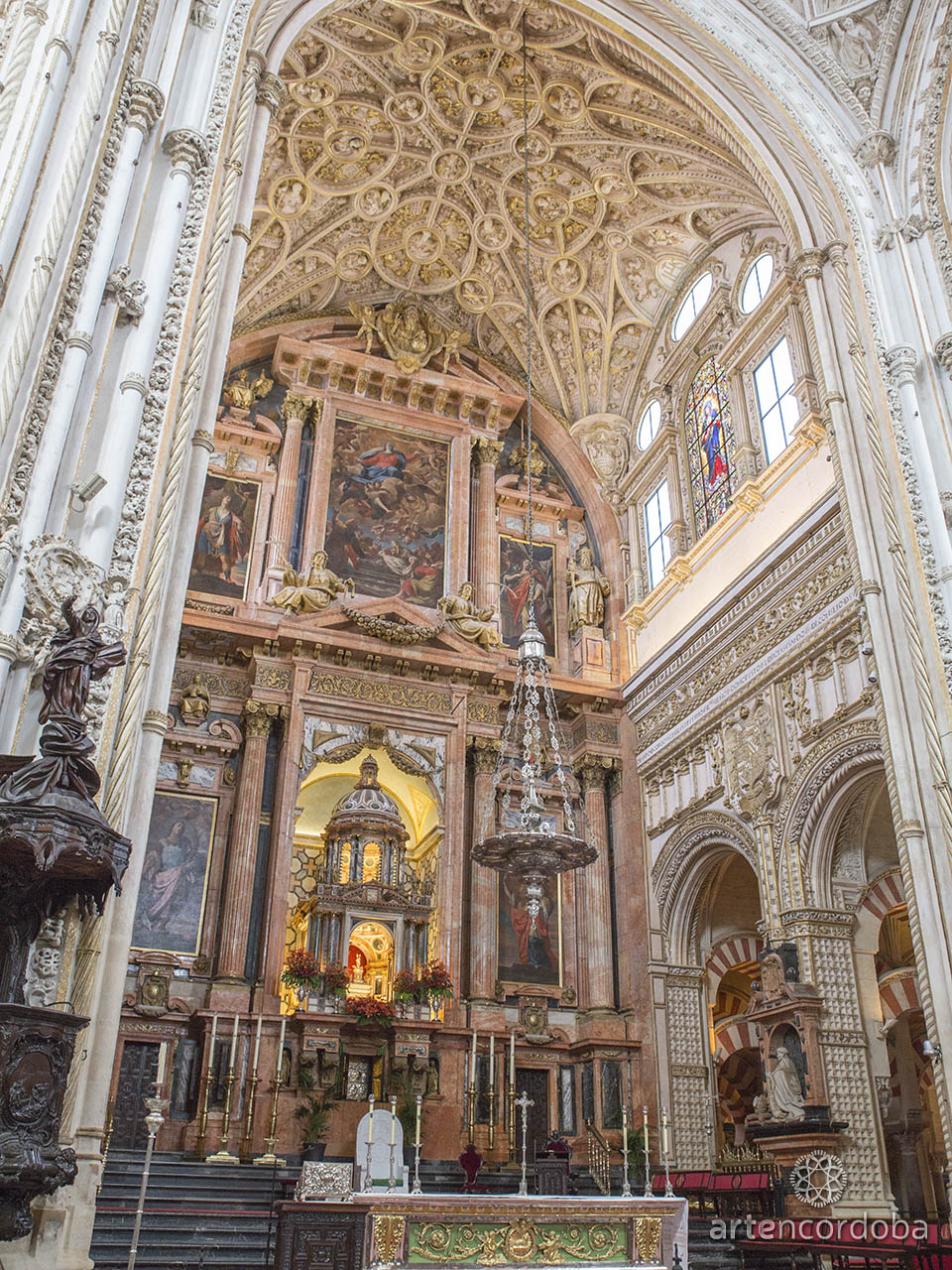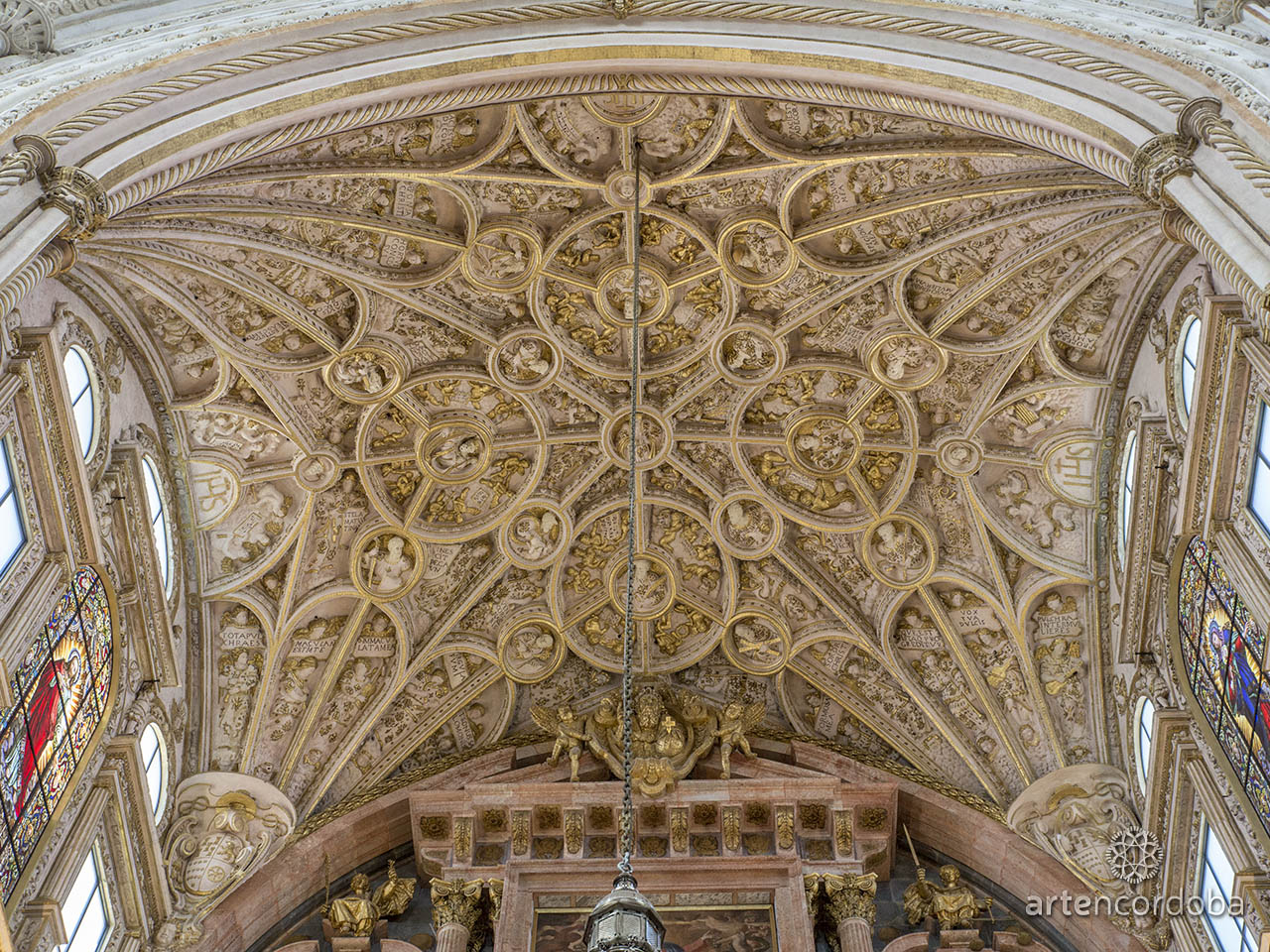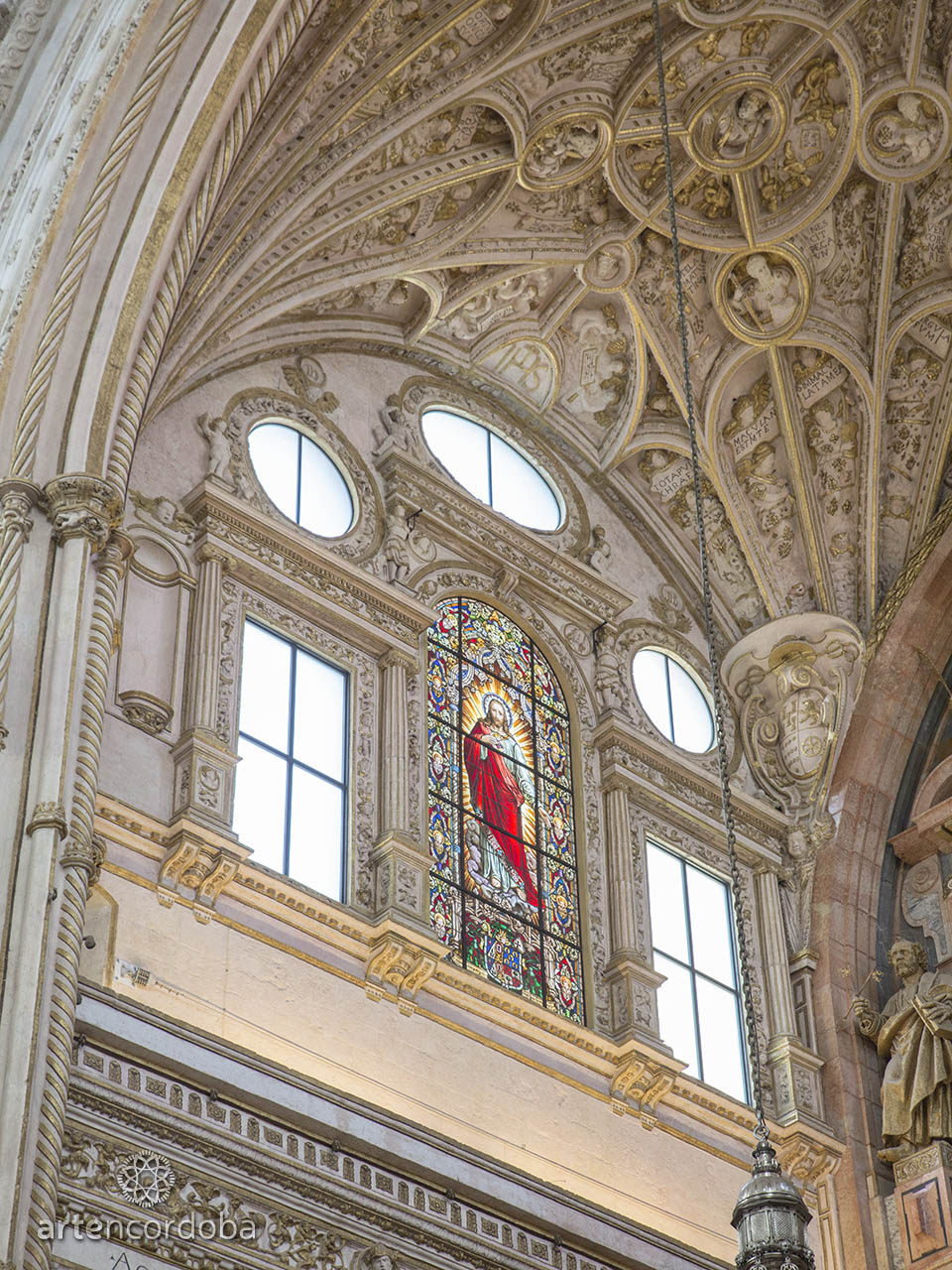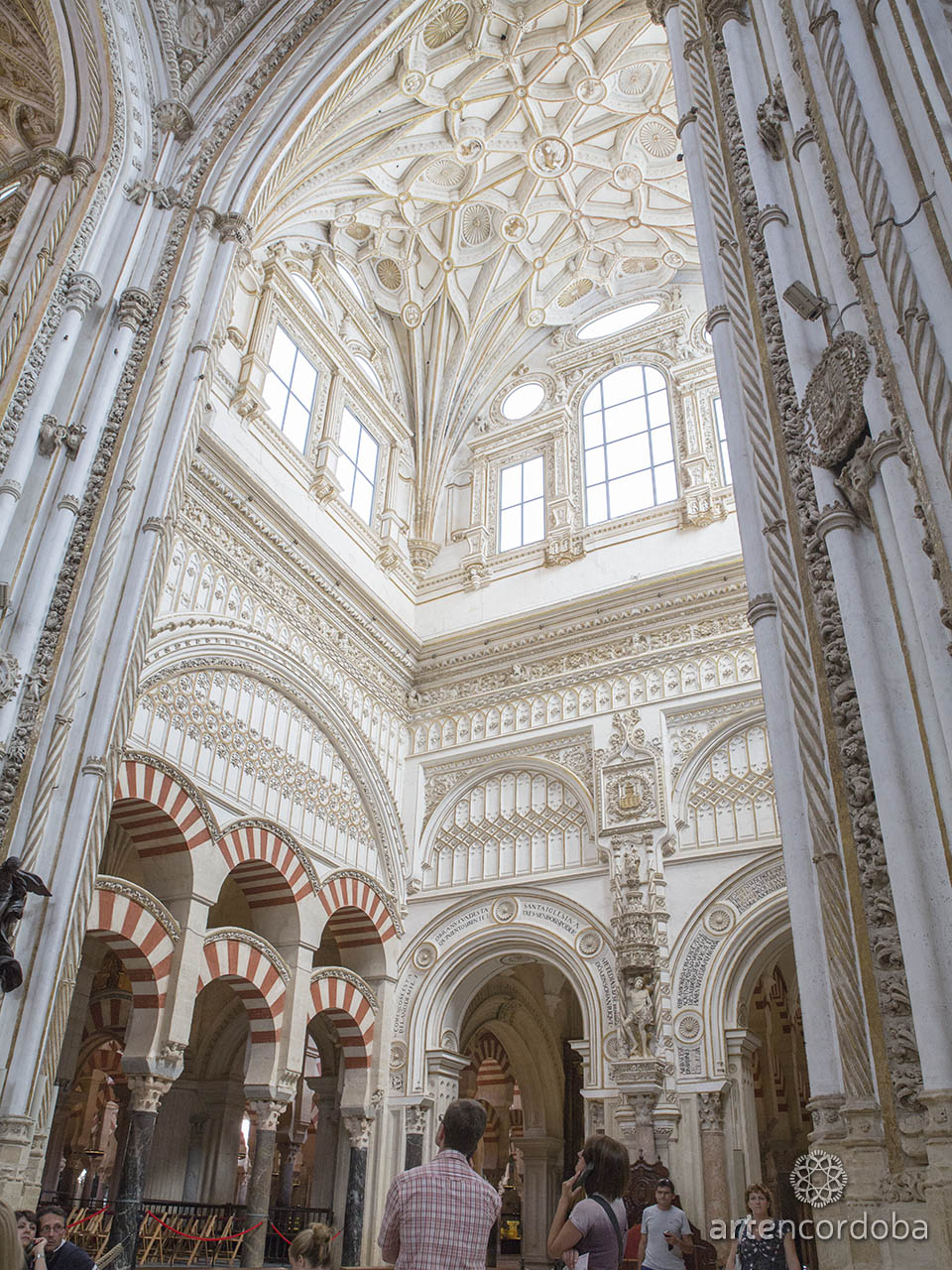




We will begin the study of the Cathedral Transept by referring to a controversy that has haunted its construction since ancient times. Who hasn’t heard the claim that a Cathedral could have been built in Córdoba without the need to reconstruct a large part of the Mosque? Who hasn’t heard, or read, the famous words of Emperor Charles I of Spain criticizing the new works? Would the Muslim building have survived to this day if it had remained unaltered over the years? It would be very complicated and unfair to analyze the Mosque-Cathedral of Córdoba while ignoring these questions, although it is our intention to distance ourselves from any kind of beliefs or ideologies in doing so.
The Preservation of the Building
More and more historians and scholars of this great building maintain that, had the works of the transept and chapels not been carried out, it would not have survived to the present day. What would have happened if, instead of being used as a sacred place of worship, it had been used for other purposes? Undoubtedly, when asking this question, the image of the Athenian Parthenon comes to mind, which, sadly, was used as a powder magazine. Indeed, “you’ve chosen a very extreme case,” more than one reader might say, but what purpose could the Mosque have served if, let’s suppose, a Cathedral had been erected elsewhere in the city?
The truth is, there are many questions—so many, in fact, that we would never finish this introduction if we posed them all. Would the building have survived? Scientists say no. In fact, we could safely say it has reached us in an “almost miraculous” state, if we consider, for example, the condition it was in before the “restoration” led by Ricardo Velázquez Bosco. And we believe, from our humble point of view, that it would not have survived either.
The Controversy During the Time of Charles I
No less controversial is the phrase supposedly uttered by Emperor Charles I of Spain and V of Germany upon learning the extent of the works: “I did not know what this was; for I would not have allowed it to come to the ancient, because you are doing what can be found elsewhere and have destroyed what was unique in the world“. The truth is that there was no consensus from the beginning among the members of the chapter, but they never publicly acknowledged this—instead, they showed their support for Bishop Alonso Manrique, the true driving force behind the works.
Popular Reaction and Historical Documents
On the other hand, the project faced great public pressure, as evidenced by the text of Antonio Toro, general notary of the Municipal Council: “… he proclaimed through the streets and squares of the city the death penalty for masons, stonemasons, carpenters, and laborers who accepted the contract to work on the demolition of part of the ancient Mosque. Even before its completion, Canon José Aldrete, on behalf of the bishop and the chapter, would say that it was begun «non prudenti consilio»“. We are thus in a somewhat tense atmosphere in the city due to the beginning of the transept works, although the Emperor received several reports on the situation, urging their continuation.
Current Historiographical Interpretations
For Alberto Villar, Professor of Art History at the University of Córdoba, the conclusion is clear: “… it is a fallacy, probably romantic, probably invented… An Emperor capable of commissioning a palace like the one bearing his name at the heart of the Alhambra could not have lamented in such a way. Today we know that King Charles came to Córdoba in 1526 en route to Seville“. If we add to this the fact that at age 26 (he was born in 1500) he barely spoke Spanish, the conclusion becomes even clearer.
And finally, we refer to the question posed by Recio Mateo: How could a Catholic monarch, in continuous struggle against Turkish Islam, who knew about the transformation of Hagia Sophia into a Mosque, have regretted the transformation of the Mosque of the “infidel” into a Catholic symbol…?
Text: J.A.S.C.
Main Elements of the Cathedral Transept
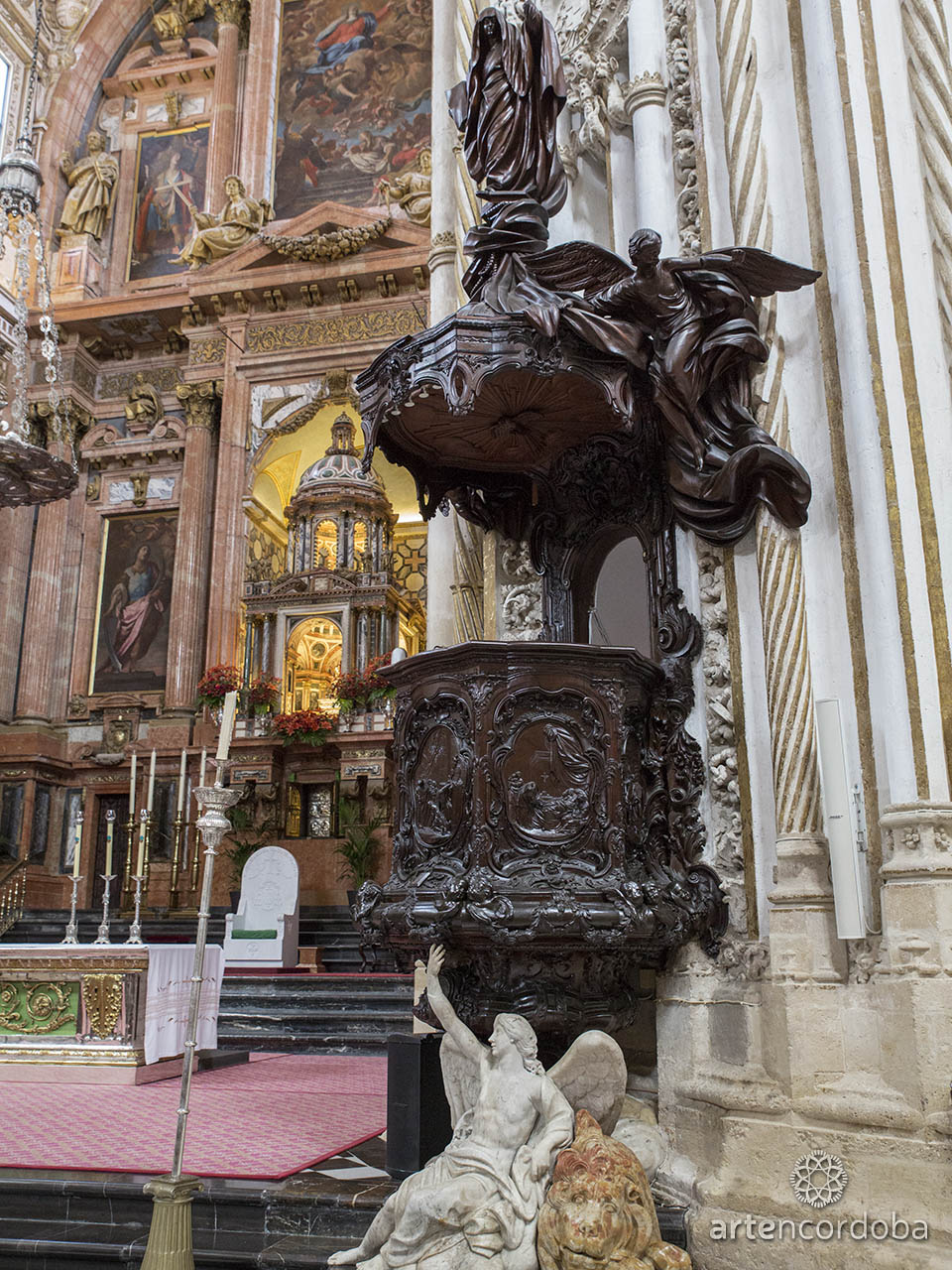
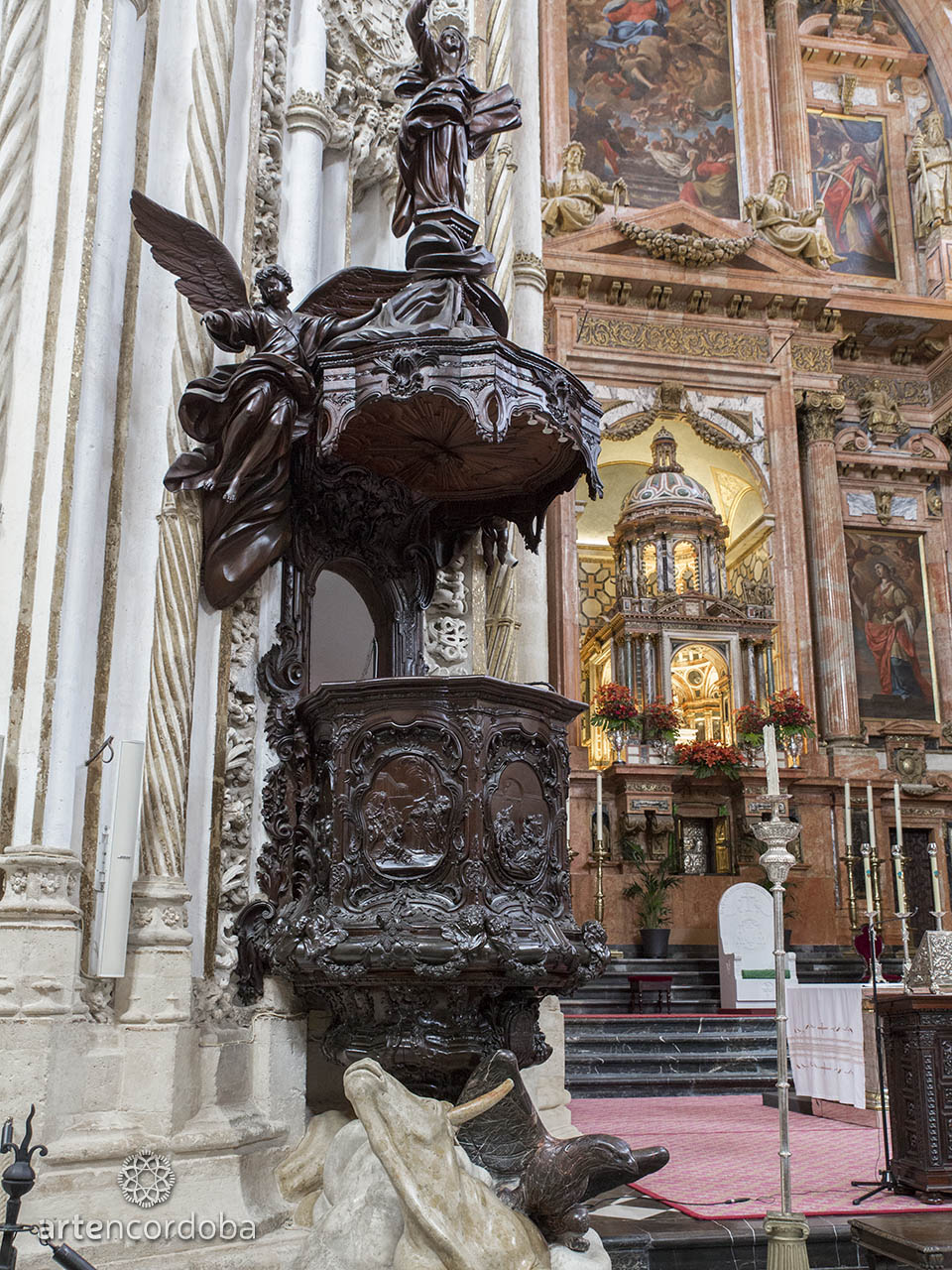
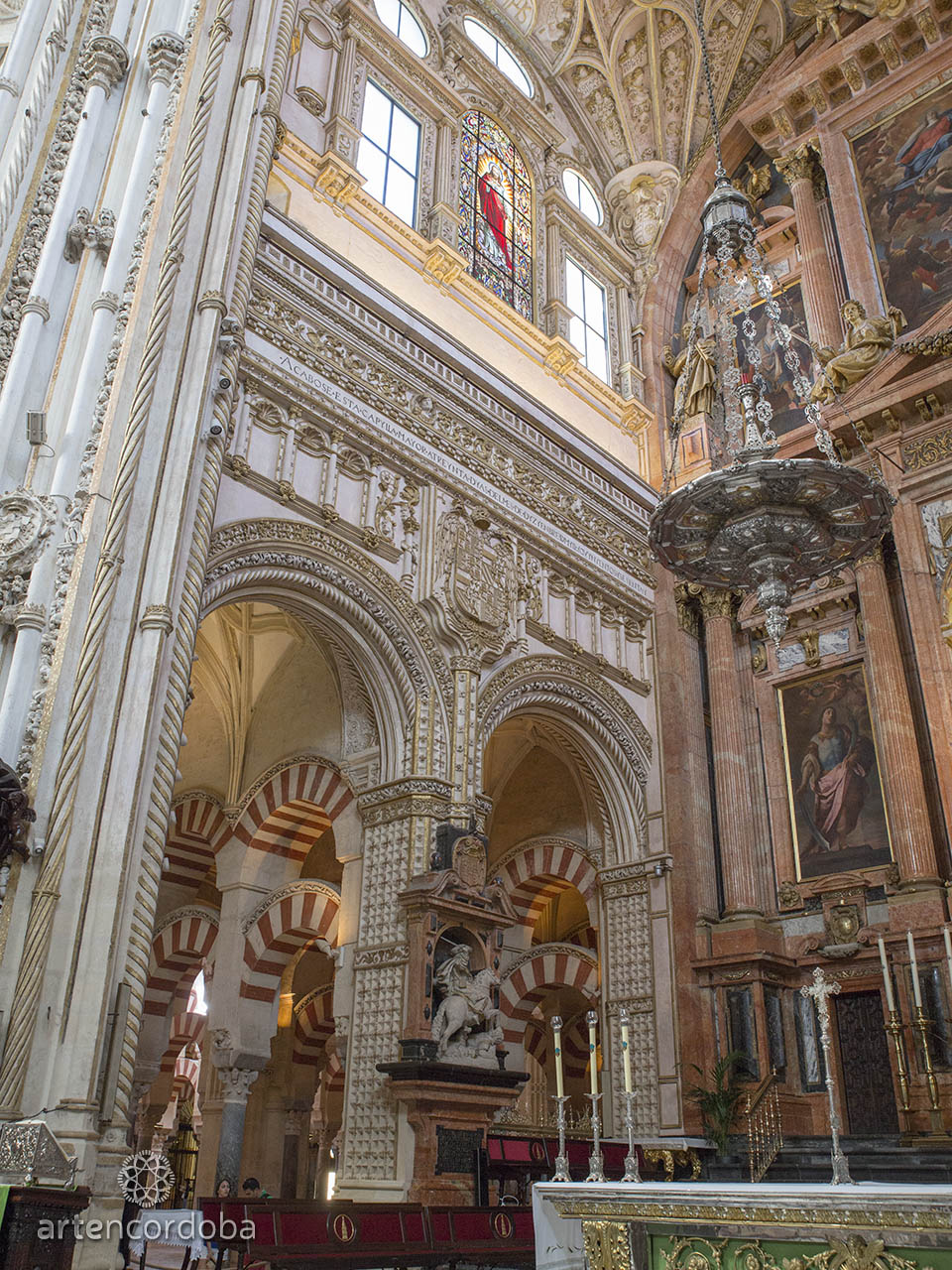
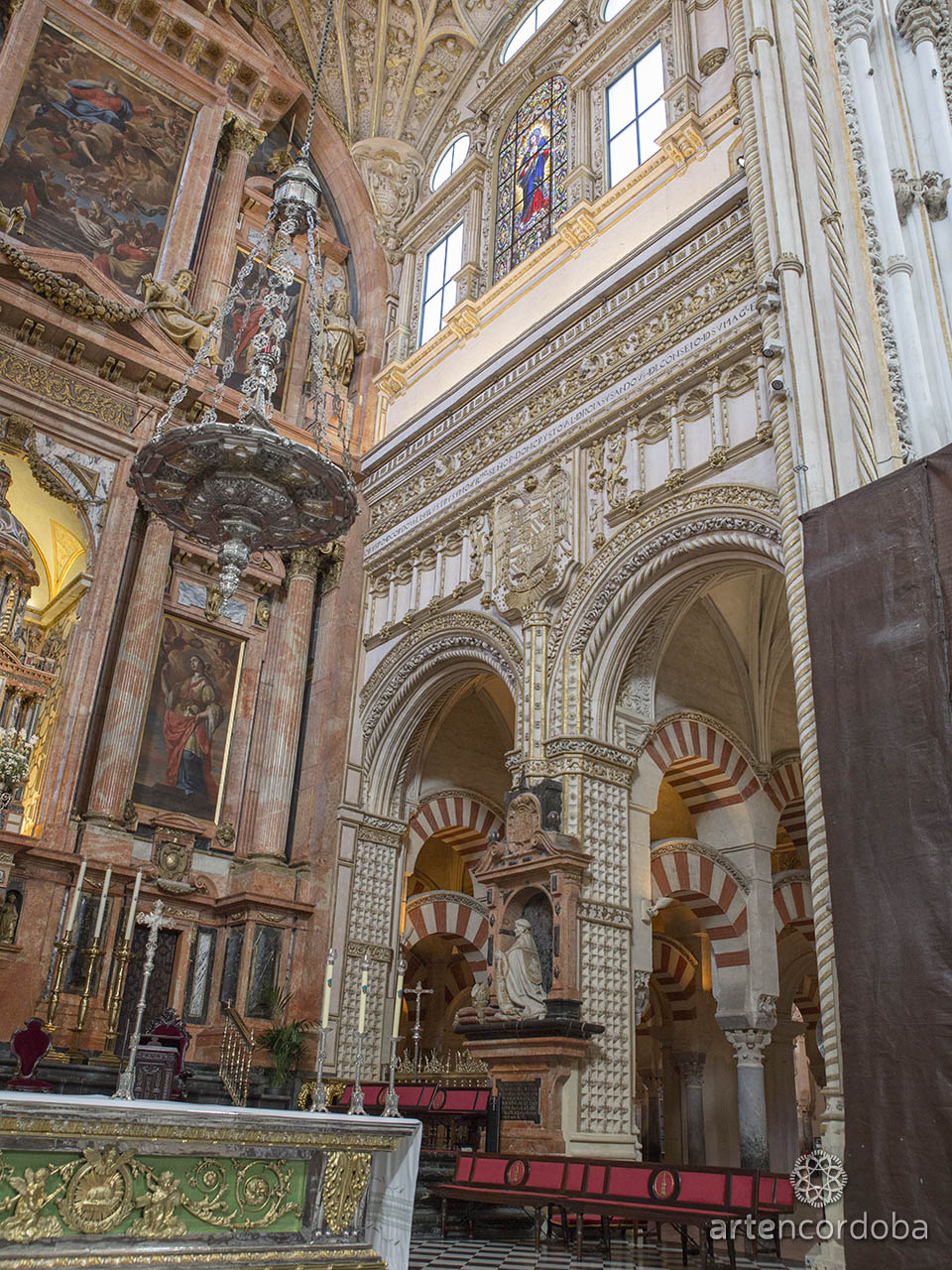
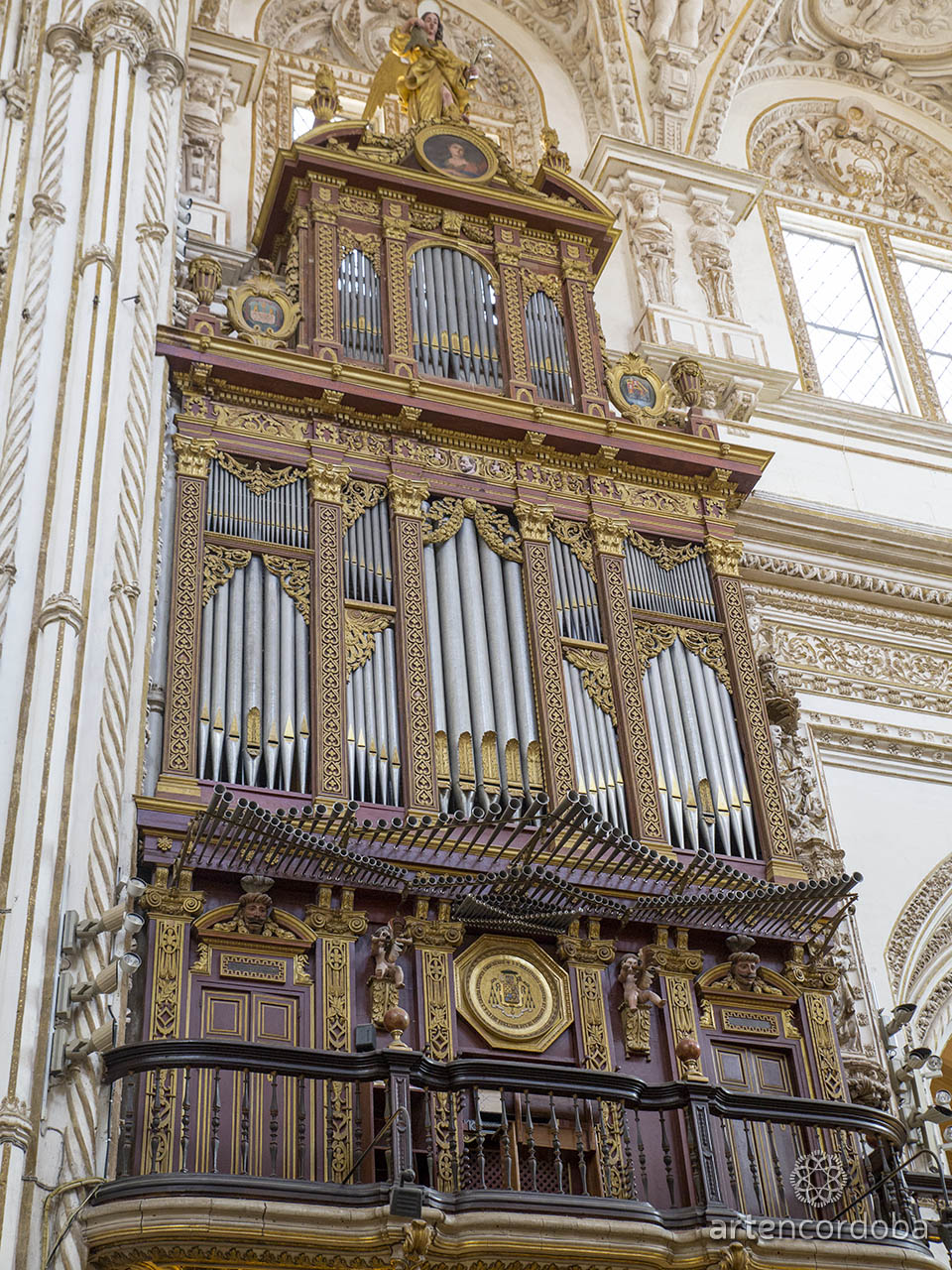
Within the Cathedral Transept of the Mosque-Cathedral of Córdoba, a series of spaces and artistic ensembles unfold that are essential to understanding its layout, symbolism, and historical evolution.
The Main Altar
Iconography
Transept Works
Choir Stalls