





The Casa del Indiano, also known as the Casa de los Ceas, belonged for centuries to one of the most prominent families in Cordoban politics after the Reconquista. Although it is not a very well-known place among the general public, it is a name that most Cordobans have heard at some point.
Location and origin of the name
It is located in the Plaza Ángel de Torres, right in the historic center and very close to the Jewish Quarter. Its name comes from one of its owners, Don Juan Cosme Paniagua, who lived in America for many years. Upon his return, he was given the nickname “Indiano,” which was eventually applied to the house as well.
Conservation and historical value
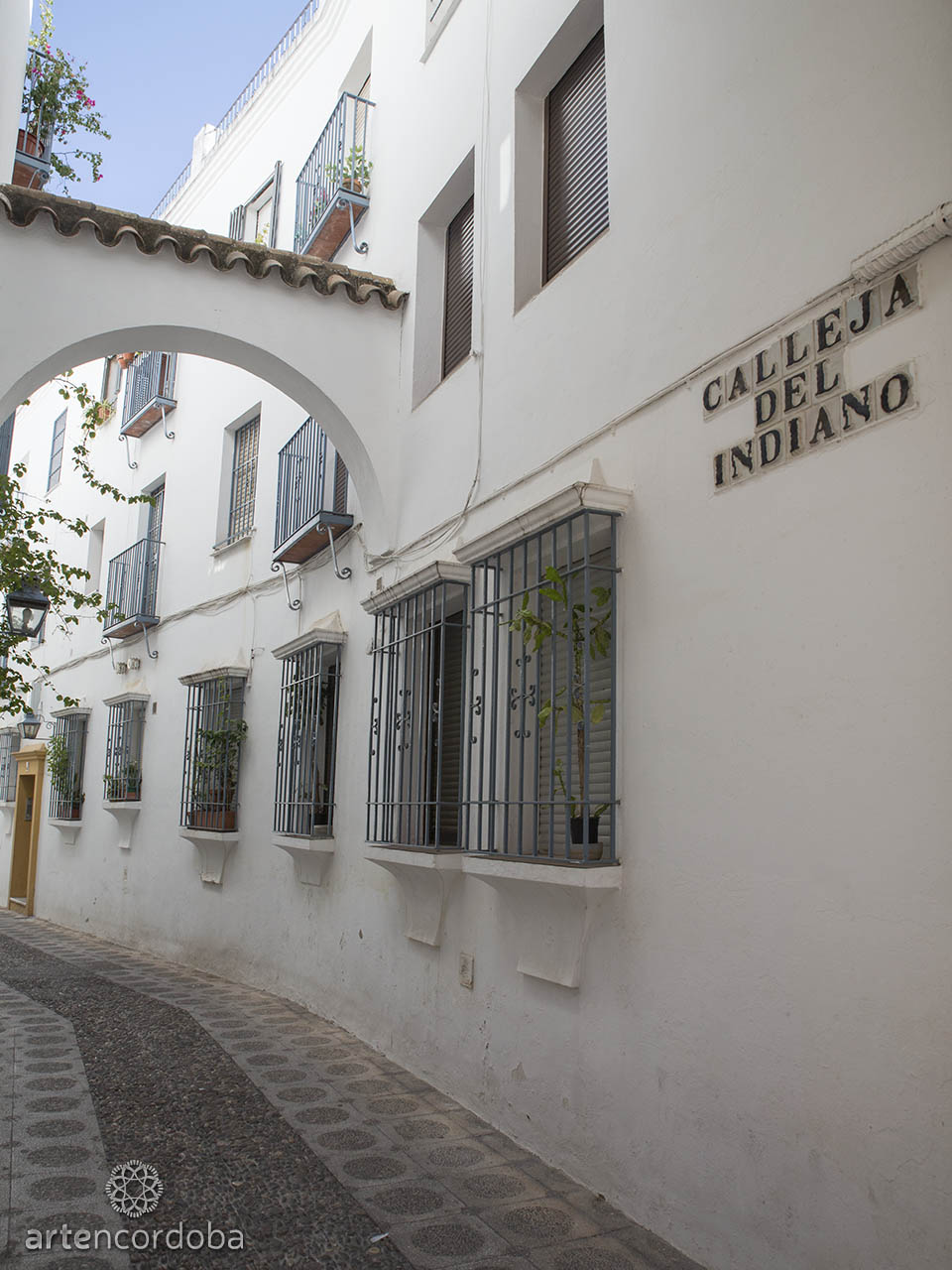
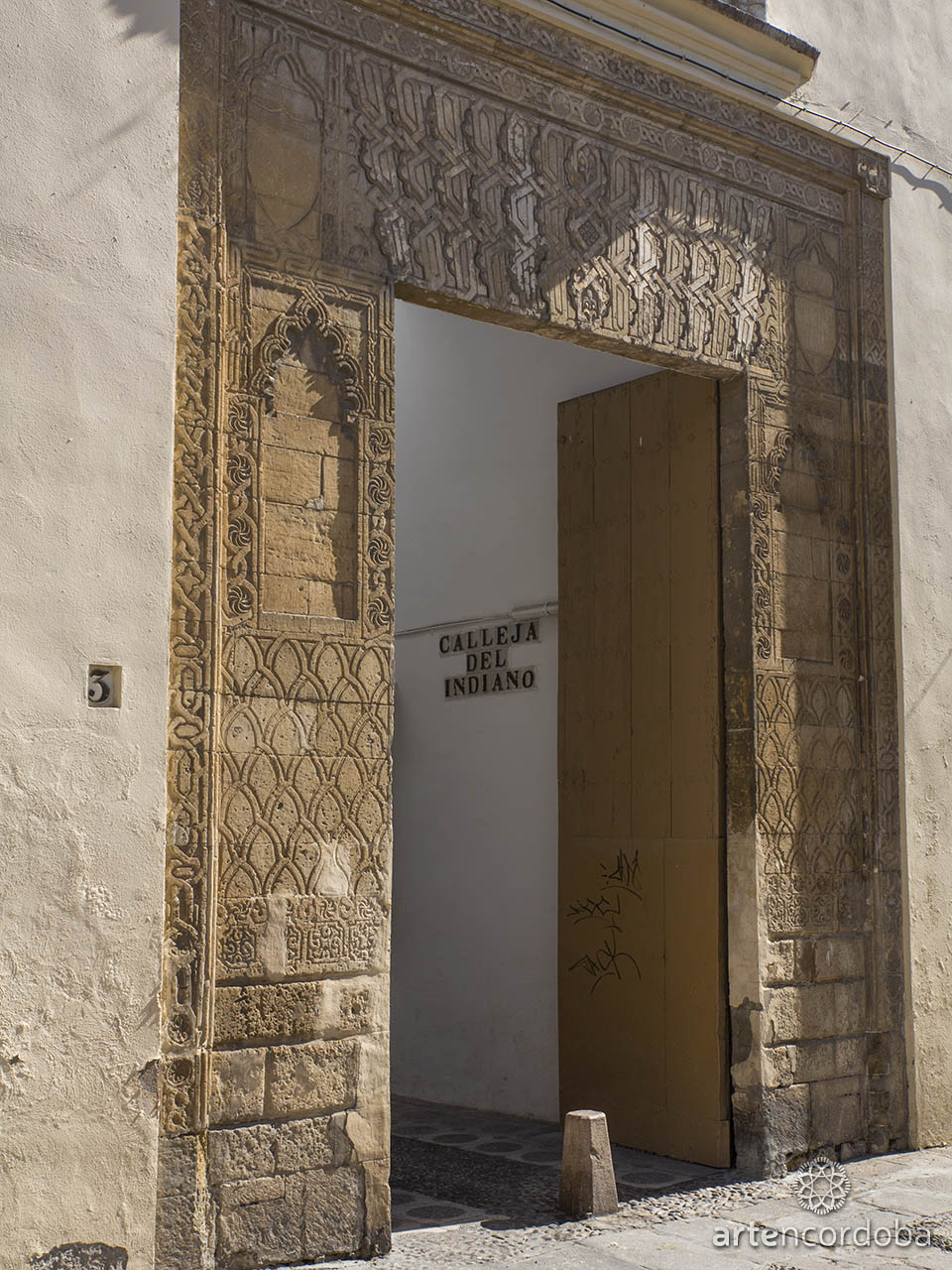
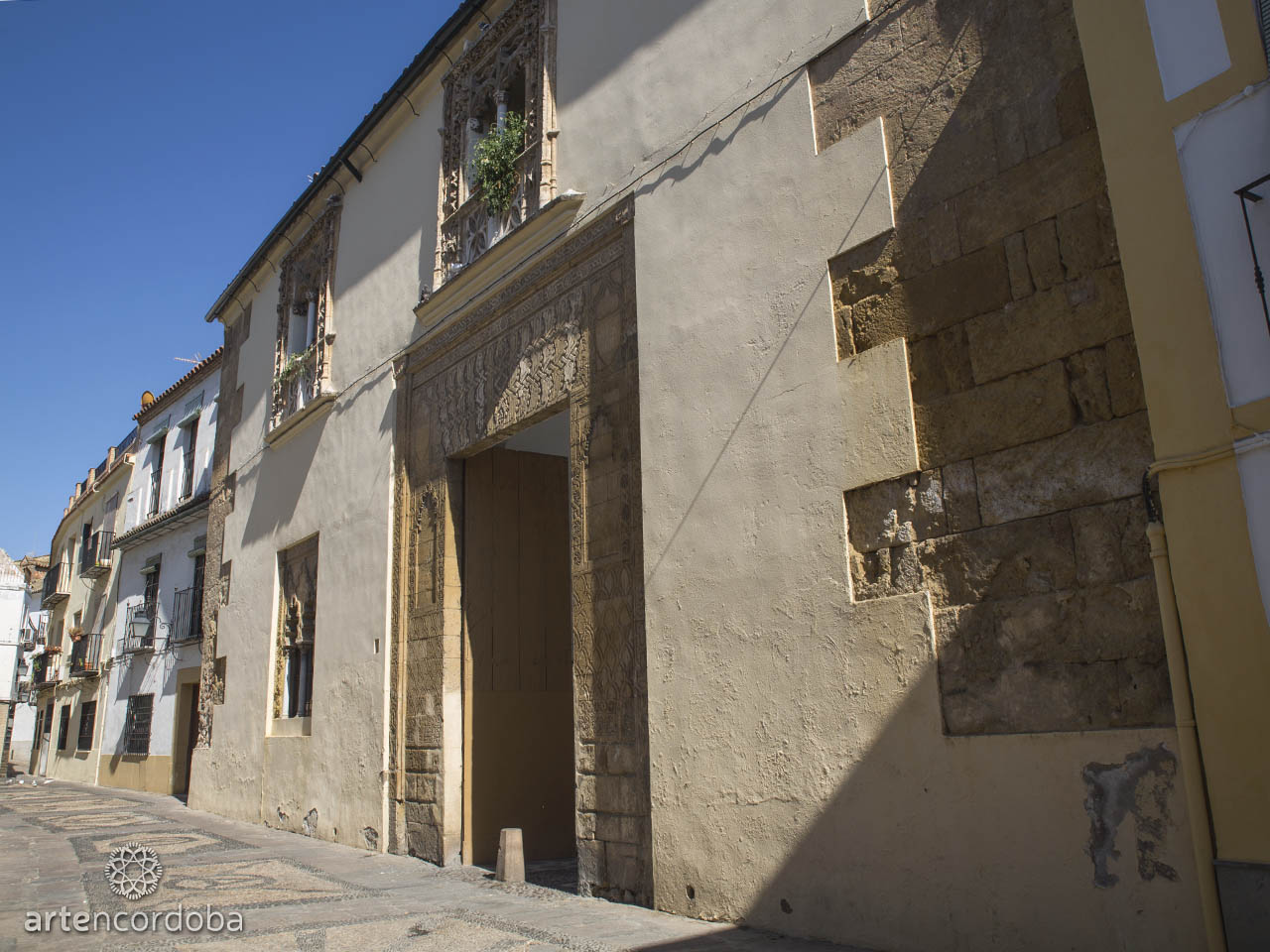
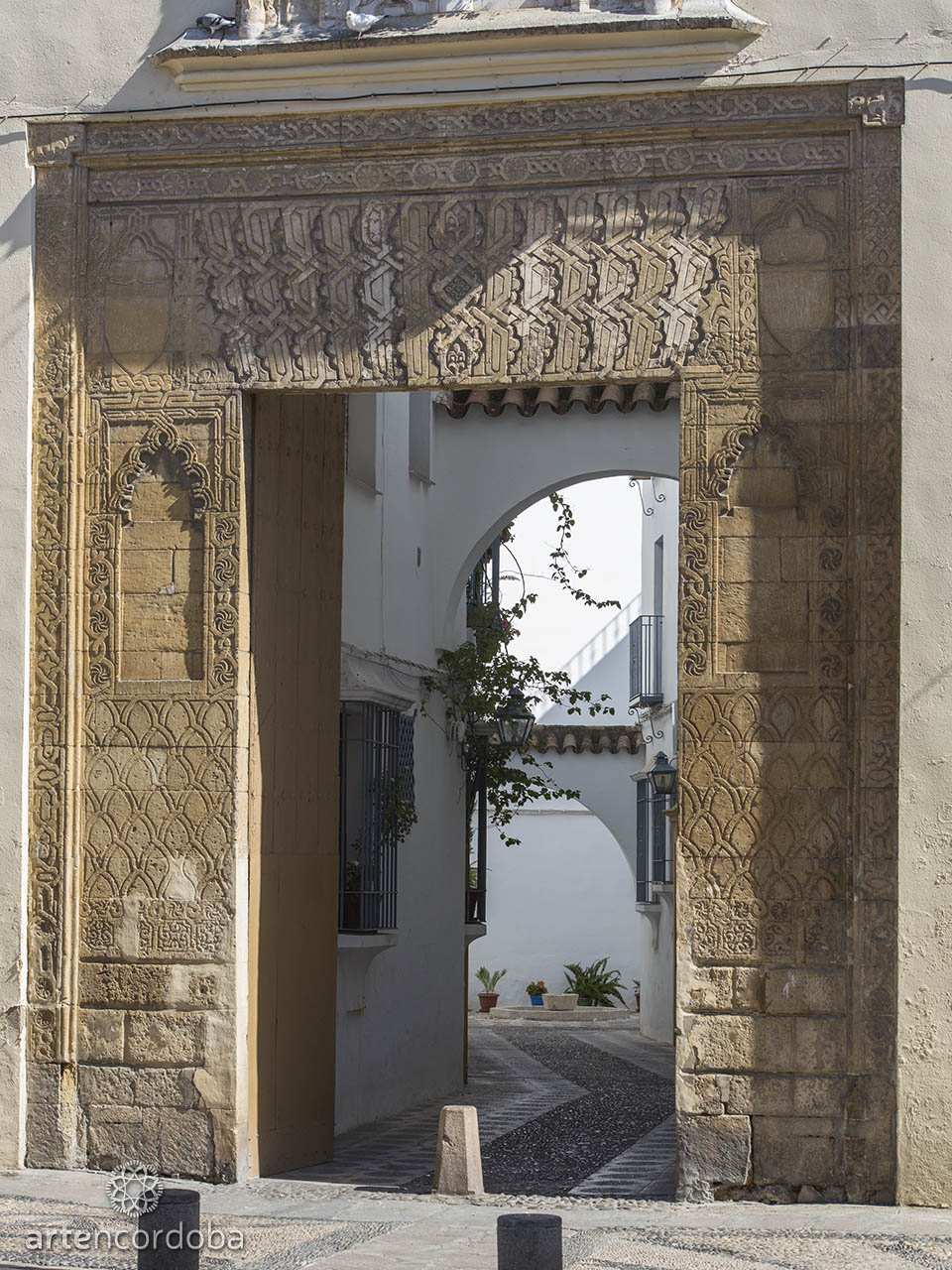
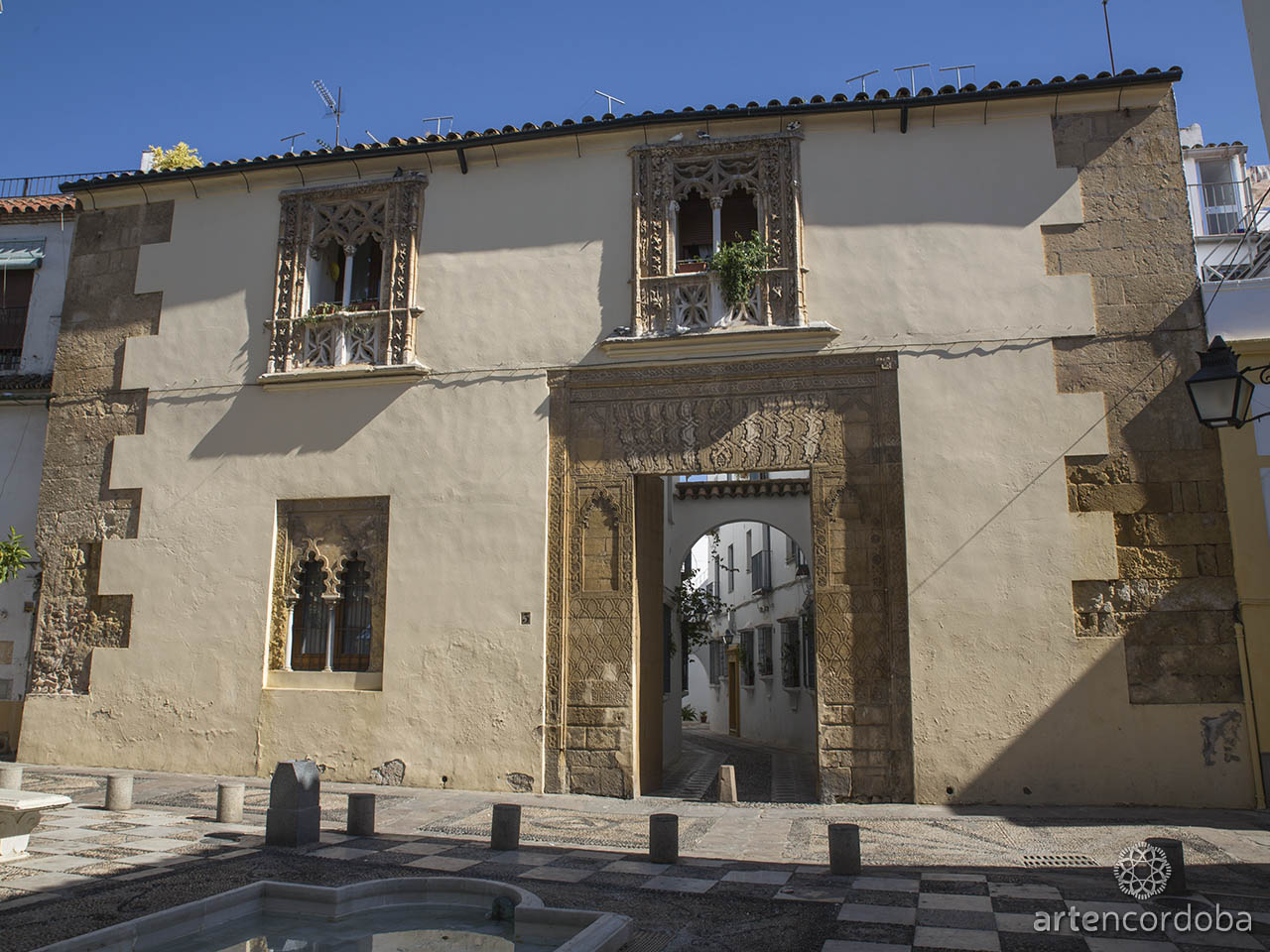
Unfortunately, the original interior of the Casa del Indiano has not been preserved, as only its façade has survived, dating back to the 15th century and considered one of the finest examples of Mudejar civil architecture in Córdoba. Today, its doorway no longer leads to the house but to the well-known Calleja del Indiano, where several entrances to modern homes are found.
Description of the façade
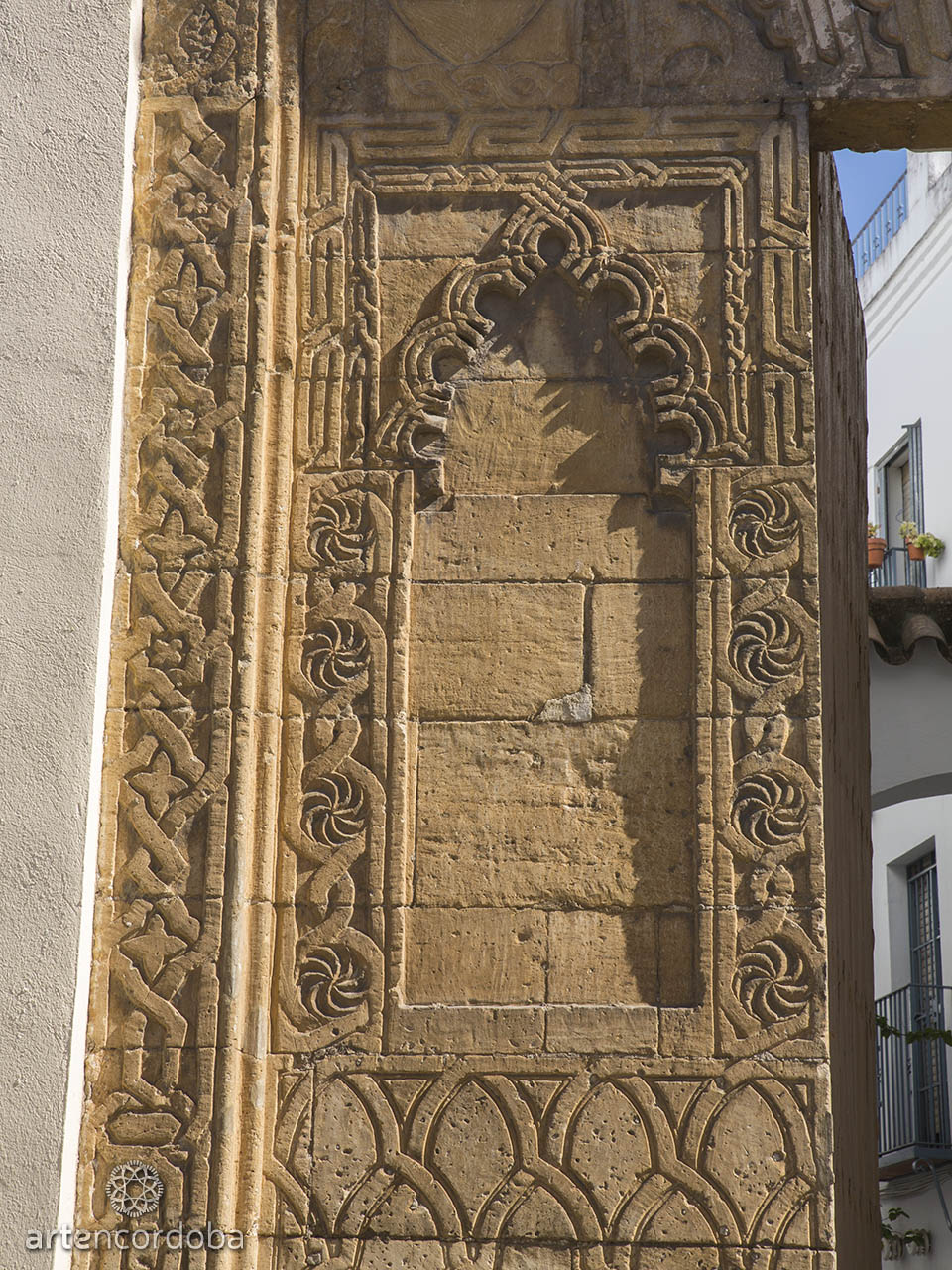
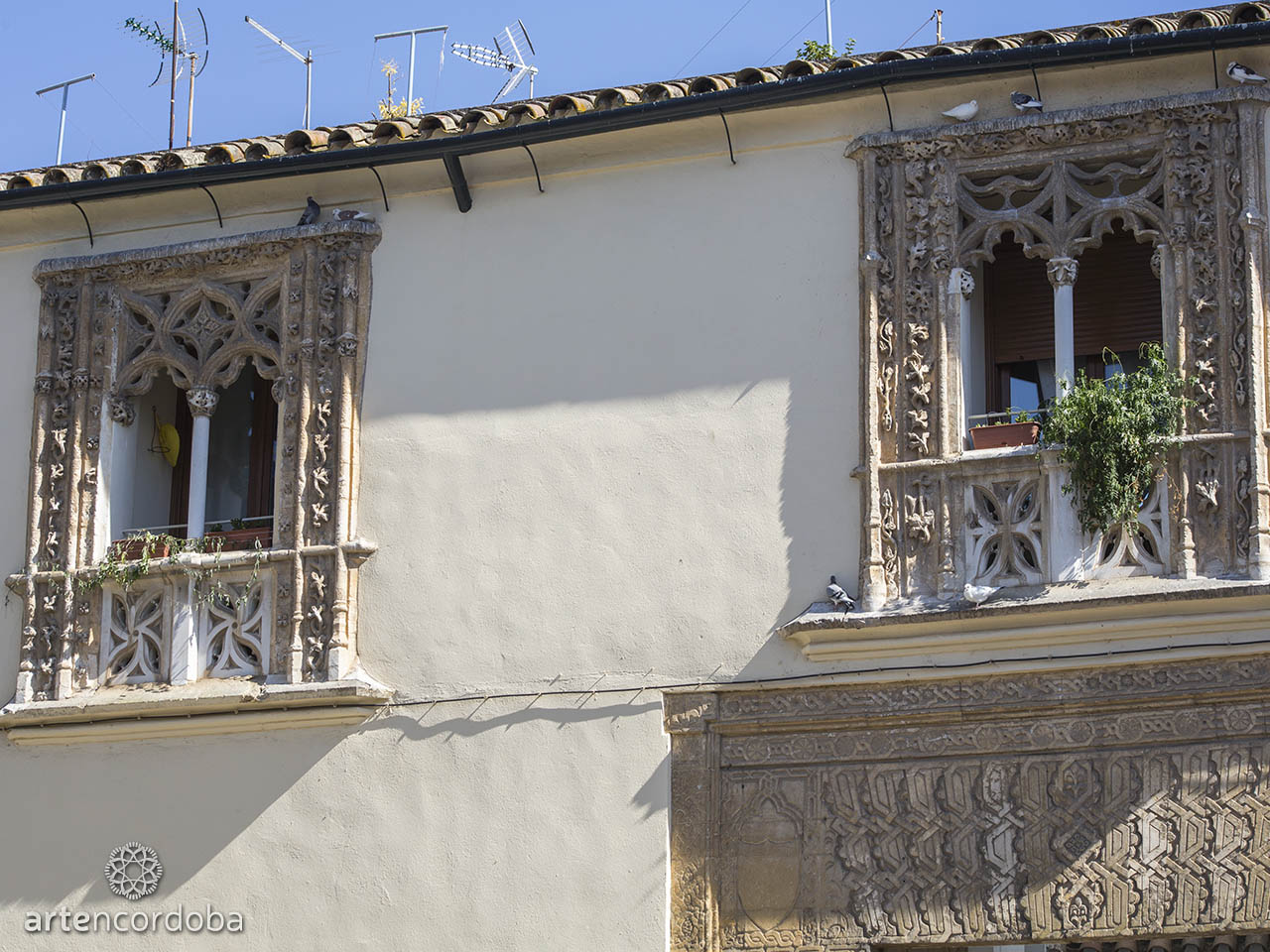
The façade has only four openings. The main one is the entrance doorway, curiously located to one side, which lessens its prominence in the whole. Some authors describe it as lintelled and others as an arched lintel, but in reality, it consists of prominent voussoirs, decorated with Mudejar lacework and sebka motifs. On both sides, as well as on the jambs, there are small blind windows with polylobed arches. All of this is topped by three slender decorative strips with geometric motifs.
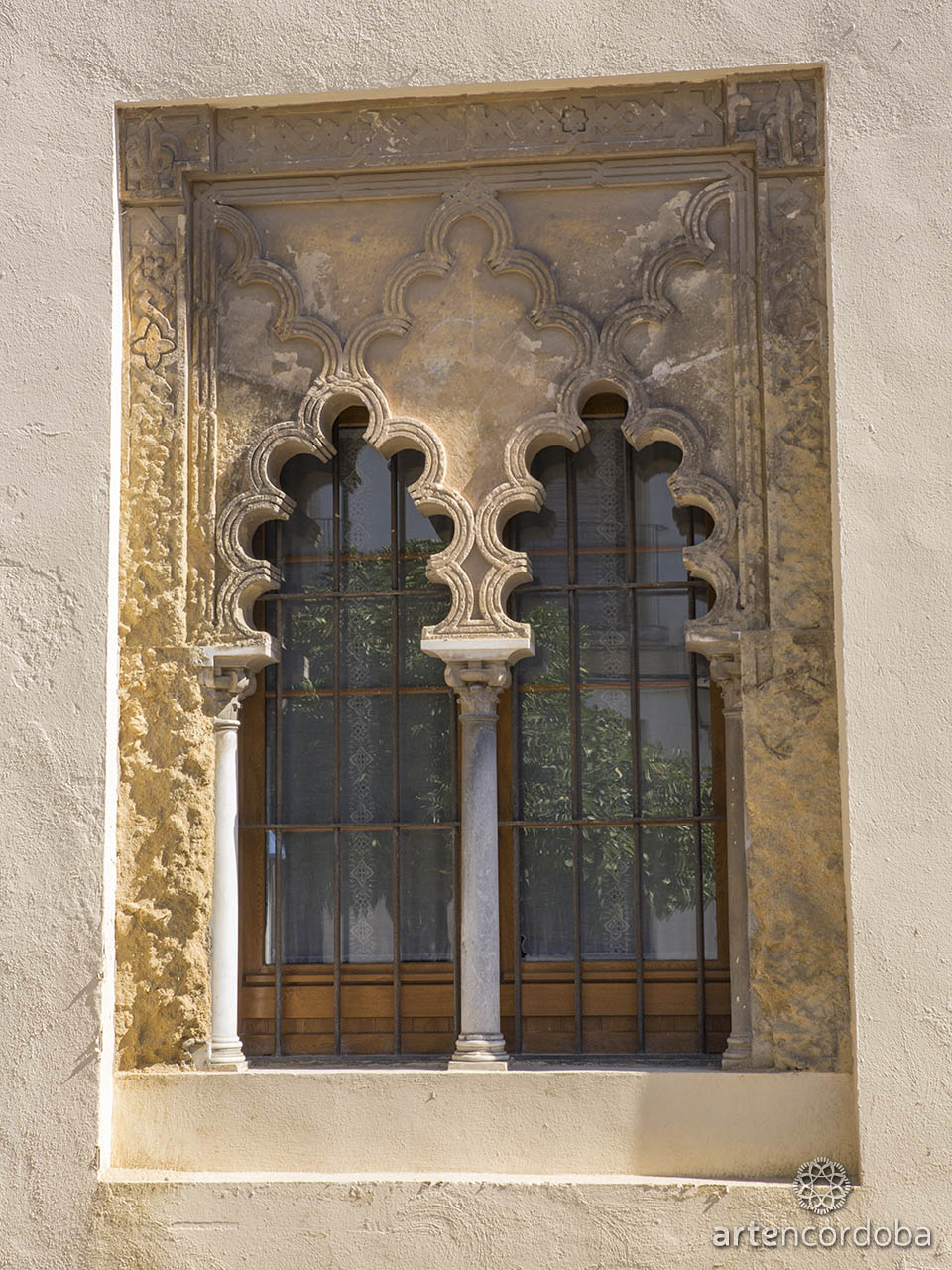
To the left of the doorway, on the ground floor, there is a twin window covered by interlaced polylobed arches, creating blind spaces framed by thin moldings. These arches rest on smooth columns with bases and Corinthian capitals, and the whole is framed by decorative plaques of geometric and sebka character.
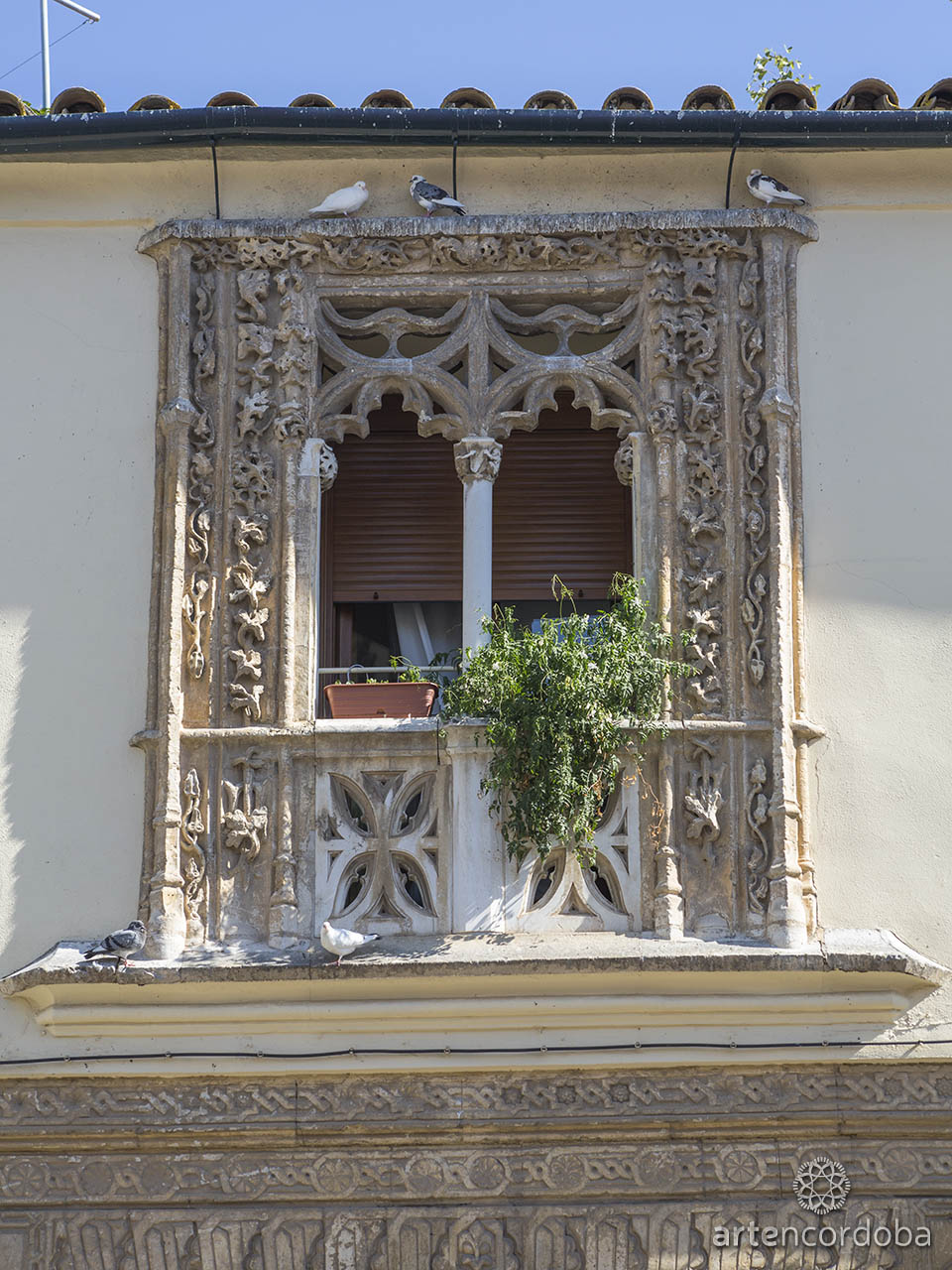
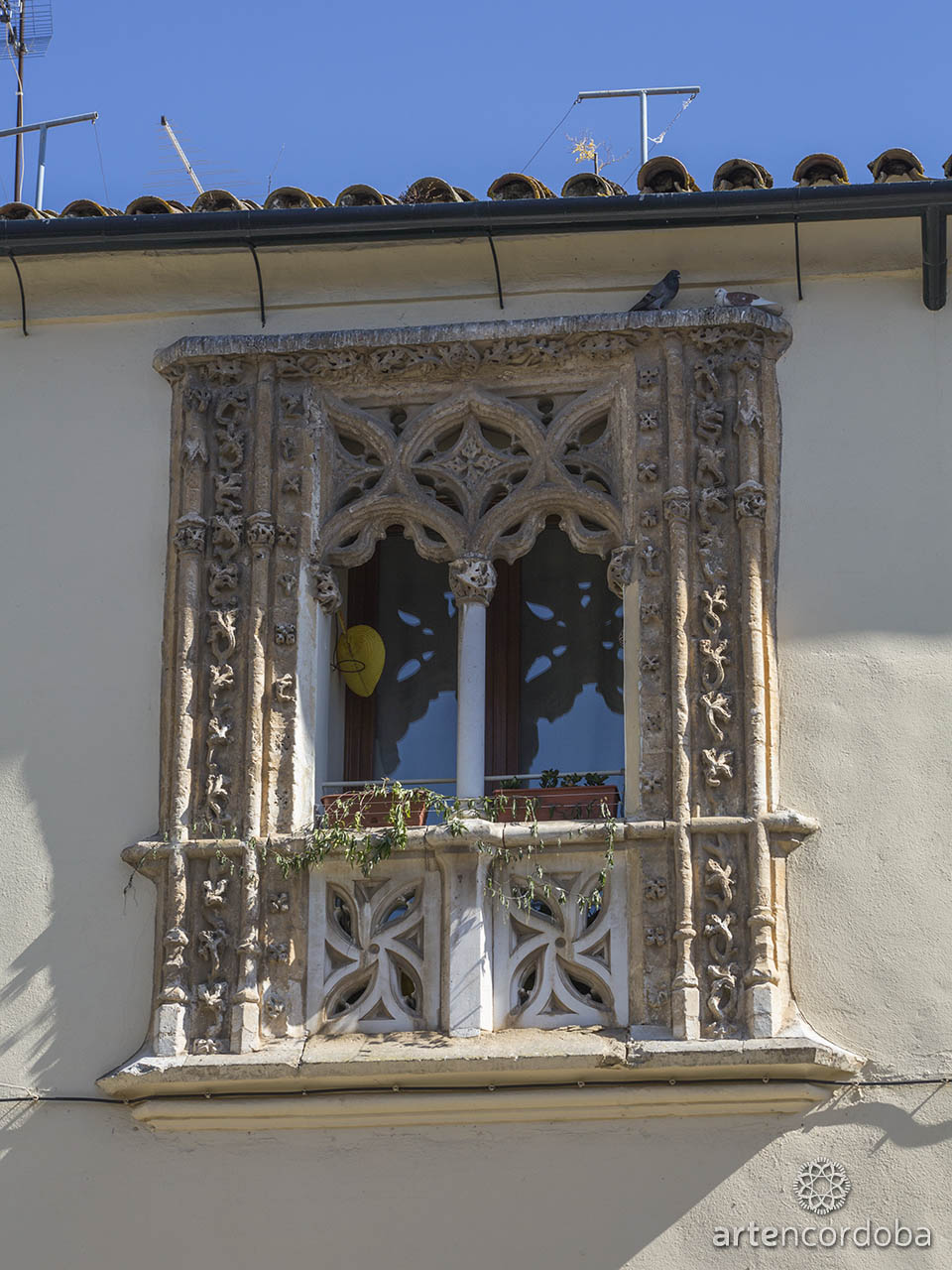
On the upper floor, aligned with the lower openings, there are two windows of similar characteristics, although their style is already close to Gothic. These are twin windows with balustrades, whose small central pillar supports two semicircular arches, above which two smaller arches are superimposed. The decoration is completed with vegetal and floral carvings distributed among the moldings.
The historian Ramírez de Arellano suggests that these upper moldings may have originally been crowned by pinnacles, elements that would have disappeared during the restoration carried out by Mateo Inurria at the beginning of the 20th century.
Guided tours
If you would like to visit the Casa del Indiano, we recommend booking one of our guided tours. We specialize in the interpretation of Cordoba’s historical heritage. If you have chosen to do tourism in Córdoba, choose a quality option: ArtenCórdoba.
Text: J.A.S.C.