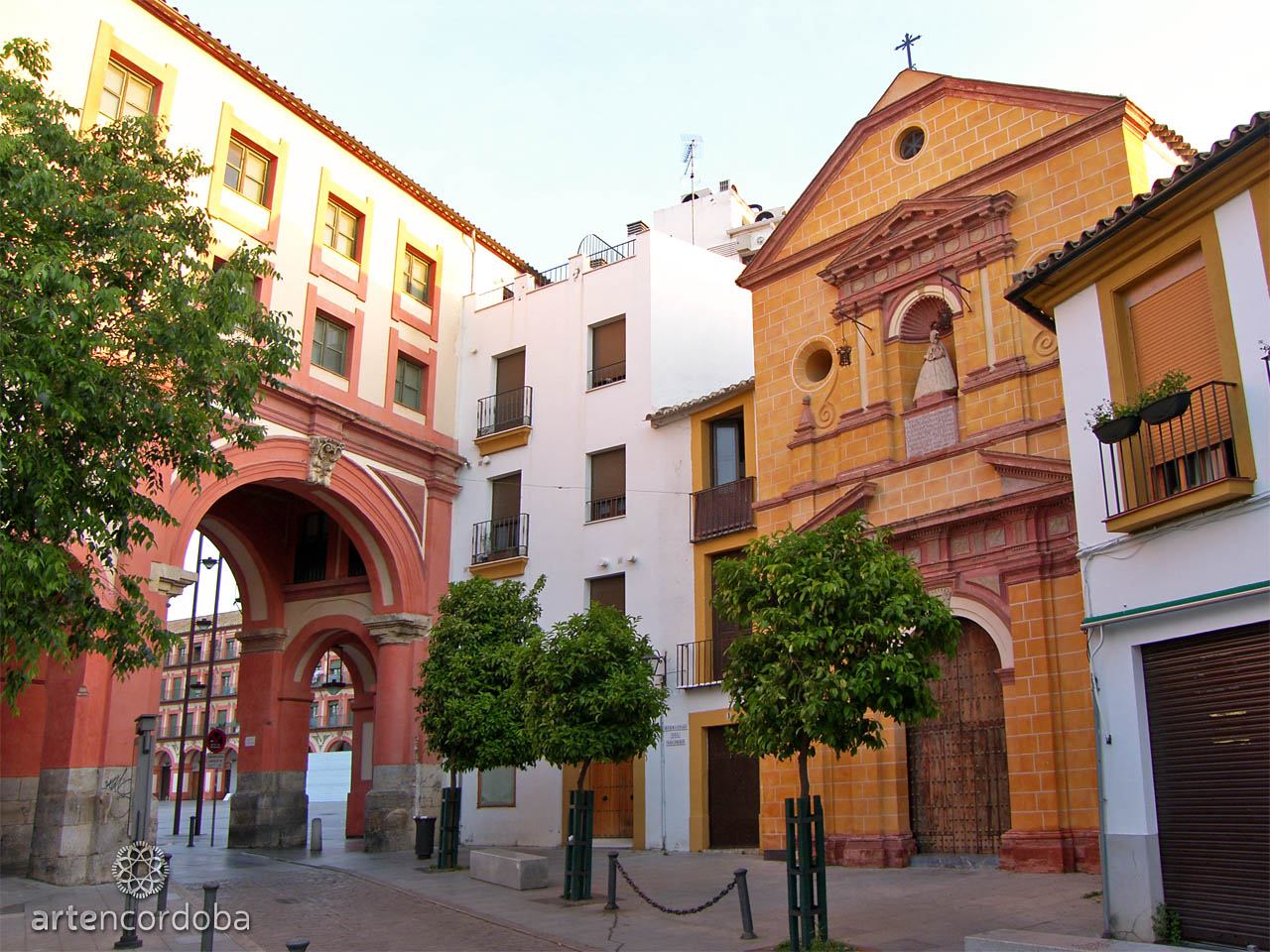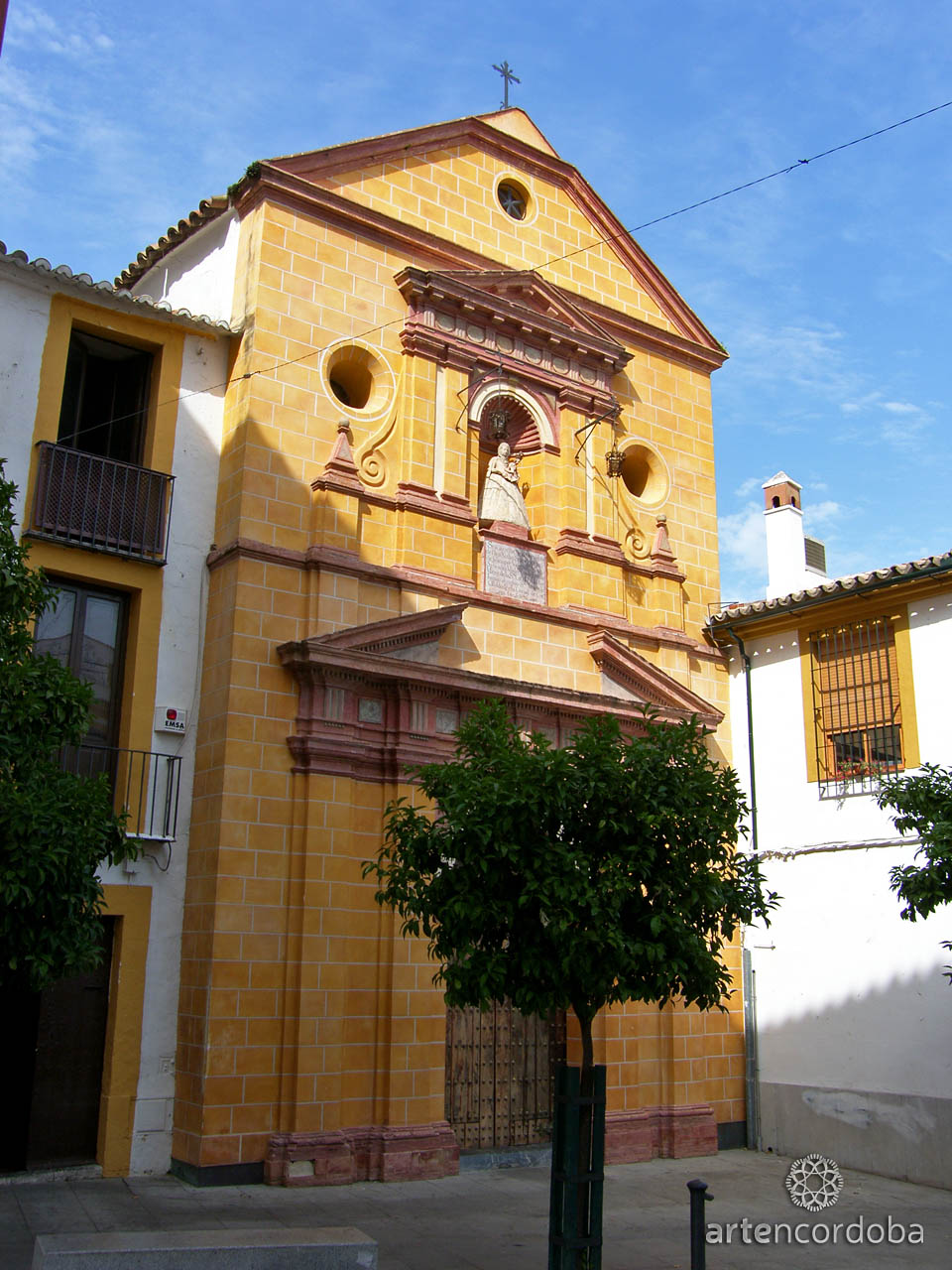






As soon as you pass through the “Arco Bajo” of the Plaza de la Corredera, located on its eastern side, you will find the entrance to the Ermita del Socorro, situated in the small square of the same name. The close proximity between such an imposing semicircular arch and the façade of our hermitage somewhat diminishes its size; however, together they form a highly charming ensemble.
Façade Description
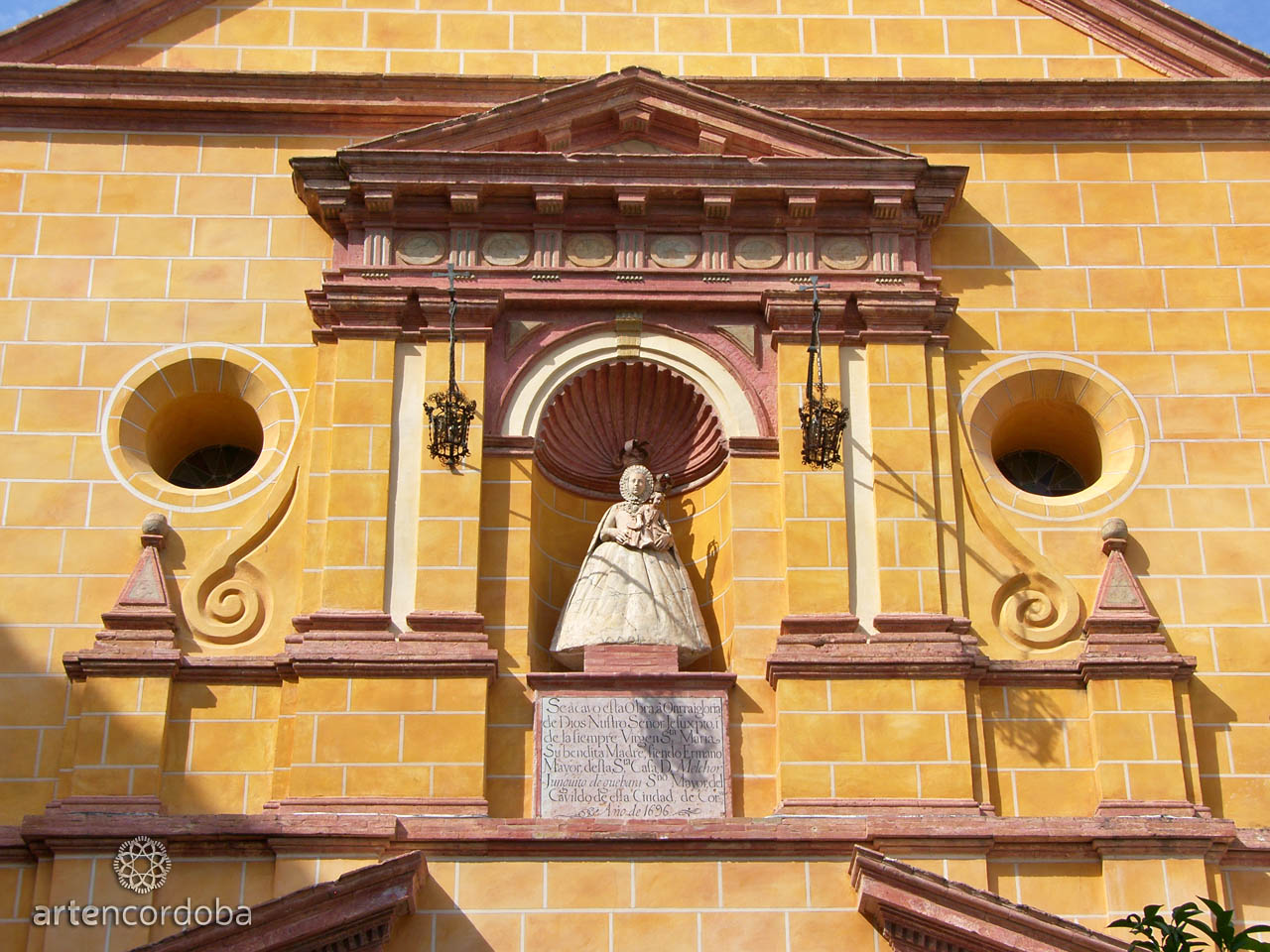
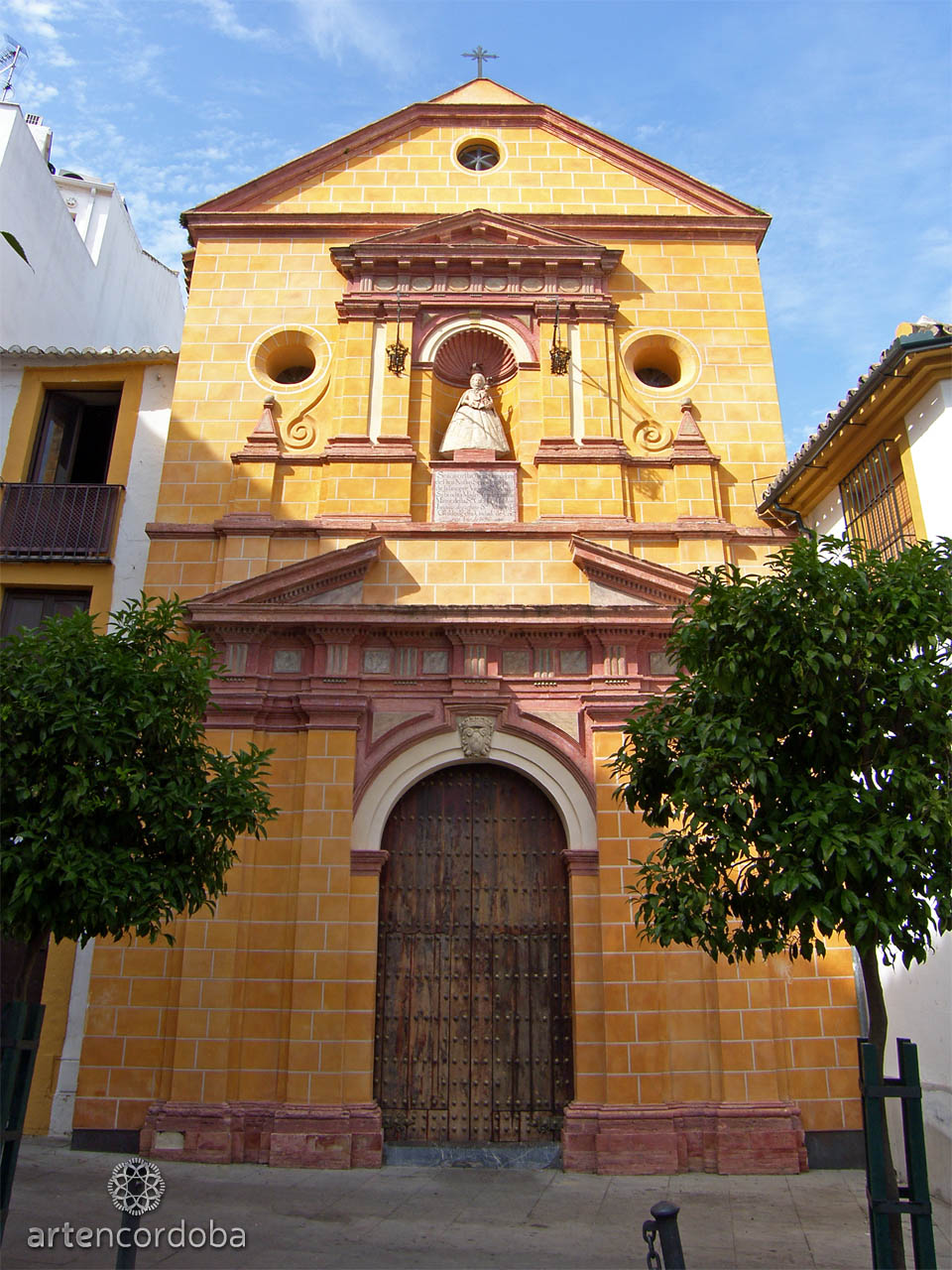
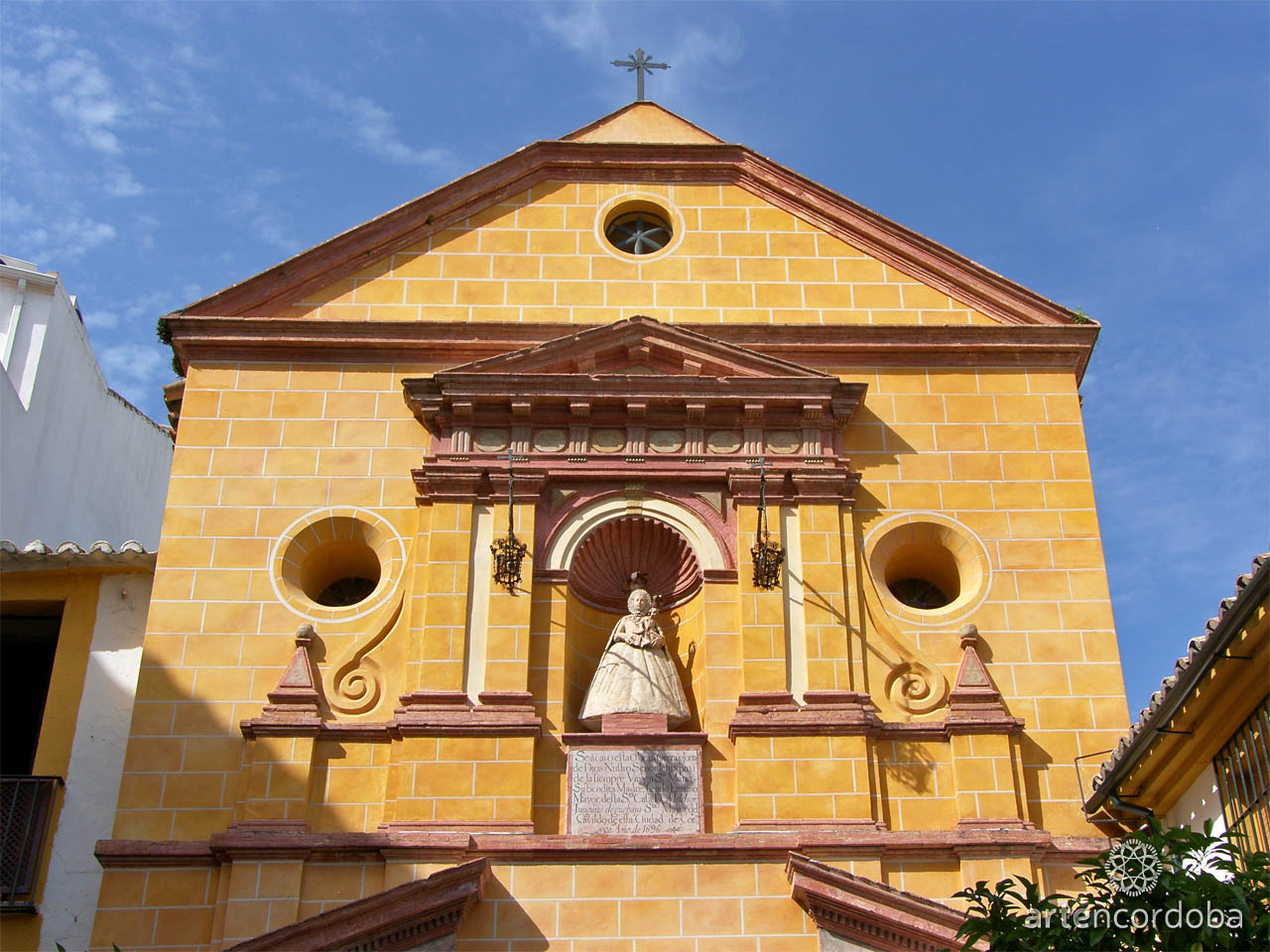
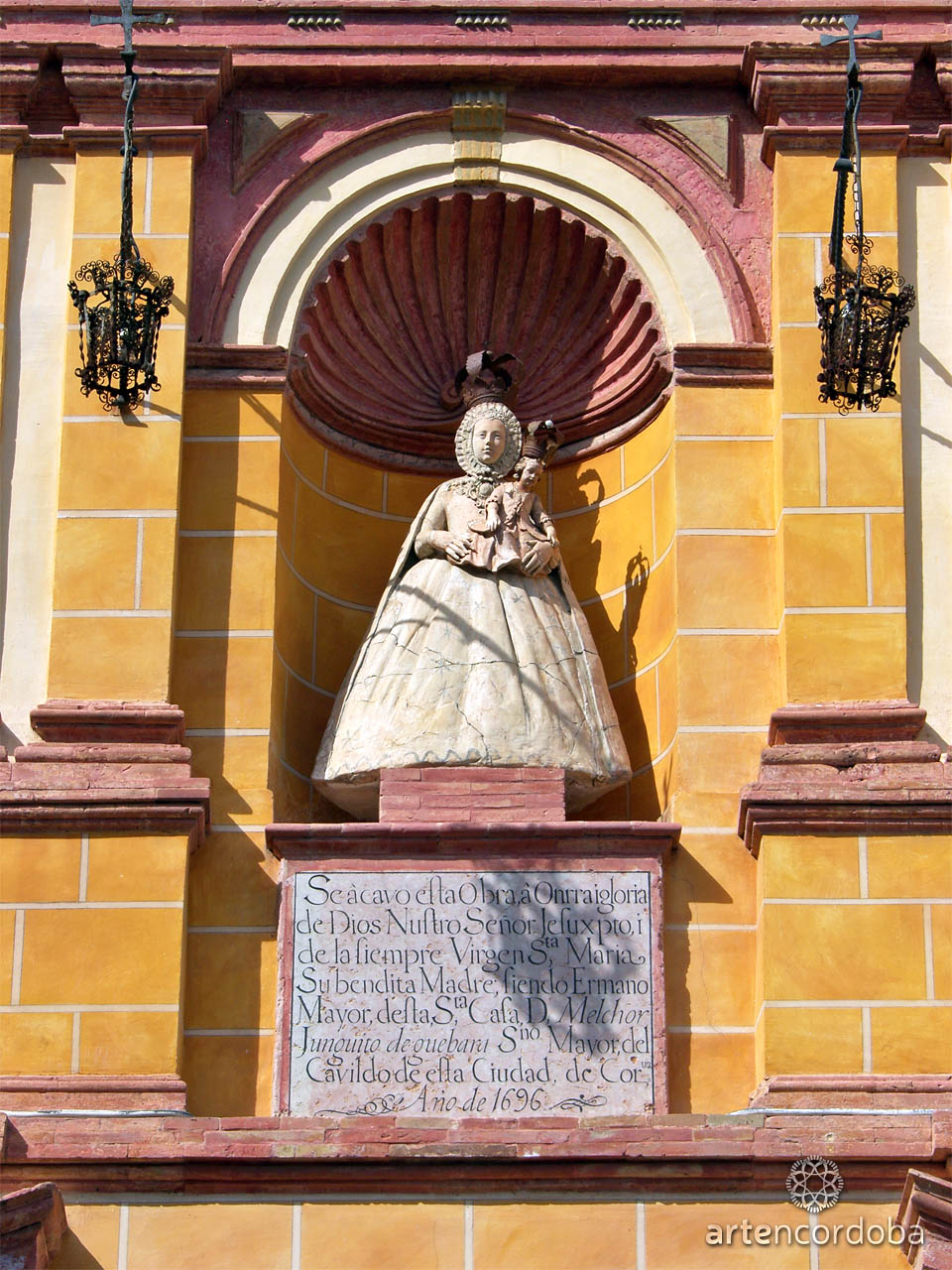
The façade of the Ermita del Socorro features an elegant and simple line. The doorway, a semicircular arch with a prominent keystone, is flanked by double pilasters supporting an entablature with triglyphs and plain metopes, which in turn serves as the base for a broken triangular pediment. The second tier, set on a pedestal, follows a similar pattern to the first, with a sculpted stone image of the “Virgen del Socorro” standing out inside a scallop shell niche, beneath which the following inscription has been preserved: “Se acavo esta obra á Onrra i gloria de Dios Nuestro Señor Jesuxpto i de la siempre Virgen Sta Maria, Su bendita Madre…“. On either side, two oculi provide light to the temple, and a third oculus can be found within the triangular pediment crowning the ensemble, which curiously lacks the molding that would cover its upper vertex.
Historical Origin of the Building
In the 15th century, the Ermita del Socorro was a hospital, then known under the patronage of the Holy Trinity and Our Lady of the Angels, whose façade, interestingly, faced the Plaza de la Corredera, unlike today, when it faces the Plaza del Socorro. After the plague epidemic that struck the city in the mid-17th century, it became known as the Hospital de la Corredera de Nuestra Señora del Socorro. When Corregidor Francisco Ronquillo Briceño ordered the reconstruction of the Plaza de la Corredera in 1685, he adapted the building to the hermitage we see today.
Interior and Main Altarpiece
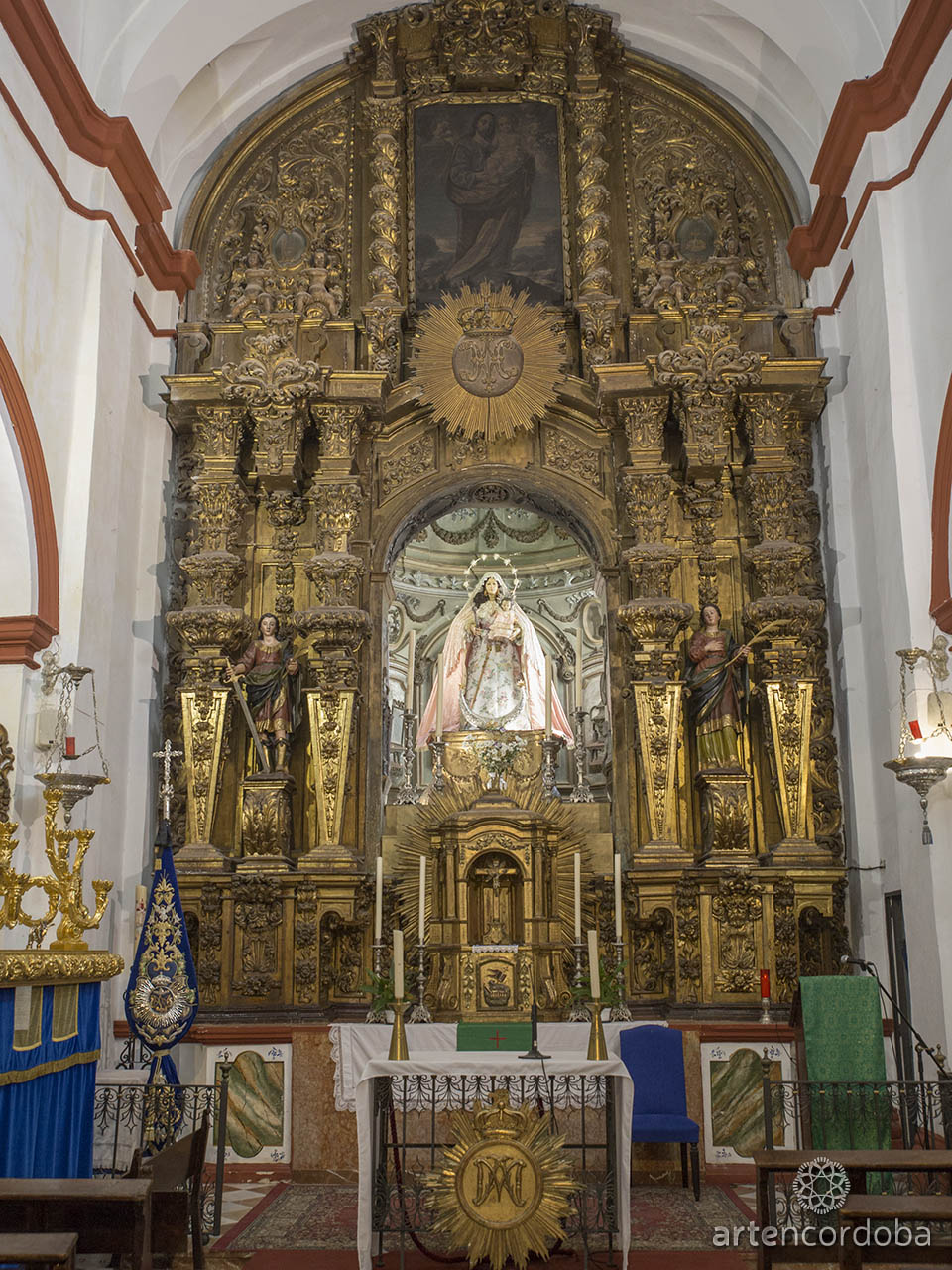
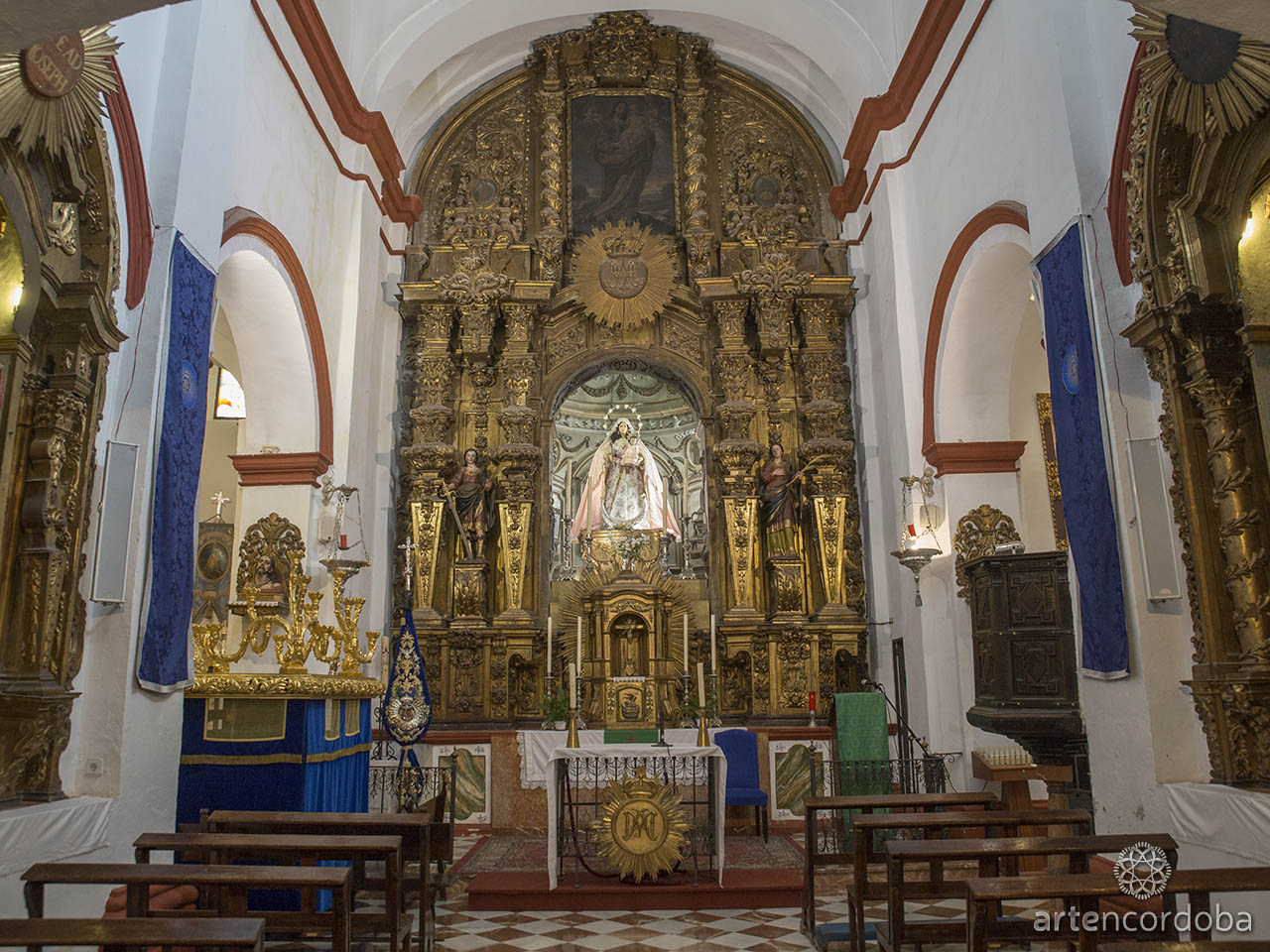
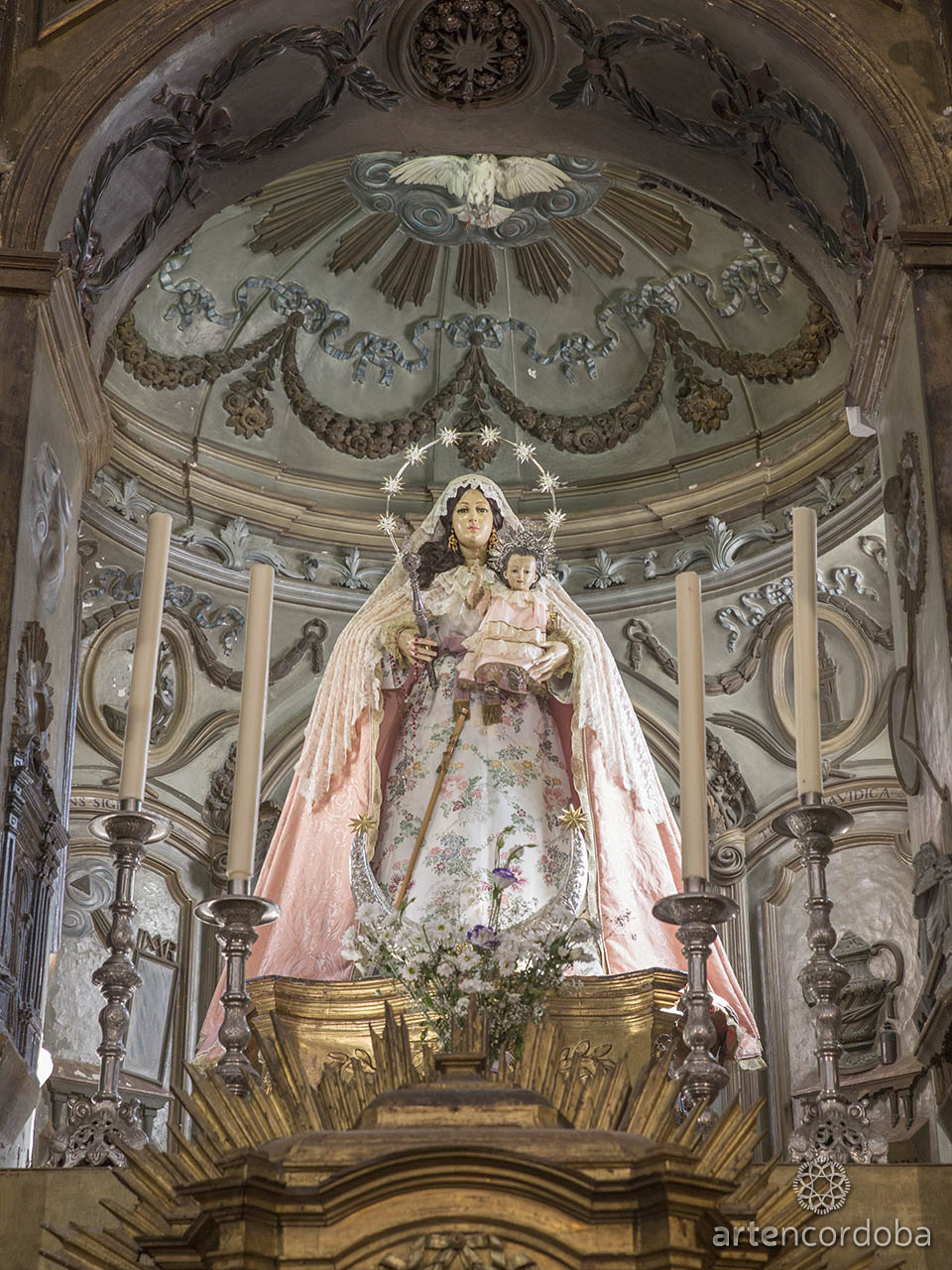
Upon entering the interior of the Ermita del Socorro, we observe that it is laid out in a simple Latin cross plan, covered by a barrel vault with lunettes, with a crossing topped by an oval dome on pendentives. The altarpiece presiding over the Main Altar was made in the early 18th century by Alonso Gómez Caballero, a disciple of Zambrano and uncle of Gómez de Sandoval, with no greater significance than the image it houses, the Virgin of Socorro, a statue by an unknown artist dating from the mid-17th century. Without a doubt, it is one of the most established “hermandades de gloria” that take part in processions in our city.
Altars in the Transept
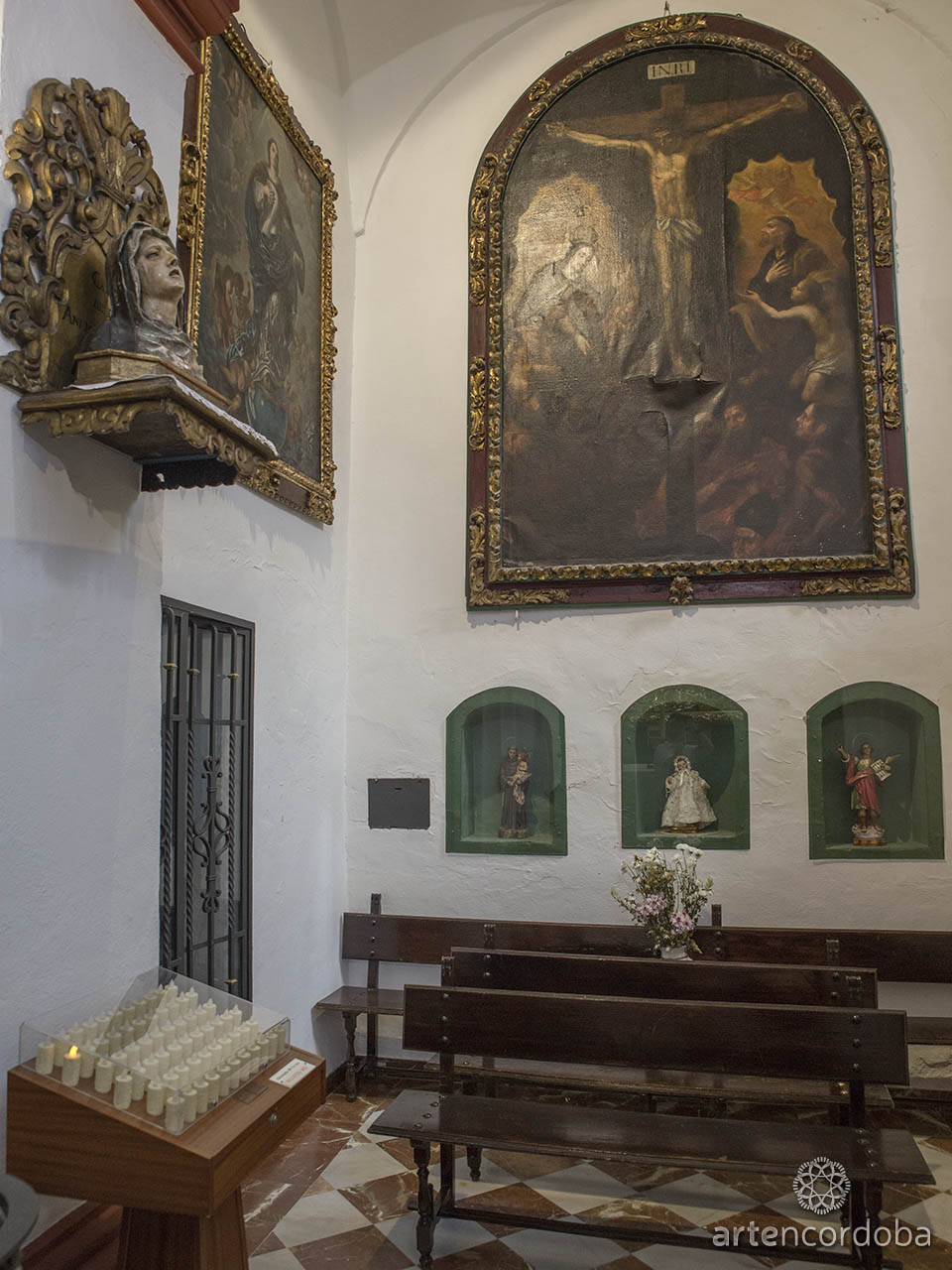
In the arms of the transept are two small altars: the Altar del Cristo de las Tribulaciones on the gospel side, and the Altar de las Ánimas Benditas on the epistle side. The first features the Cristo de las Tribulaciones, a crucified Christ sculpted in polychrome wood, accompanied by two figures representing St. John and Our Lady of Sorrows, all anonymous carvings from the 18th century. The second features paintings belonging to the Cordoban school of the 18th century, such as the “Souls in Purgatory“.
Baroque Altars
Lastly, two baroque altars deserve mention: the Altar of St. Raphael, presided over by a sculpture of the city’s guardian archangel, a work by Alonso Gómez de Sandoval; and the Altar of St. Joseph, a work by Juan Morillo, who completed a project begun by Teodosio Sánchez de Rueda.
Guided Tours
If you wish to visit the Ermita del Socorro, do not hesitate to book one of our guided tours. We are experts in the interpretation of Cordoba’s historical heritage. If you have chosen to do tourism in Córdoba, choose a quality option—choose ArtenCórdoba.
Text: J.A.S.C.