





Brotherhood and Fraternity of Nazarene Penitents of Our Father Jesus of Pardon before Annas, Holy Mary of Rocío and Tears, and Saint Michael the Archangel.
History
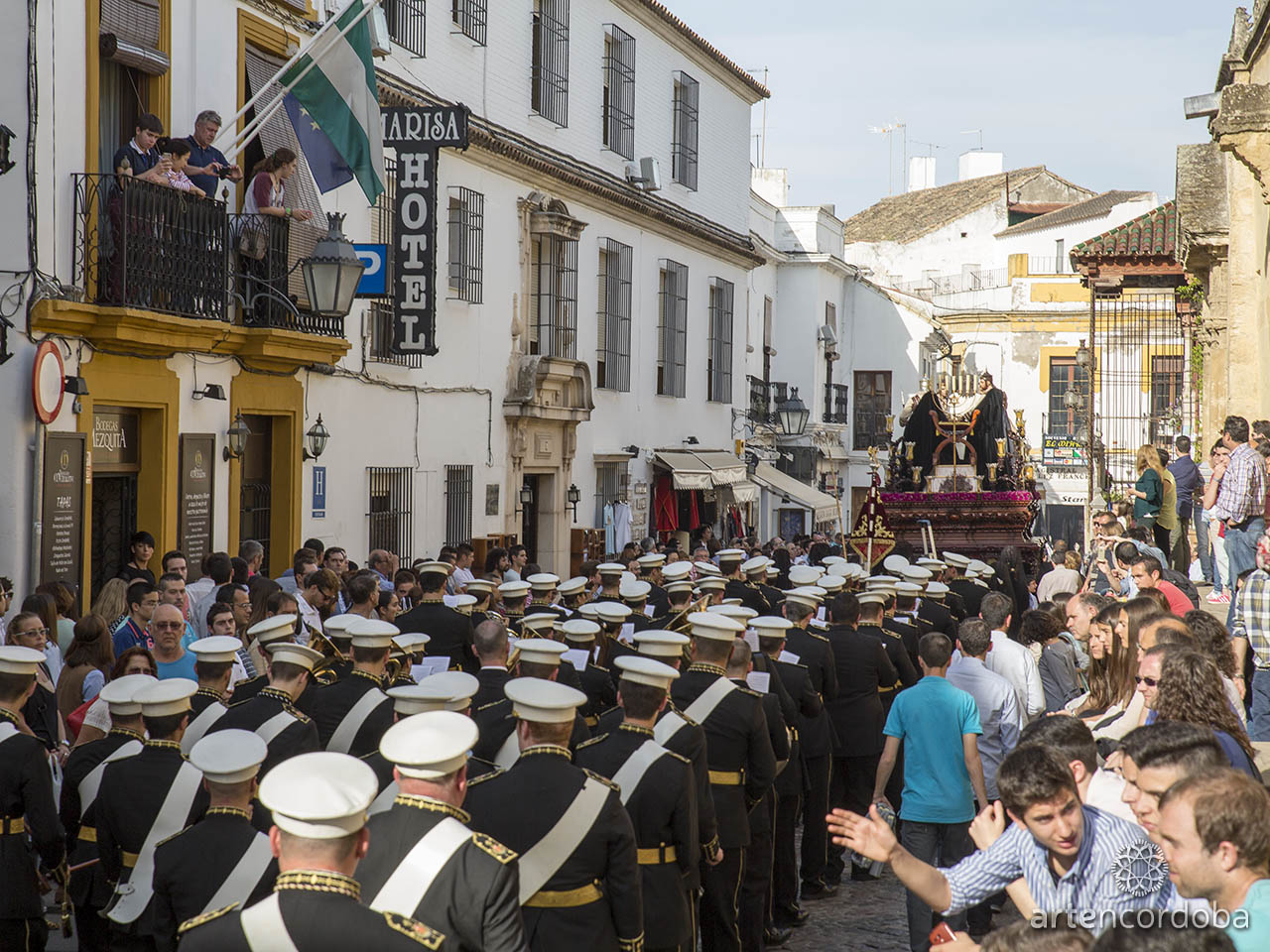
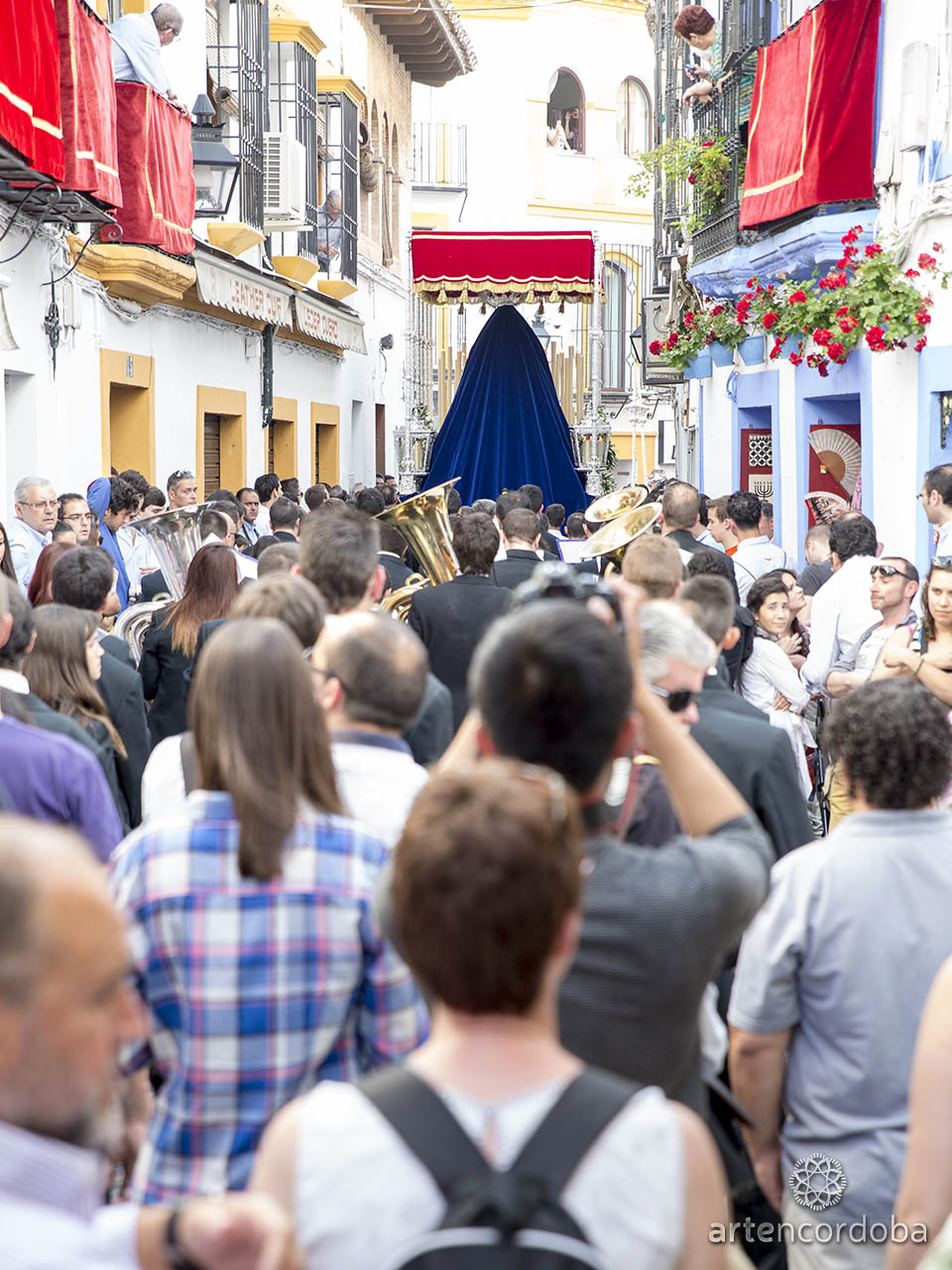
Founded in the central parish of San Miguel, although it has passed through several temples before reaching its current canonical seat. Its first image was Holy Mary of Rocío and Tears (1990), to which the image of the Lord was added four years later. Conversely, it was the mystery float that first processed in 1996, and the canopy float in the year 2000.
Temple
Church of San Roque. Founded by Saint John of the Cross and later passed to the Discalced Carmelites. Its exterior features a 17th-century façade and remains of a previous one from the 16th century.
The Images
Our Father Jesus of Pardon
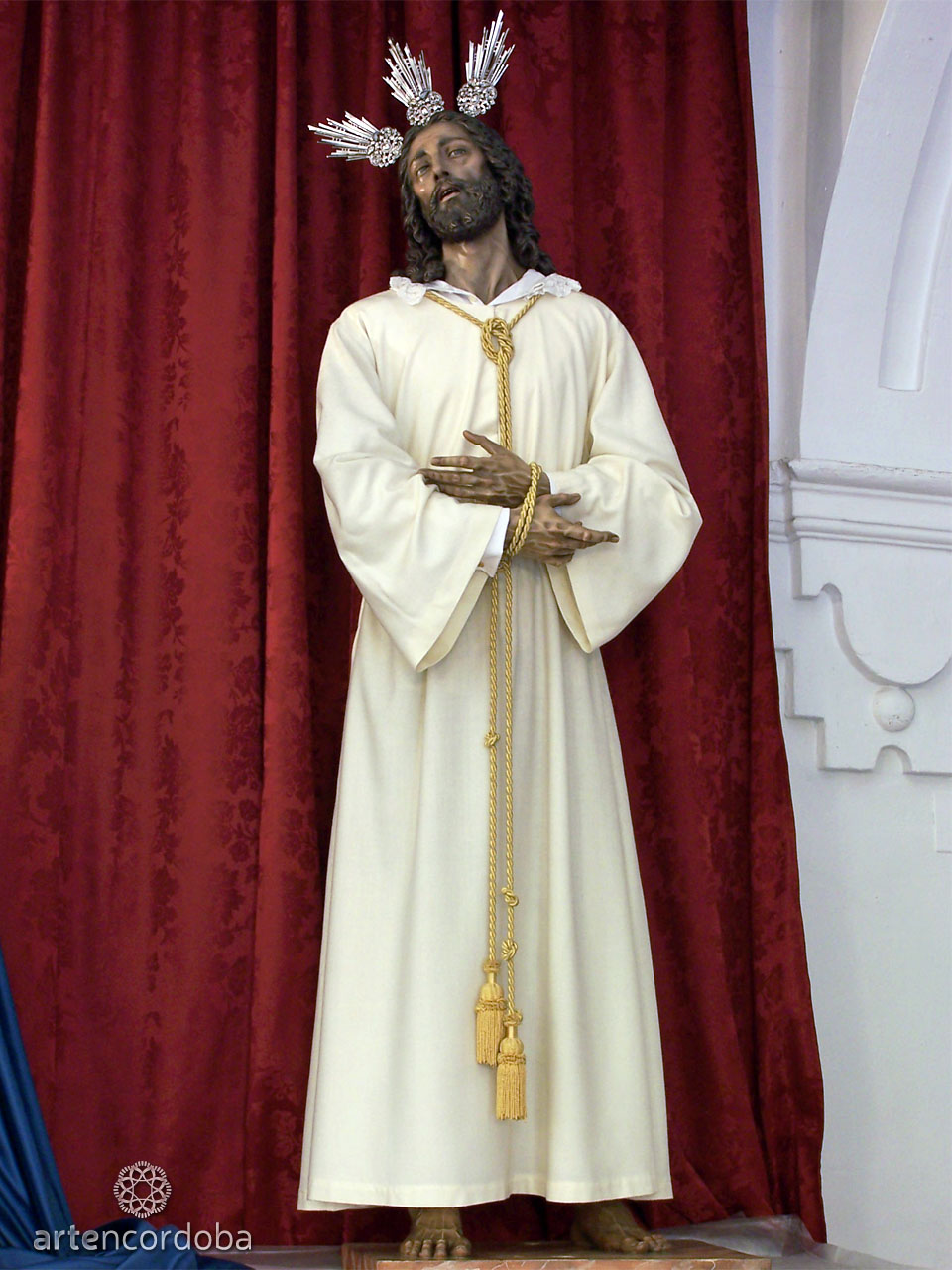
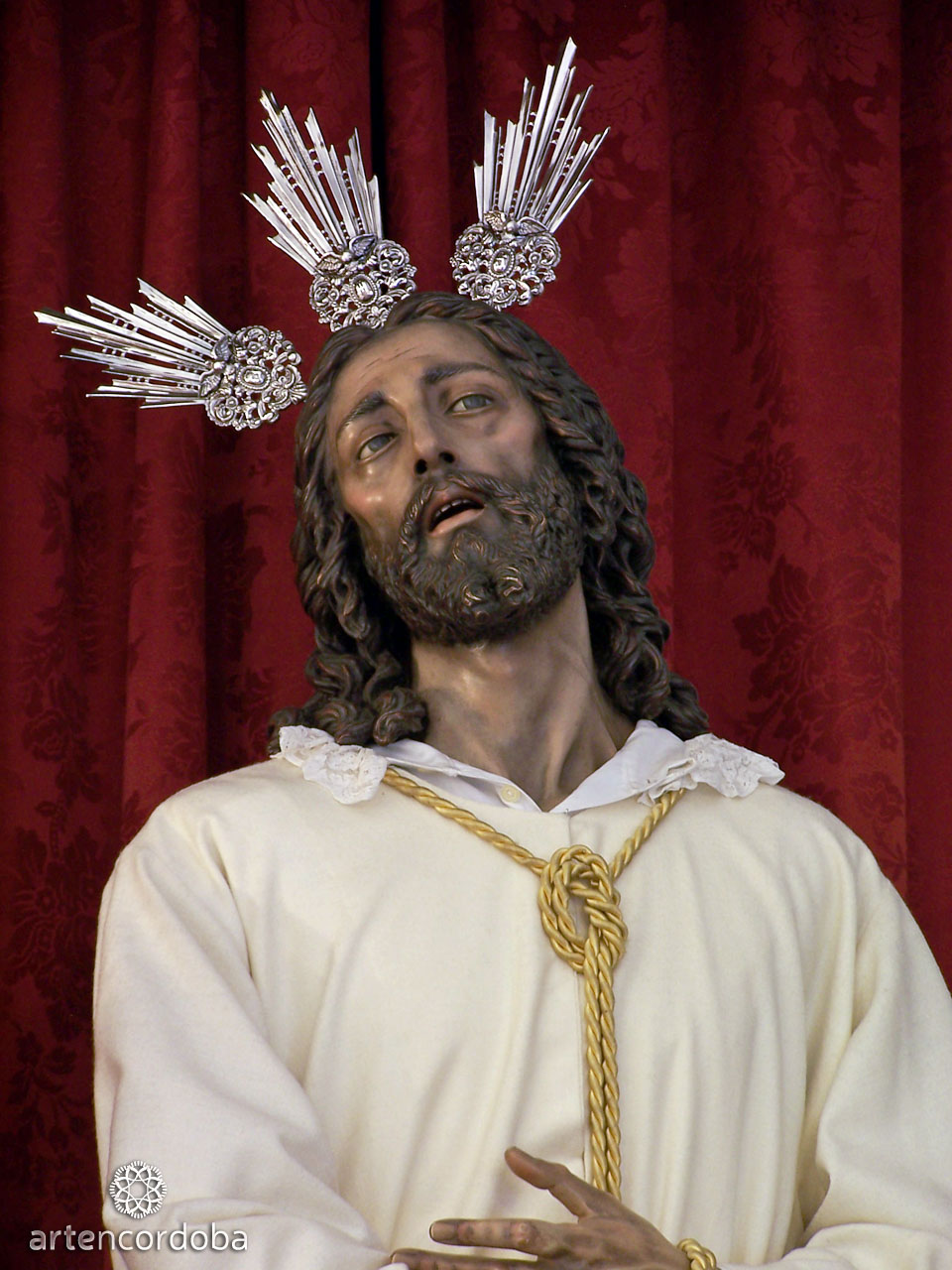
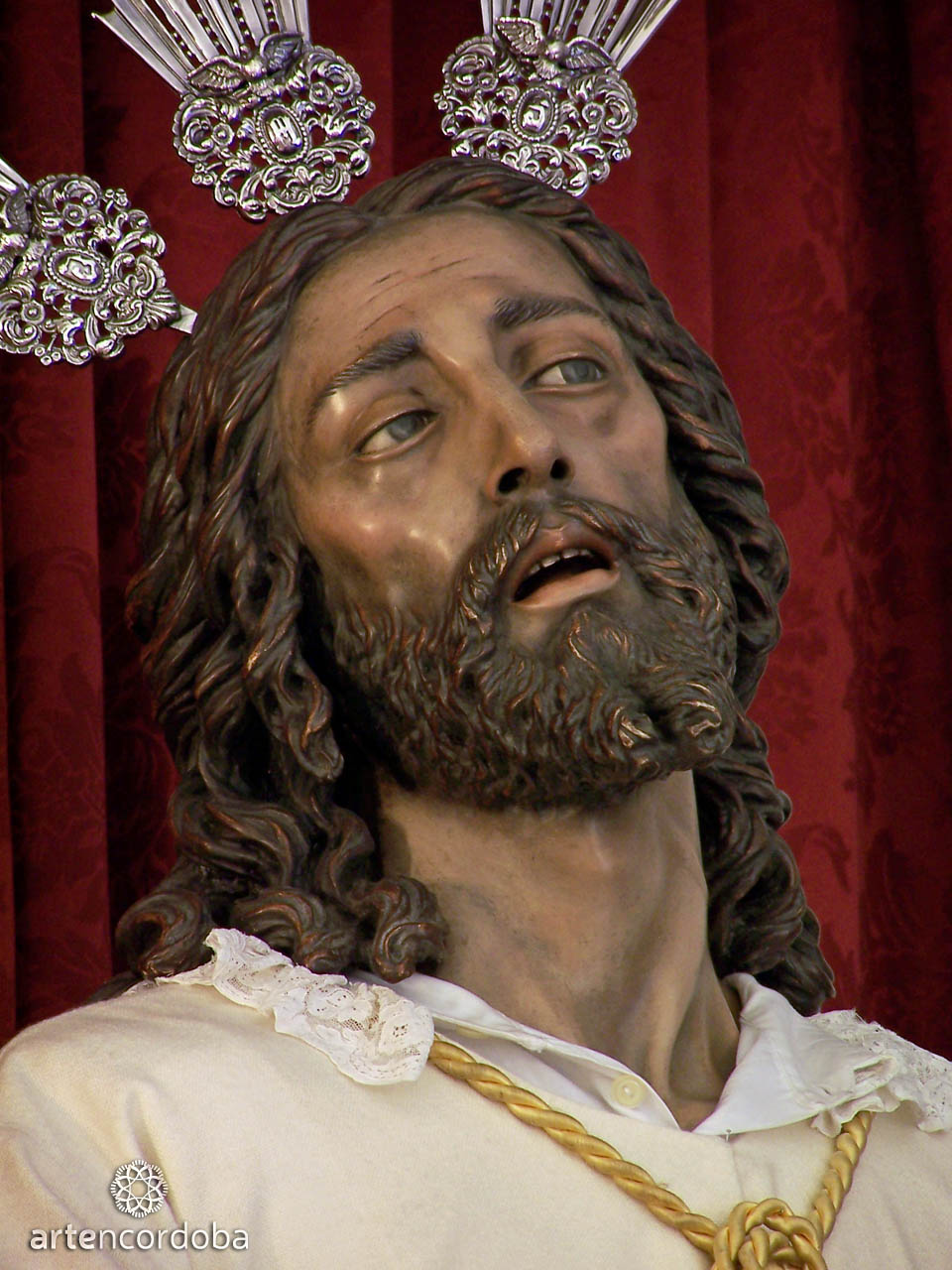
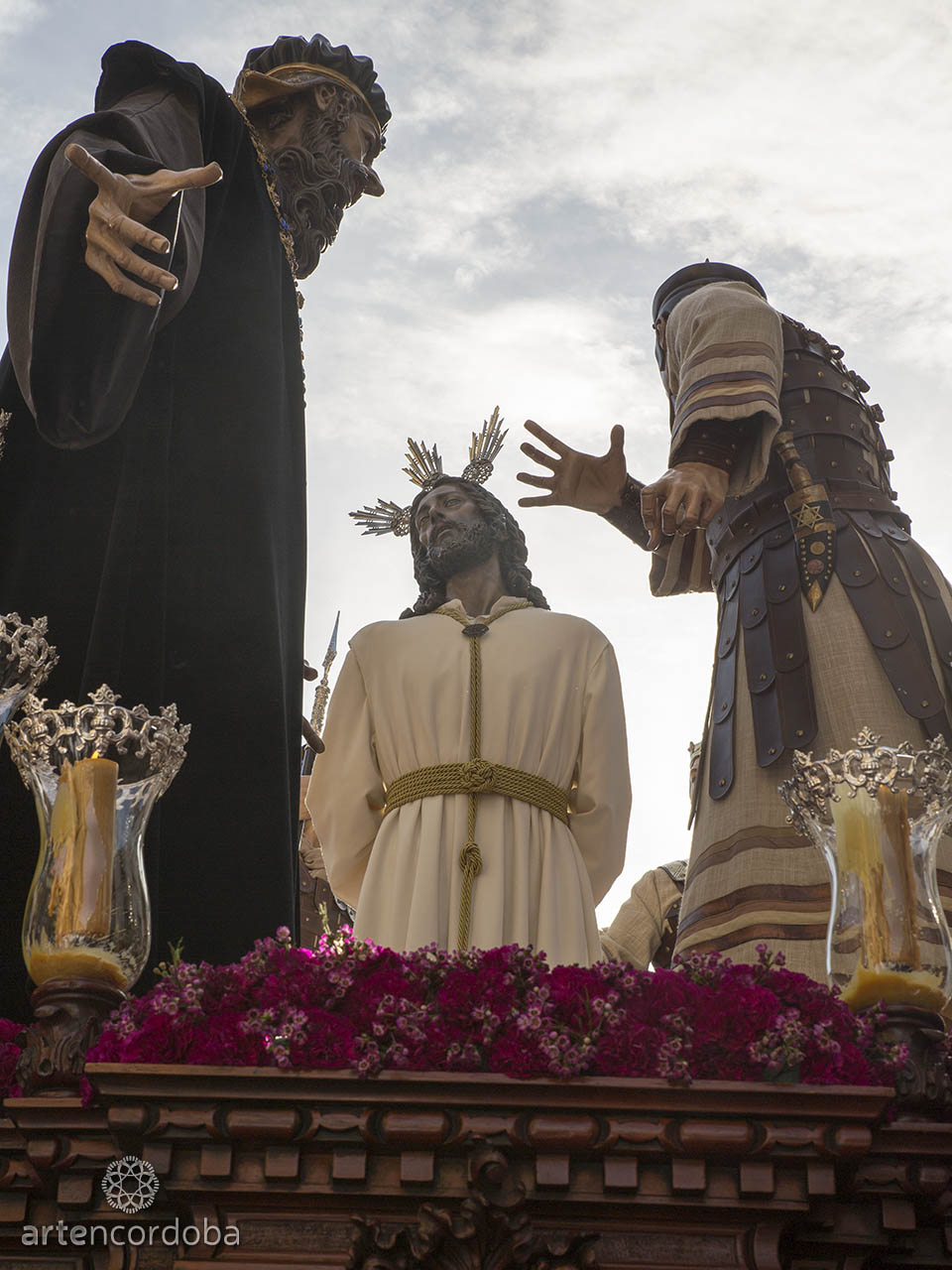
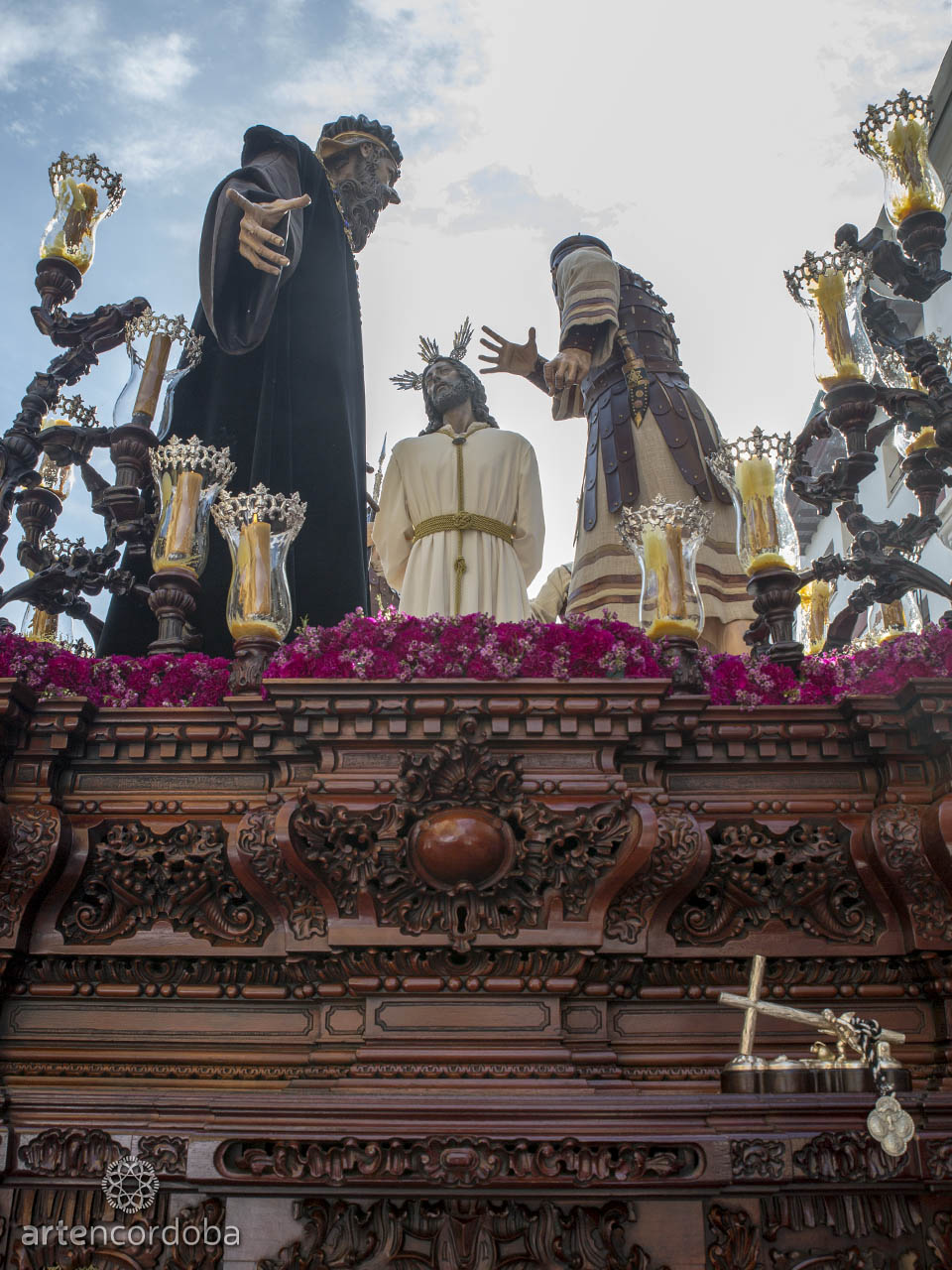
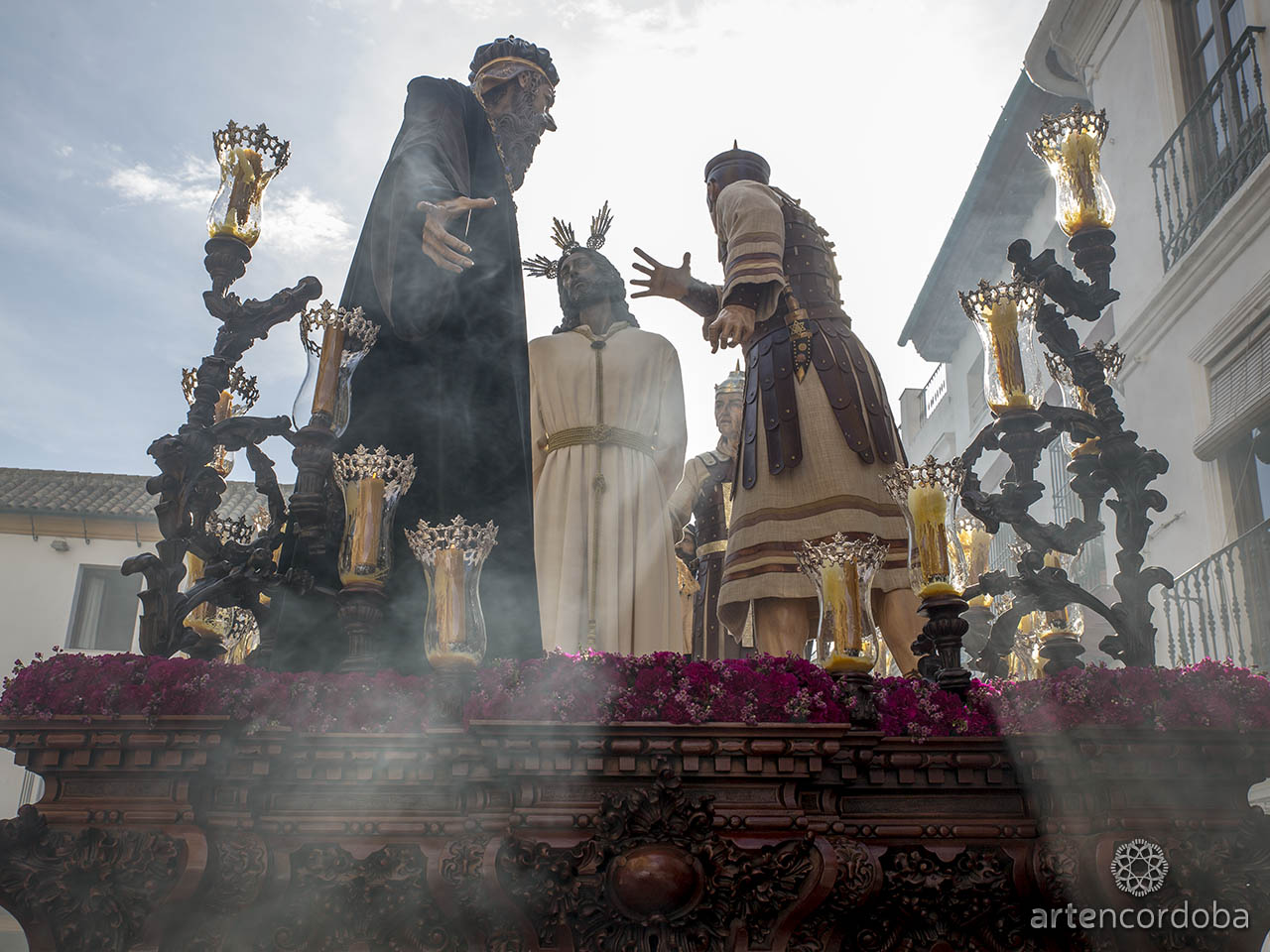
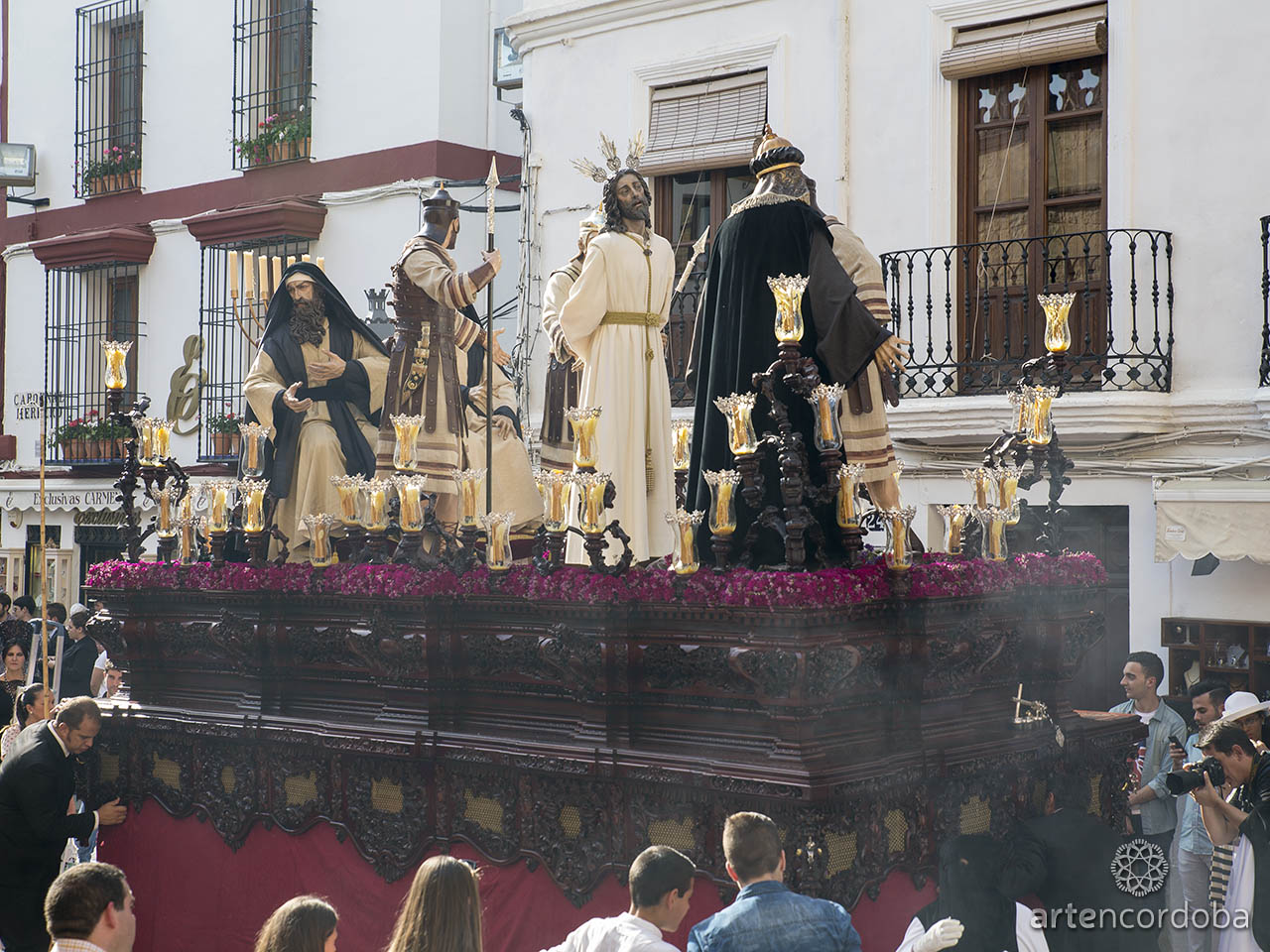
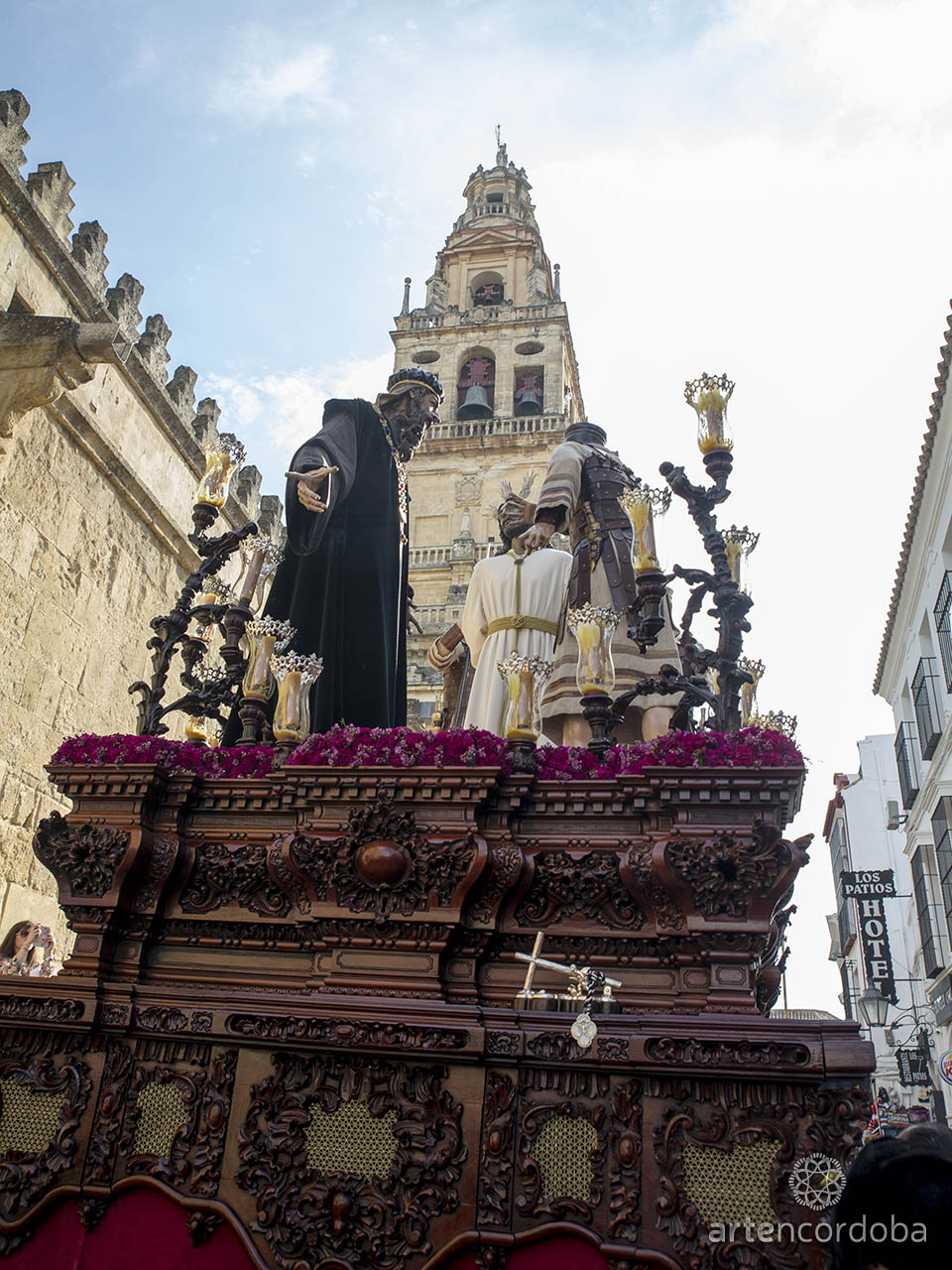
The image of Our Father Jesus of Pardon is the work of the Cordoban sculptor Francisco Romero Zafra, delivered to the brotherhood in 1993. The Lord is conceived as the central figure of a mystery, representing the moment He is presented before Annas, father-in-law of the High Priest Caiaphas. Annas asks Him a series of questions about His doctrine and disciples. Jesus replies that those who must answer those questions are the ones who have heard Him, as He had preached in public places and not in secret, according to Jewish law.
In response, Annas is publicly humiliated, prompting one of the guards to slap Jesus and say, “Is that how You answer the high priest?” Jesus is depicted standing, dressed in a white tunic with gold embroidery, hands bound behind His back. It is the moment of the slap, so His head is sharply turned to the right, with a dazed expression, mouth slightly open, and a contemplative gaze.
The rest of the figures in the scene, except for the Lord, are works by the sculptor Manuel Luque Bonillo. In the foreground is the guard delivering the slap, watched by a member of the Sanhedrin. Facing them is Jesus; with His back to Annas and, behind Him, two more guards, the scene culminating with the figure of Annas seated on a throne.
Holy Mary of Rocío and Tears
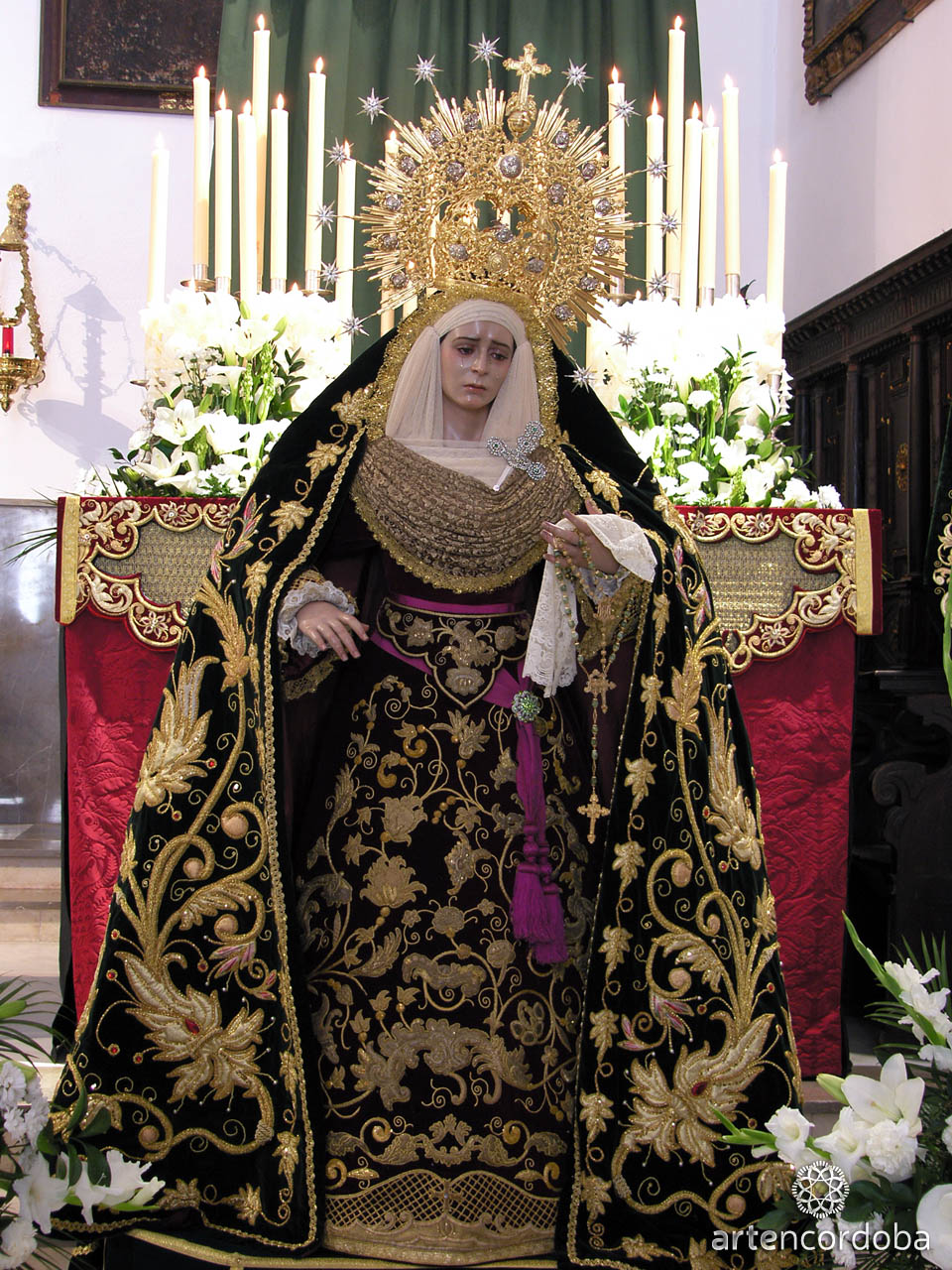
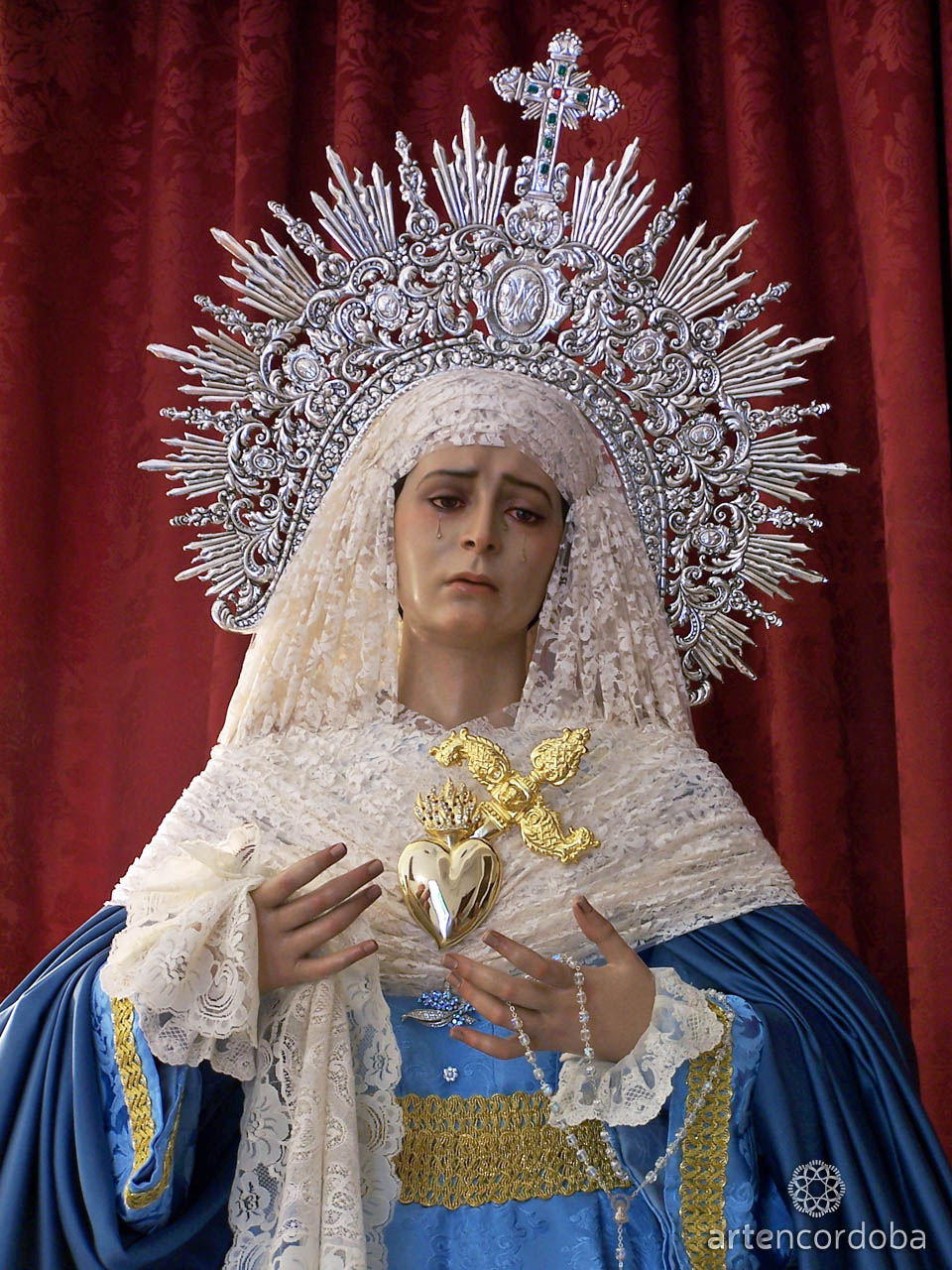
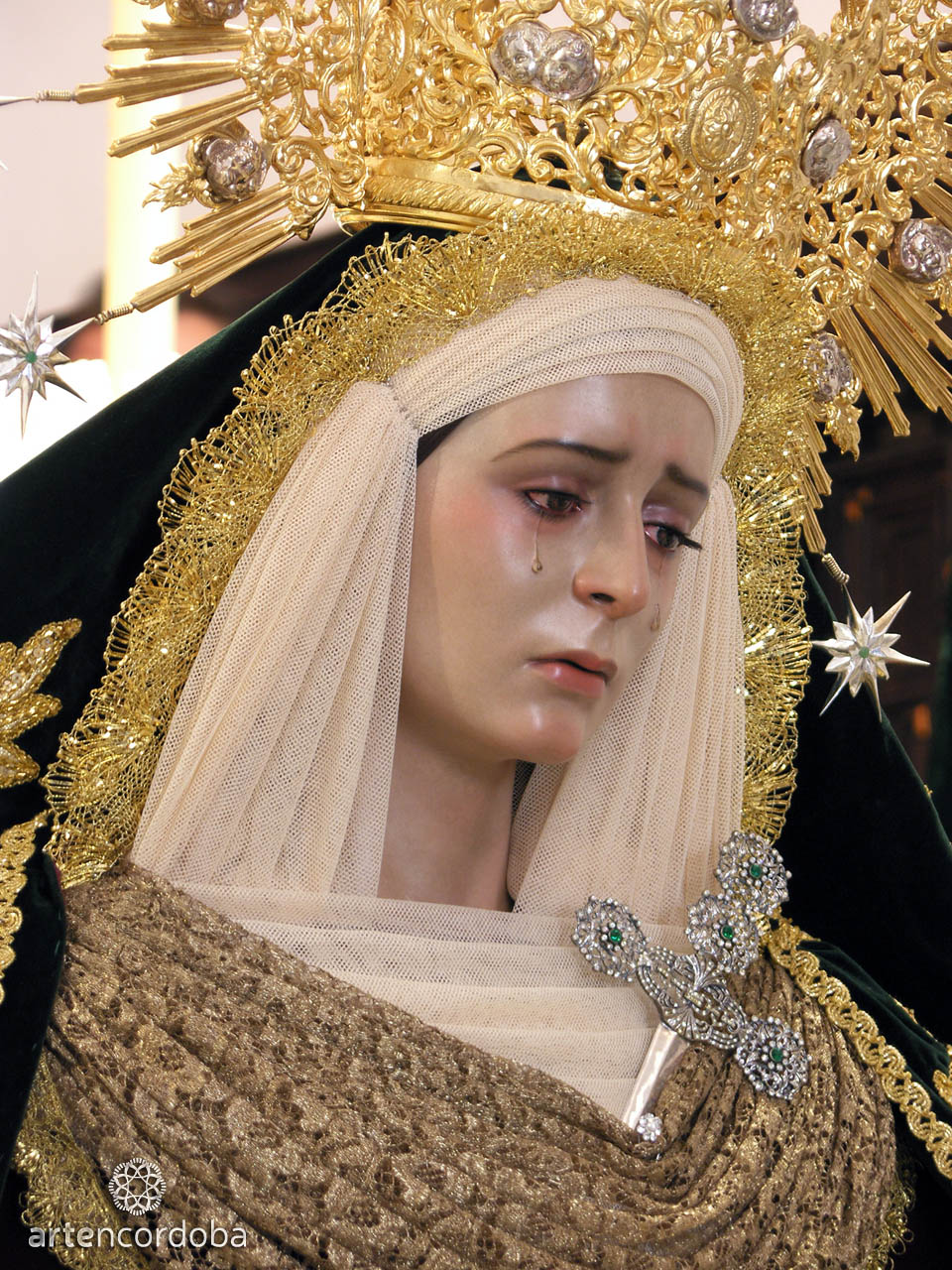
It was the image of Holy Mary of Rocío and Tears that inspired the enthusiasm necessary for a group of young devotees to found the current brotherhood. At that time, the image was in the workshop of Francisco Romero Zafra, nearly completed.
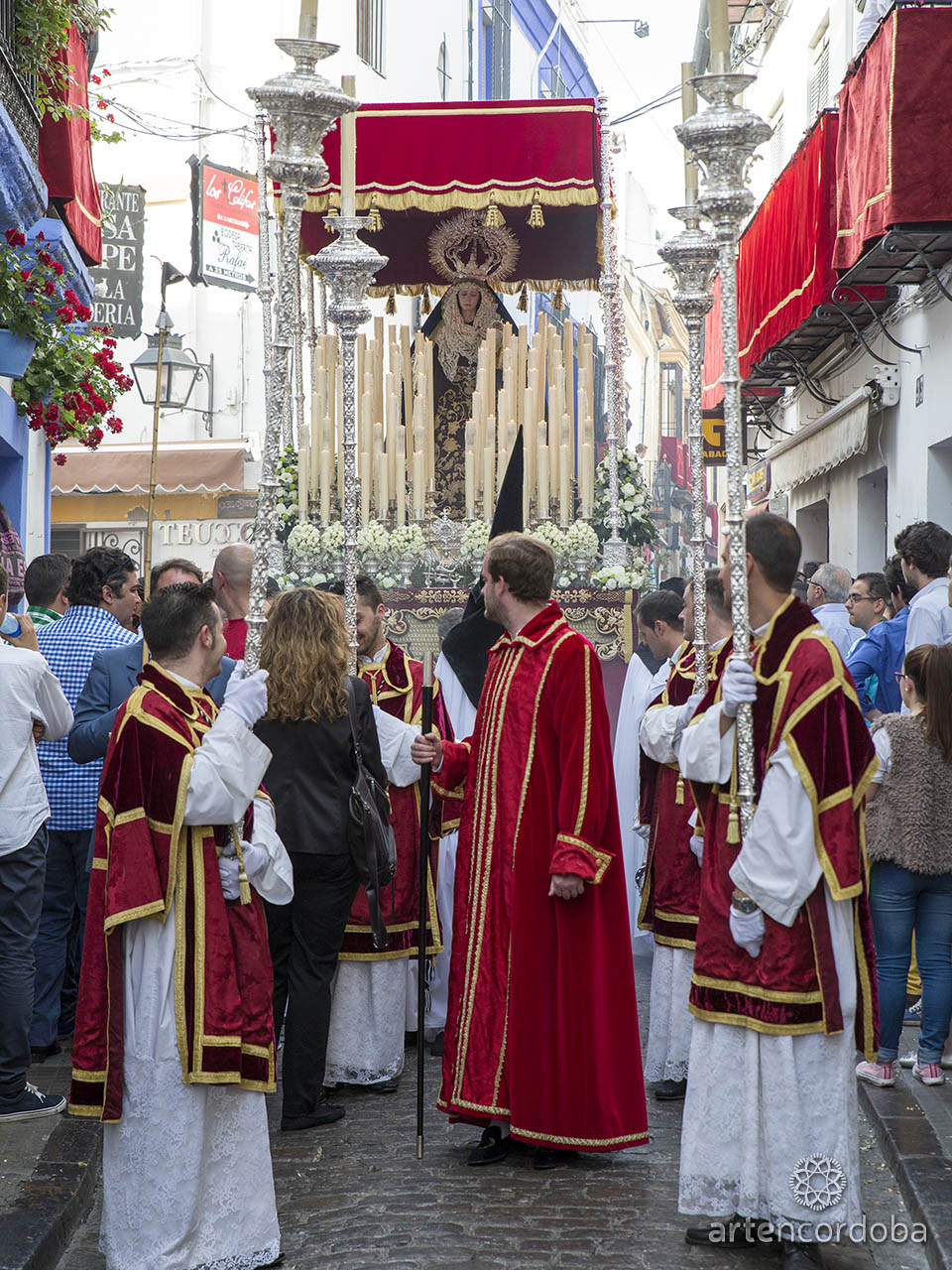
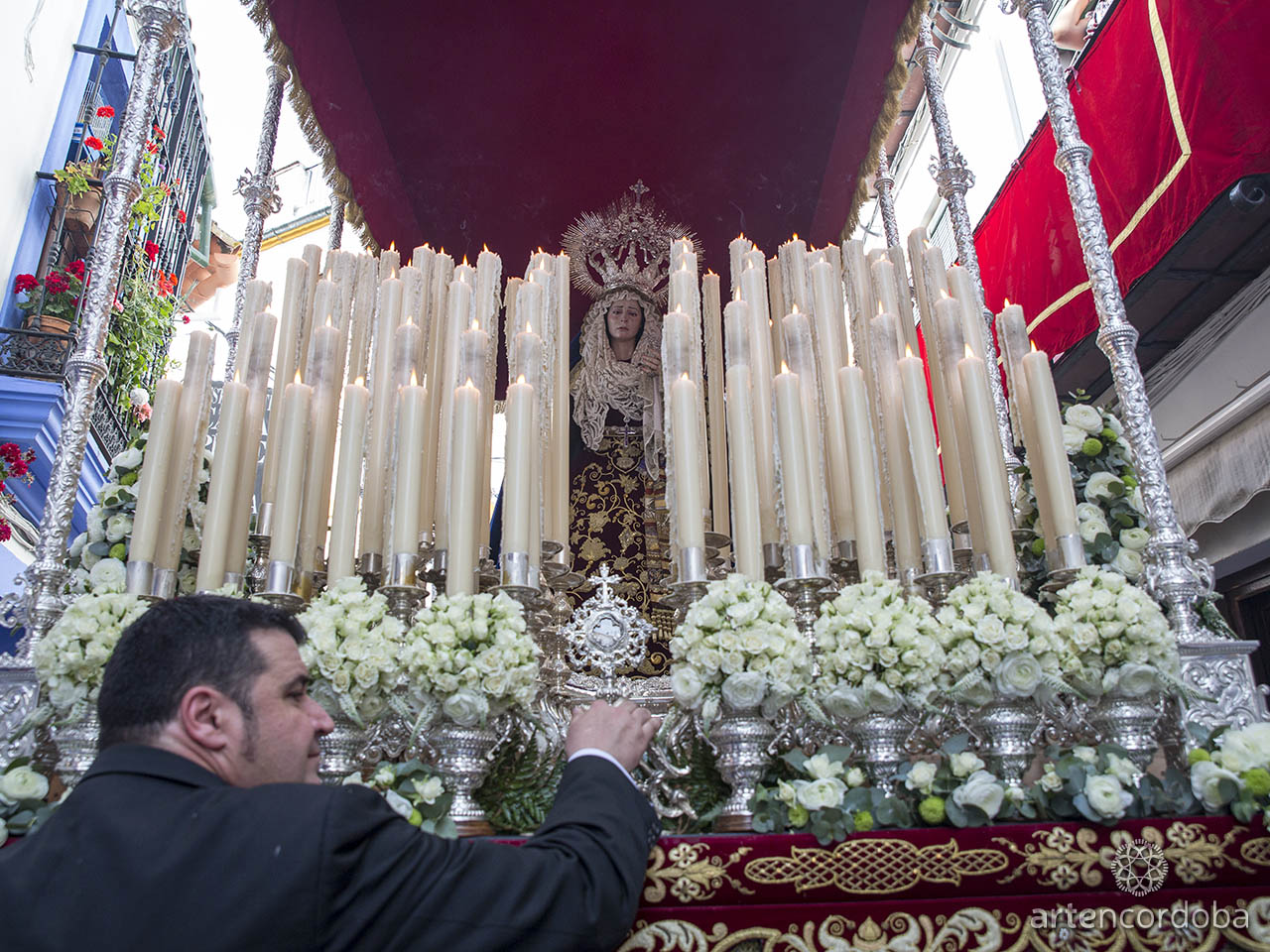
It is a candlestick image, with carved hands and face. She has a face of great beauty, pale complexion, full lips, and lowered gaze, with an expression of contained sorrow. Her eyes, reddened from crying, slightly furrowed brows, and almost closed mouth convey composure and serene suffering.
Nazarene Habit
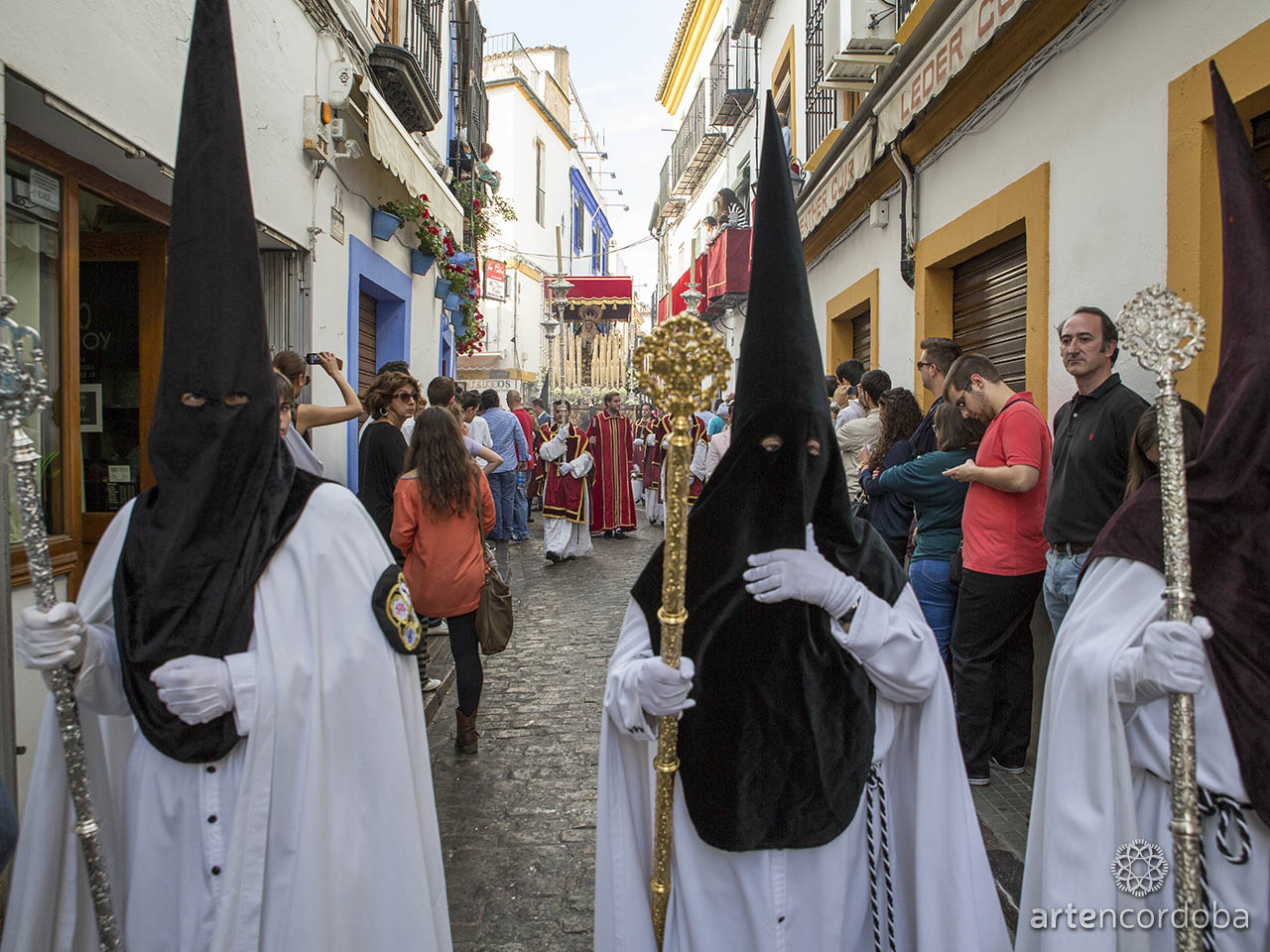
White tunic and cape, black face cover, and white and black cincture.
Notable Insignias
- Guiding Cross (1996), carved in wood with silverwork by Luis Jiménez.
- Senatus and brotherhood banner, embroidered under the design of Fray Ricardo of Córdoba, made by Antonio Villar.