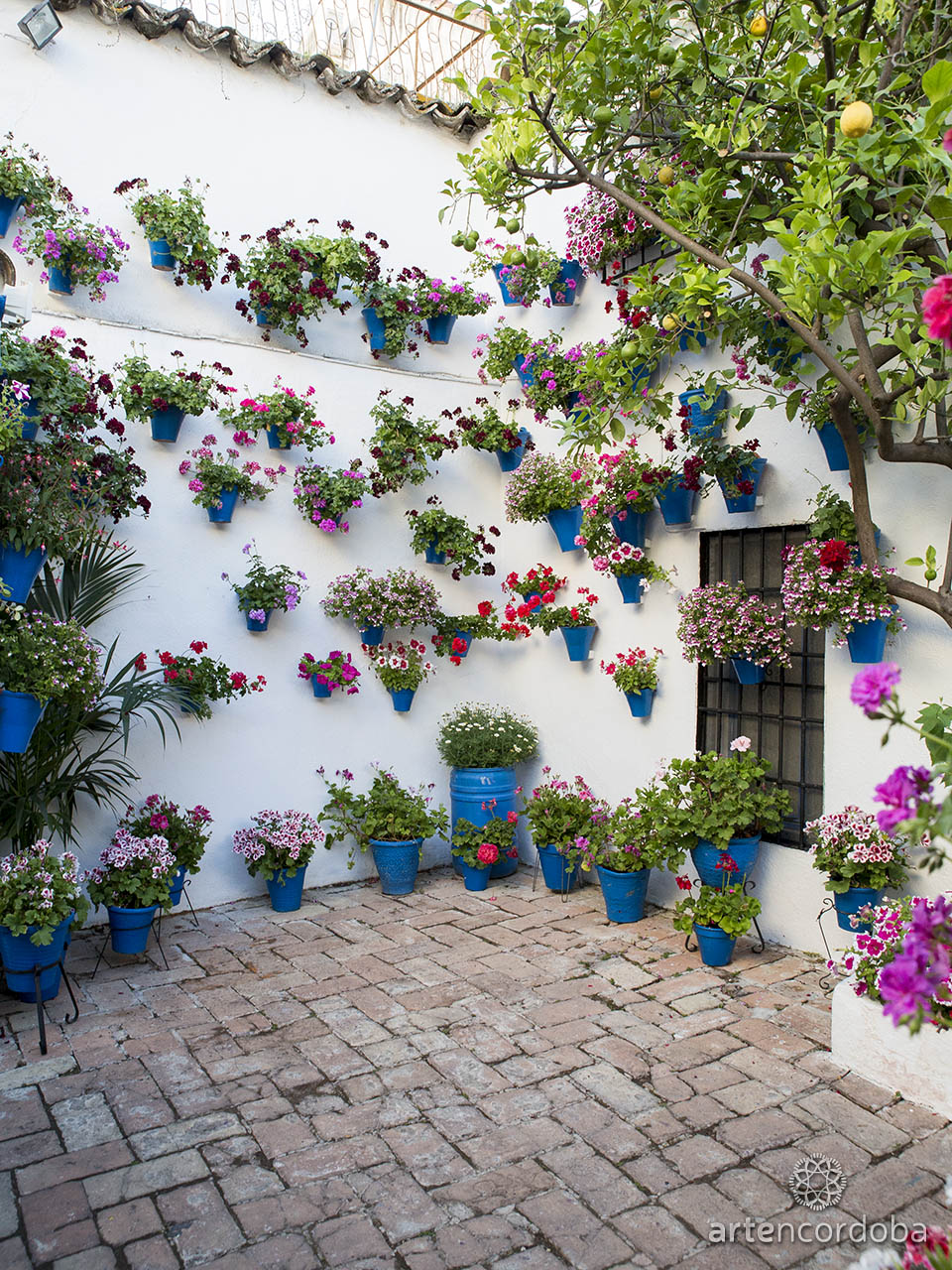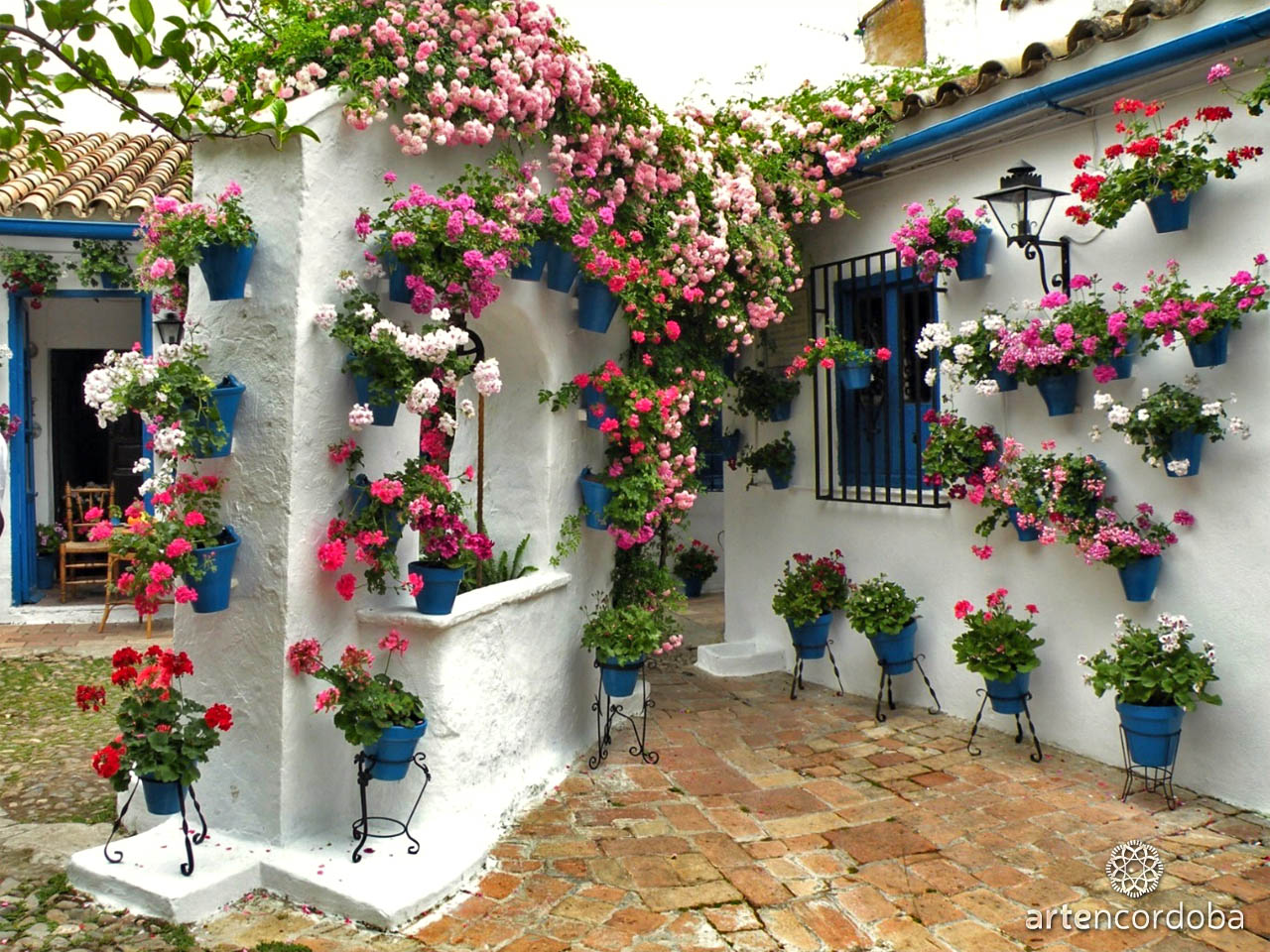






Located behind the Fernandine Church of San Lorenzo, and popularly known as “El patio de Carmela“, this is one of those patios where time seems to have stood still.
A traditional Cordoban patio
The floor is made of the typical Cordoban pebble mosaic, although in some areas old clay tiles have been placed. Personally, I would like to add that this is one of the patios that has best managed to preserve that old house charm, not only because of its layout and general architecture, but also because of the nickname or even the name of the street.
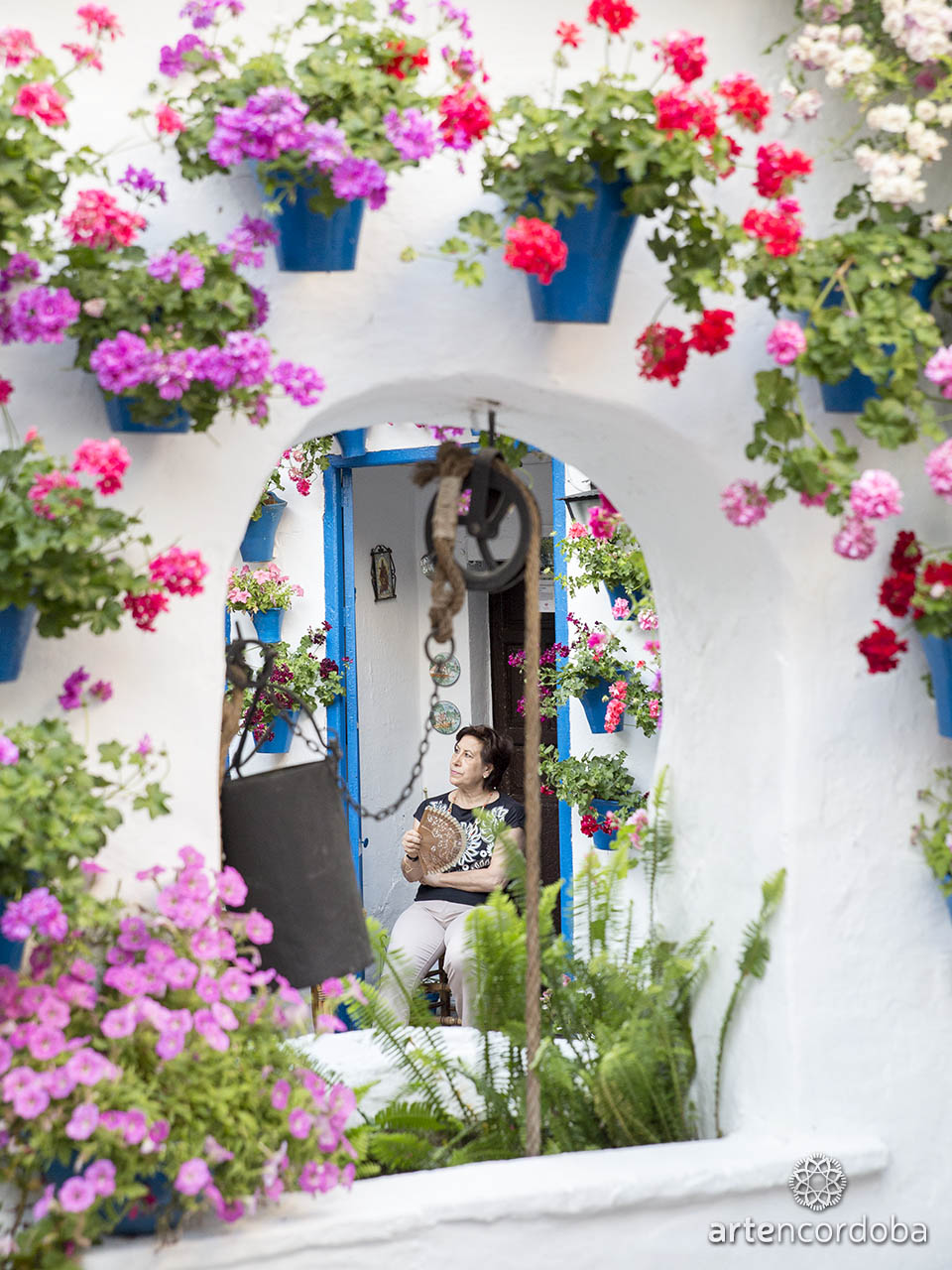
In the middle of the Patio at Calle Trueque, 4 there is a beautiful Arab-inspired well, with a whitewashed curb and a gabled roof, which is still in use, as we can see the old pulley from which hangs the thick rope tied at the end to the bucket.
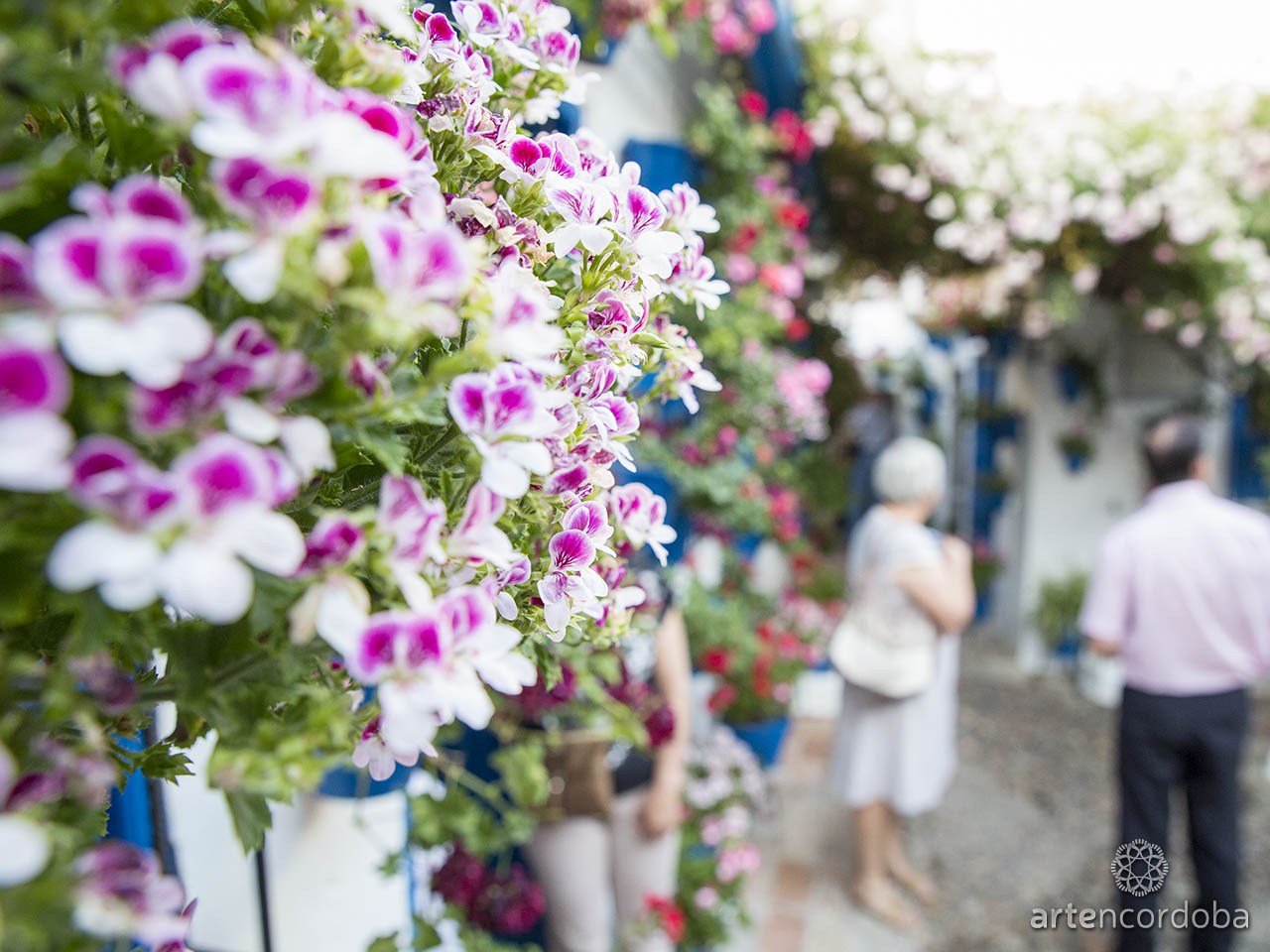
This well, like the rest of the patio, is completely decorated with deep blue flowerpots, which contrast with the white walls and the colors of the plants.
Unique details of the Patio at Calle Trueque, 4
One striking feature is a collection of “mini-flowerpots,” the same color as the others, in one corner of the patio, which quickly reminds us of the Patio at Calle Tinte, 9 and Ana, its owner.
We can also see how the doors and windows are made of very old wood, but are very well maintained, which gives the whole ensemble a special charm.
In another corner of the Patio at Calle Trueque, 4, there is a turning staircase leading to the second floor of the house, covered by a small roof supported by two slender whitewashed columns.
This staircase is completely adorned with plants, and at the top, we can see a small collection of beautiful artistic ceramic plates.
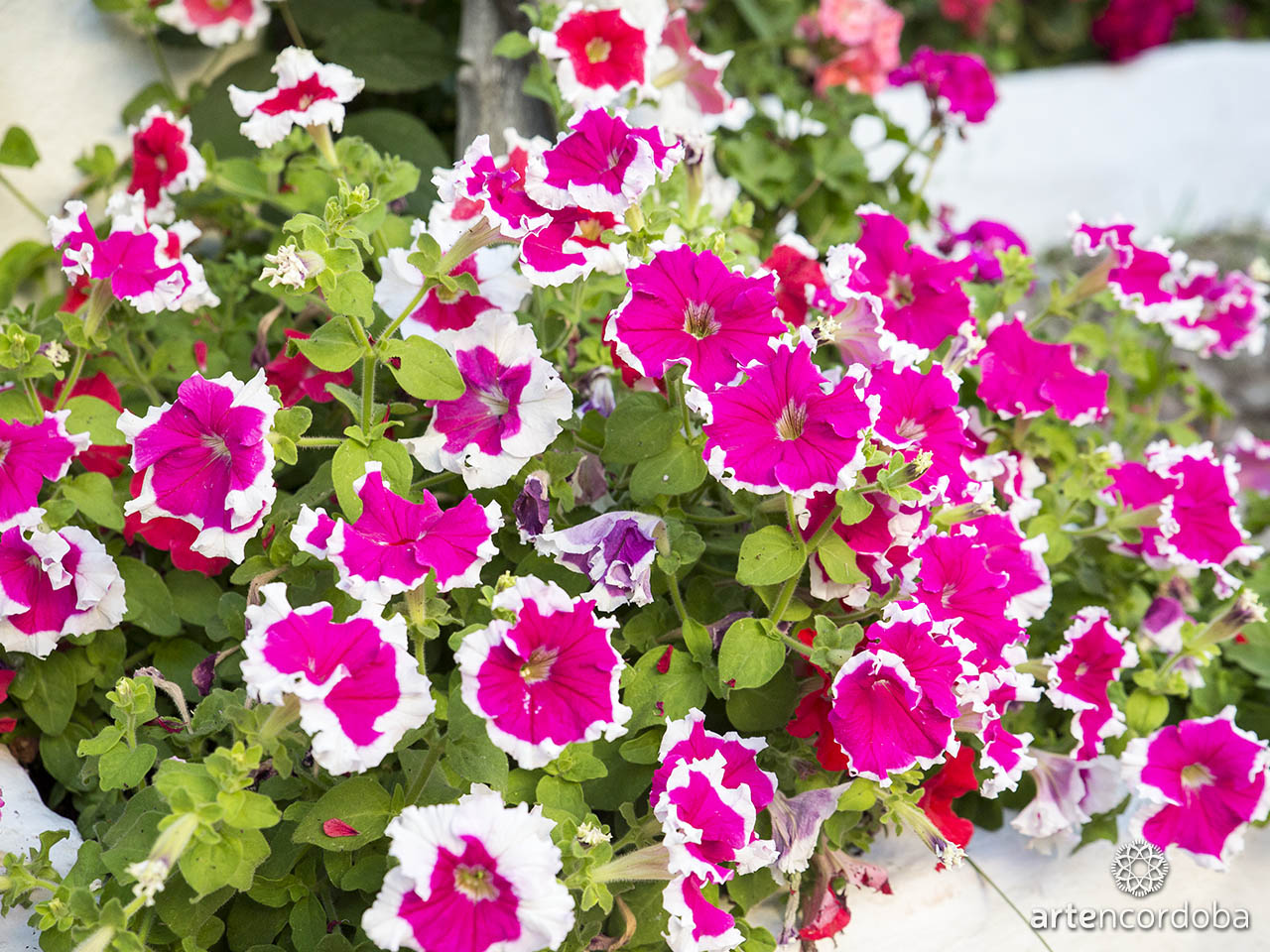
Bordering the entire area, we observe flowerbeds full of plants, including fruit trees such as lemon trees, as well as ferns, geraniums, jasmines, mock oranges, and begonias.
An award-winning patio
This patio is one of the four most awarded between 1960 and 2009. It has participated in the competition 45 times, winning first prize in 1974, 1978, 1982, 1987, 1992, 2004, and 2008, and achieving second place on six other occasions.
To conclude, it is worth mentioning that this property was recently acquired by the City Council, and it seems that the goal is none other than to house the Museum of the Patio Houses here, another step towards the definitive consolidation of the festival.
What to visit in Córdoba
If you’re wondering what to do in Córdoba, we recommend visiting the Patios of Córdoba by booking one of our guided tours. There, we will dedicate a special section to the Patio at Calle Trueque, 4.
Choose to enjoy quality tourism with qualified personnel — don’t hesitate, ArtenCórdoba is the best option.
Text: J.A.S.C.