





On June 29, 1236, the feast of Saints Peter and Paul, King Ferdinand III the Saint entered our city with his troops. A long procession crossed the bridge until reaching the Mosque, where the Cross, symbol of Christianity, and the banner of Castile and León were first placed on the minaret. Immediately afterward, the Bishop of Osma officiated the consecration ceremony of the Islamic oratory, and the new Cathedral was “baptized” under the dedication of Saint Mary, Glorious Mother of Jesus Christ.
The First Main Chapel and the Royal Funerary Spaces
The first Main Chapel was established in the space corresponding to the skylight that provided access to the expansion of Alhaken II of the old Mosque, using as a choir the three naves located between it and the western wall. Next to the aforementioned entrance skylight was another, surely built during the Almohad period, which King Henry II reserved in 1371 to house the remains of his father and grandfather, Alfonso XI and Ferdinand IV, respectively; this is the Royal Chapel.
The Major Reforms of the 16th Century
Being a border city at the time led to marked political and social instability, which meant that large-scale works were notably absent until the early 16th century, when one of the greatest dynasties of architects our city has ever produced emerged: the Hernán Ruiz family. The first of them, Hernán Ruiz I, nicknamed the Elder, was Master Builder of the Cathedral for nearly half a century (1502–1549); his work on the building has been studied in three major phases: the renovation of the exterior facades and the courtyard (1505–1514), the renovation of the naves of Almanzor (1514–1523), and the creation of the new Main Chapel and Choir, works that he began in 1523 and continued until his death in 1549.
The Completion of the Main Chapel
The works on the Main Chapel continued until 1607, and throughout all these years, the contrasting architectural styles of the various masters who led the project became evident—such as Hernán Ruiz II, son and successor of the aforementioned Hernán Ruiz the Elder, Diego de Praves, and Juan de Ochoa himself, a key figure in the Mannerism of our city.
17th and 18th Century Interventions
Throughout the 1600s, a period of clear political and social stability ensued, which, as expected, had a direct impact on the Cathedral. Many medieval chapels were renovated during this time, and even new ones were built, such as the Chapel of the Holy Spirit, one of the last works by Hernán Ruiz II. The 16th-century works were crowned by the beginning of the tower renovation, starting with the bell tower designed by Hernán Ruiz III; he is also the author of the Chapel of the Tabernacle, located southeast of the prayer hall.
Baroque Splendor
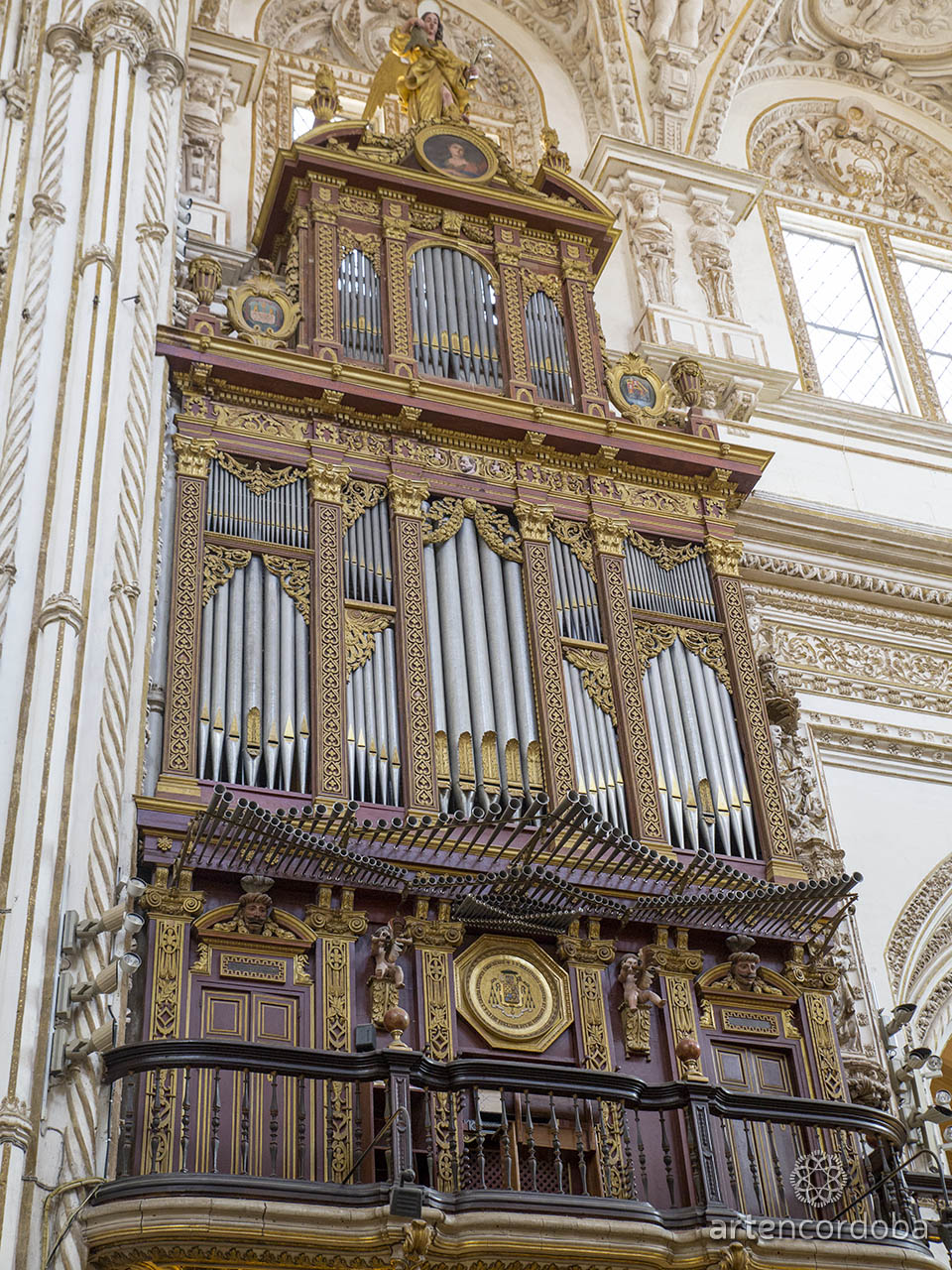
During the 17th and 18th centuries, the religious fervor of previous times persisted, and thus, prominent families were willing to contribute generous amounts of money to maintain worship in the chapels built in prior years. In the 18th century, the creation of the Chapel of Saint Teresa stands out, built to serve as the Main Sacristy and to house the remains of the late Cardinal Salazar. We must also highlight one of the most remarkable choir stalls of the Spanish Baroque, crafted by Pedro Duque Cornejo, which deserves its own special section.
Understanding the Cathedral
Next, as is customary, we will take a brief journey through the history of the Cathedral, highlighting the figures who had the greatest influence on it. We will also individually examine those spaces that we consider essential for a basic understanding of the monument, which, after all, is the purpose of this website.
Visiting the Mosque-Cathedral of Córdoba
If you’re wondering what to visit in Córdoba, the best option would be the Mosque-Cathedral, choosing one of our guided tours. Choosing quality tourism means choosing ArtenCórdoba.
Text: J.A.S.C.