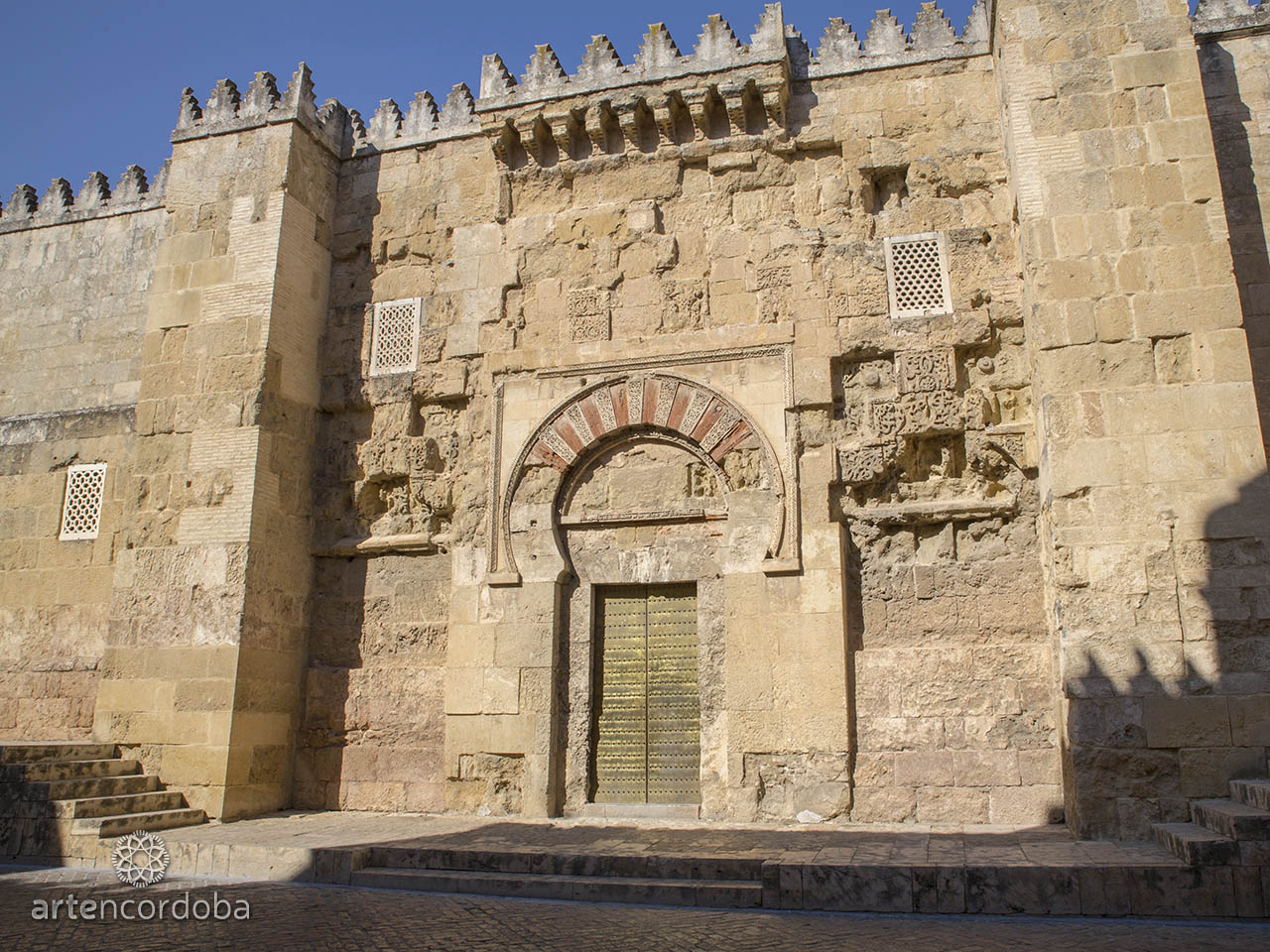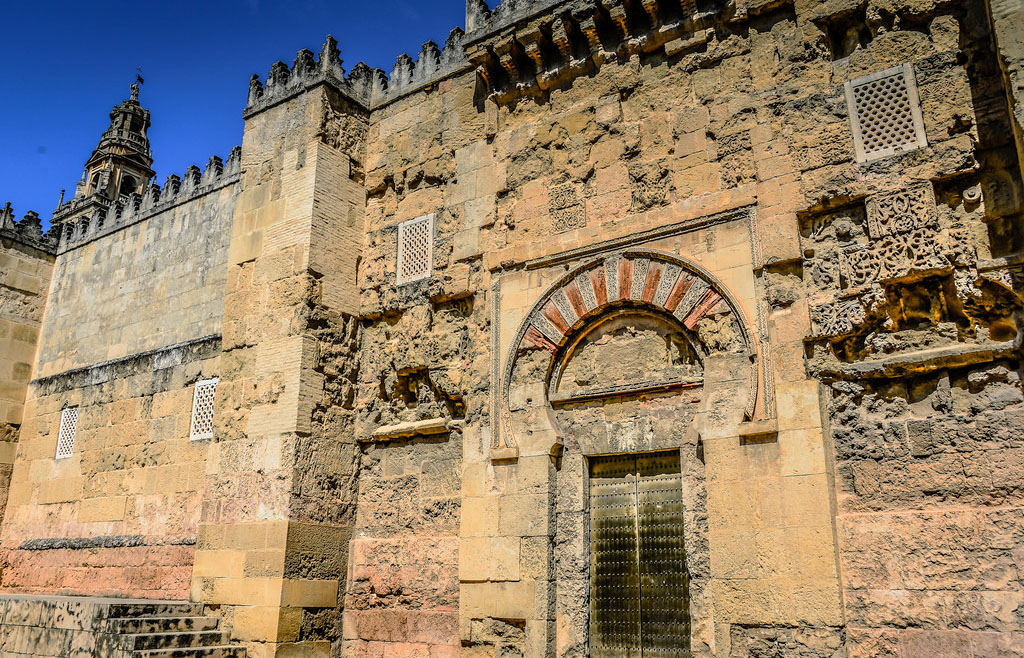






Following our path along the western side of the Mosque-Cathedral, we come across the Gate of Saint Stephen, probably the most representative and artistically rich one that has come down to us from the Muslim period. A manuscript dated to the mid-18th century reads: “…the (gate) next, of Saint Sebastian, as it faces this hospital…“. Don Miguel Salcedo Hierro, chronicler of our city, tells us that this is how Ramírez de las Casas Deza described the gate, that is, as the “Gate of Saint Sebastian“, logically adopting the same name as the nearby hospital, but due to a later error it came to be referred to as the Gate of Saint Stephen, as it is known today.
Historical inscription
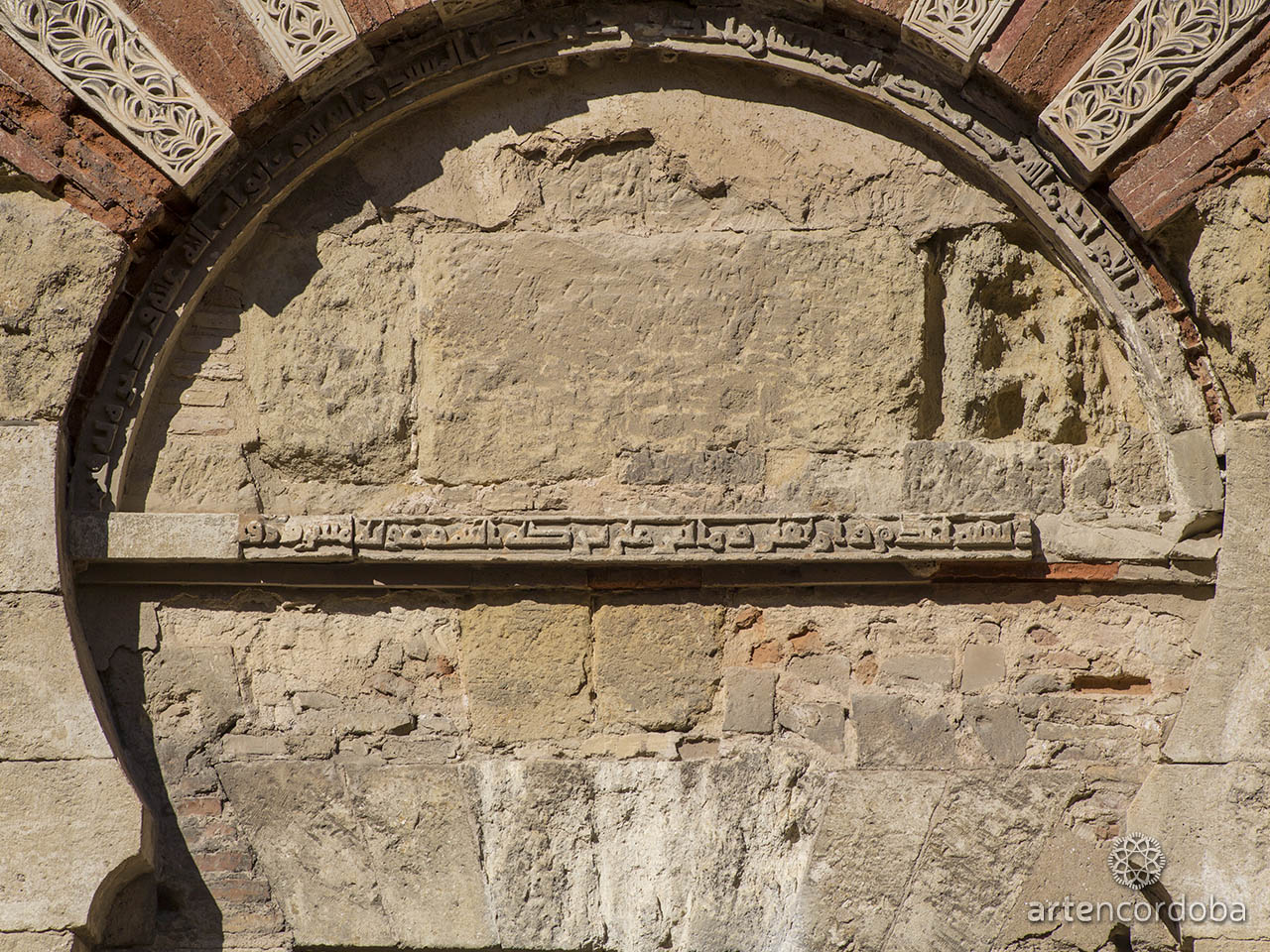
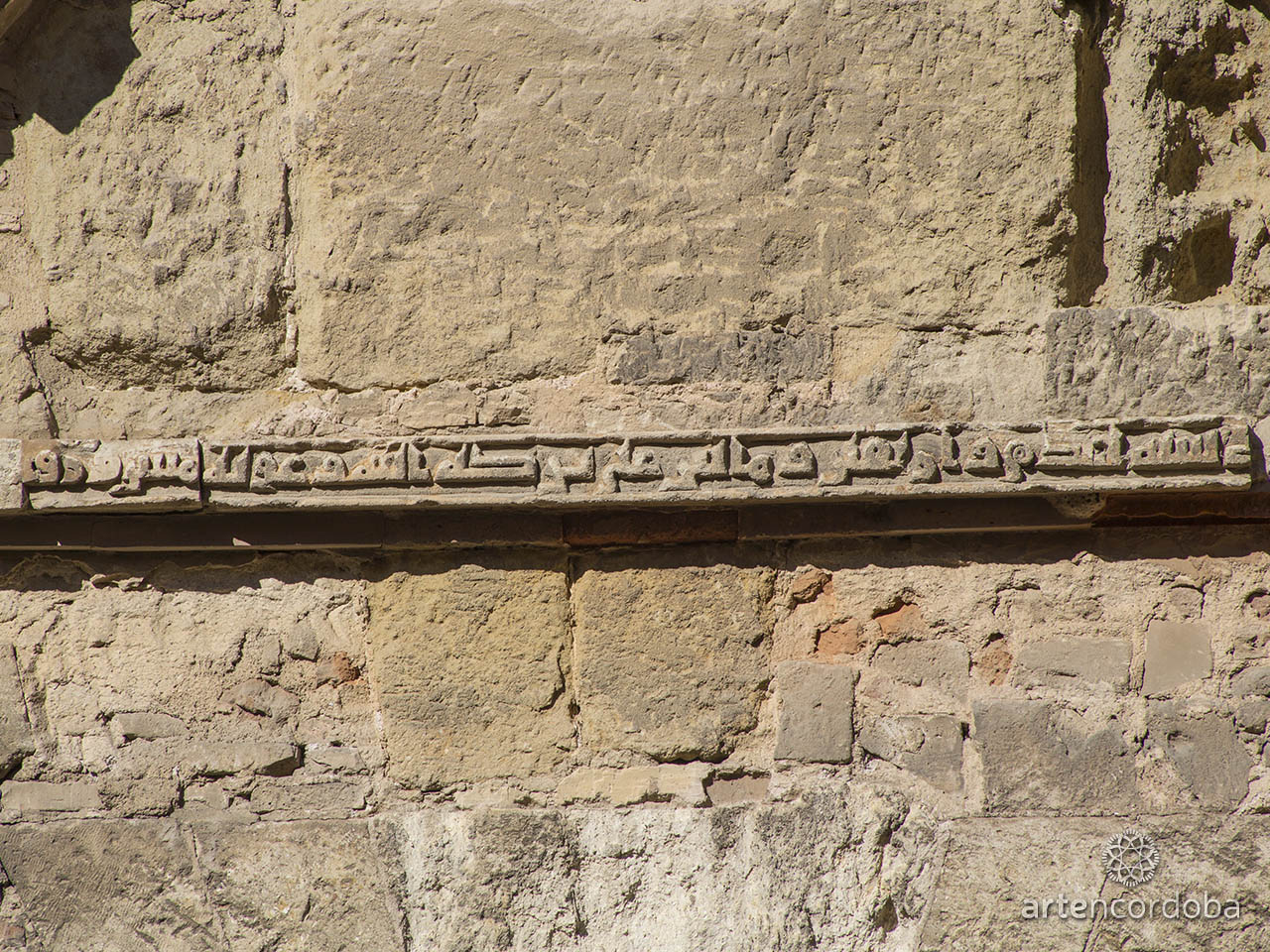
The Gate of Saint Stephen of the Mosque-Cathedral bears an inscription from the year 855 A.D.
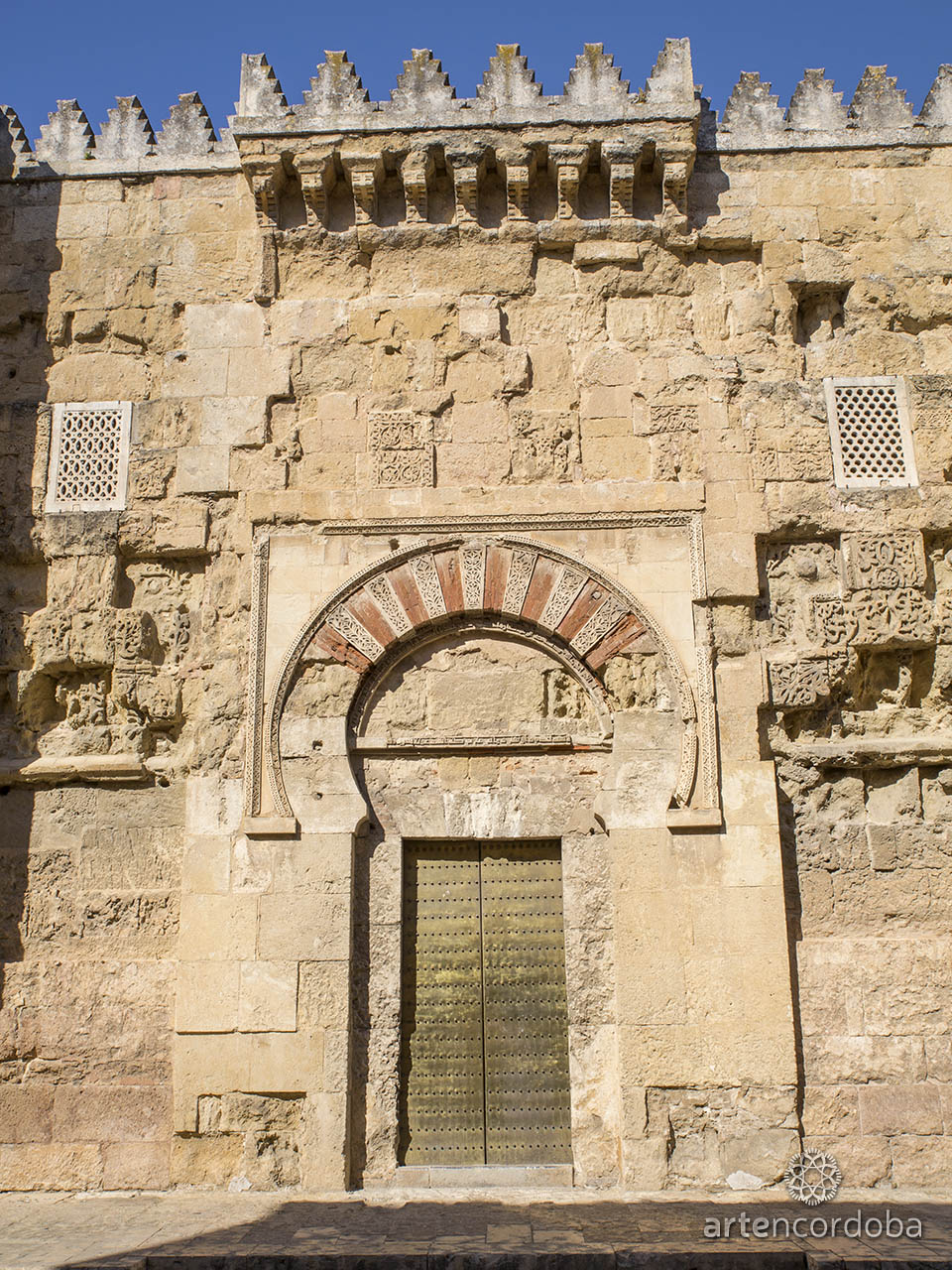
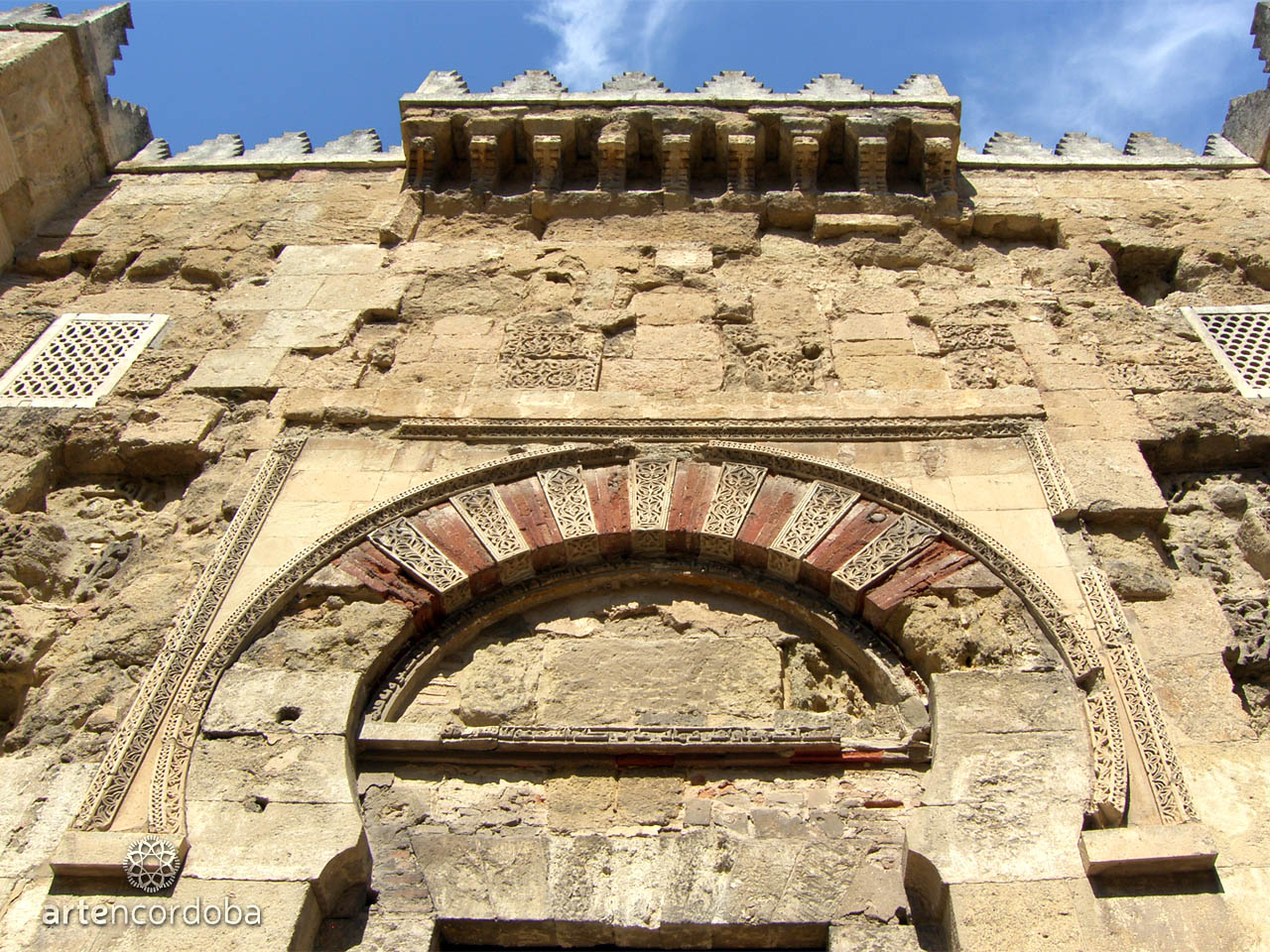
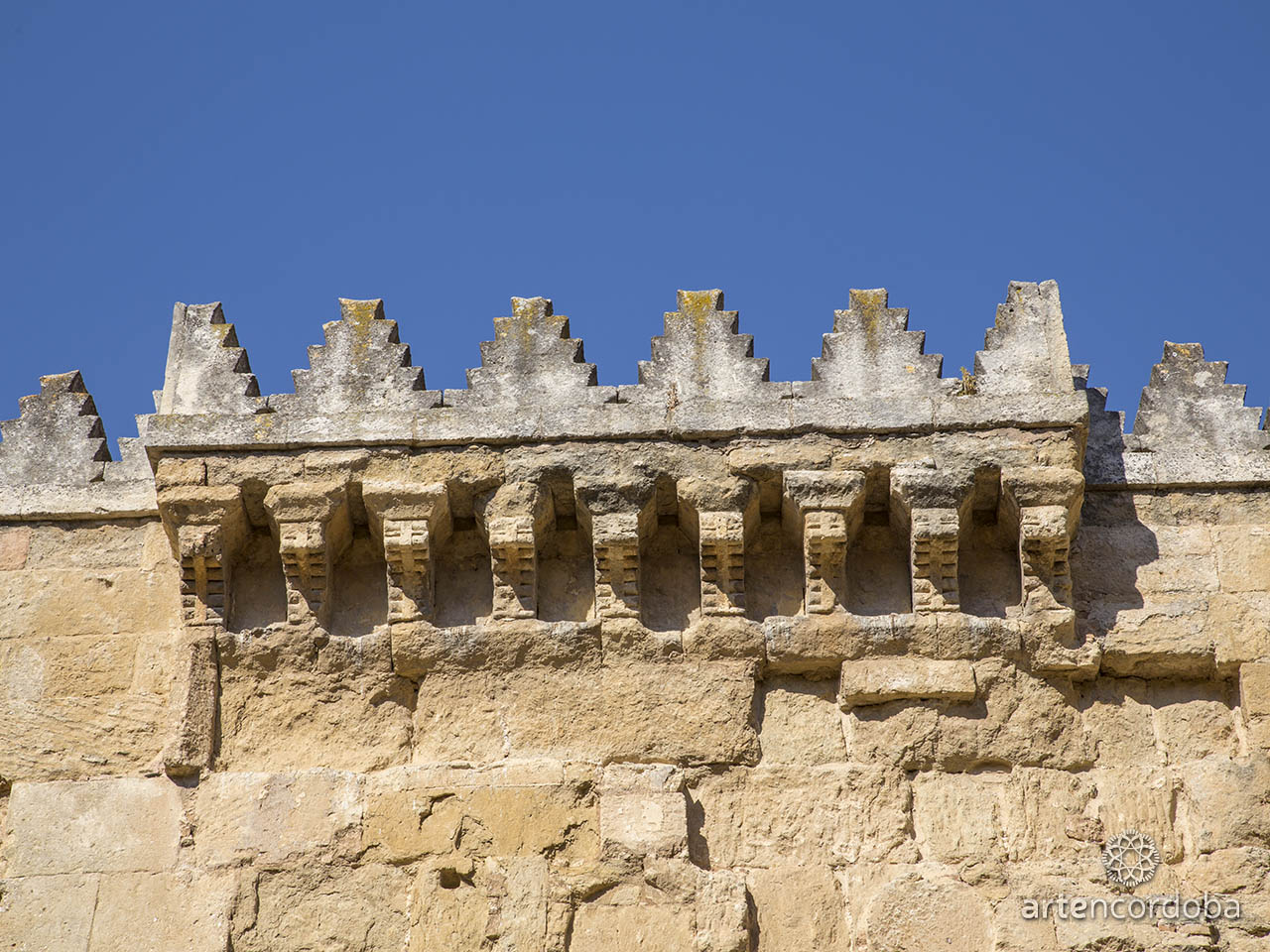
The gate provided access to the prayer hall of the Original Mosque, built during the time of Abd al-Rahman I, and therefore dates back to the 8th century. However, it underwent a significant remodeling during the time of Muhammad I, in the 9th century, mainly focused on the construction of a new horseshoe arch, differing in characteristics from the previous one, and the carving of decorative motifs, as well as the important inscriptions that we will now discuss. As mentioned in the commentary on the Gate of the Deans, the layout to be followed is similar for all gates, with a lintelled opening above which a blinded horseshoe arch with an alfiz is developed. In this case, it is topped by a stone eave supported by roll corbels, and above it, a series of stepped battlements is arranged.
The arch and its decoration
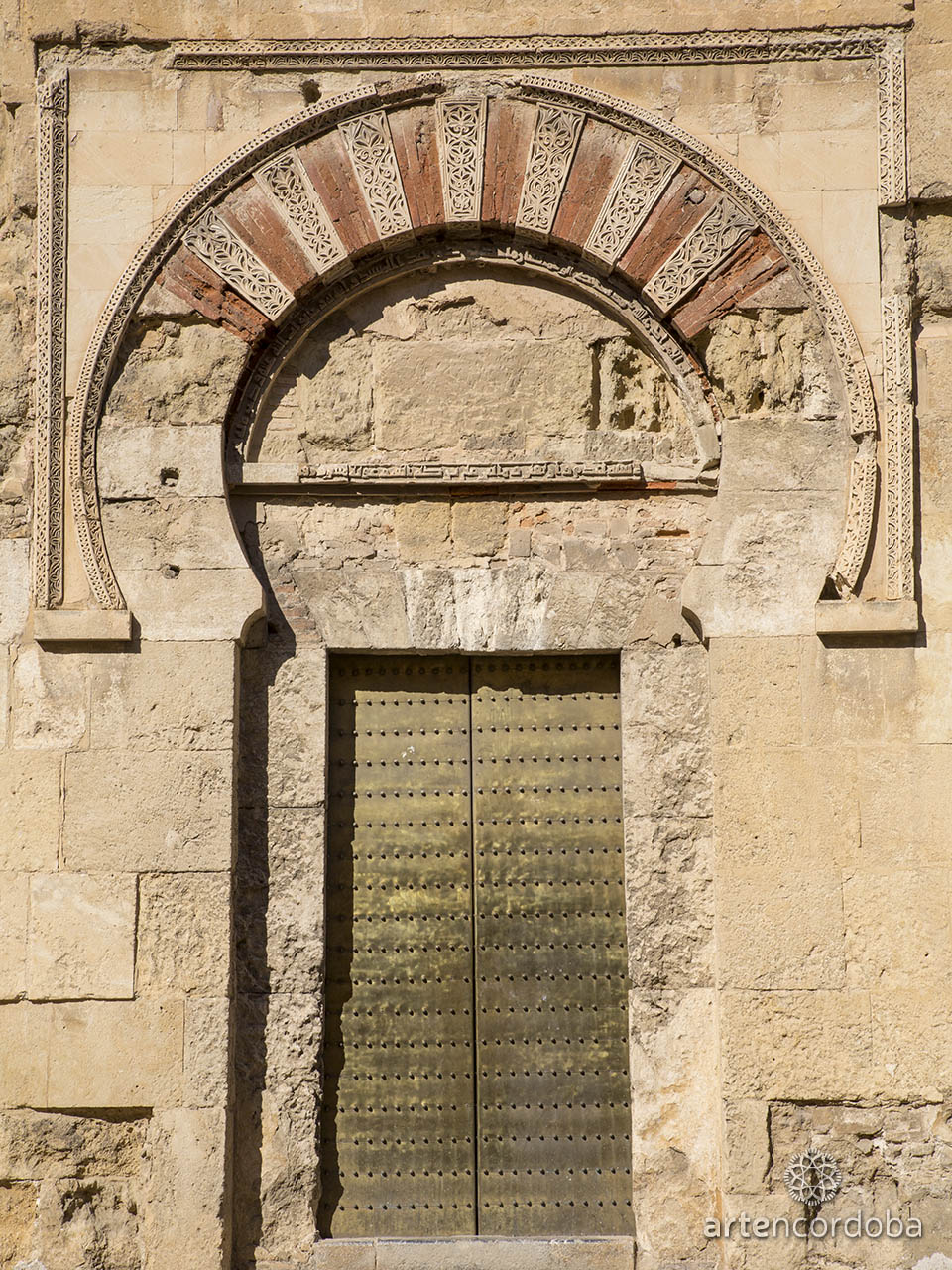
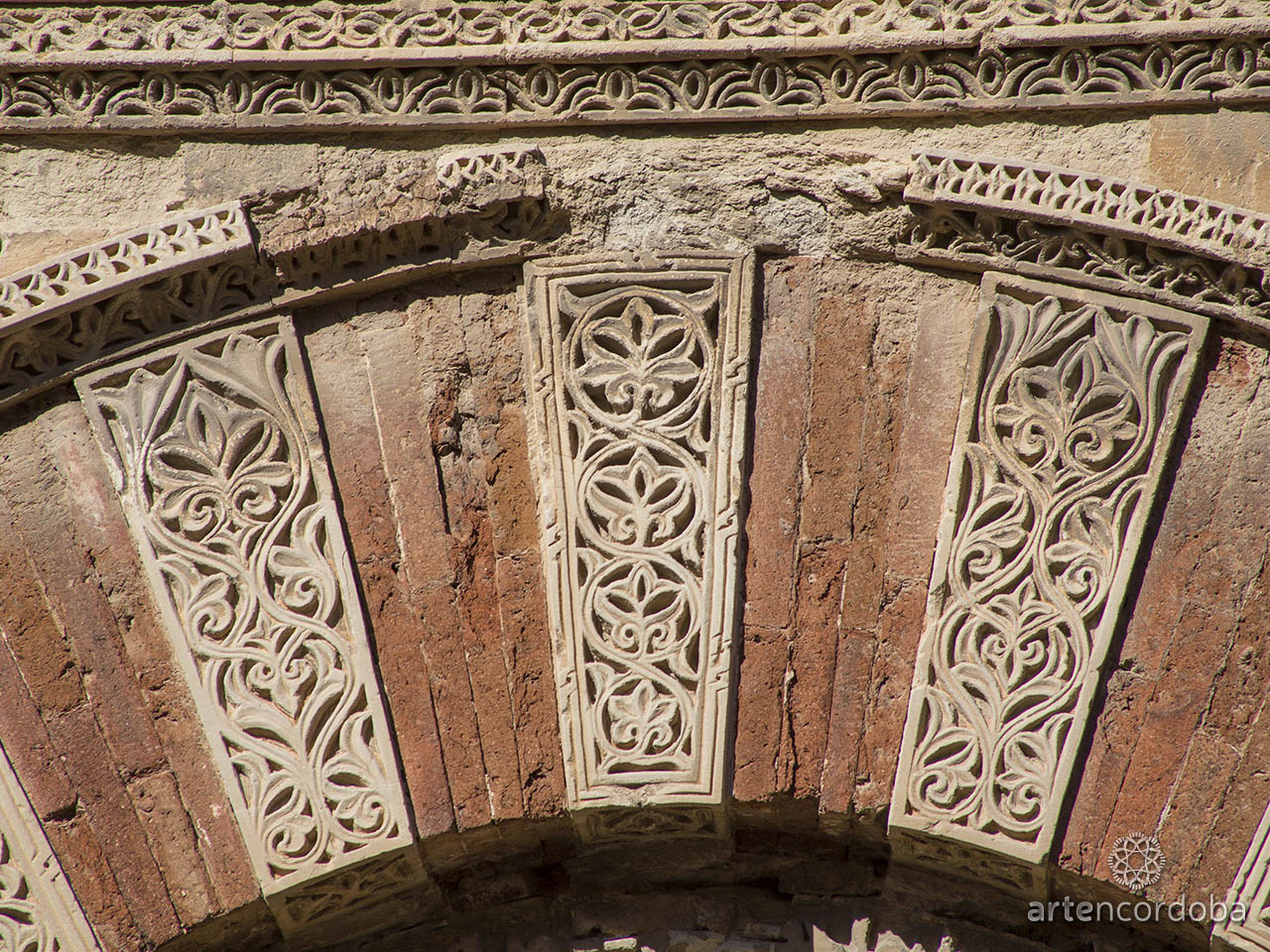
If we focus on the arch, we will notice that the voussoirs alternate between brick and stone, the latter being decorated with symmetrical vegetal elements. Interestingly, even the inner face of the arch, the intrados, is decorated.
Historical value of the Gate of Saint Stephen
But while the artistic value of the Gate of Saint Stephen is undeniable, its historical value may be even greater, as an inscription in Kufic script runs along the intrados of the arch and the upper horizontal line of the lintel. The inscription reads as follows: “In the name of Allah, the Most Gracious, the Most Merciful. The Emir (may Allah ennoble him) Muhammad ibn Abd al-Rahman ordered the construction of that which…of this Mosque and its foundations (may Allah’s blessings be upon him and accompany him). And it was completed…in the year one and forty and two hundred (241 of the Hijra and 855 A.D.) with the blessing of Allah and His prosperous protection“. Its importance lies in the date of the inscription, the year 855, which means we are facing the oldest inscription in the building.
Visiting the Gate of Saint Stephen
If you’re wondering what to visit in Córdoba, the best option would be the Mosque-Cathedral, choosing one of our guided tours. This way, you will be able to learn everything about the Gate of Saint Stephen. Choosing quality tourism means choosing ArtenCórdoba.
Text: J.A.S.C.