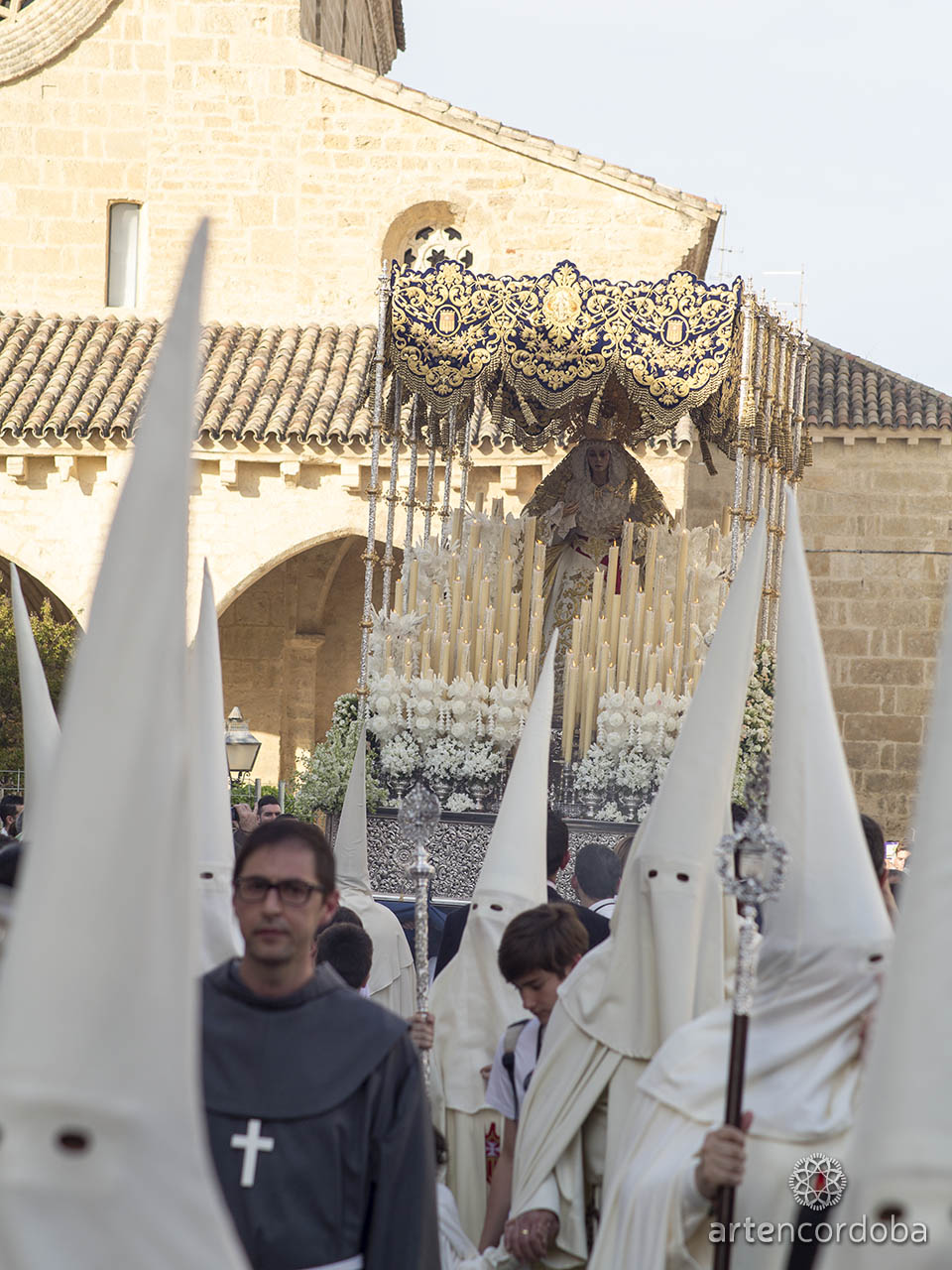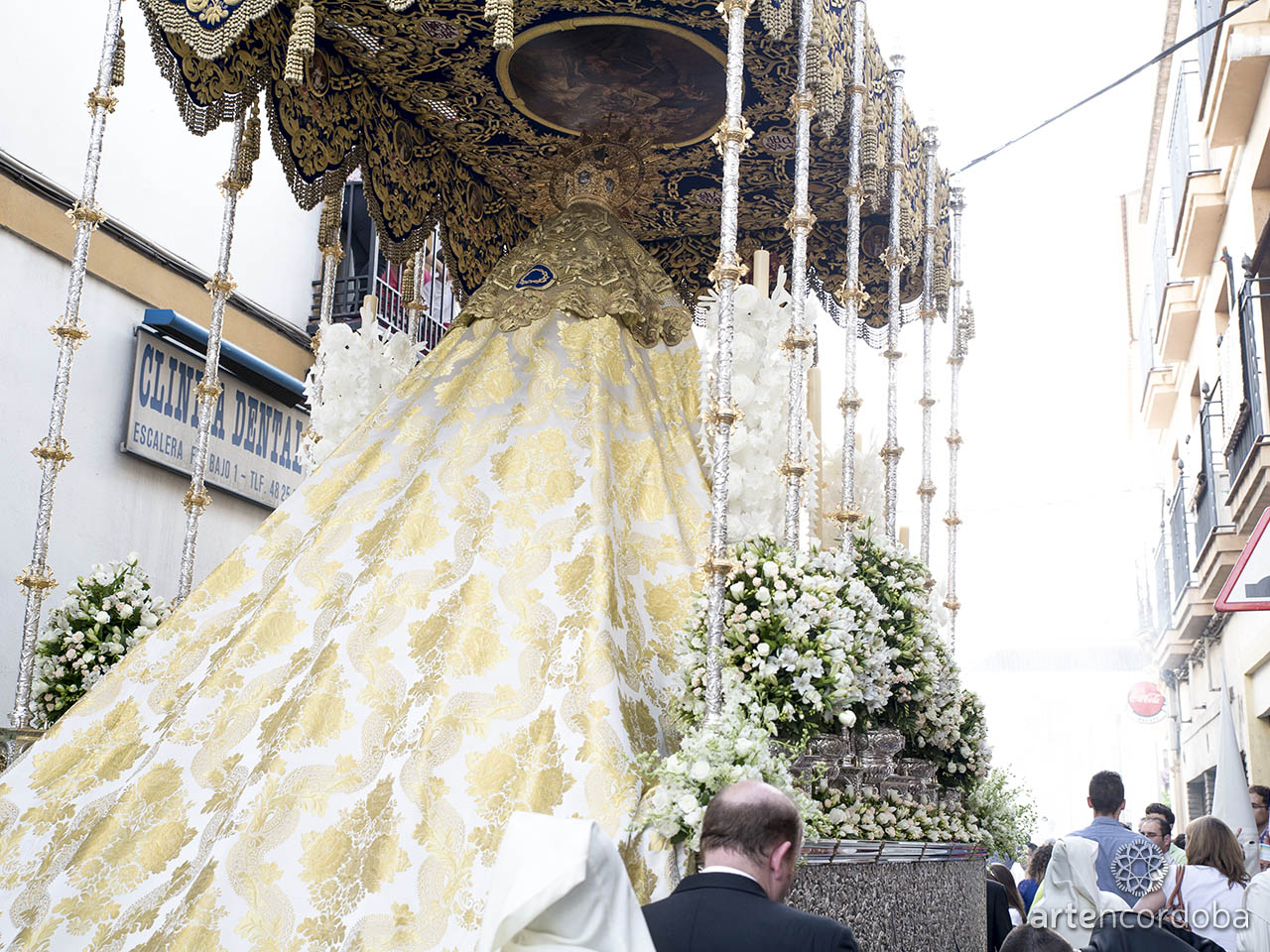






Venerable and Illustrious Brotherhood of the Blessed Sacrament and Penitential Confraternity of Our Humble Father Jesus in the Crowning with Thorns and Our Mother and Lady Holy Mary of Mercy.
History
Founded in 1954 by a group of parishioners led by parish priest Manuel Márquez González, most of whom were Barcelonans working at the Cepansa factory, who wished for the Marian devotion to be to Mercy, in memory of the patroness of their hometown.
On Holy Monday in 1958, it made its first appearance in the official procession. In 1976, the current image of the Virgin of Mercy was blessed, and in 1978 the new statue of the Lord of the Crowning, which began to process in 1980.
As the years passed, the brotherhood’s heritage grew, developing the distinctive identity it has today. During this period, a canopy was added to the Virgin’s float, the new image of Our Lord was created and blessed, work began on the canopy float as it can be seen on the streets today, Christmas campaigns for the underprivileged were launched, and collaborations with the Provincial Prison began.
In 1997, construction of the new mystery float began, with the first phase debuting that same Holy Week. That year, the General Chapter was asked to approve the return of the confraternity to Holy Monday after five years of processing during the early hours of Good Friday.
Temple
Parish of Saint Anthony of Padua. Located at the end of Agrupación Córdoba Avenue. The brotherhood departs from an annex to the temple, where they have a large area presided over by the Brotherhood House.
The temple has three naves separated by columns, a typical church construction from the 1950s in our city.
The Images
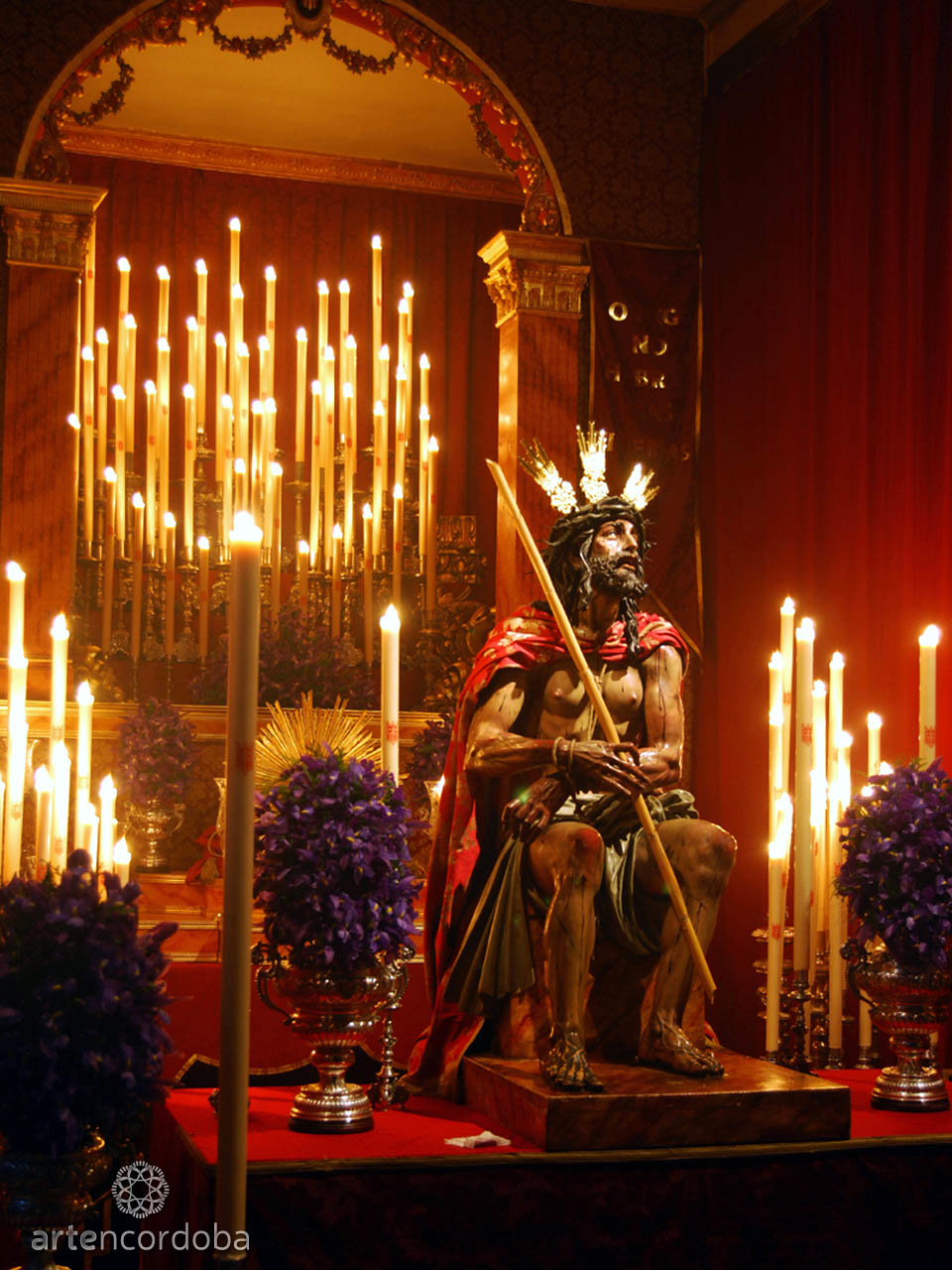
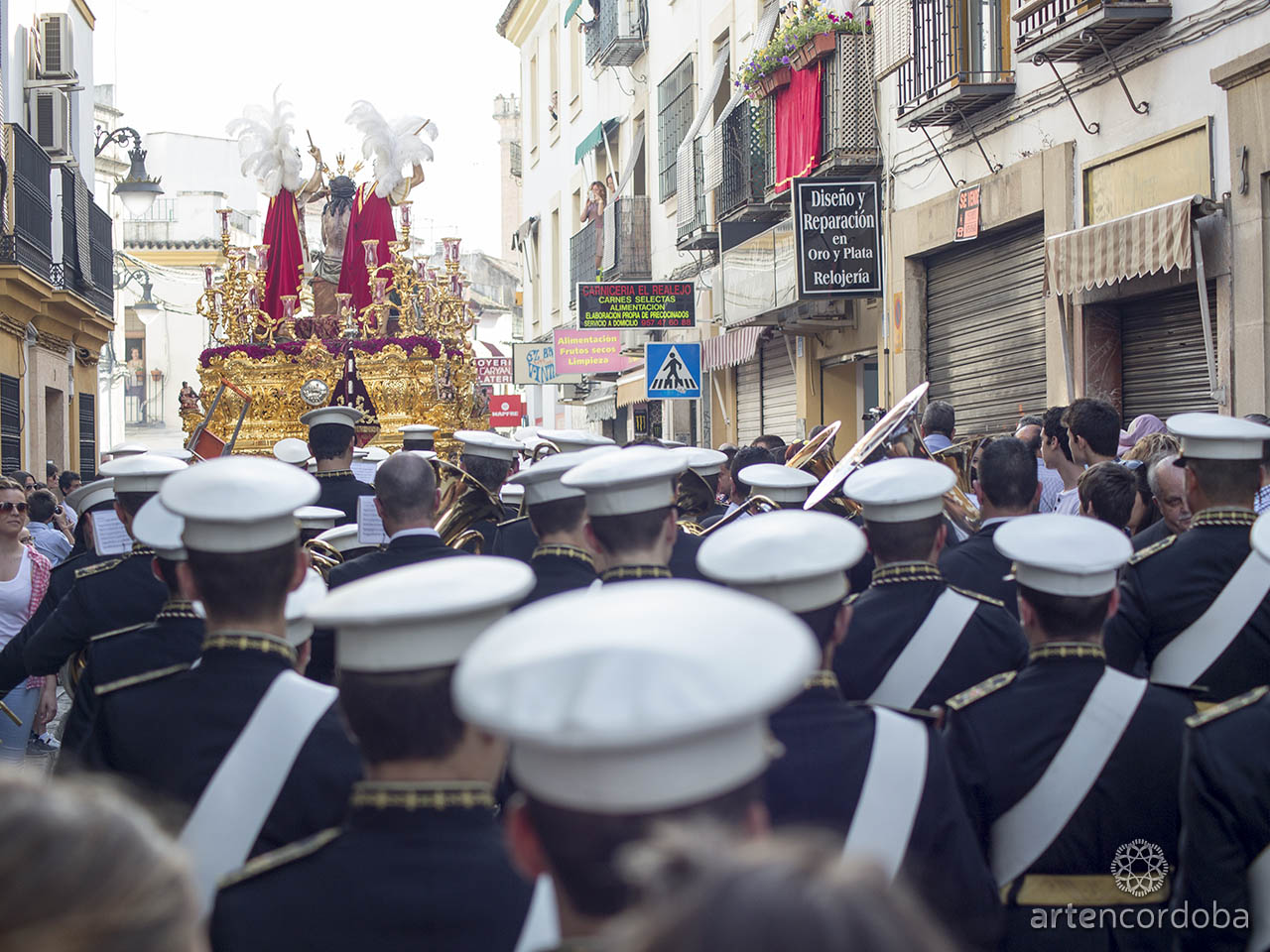
Our Humble Father Jesus in His Crowning with Thorns
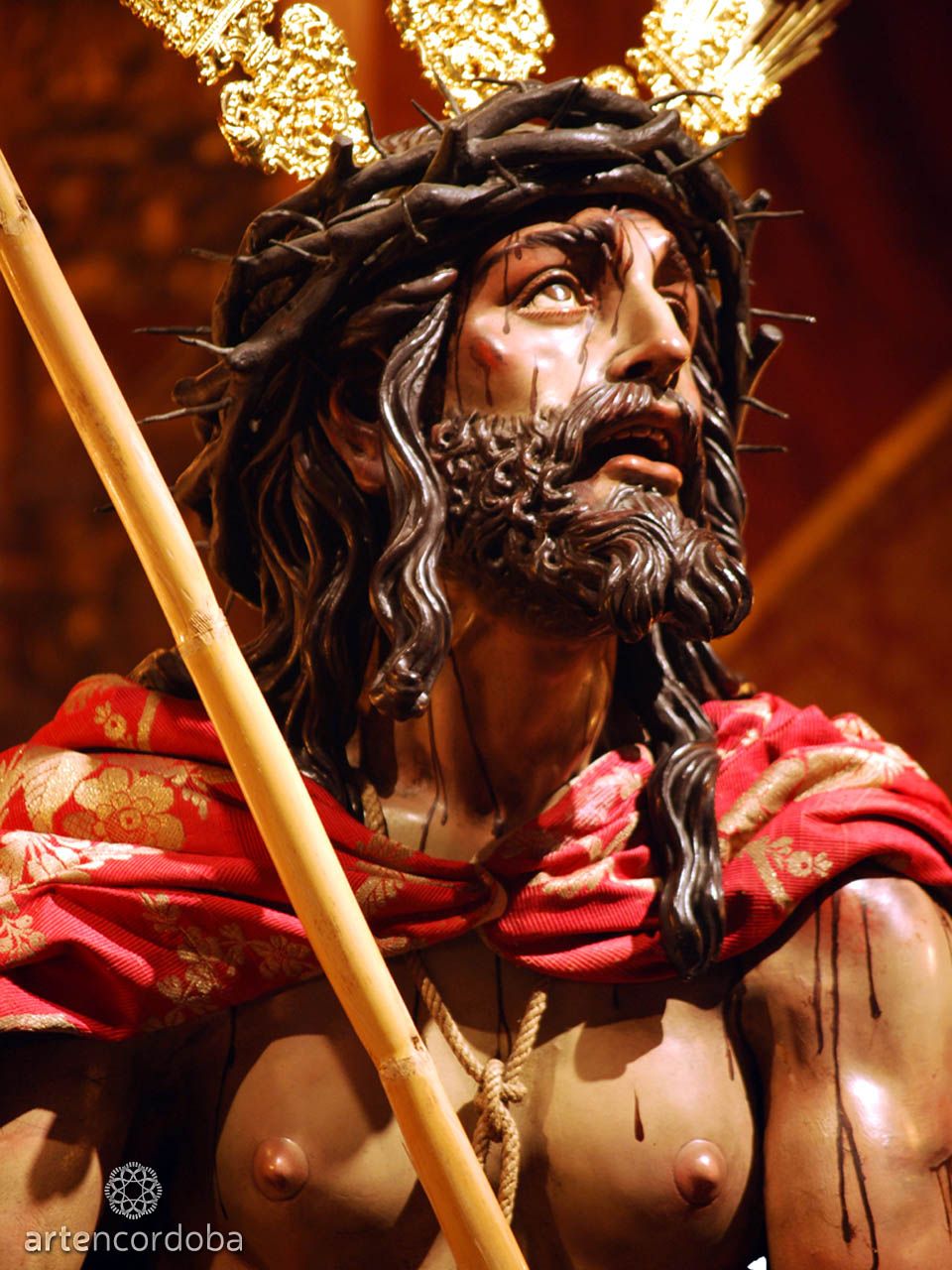
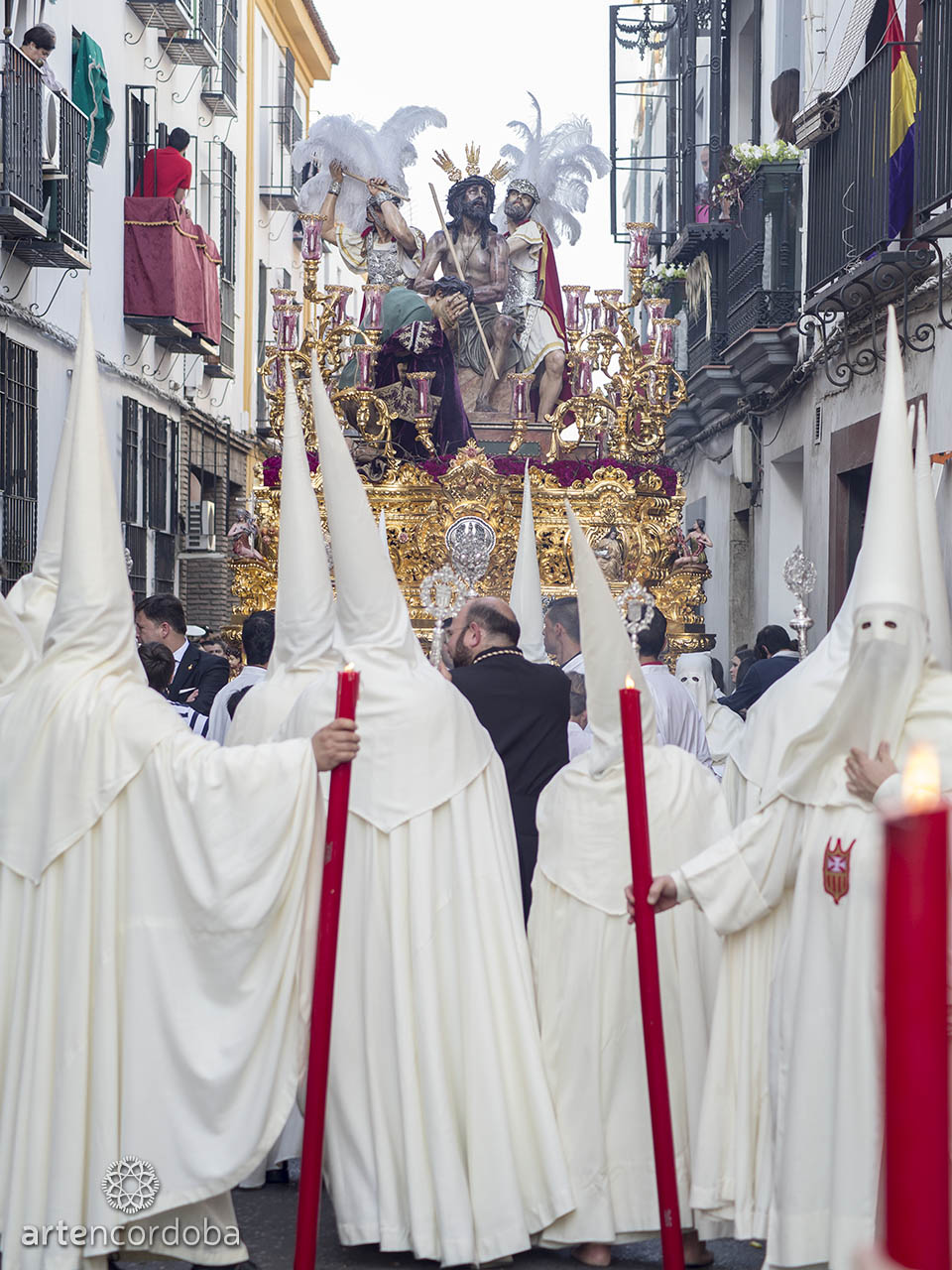
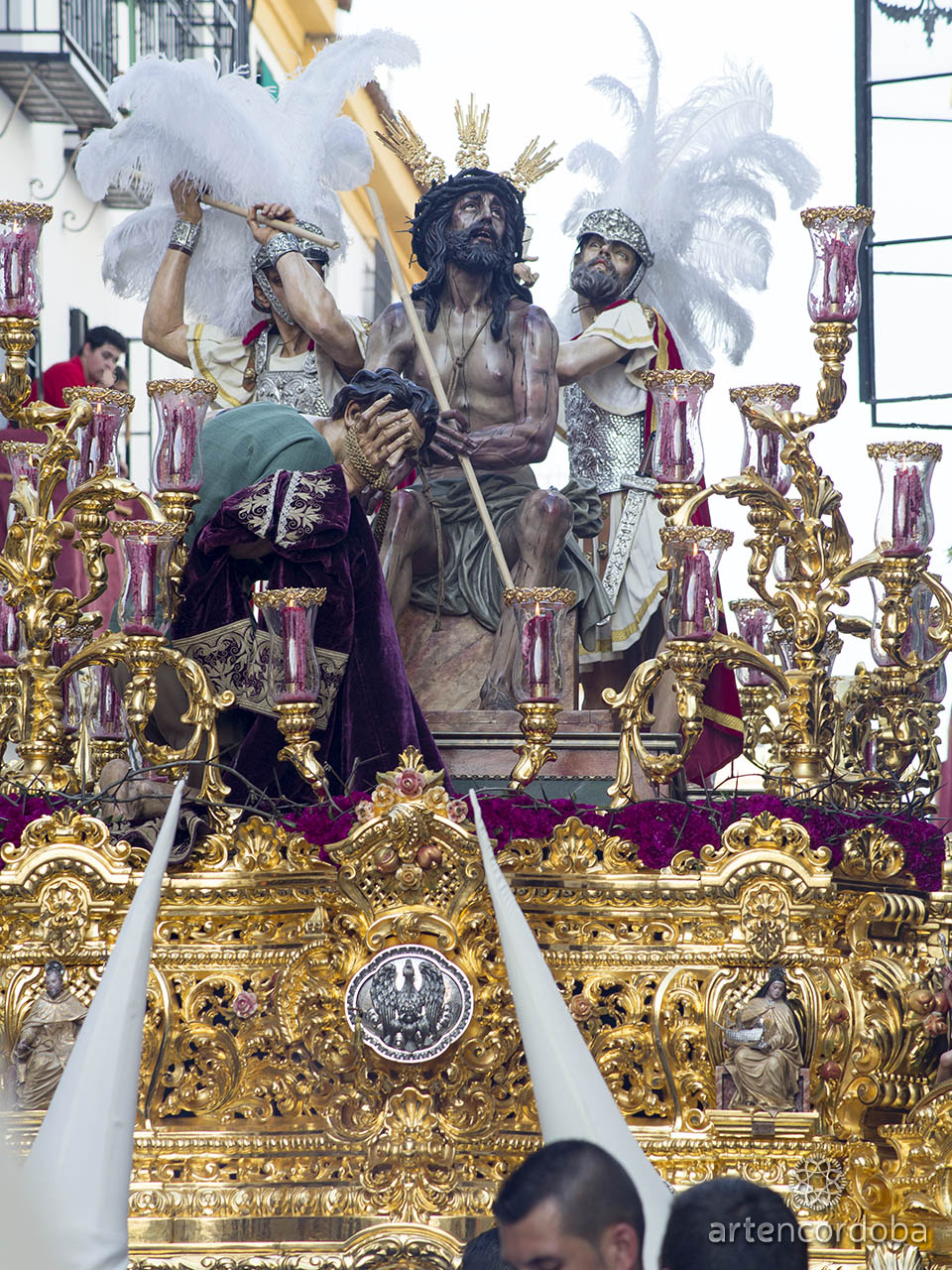
Image created in 1978 by the Sevillian sculptor Francisco Buiza Fernández. It processes alongside three additional figures: one executioner and two Roman soldiers, sculpted by Jerez-born artist Francisco Pinto Barraquero around 1985.
The scene depicts the moment when a Roman, with the aid of a reed, places a crown of thorns on the Lord’s forehead while an executioner mocks Him: “Hail, King of the Jews!”
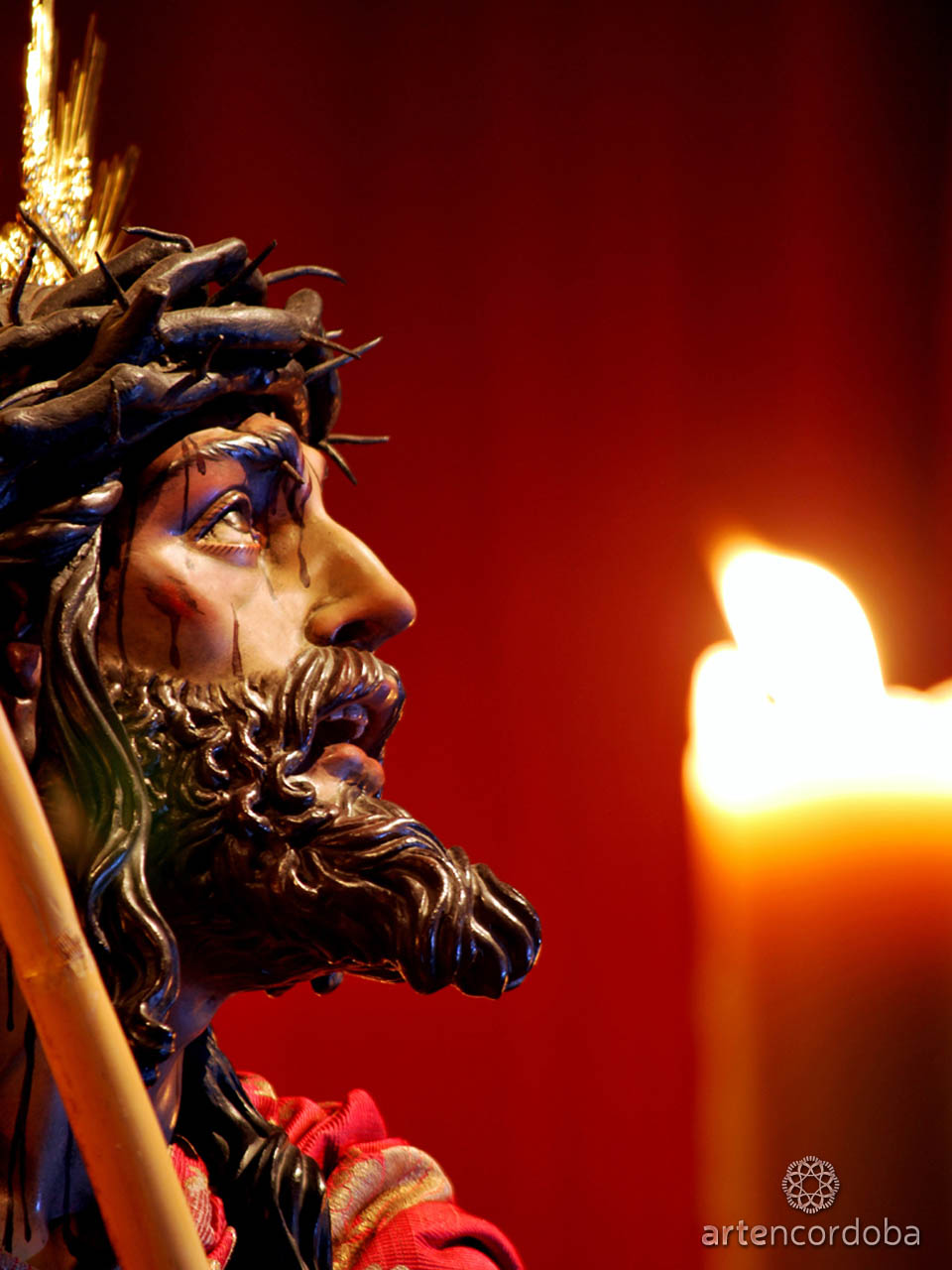
The seated figure holds the reed in His clenched hands as a mocking symbol of His kingship. Anatomically perfect and muscular, He leans slightly forward, turning His head to the left and looking toward heaven in a pleading attitude.
His face displays great expressive power, with tousled hair intermingled with the sharp thorns of the crown that fits perfectly to the sculpture. The intense polychromy, with greenish tones, gives it a pathetic and harrowing character, typical of the neobaroque style continuously showcased by the artist.
Our Humble Father Jesus in His Crowning with Thorns has been considered one of Buiza Fernández’s masterpieces and one of the most notable examples of contemporary religious sculpture in Córdoba.
It is a bold composition of meticulous anatomy, covered only by a finely pleated loincloth, in which the artist has carefully depicted the musculature and veins swollen from beatings, along with bruises and blood trails from the scourging that has left Him weakened and nearly lifeless.
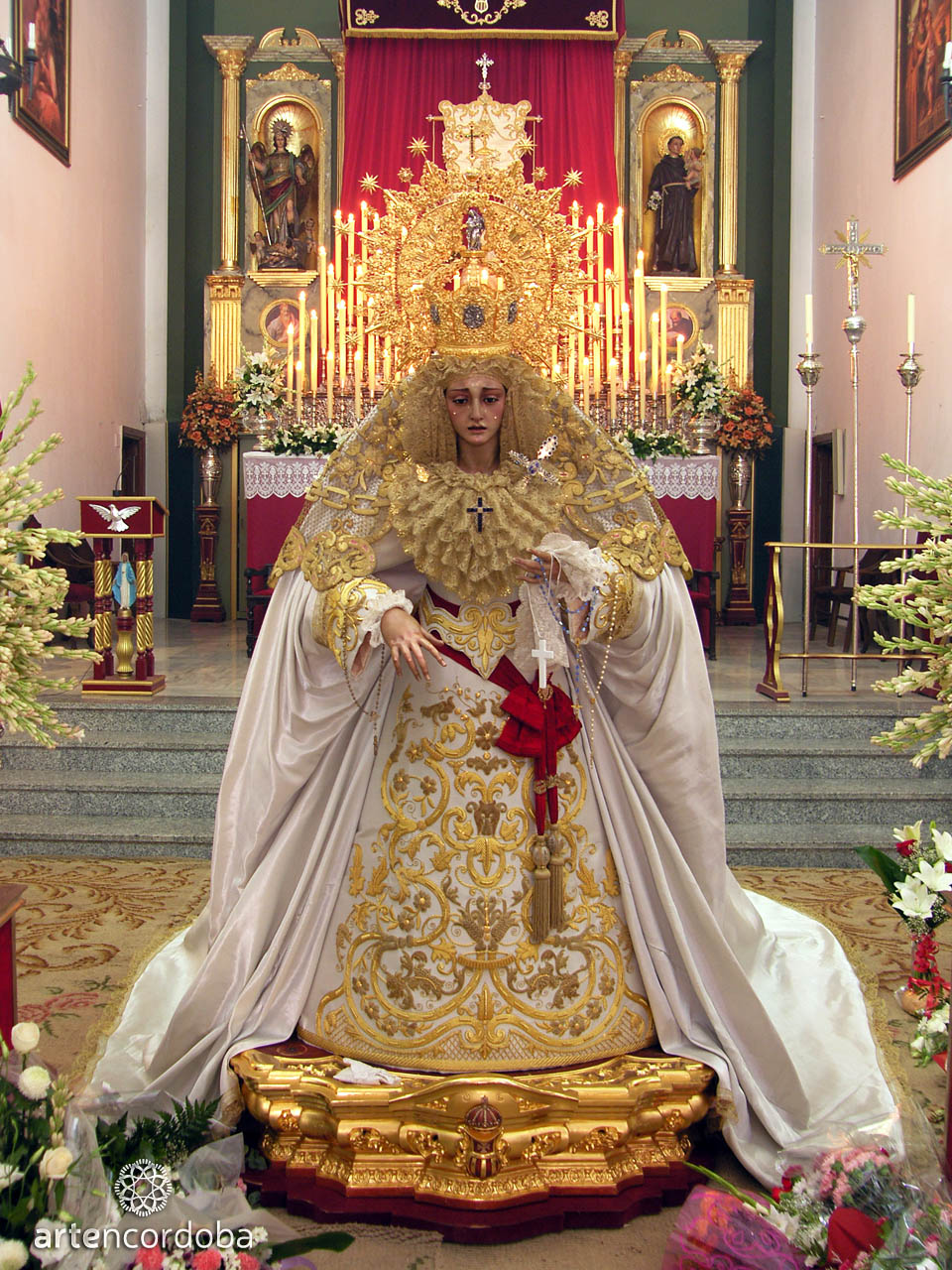
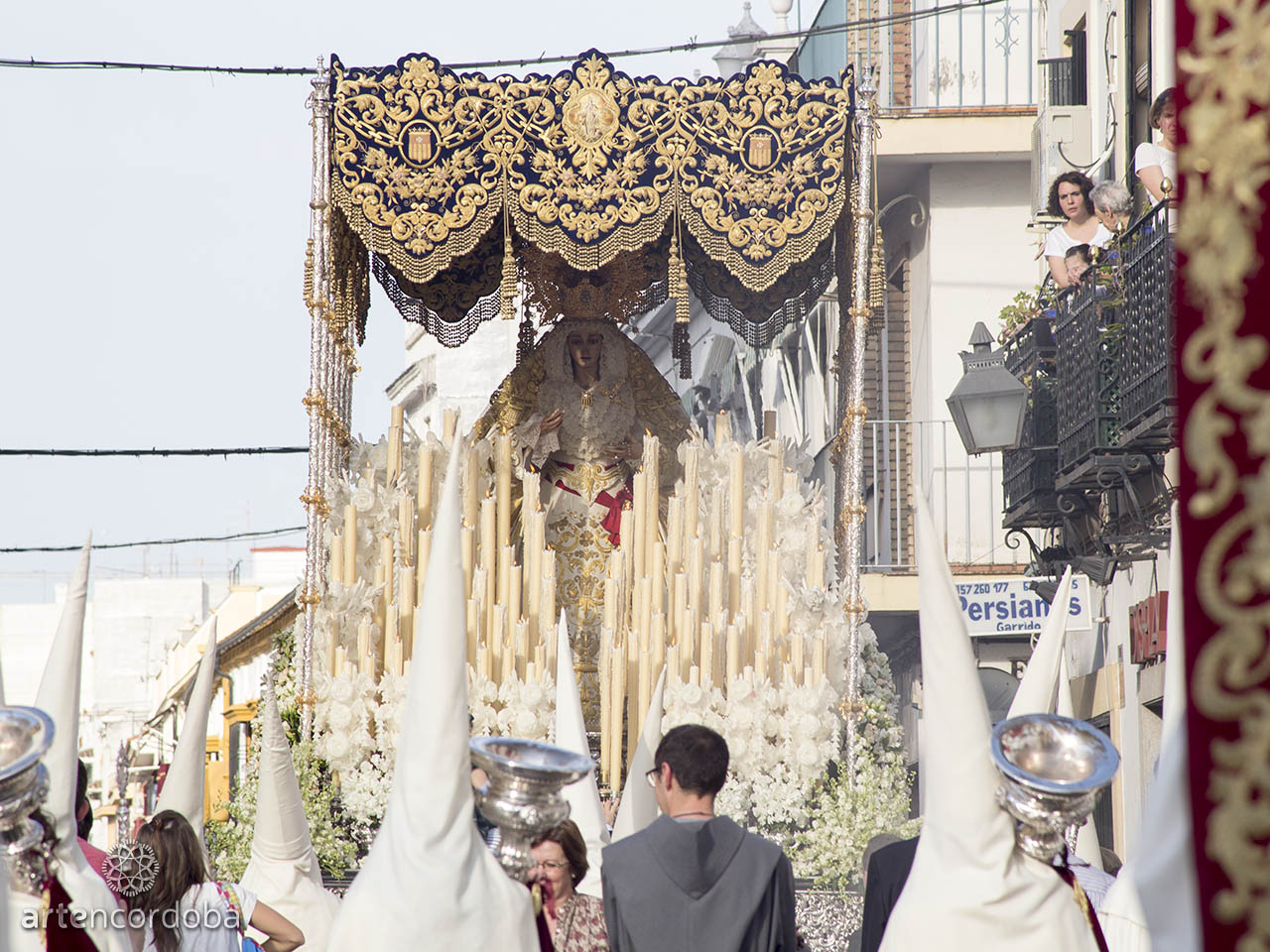
Our Mother and Lady Holy Mary of Mercy
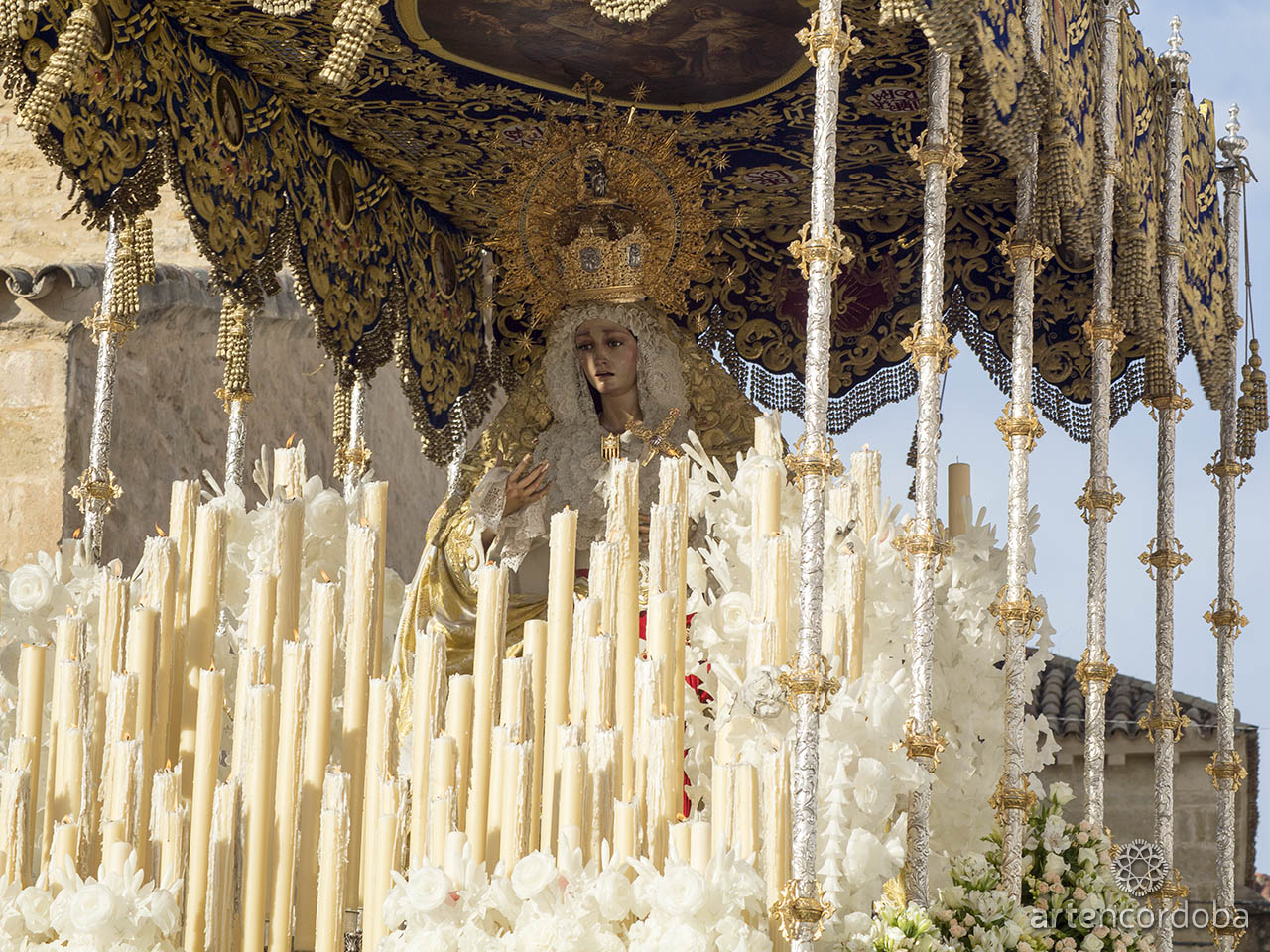
The Virgin of Mercy, like the previous image, is a work by sculptor Francisco Buiza Fernández. Created in 1976 due to the impossibility of restoring the sorrowful image donated by Rafael Rodríguez de Ortega, which was the one used in processions from 1955 to 1975.
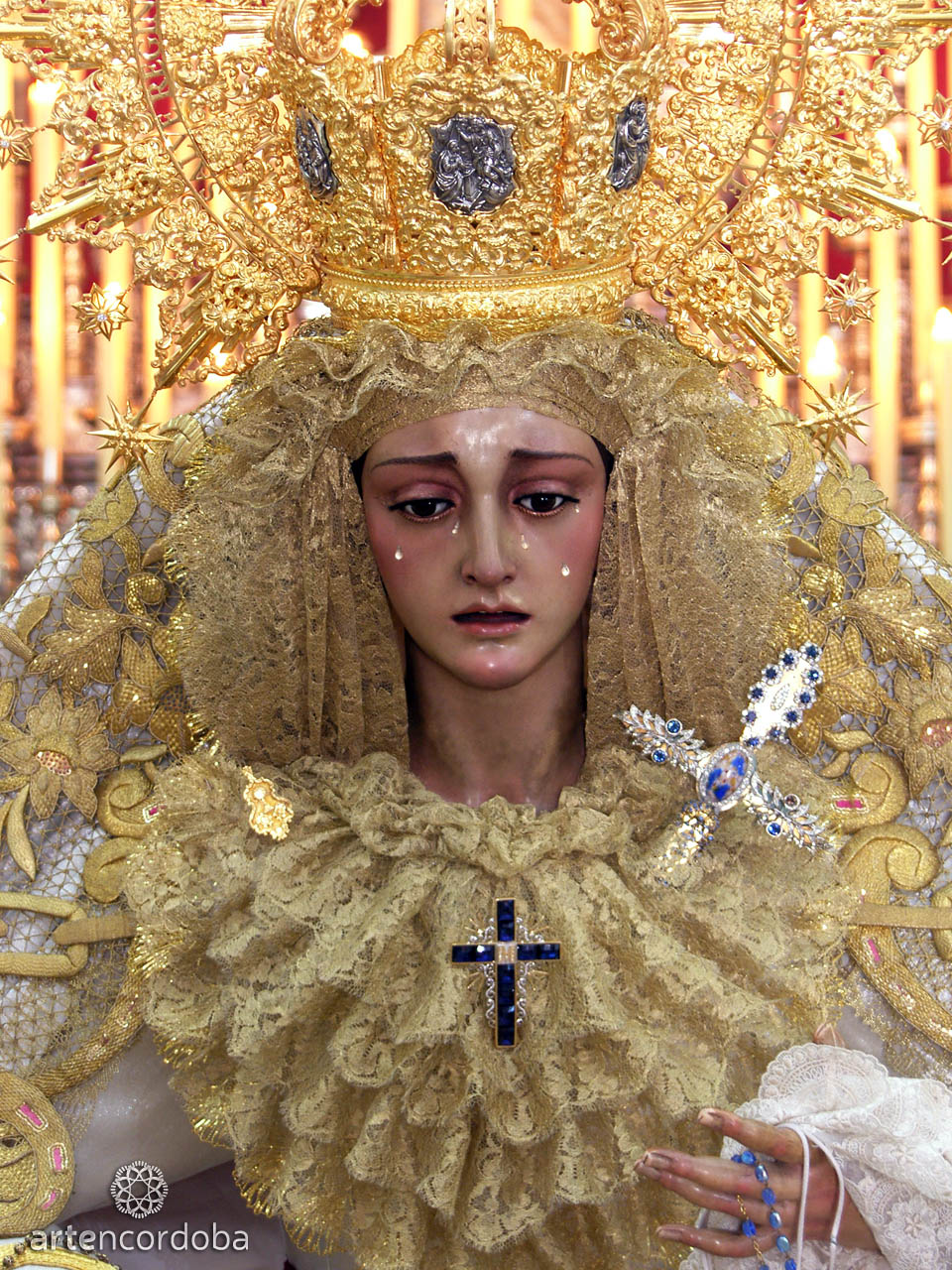
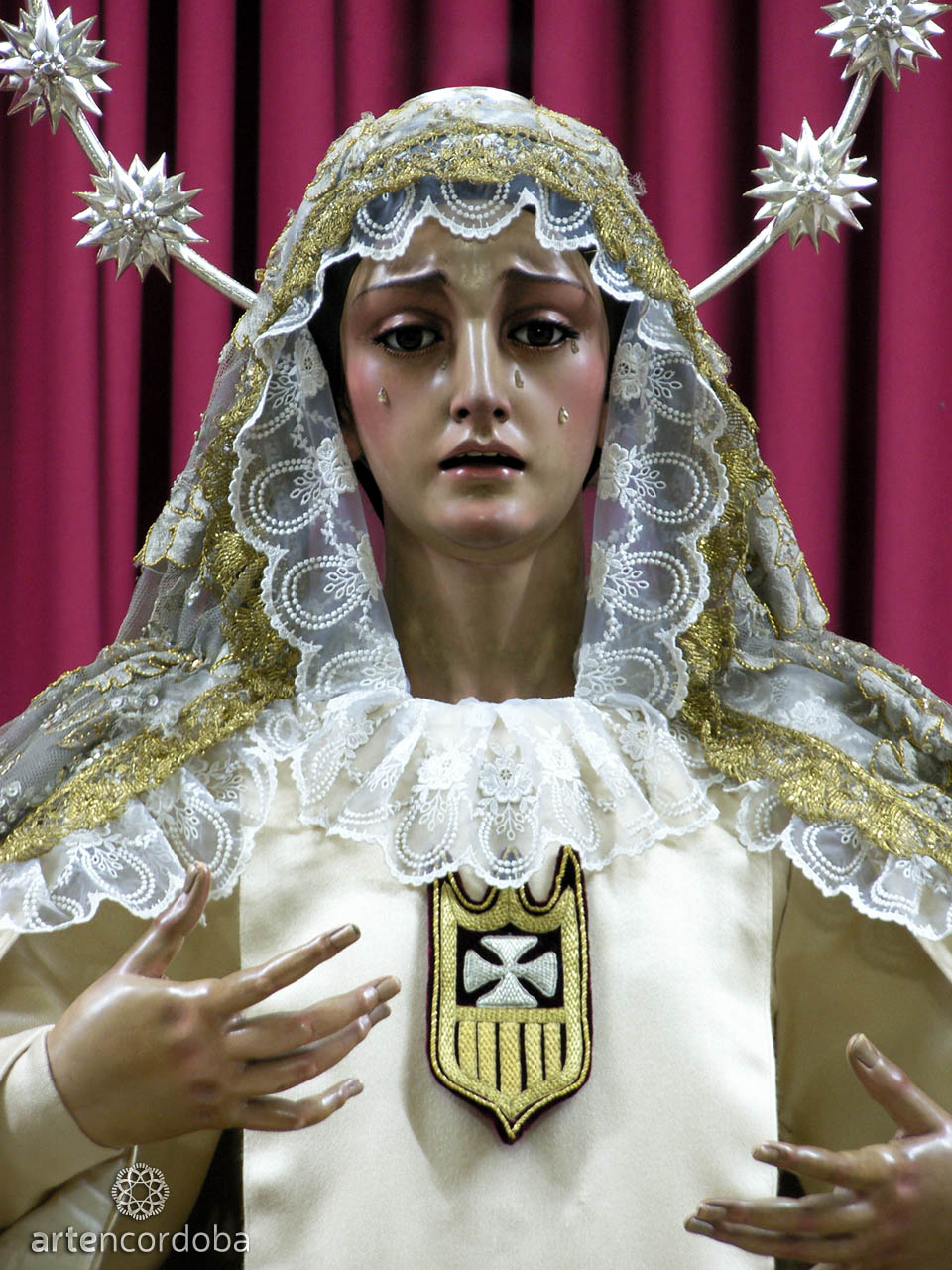
The Virgin of Mercy is a sorrowful figure meant to be dressed, with a face that denotes great beauty and serenity. Her chin is slightly pronounced, and her eyebrows gently arched. She has a straight nose and a slightly open mouth, accentuating an expression of contained sorrow.
Initially, it was intended to reuse the hands from the previous sorrowful figure for the new sculpture, but in the end, new hands were commissioned from Buiza, with the old ones now preserved in the Brotherhood House.
Nazarene Habit
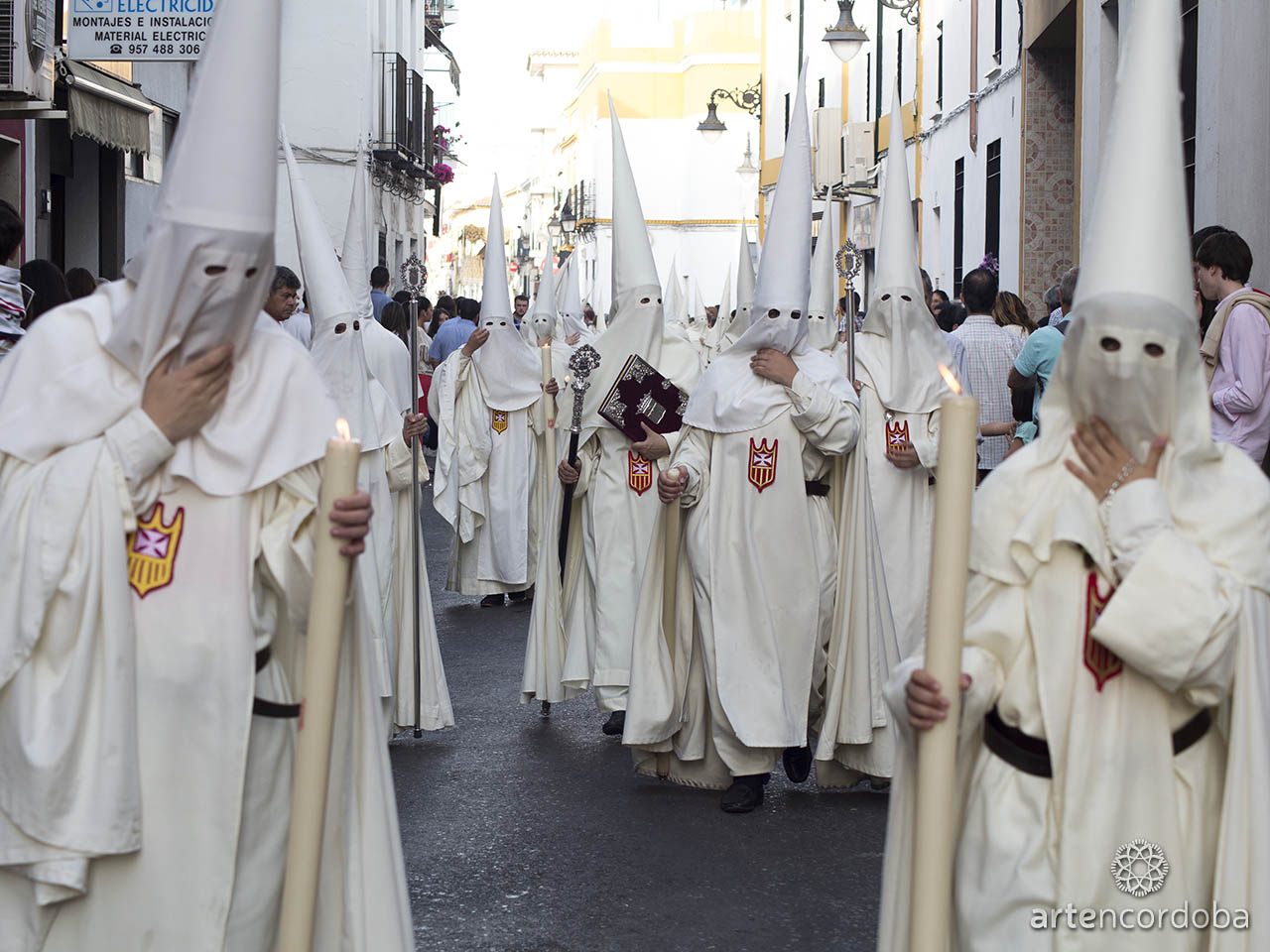
Ivory-colored tunic, cape, and scapular with a leather belt.
Notable Insignias
- Guiding Cross and lanterns crafted by Sevillian silversmith Manuel de los Ríos and restored by José María Navarro.
- Penitential banner (1998) of bone-colored damask with a red cross.
- Metal crown of thorns recalling the iconic moment of the Lord’s image.
- Sacramental banner (1999) with embroidery from the Sevillian Caro workshop.
- Rule Book bound in red velvet with silver corners.
- Conceptionist banner embroidered on sky-blue damask.
- Brotherhood banner (1988) with a chiseled pole and red velvet embroidered cloth.
- Herald trumpets by Manuel de los Ríos restored by José María Navarro.
- Banner for the Cornet and Drum Band of the Crowning with Thorns (2001).
- Virgin’s crown (2001) made of silver gilded in gold.