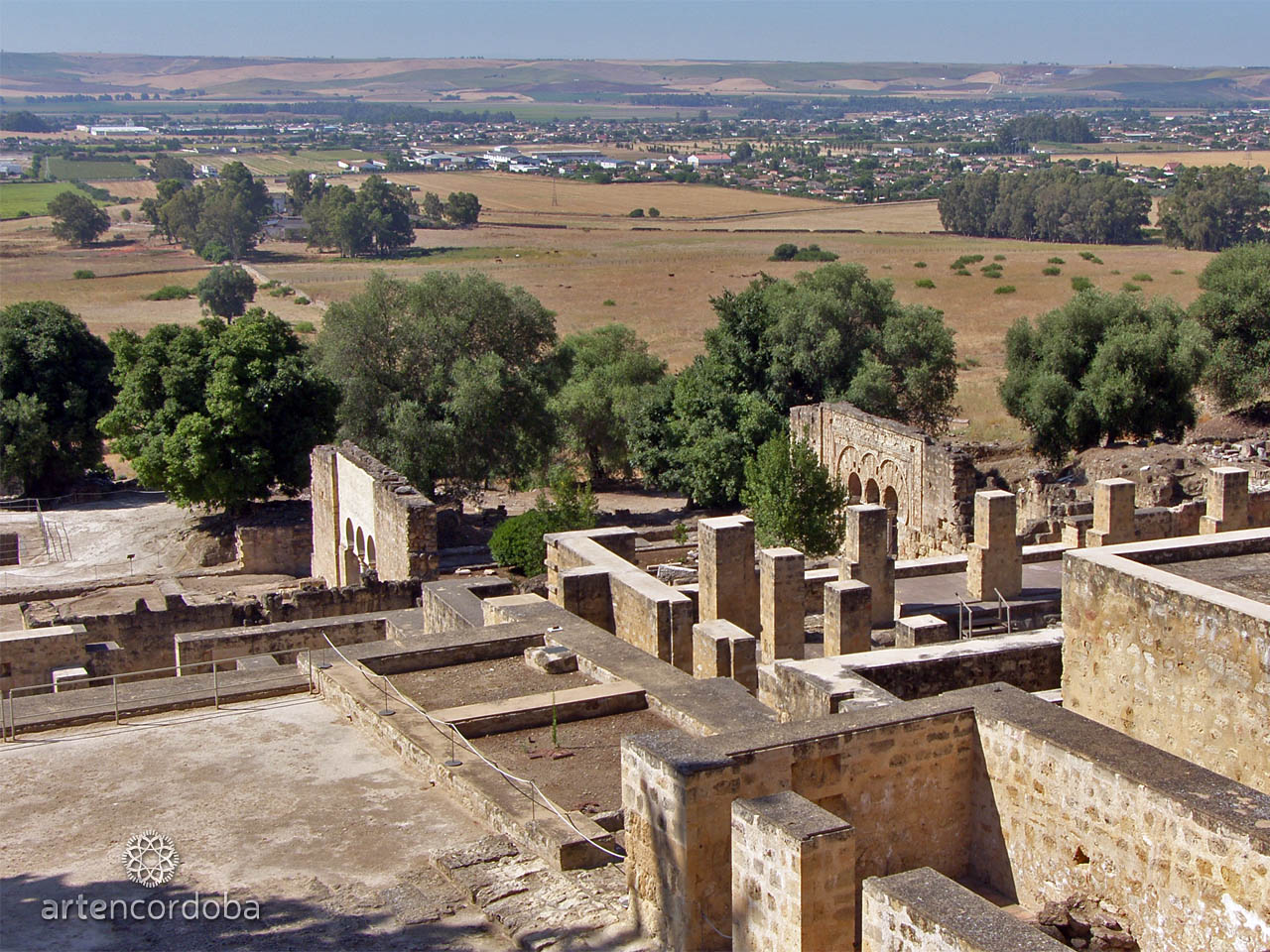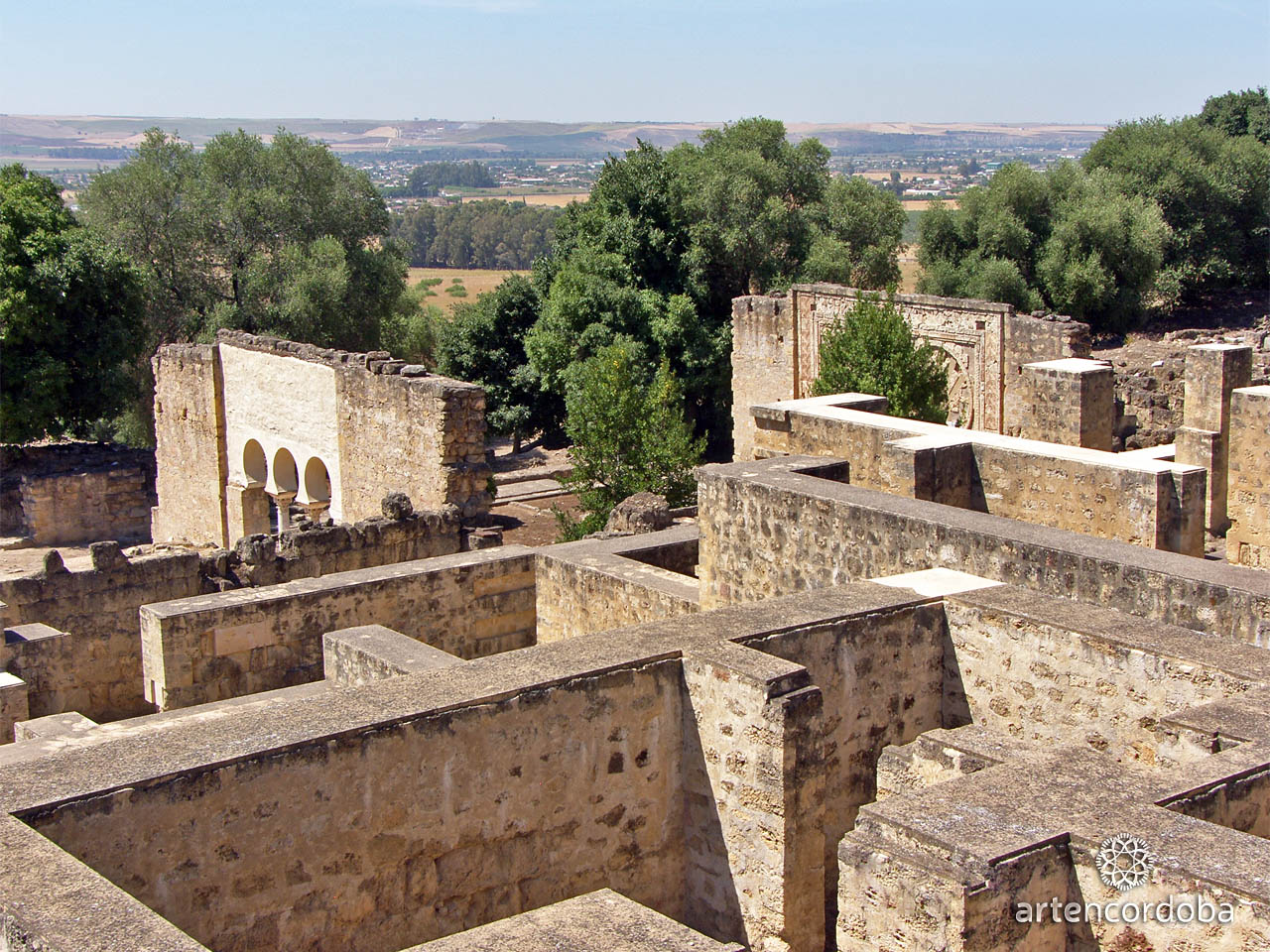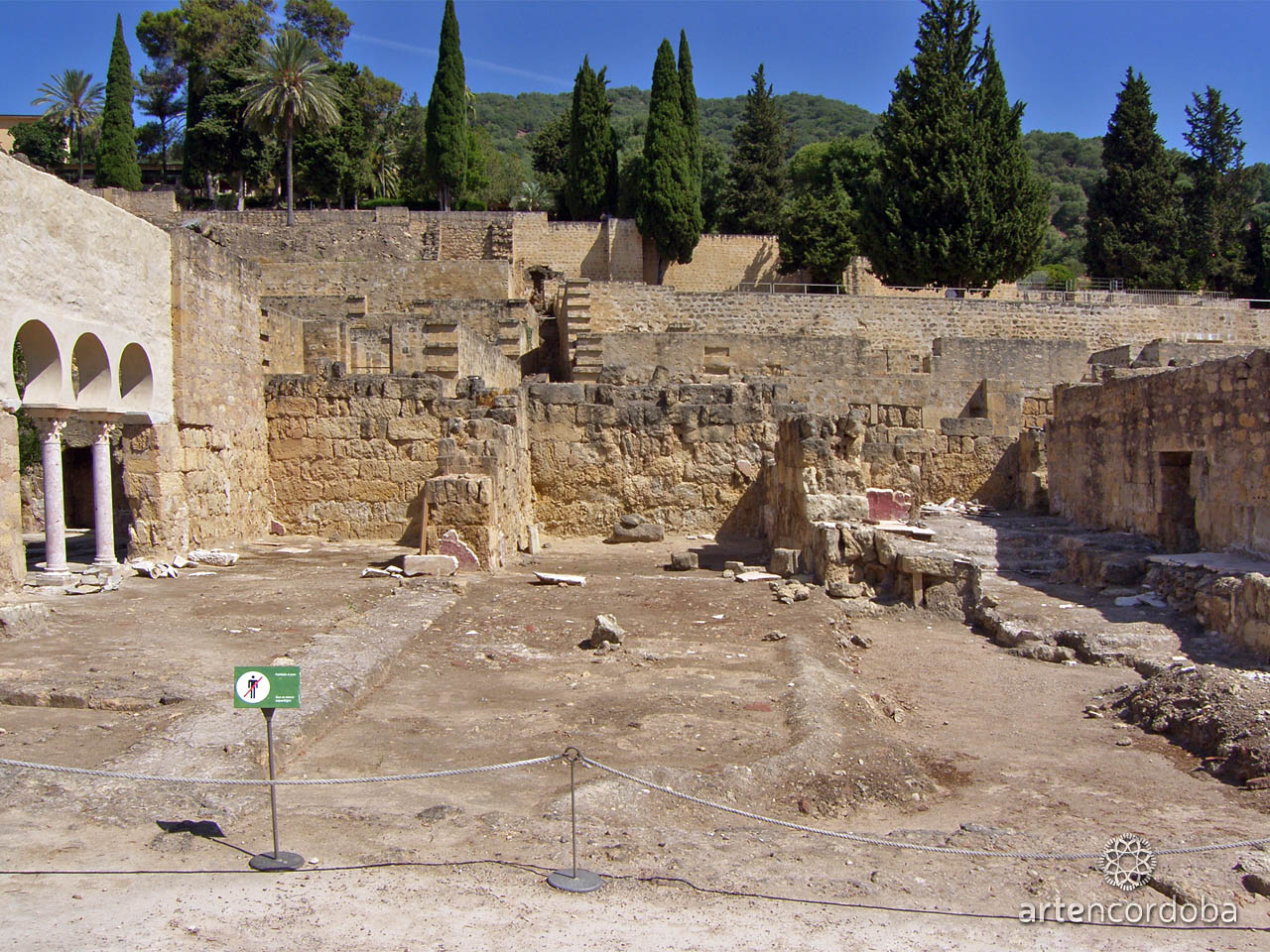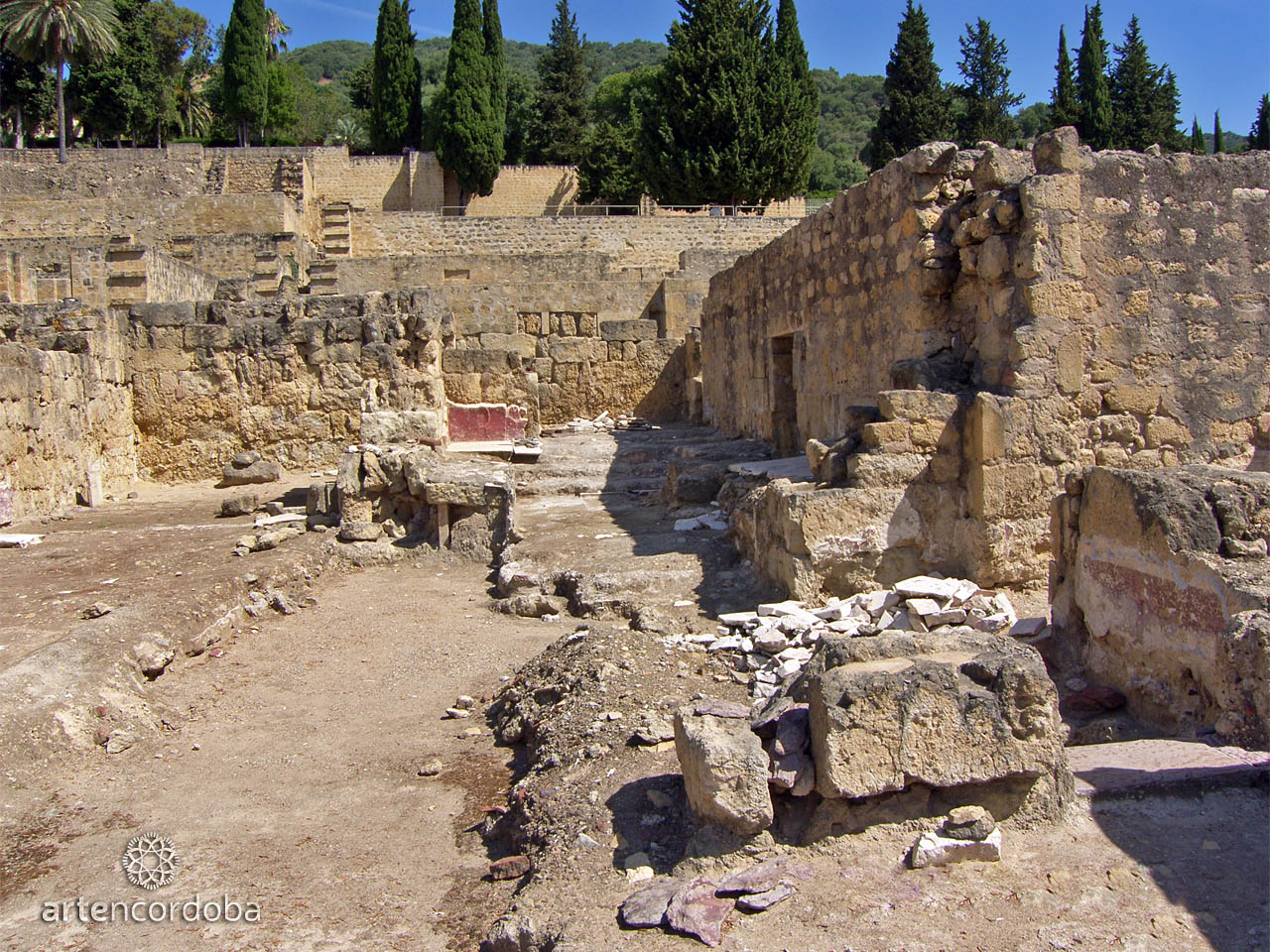






Located to the west of the House of Ya’far, the House of the Pool stands out as the only building, among those excavated so far in Medina Azahara, whose structure is organized around a central space occupied by a garden. The chronology of the building is unknown, although it is believed to have been built early on based on artistic and archaeological criteria. These same criteria also support its identification as the residence of Caliph Alhaken II – now generally accepted – although this hypothesis has not been confirmed through comparison with epigraphic remains or documentary sources.
The garden and the pool
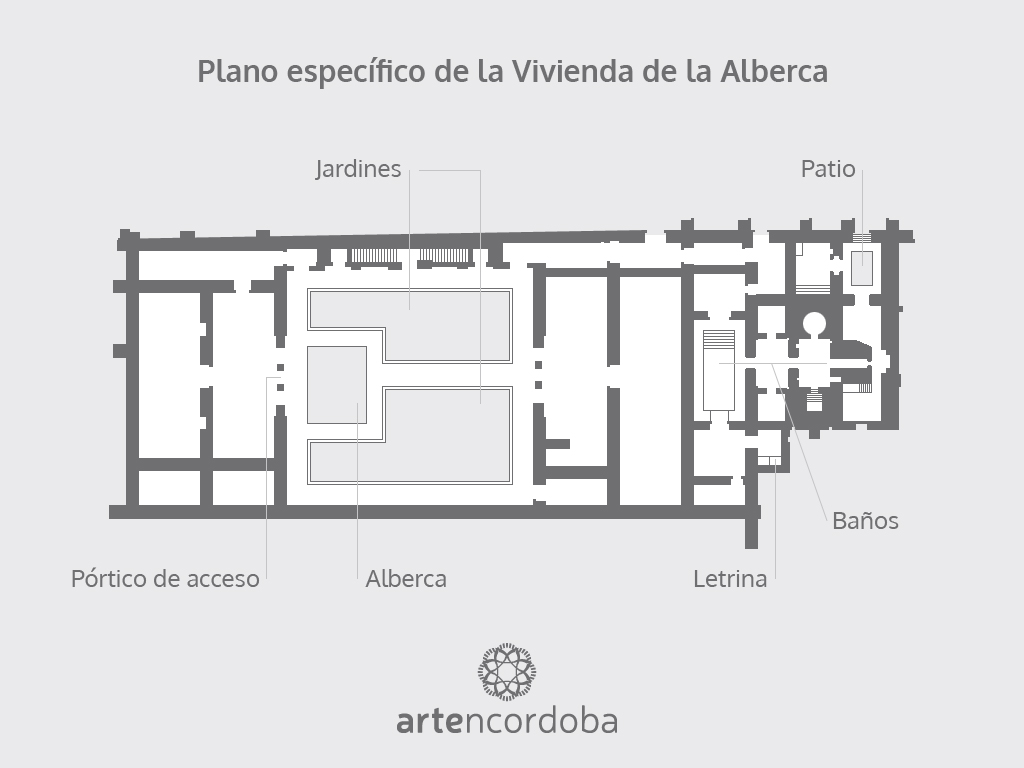
The garden beds embrace on their western end a small pool, supplied with water through a spout (a small bronze animal), and connected to an irrigation canal by means of two overflow outlets. The whole area is enclosed by perimeter walkways and a central one that marks the longitudinal axis of the house. On the northern front, a double-sloped covered staircase connected the house with the street coming from the Service Quarters, while on the southern end the garden space was delimited by a wall, of which no remains survive. With this layout, the garden space reinforced its isolation from the outside and its private and intimate character.
Architectural layout
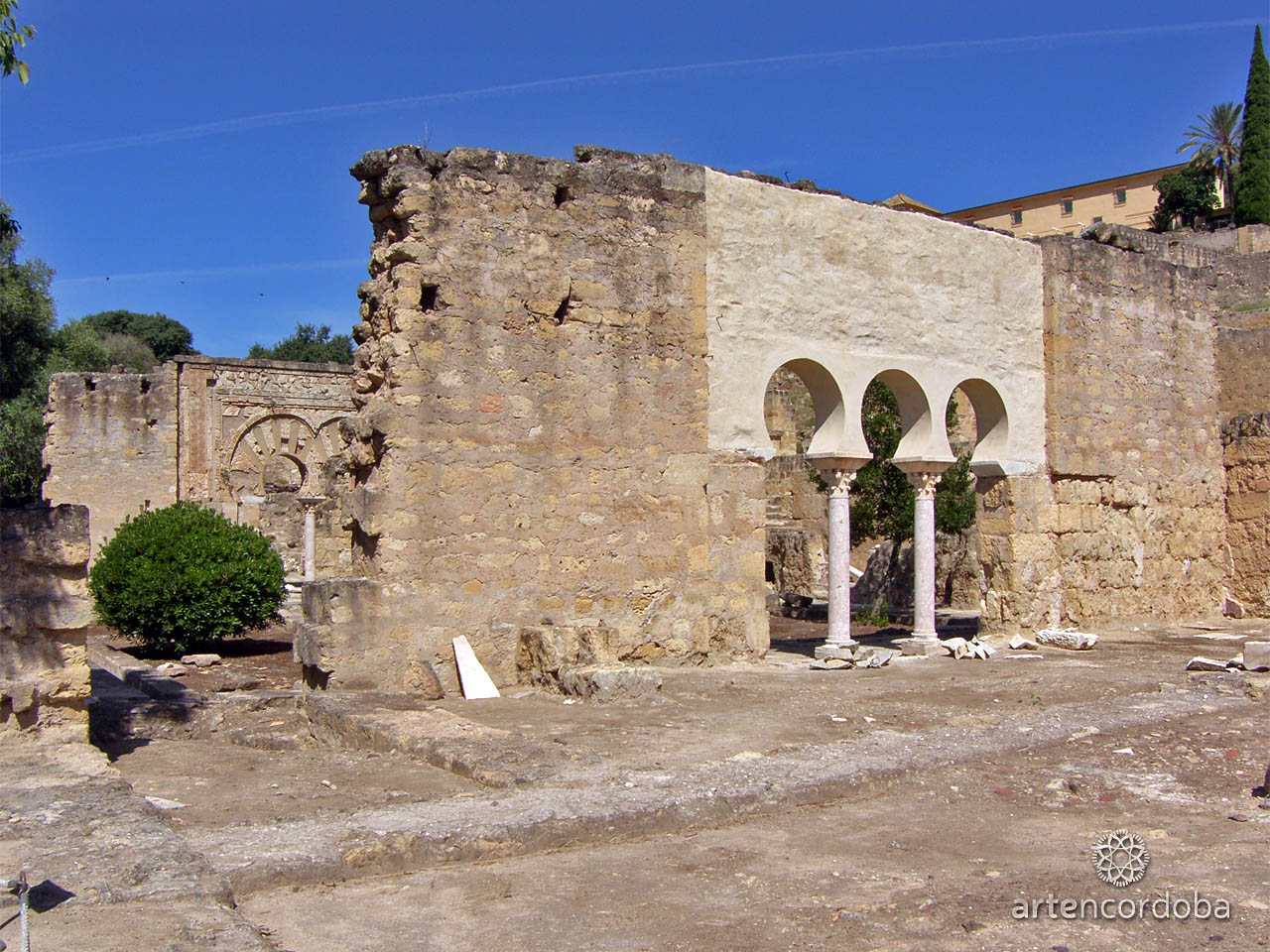
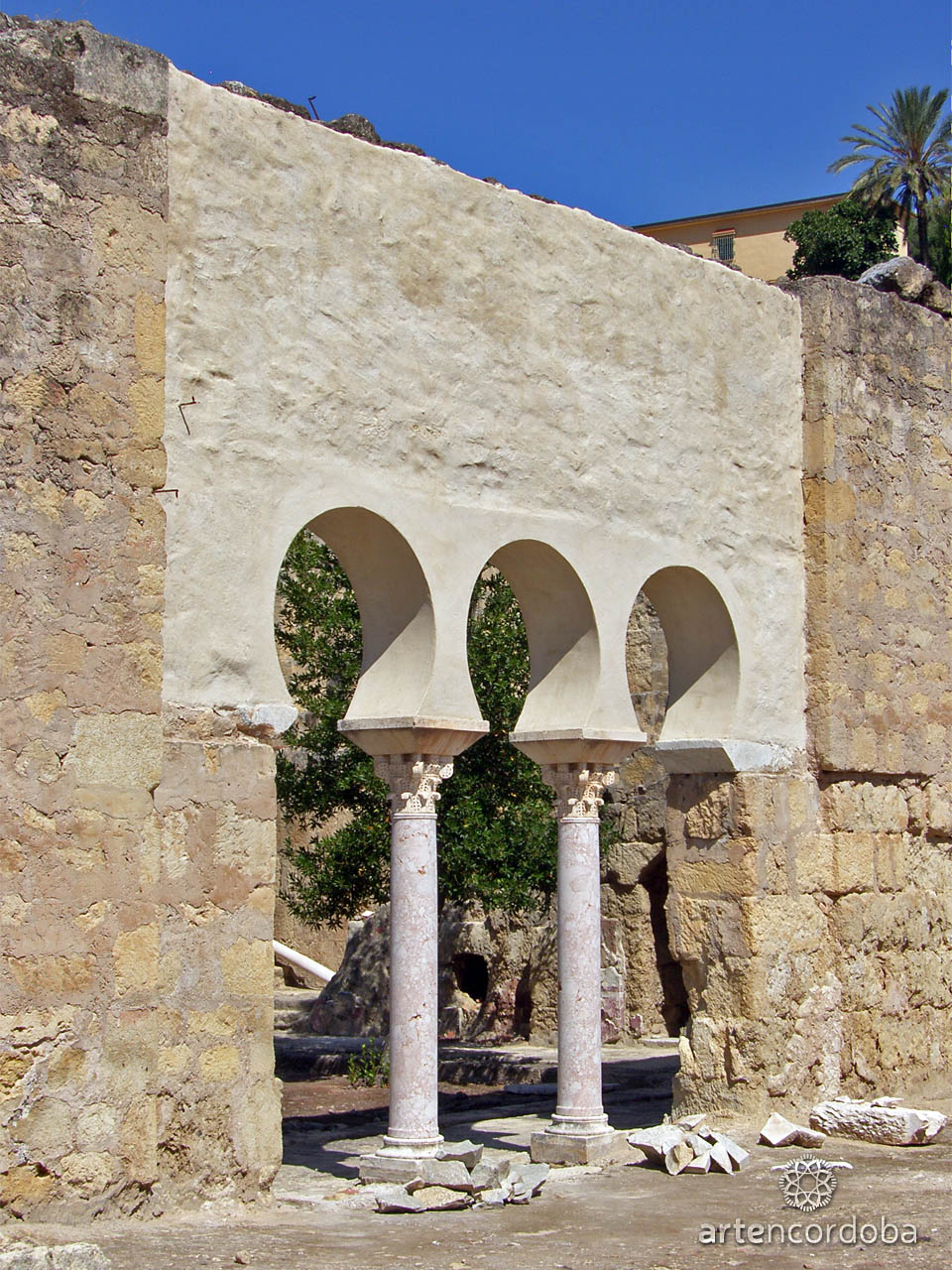
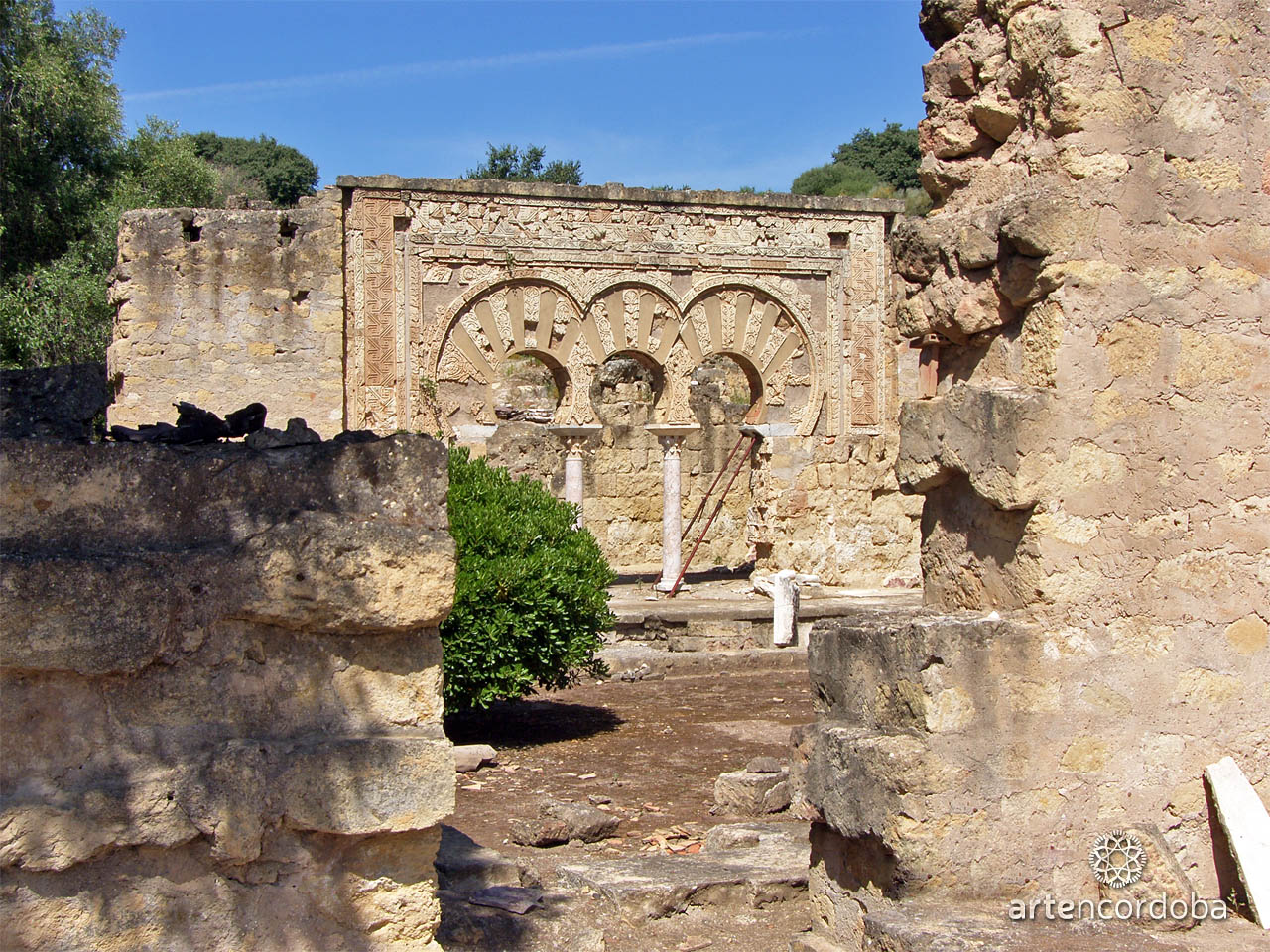
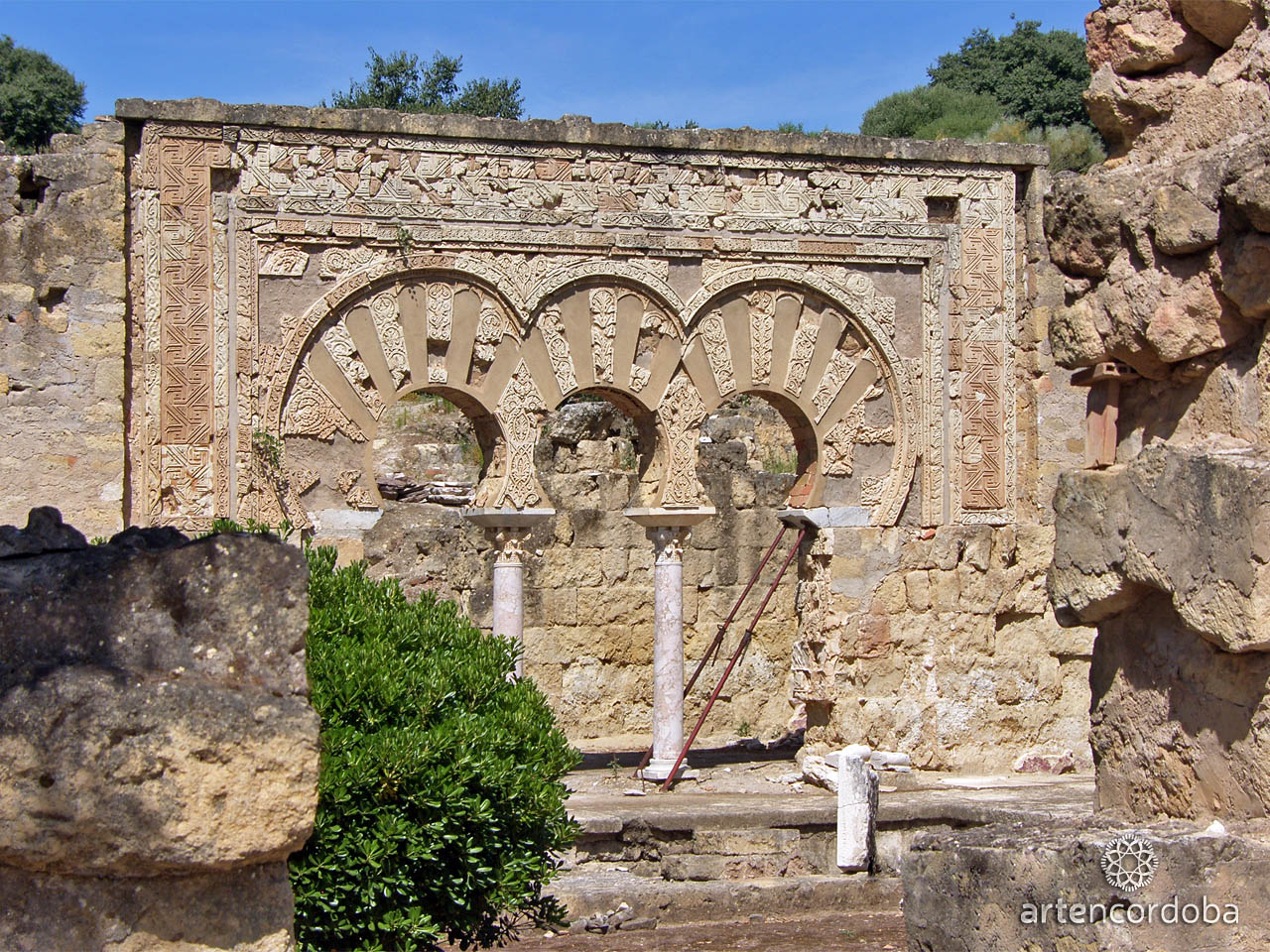
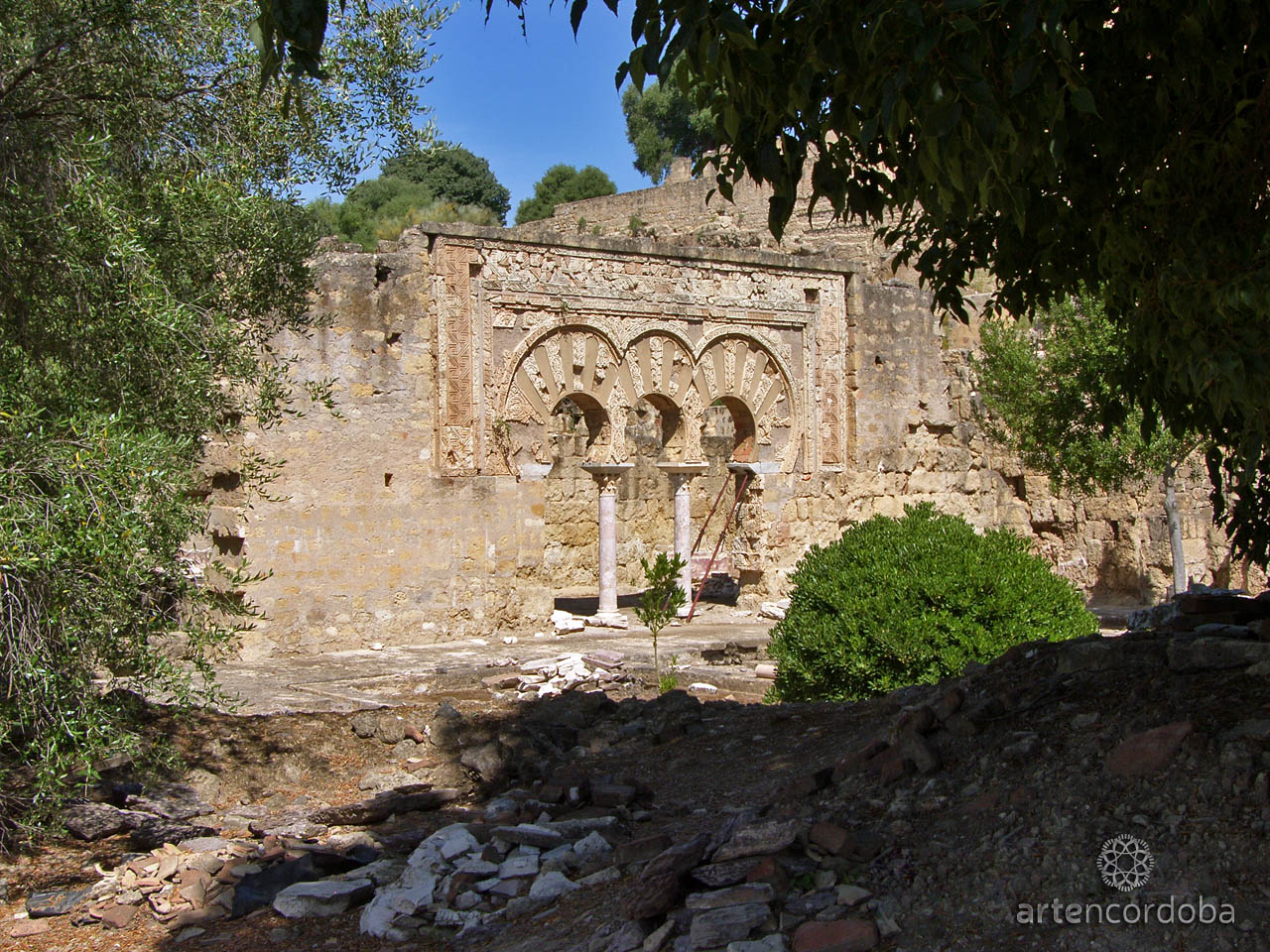
The rooms of the House of the Pool are arranged in pairs and open onto the shorter sides of the garden through their corresponding arcades, decorated with atauriques, raised in the central part on columns and at the ends on pilasters.
The bath attached to the house
A bath was attached to this house, which was part of the original design of the palace complex, initially for personal use. However, later modifications to the layout of the palatine city led to the bath being shared between its residents and those of the House of Ya’far. This transformation was due to the aforementioned hayib of Alhaken II, Ya’far ibn Abderramán, whose name appears in inscriptions found on three small arches decorating the hot room of the said bath and dated to the years 960–961.
One can observe the similarity between the bath attached to the House of the Pool and the bath next to the Rich Hall, both in their architectural structure and decorative organization, although differences can also be seen in the morphology of the small rooms of the hot chamber and the changing room. In any case, both baths were modeled after those found in the Islamic East.
Visiting the House of the Pool
If you’re unsure what to do in Córdoba, we recommend visiting the Archaeological Site of Medina Azahara by booking one of our guided tours. There, we will dedicate special attention to the House of the Pool and its importance within the site. Choose to enjoy quality tourism with qualified staff – don’t hesitate, ArtenCórdoba is your best option.
Text: Jesús Pijuán.