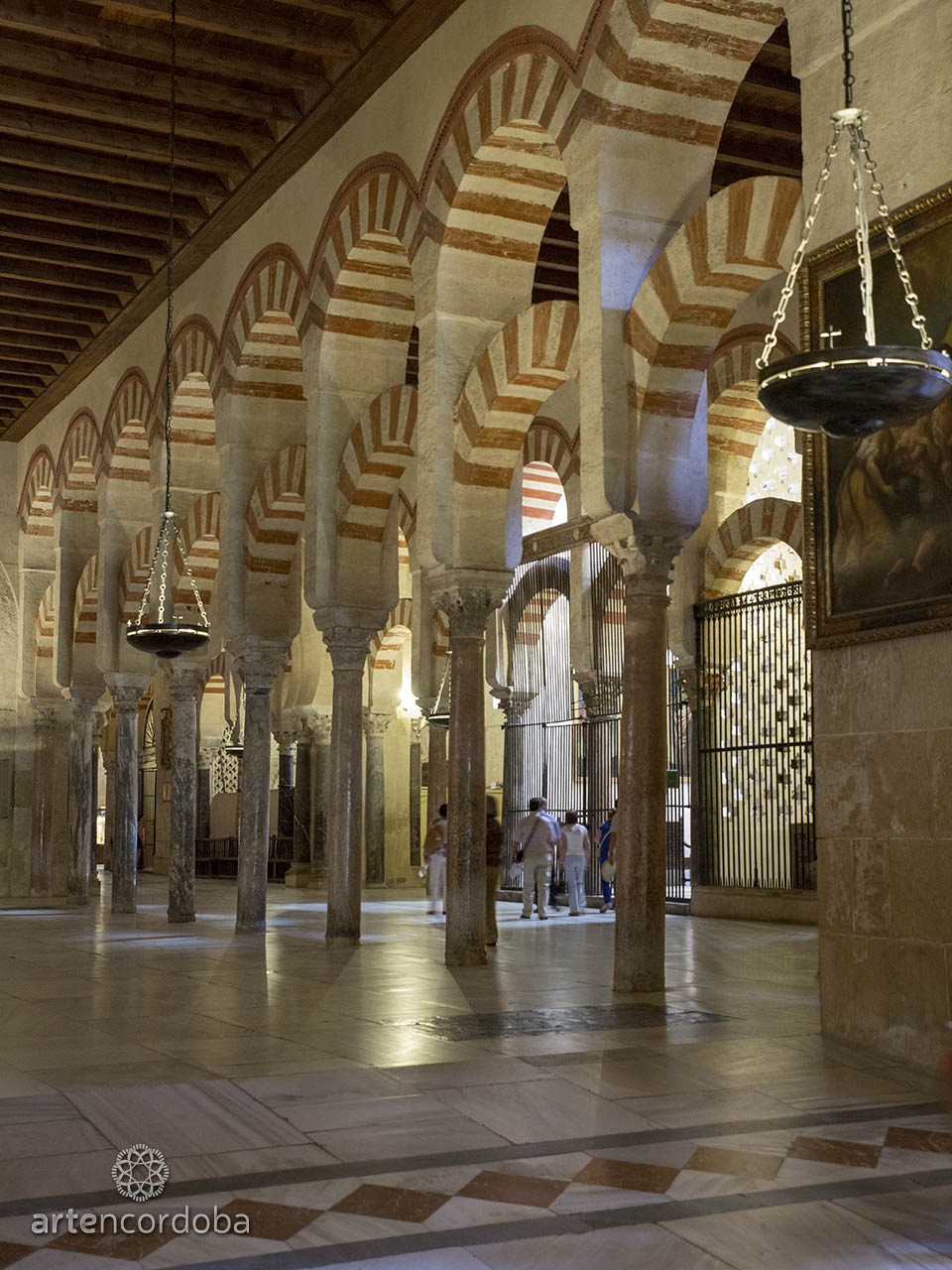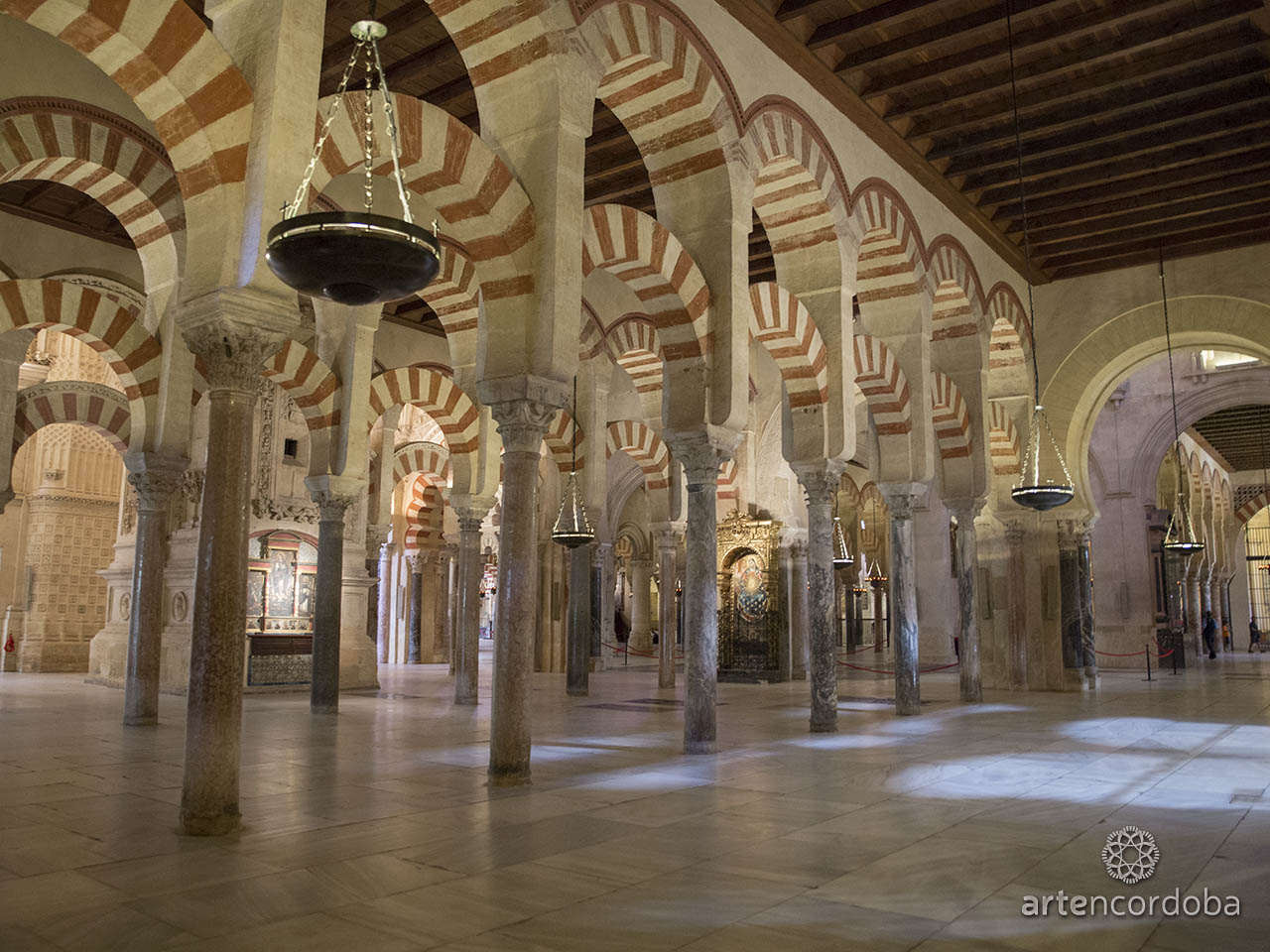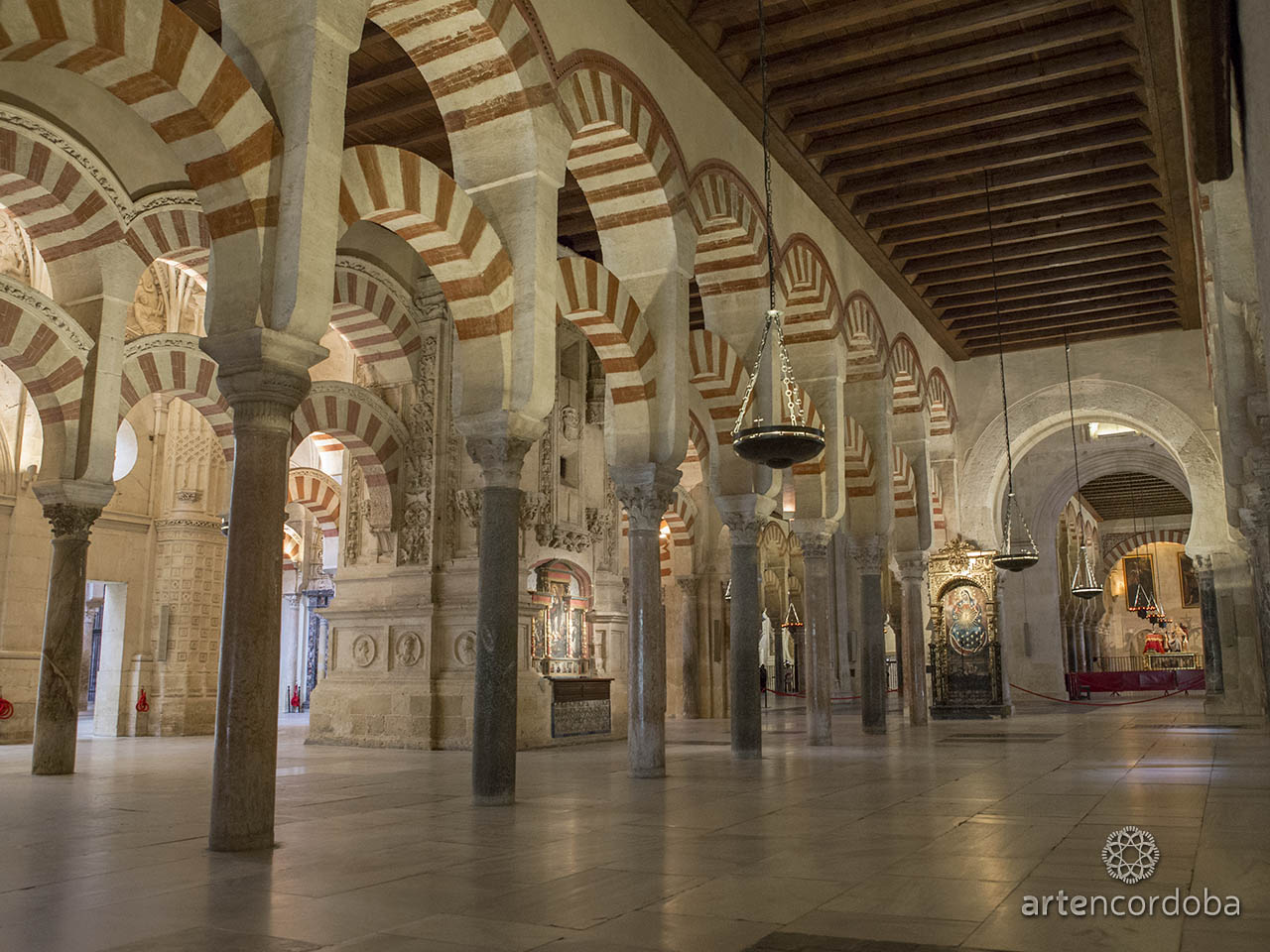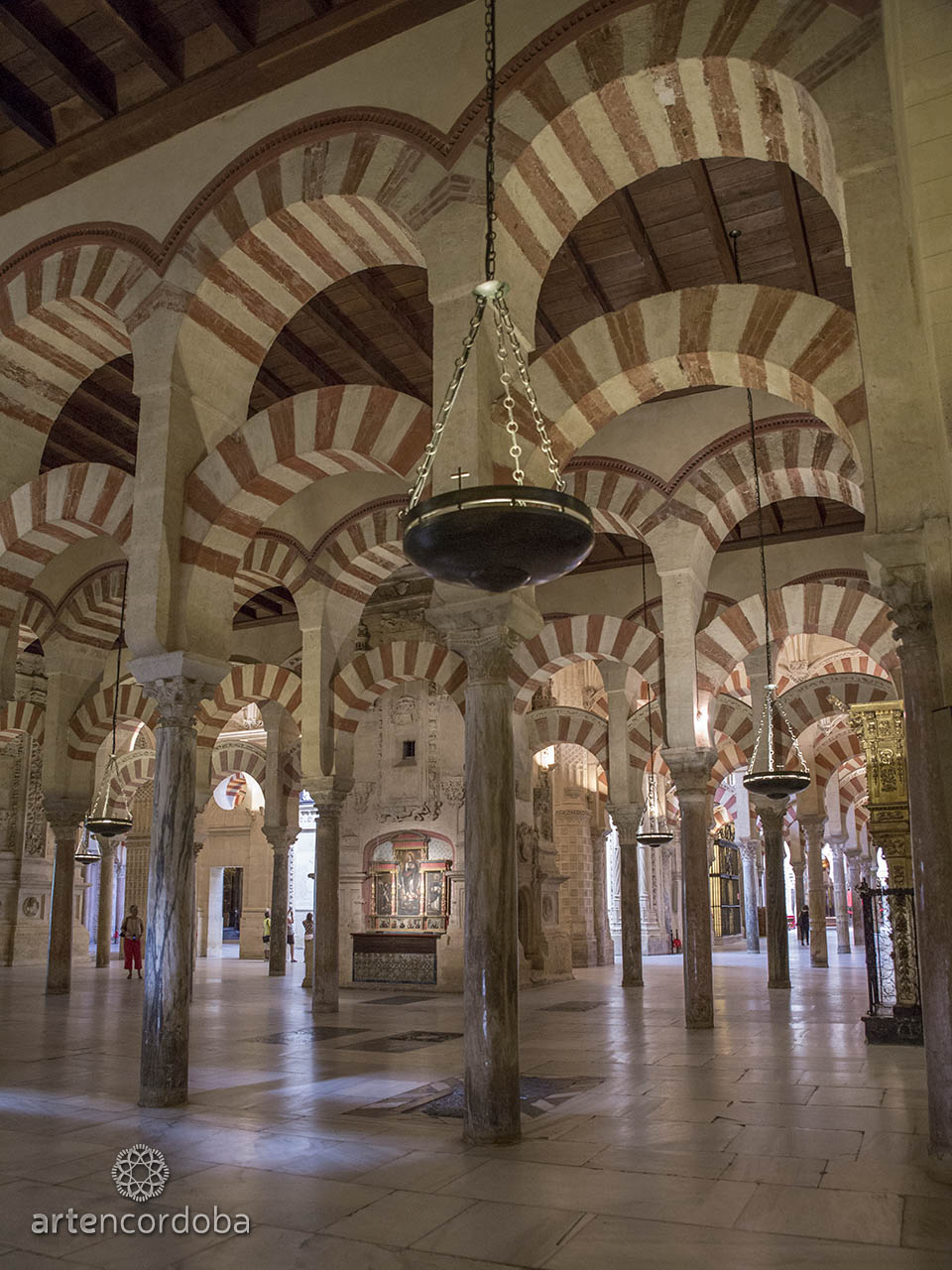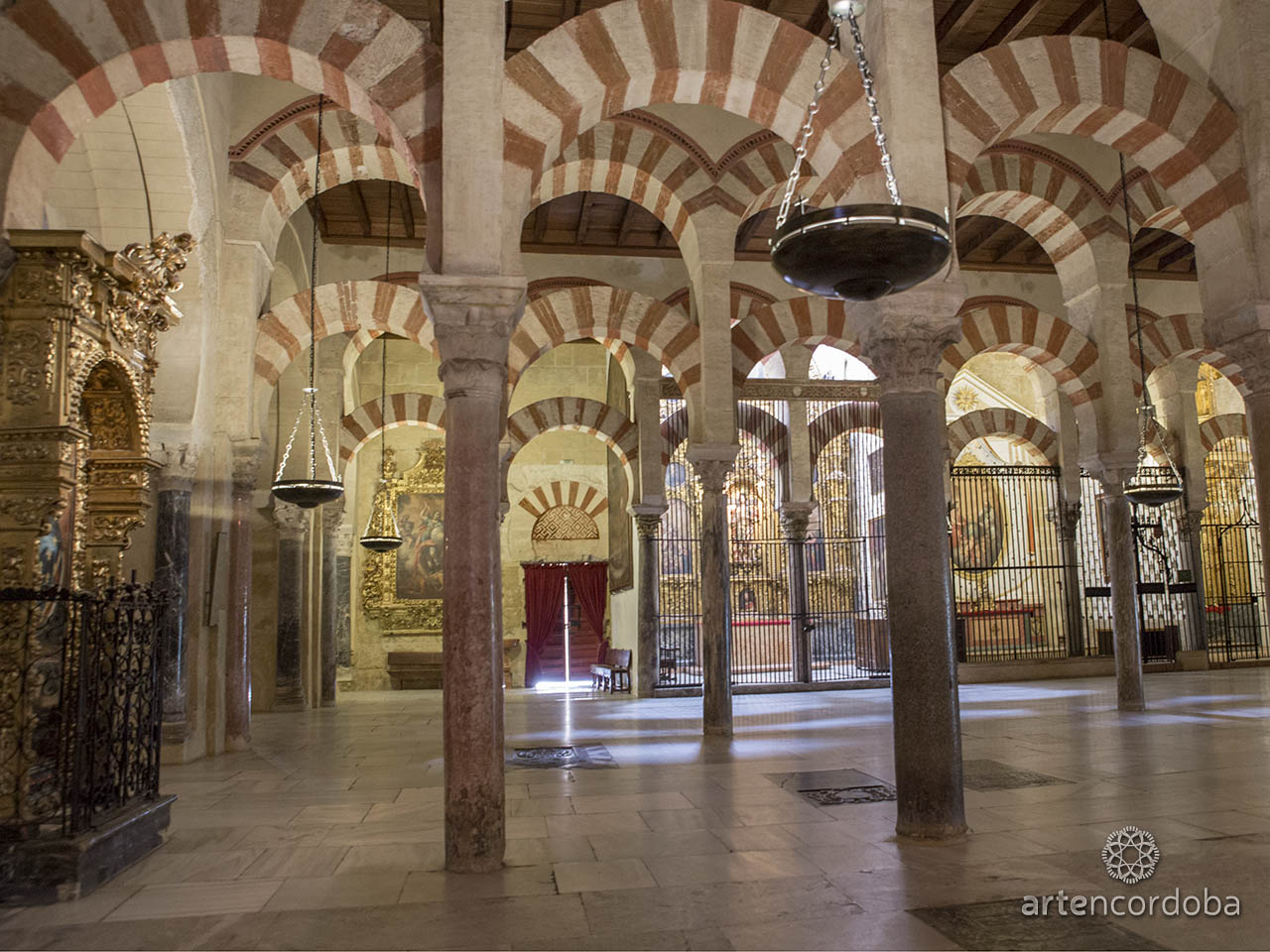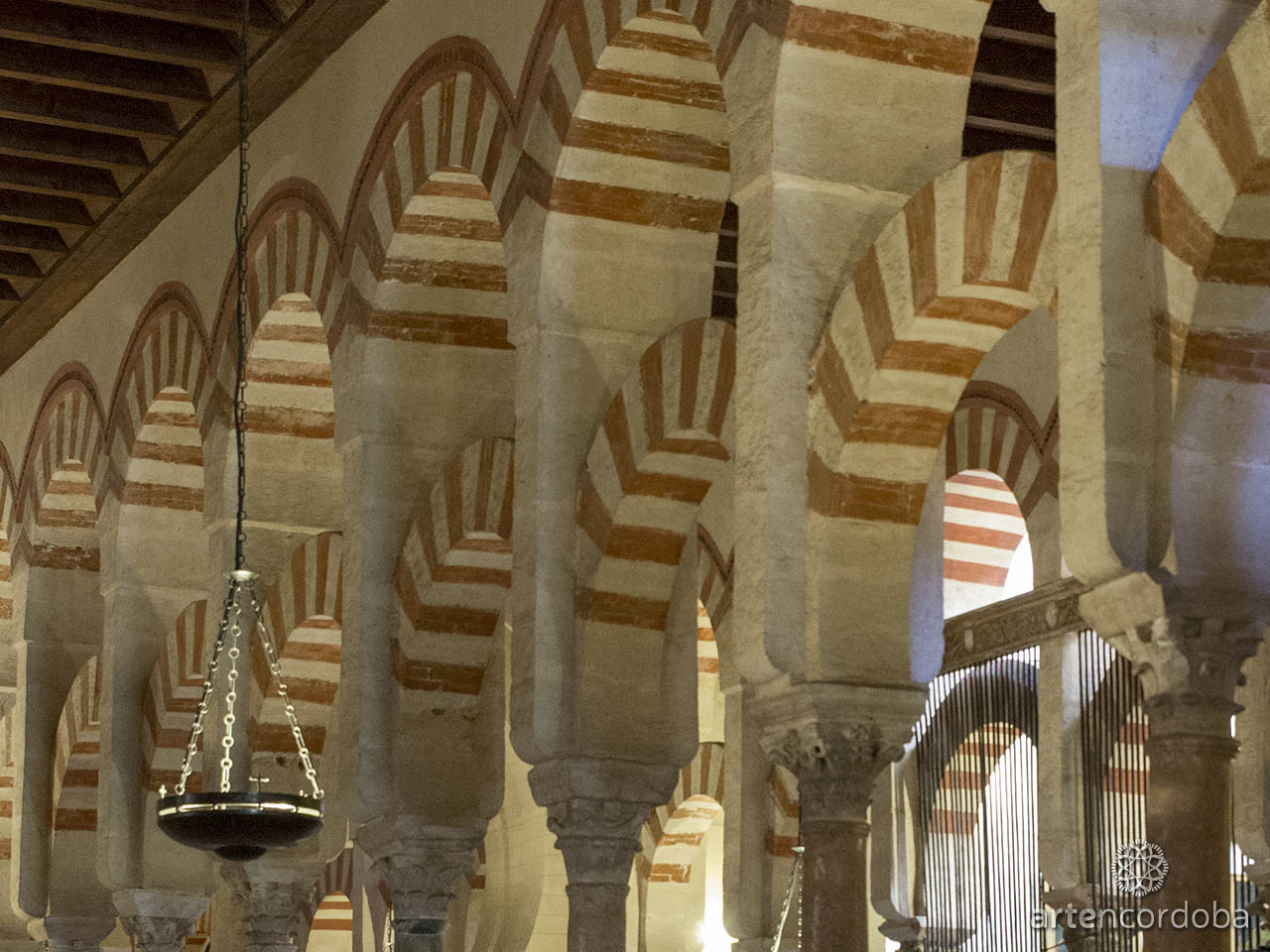






During the reigns of Abderramán I’s two immediate successors, the mosque did not undergo significant modifications, especially under Alhaken I (796–822). However, from the time of Hisham I (788–796), the courtyard gate called Deanes Gate has been preserved. It features a horseshoe arch of ancient design, similar to those in the prayer hall. In the first section of the oratory wall, he built the mida’a, a pavilion with a fountain for ablutions and modest latrines, which remained in use until Alhaken II demolished it to renovate the street where it was located. He also ordered the construction of a protected space on the roof of the Great Mosque, accessible by a staircase, for the muezzin, the person responsible for calling the faithful to prayer five times a day. Additionally, the courtyard or sahn was completed. Finally, in the northern area next to the courtyard, in a location not yet securely identified archaeologically, the women’s gallery was built.
The building’s space was doubled during the first expansion
But the most notable action by Hisham I regarding the mosque was that, in the year 796, this emir completed the original minaret of the Great Mosque, whose location in the courtyard was marked by Félix Hernández. This minaret, possibly the first built in Al-Andalus, was placed slightly to the right of the axis of the central nave, had a single staircase and one door, and measured about 24 meters in height, according to Islamic sources.
The expansion of Abderramán II
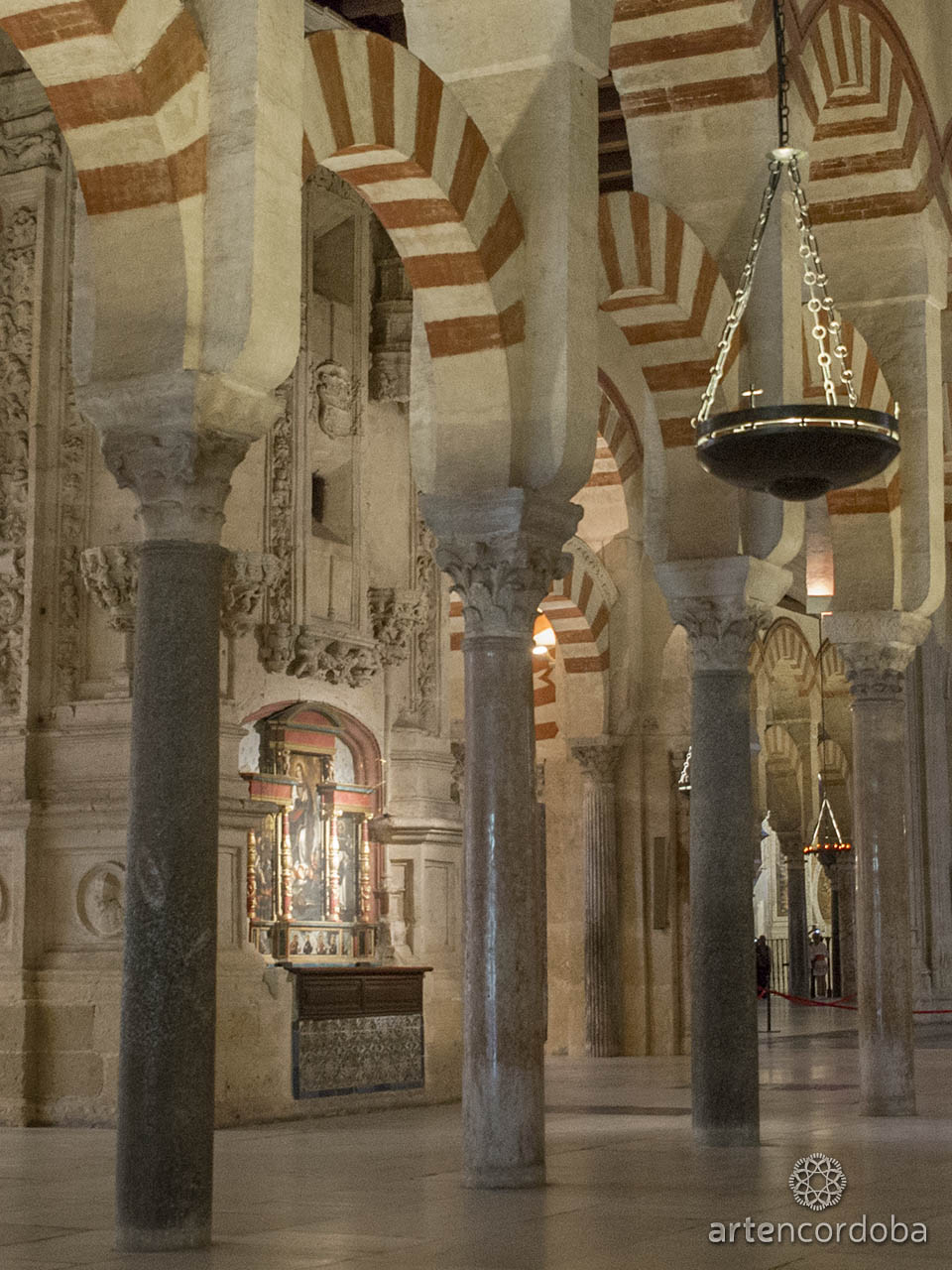
The first major expansion was carried out by Abderramán II (822–852), between the years 832 and 848. The works were directed by the eunuchs Nasr, who began the works, and Masrur, who continued them. The construction system of arches and roofs was repeated, but with slight variations. Although the number of naves did not change, the space of the building was doubled — approximately 130 by 79 meters — and the number of columns in the hypostyle hall increased to 200.
The qibla wall was moved 8 bays southward; the pilasters from the old qibla wall were preserved to provide more support for the thrust of the arches, whose length increased considerably. After this expansion, the prayer hall was 64 meters deep and nearly square. The Emir wanted to make the central nave and the transverse qibla wall more prominent, which was achieved through the decoration of the capitals.
Only the west outer wall of the courtyard galleries remains. According to sources, the side galleries rested on 19 columns each, while the one on the north side had 23.
Capitals and decorative elements
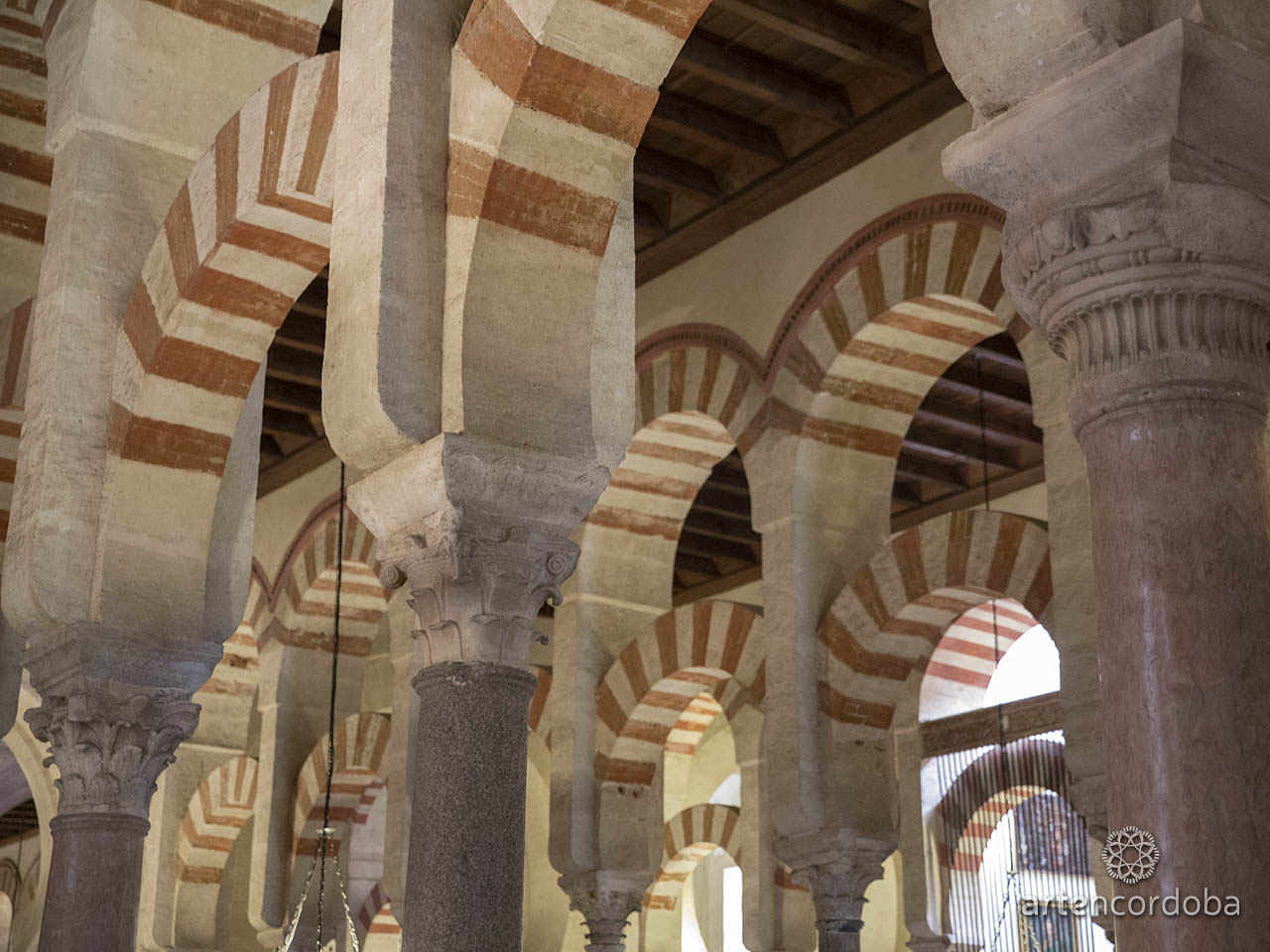
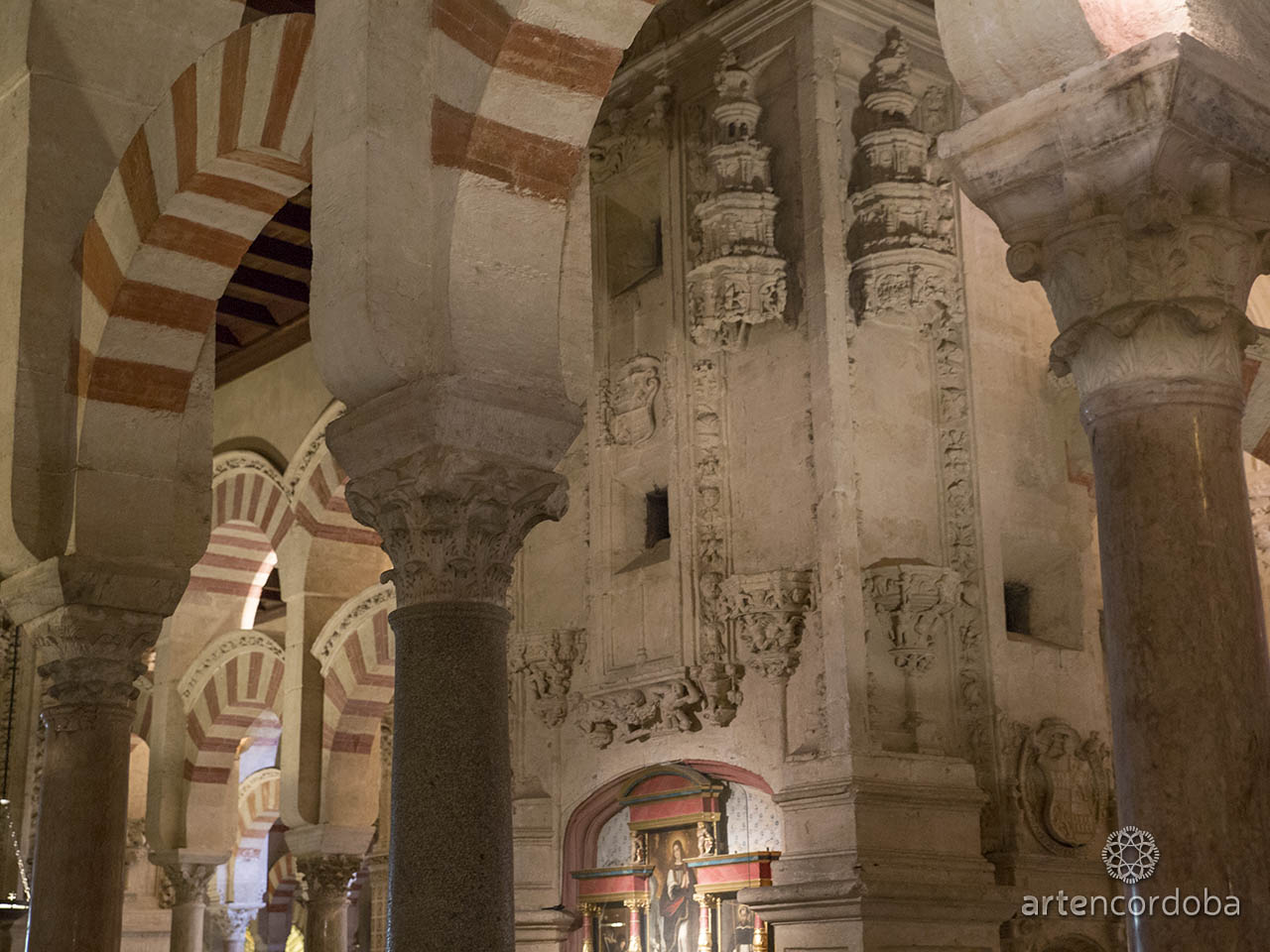
Patrice Cressier and Christian Ewert have demonstrated the importance of capitals in organizing the individual elements of the prayer hall since the construction of the Original Mosque. In Abderramán I’s original plan, the central nave of the mosque was the axis of symmetry for the distribution of various types of capitals, with ancient Visigothic columns being reused in the building.
However, in the Expansion of Abderramán II, Islamic copies of Roman and Corinthian capital models were used, whose design and construction were never strictly classical. The column shafts from this expansion do not rest on bases. The columns for the macsura were carefully selected. These columns have striking fluting, and the smaller ones in the mihrab feature colored marble and beautiful capitals.
Later interventions in the mosque
Muhammad I (852–886) completed the work started by his father Abderramán II. In the year 865, the macsura was renovated, and between 855–856, the decoration of the entrance was renewed. In the latter year, the decoration of the Gate of the Viziers was completed. Also, probably during the reign of this emir, a new door to the prayer hall was opened on the side wall of the hall, discovered by Félix Hernández, located approximately halfway down the hall.
According to the inscription on the doorway, the oldest preserved in the mosque, the director of the works was the fatá Masrur, who may have been the same person who worked for Abderramán II.
Copies of Roman and Corinthian capitals
Finally, during the emirate of Al-Mundhir (886–888), the Treasury Room was built, and during that of his brother Abd Allah (888–912), the Sabat — a raised passage connecting the Andalusian Alcazar with the macsura area — was constructed. Only the San Miguel Gate remains from this passage, which led into the mosque. The Sabat was built to prevent the faithful from raising their gaze upon the emir’s arrival and to ensure his protection against possible attacks.
Visit to the Mosque-Cathedral
If you’re not sure what to do in Córdoba, we recommend visiting the Mosque-Cathedral by booking one of our guided tours. There, we will dedicate a special chapter to the expansion ordered by Abderramán II. Choose to enjoy quality tourism with qualified staff — no doubt about it, ArtenCórdoba is the best option.
Text: Jesús Pijuán.