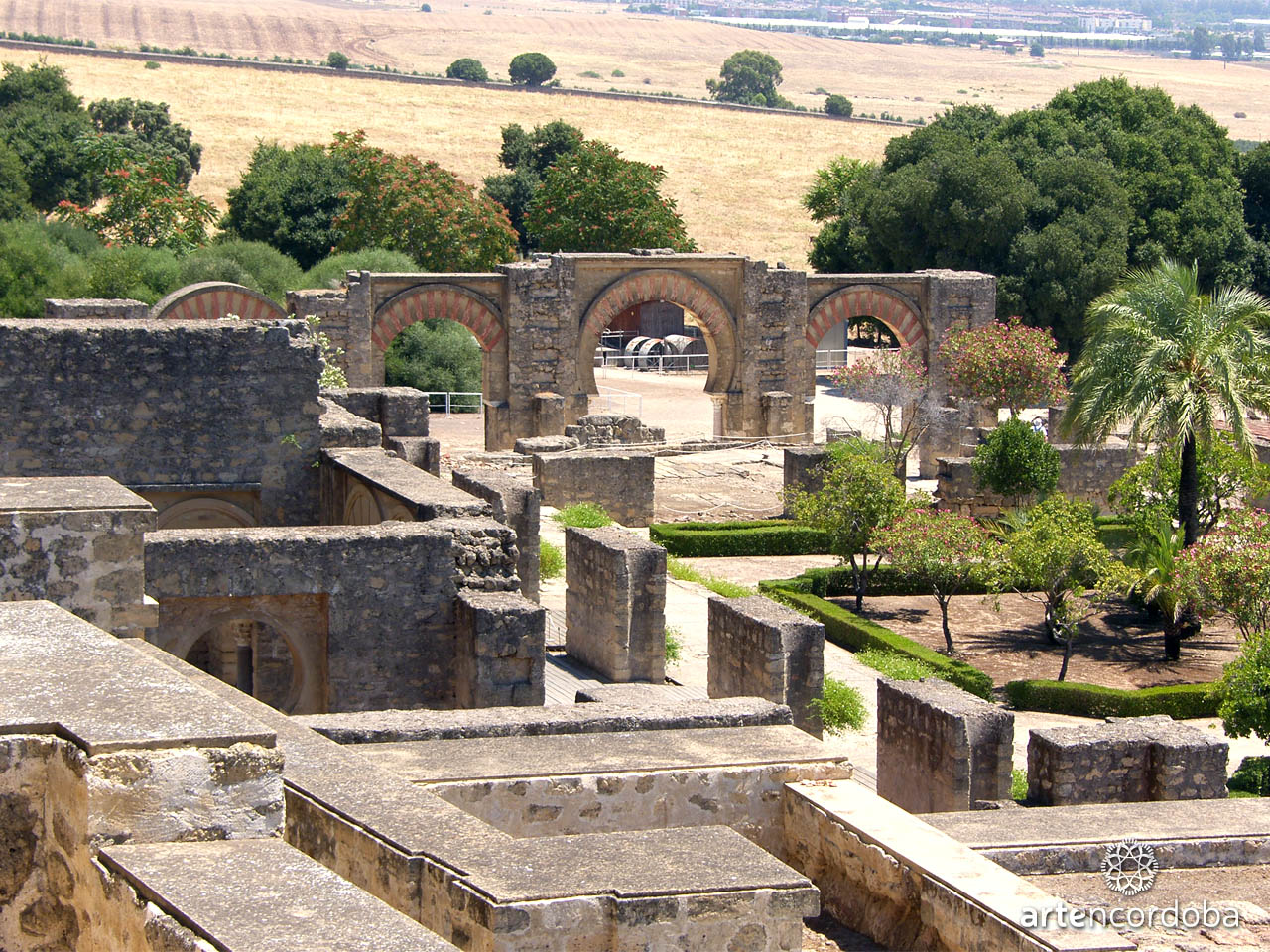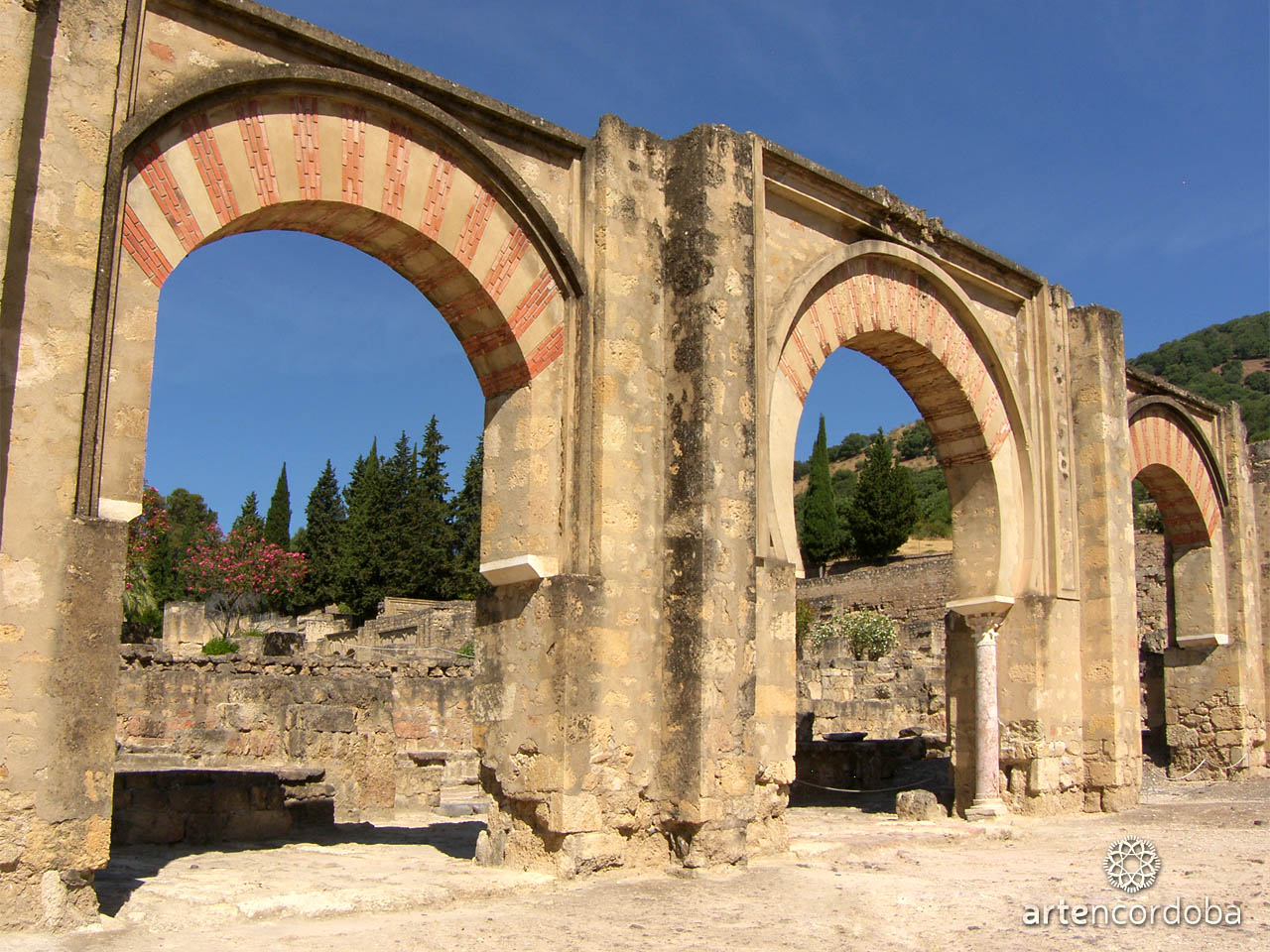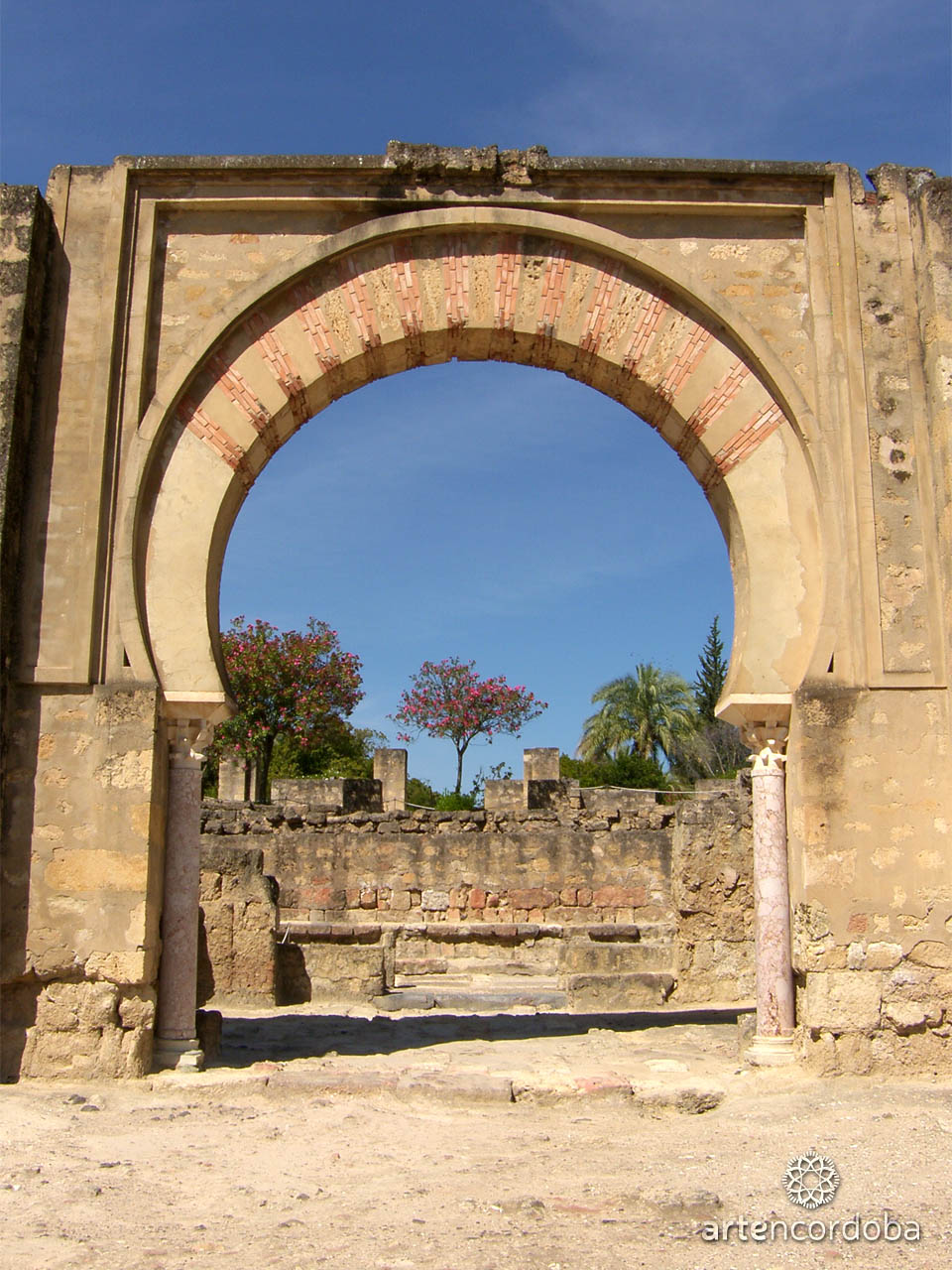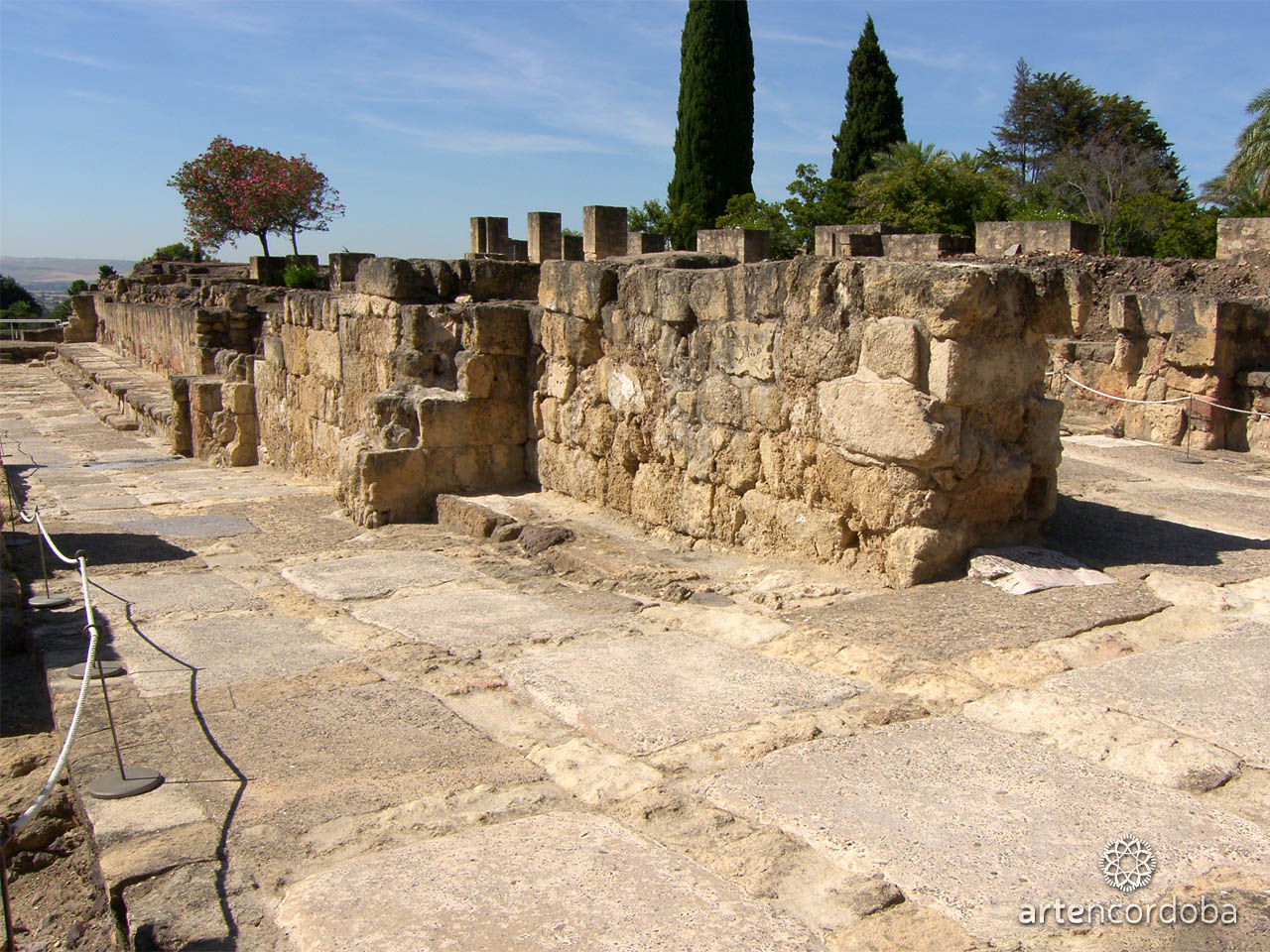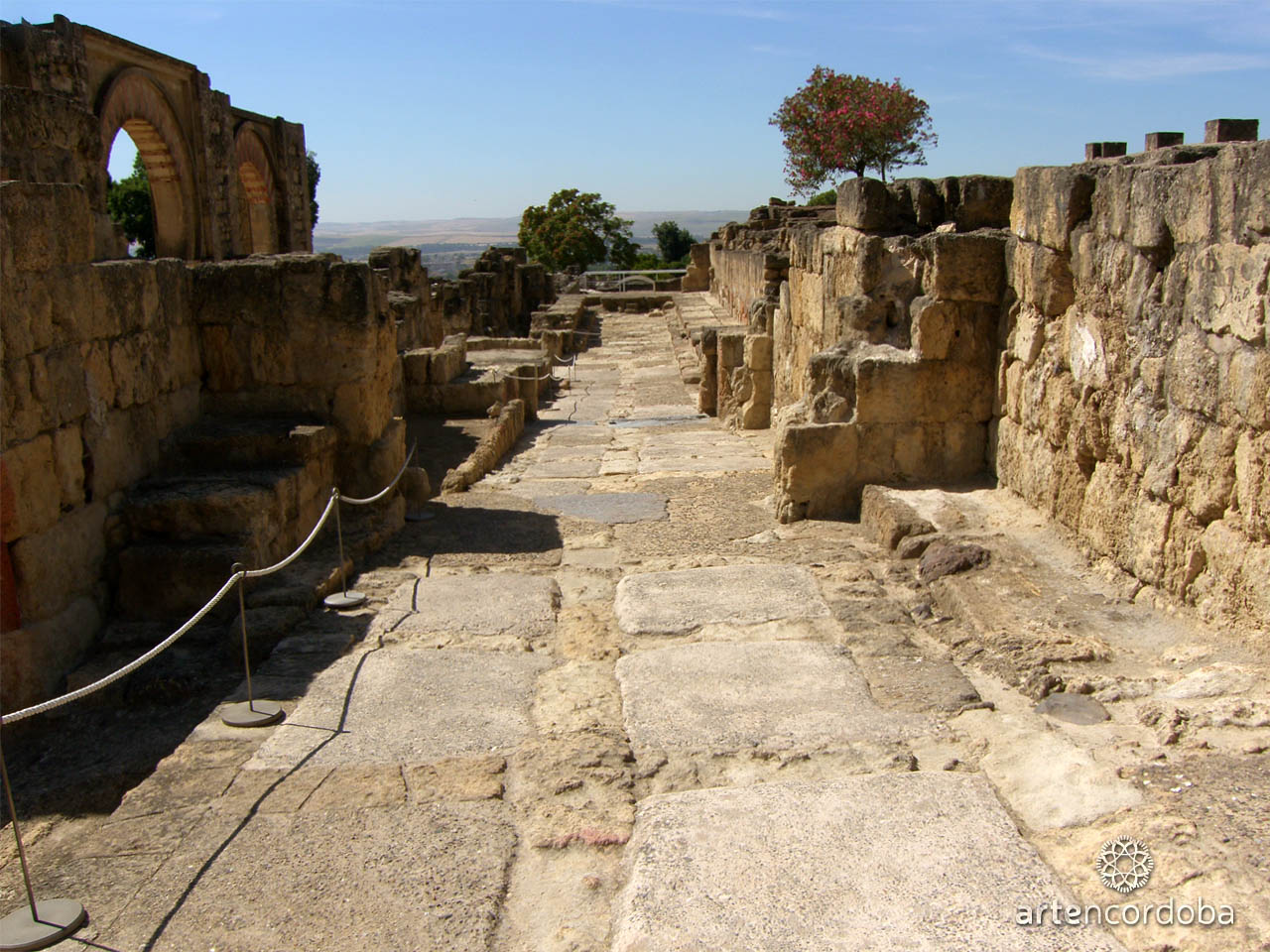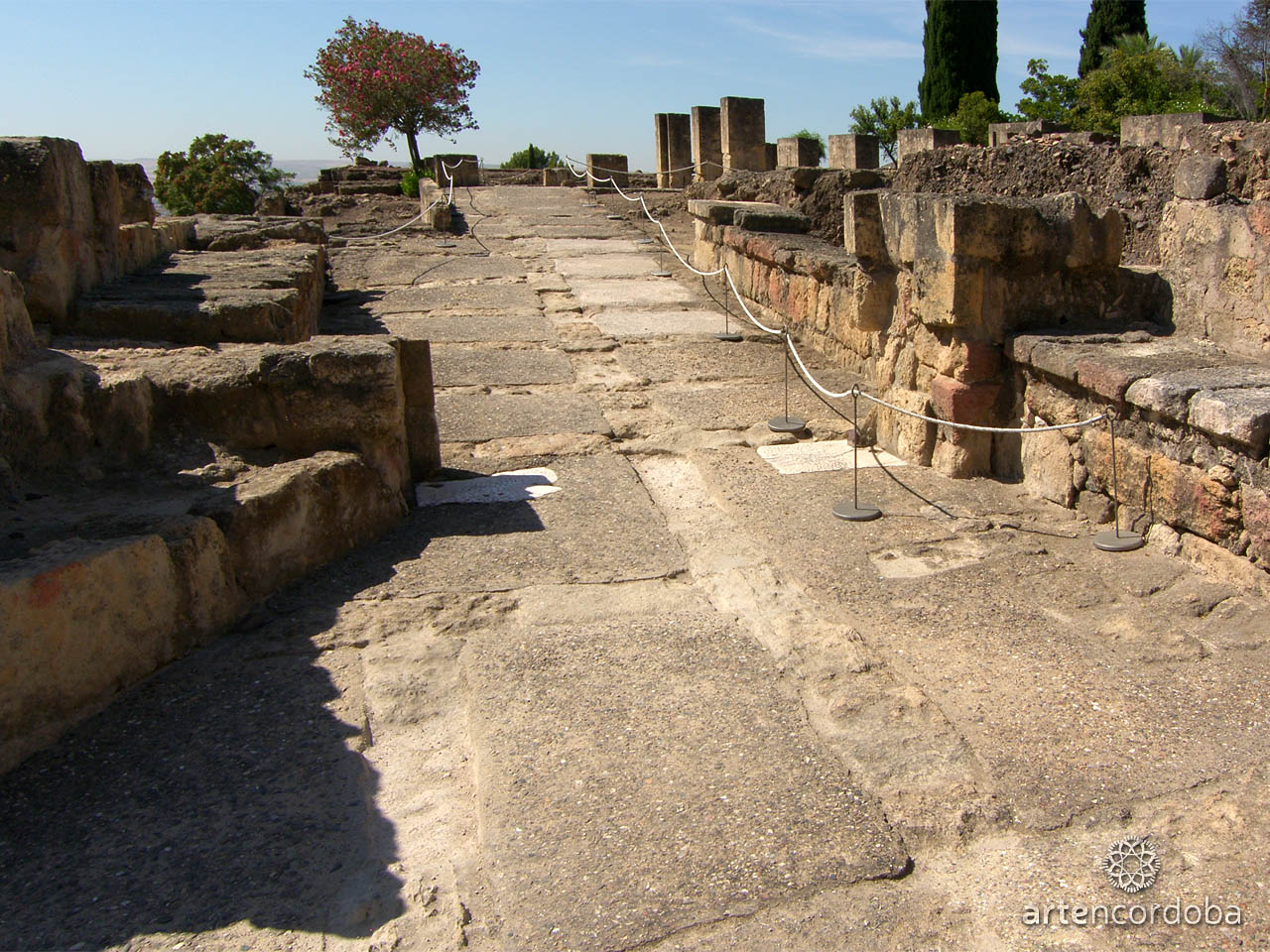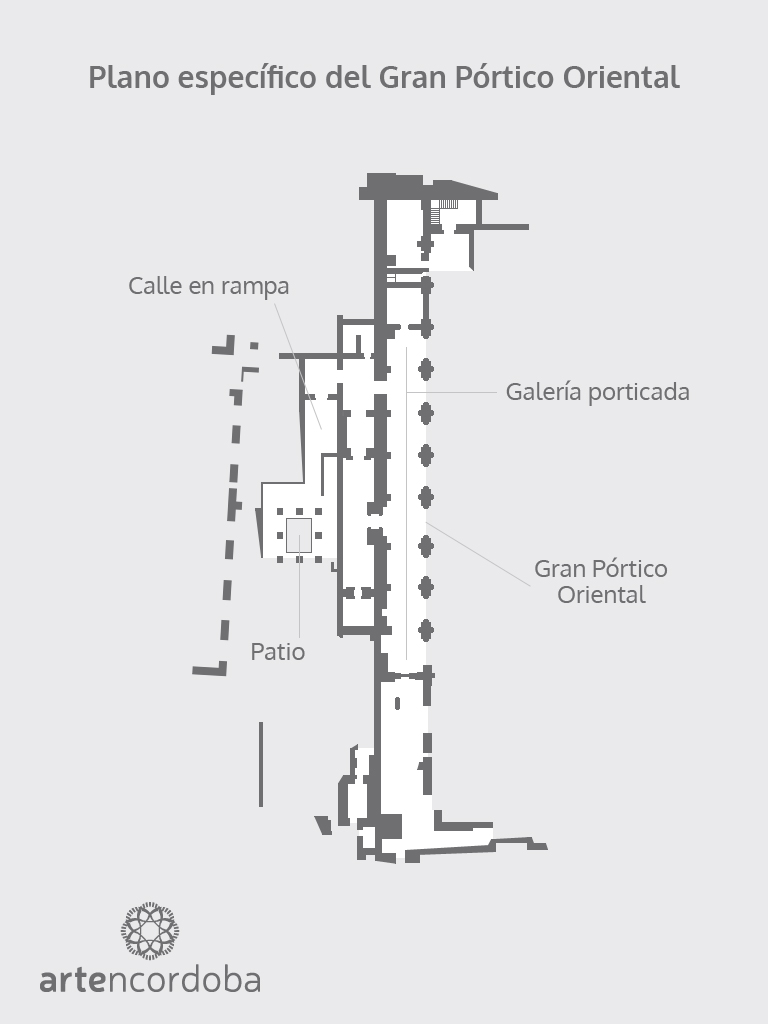






Beyond the Basilical Hall and the nearby structures, a ramped street heads eastward, broken into two sections separated by gates, with stone benches on both sides. Jambs and hinge-stones of the gates are still preserved. The street’s pavement consists of limestone blocks, forming framed sections filled with dark mountain stone, as seen in the only area where the original pavement has been preserved, at the entrance to the house located to the northwest.
The street, designed for the use of pack animals accompanying the embassies to be received by the Caliph, connected the aforementioned House of War with the lower terrace where the Great Eastern Portico was located.
Original Construction
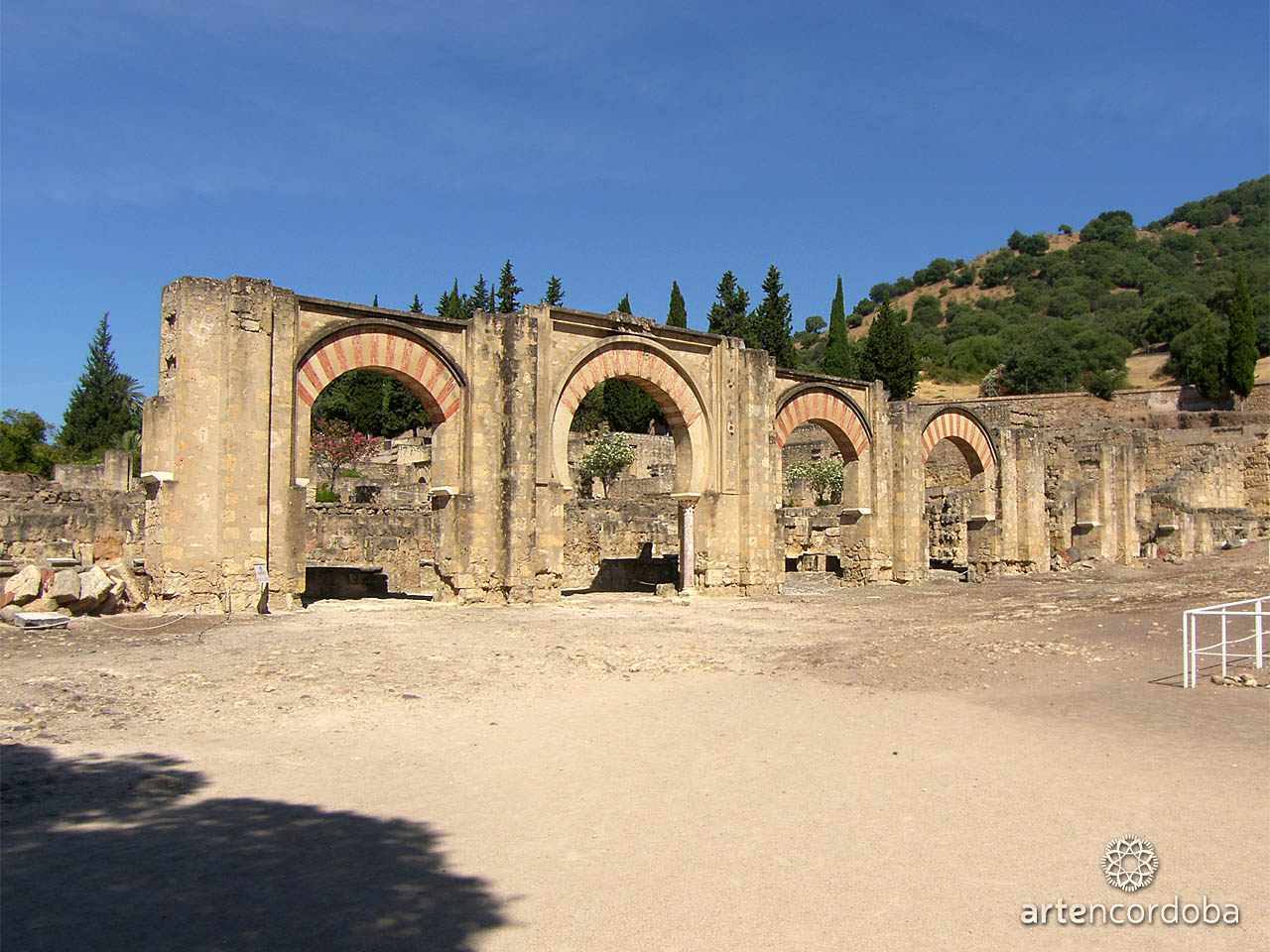
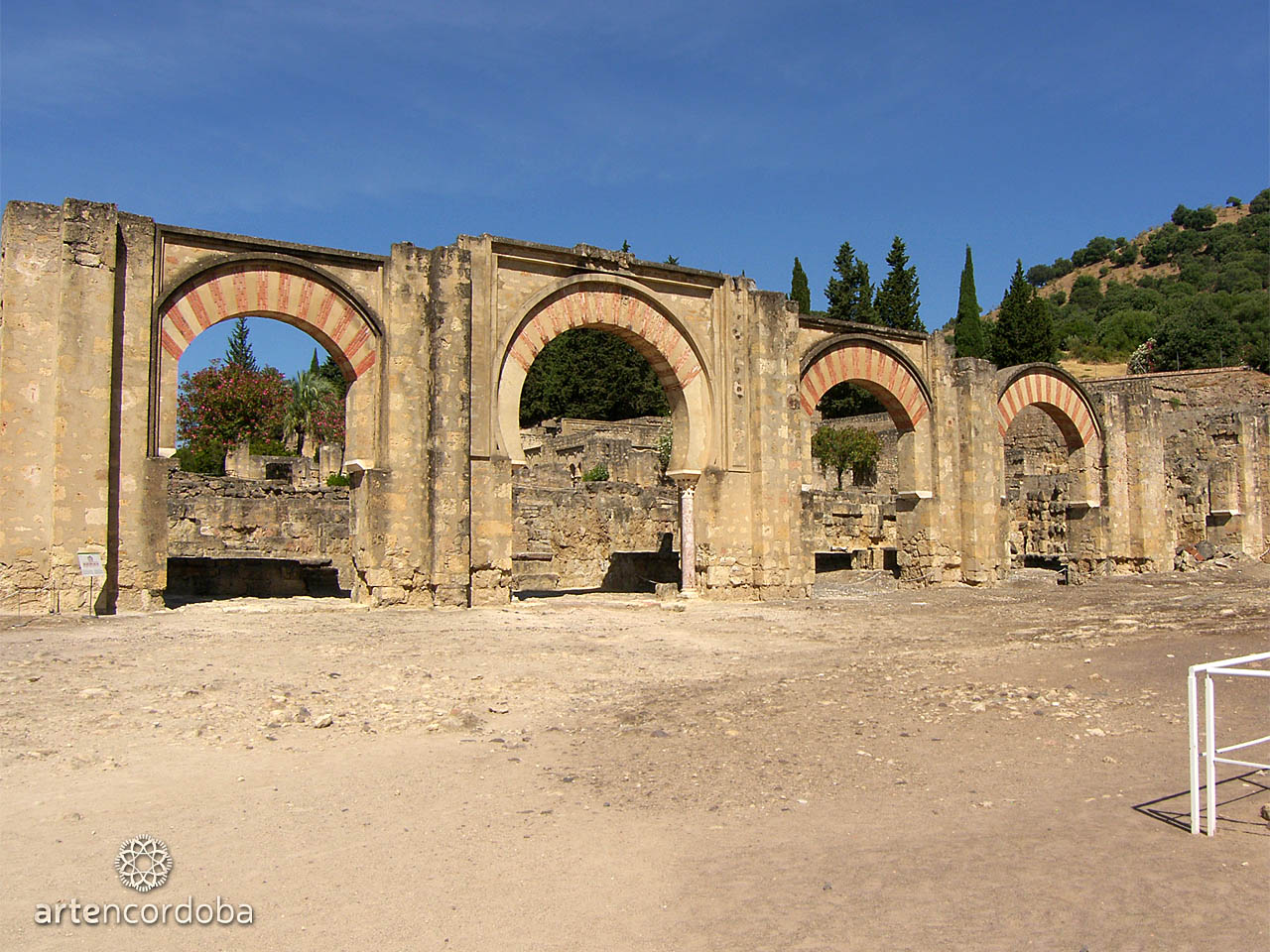
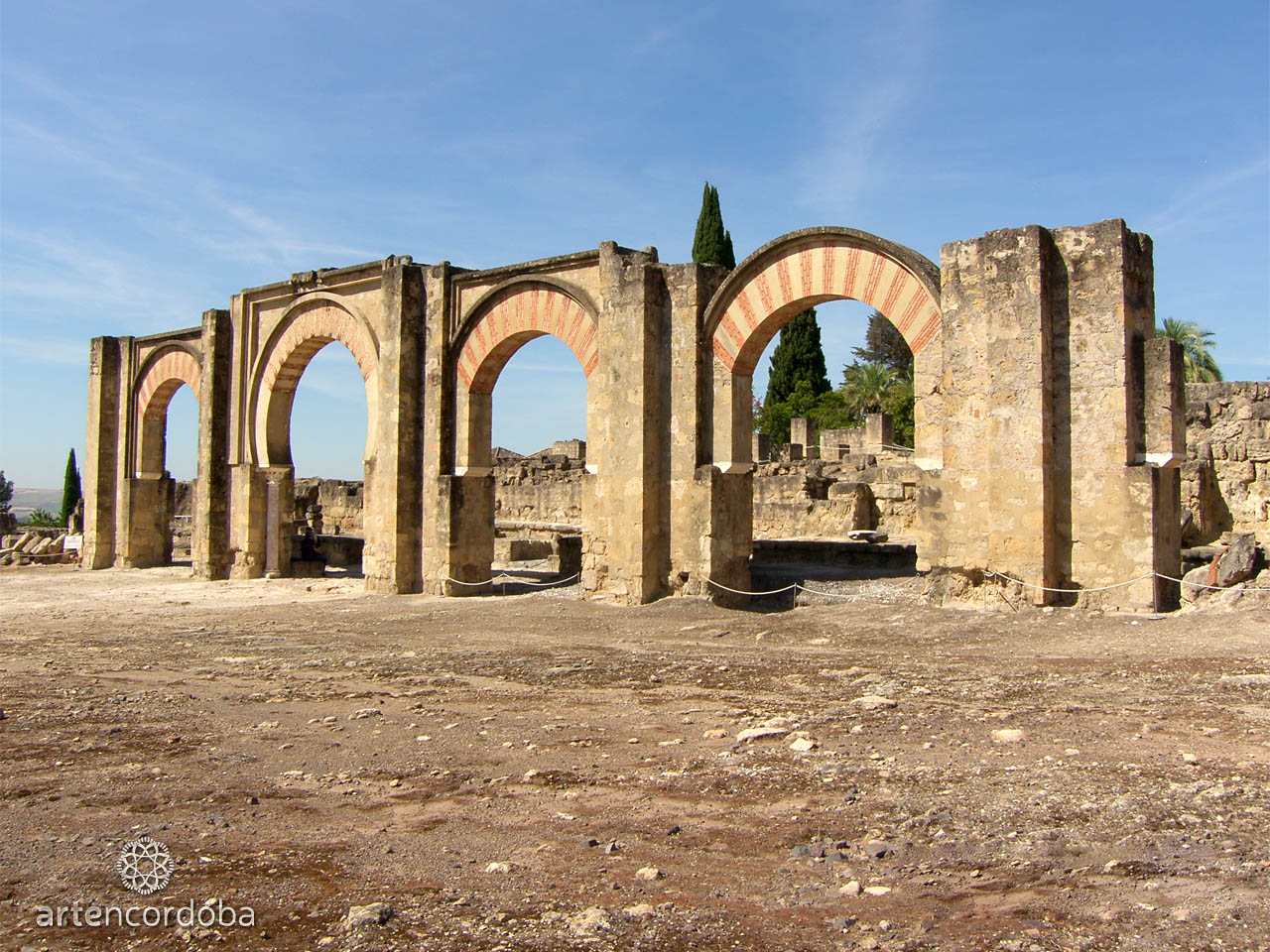
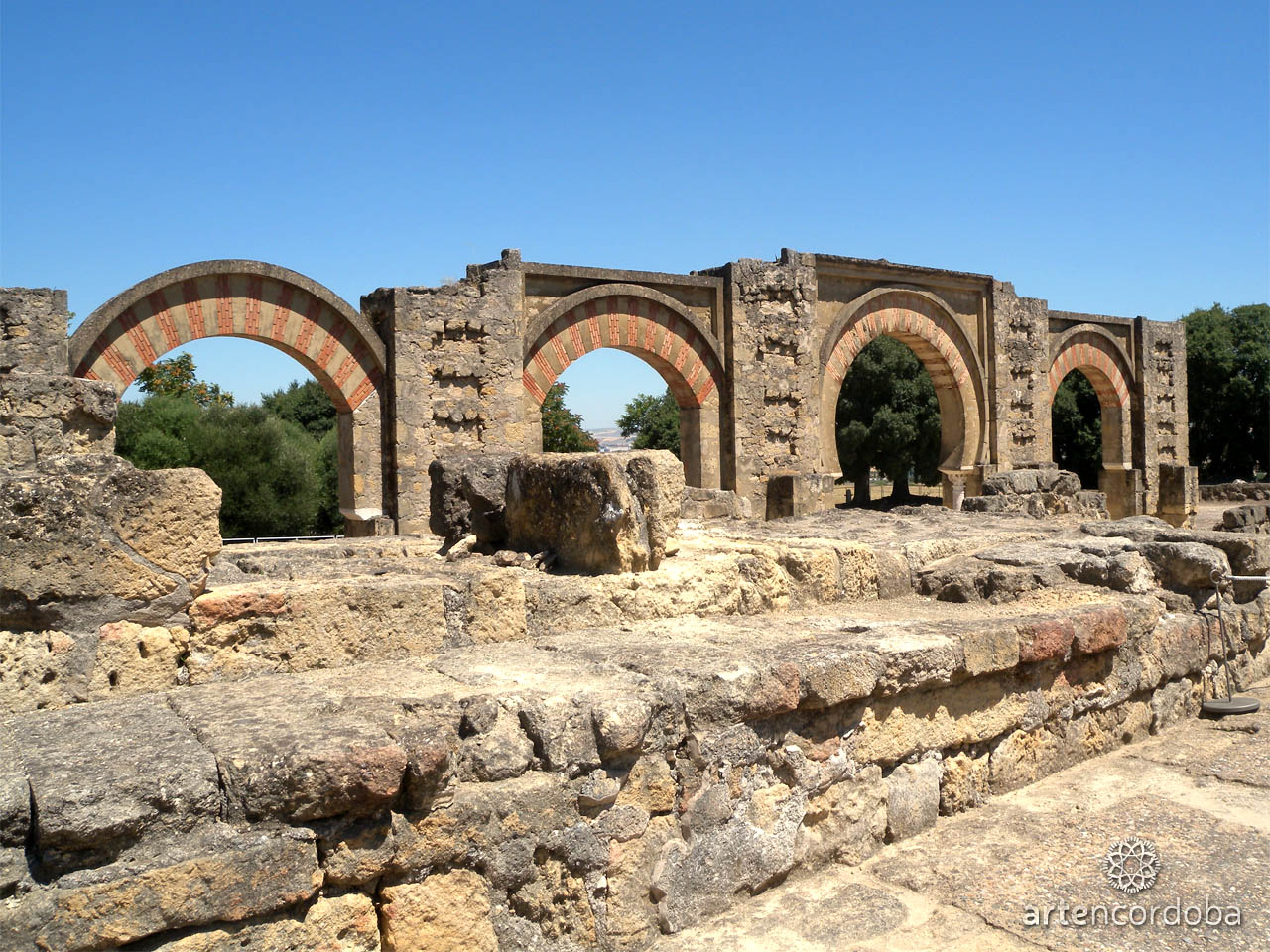
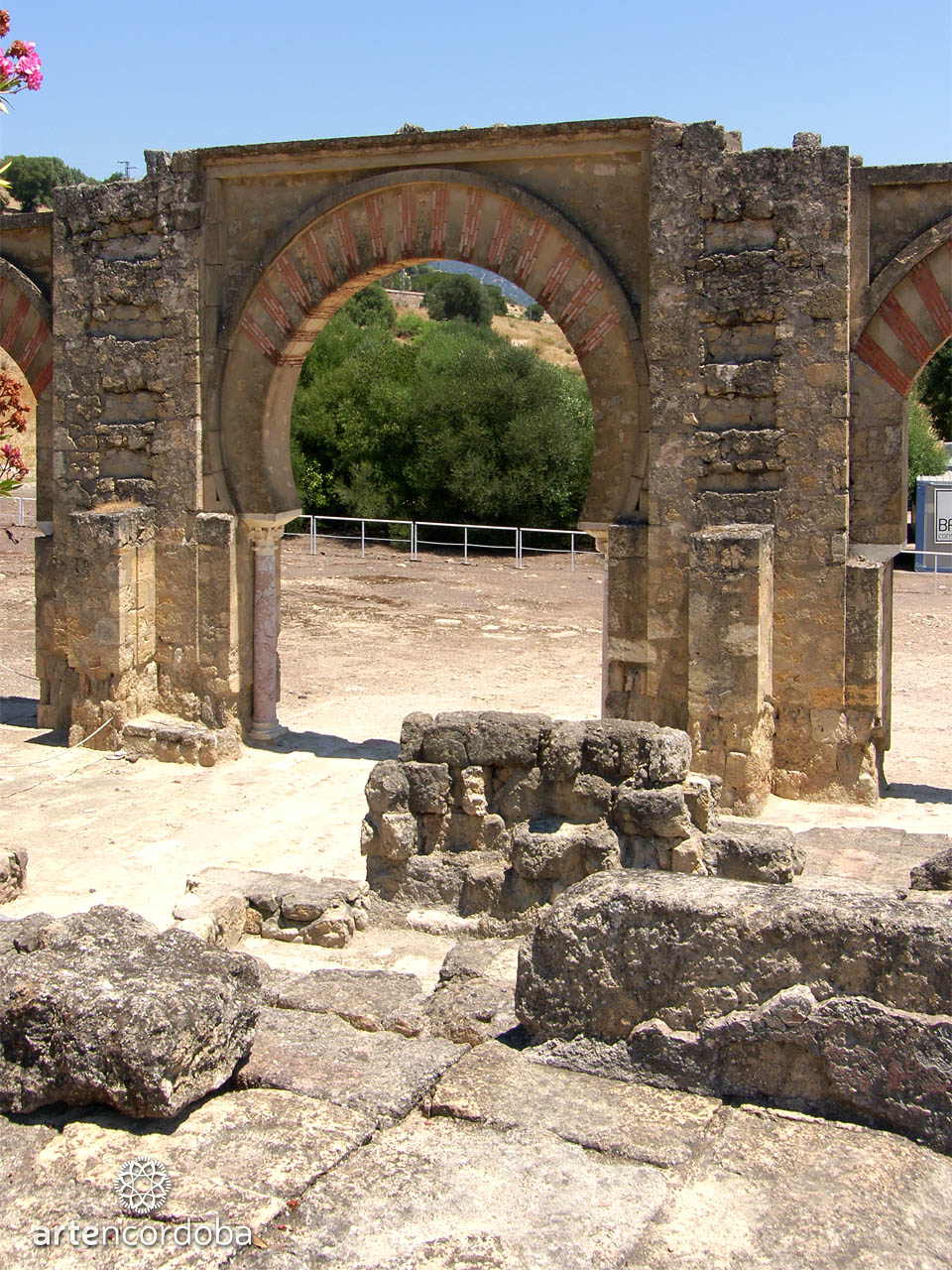
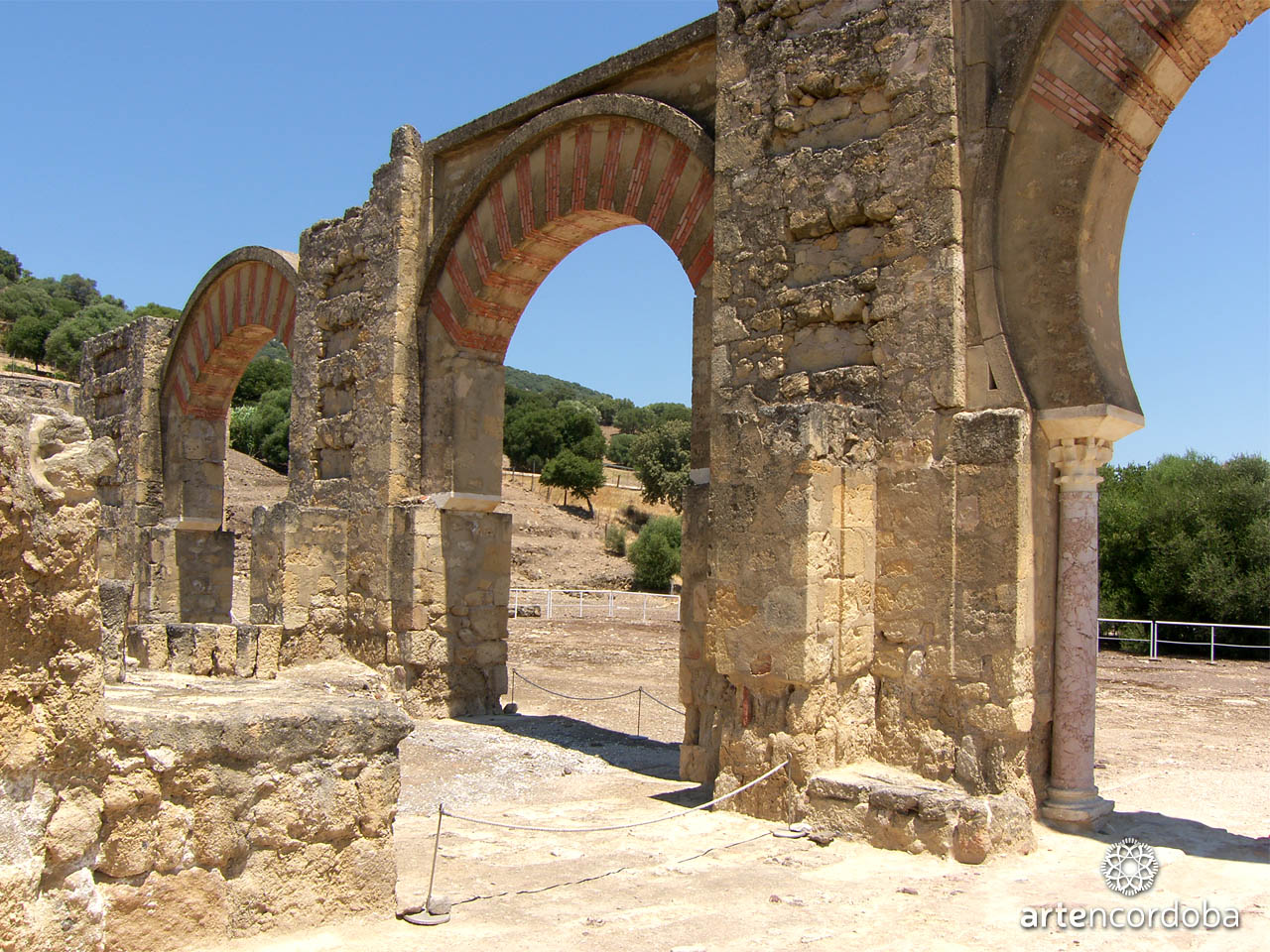
Initially, the Great Eastern Portico was built as a row of fifteen arches—fourteen segmental arches and one central horseshoe arch—erected on pillars and aligned north to south from the northern wall, occupying the eastern front of the aforementioned terrace.
The arcade was simply decorated: white plaster and alternating brick and stone voussoirs. In front of it is a large space that would have been used as a Parade Ground, where military parades presided over by the Caliph would take place, with a series of rooms located to the north and south.
The Upper Terrace and the Pavilion
The porticoed gallery supported a terrace, now lost, which was paved with lime mortar painted with red ochre. At its center, over the axial arch, there would have been a small pavilion, from which the Caliph would review the cavalry, which has also not been preserved.
Subsequent Alterations of the Complex
Shortly after its construction, carried out at the end of the reign of Abd al-Rahman III or the beginning of that of Alhaken II, the complex underwent a significant remodeling, which brought changes to its apparent symmetry.
On the north side of the Parade Ground, an embankment was raised to create a stone-paved ramp connecting to the northern access road to the palace. This modification led to the closure of the first three arches of the Great Eastern Portico, which was subdivided into several individual rooms that would be used as guard posts.
Alterations to the Original Layout
The current access between the terrace that supported the porticoed gallery and the terrace where the Rich Hall and the Upper Garden are located breaks the original pathways, altering the symmetry between the different parts of the palace.
Visit the Great Eastern Portico
If you wish to discover the Great Eastern Portico of Medina Azahara, do not hesitate to book our guided tours. We are experts in the interpretation of Córdoba’s historical heritage. If you’ve chosen to do tourism in Córdoba, choose a quality option—choose ArtenCórdoba.
Text: Jesús Pijuán.