





In 1814, Don Diego Rafael Cabrera y Fernández de Mesa, seventh Marquis of Villaseca and Count of Villanueva de Cárdenas, reached an agreement with the Counts of Torres Cabrera to incorporate some adjoining land into the palace, in exchange for a country estate he owned. These lands nearly doubled the size of the house, incorporating areas such as the current patios of the Alberca, the Well, the Gardeners, the Chapel, the Gate and the one in question, the Garden.
The marquis enjoyed a comfortable financial position and considered that he needed more space in the house. He justified the operation as follows: “for greater comfort and better accommodation for his growing family, and because the aforementioned houses lacked a garden, and all the other necessary rooms and spaces…“.
Design and Features of the Garden
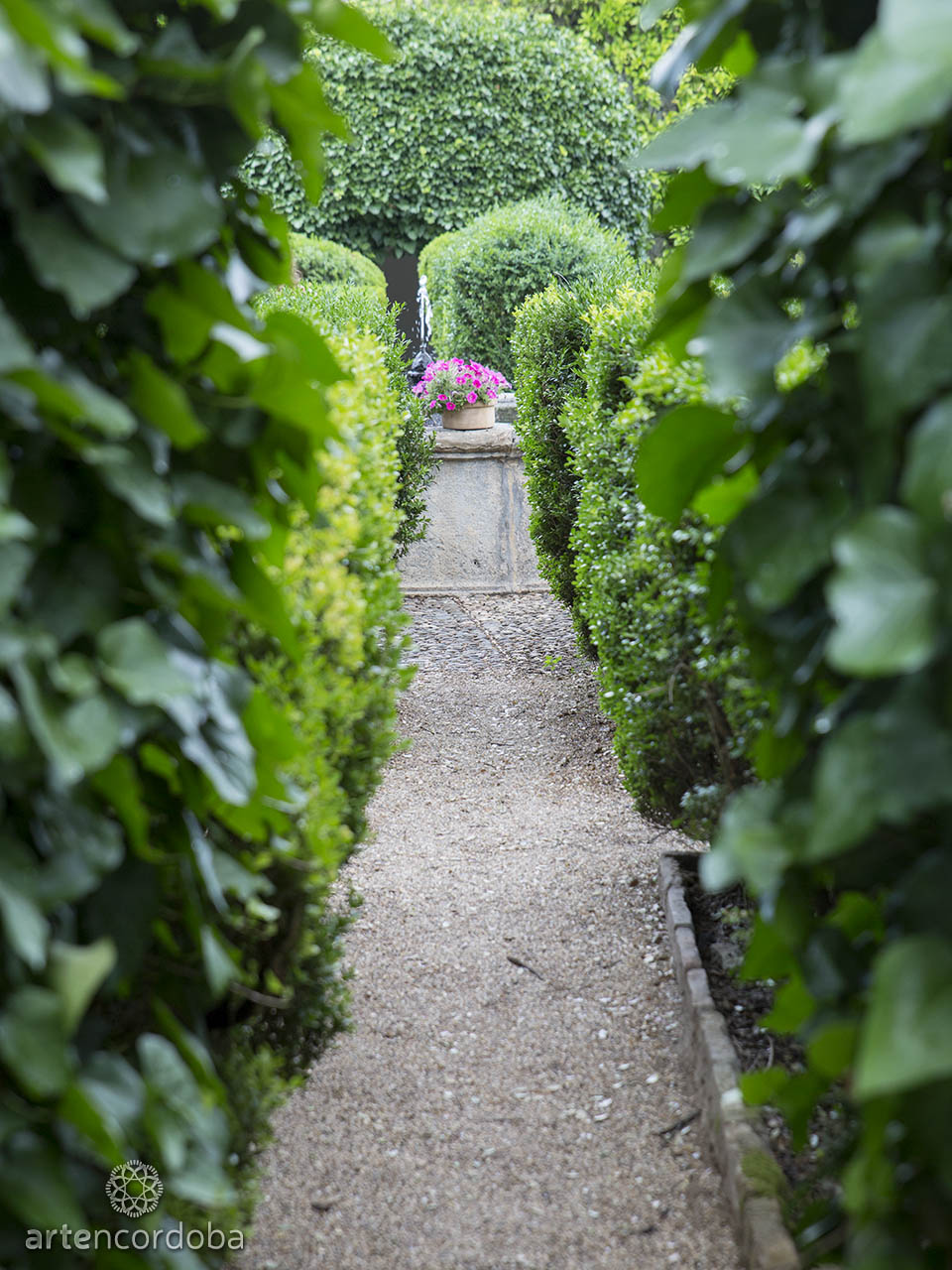
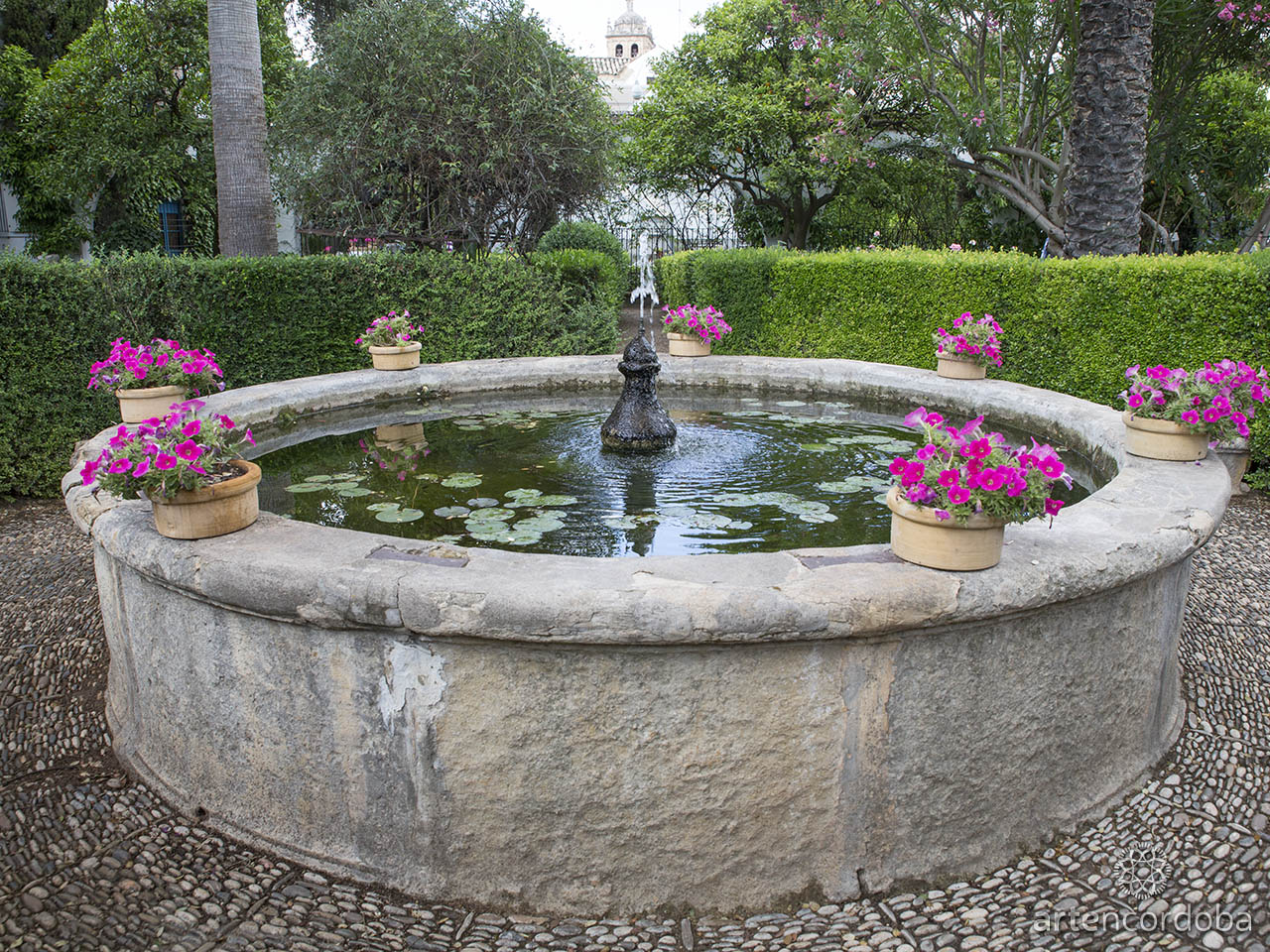
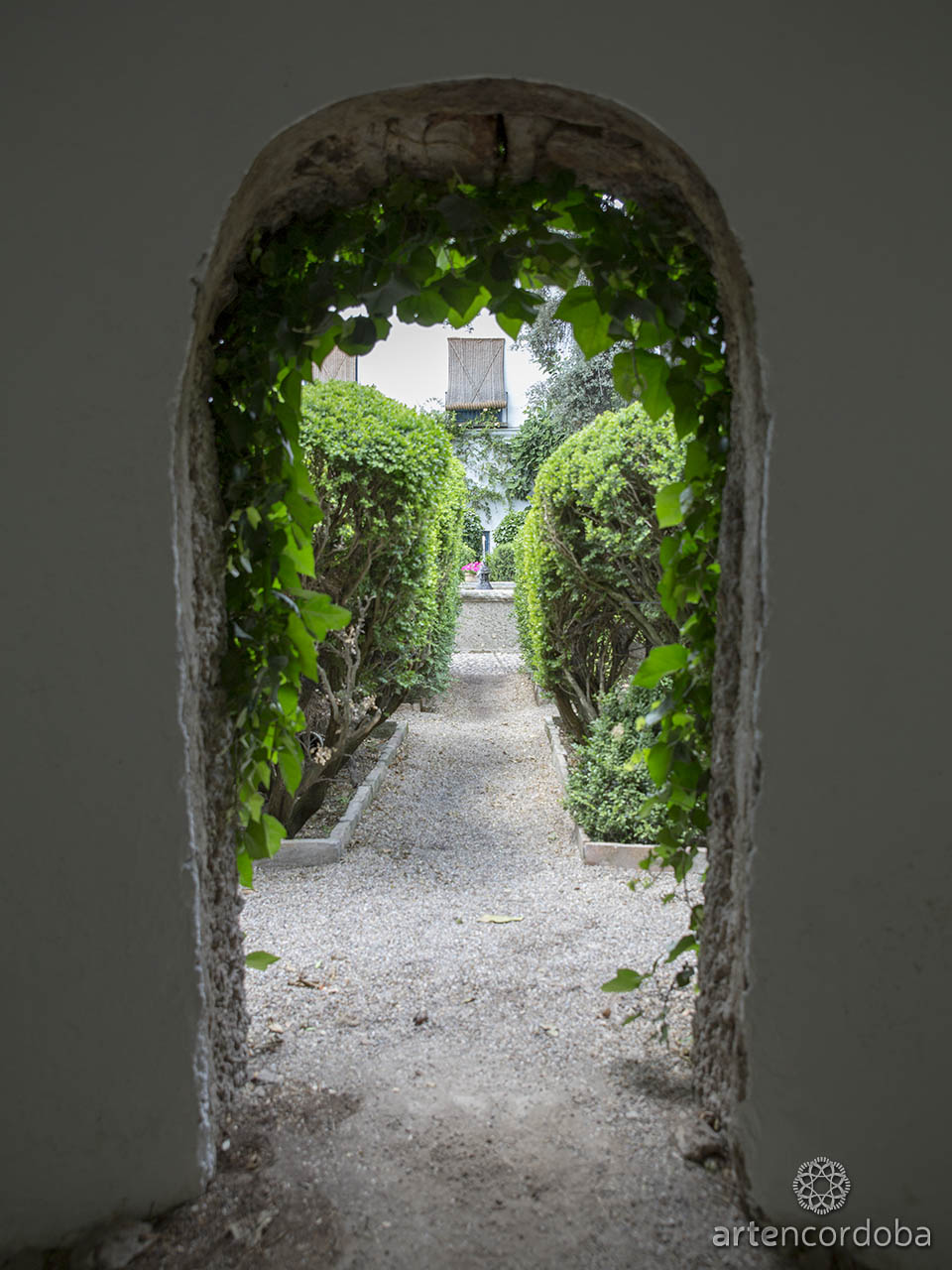
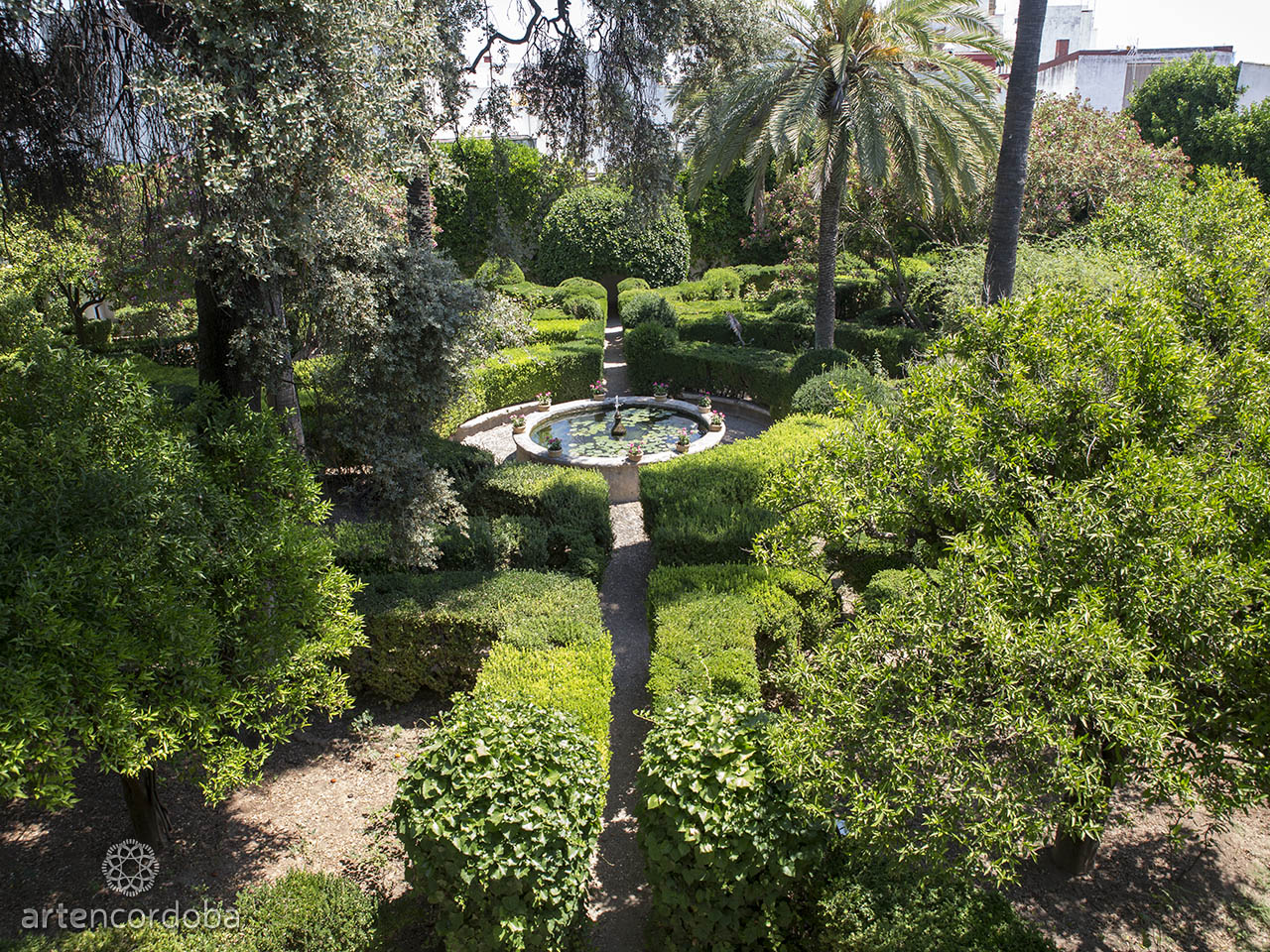
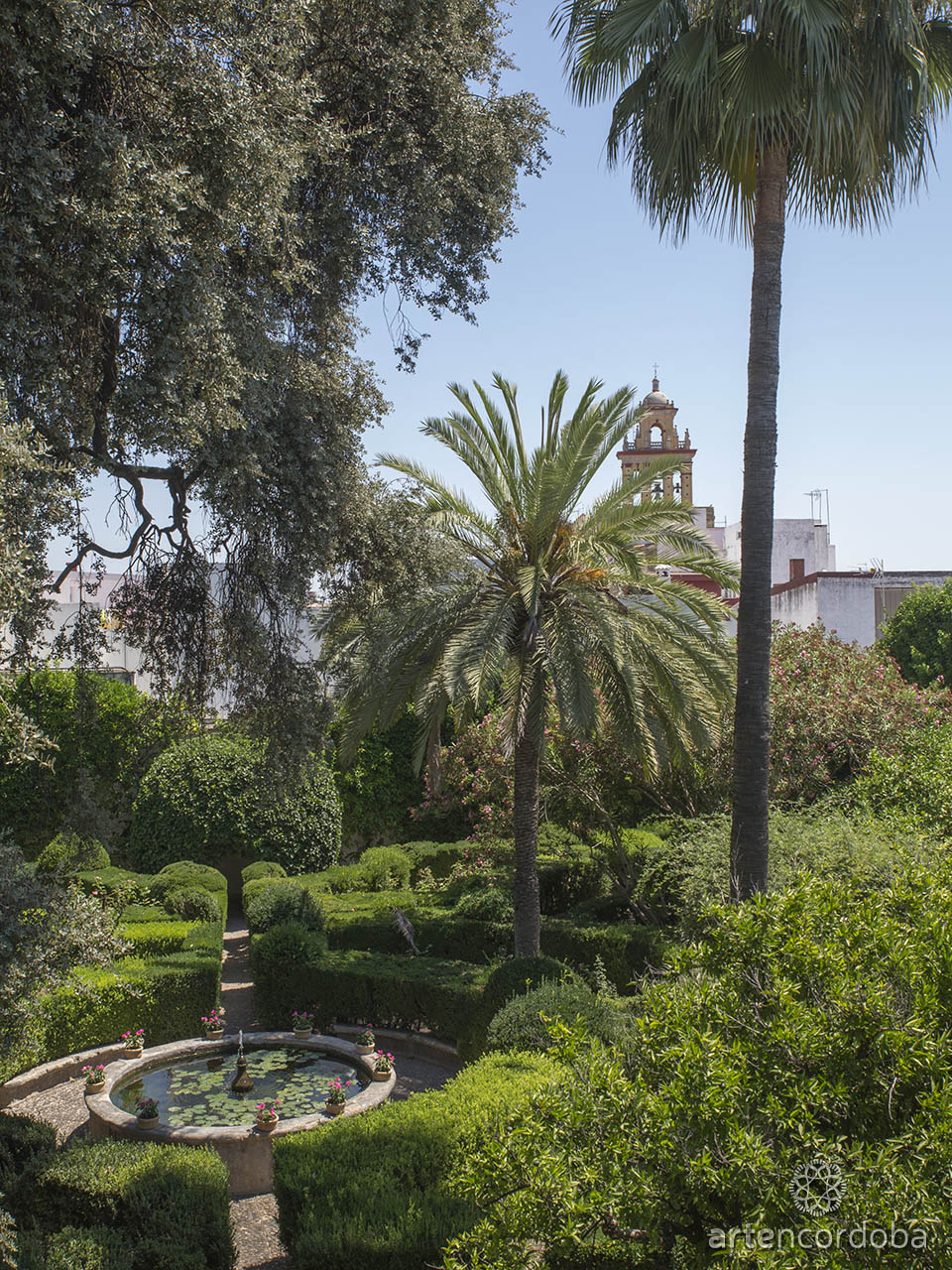
With a quadrangular layout and Baroque design, the garden is the largest open space in the entire Palacio de Viana, covering over 1,200 square meters. The layout follows the cruciform style, meaning it has two longitudinal axes that intersect in a cross, where a fountain is located. This scheme is repeated in each of the resulting four squares, reflecting a total of sixteen planting squares, all surrounded by boxwood hedges.
Vegetation and Architectural Setting
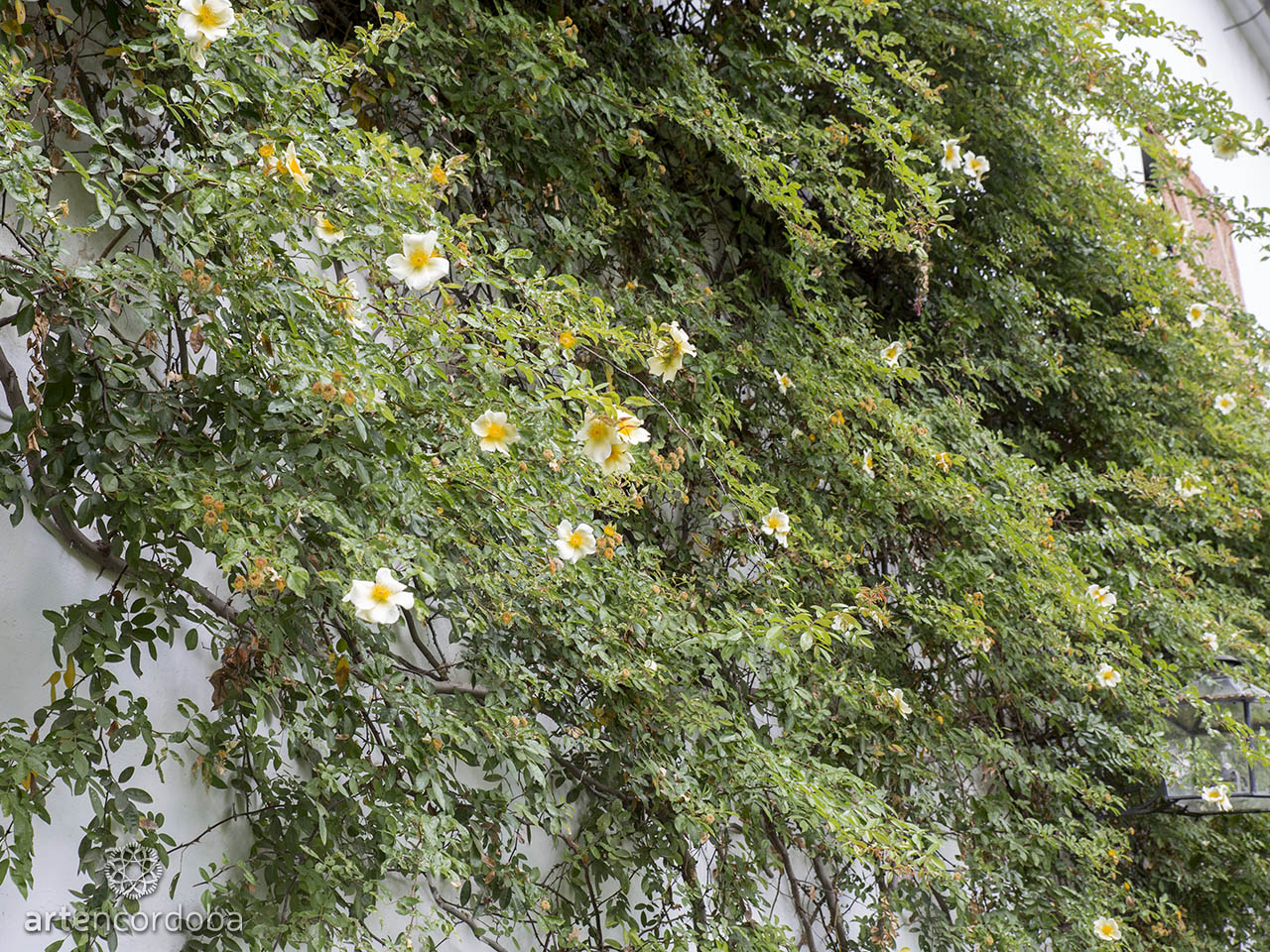
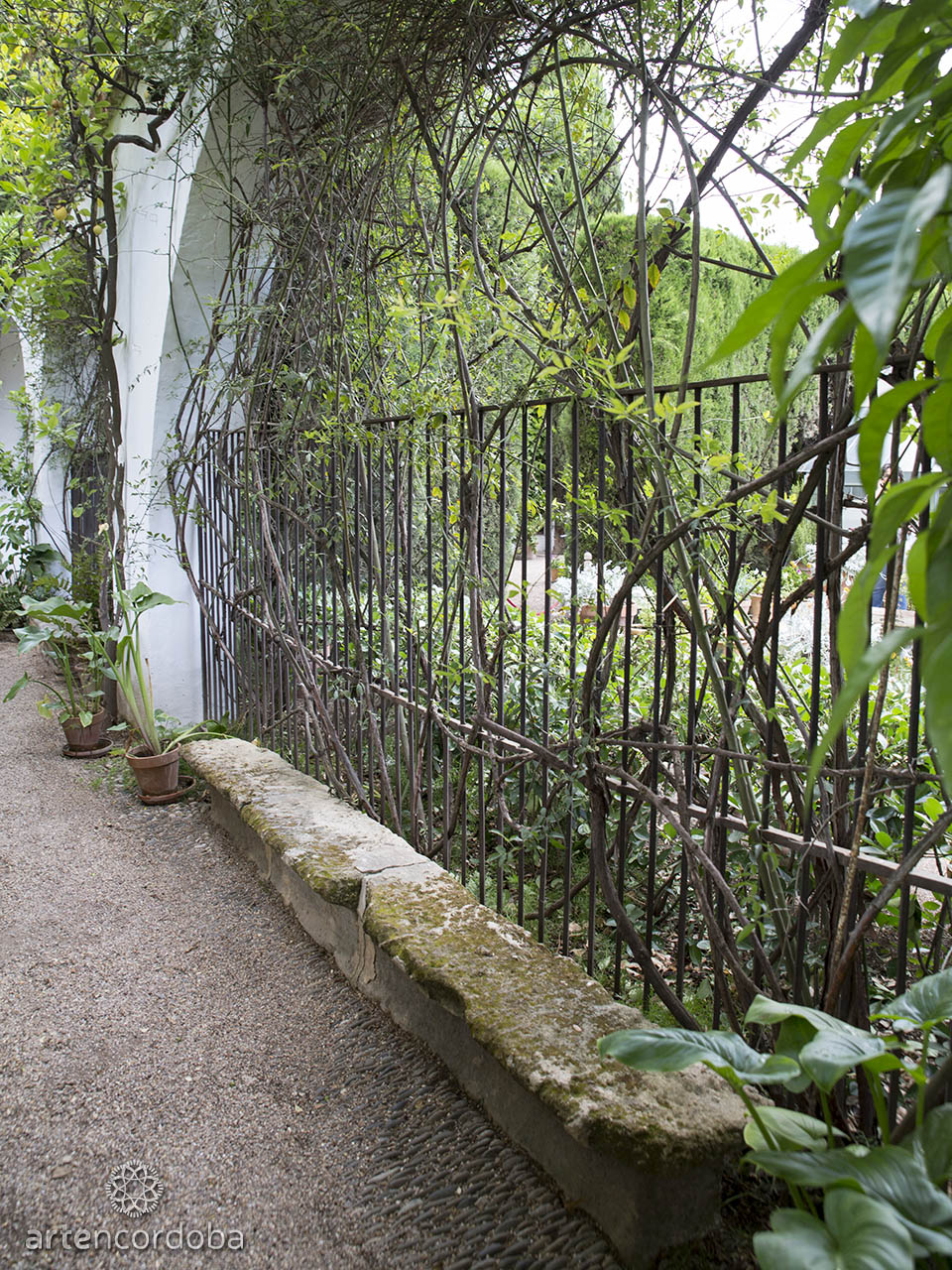
Within each of the planting squares, we find species such as rosebushes, palm trees, or a centuries-old holm oak, whose height far exceeds that of the palace buildings. Two of the walls, decorated with citrus trees, are boundary walls, while the remaining one connects with the palace and is adorned with climbing roses that blend with the architecture. The exterior of the building presents two stories in one area, and two stories plus a mezzanine in another, featuring balconies and windows overlooking the courtyard.
Archaeological Elements and Visitor Experience
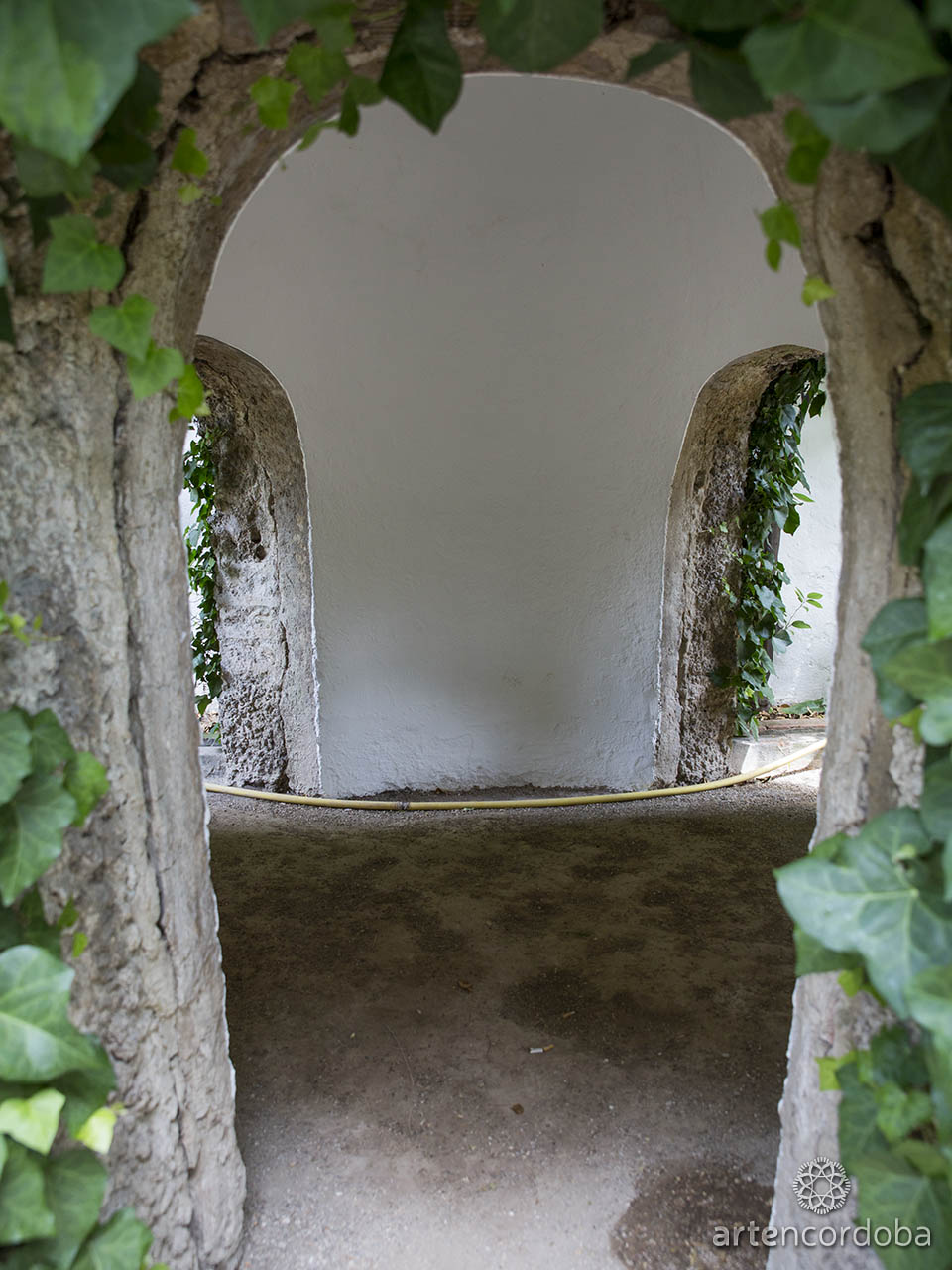
As in the other patios described, archaeological elements remain present, such as bases, columns, amphorae, or pitchers, which, together with the coolness and aromas produced by the vegetation, make this space a perfect place to stroll and enjoy the peace and tranquility it provides.
If you’re wondering what to visit in Córdoba, a great option would be the Palacio de Viana, choosing one of our guided tours. This way, you’ll get to know everything about the Garden. Choosing quality tourism means choosing ArtenCórdoba.
🌸 Blooming Calendar
Blooming calendar of the main species inhabiting the Garden.
| Species | Jan. | Feb. | Mar. | Apr. | May | Jun. | Jul. | Aug. | Sep. | Oct. | Nov. | Dec. |
|---|---|---|---|---|---|---|---|---|---|---|---|---|
| Citrus | ● | ● | ● | ● | ● | ● | ● | |||||
| Holm oak | ● | ● | ● | ● | ||||||||
| Wild Magnolia | ● | ● | ||||||||||
| Oleander | ● | ● | ● | ● | ● | ● | ● | |||||
| Pomegranate | ● | ● | ● | ● | ● | ● | ● | ● | ● | ● | ||
| Rose | ● | ● | ● | ● | ● | ● | ● | ● | ||||
| Senecio petasite | ● | ● | ||||||||||
| Lily | ● | ● | ● |
Text: J.A.S.C.