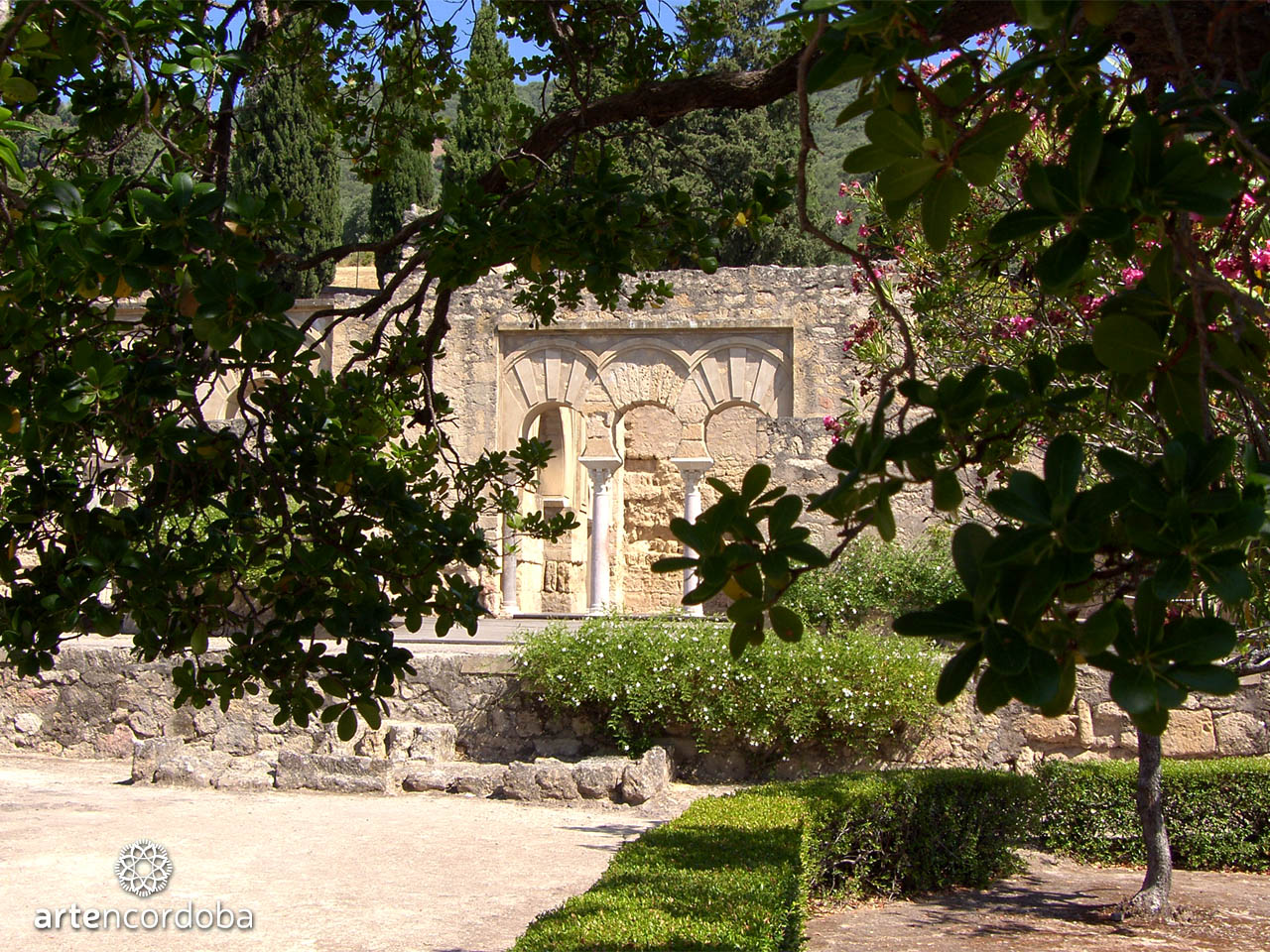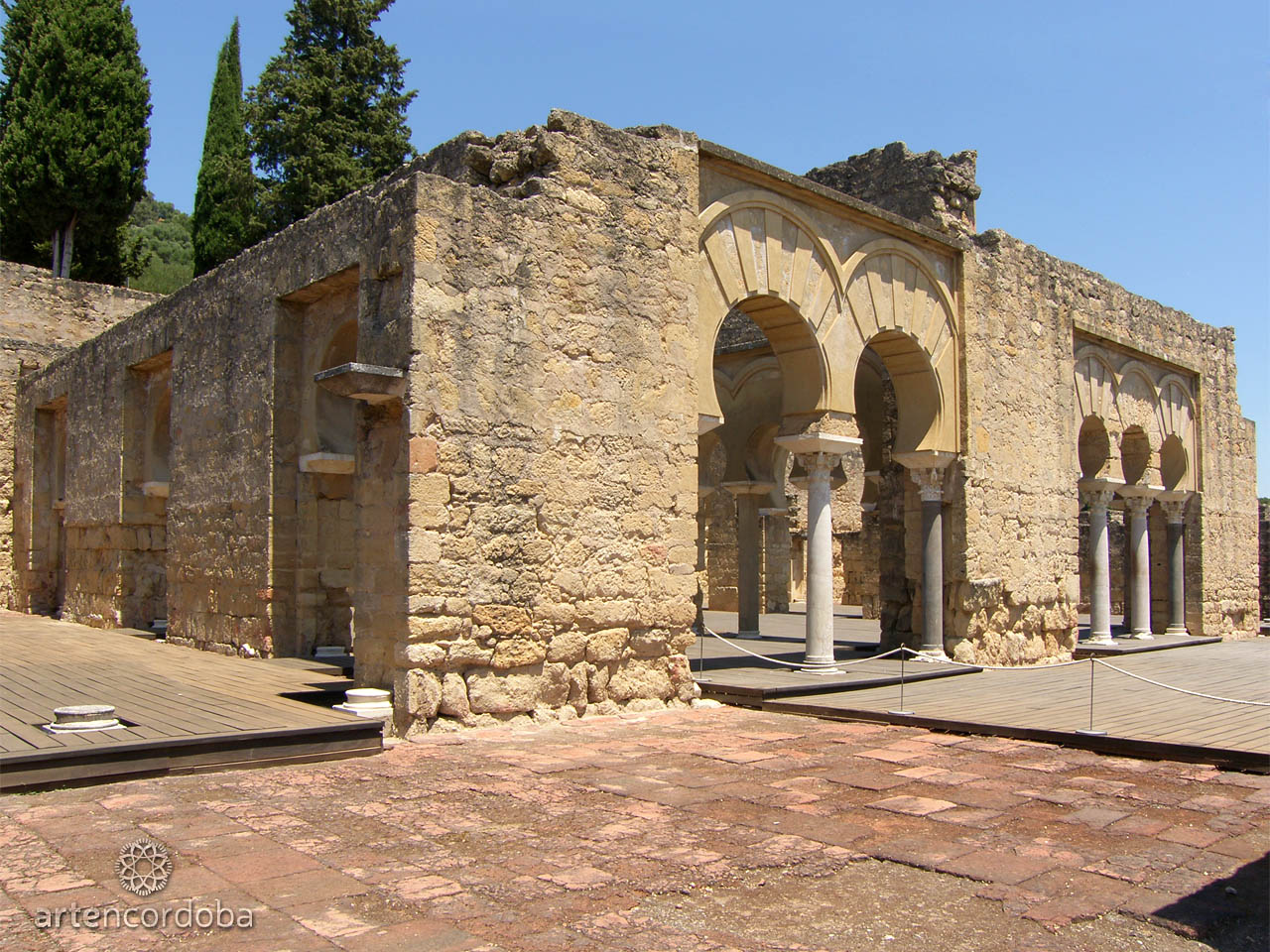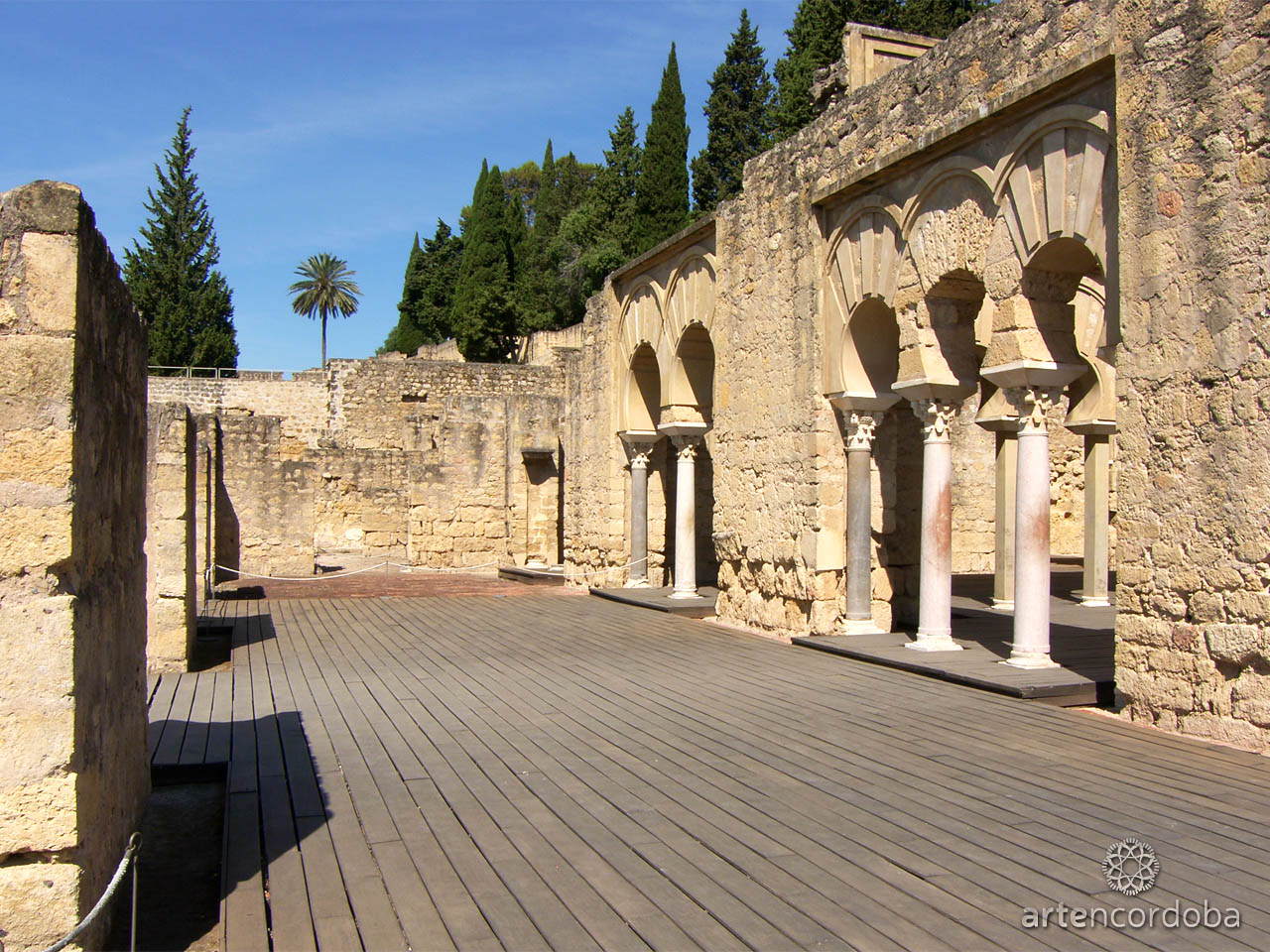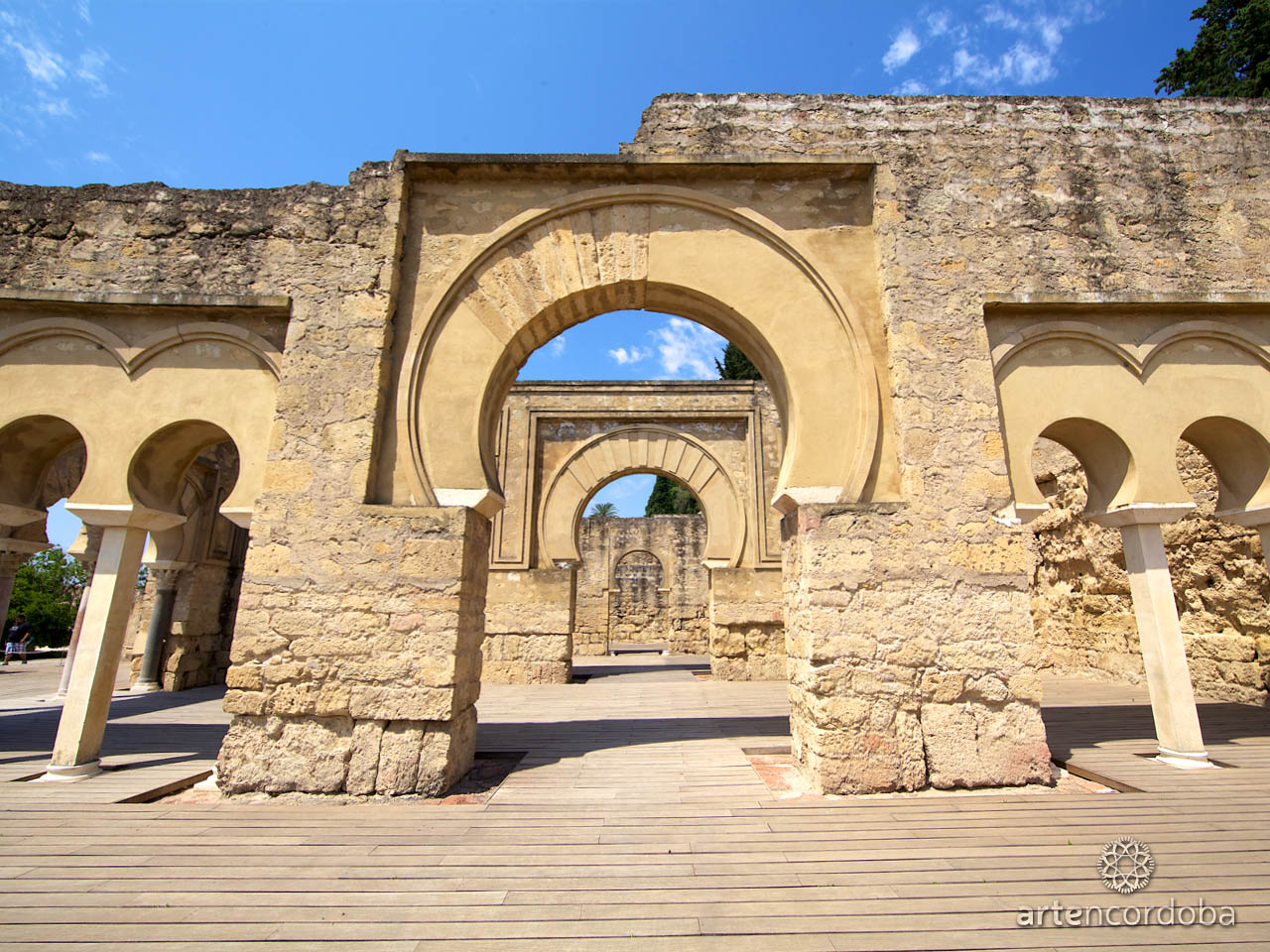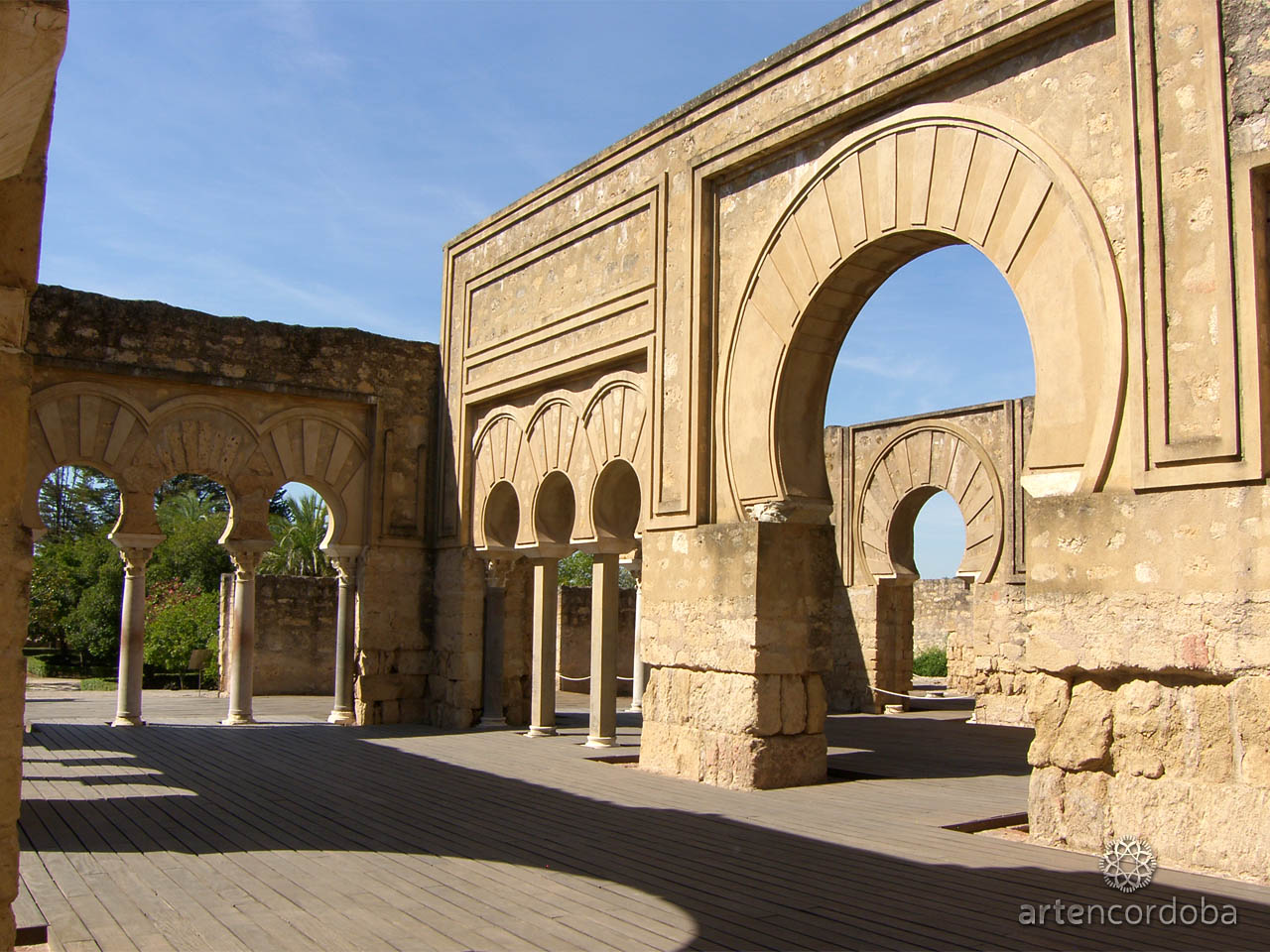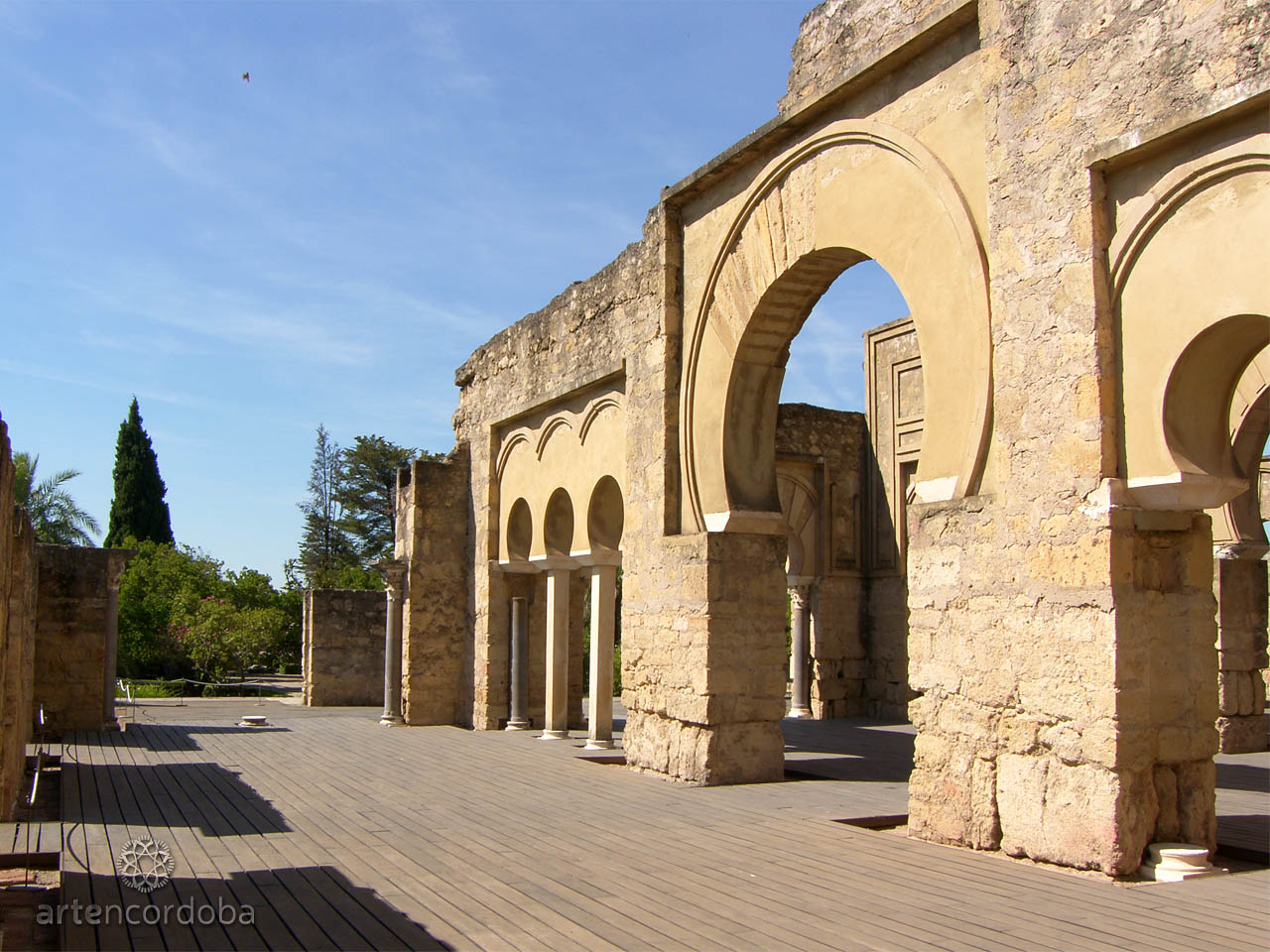






This building would have served as the waiting area for those who were to be received by the Caliph in Medina Azahara. According to some writings from the time, the offices of two important figures were located there: Ziyah ibn Affah, the chief equerry, and General Galib. For this reason, the most likely identification of this Basilical Hall is the House of the Army (Dar al-Yund), built around the years 955–960.
Layout and Architectural Structure
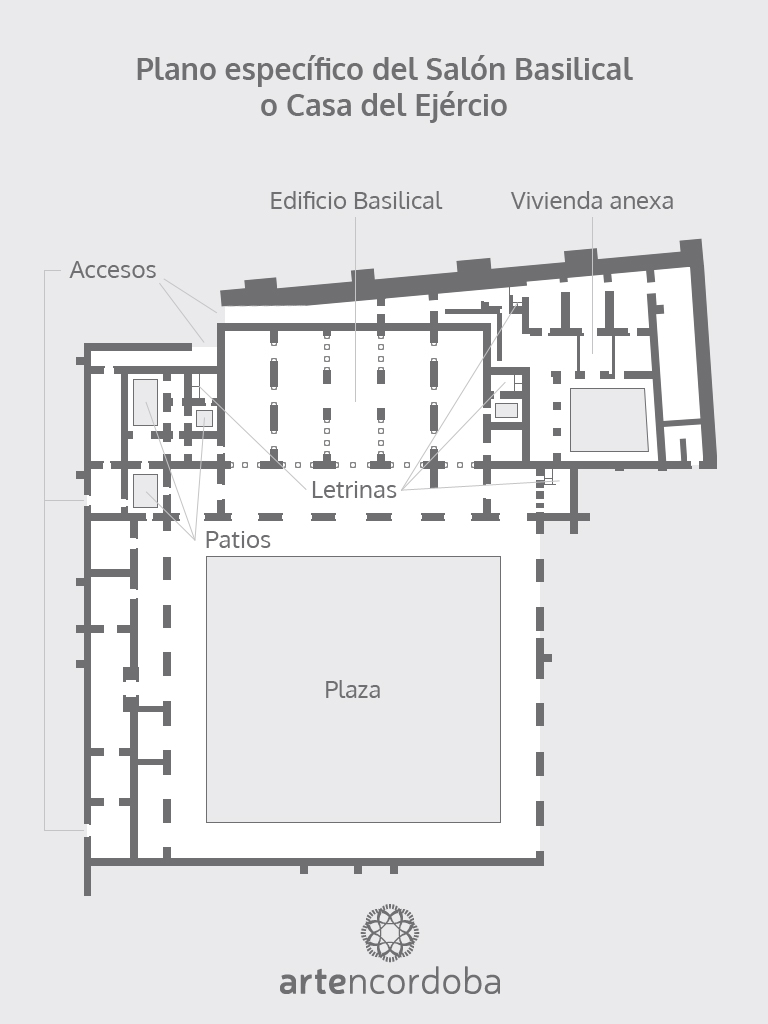
With a basilical layout, it consists of five longitudinal naves—three central ones that form the core and two outer ones that flank them—aligned North-South, and a transverse nave that spans the full width of the others, ending at each side in a small room. The axial nave features a triple horseshoe arch, while the others have double arches, which serve as the façades providing access from the transverse nave.
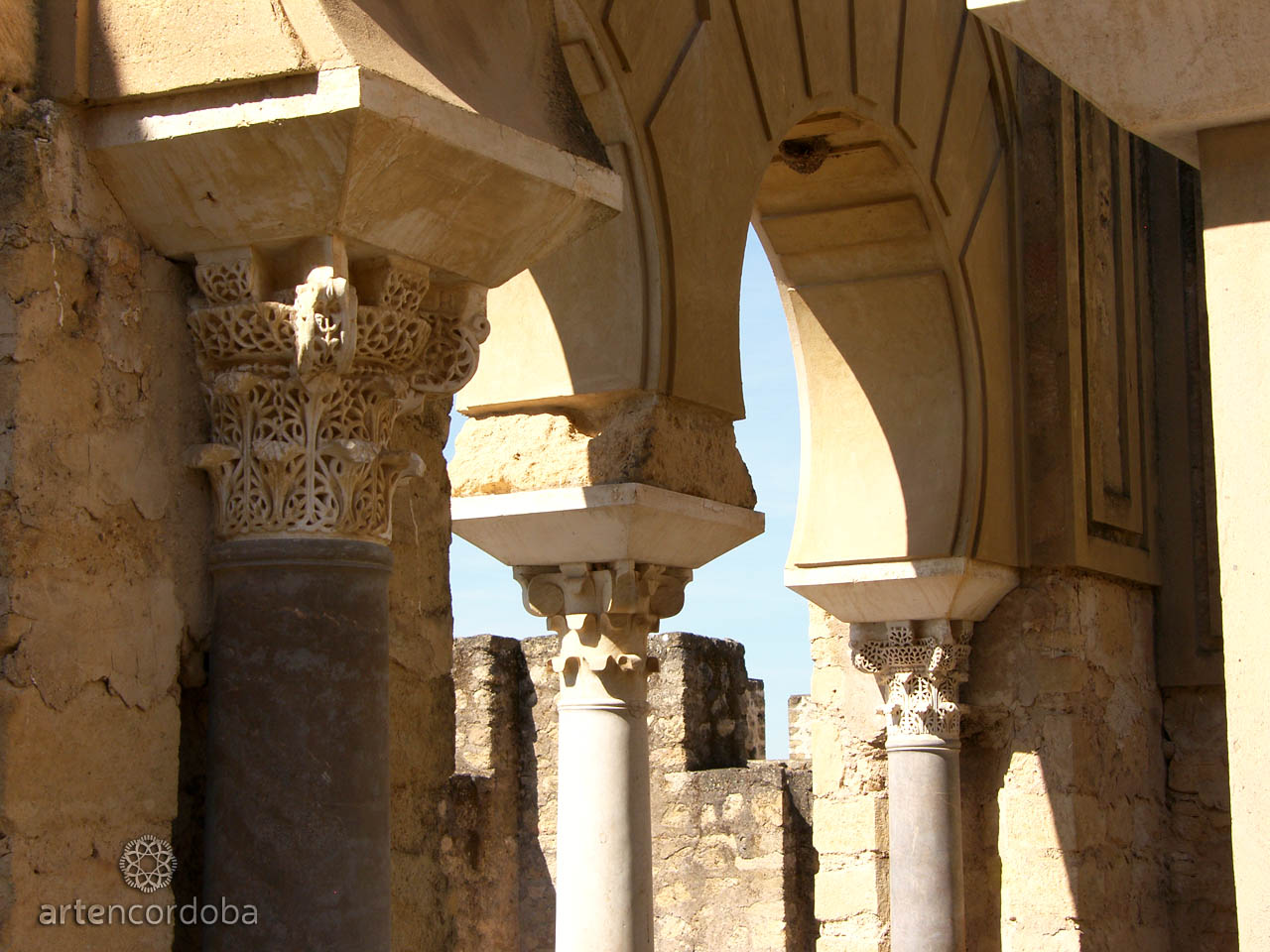
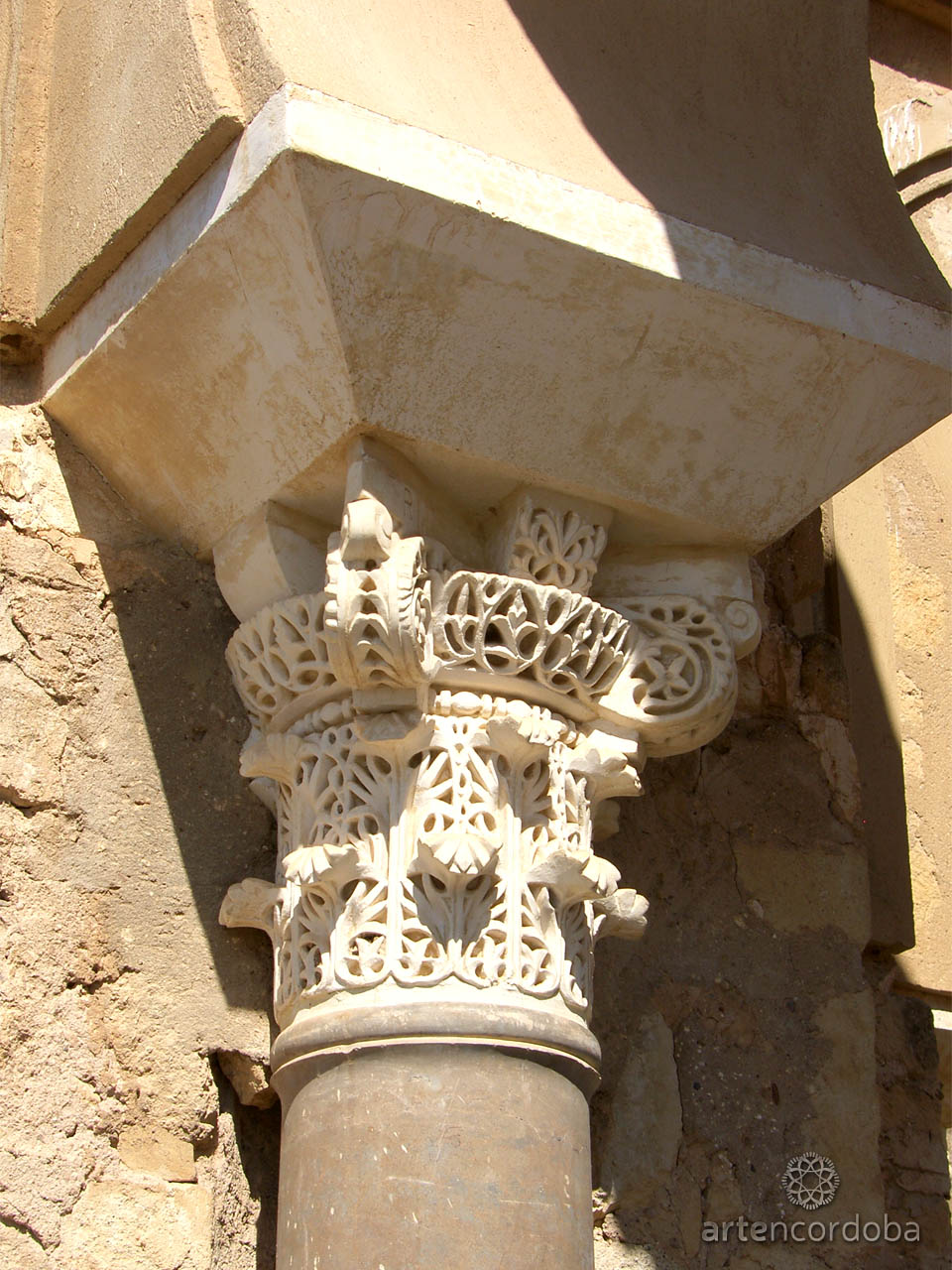
The arches are supported by limestone capitals alternating between simply carved ones with reddish marble shafts (from Cabra), and deeply carved honeycomb or trepanned ones with bluish-gray marble shafts (from the mountains of Córdoba).
Entrances and Decoration
The only existing doors—of which only the hinge fittings are preserved—are located in the openings connecting the outermost naves with the transverse one, demonstrating a direct connection between the transverse nave and the central core, while the latter is isolated from the outer naves.
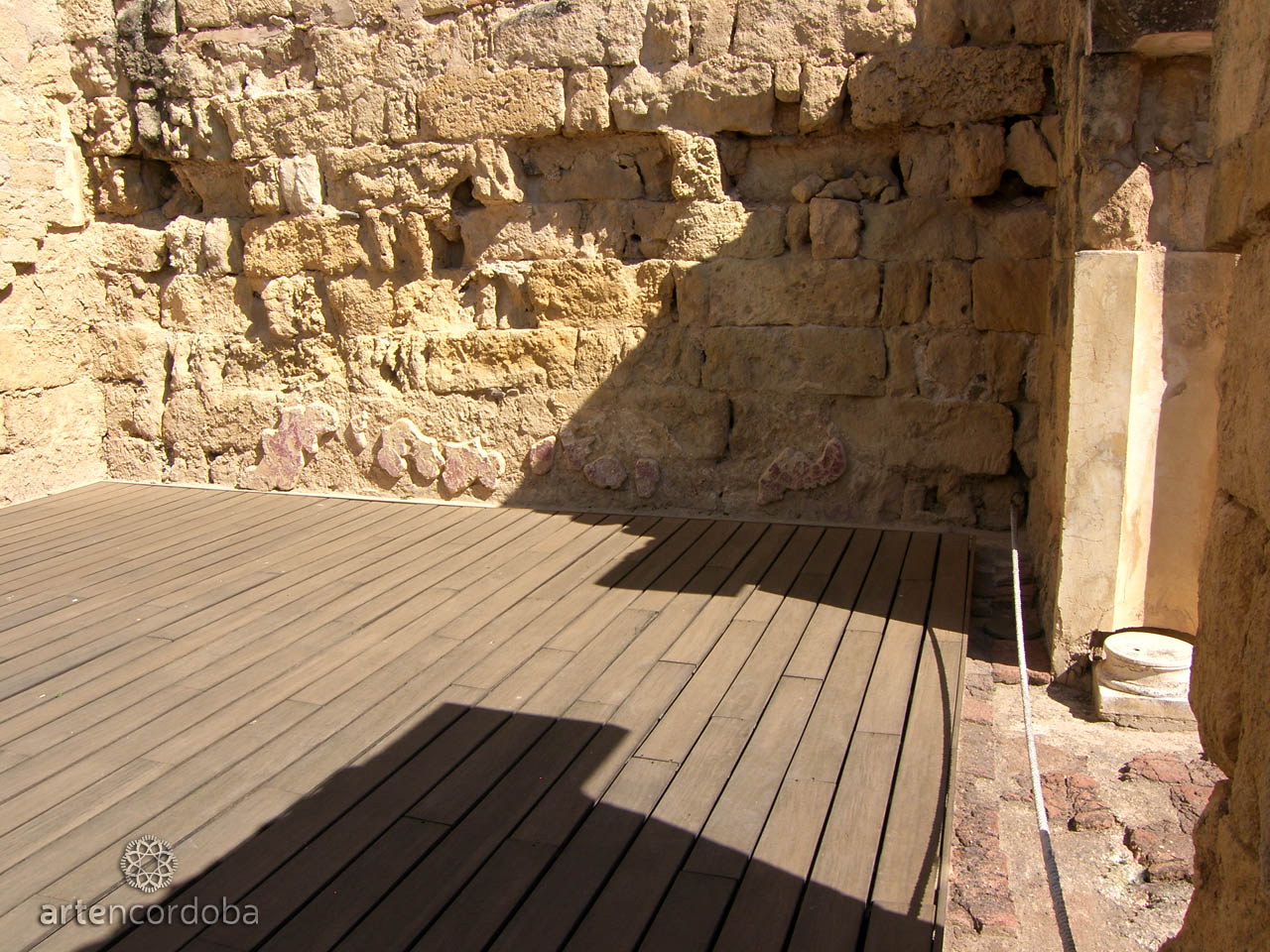
As for its decoration, the absence of stone panels is notable. The walls were coated with lime and sand mortar painted in red ochre and white, colors also used on the voussoirs of the arches. There was an intent to simulate the use of brick through a red plaster finish applied over the stone voussoirs.
Relationship with the Urban Environment
The Basilical Hall was not attached to the wall; a separating corridor existed that connected the North Gate with an important residence located to the northwest of the complex, which likely served as the residence or reception space of a high-ranking official.
From this residence, three rooms arranged perpendicularly to the wall are preserved on the northern front, opening onto a paved courtyard with galleries on the north and west sides.
The Plaza and the Stables
At the foot of the Basilical Hall lies a large plaza. Although its original pavement is not preserved, there are remains of ashlar blocks in the center of the north side, where a watering trough for horses would have been located.
The plaza is surrounded on the east and west sides by a colonnaded gallery between pillars—turned into a garden in 1960. On one of its sides, which would face the main façade of the building, no hinge fittings have been preserved to suggest the existence of doors allowing access to the transverse nave from the outer walkway.
On the western side of the plaza is the entrance to the Stables of Medina Azahara, arranged in an elongated space between the official and private sectors of the palace, divided longitudinally into two sections by a gallery of pillars. The horses were kept on the eastern side, with a maximum capacity of twenty-five animals, while the upper part was used to store hay.
The western half, on a lower and steeper level, was an open-air area intended for cleaning operations. Finally, on the south side of the terrace, remains of a large building are preserved, arranged around a central courtyard paved with ashlar stone and surrounded by a gallery of pillars on at least two sides.
Due to plundering, very few remains of the rooms and pillars exist, but three sundials have been preserved, which is why this area is colloquially known as the Courtyard of the Sundials.
Visiting the Basilical Hall
If you’re wondering what to visit in Córdoba, a great option would be the archaeological site of Medina Azahara, choosing one of our guided tours. There, we will dedicate a special section to the Basilical Hall or House of the Army. Choosing to engage in high-quality tourism means choosing ArtenCórdoba.
Text: Jesús Pijuán.