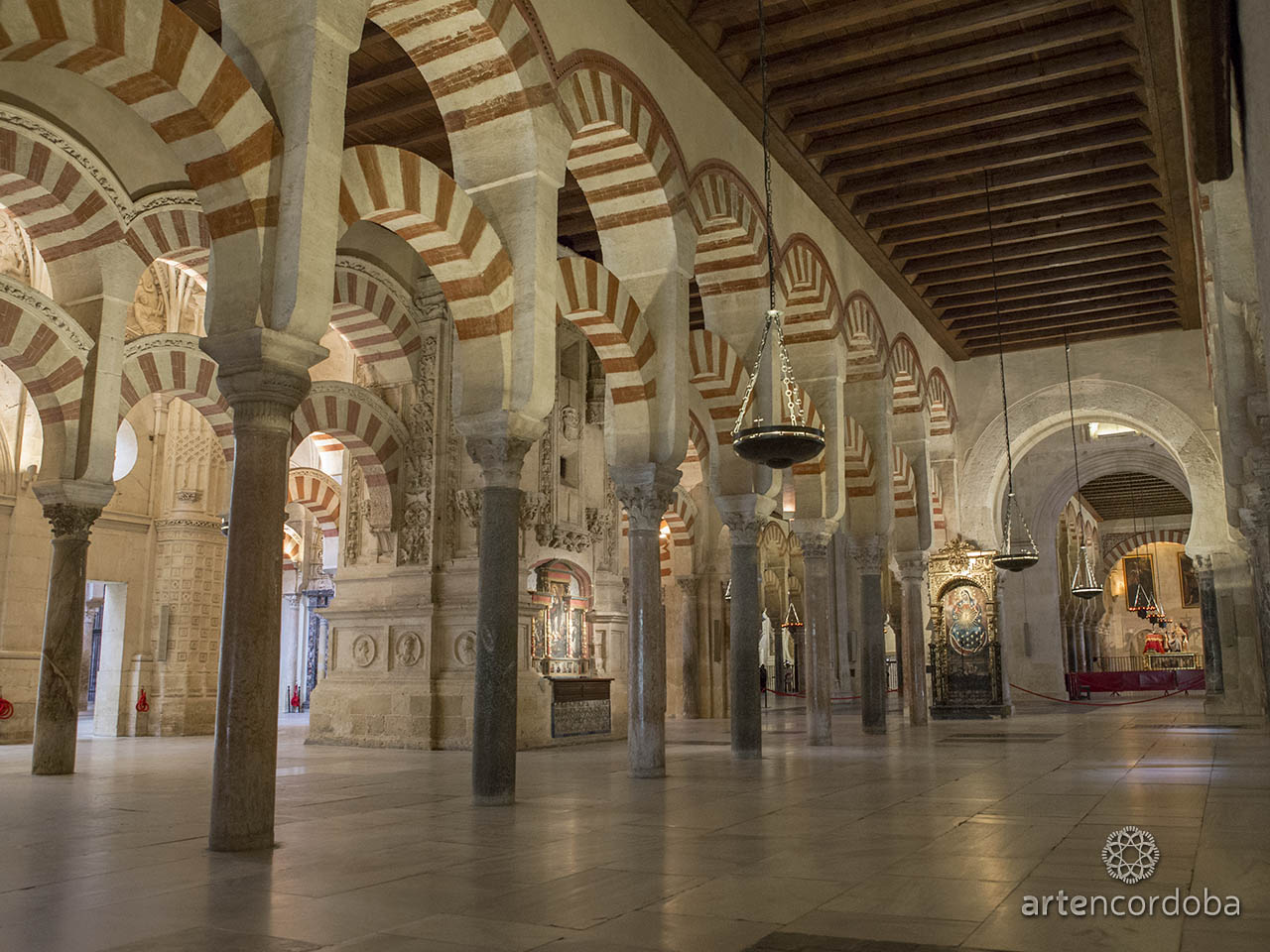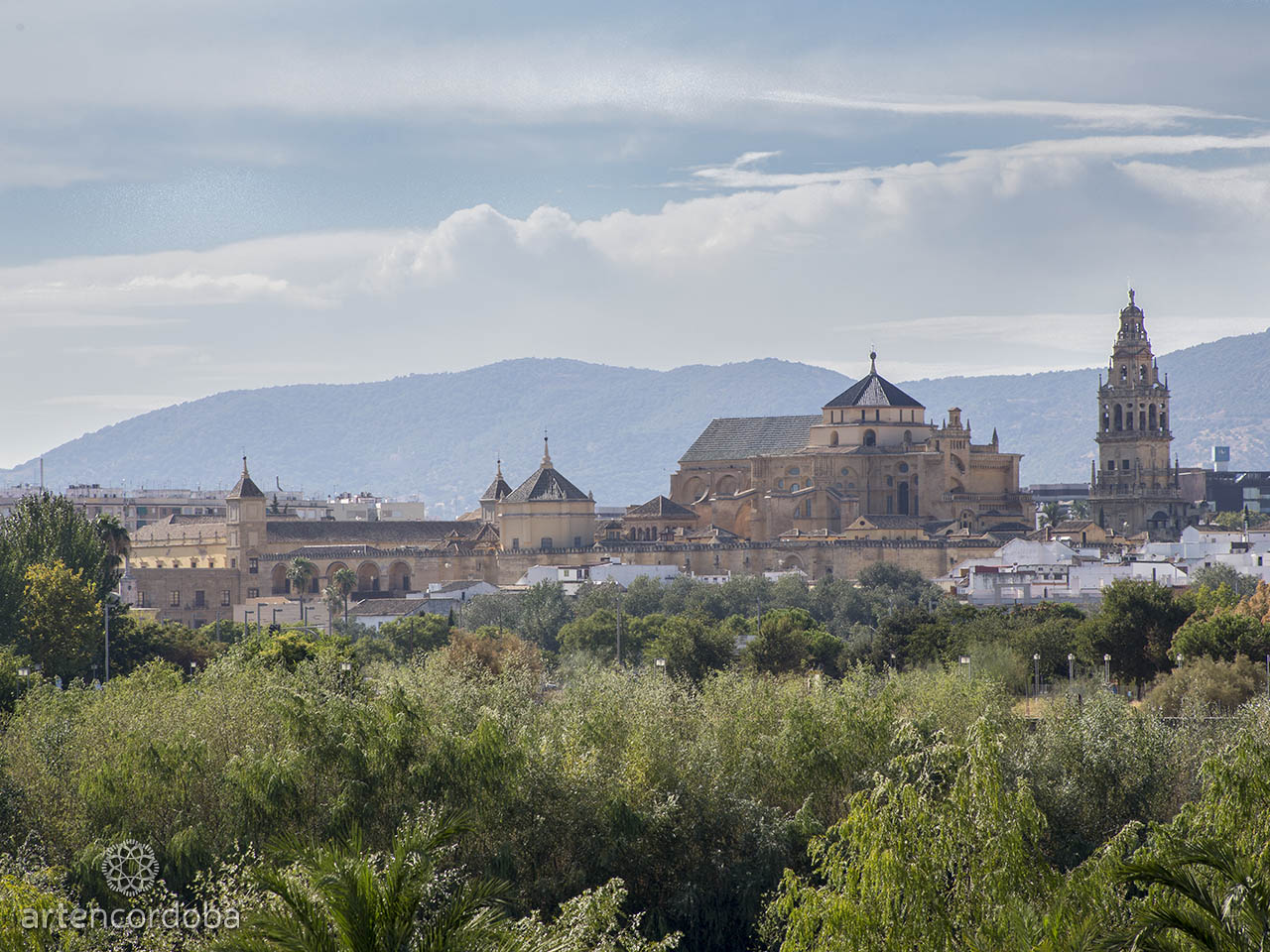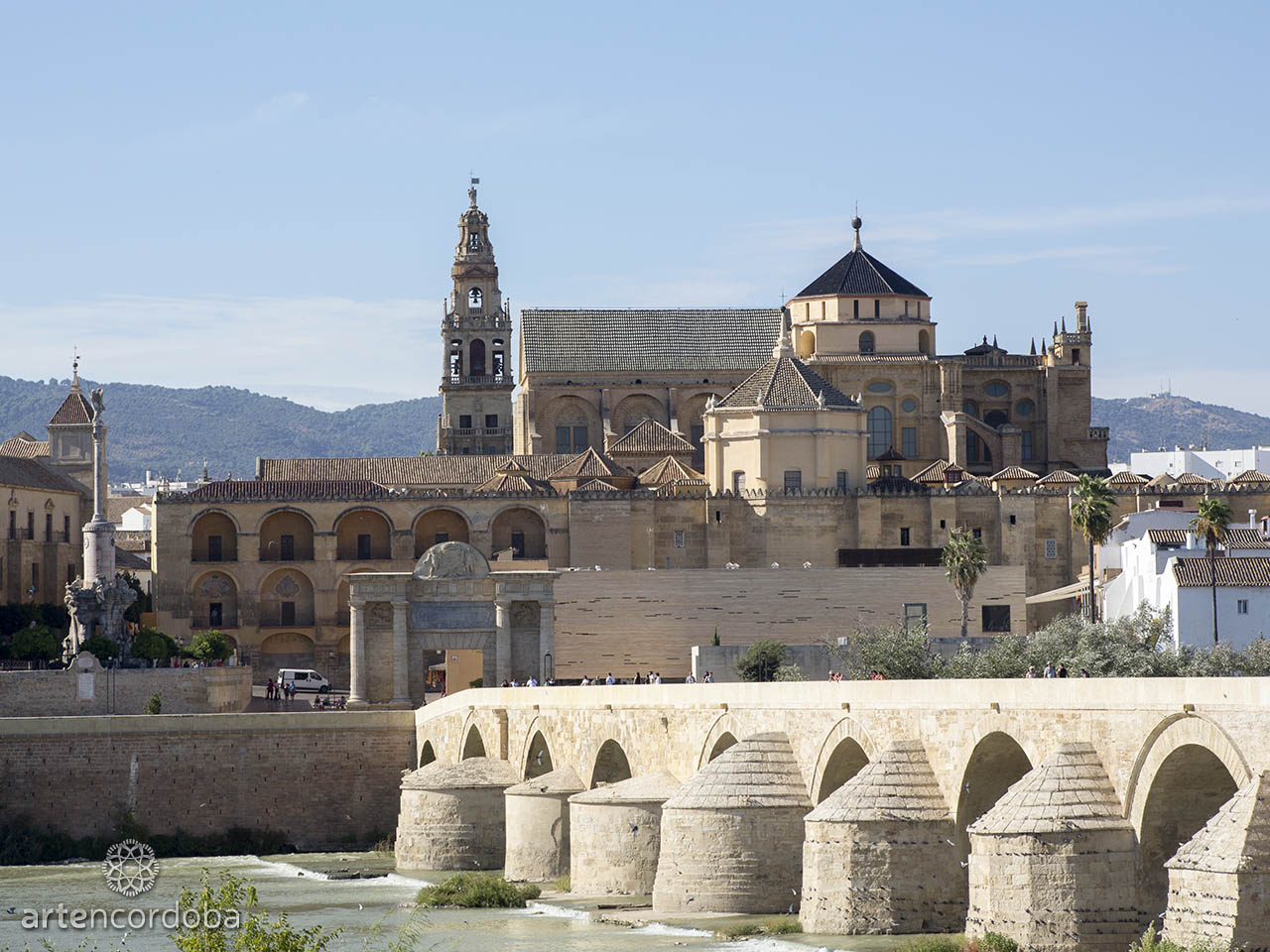






The declaration of the Mosque-Cathedral of Córdoba as a World Heritage Site by UNESCO in 1984, and its inclusion in the list of those worthy of such a privilege, merely confirms a reality. This monument has become a symbol of the city of Córdoba and its rich past. Above all, however, it is the hallmark of the city worldwide. Thus, the association between Córdoba and the current Cathedral is almost automatic and inevitable. Almost everyone, upon hearing the word Córdoba, immediately thinks of its Mosque.
A universal monument
It is not only a source of pride for the people of Córdoba but also a cause of admiration for visitors, due to the spectacular and impressive complex and the rich beauty of its elements and decorations. Naturally, the building leaves no one indifferent, regardless of their beliefs, and, of course, in the Muslim world, it arouses great respect and veneration combined. Without a doubt, it is the work that best symbolizes the creative genius of the civilization from which One Thousand and One Nights emerged, and its monumentality and beauty are on par with that genius.
From mosque to cathedral
Furthermore, the fact that the former Mosque has functioned as a Christian Cathedral for many years adds an extremely important value: we are looking at one of the longest-standing monuments in Spain. This “longevity” of the building makes its study even more fascinating, especially considering that, despite currently being in use, it continues to provide new information; it is a subject that remains open.
Symbol of Córdoba
The Mosque-Cathedral is the symbolic monument of the city of Córdoba.
The use and reuse of what is today the Cathedral over the centuries makes its study more complex due to the numerous transformations it has undergone over time. However, it never ceased to serve a prominent religious, worship-related function: indeed, it was first the Basilica of Saint Vincent in Visigothic times; in the mid-8th century, it was repurposed as a Mosque by the Muslims; and since the Reconquest of Córdoba by Ferdinand III the Saint in 1236, it has been used as a Cathedral. If studying the monument in its Islamic phase (following the Visigothic precedent) is complex, synthesizing its evolution as a Cathedral is even more so, considering all the transformations involved in converting the temple to Christian worship: the Late Middle Ages, the Humanist and Baroque periods, up to the 18th century and the beginning of the restoration of the Mosque-Cathedral in the 19th and 20th centuries.
Study and analysis of the monument
For this reason, in the following sections, we will attempt to provide the most complete possible description of the historical and artistic evolution of the Mosque-Cathedral, having to overlook, for the sake of the necessary synthesis required by these “pages,” many very interesting aspects. We know we may be criticized for this shortcoming, but we will strive to focus on the most outstanding features, without losing the overall vision (from basilica to Mosque and, of course, to Cathedral). Let it be said in our defense that the architectural and artistic richness of the building is such that it is nearly impossible to cover all its elements and details in a synthesis. We believe the extensive photographic galleries that accompany the already in-depth content dedicated to the Mosque-Cathedral will serve as justification and compensation for the inevitable omissions.
Historiography and construction phases
Following this brief yet timely introduction, we have compiled, under the title Historiography, a short analysis of the various excavations and restorations the building has undergone, with special mention of the architects and archaeologists who led them. Next, we will separately study the Visigothic, Muslim, and finally, Christian constructions. In the case of the Visigothic period, we will make special reference to the excavation led by Don Félix Hernández, which has provided numerous pieces of information that were recently unknown. Regarding the Muslim construction, we have studied the significance of the Mosque as a sacred Islamic temple and its meaning in the Muslim world. Additionally, we have structured the analysis of the building starting from the Foundational Mosque ordered by Abd al-Rahman I at the end of the 8th century, going through the contributions made by each of the emirs or caliphs. We then address the study of the building after the city’s conquest in 1236 by the Christians, describing the areas we consider most interesting, highlighting the Royal Chapel or the Cathedral Crossing, located in the heart of the Islamic structure.
Guided tours
If you wish to visit the Mosque-Cathedral of Córdoba, do not hesitate to book one of our guided tours. We are experts in the interpretation of Córdoba’s historical heritage. If you have chosen to do tourism in Córdoba, choose a quality option—choose ArtenCórdoba.
Text: Jesús Pijuán.