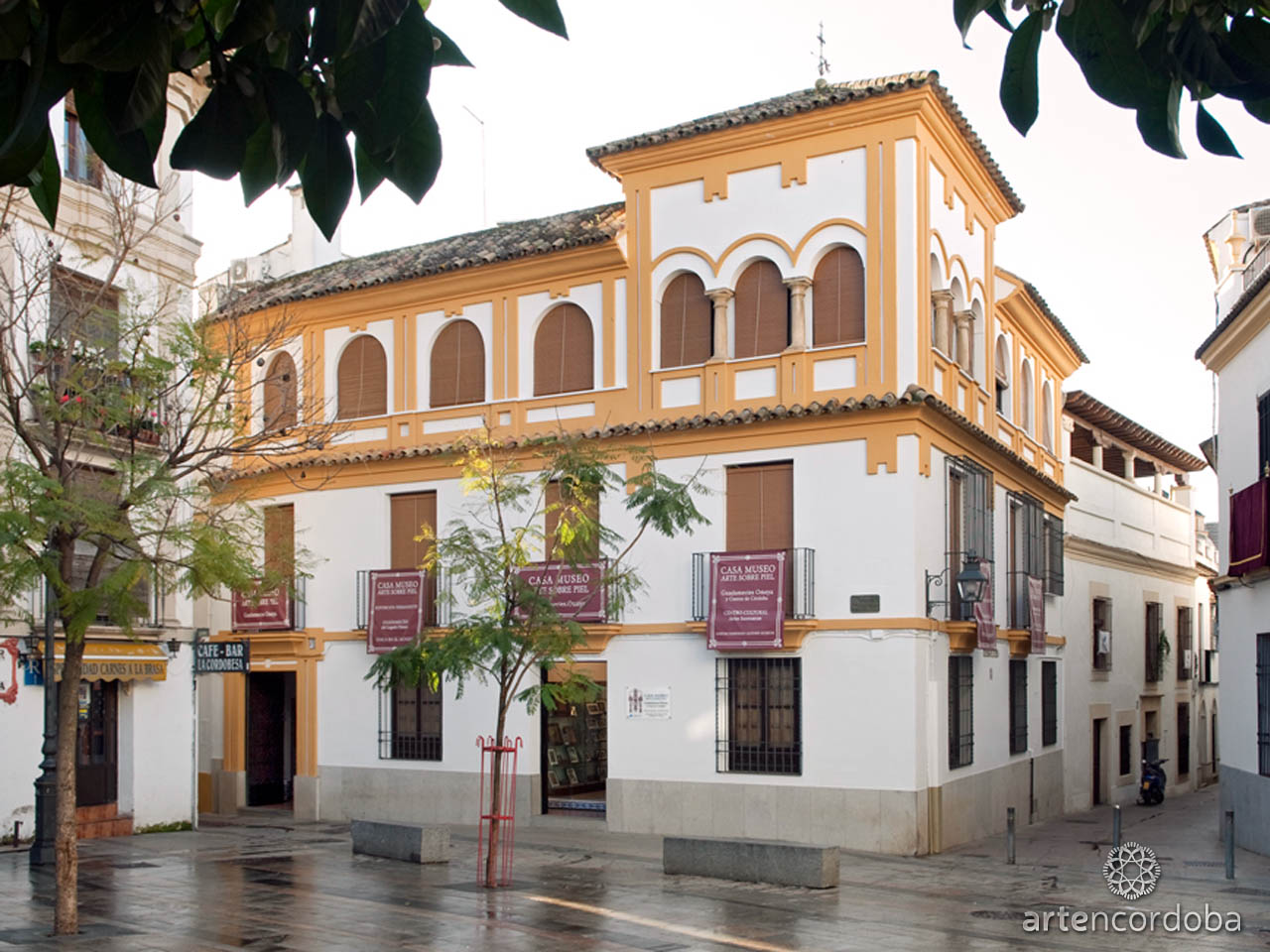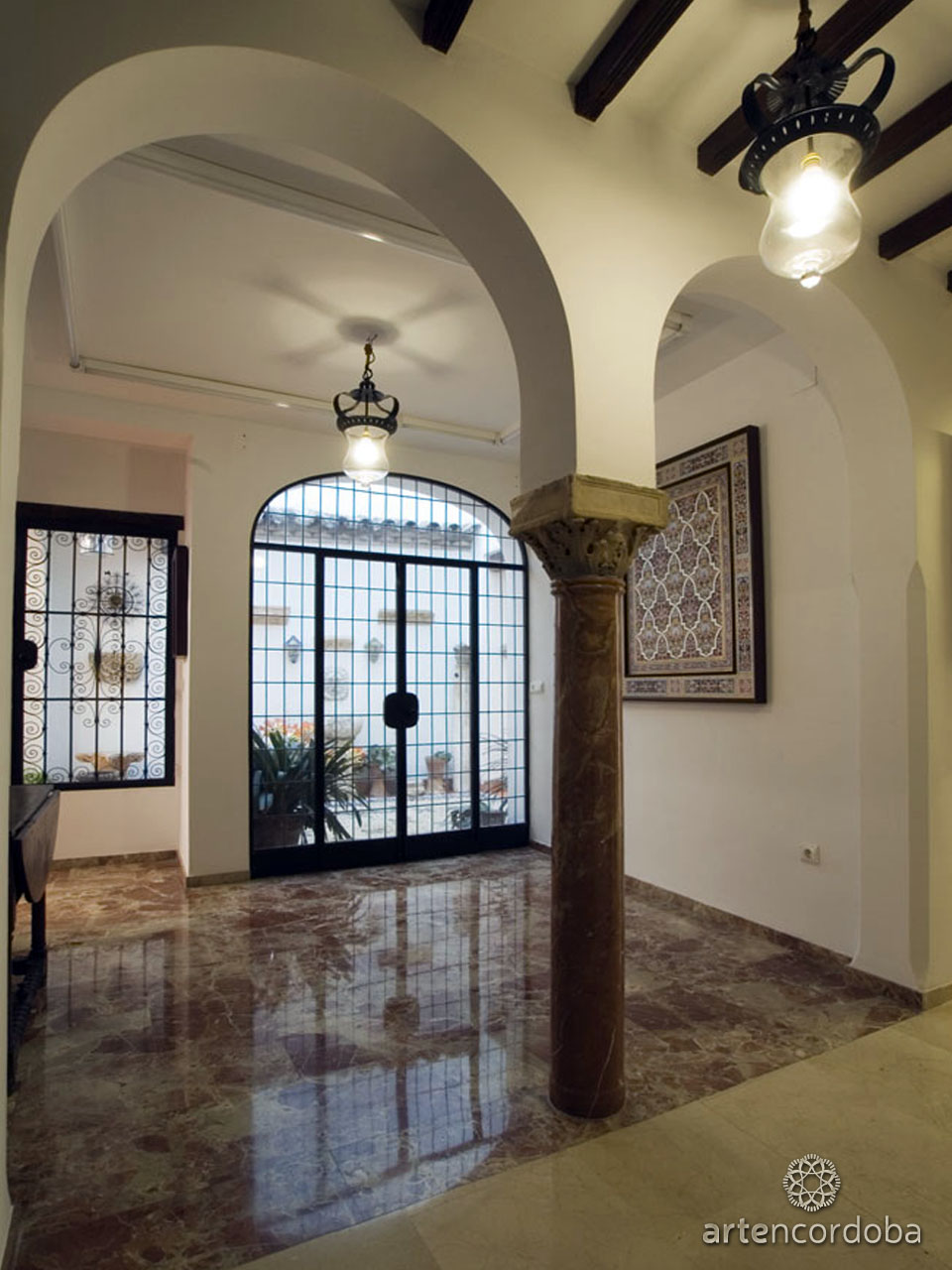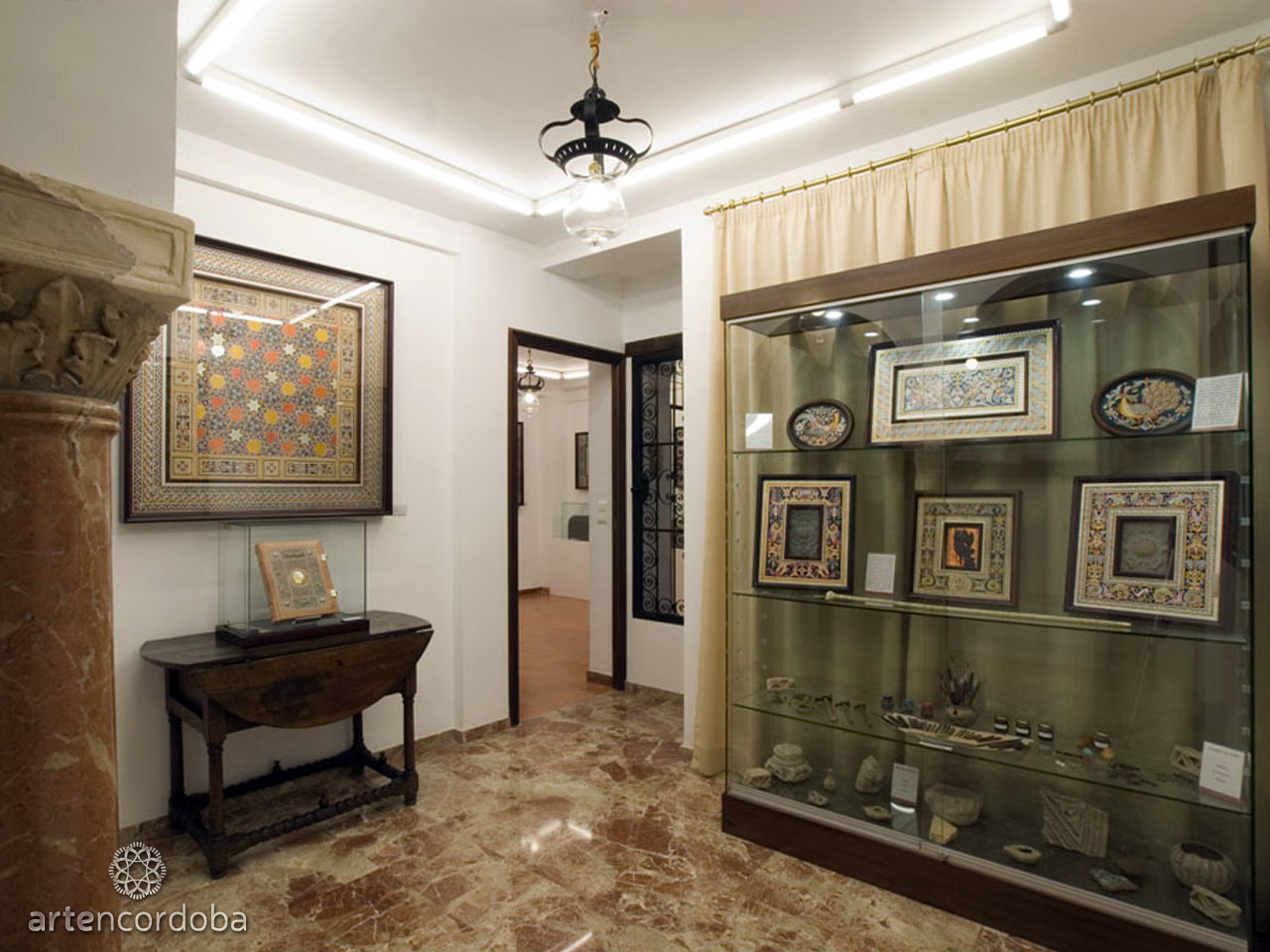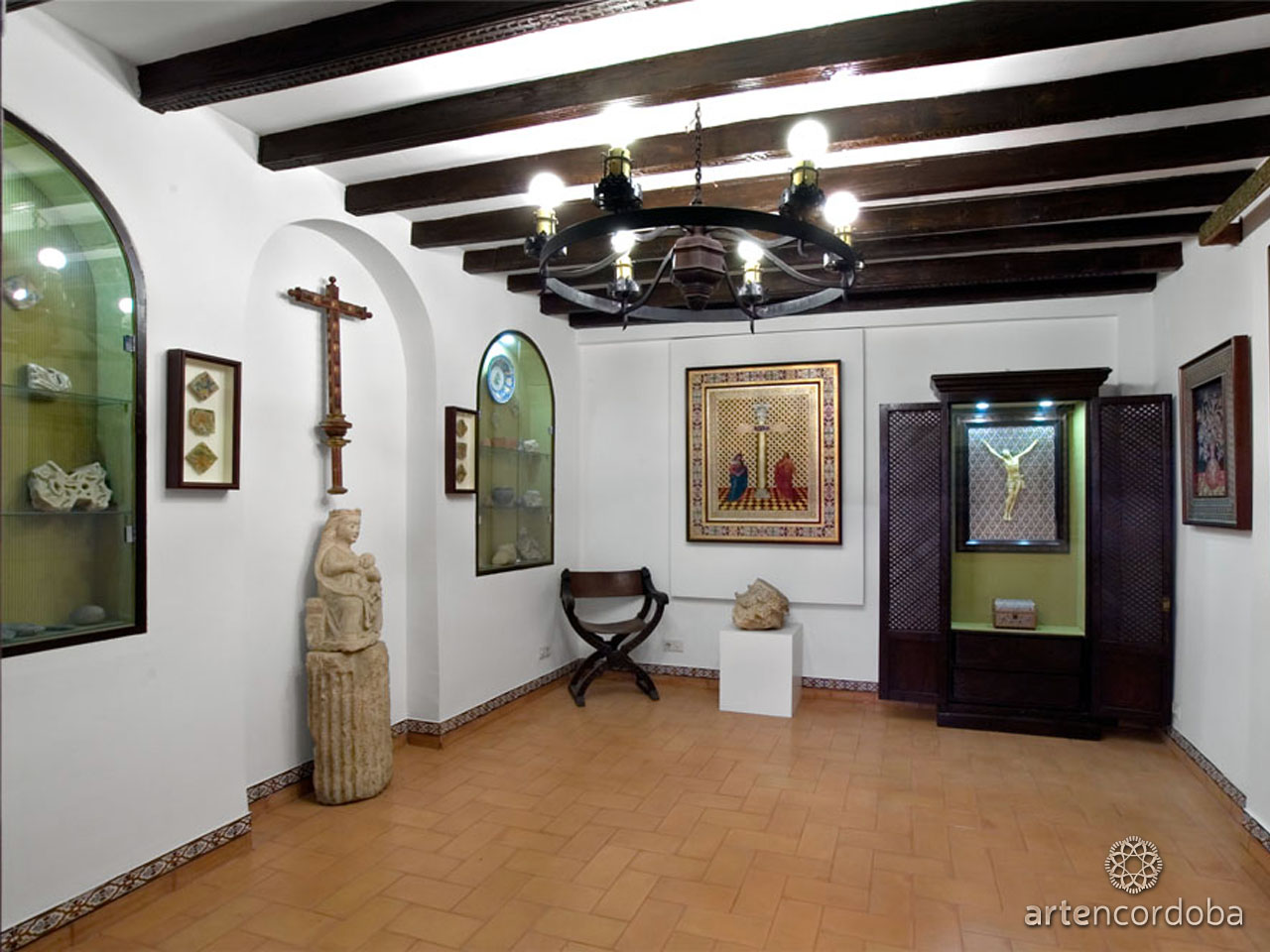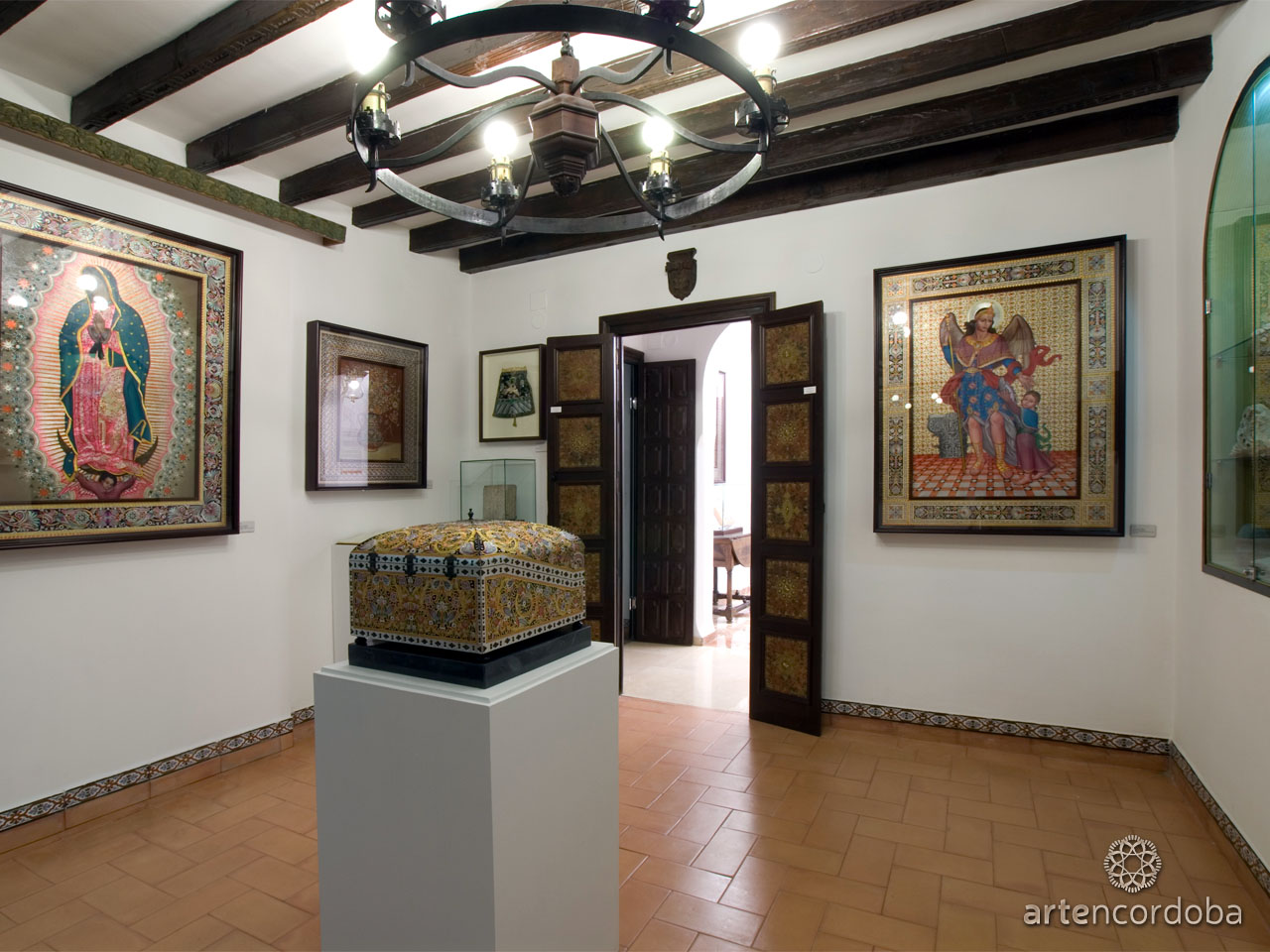






The Casa Museo Arte sobre Piel, now Casa Ramón García Romero, was founded with the purpose of promoting artistic expressions linked to the decorative arts, especially the original guadamecíes from the Umayyad legacy.
Located in the heart of the historic center, just a few meters from the Mezquita-Catedral, this house museum hosts a permanent exhibition dedicated to the work of Ramón García Romero, who, after extensive research, revived the ancient caliphal guadamecíes of the 10th century for our time.
As we tour the Casa Museo Arte sobre Piel, we encounter a unique exhibition in the world, created using original Umayyad techniques, similar to those used in the palatine city of Medina Azahara, when Córdoba was the cultural center of the Islamic West.
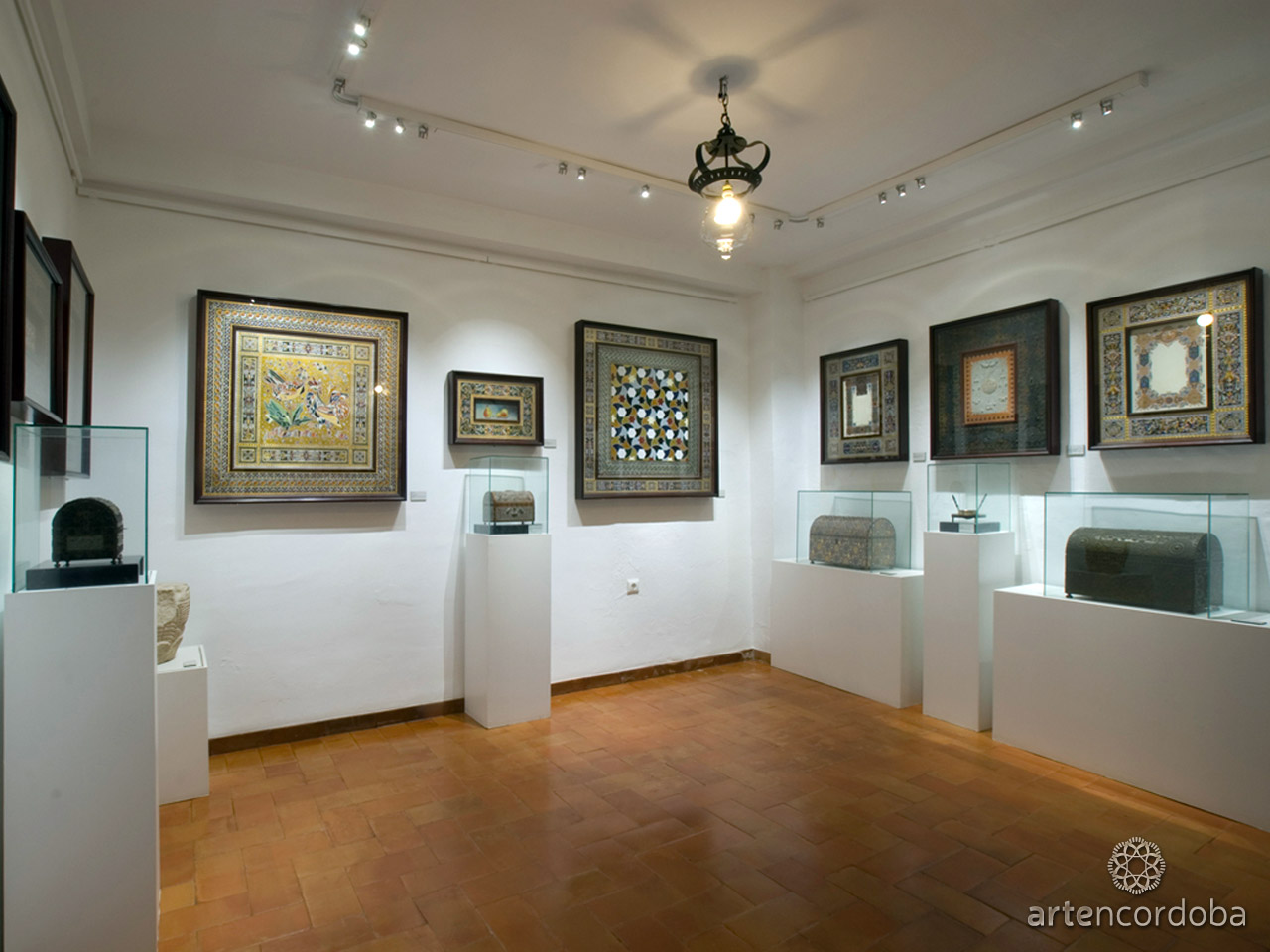
This art on leather, born in Córdoba during the Caliphate, gained international fame and was admired in both the East and West. The recovery of this tradition is now displayed in five rooms, which also incorporate other historical leatherworking techniques, both Arab and Hispanic.
The Museum Rooms
Room I: The Caliphal Guadamecí
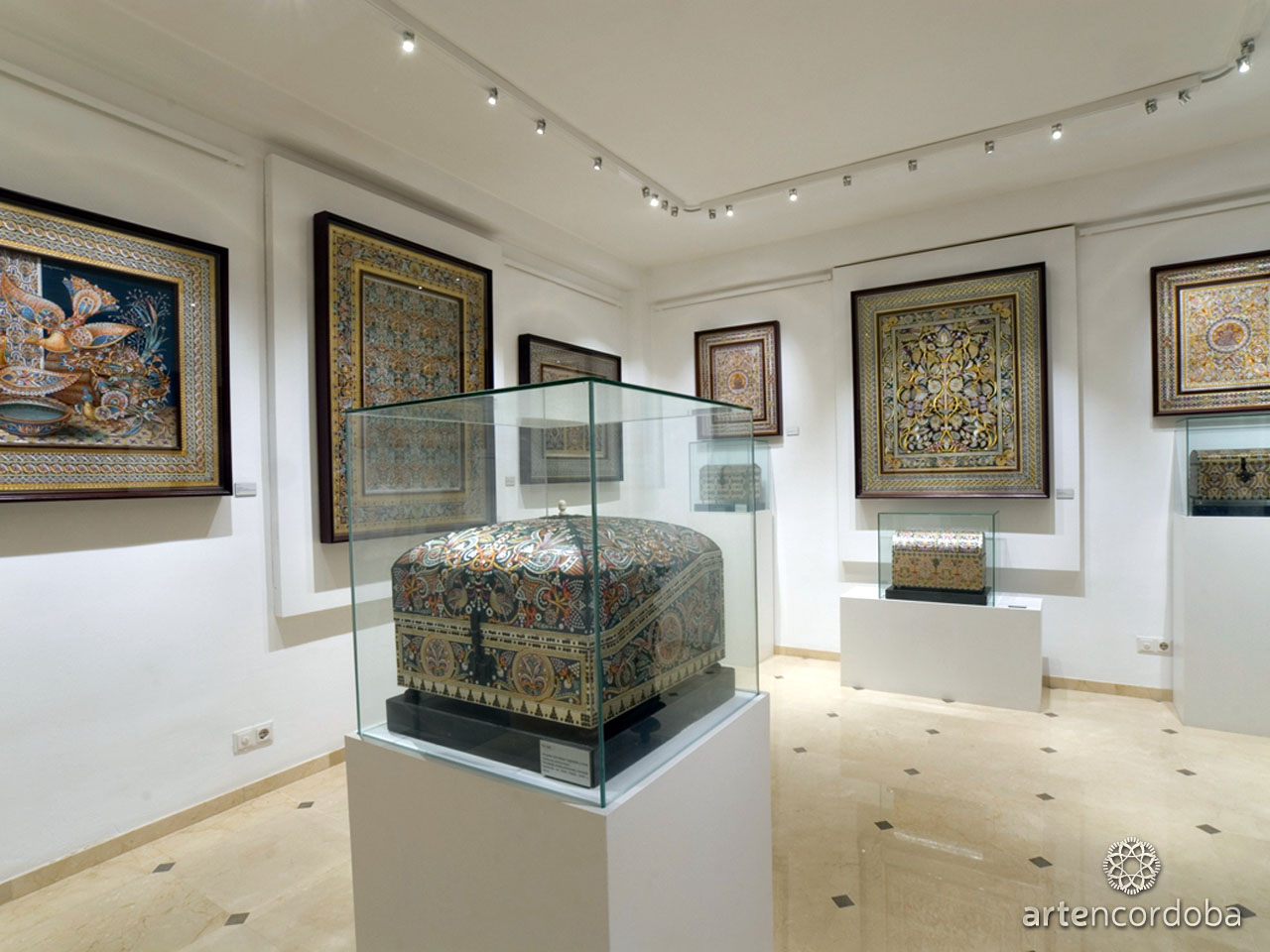
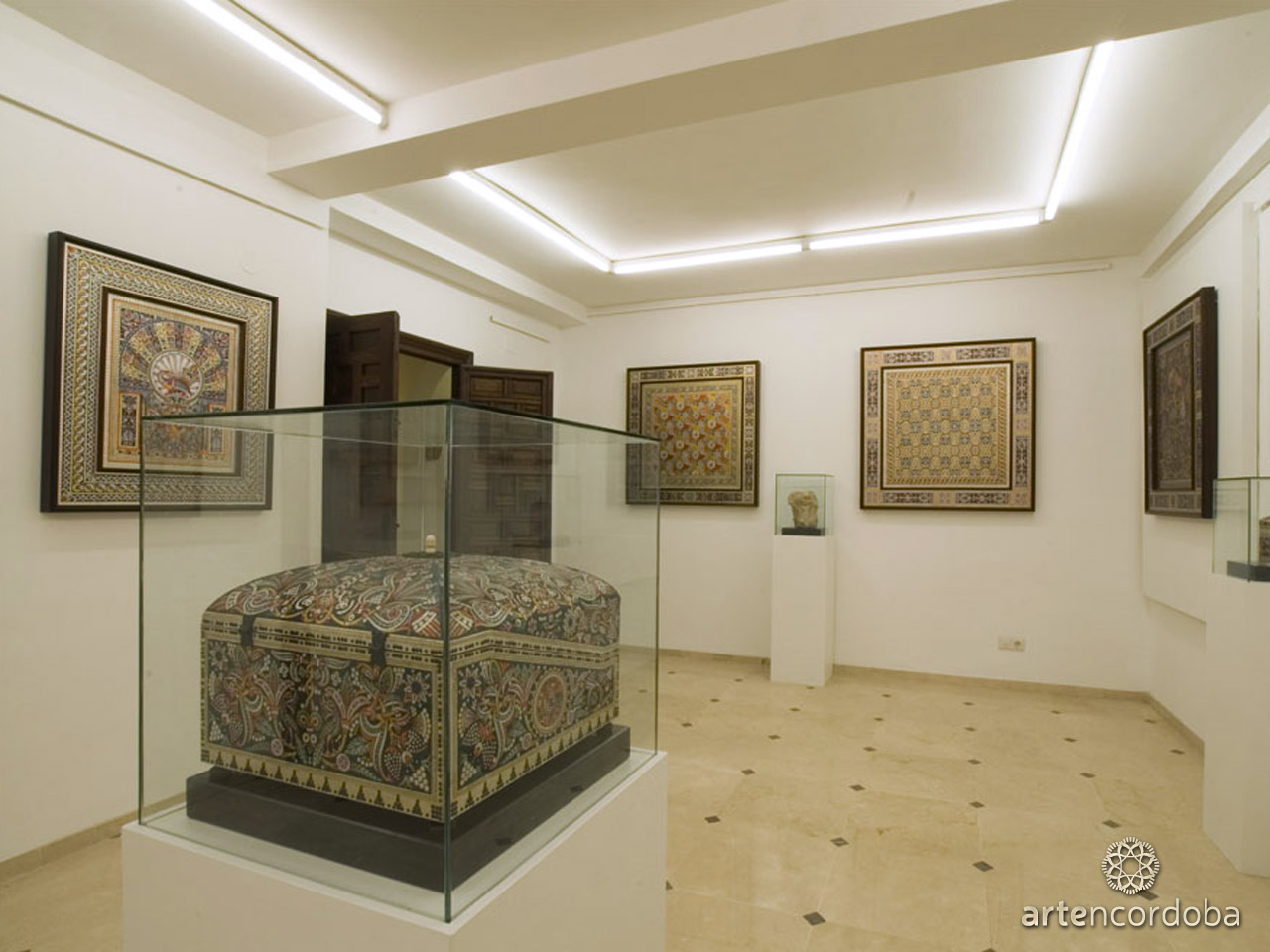
The first room is dedicated to the Umayyad guadamecí technique in its purest form, showcasing panels and caskets with vegetal, geometric, and fantastical bird decorations. Here, visitors can appreciate the original caliphal guadamecíes and the value of the recovery work carried out by Ramón García Romero.
Room II: Ceramics in the Guadamecí
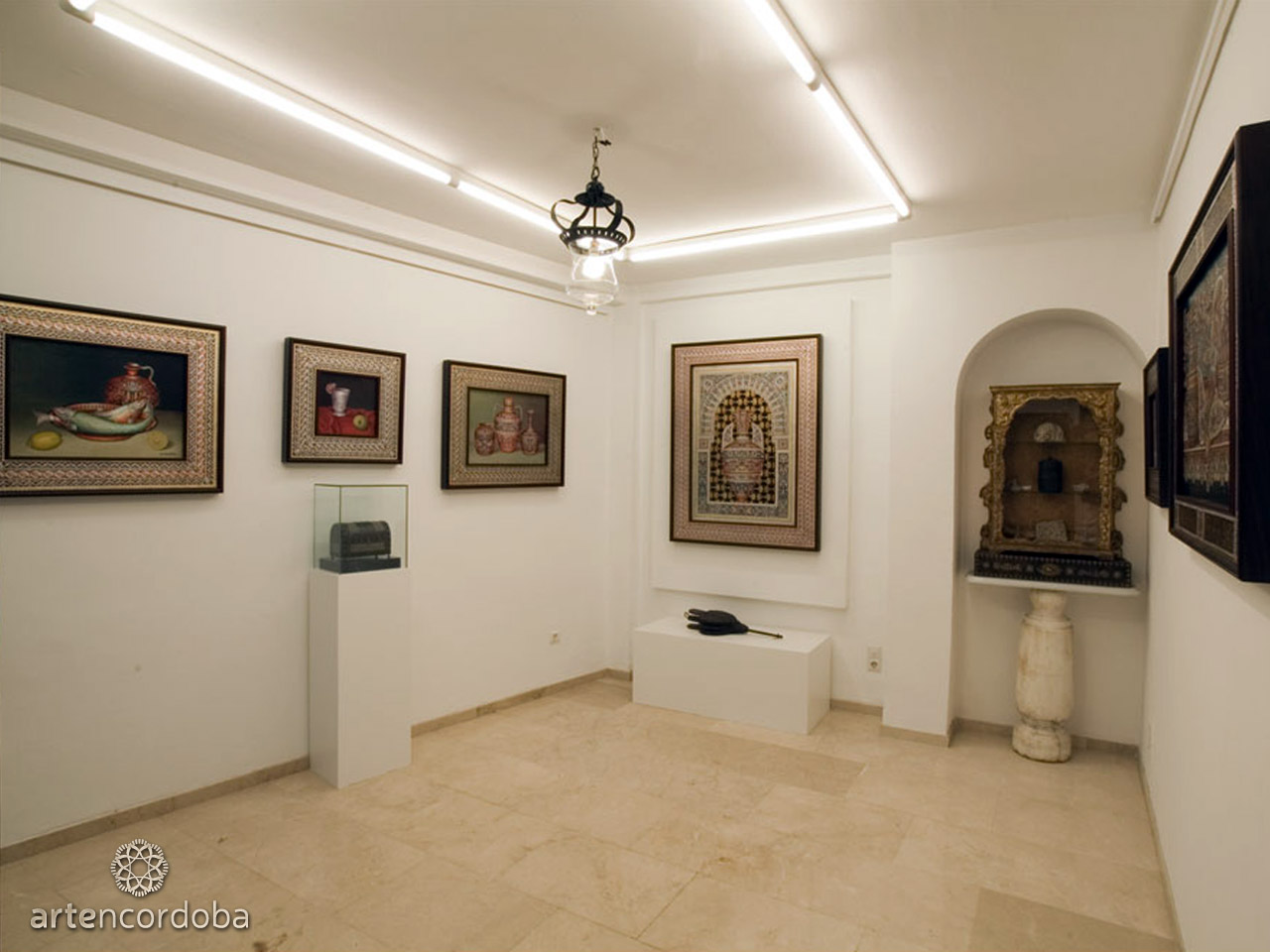
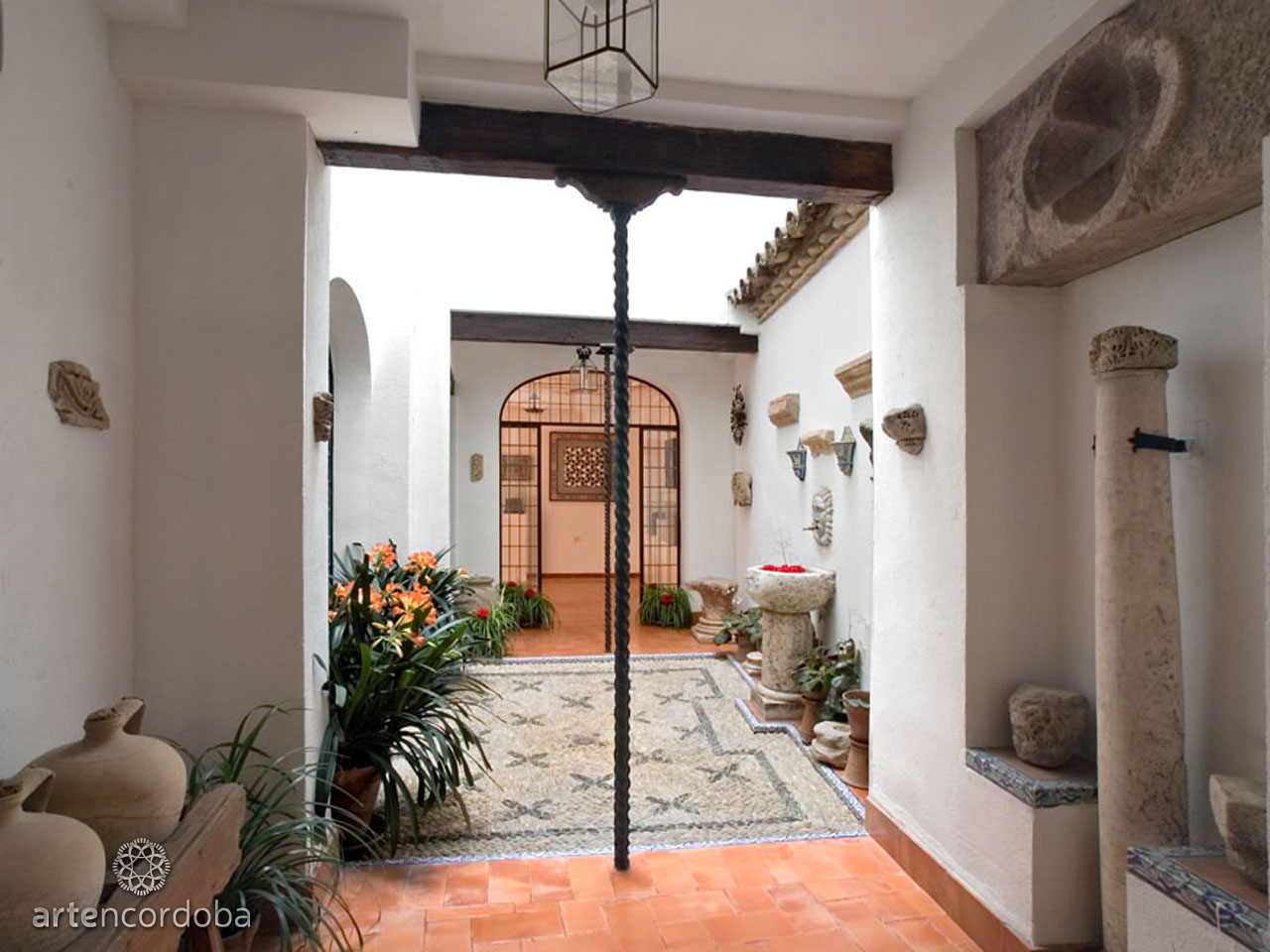
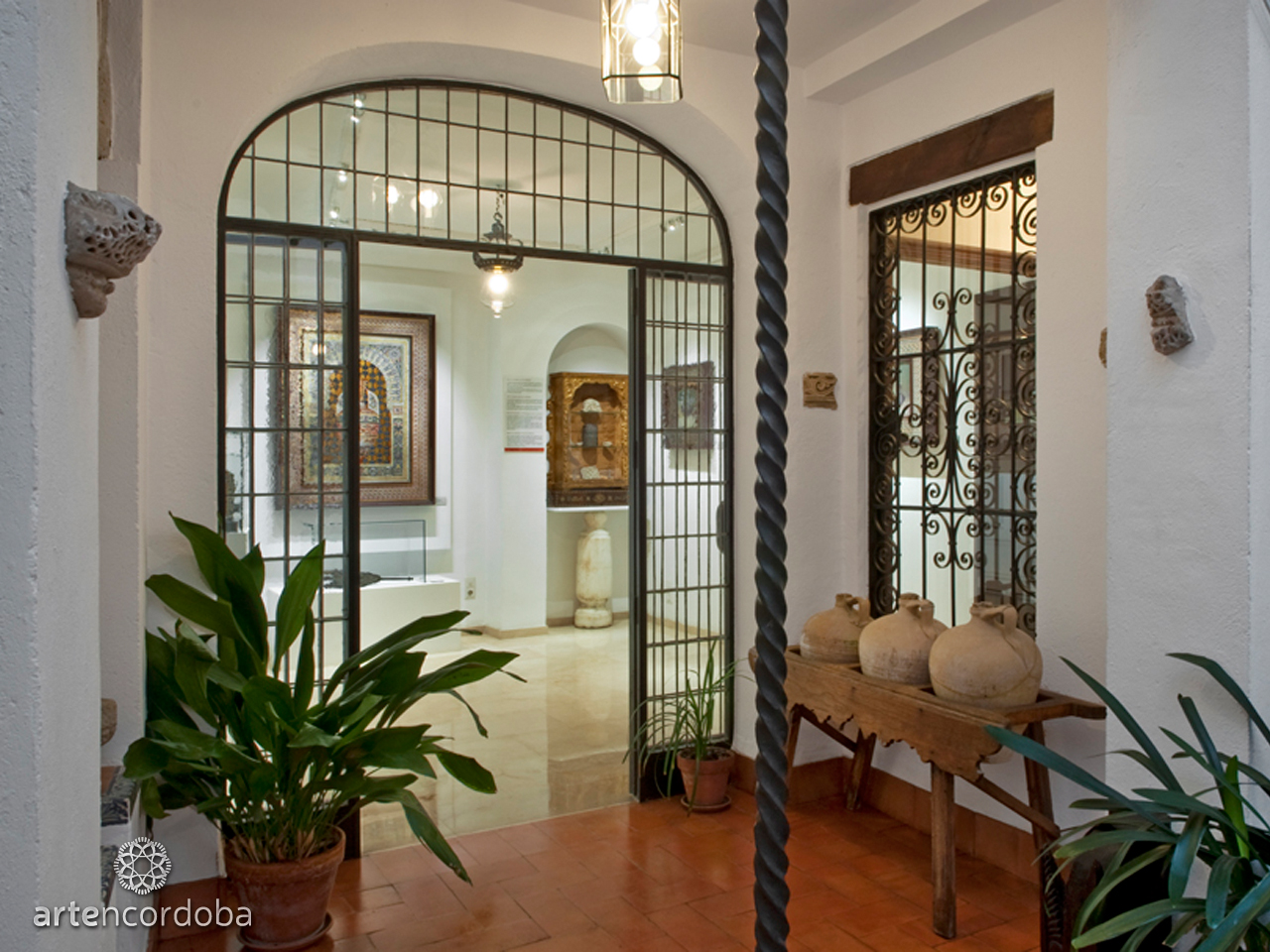
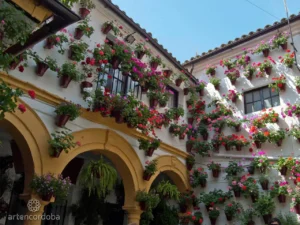
This room shows the artist’s intention to merge different forms of expression, incorporating motifs from Arab ceramics: niches, fruits, and flowers, crafted with the guadamecí technique. To access the next room, visitors pass through a small white patio with a Cordoban air, reminiscent of ancient Roman atriums.
Room III: Techniques
A space dedicated to the various techniques used in leather ornamentation: engraving, modeling, incising, embossing, pierced, marbled or studded caskets. The room features studies of silver on guadamecí, illuminated parchments, mosaics, and pieces crafted with the refinement characteristic of the Umayyad guadamecí.
Room IV: Between Columns
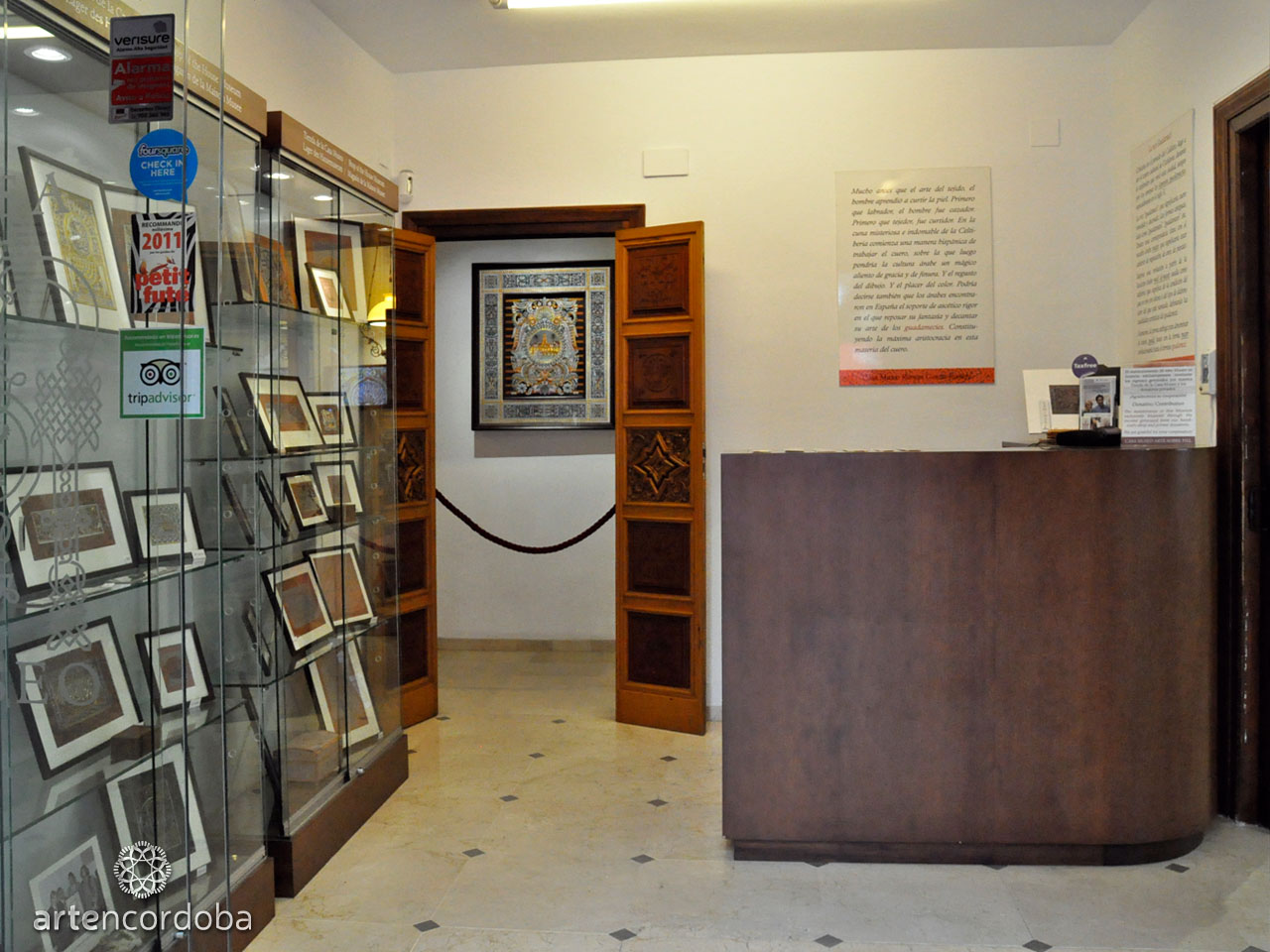
This room displays tools, stamps, pigments, and utensils used by Ramón García Romero in his creations. It also houses the museum’s Guestbook, containing messages from prominent visitors.
Room V: The Figure in the Guadamecí
The earliest references to the figurative use of guadamecí date from the 13th century, particularly in altar frontals. In this room, the artist draws inspiration from the medieval period to depict human figures in his personal style, creating works of great originality and beauty.
Notable Works
The Tree of Life
Author: Ramón García Romero. Silvered, gilded, polychrome, and stamped leather. Dimensions: 103 x 122 cm.
A work created using the guadamecí technique, inspired by the stuccoes of the Salón Rico in the palatine complex of Medina Azahara. It features marked symmetry and vegetal motifs evoking the Umayyad tradition. The “Tree of Life” symbolizes wisdom and happiness. The artist created a variant of this piece for the Princes of Asturias.
Guadamecí Casket
Author: Ramón García Romero. Silvered, polychrome, and stamped leather, adorned with wrought iron and ivory. Dimensions: 39 x 41 cm.
This is a square-shaped casket crowned with a four-sectioned dome, decorated with animal and vegetal motifs inspired by Umayyad art. Its harmony and elegance evoke the pieces that might have been created in Medina Azahara for Caliph Abd al-Rahmán III.
Poem to Córdoba
Author: Ramón García Romero. Silvered, gilded, polychrome, and stamped leather. Dimensions: 79 x 91 cm.
This work is the artist’s tribute to his city. It is inspired by the Mihrab of the old Great Mosque, depicting its horseshoe arch and inner shell. Two birds with interlaced necks symbolize harmony and love.
Tourist Information
Address: Plaza Agrupación de Cofradías, 2. 14003 Córdoba. Phone: +34 957 050 131.
Bus
Bus Lines
Lines 2, 3, 5, 6, 7, 9, 16, 01, 02.Opening Hours
Opening Hours
Monday to Saturday: 10:30 a.m. – 2:00 p.m. and 4:30 p.m. – 8:00 p.m.Price
Prices
Free admissionHow to Get There
The museum is located in Plaza Agrupación de Cofradías. It is accessed via Céspedes Street, just a few meters from the Mezquita-Catedral.
If you would like to visit the Casa Museo Arte sobre Piel (Casa Ramón García Romero), we recommend booking one of our guided tours. We are specialists in interpreting Córdoba’s historical heritage. For information on tickets, schedules, or how to get there, trust ArtenCórdoba.