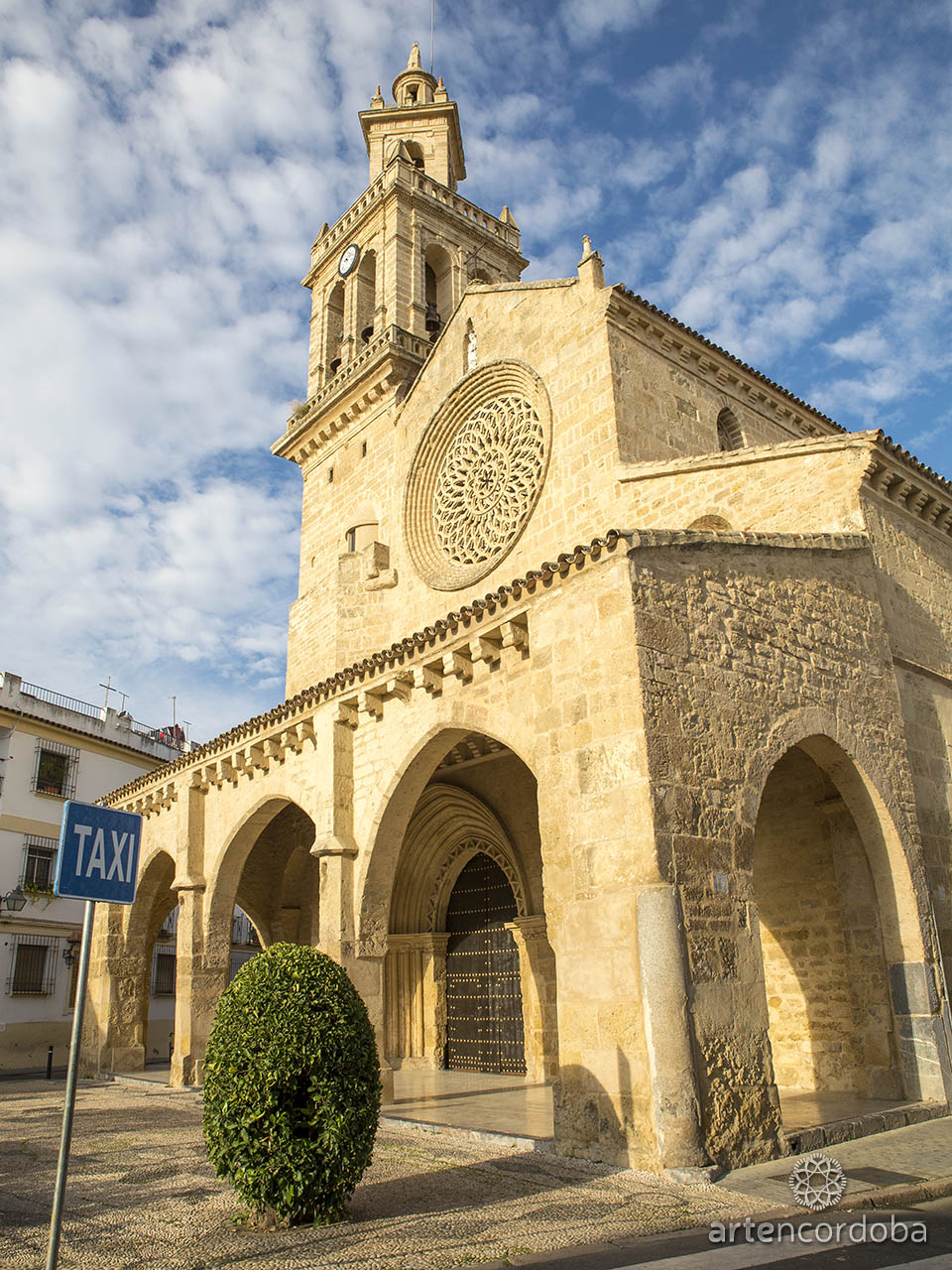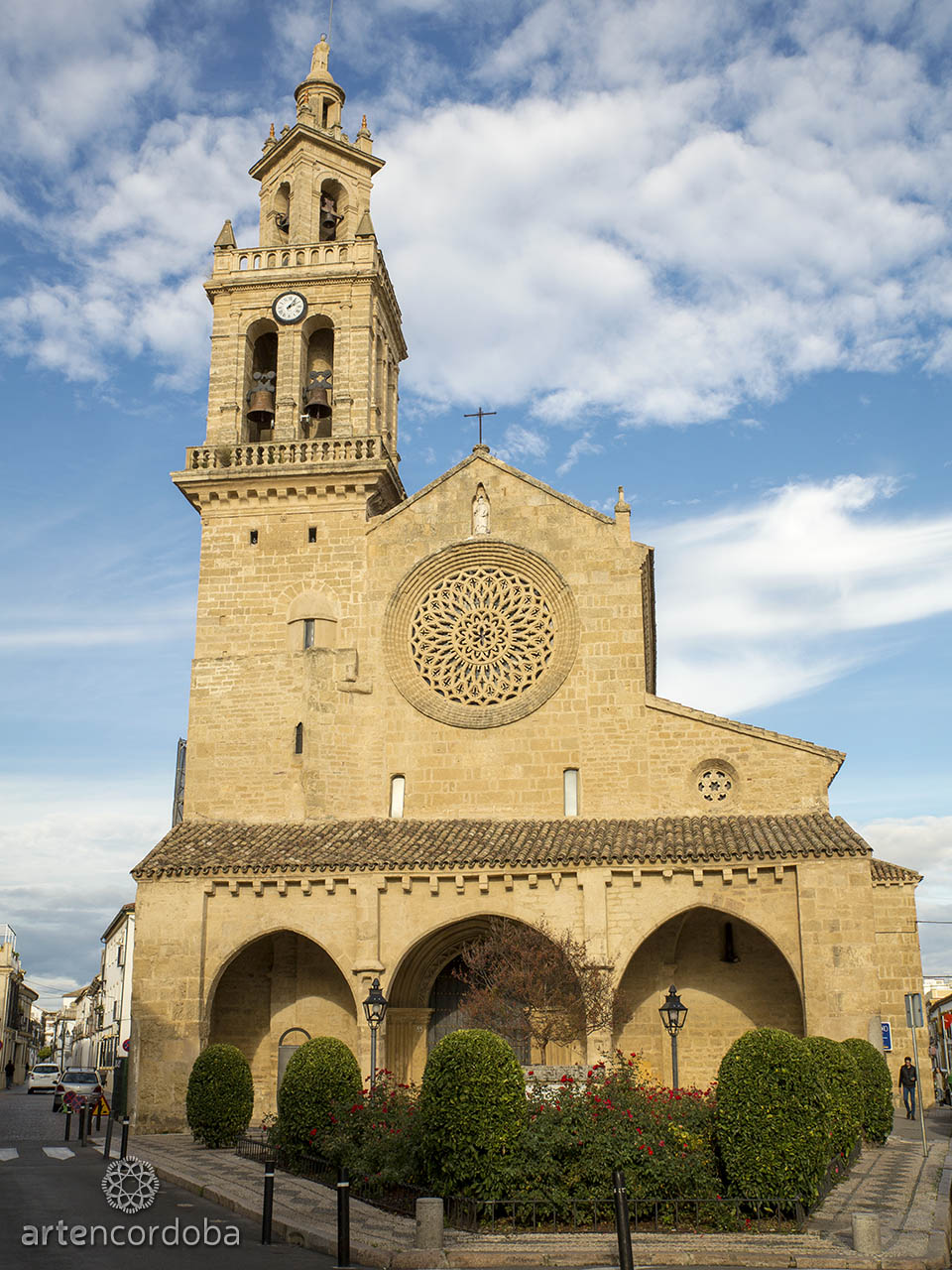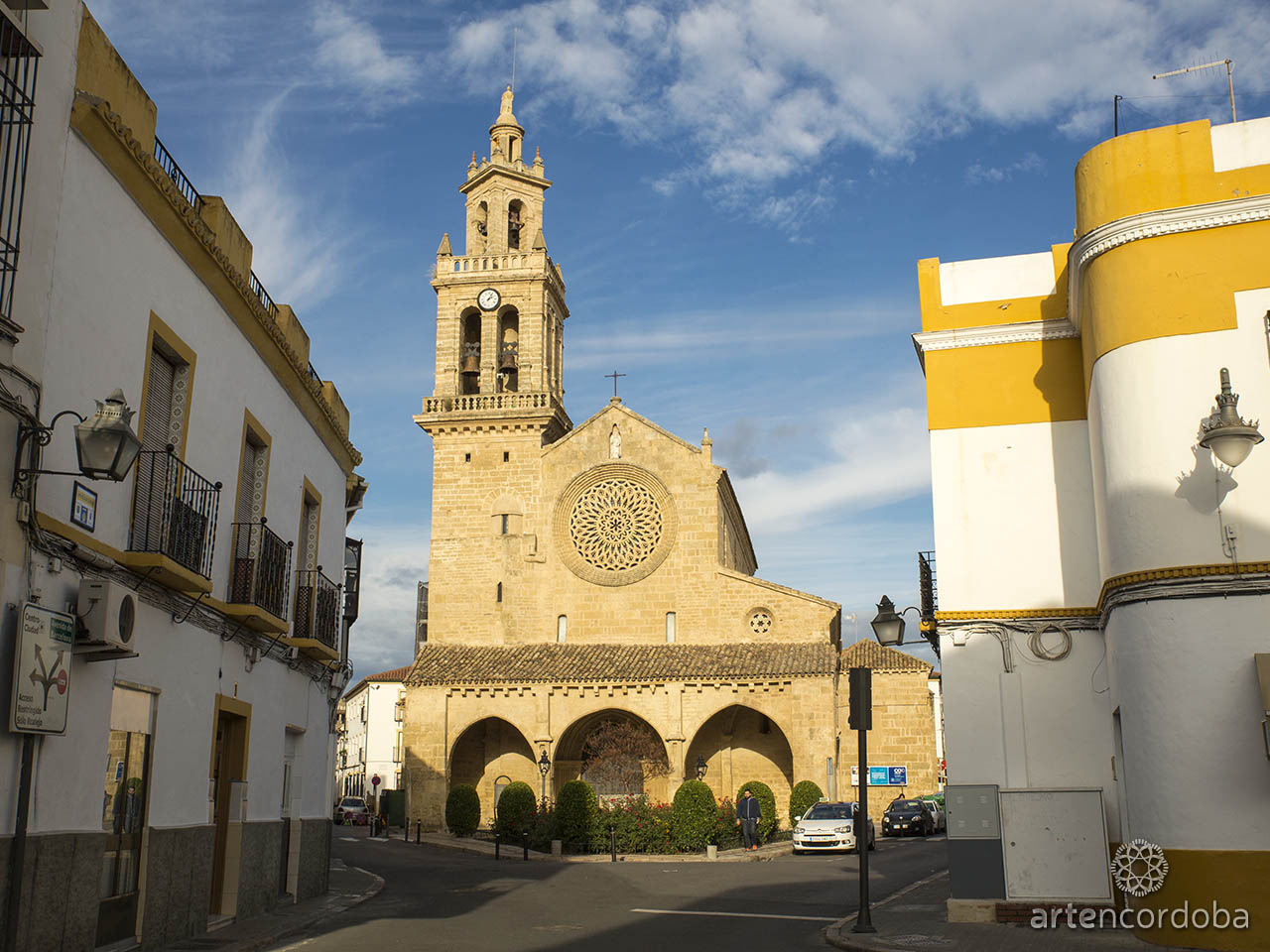






The Church of San Lorenzo was erected in the parish of the same name, located at a crossroads whose main axis, the old Via Augusta, ran from the Puerta de Plasencia to the Puerta de Hierro, which was embedded in the wall separating the neighborhoods of the Villa and the Ajerquía. The Church of San Lorenzo bordered the wall that protected the city.
Islamic origin of the site
The Christian temple was built on the former site of the al-Mugira Mosque, of which remains of the original minaret can still be found beneath the current tower. Additionally, in 1884, the commemorative foundation stone of the mosque was discovered: “There is no power or strength except through Allah. Lady Mustak, mother of Prince Almugira, ordered the construction of this minaret and the adjoining gallery and the work of nine naves of this mosque. It was completed with the help of Allah under the direction of Gafarben Abderrahman, her official. In the Ramadan of the year three hundred.”
The Christian church after the Reconquista
As occurred in other parts of the city, the Muslim temple was used for Christian worship during the early years of the Reconquista. However, it is known that in 1272, once the administrative organization of the diocese was established, the construction of the Church of San Lorenzo received ten maravedíes, more than enough money to erect what is likely the most representative temple of this era in our city.
Architectural transformations
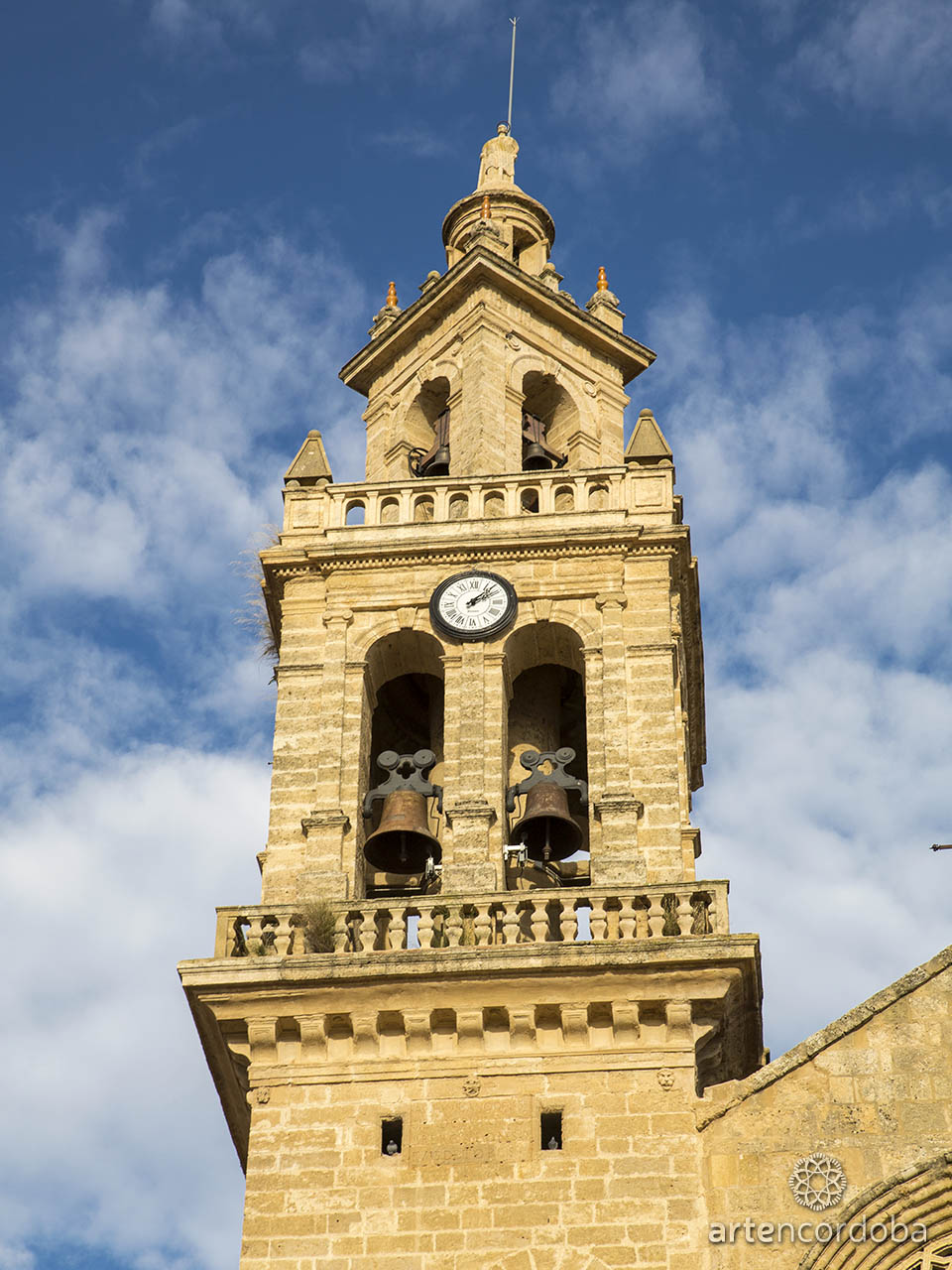
Of all the transformations the Church of San Lorenzo has undergone, the most interesting is the one carried out by the Cordoban architect Hernán Ruiz II the Younger, who built in 1555 the bell tower that we can admire today. In the following years, additions to the church were constant; however, the various restorations throughout the 20th century have aimed to return it to its original state.
The urban environment
The dominance of low houses in the neighborhood makes the image of the church stand out prominently, rising with its own personality above the surrounding whitewashed houses. Very close by, to the East of the Parish, is the Plaza de los Padres de Gracia, popularly known as the Jardín del Alpargate, which houses the Trinitarian temple from the early 17th century and shares the same name as the square. Behind this church, and along the Ronda del Marrubial, we can observe how the old stretch of wall on its eastern side extended to the north. Let us remember that the parish of San Lorenzo bordered the wall that protected the city.
Near the temple was the Cruz de Roelas, the place where, according to tradition, the Archangel Saint Raphael swore before Father Roelas to be the Guardian Angel of Córdoba. For this reason, there is currently a street dedicated to this distinguished priest, who has been the subject of numerous pictorial compositions scattered throughout the city.
The predominance of the old Muslim urban layout is evident in most of the neighborhood’s streets, which remain largely narrow and winding, causing the houses to be partially hidden from the outside—a feature much appreciated by Muslims, who preferred inward-facing construction and shunned ostentation.
Devotion and brotherhoods
Finally, it should be noted that the Church of San Lorenzo is the only temple that houses three Holy Week brotherhoods, which reflects the deep religious and brotherhood sentiment that the San Lorenzo neighborhood has breathed for many years.
The building
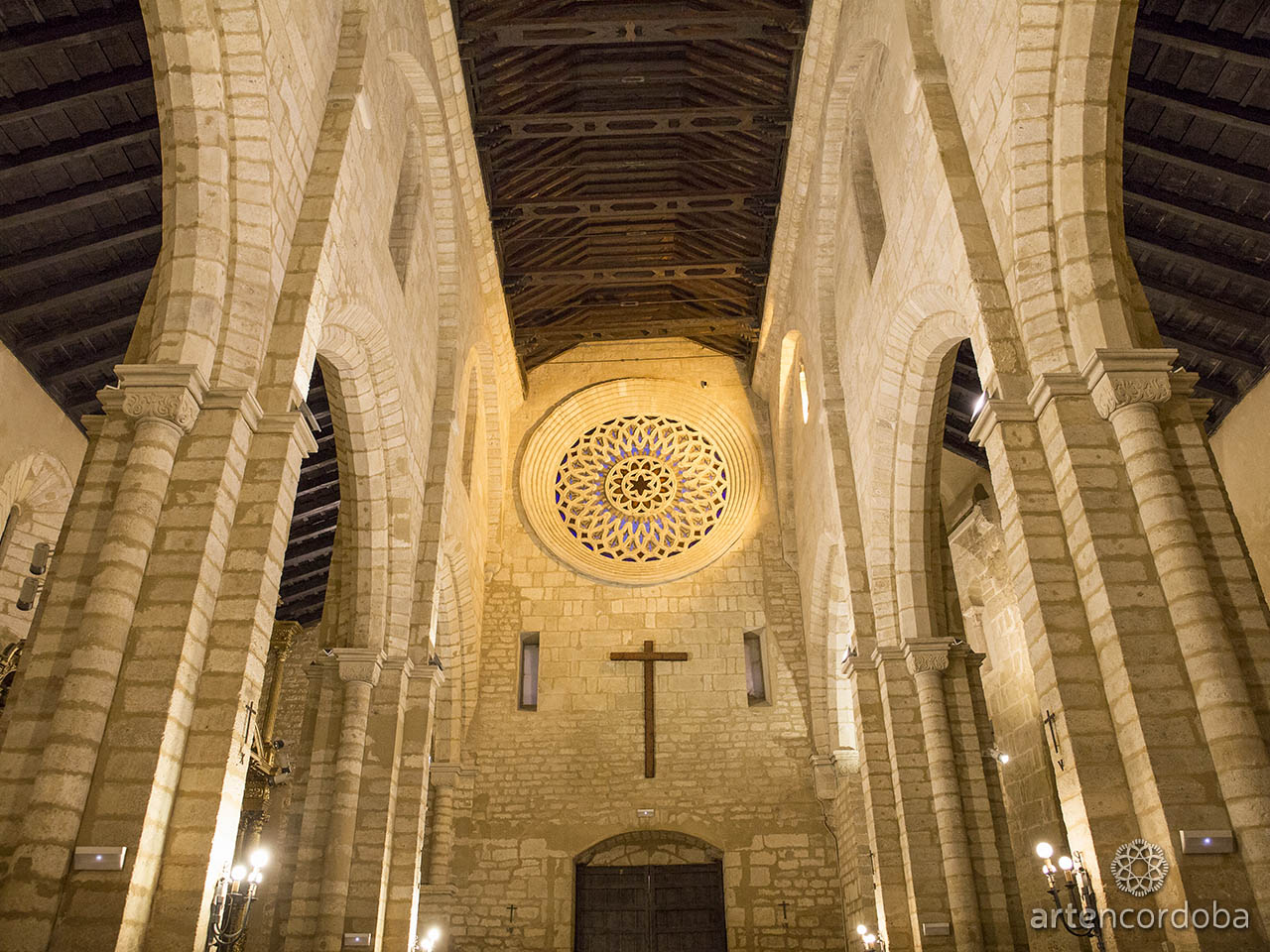
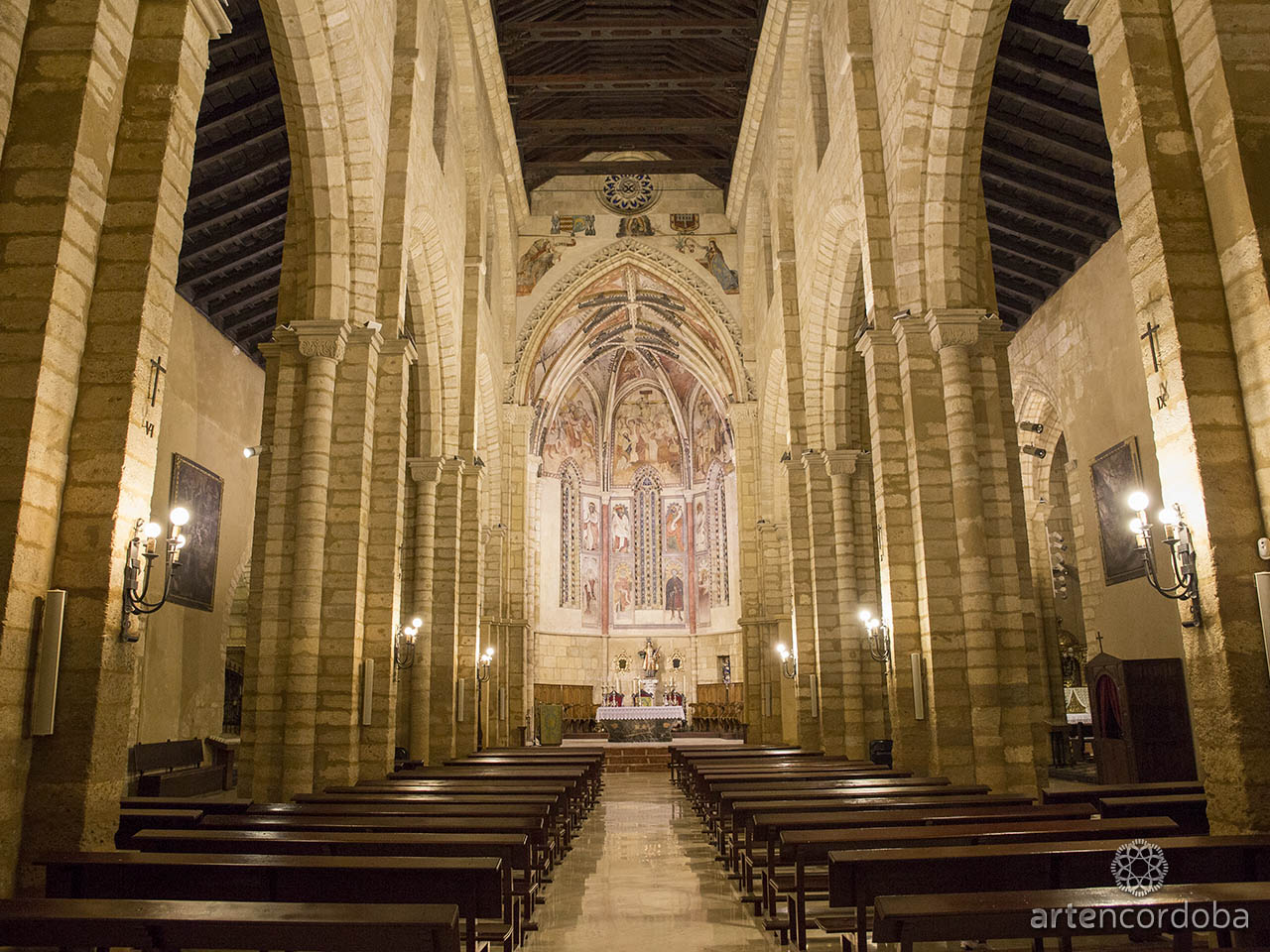
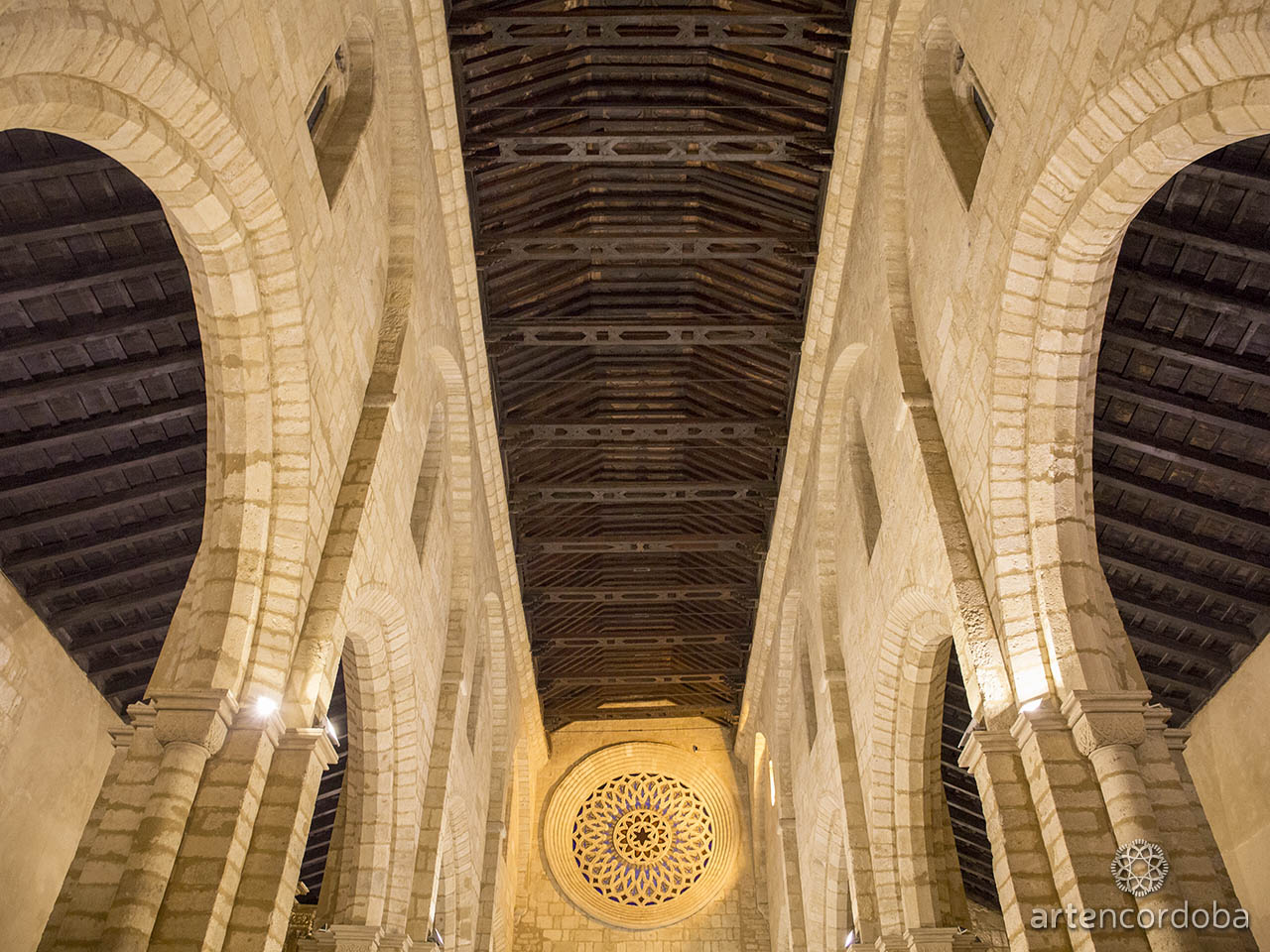
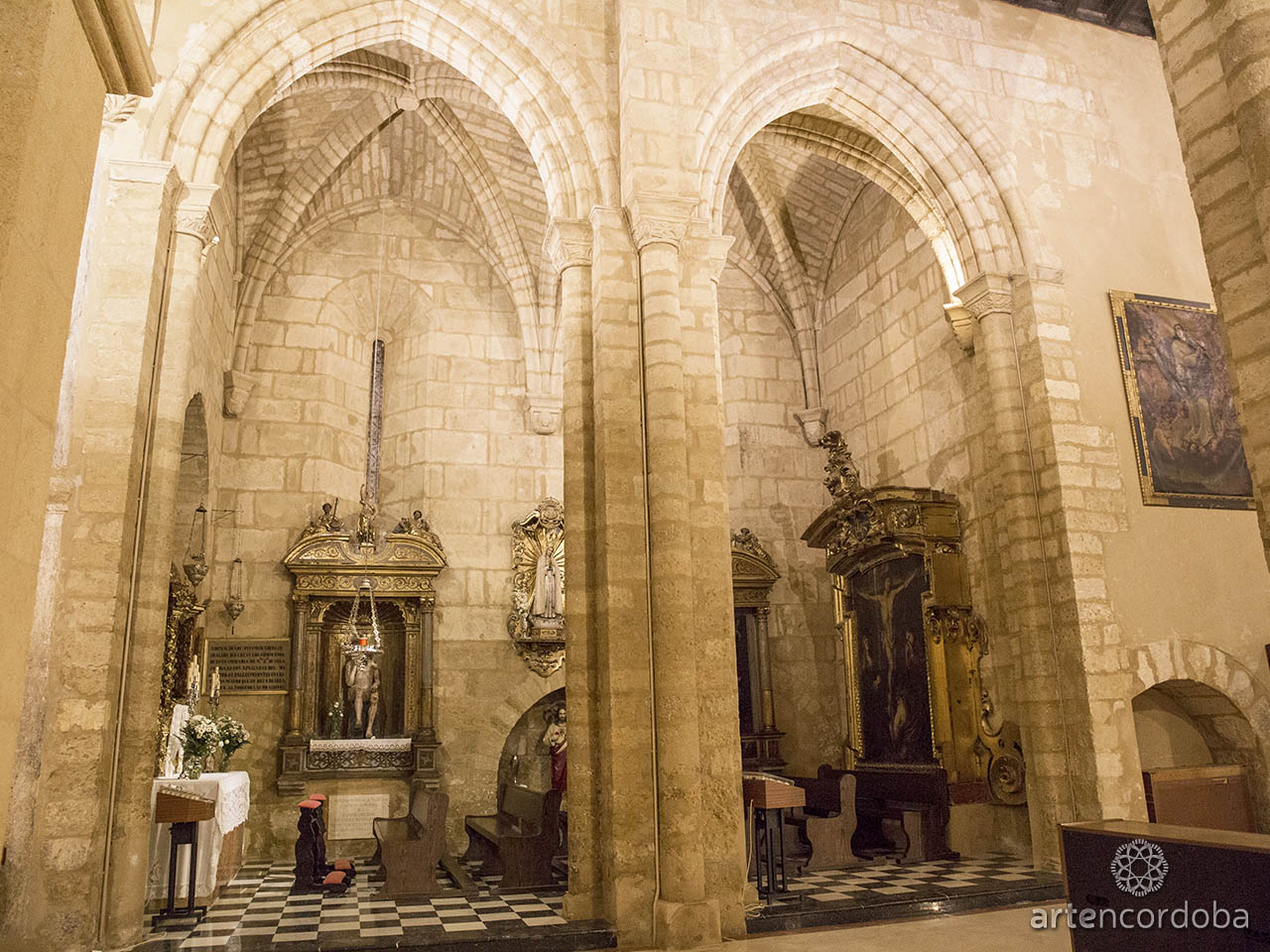
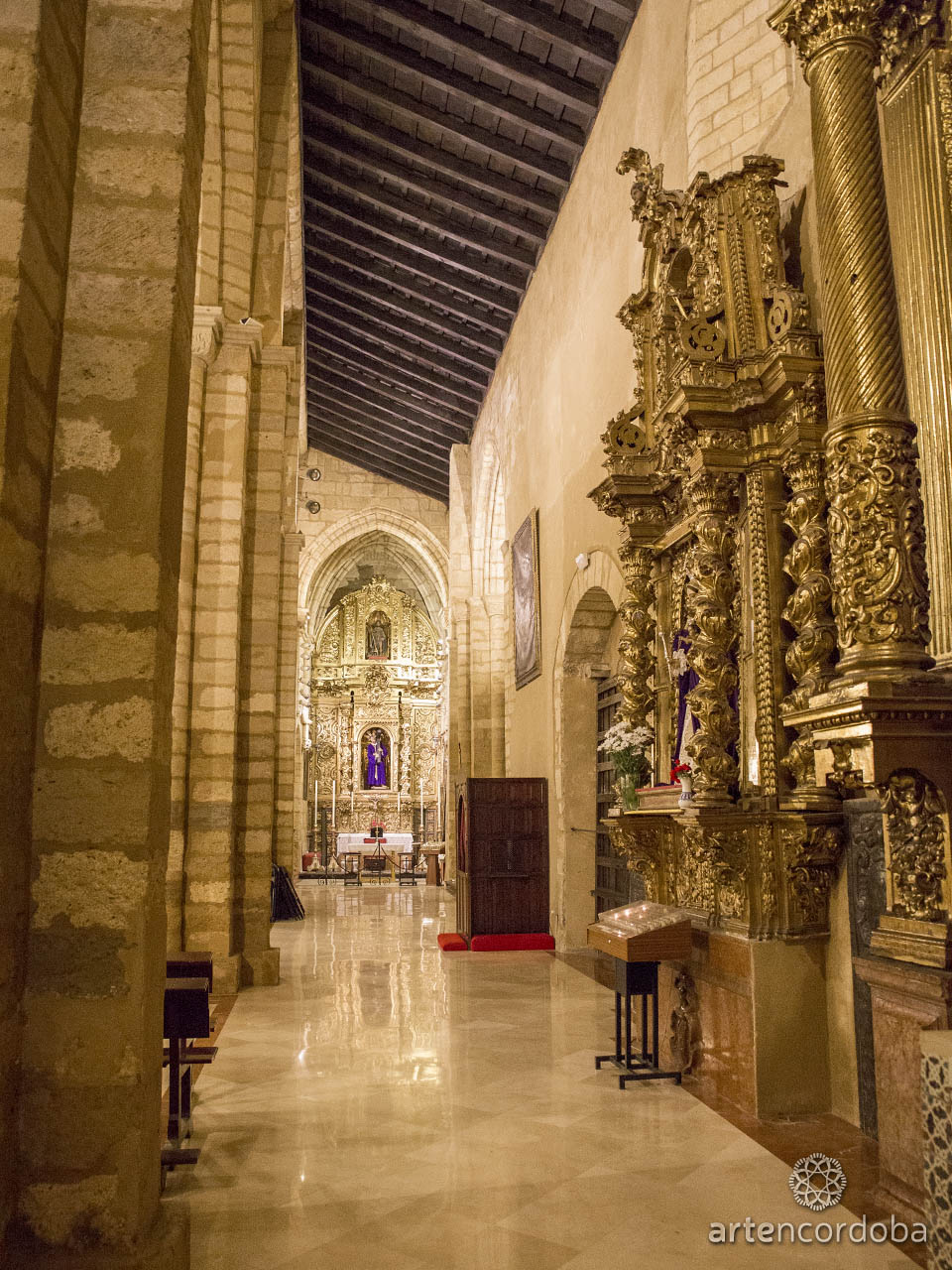
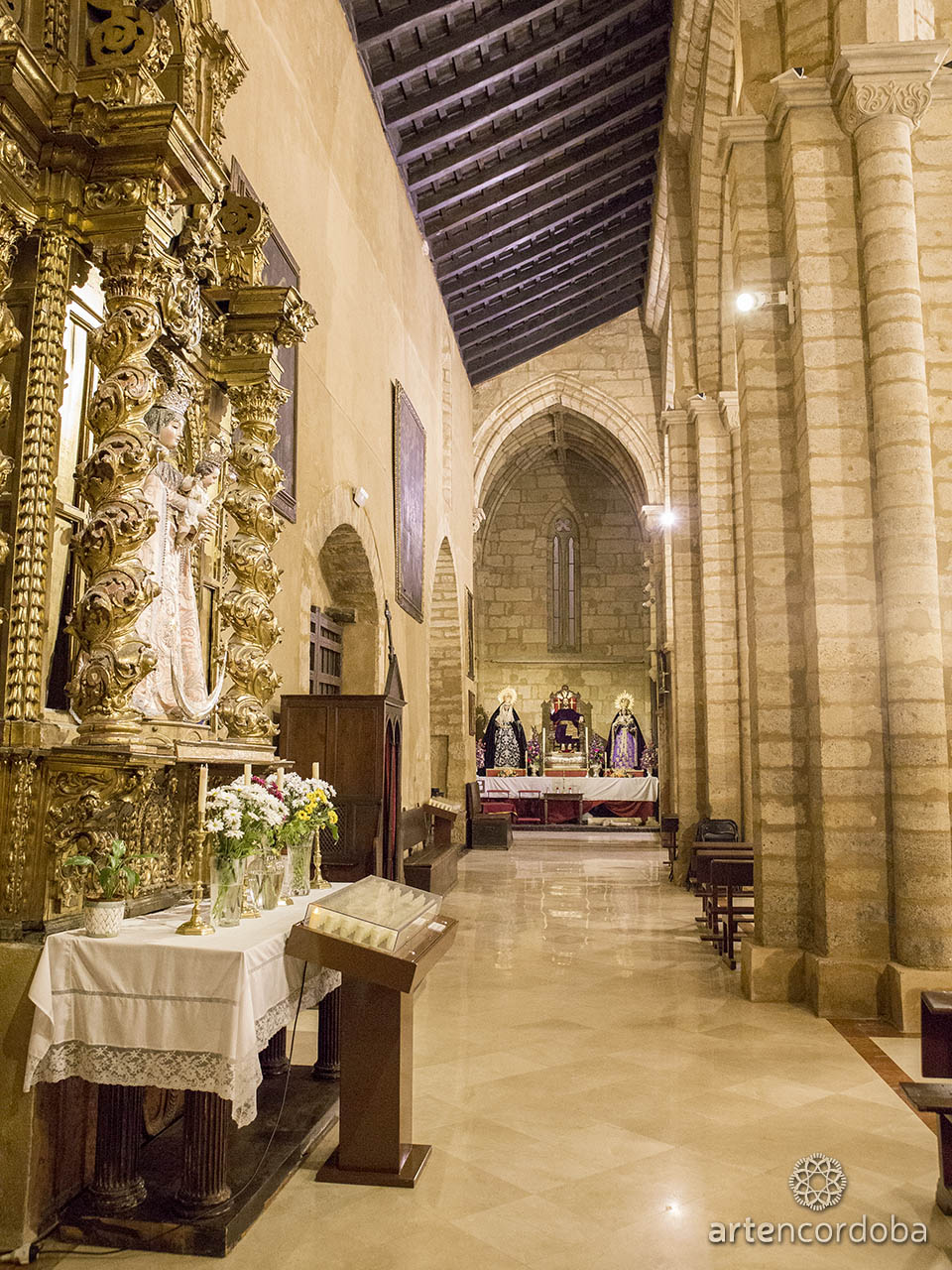
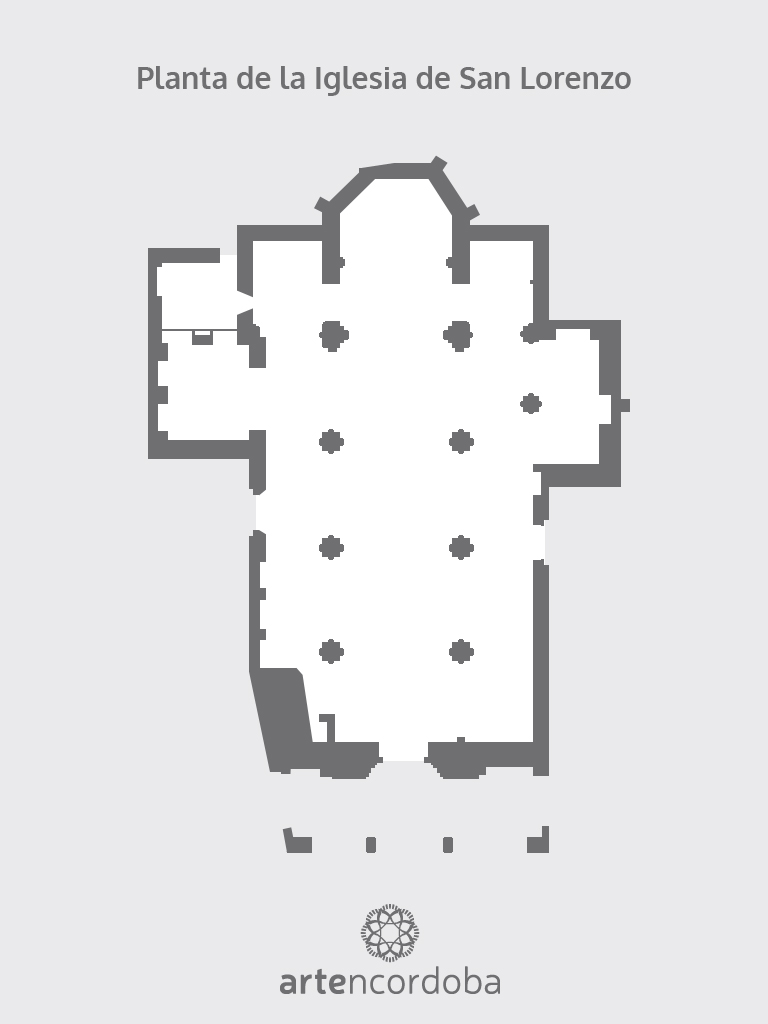
The Church of San Lorenzo features a layout of three parallel naves, with the central one being wider and taller than the lateral ones. The apse consists of three chapels: the central one is polygonal and the side ones are rectangular, all expressed similarly on the exterior, with the central one reinforced by buttresses.
The different naves are connected by four pointed arches resting on cruciform pillars, which have attached columns with capitals decorated with floral motifs, as well as plain pilasters, from which semicircular arches spring along the wall structure that supports the current wooden roof. Only one original capital is preserved, located at the foot of the gospel nave; however, small “little men” figures supporting the vault ribs and monstrous heads are commonly seen.
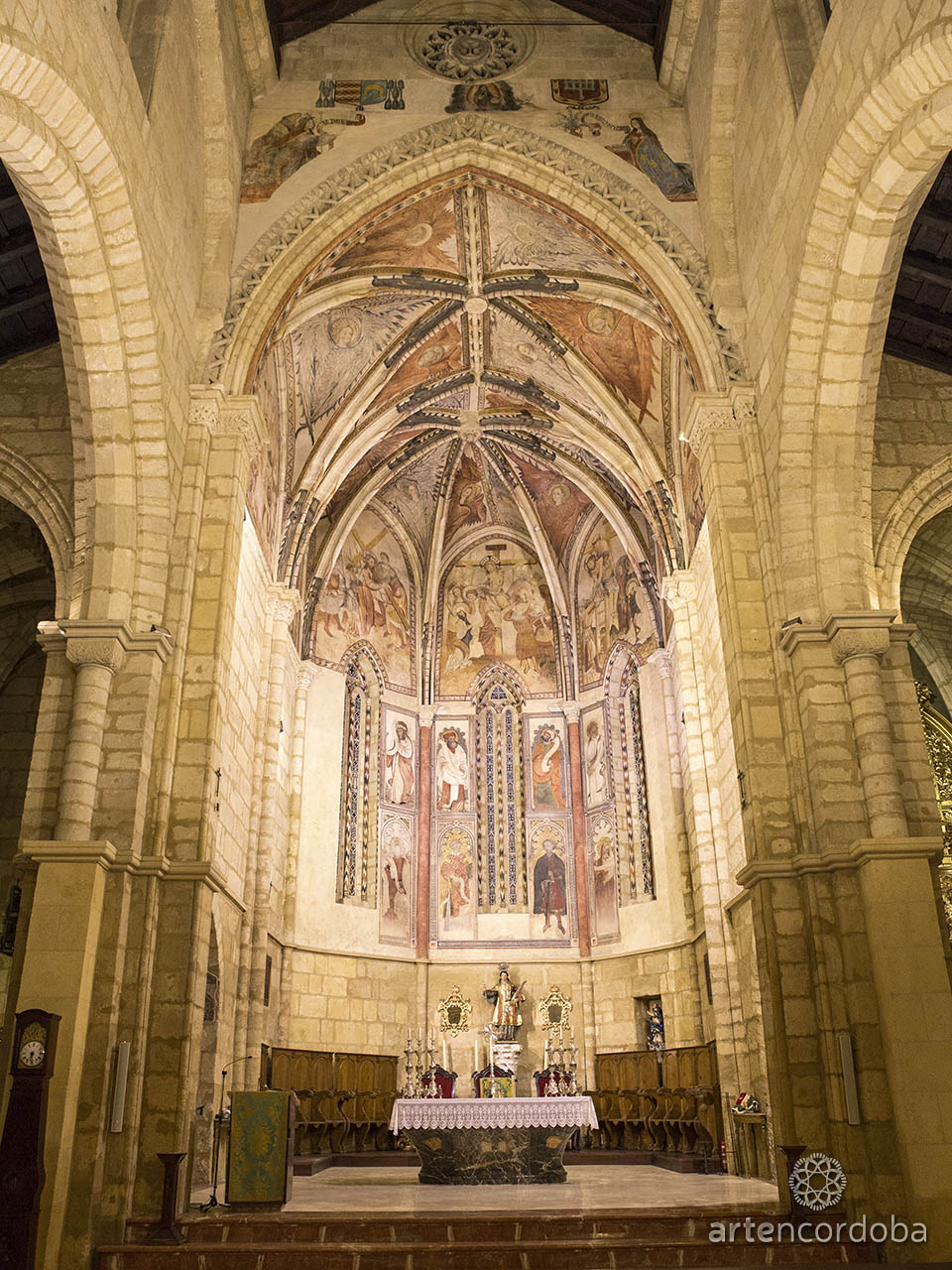
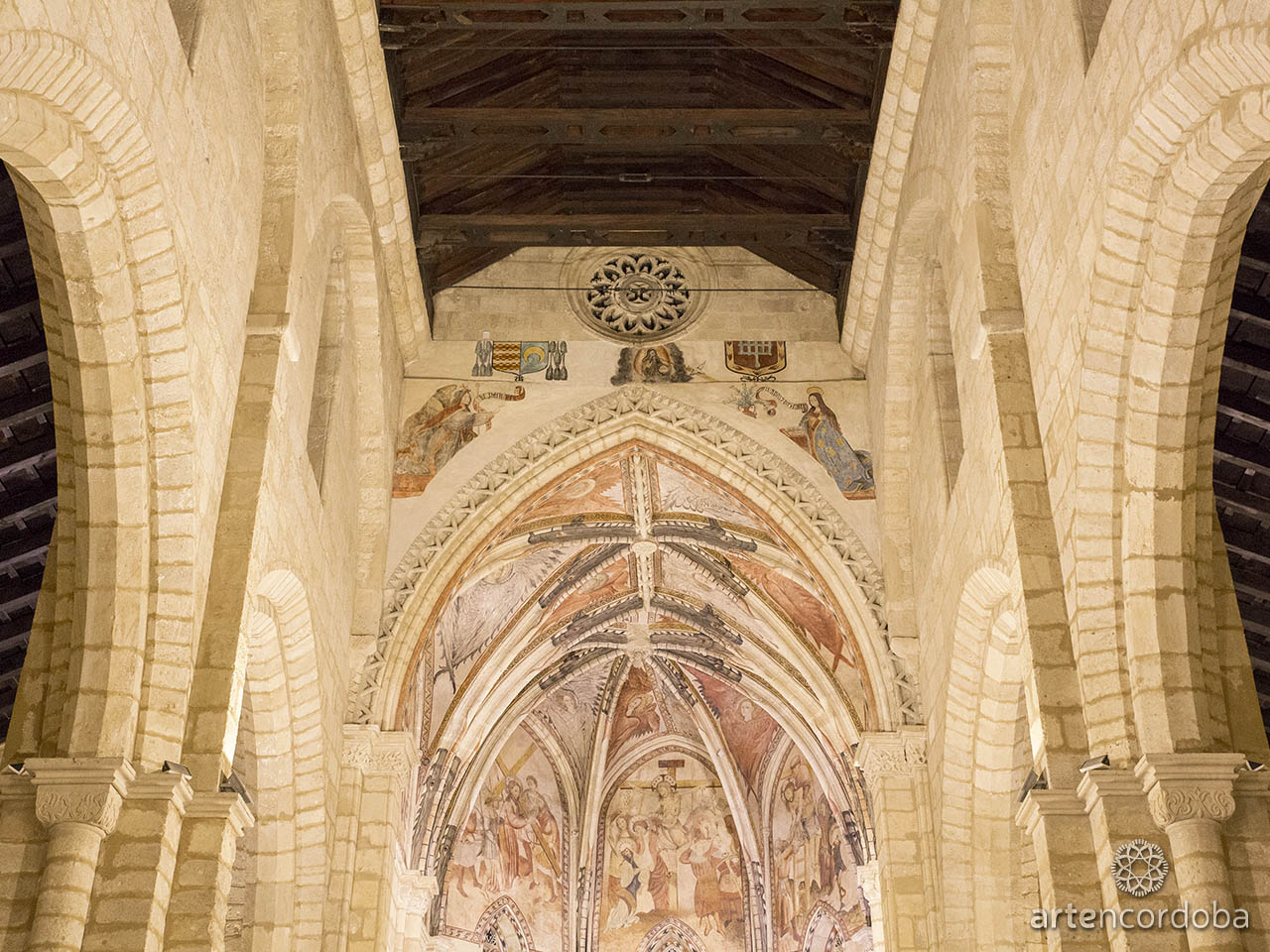
The triumphal arch, which gives access to the Main Altar, features cruciform pillars with corners, and a decorative band acting as a capital. Next comes the typical angled pillar, while the arches accessing the chapels are supported by reused columns with rings.
Layout and roofing of the church
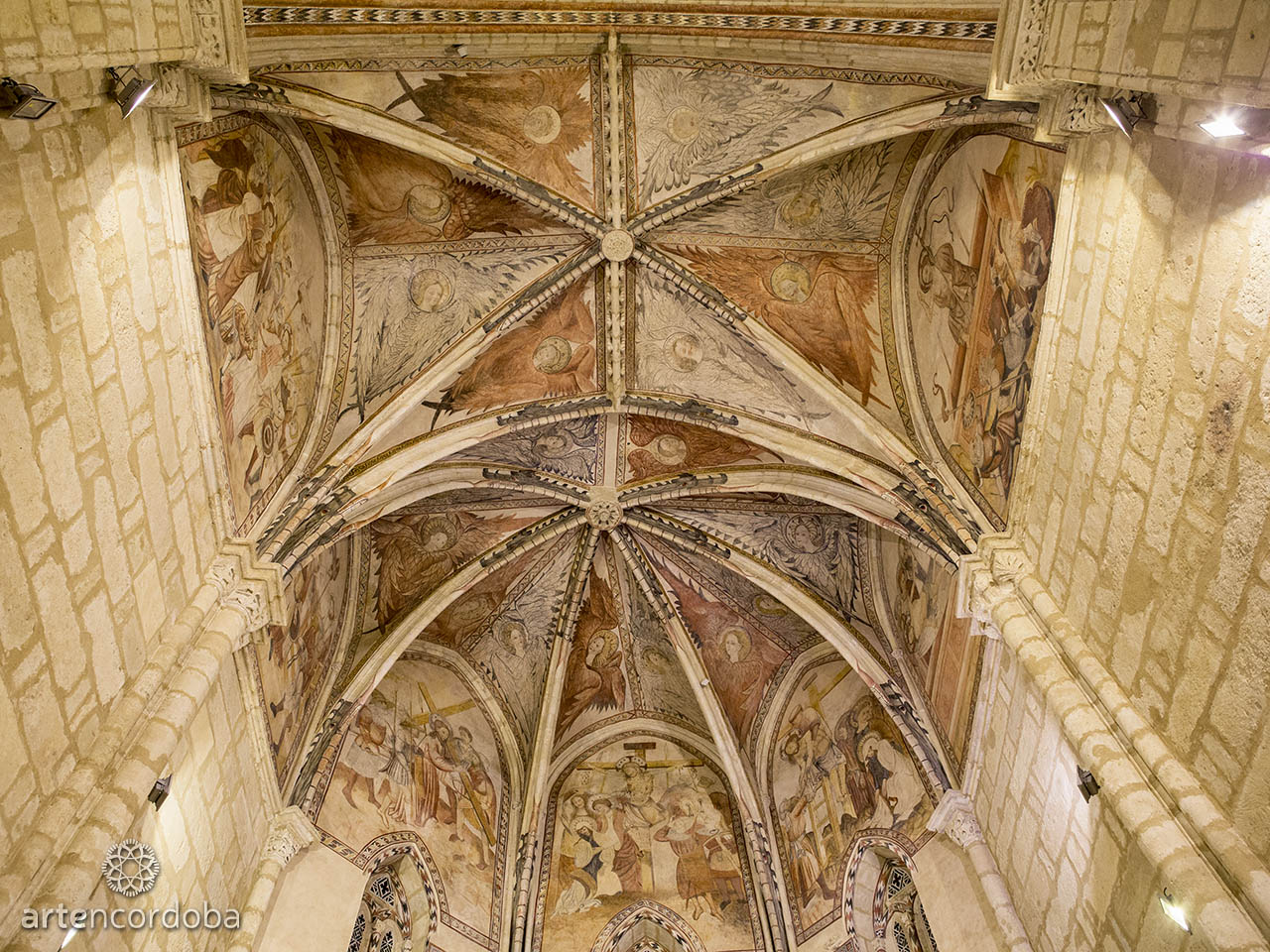
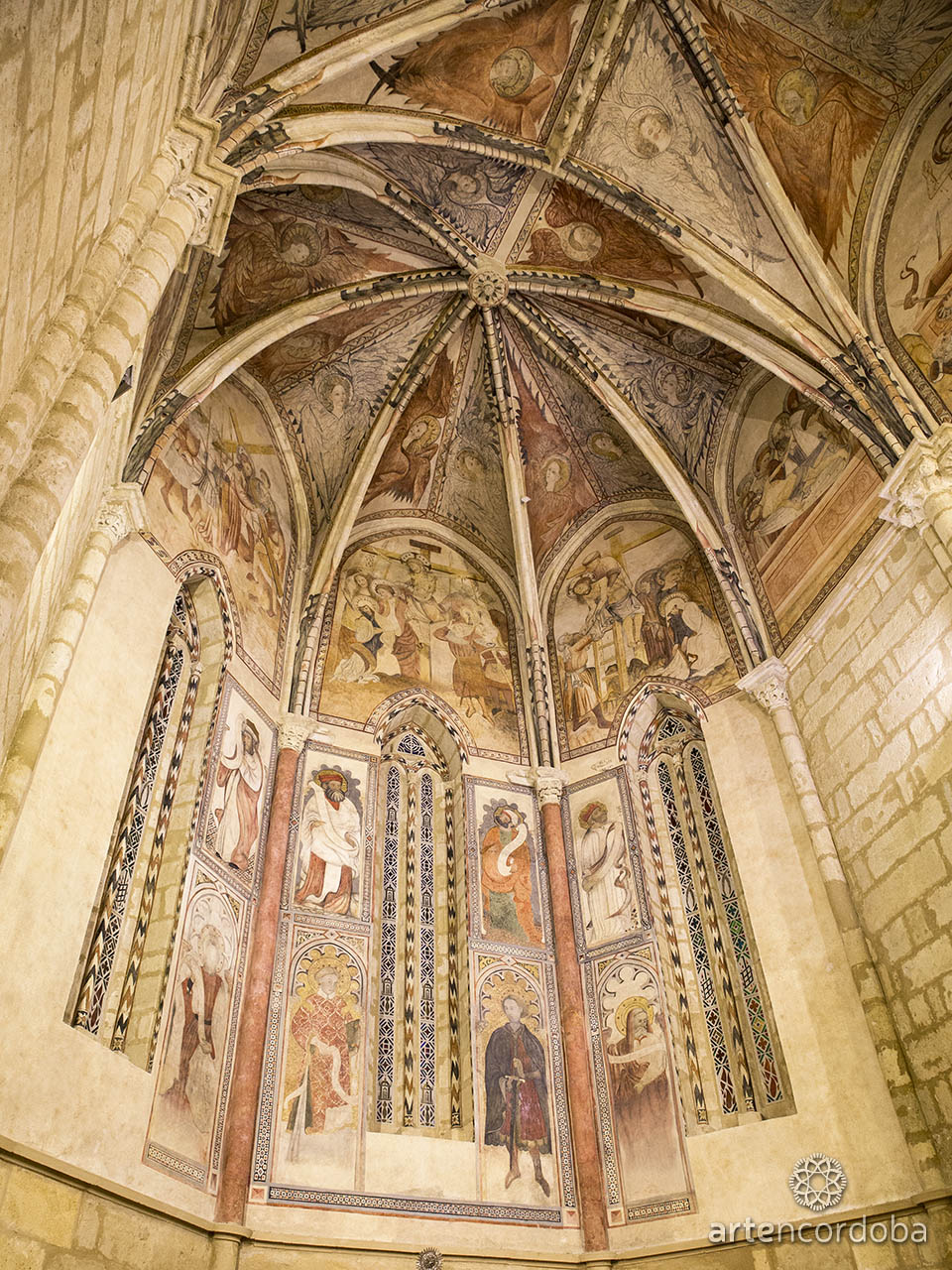
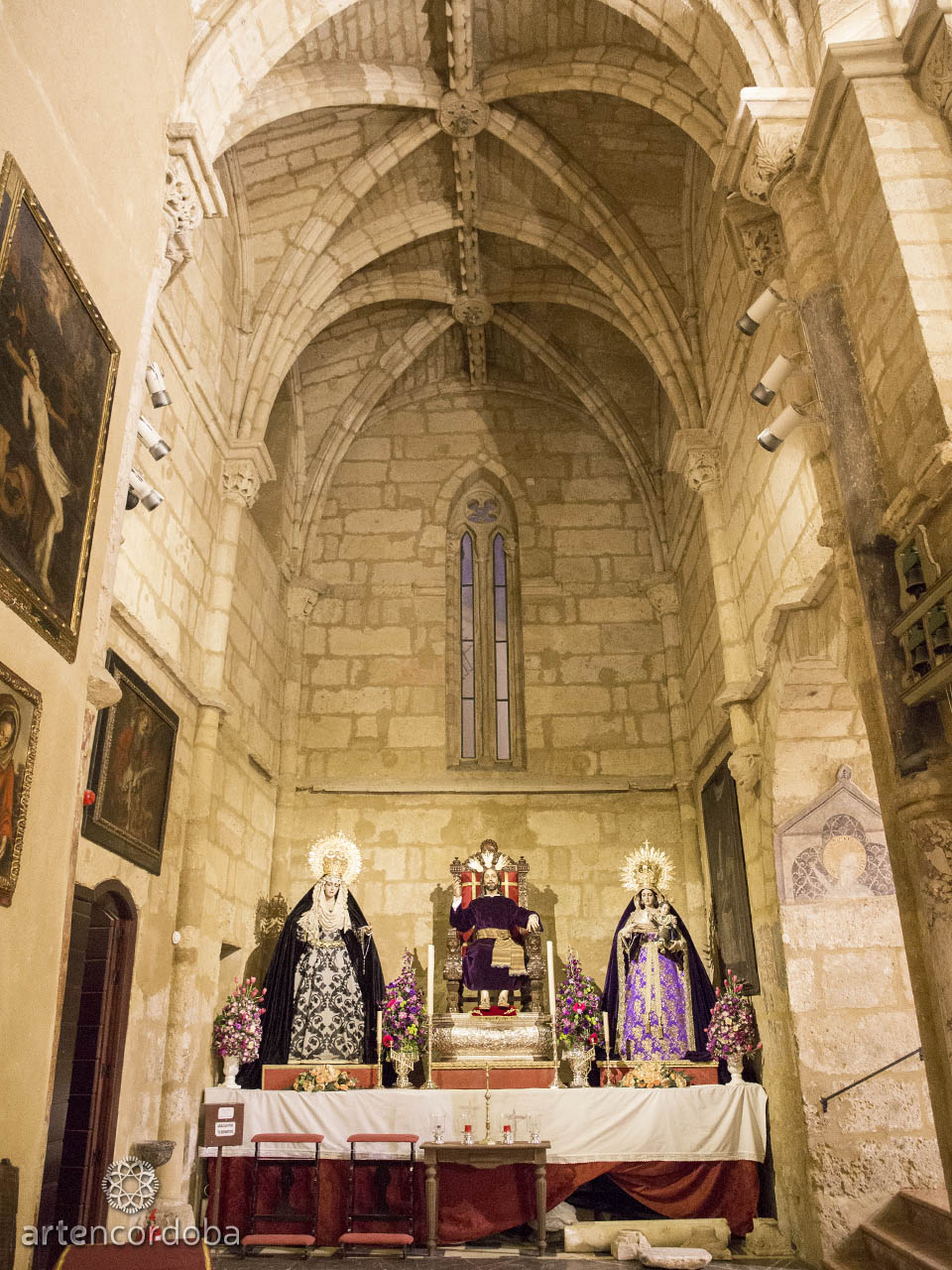
The three apses of the Church of San Lorenzo are covered by Gothic ribbed vaults, with Burgos-style spine ribs in the central apse and the gospel side. The ribs are replaced by pointed mouldings crossing at decorative keystones, usually with floral motifs. The thrusts of the vaults are counteracted by external buttresses topped with dripstones.
In contrast to the use of stone in the apse, the roofing of the naves features wood: the central nave is covered by a pair-and-knuckle timber roof with paired tie beams, while the side naves have lean-to roofs, resulting from one of the latest restorations.
The exterior of the temple
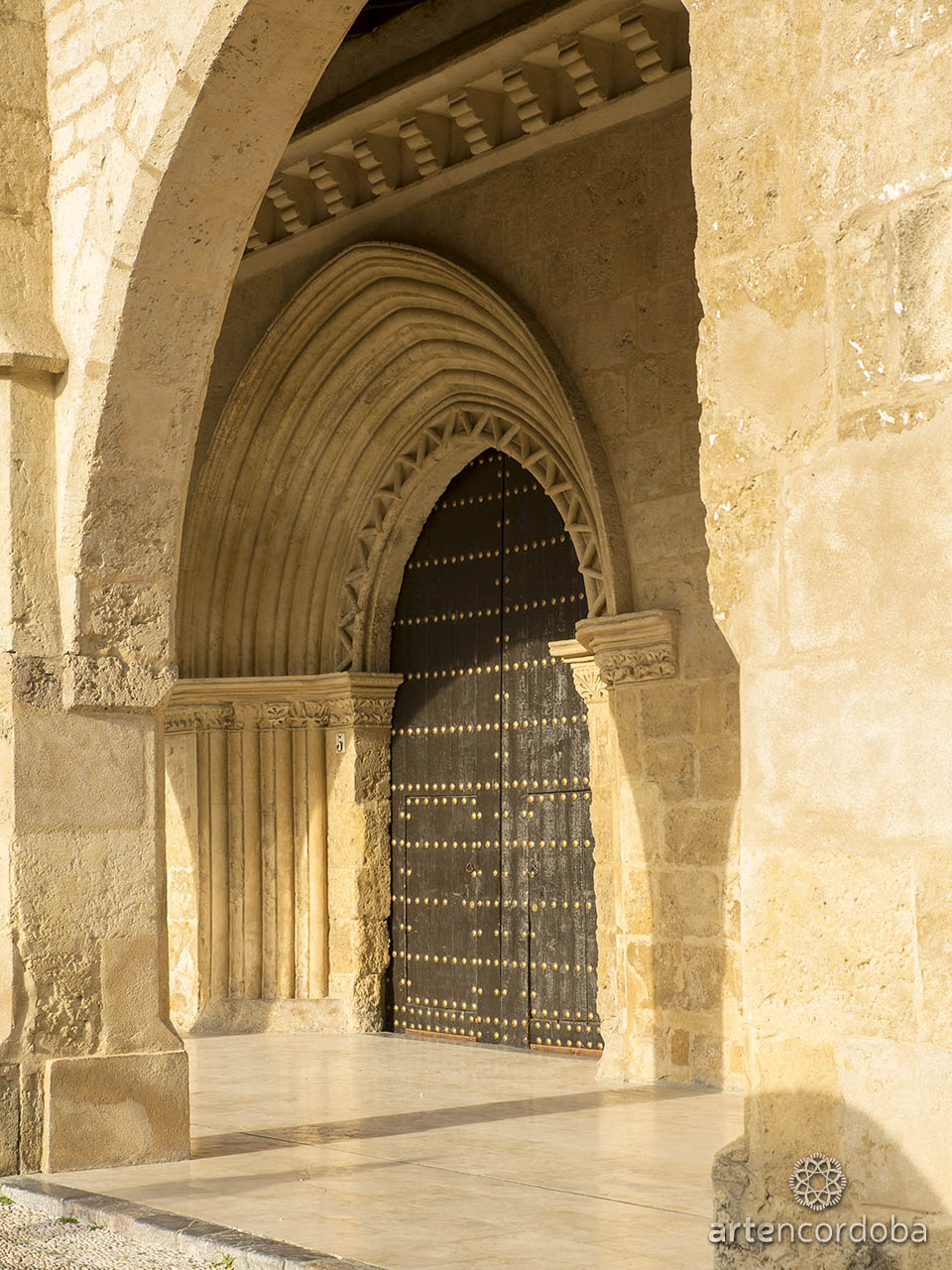
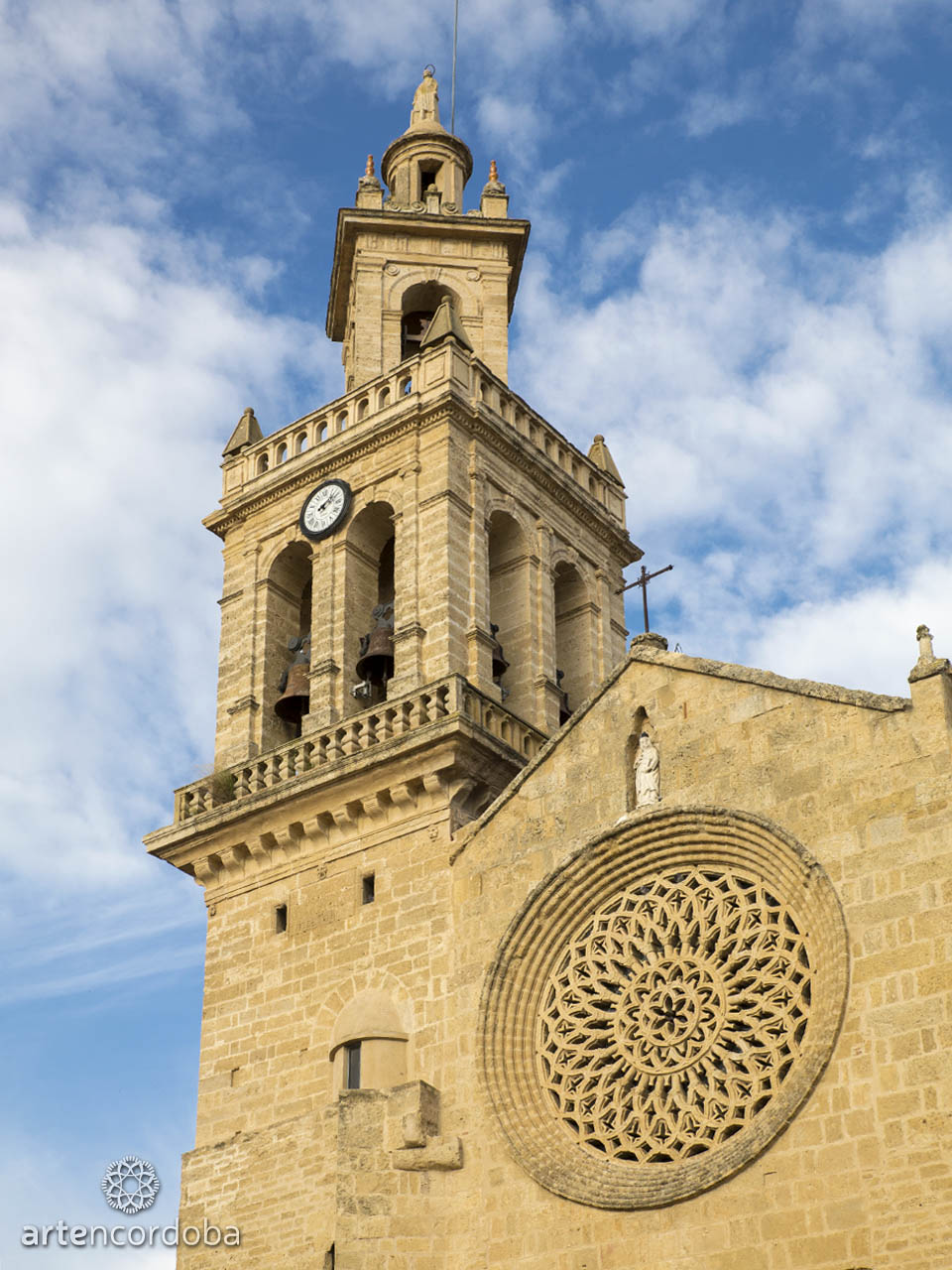
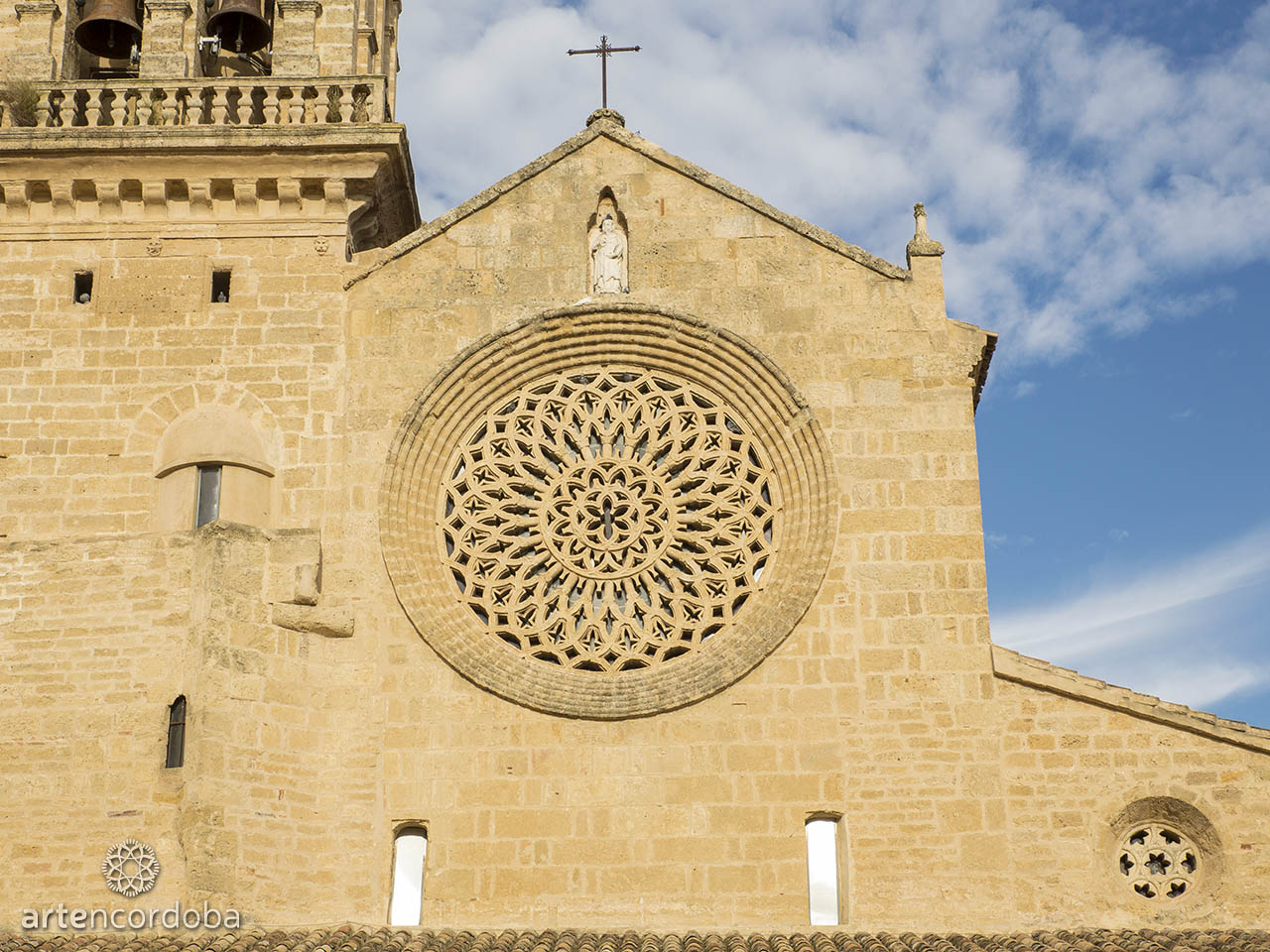
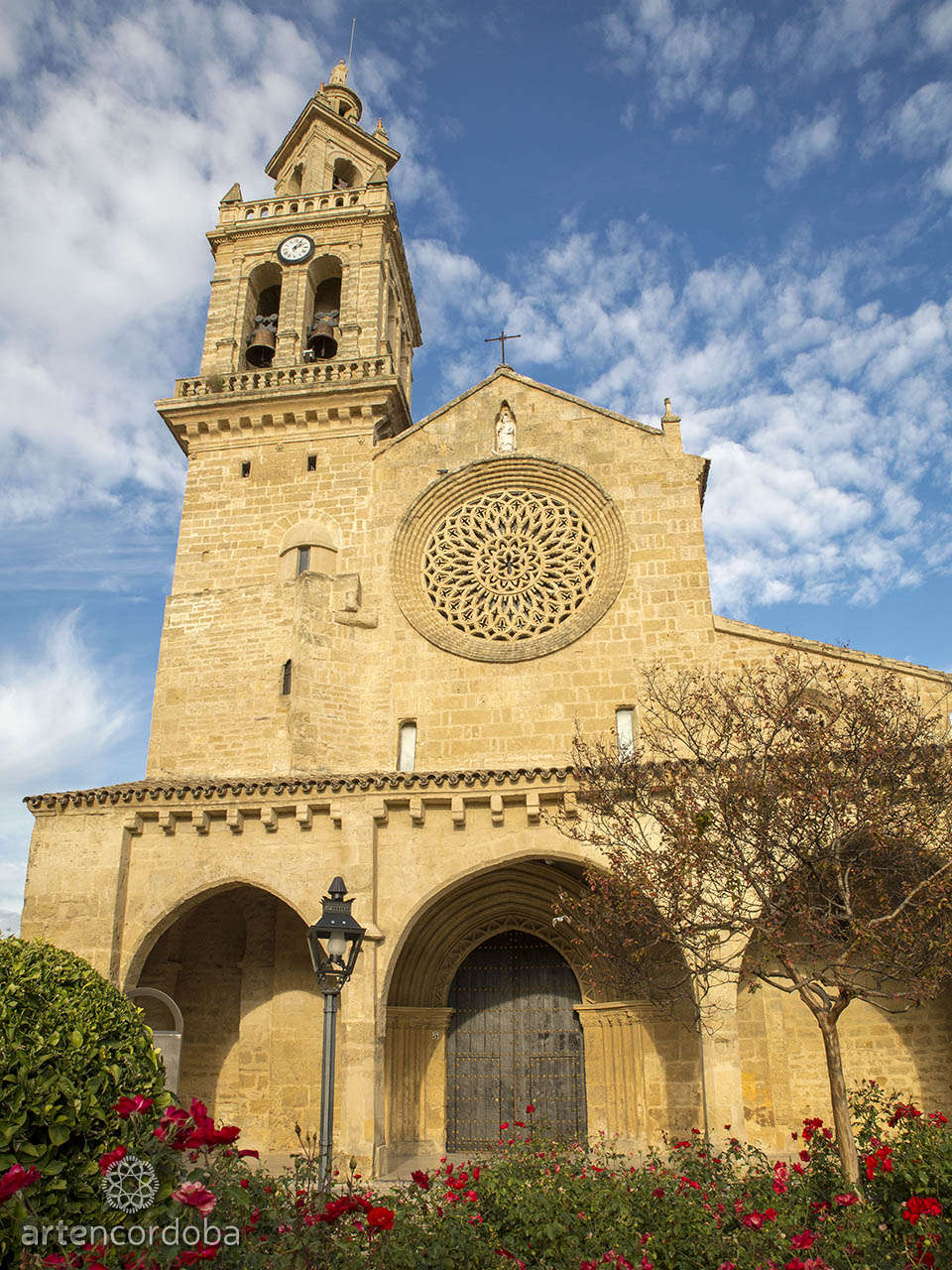
Outside, a 14th-century portico stands out, formed by a triple arcade that leads to the doorway at the foot of the church. It is a pointed, splayed opening, whose intrados is decorated with zigzag and moulded mouldings, all supported by small columns adorned with vegetal bands. Above the doorway is a characteristic overhanging roof supported by rounded corbels. The rose window, one of the three preserved from the medieval period, is made up of a network of pointed arches on smooth-shafted columns. On the epistle side, another smaller rose window is preserved.
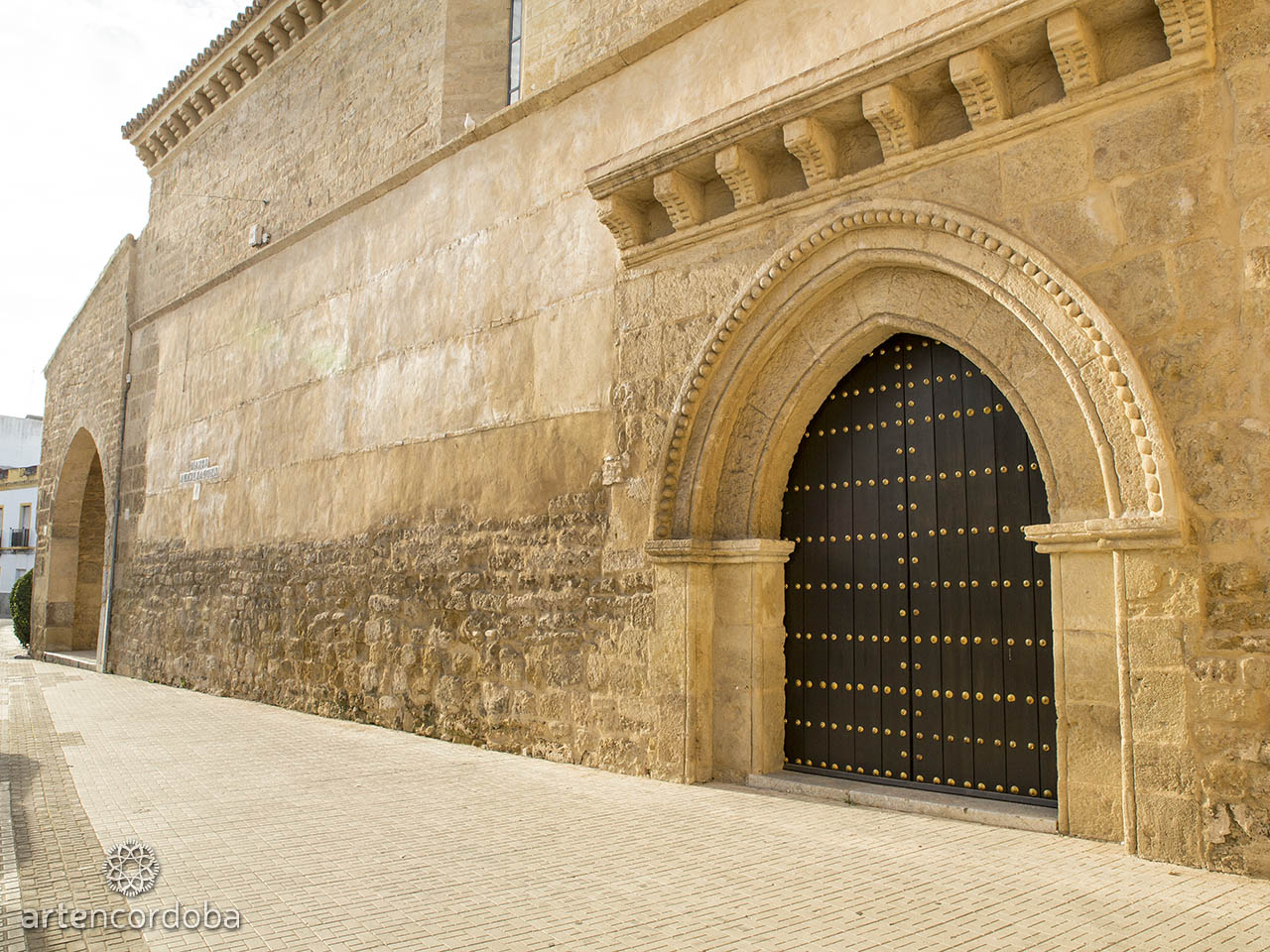
The side doorways follow the same scheme, with a pointed arch on stepped jambs and little decoration. Above them rises a roof overhang supported by rounded corbels decorated with plain ribbons.
The tower of San Lorenzo
Of particular interest is the tower, the work of Hernán Ruiz II the Younger, completed around 1555. It consists of three sections, with the first rising from the entrance portico at the foot of the gospel side. The second section begins at a cornice supported by brackets, followed by a small balustrade; it has a square plan and features two semicircular openings on each side, where the bells are located. This section is notable for the use of Ionic capitals on pilasters attached to the wall, unlike the third section, which uses Tuscan order capitals. This last section is rotated relative to the previous one, so its corners align with the centers of the sides below, giving the structure significant uniqueness and visual interest. The tower is topped with a circular lantern, from which a statue of San Lorenzo rises.
Furnishings on the gospel side
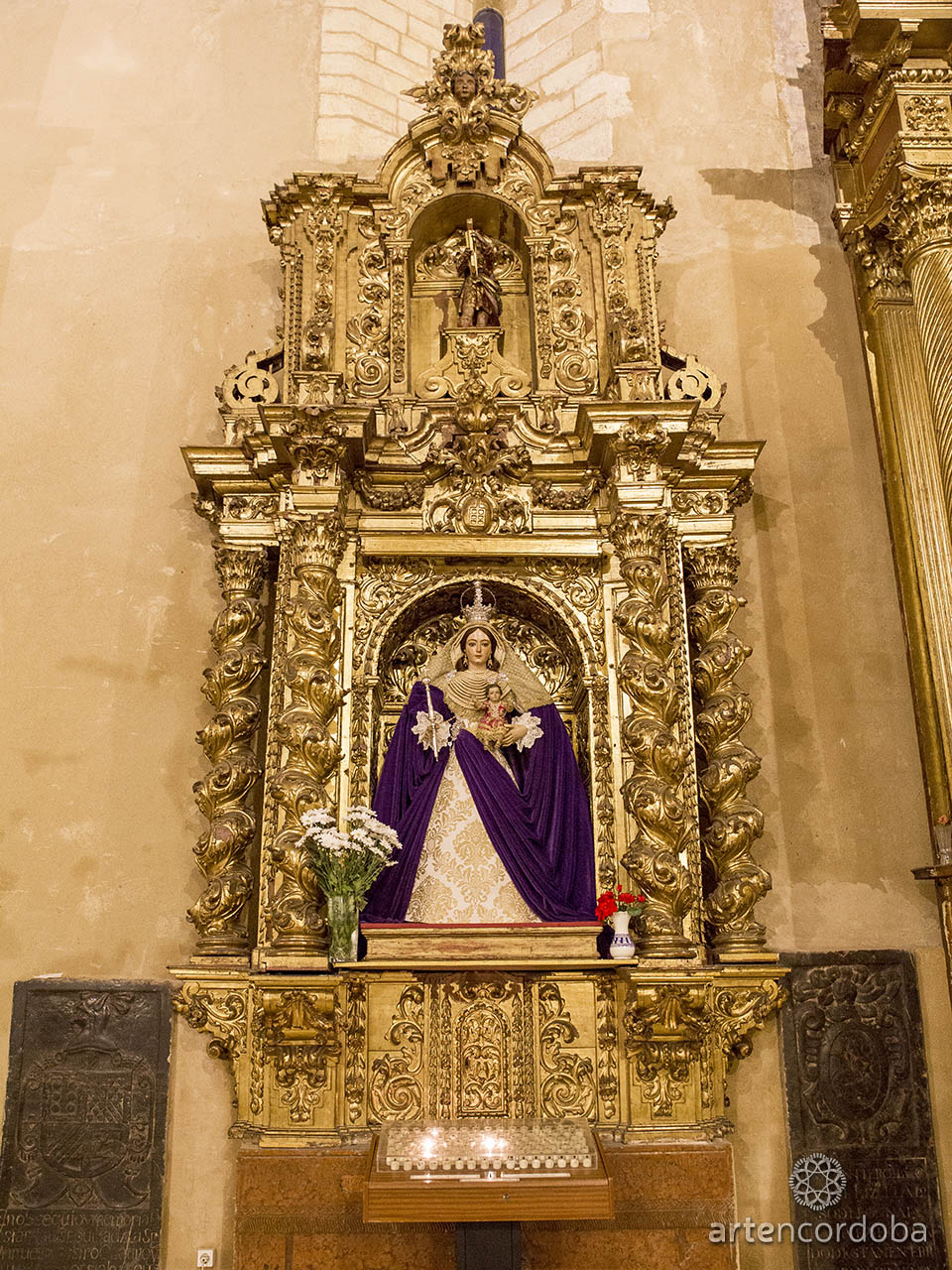
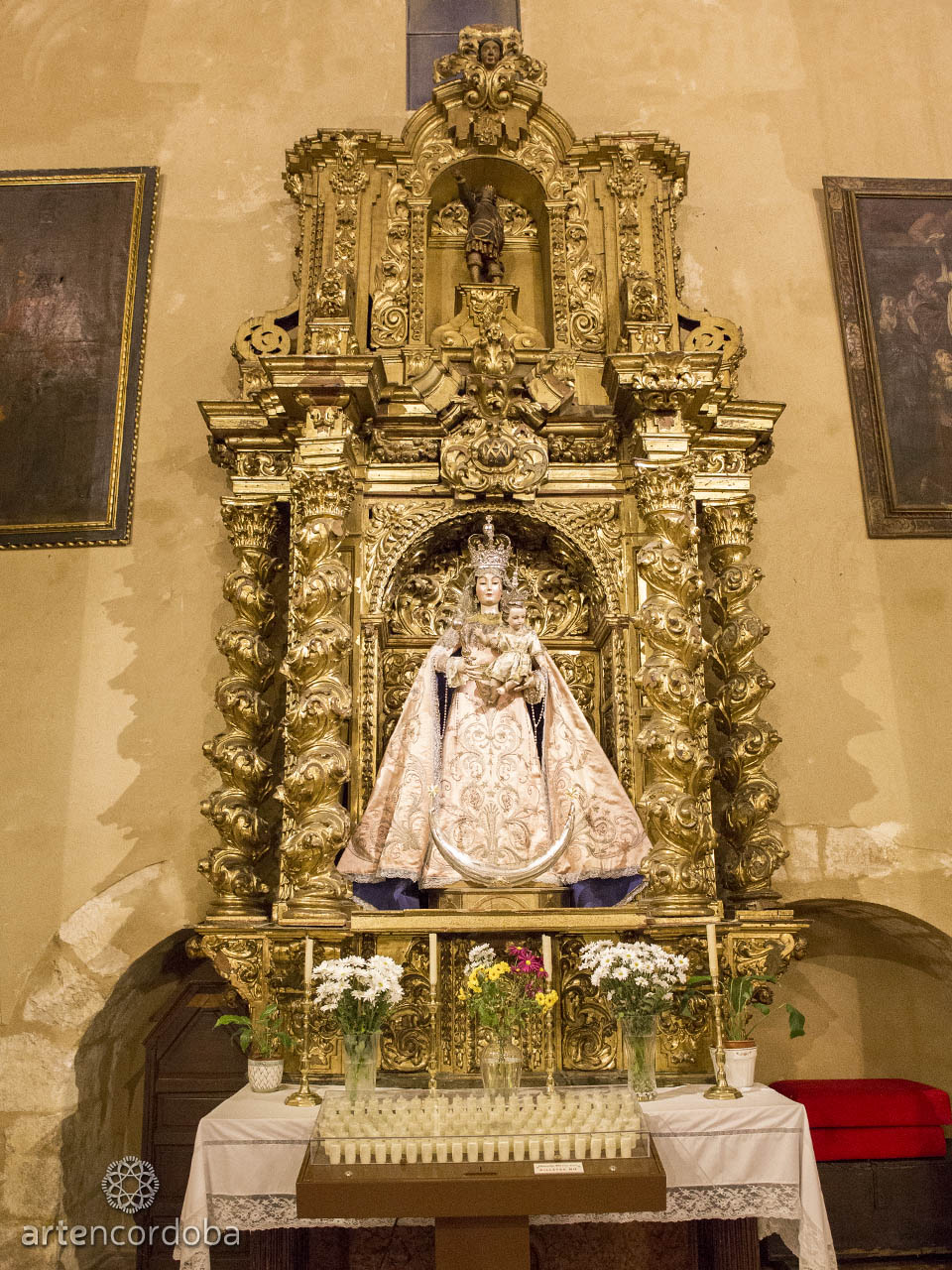
We begin the analysis of the furnishings of the Church of San Lorenzo on the gospel side, where the Altar of Our Lady of Remedies stands out. The altarpiece, made of gilded wood, consists of two tiers and a single vertical section, highlighting the use of Solomonic columns with Corinthian capitals and a continuous and broken frieze decorated with garlands and fruits. In the central niche is the image that gives the altar its name, and above it, a sculpture of Saint Ferdinand.
This section also features two 17th-century paintings: a Martyrdom of Saint Lawrence by Acisclo Antonio Palomino, a great painter and theorist, and the Virgin of Silence by Antonio Mohedano.
Chapel of the Remedy of Souls
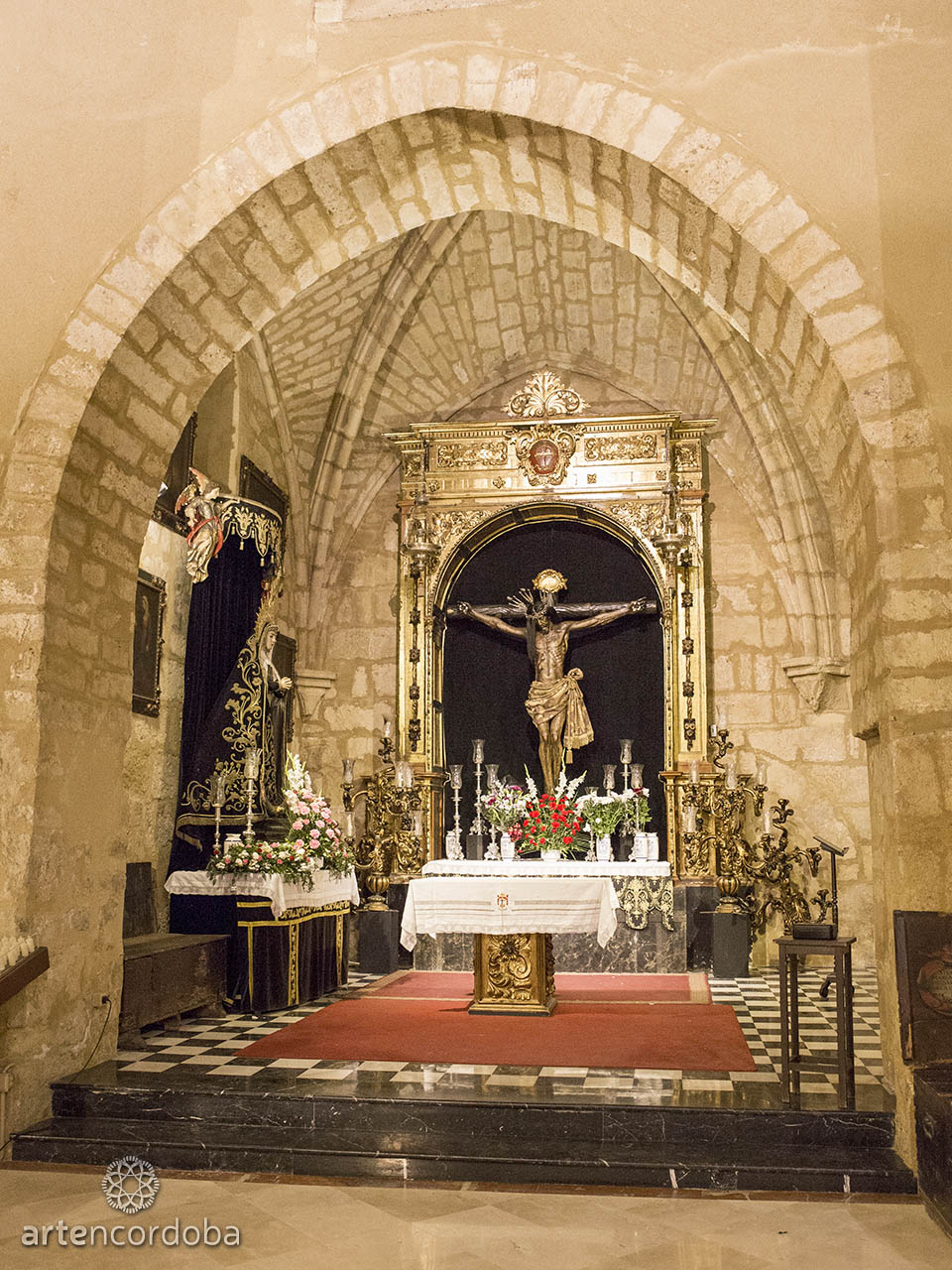
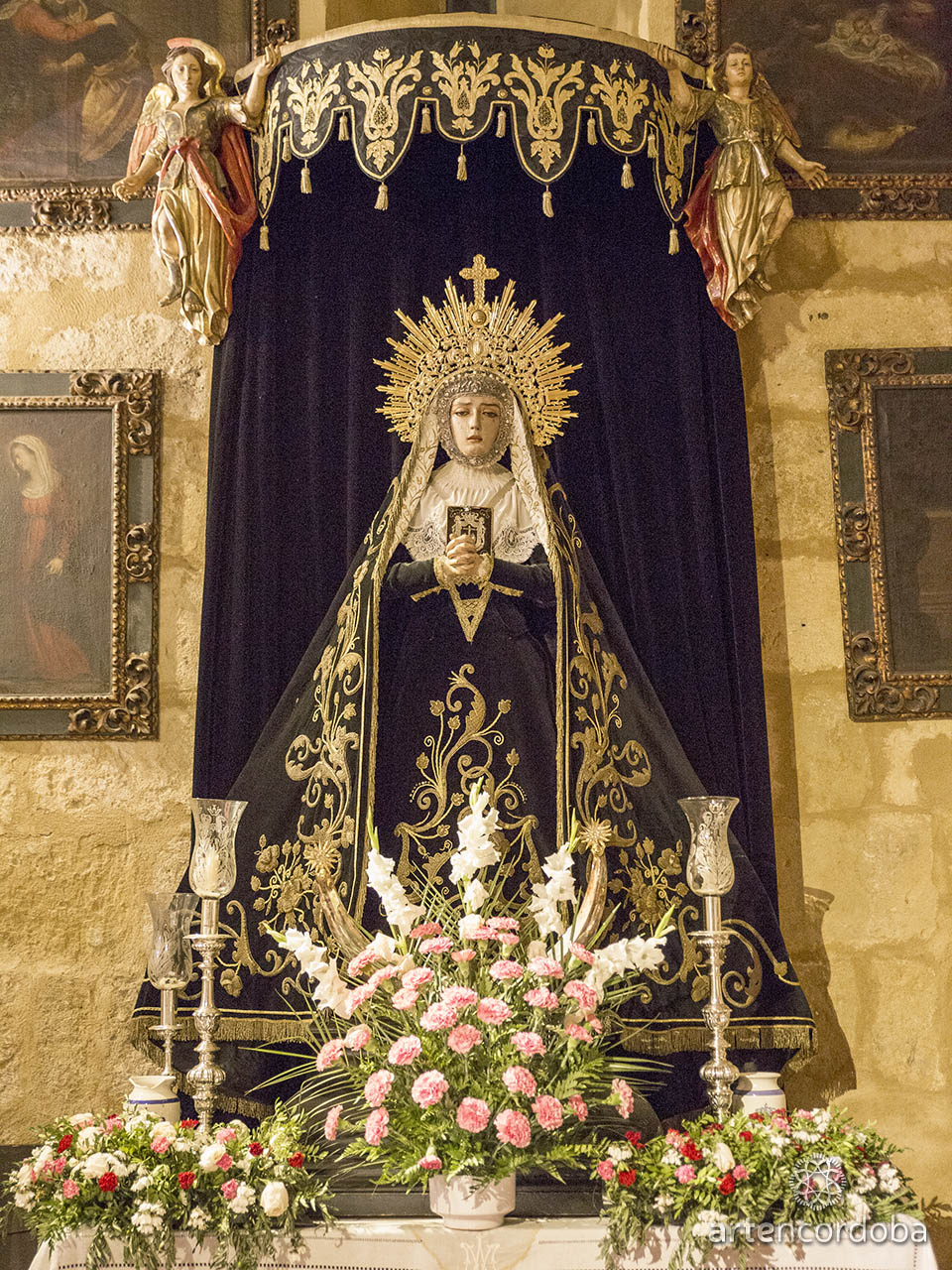
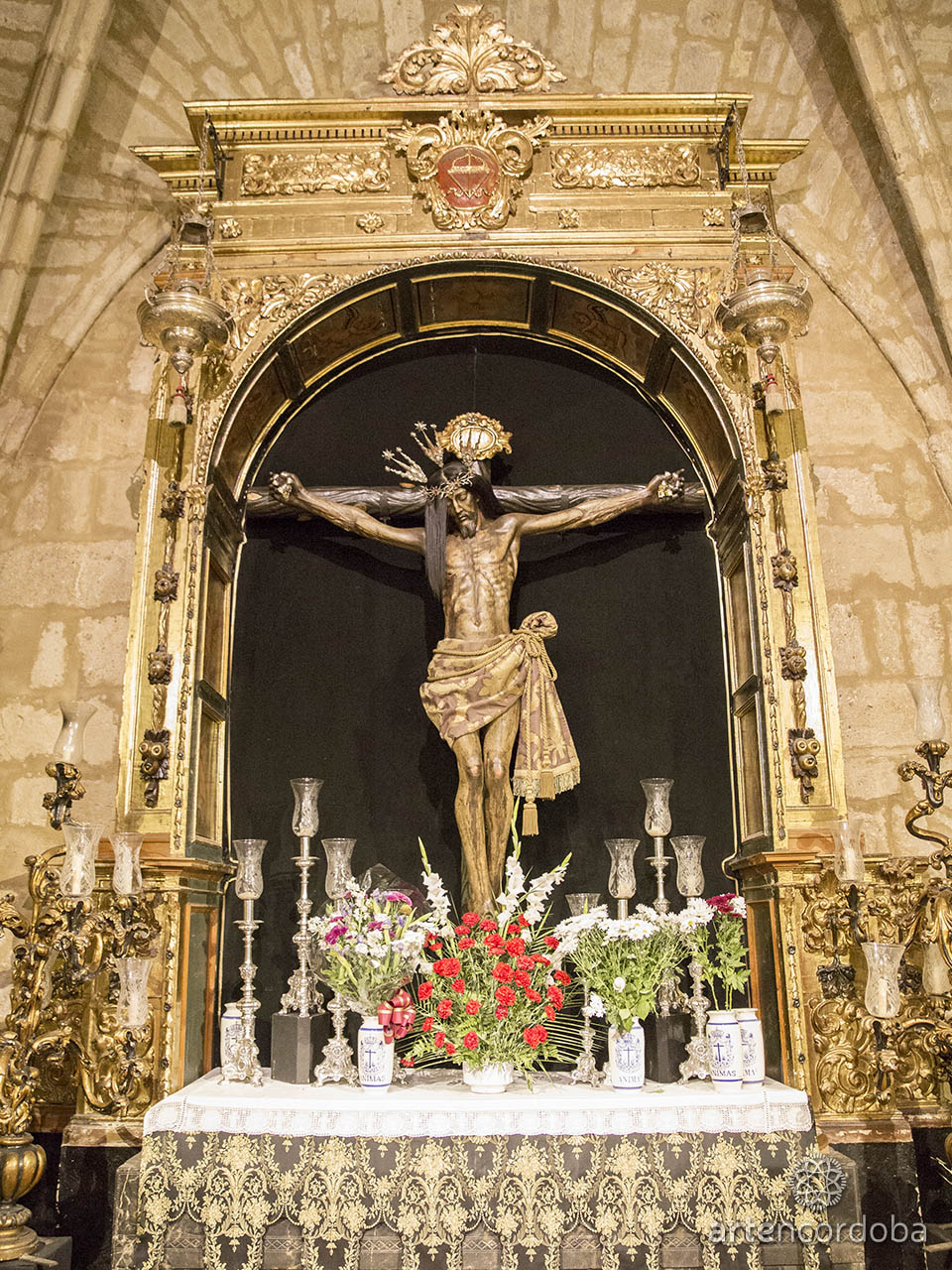
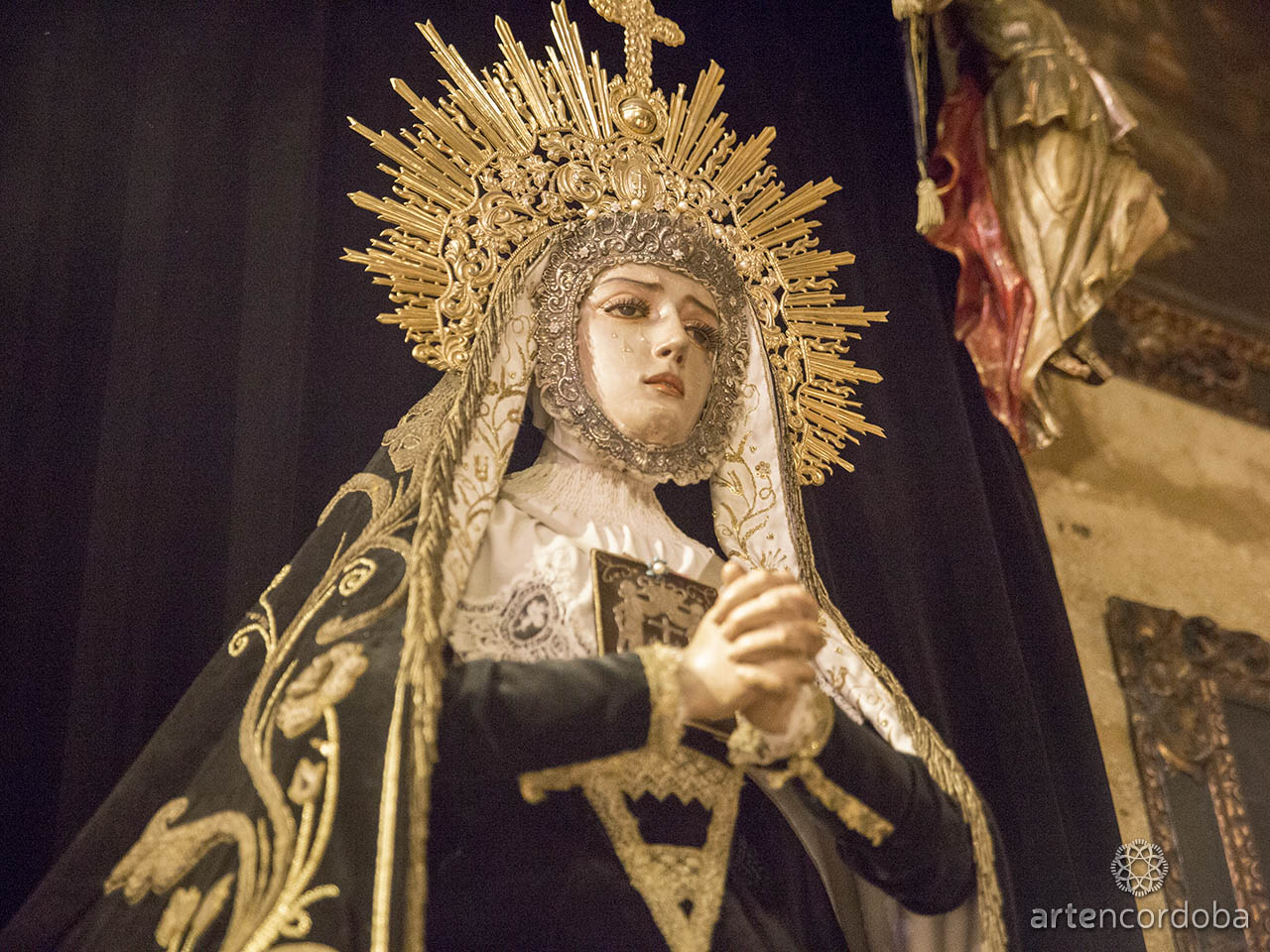
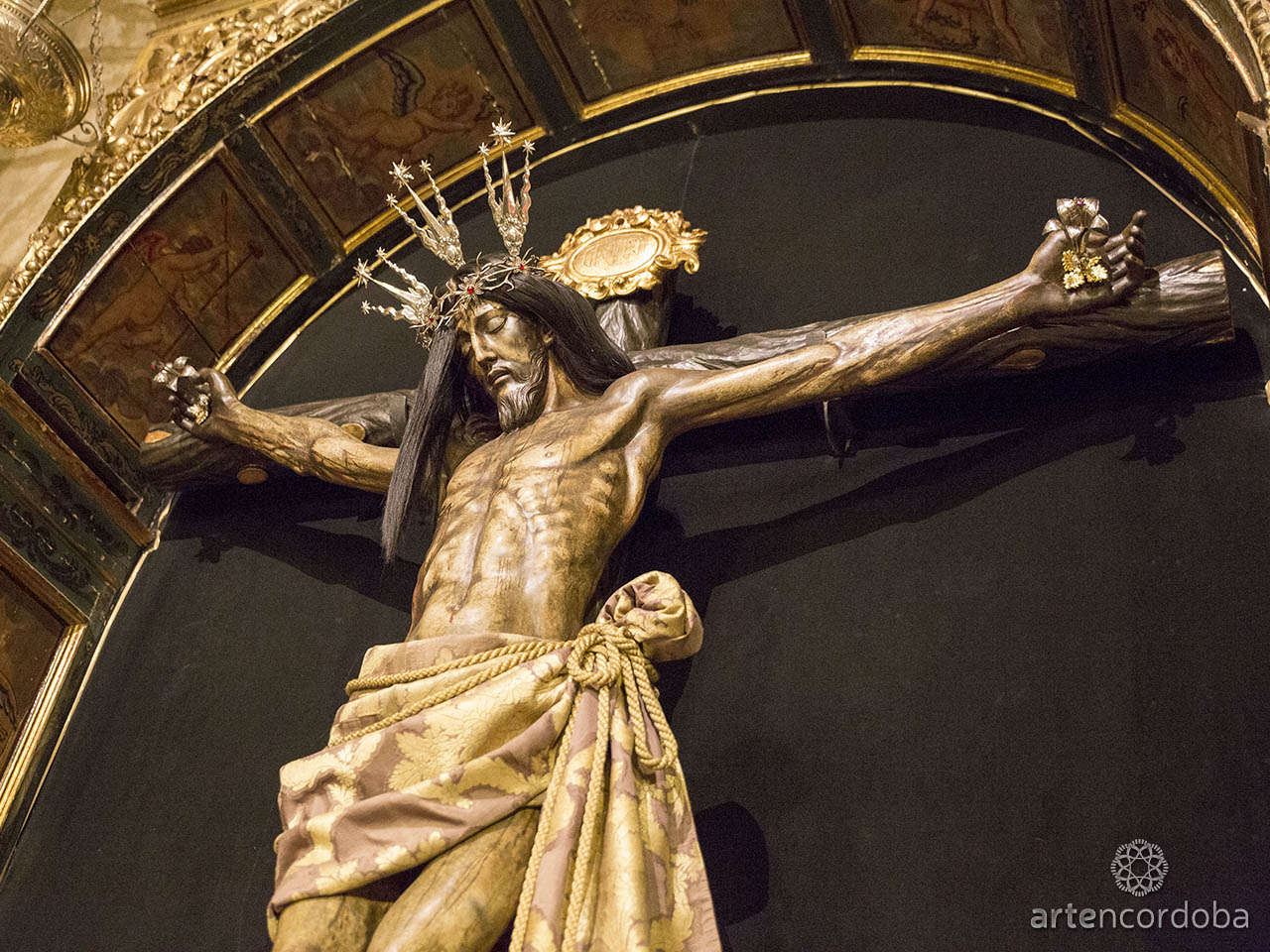
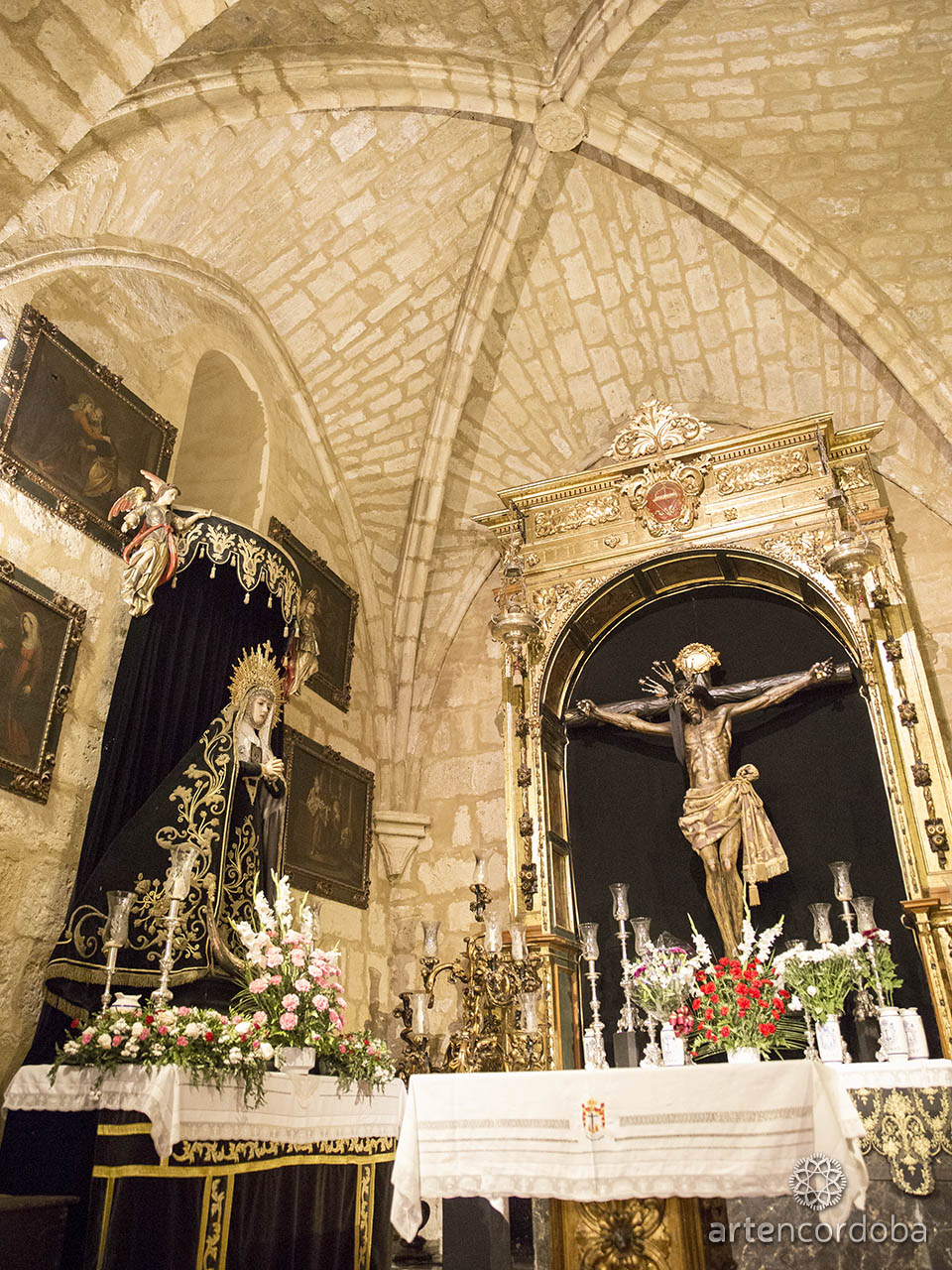
Almost reaching the side apse, we find the Chapel of the Remedy of Souls, a square space covered by a Gothic ribbed vault dating from the early 14th century. Presiding over the space is the Most Holy Christ of the Remedy of Souls, to the left Our Lady Mother of God in her Sorrows, anonymous 17th-century images and the titular figures of the Brotherhood of the Remedy of Souls, which processes through our city’s streets on Holy Monday.
Gospel apse
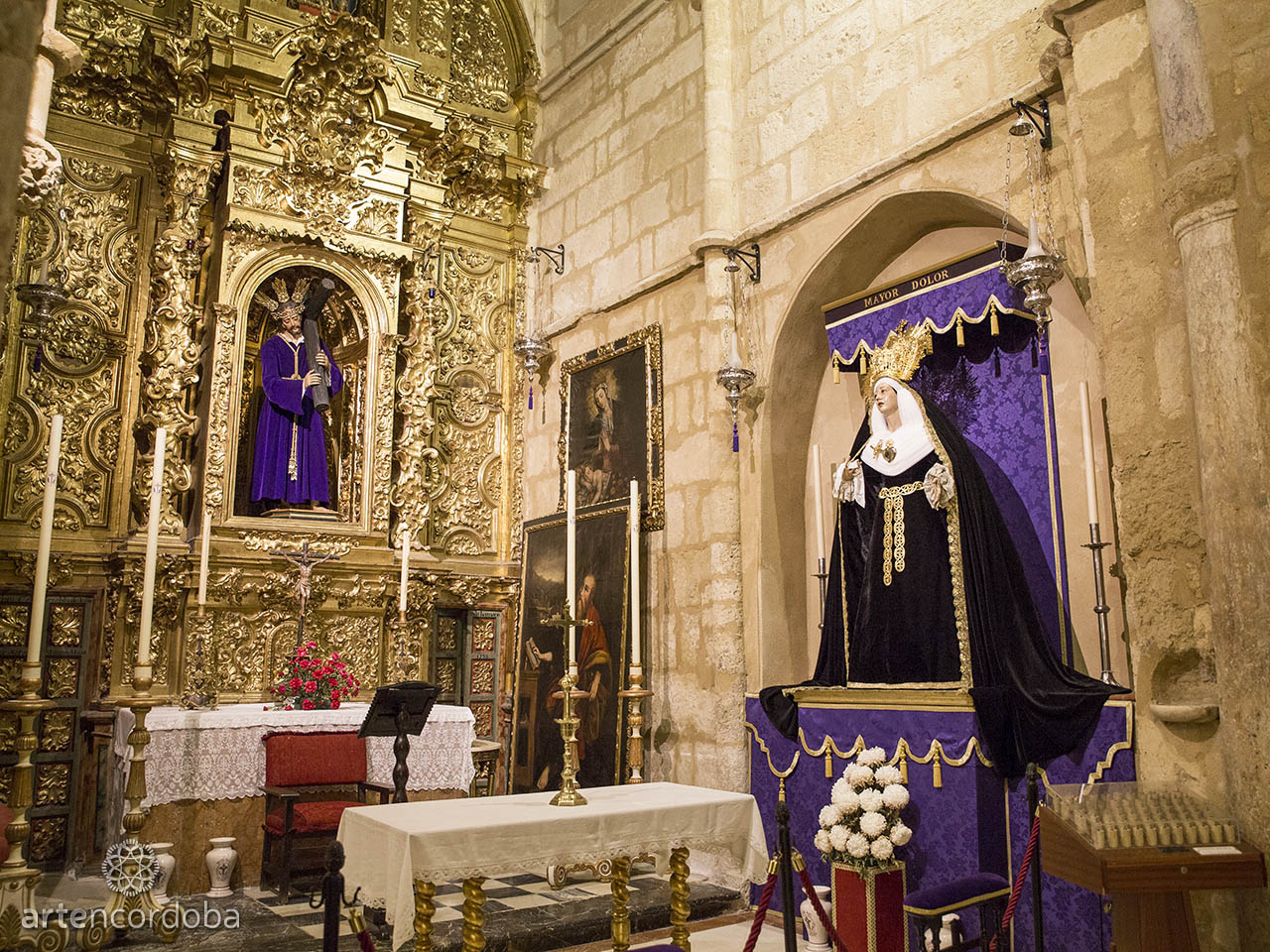
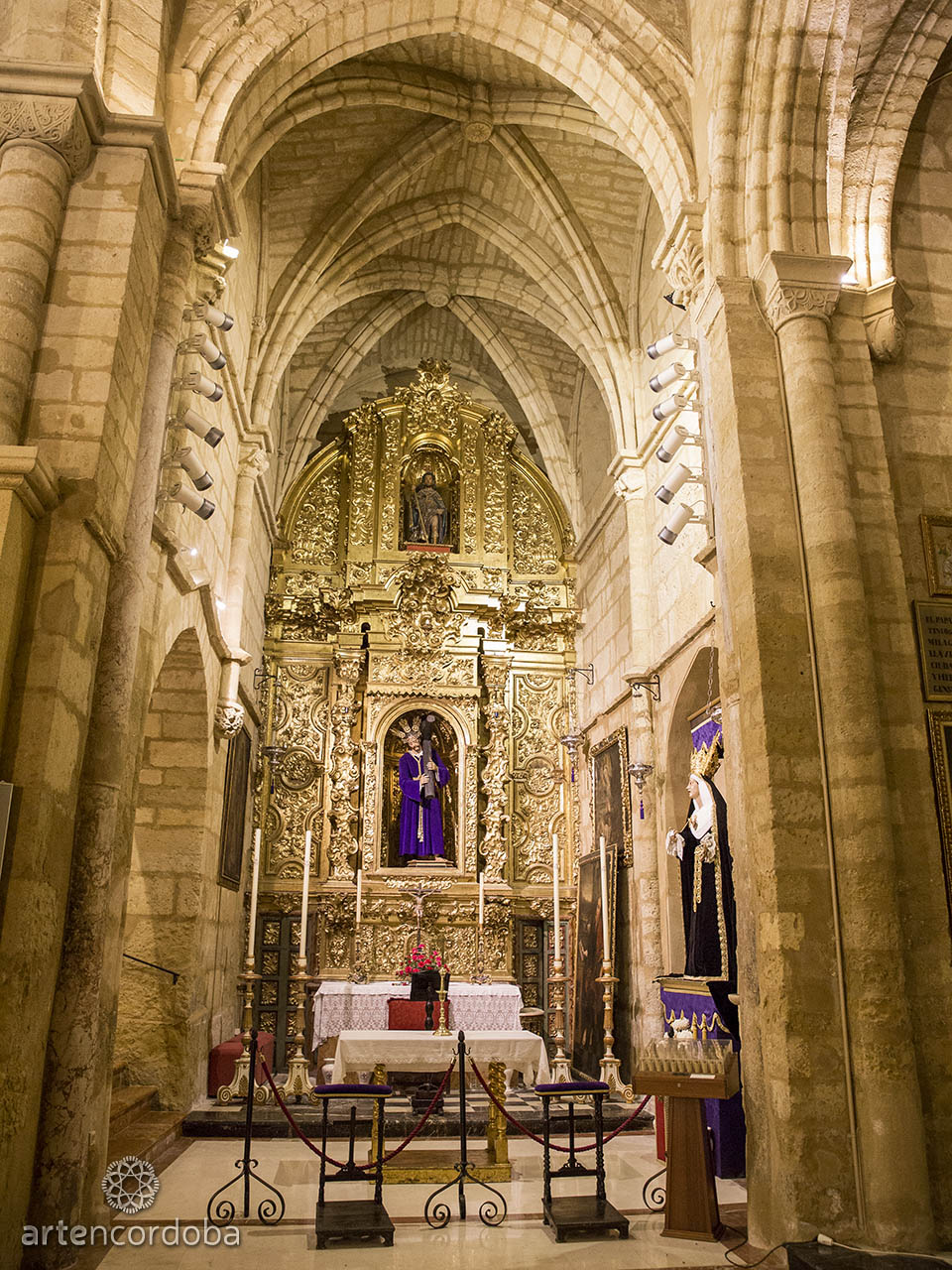
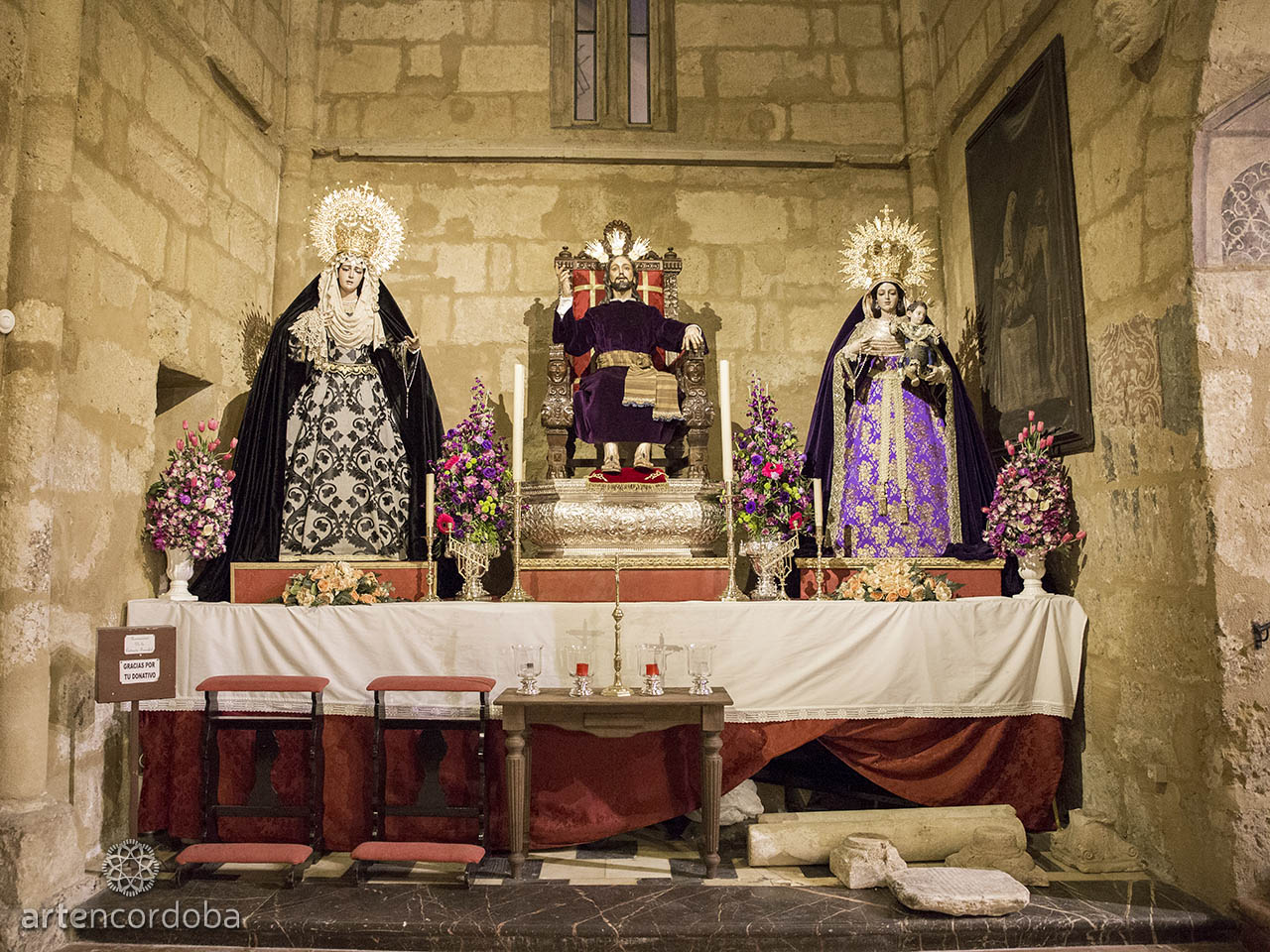
From the gospel apse, we highlight the three images it houses, all belonging to the popular Brotherhood of La Borriquita. In the center is Our Father Jesus of the Kings, made by Juan Martínez Cerrillo in 1963. On either side of the Lord are two sorrowful Virgins, Our Lady of the Palm and Most Holy Mary of Victory. The first, by Francisco Romero Zafra, processes after the La Borriquita mystery on Palm Sunday morning.
Main Altar
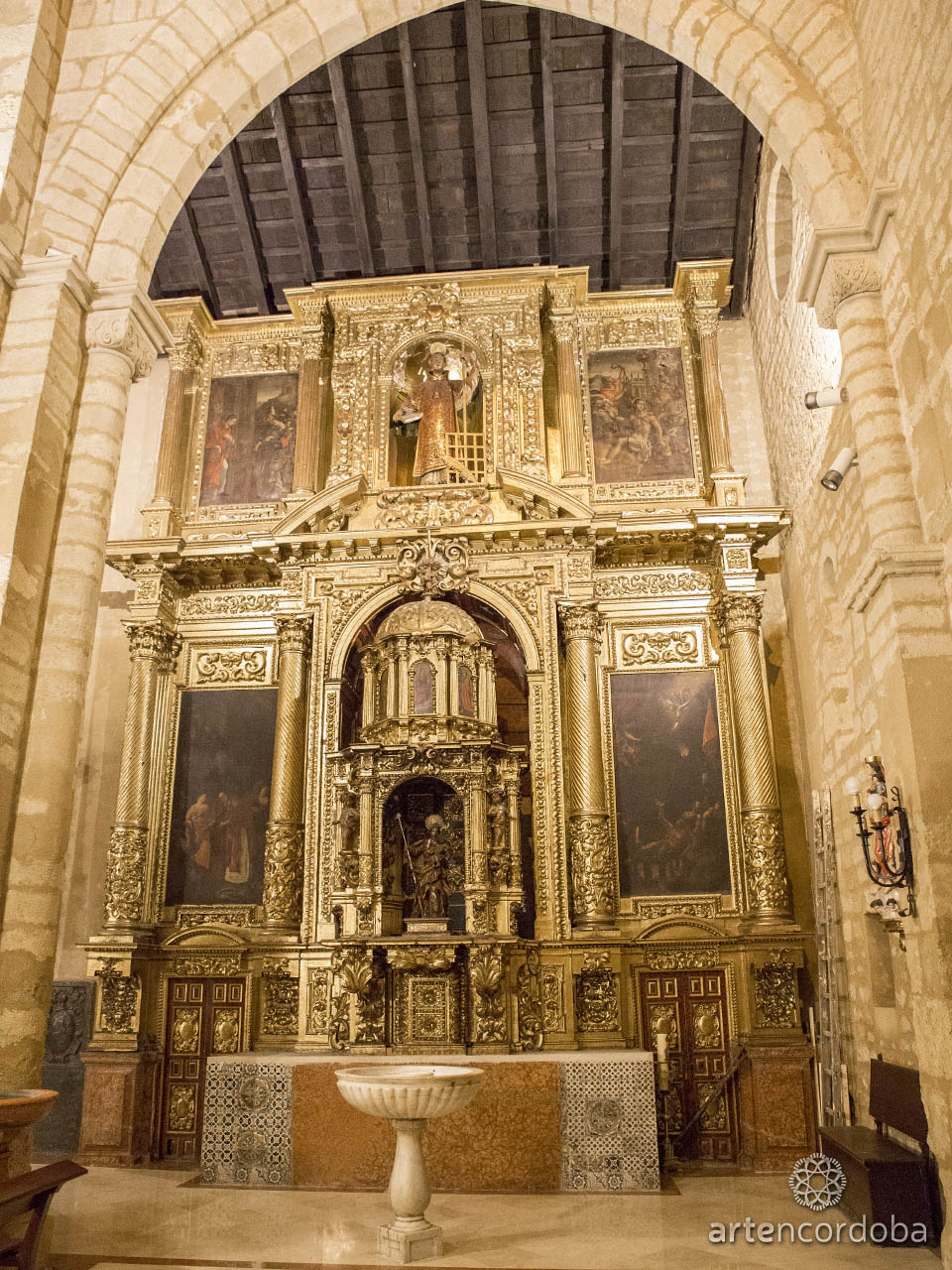
The Main Altar has no altarpiece, as is common in other churches of this type, although it once did. Due to the importance of the mural paintings it holds, it was dismantled and relocated to the foot of the epistle nave, its current location. The altarpiece was begun by Melchor Fernández Moreno and completed by Francisco Hurtado Izquierdo and Manuel del Río at the end of the 17th century. Of large dimensions, it has two tiers and three vertical sections, missing the third that would have adapted in a curve to the layout of the apse; the columns are spiral-shaped with a differentiated lower third and Corinthian capitals.
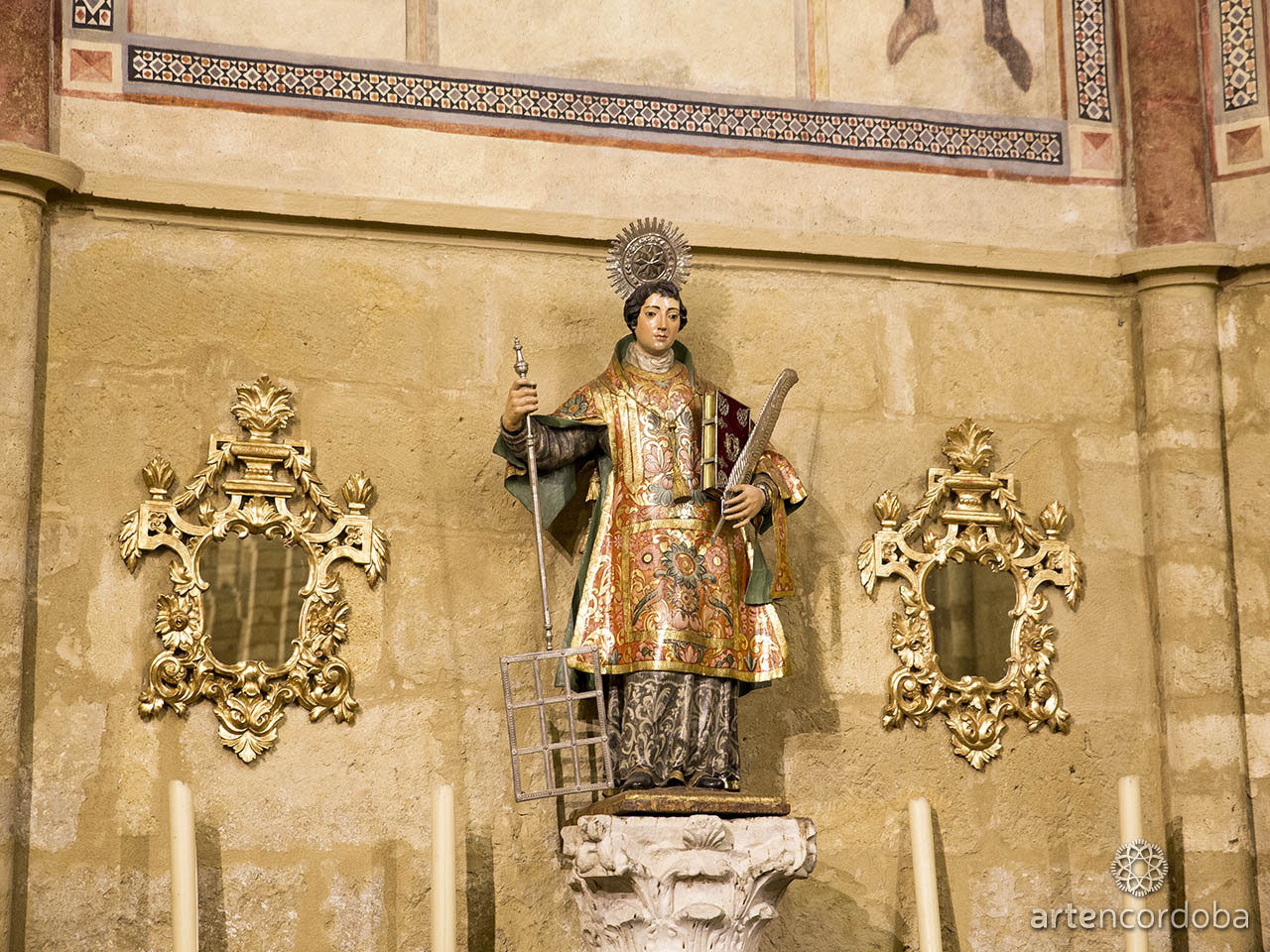
In the center is a Tabernacle containing a sculpture of Saint Joseph, above which, in the second tier, is a sculpture of Saint Lawrence by Pedro de Paz, depicted with his most characteristic attribute, the grill on which he was martyred. On the sides are four large canvases depicting scenes from the saint’s life.
Altarpiece of Our Father Jesus of Calvary
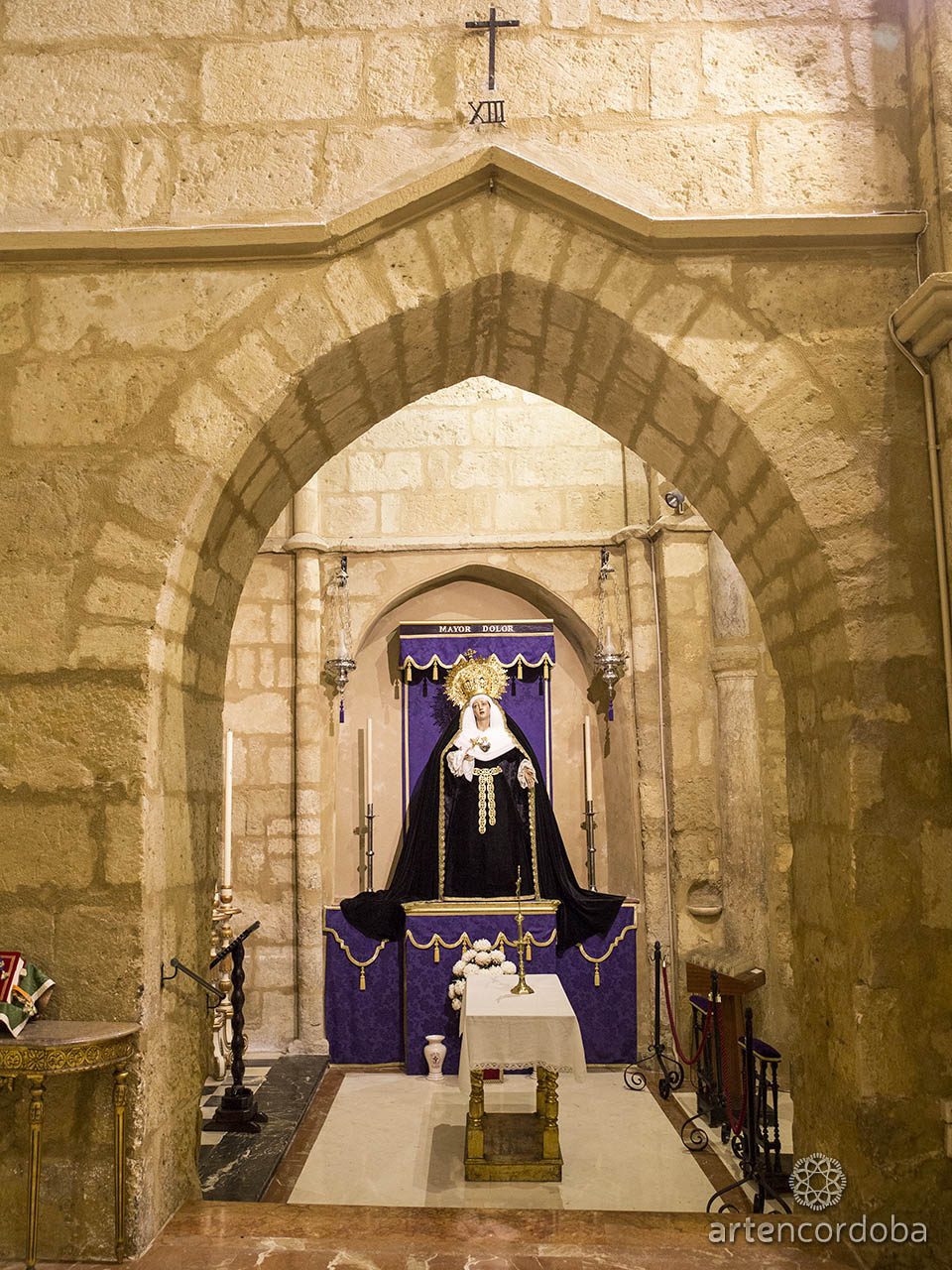
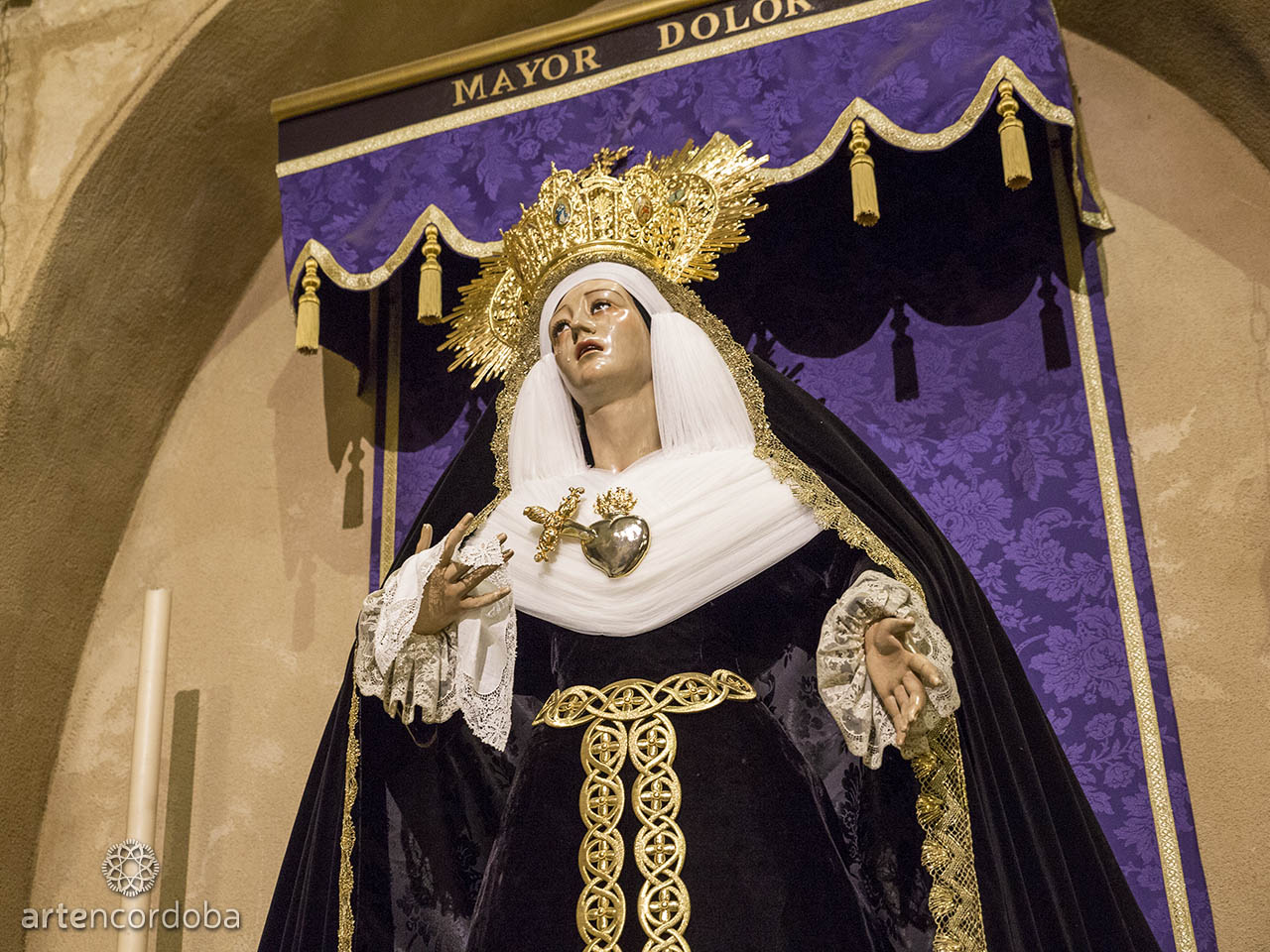
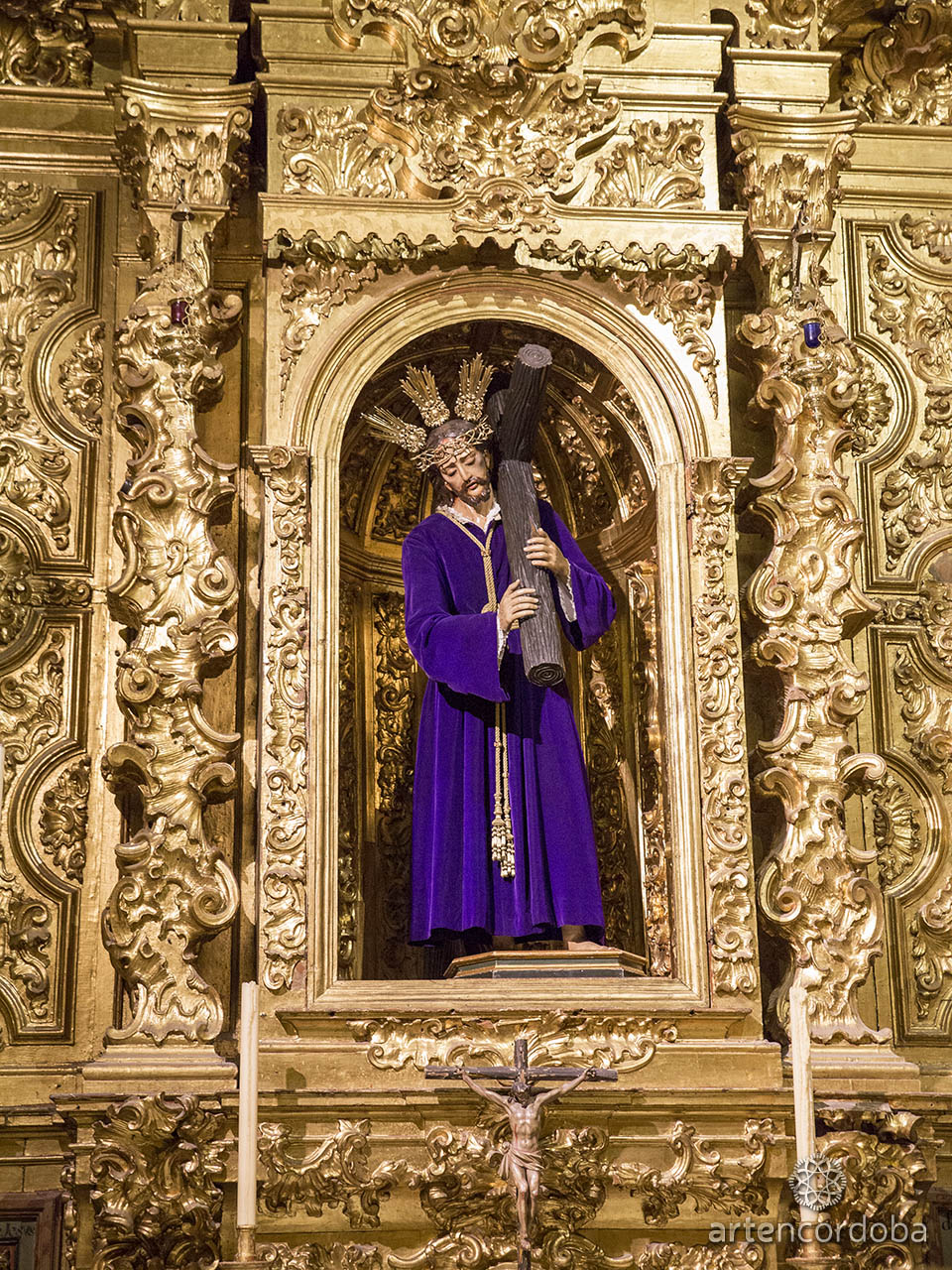
From the following century is the Altarpiece of Our Father Jesus of Calvary, located in the apse on the epistle side. In the center is the titular image of the Brotherhood of El Calvario, which gives the altarpiece its name. The image dates from 1723 and is the work of Friar Juan de la Concepción, processing on the evening of Holy Wednesday together with Our Lady of Greatest Sorrow, a contemporary work by sculptors Antonio Castillo Ariza and Francisco Díaz Jiménez.
Above the image of the Lord, crowning the altarpiece, is a notable anonymous carving of Saint Roch, made in the mid-18th century.
Chapel of the Tabernacle
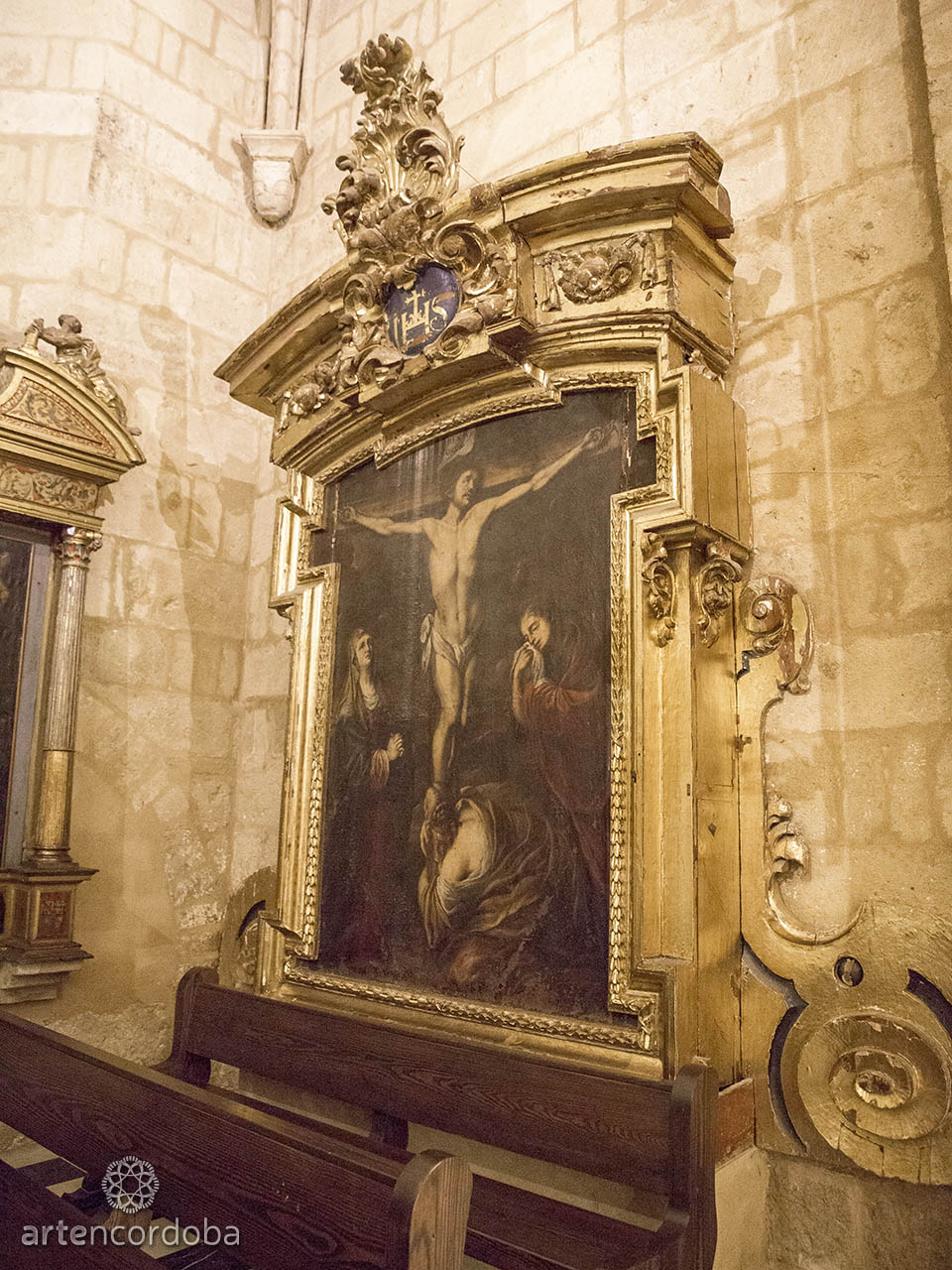
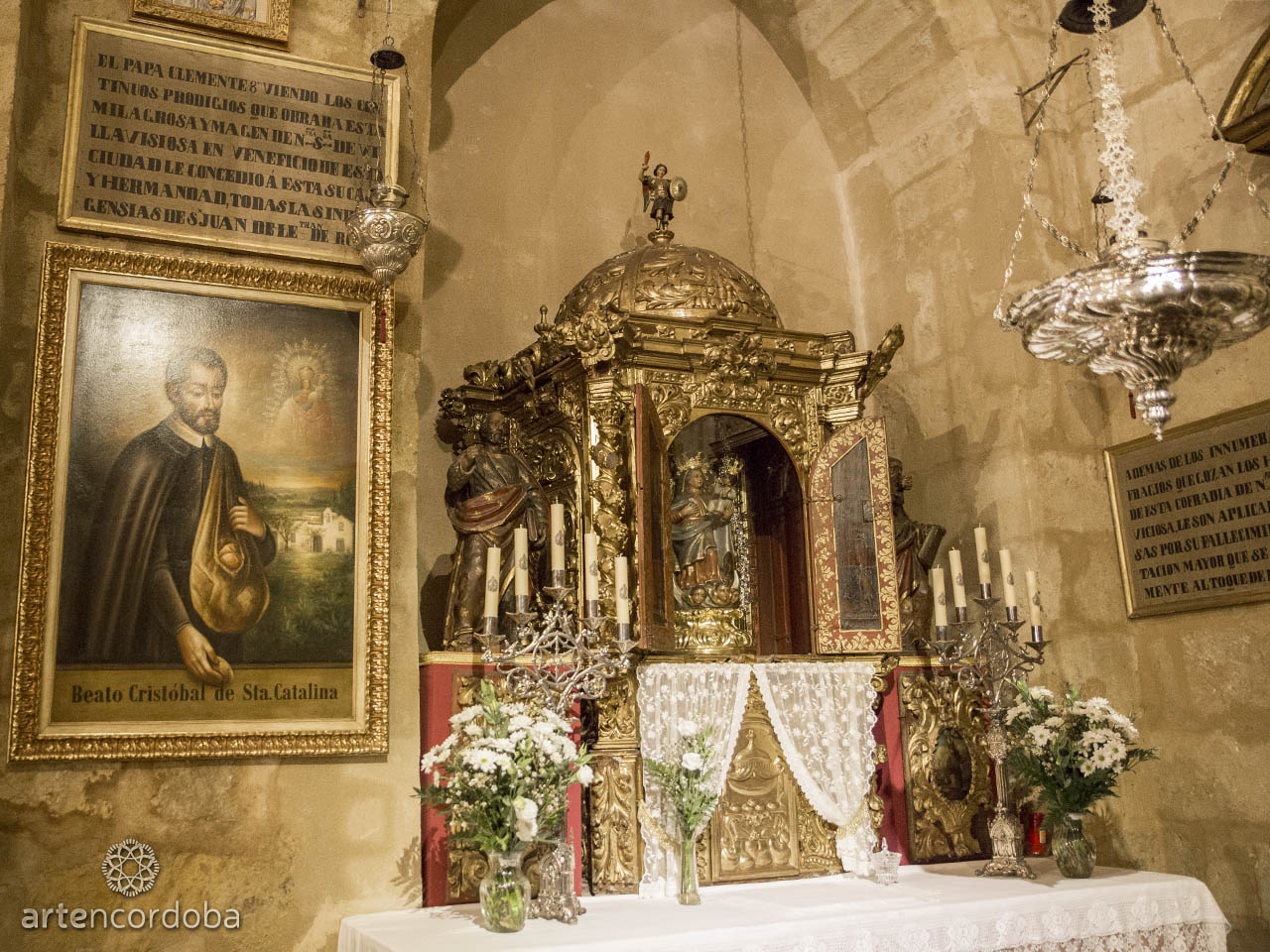
In the epistle nave is the Chapel of the Tabernacle, accessed through two pointed arches. Dating from the early 14th century, this rectangular space is covered by two Gothic ribbed vaults and is one of the most venerated places in the Church of San Lorenzo, partly for housing the image of the Virgin of Villaviciosa, dating from the late 16th century. The painting of The Calvary formed the attic of the aforementioned old main altarpiece and is the work of Fernández de Castro.
Altar of Our Lady of the Rosary
Finally, we must highlight the Altar of Our Lady of the Rosary, similar in style to that of Our Lady of Remedies, located opposite it in the gospel nave. In the central niche is the image that gives the altar its name, and above it, a sculpture of King David playing the lyre.
Visiting the Church of San Lorenzo
If you’re wondering what to visit in Córdoba, a good option would be the Fernandine Churches, choosing one of our guided tours. This way, you’ll learn everything about the Church of San Lorenzo. Choosing to do quality tourism means choosing ArtenCórdoba.
Text: J.A.S.C.