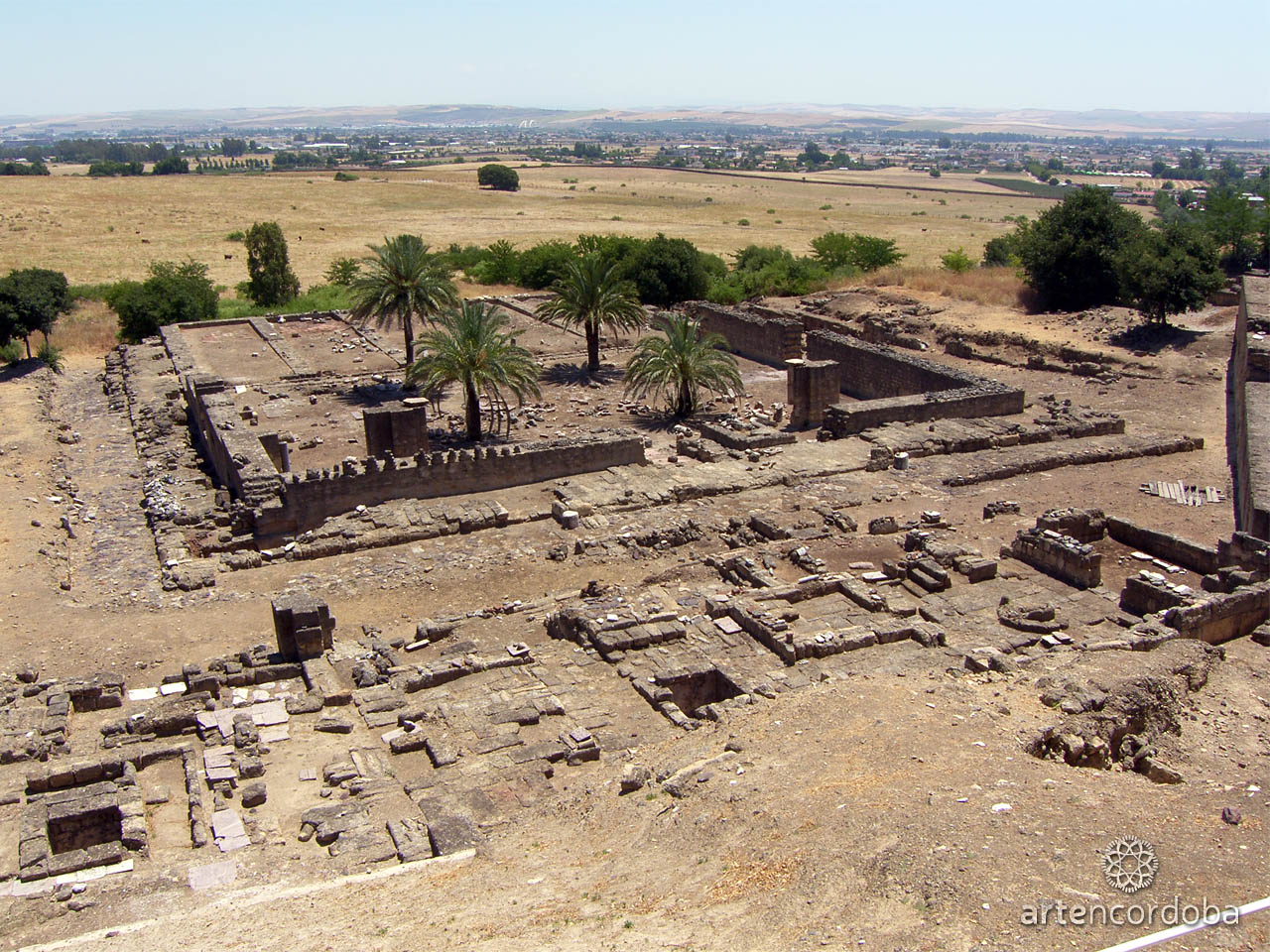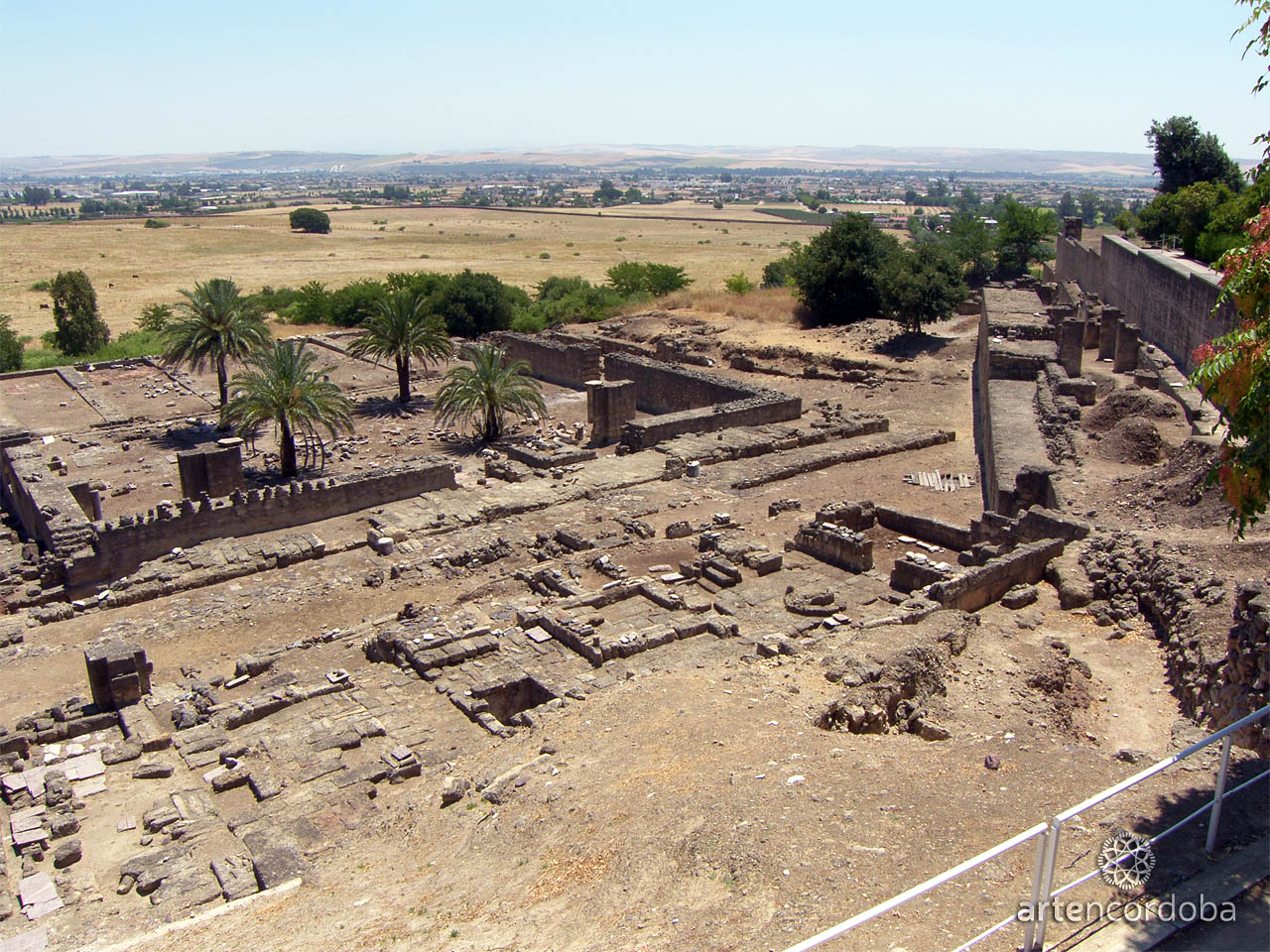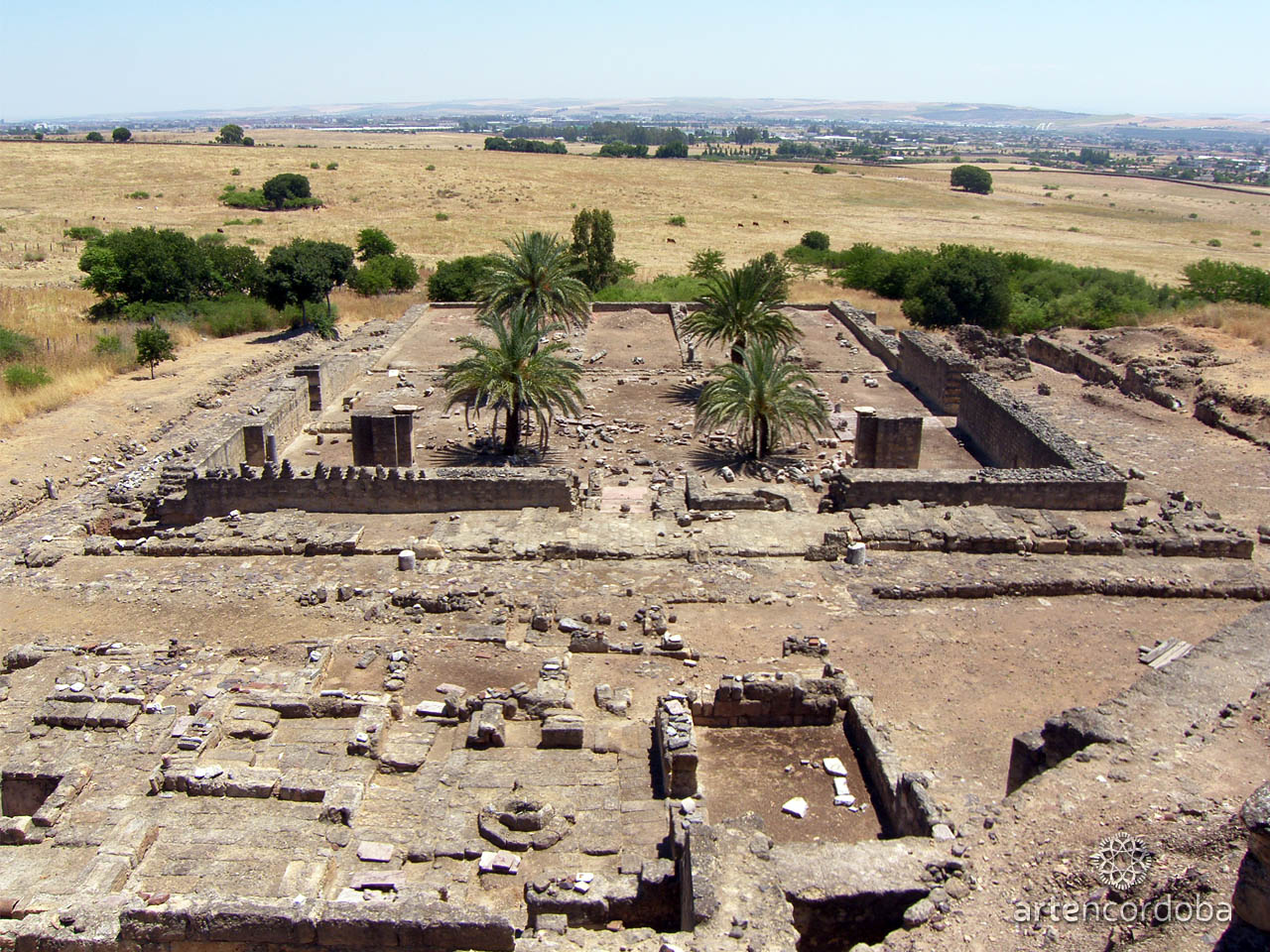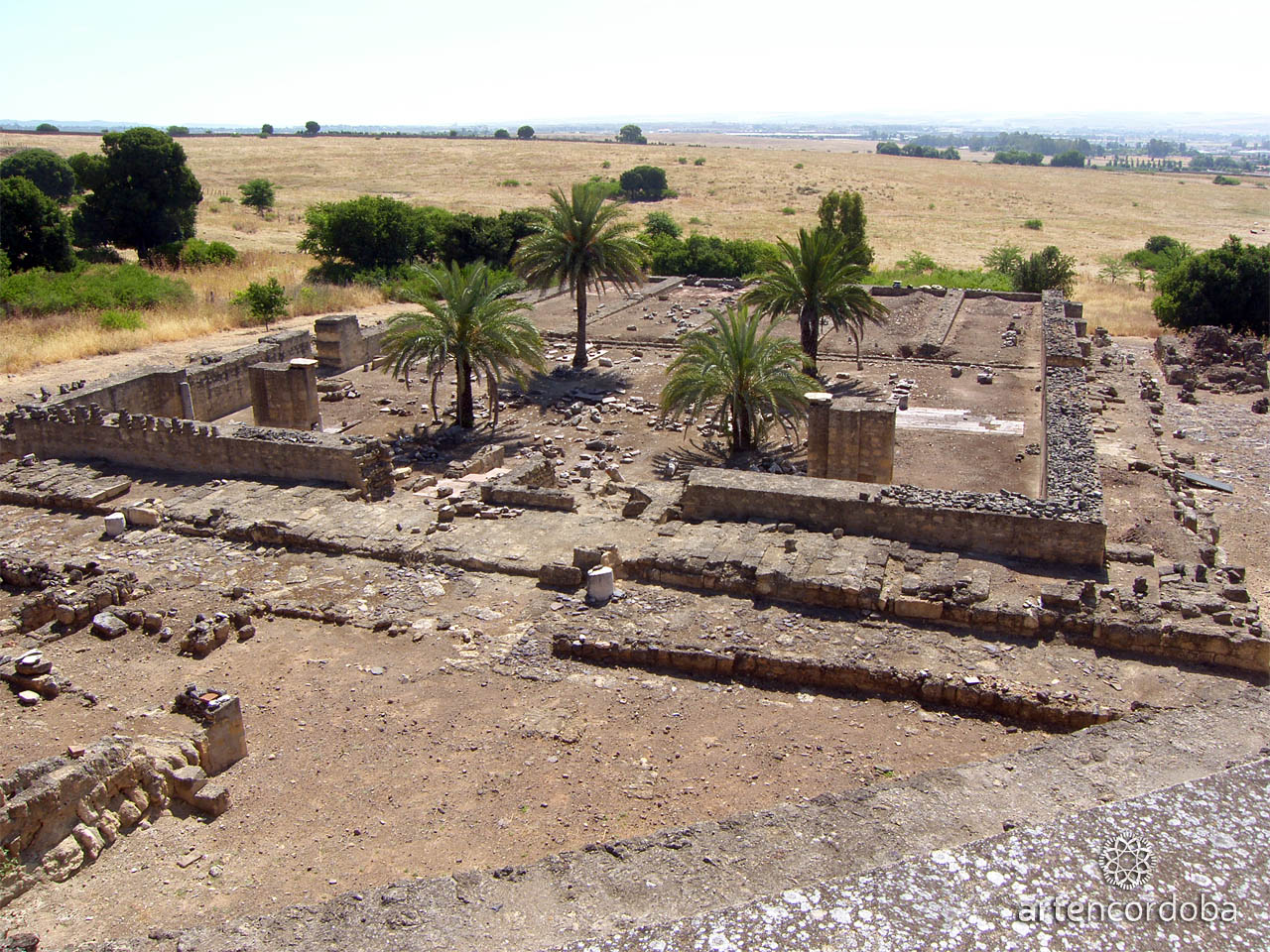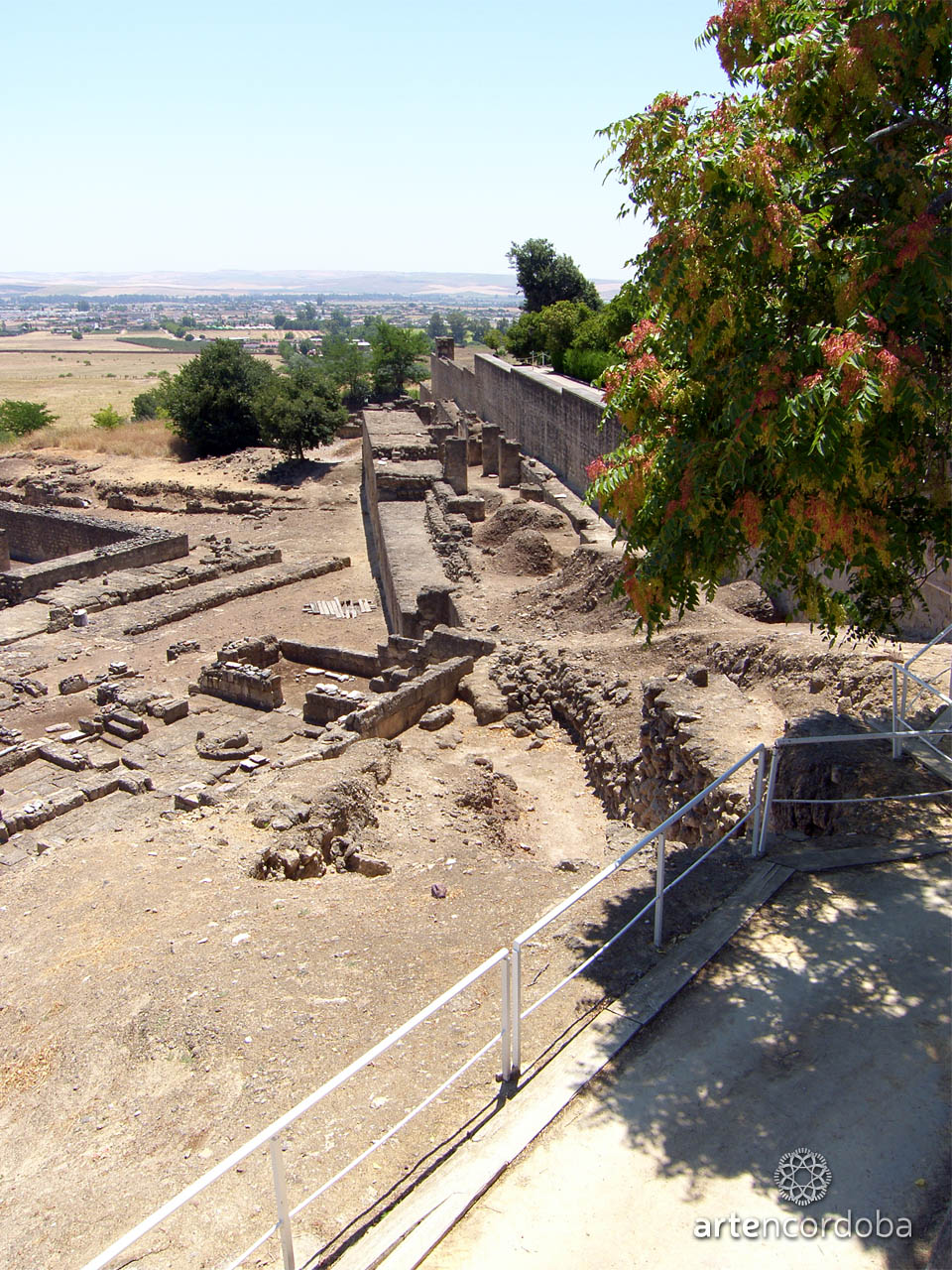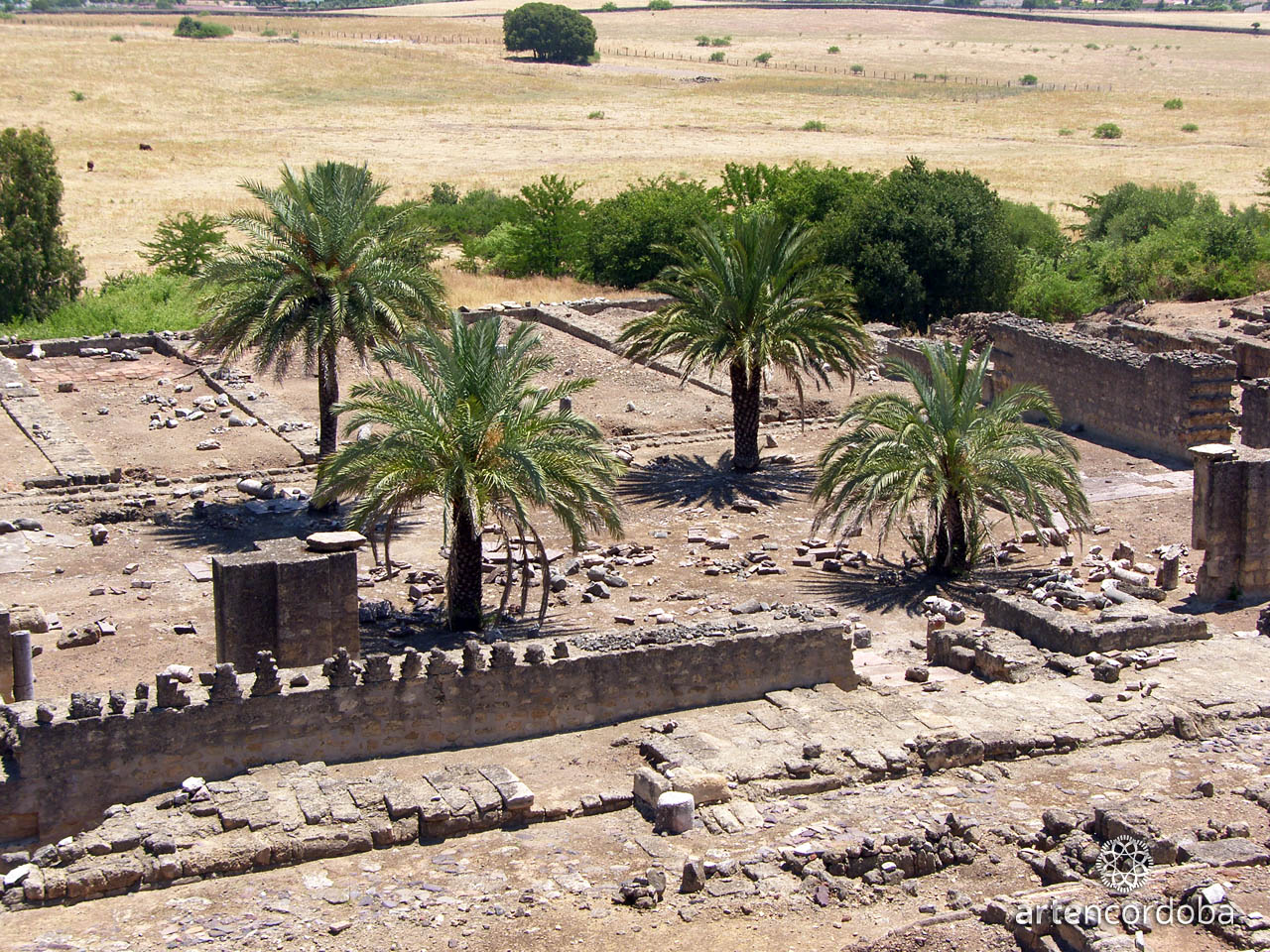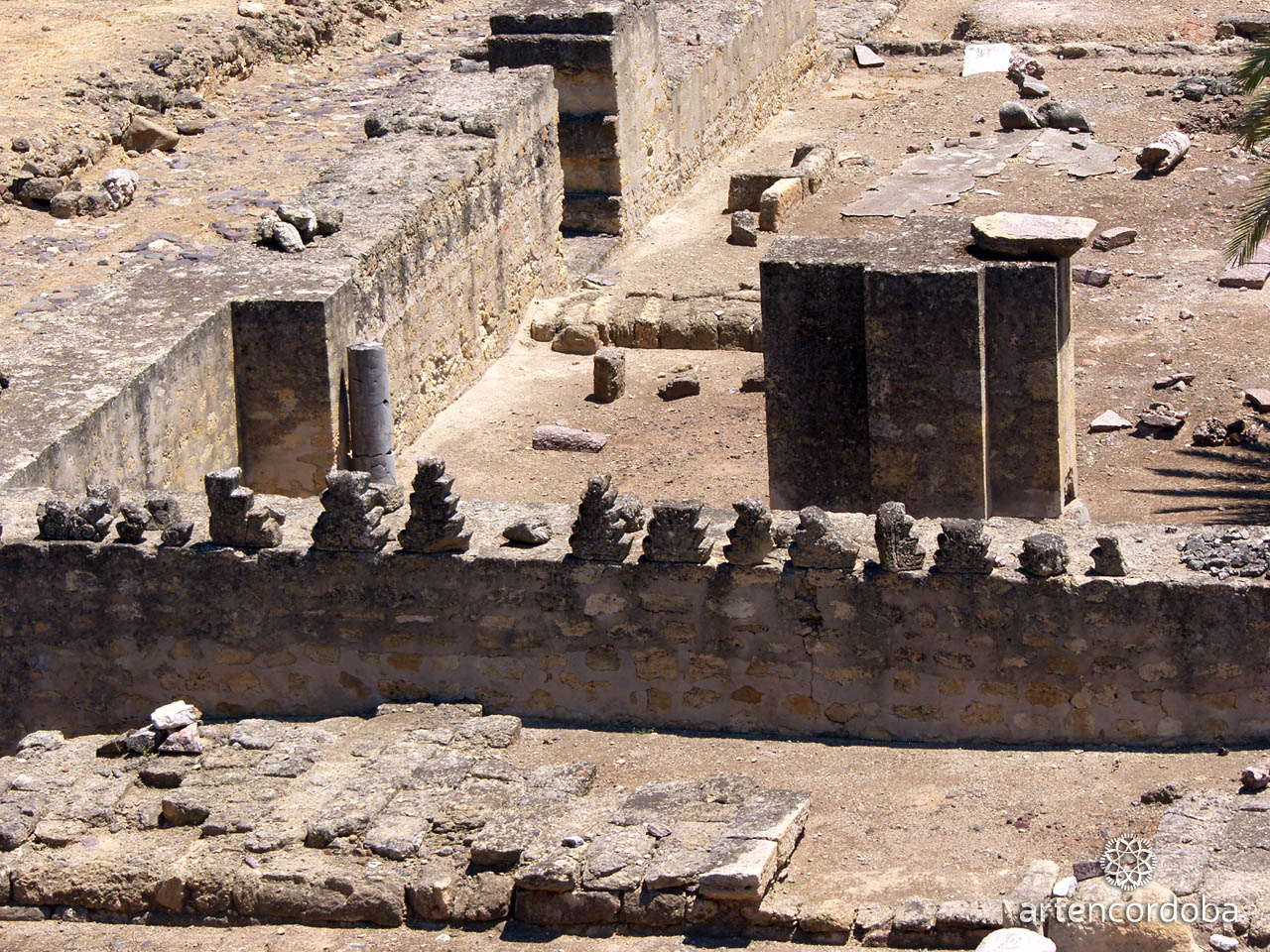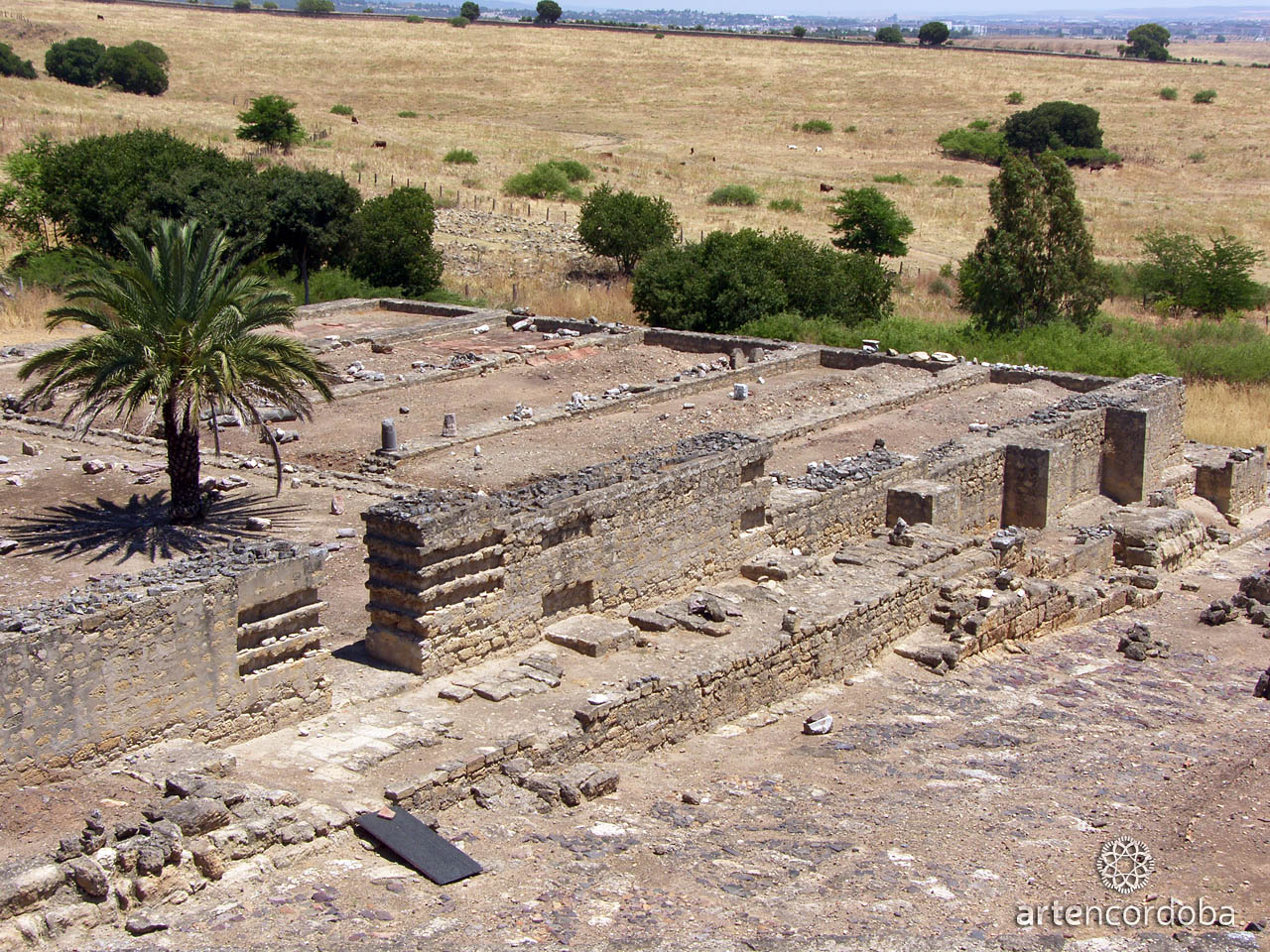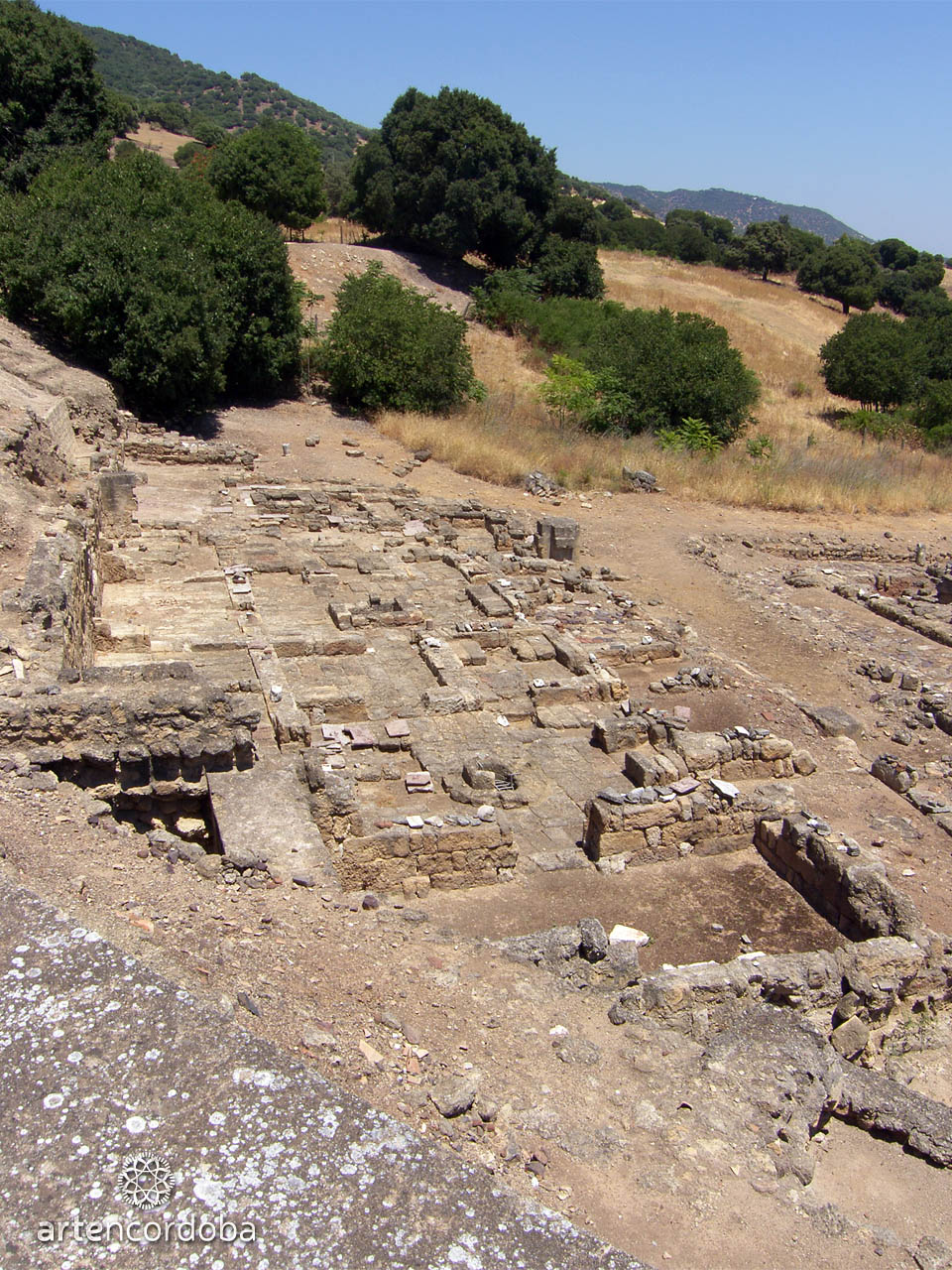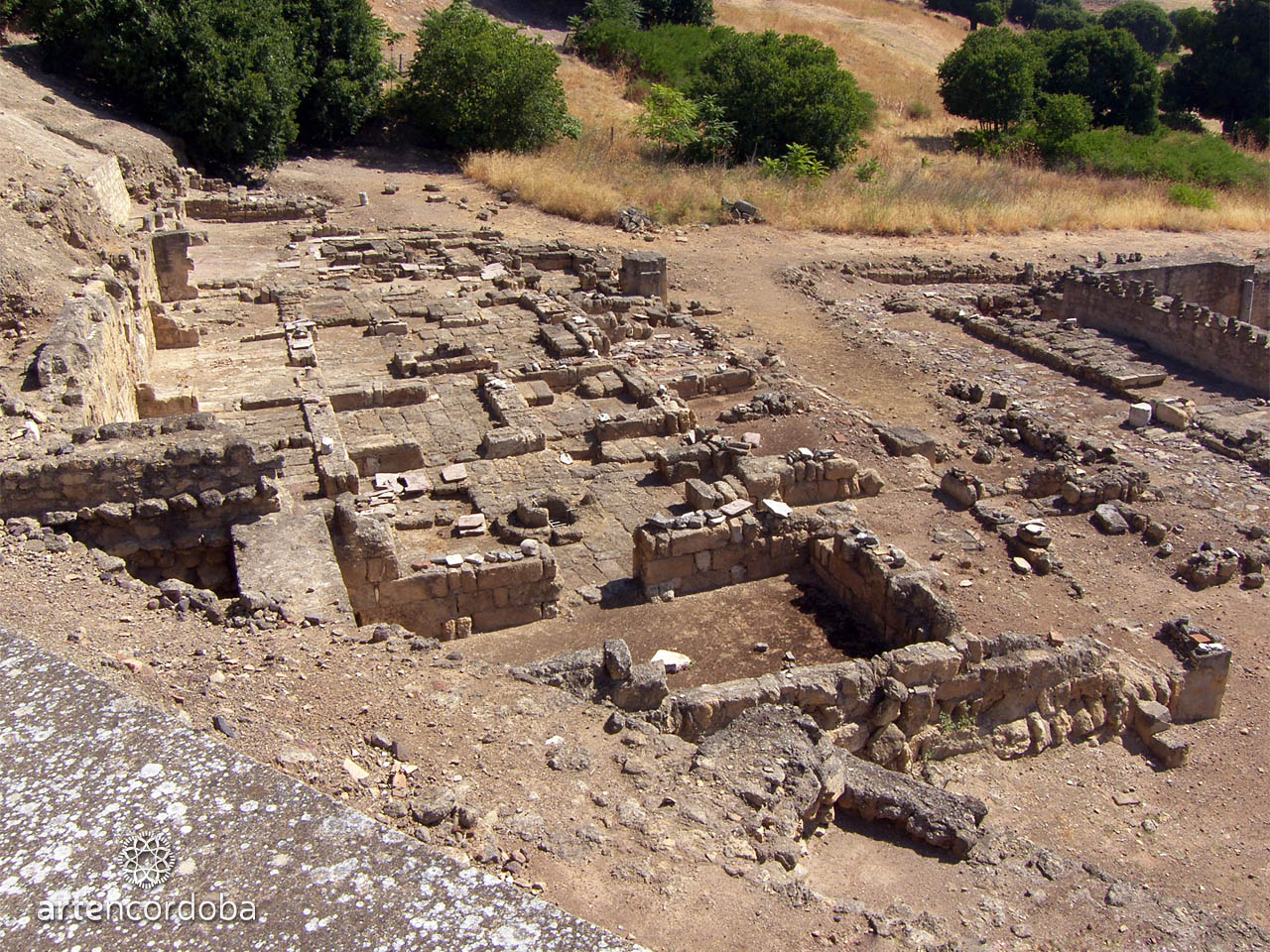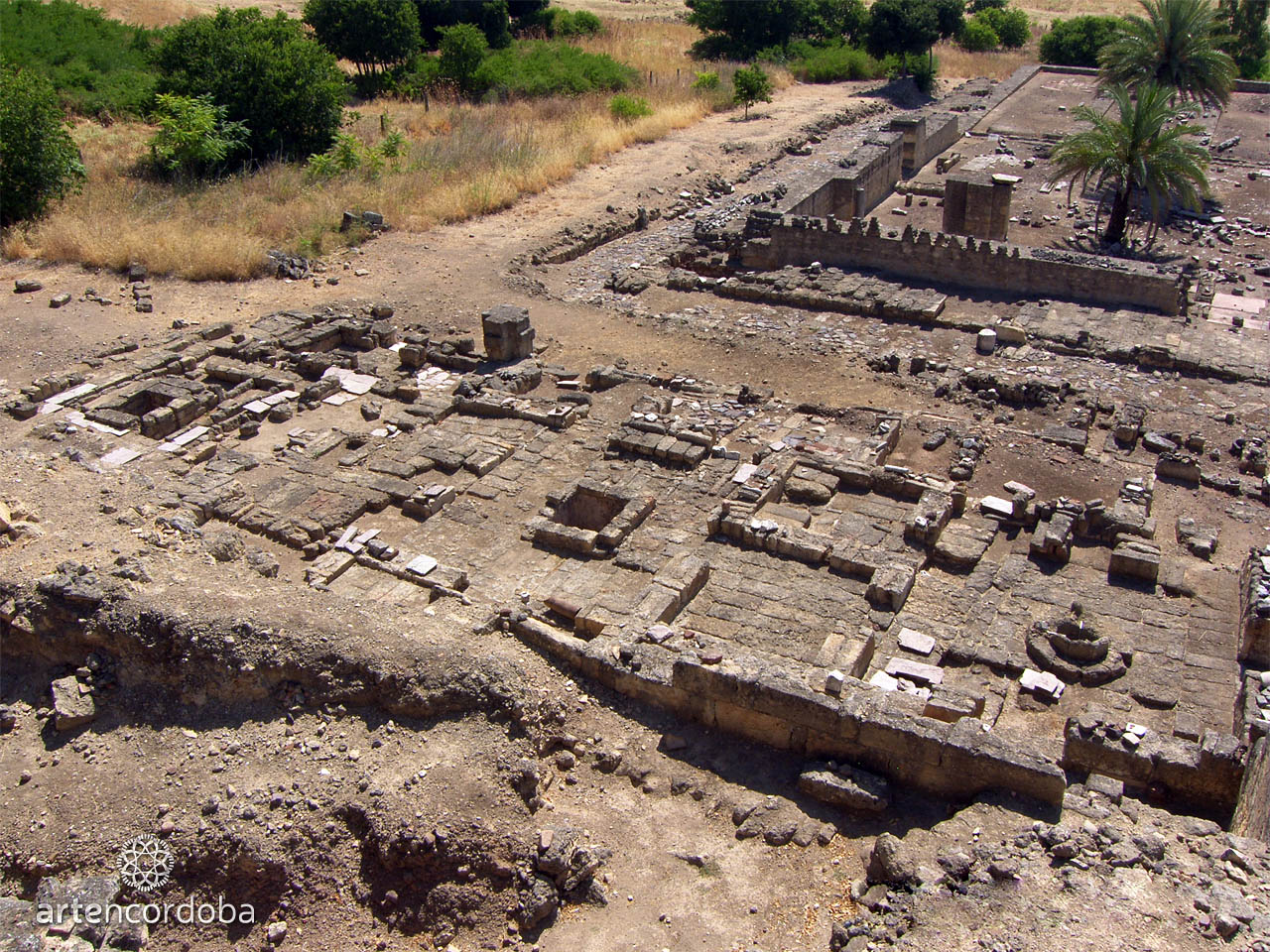






On the terrace located to the east of the “High Garden” of Medina Azahara, the Aljama Mosque was built. Due to its location—adjacent to the palace but outside of it—it allowed shared use of the building by both city residents and palace inhabitants. The completion date of its construction varies: written sources indicate the year 941, while the remains of a main commemorative plaque postpone it to 944 or 945. Very few remains of the building survive today, as it was among those most affected by the plundering of materials.
Well oriented towards Mecca (southeast), the floor plan of the Mosque is rectangular, and its three main elements (courtyard, prayer hall, and minaret) follow the “classic” layout found in other mosques of the Islamic West.
The Courtyard and the Prayer Hall
The ablutions courtyard (sahn) features covered galleries on three of its sides, except on the southeast, which is occupied by the façade of the oratory, and was paved with slabs of purplish limestone.
The prayer hall has a basilica layout, with five aisles perpendicular to the qibla wall—remarkable for correcting the deviations present in the Aljama Mosque of Córdoba; these aisles are separated by arcades of eight horseshoe arches.
The earthen floor of the entire oratory (haram) was covered with esparto mats, except in the macsura, a raised platform from which the Caliph or Imam led the prayer, which was paved with clay tiles.
The Mihrab
As for the mihrab, a niche or deep recess that opens to the exterior—the center of every Mosque and the area with the richest and most elaborate decoration—only a few remains survive to tell us about its shape and decorative motifs.
Access Points and Architectural Elements
From the “Rich Hall“, the Caliph could access the oratory through a covered passageway (sabat) attached to the eastern side of the “High Garden“. The street level difference was overcome by a three-arched bridge, which remains intact except for its springings, and allowed access to the said passageway, built at the end of the reign of Abd al-Rahman III or the beginning of that of his son Alhaken II.
The Minaret
On the northwest side, next to the main entrance, stands the minaret or alminar, a square tower on the outside and octagonal on the inside, where the staircase was located leading up to the terrace from which the muezzin called the faithful to prayer. Its location inside the courtyard and offset from the central axis to align the entrance door with the mihrab foreshadows the minaret of the Cordoban Aljama Mosque.
Annexed Buildings and Urban Context
In front of the main façade of the Aljama Mosque of Medina Azahara, a group of rooms was built, which have been identified as a “House of Alms” (Dar al-sadaka) due to their layout and location.
With the Mosque, we conclude the analysis of the main buildings and remains located in the eastern part of the palace complex, which we have called the “public” sector. From now on, we begin the analysis of the western part, the “private sector.” However, this functional division is not always applicable, as we will see with the “Pillars Courtyard“, which has a public or official character.
Visit Medina Azahara
If you are unsure about what to do in Córdoba, we recommend visiting the Archaeological Complex of Medina Azahara by booking one of our guided tours. There, we will talk about the Aljama Mosque and its significance within the site. Choose quality tourism with qualified staff—don’t hesitate, ArtenCórdoba is the best option.
Text: Jesús Pijuán.