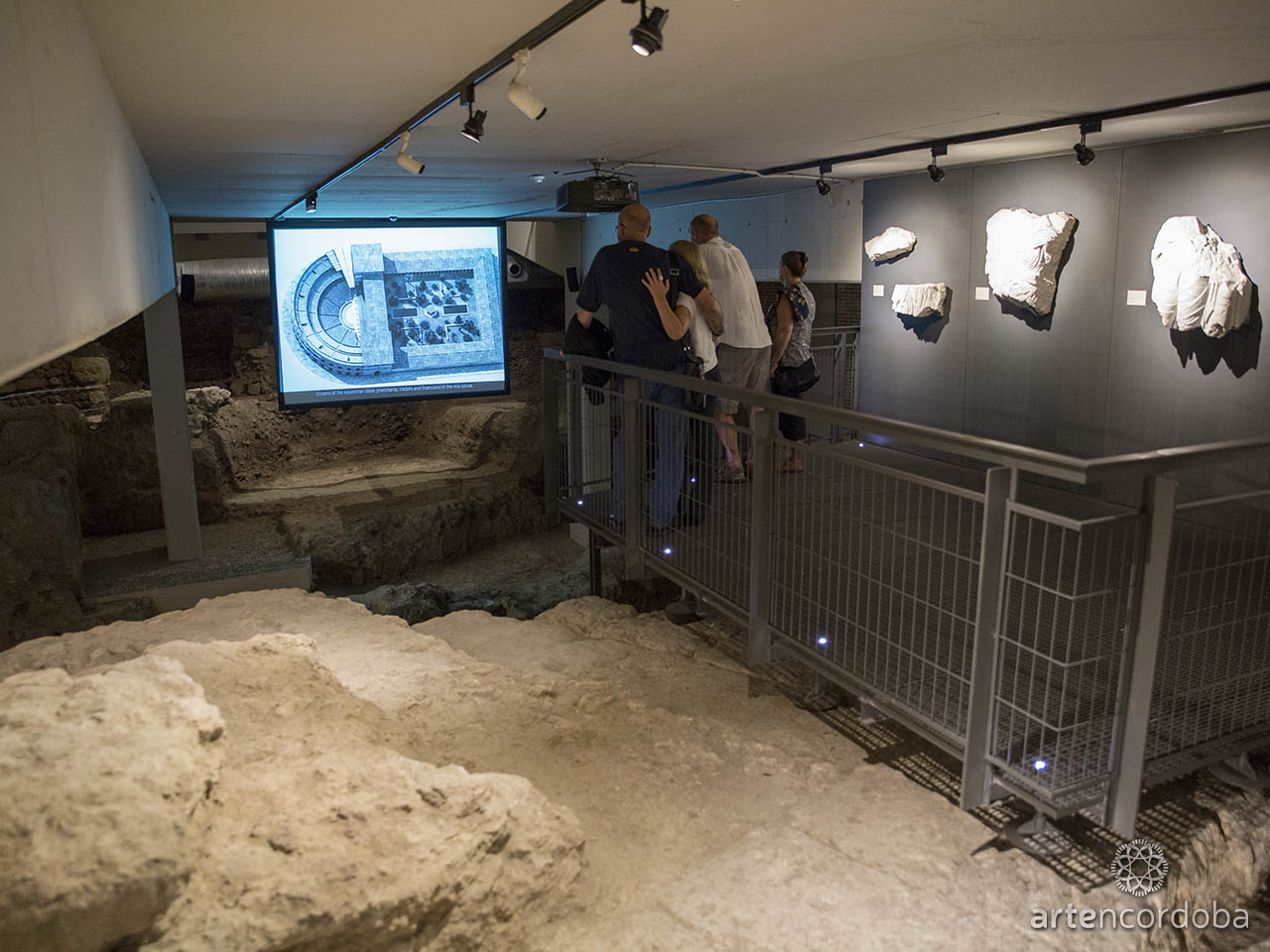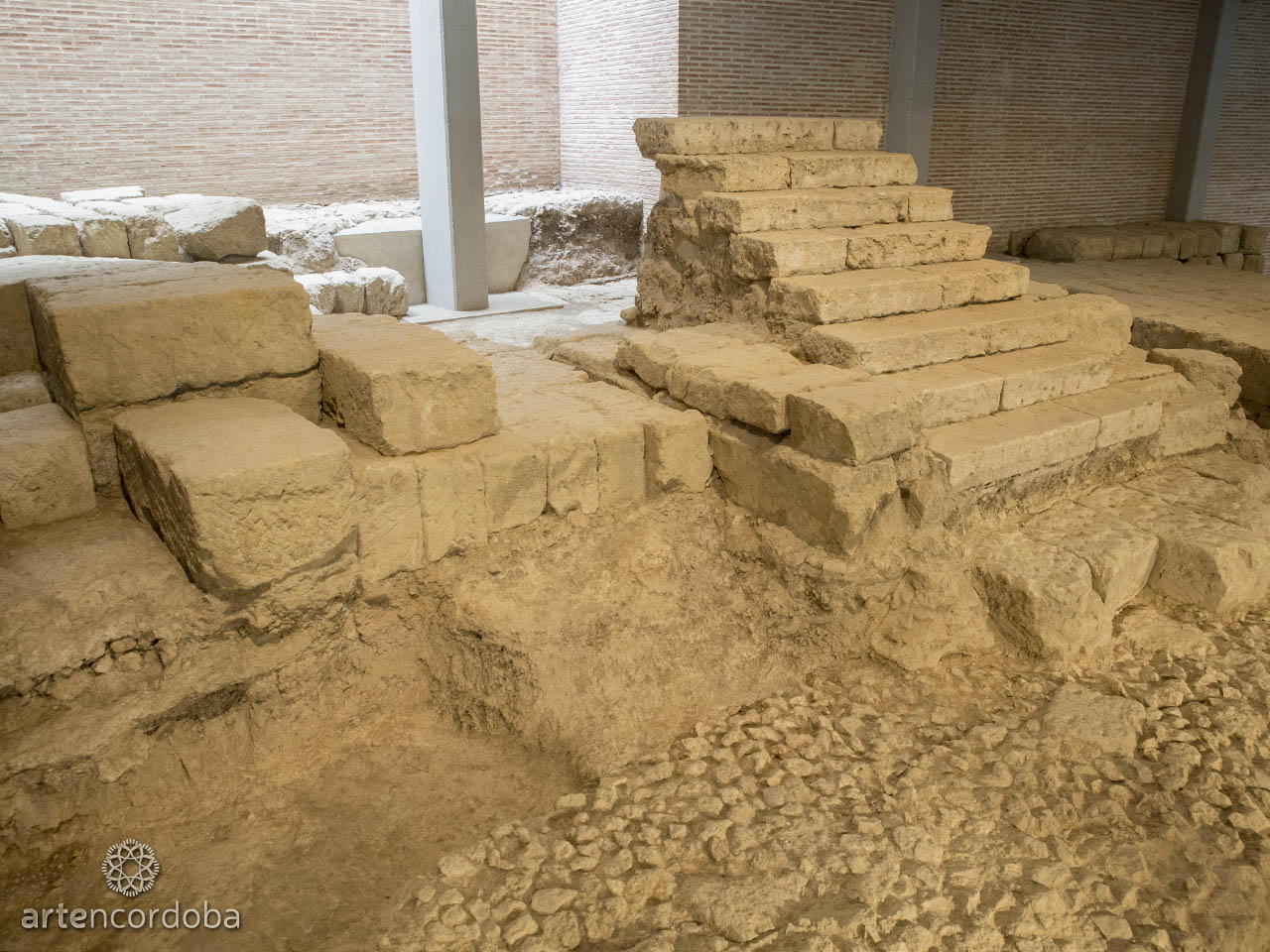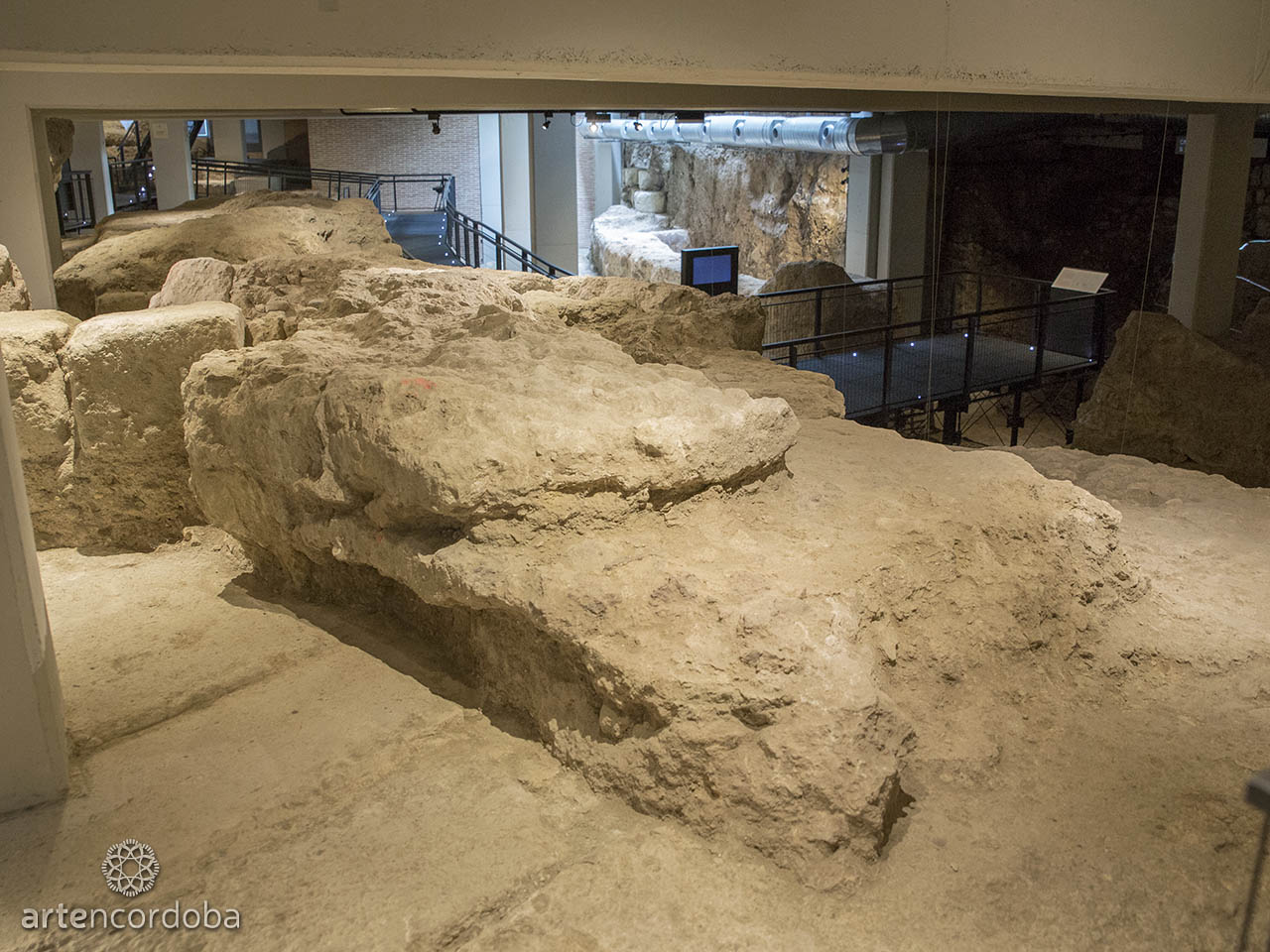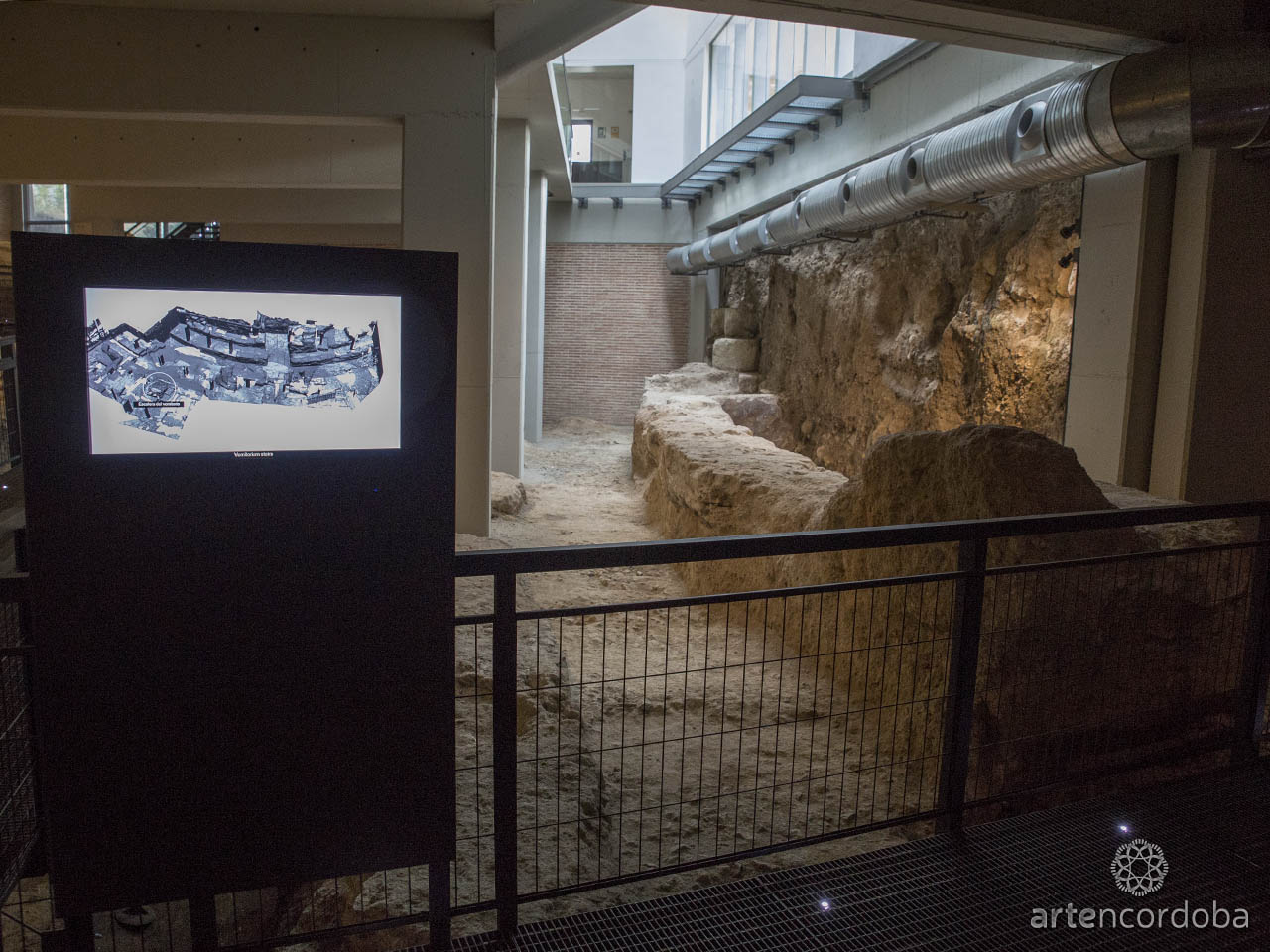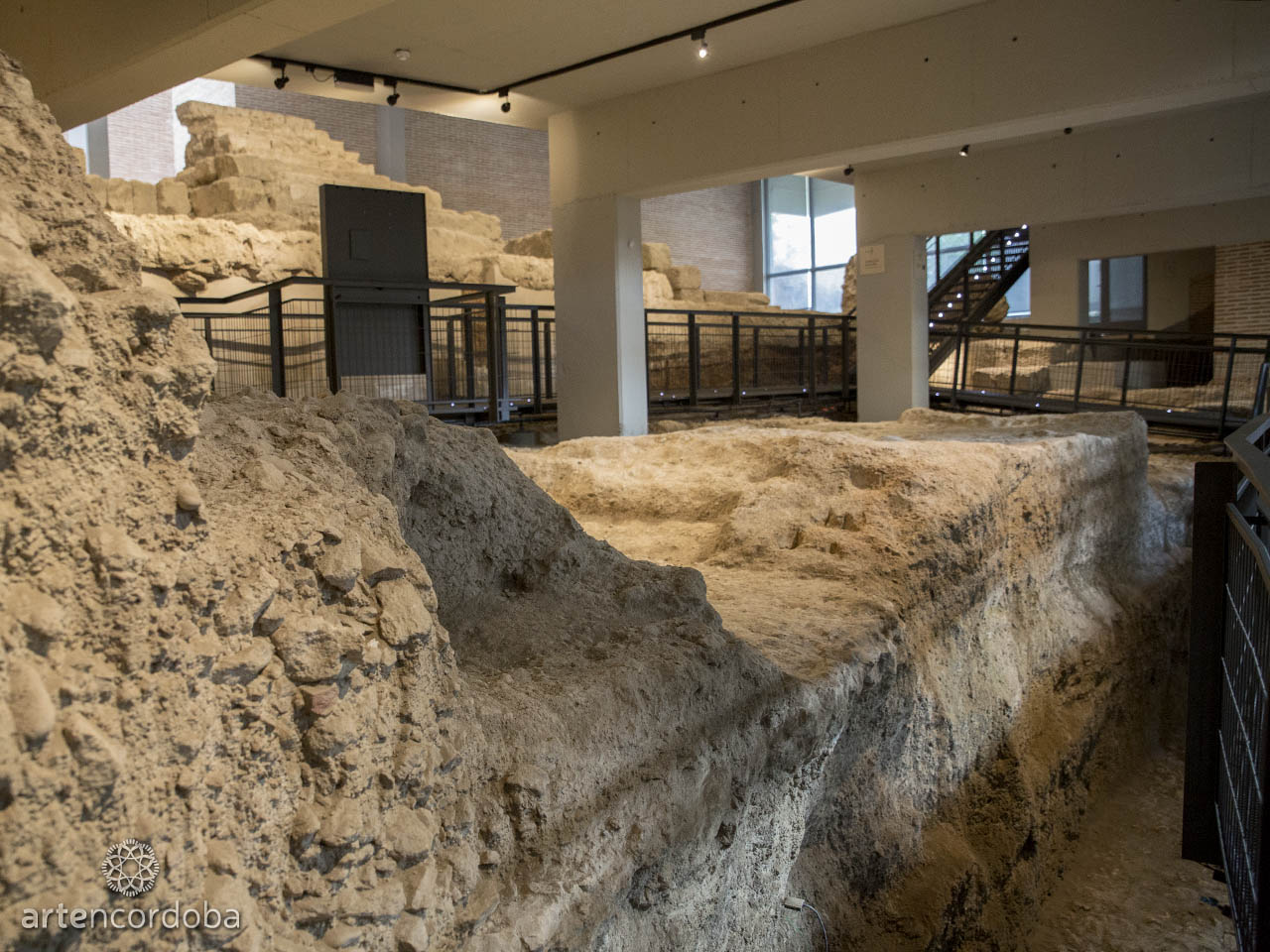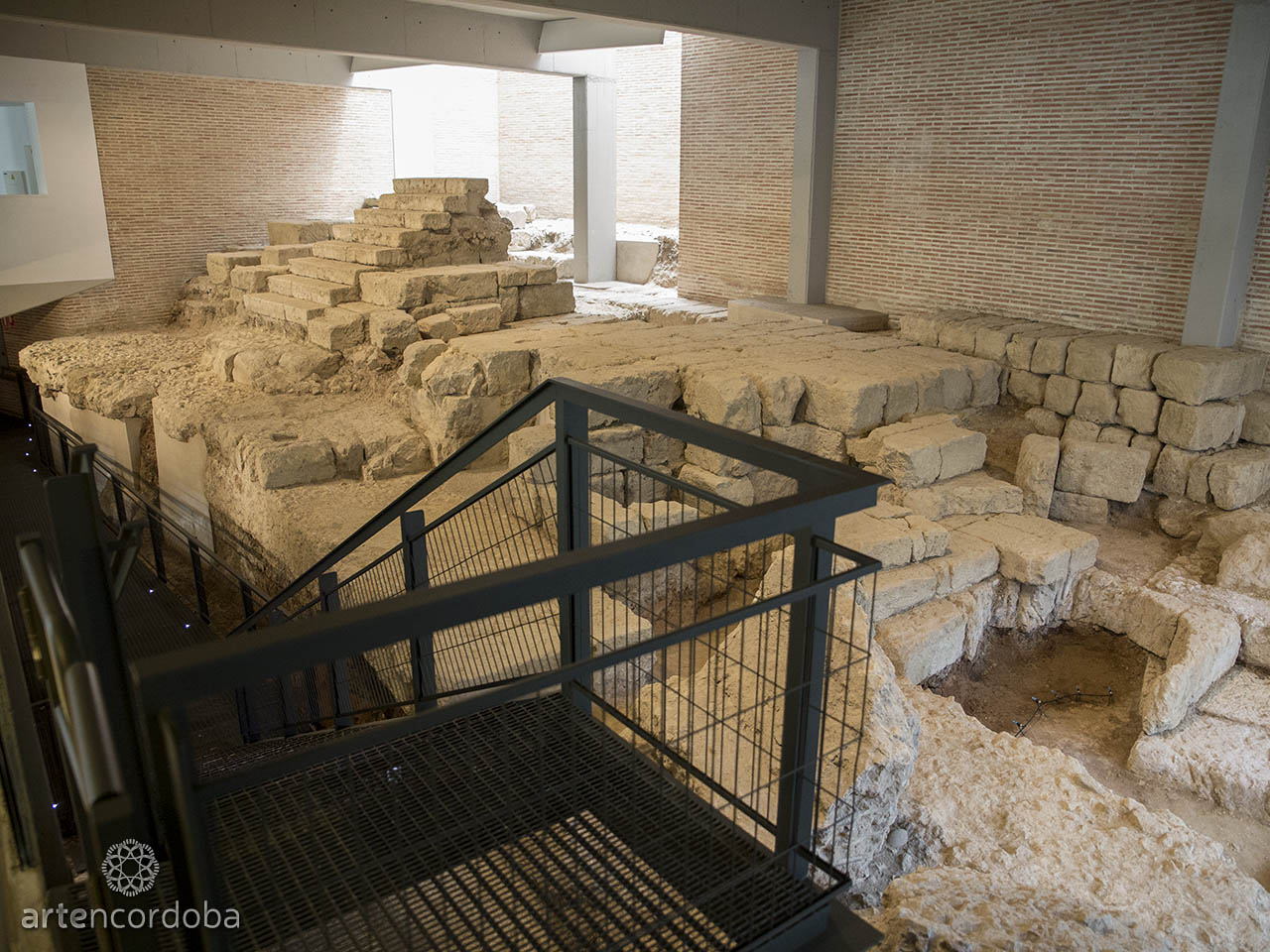






Of all the buildings intended for entertainment that our city hosted during the Roman era, the best known and, probably, the one with the greatest architectural and ornamental richness was the theatre.
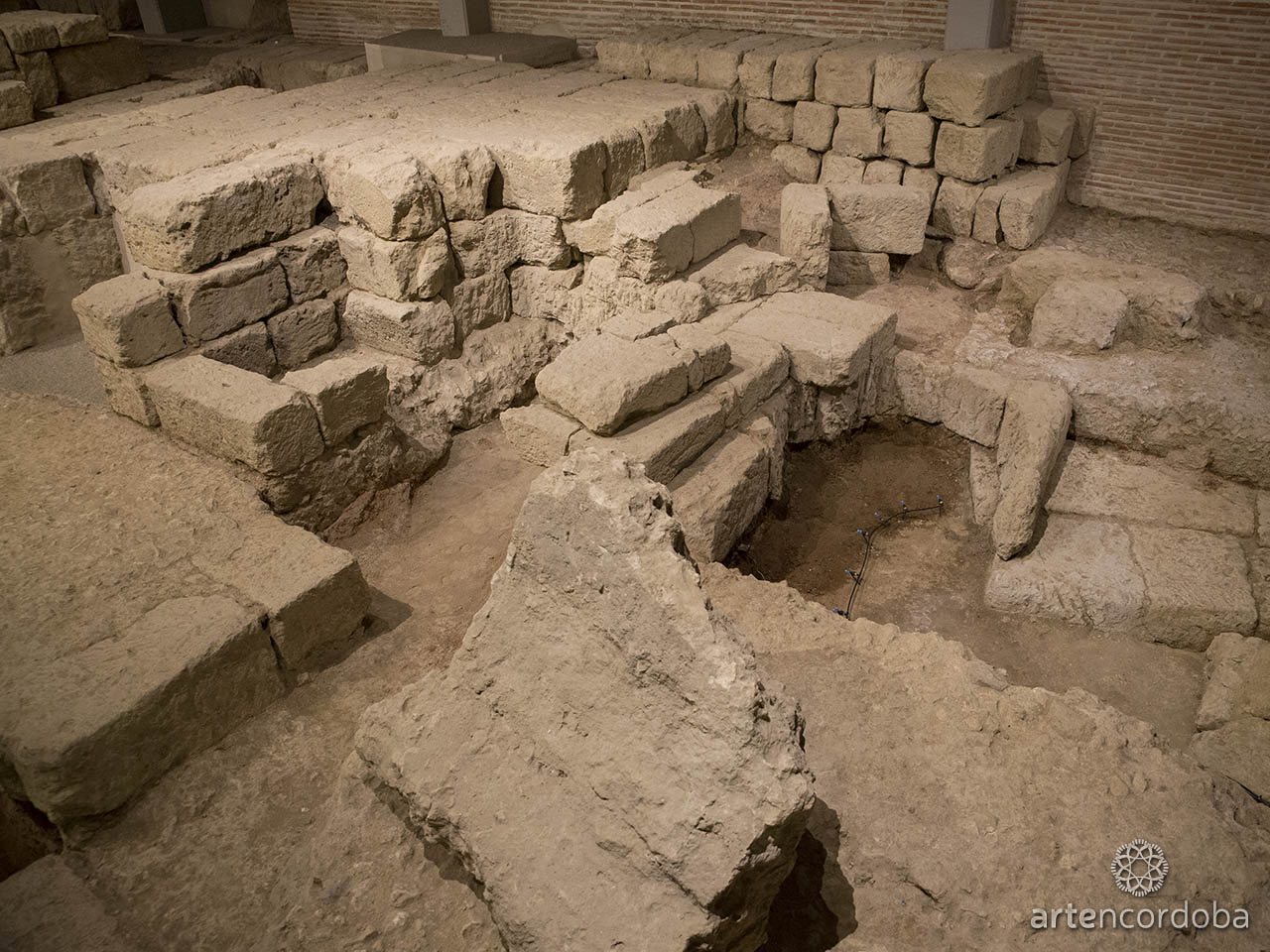
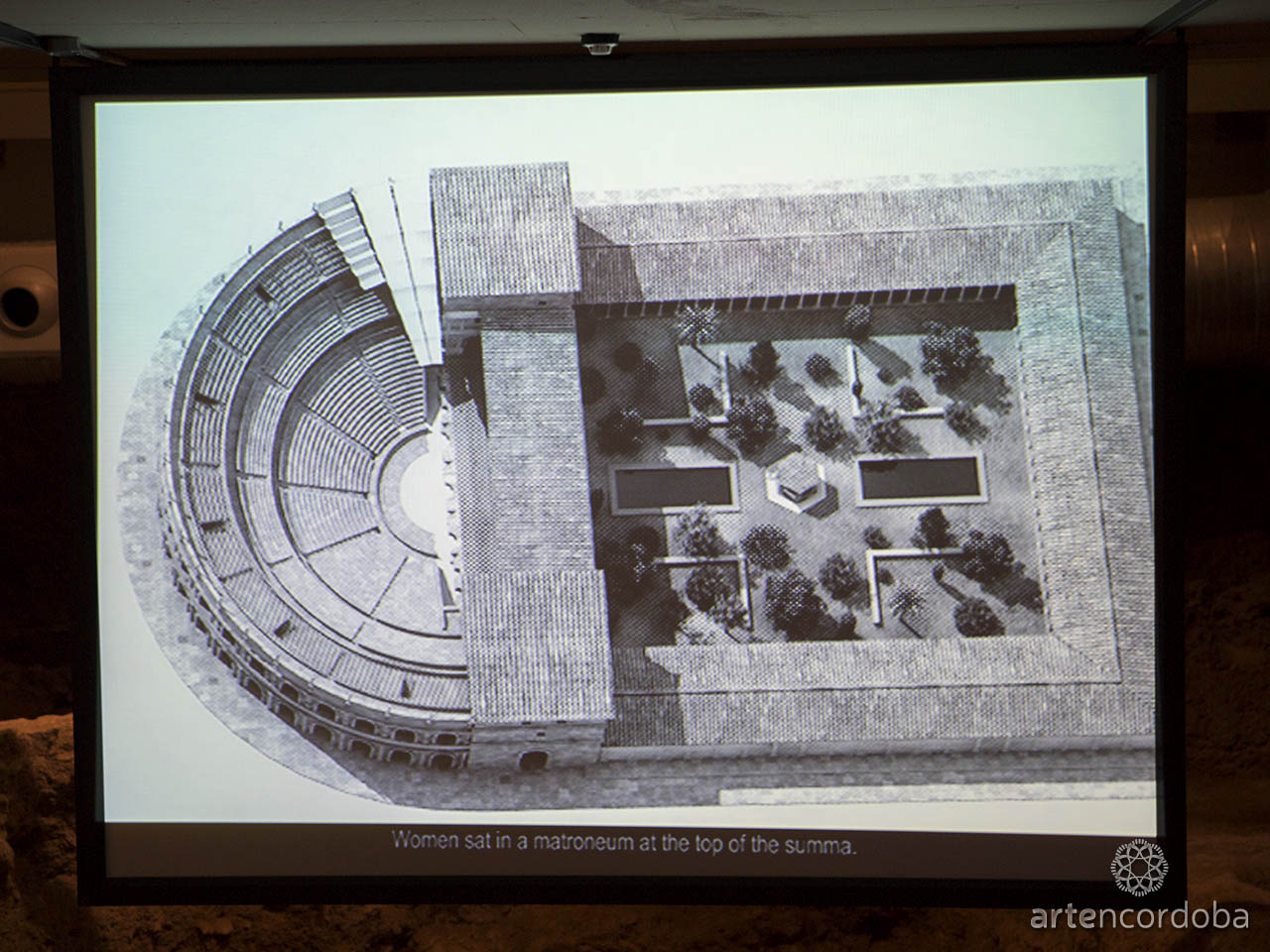
Several excavation campaigns have taken place since the Roman Theatre of Córdoba was discovered in 1994, revealing almost 30% of its total surface. This has provided enough information to understand its actual dimensions as well as its spatial configuration. Today, it has been possible to recreate the entire cavea (seating area); however, very little is known about the composition of the scaena (the stage area where theatrical performances took place, usually adorned with rich architectural decorations).
Location and dimensions of the theatre
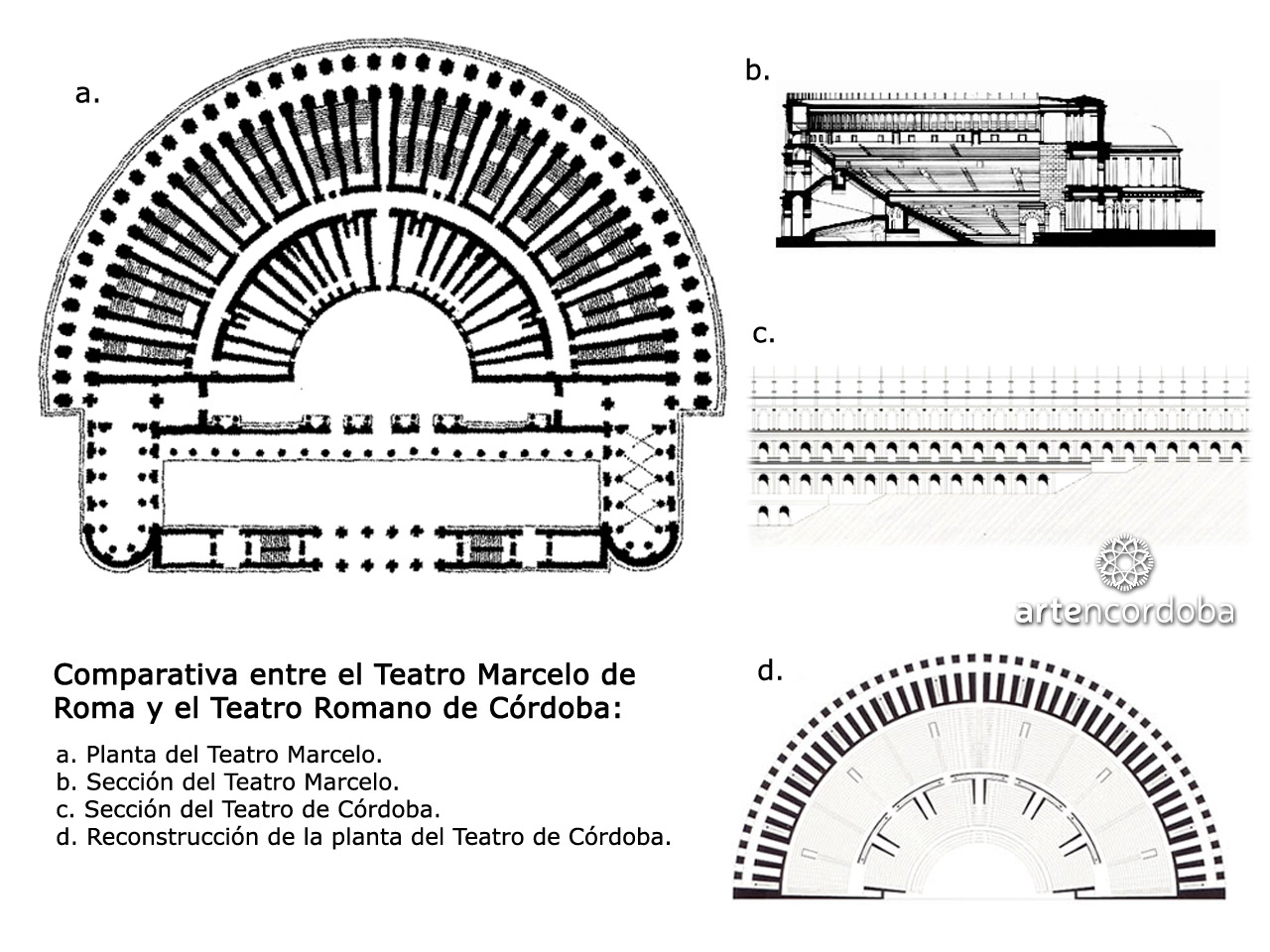
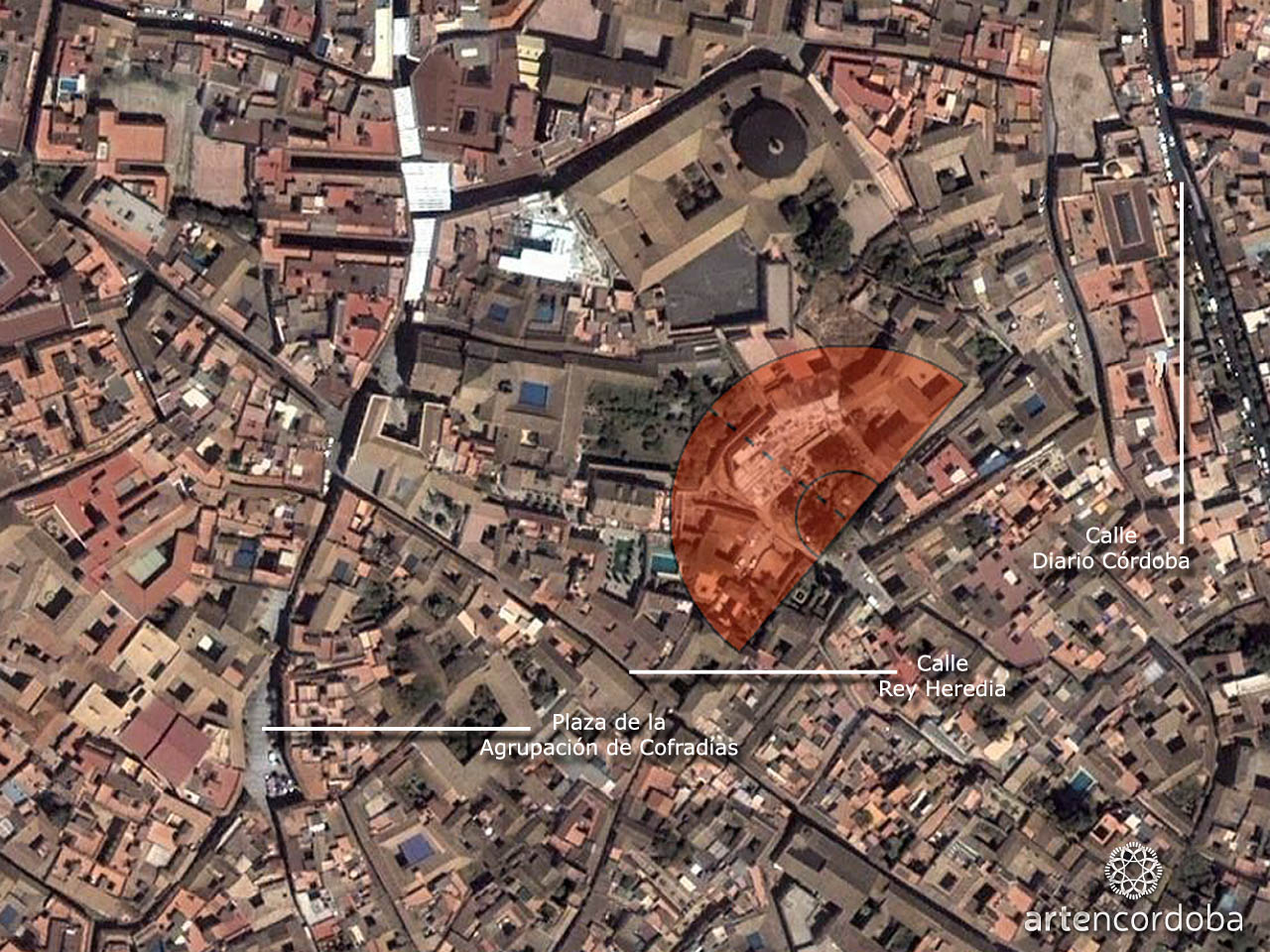
Roman architects chose the highest point of the city to build the theatre, in order to take advantage of the slope and place the seating area on it. It is estimated that the cavea had a diameter of nearly 125 meters, making it the largest example of its kind found in Hispania, only 6 meters smaller than the Theatre of Marcellus in Rome, and able to accommodate up to 15,000 spectators.
The orchestra (the semicircular central space for the chorus or “orchestra”) was located in the area now occupied by the Plaza de Jerónimo Páez, where the back entrance of the Archaeological and Ethnological Museum of Córdoba is located.
Architecture and decoration
Thanks to the remains found in various excavations, such as several cornice pieces, capitals, and even arch keystones decorated with a kind of tragic mask, we know that the Roman Theatre featured an arched design, and that there was a superposition of architectural orders, as is also the case in the aforementioned Theatre of Marcellus.
Capitals similar in style to those of the Temple of Mars Ultor in Rome have also been found, which are thought to possibly belong to the scaena.
Chronology and patrons
Numerous epigraphic remains allow us to place the construction of this great building in the Augustan period, possibly before 5 BC, although the process of ornamentation and embellishment may have continued into the Julio-Claudian period (14 AD to 69 AD).
These same remains also speak of the presence in the building of notable local families of the time, such as the Annaei, Marii, Numisii, MeIrcellones Persii… which suggests that the project may have been directly funded by the Princeps Senatus (The Roman Senate).
Abandonment and later development
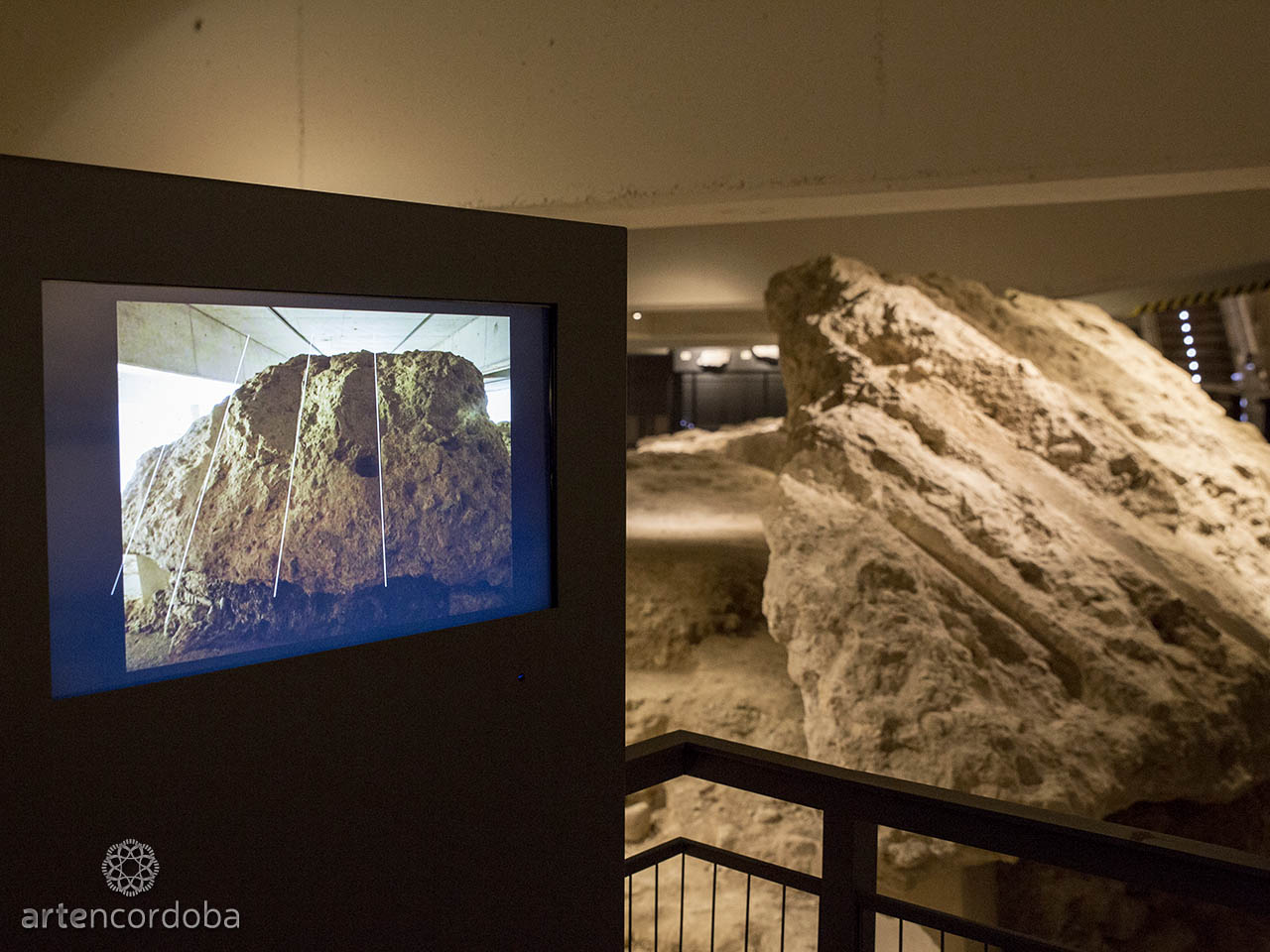
The Roman Theatre remained in use until the third quarter of the 3rd century AD, when it was severely damaged by an earthquake, causing large cracks in the cavea and the ground supporting its foundations.
We know there was an attempt to repair it in the 4th century AD, but in reality, a slow process of plundering began during that century. In the following century, it became a quarry, stripped of much of the stone that made up the cavea. Over time, the area was urbanized and became a residential zone, a status that remained from the Middle Ages to the present day.
Visiting the Roman Theatre of Córdoba
If you are wondering what to do in Córdoba, we recommend visiting Roman Córdoba by booking one of our guided tours. There we dedicate a special section to the Roman Theatre. Choose to enjoy quality tourism with qualified professionals—don’t hesitate, ArtenCórdoba is the best choice.
Text: J.A.S.C.