





The Roman Temple is located at the intersection of Claudio Marcelo Street and Capitulares Street, with its rear boundary being María Cristina Street. The land on which the site is located is owned by the Córdoba City Council, and the old town hall buildings once stood on it.
The Provincial Forum of Colonia Patricia
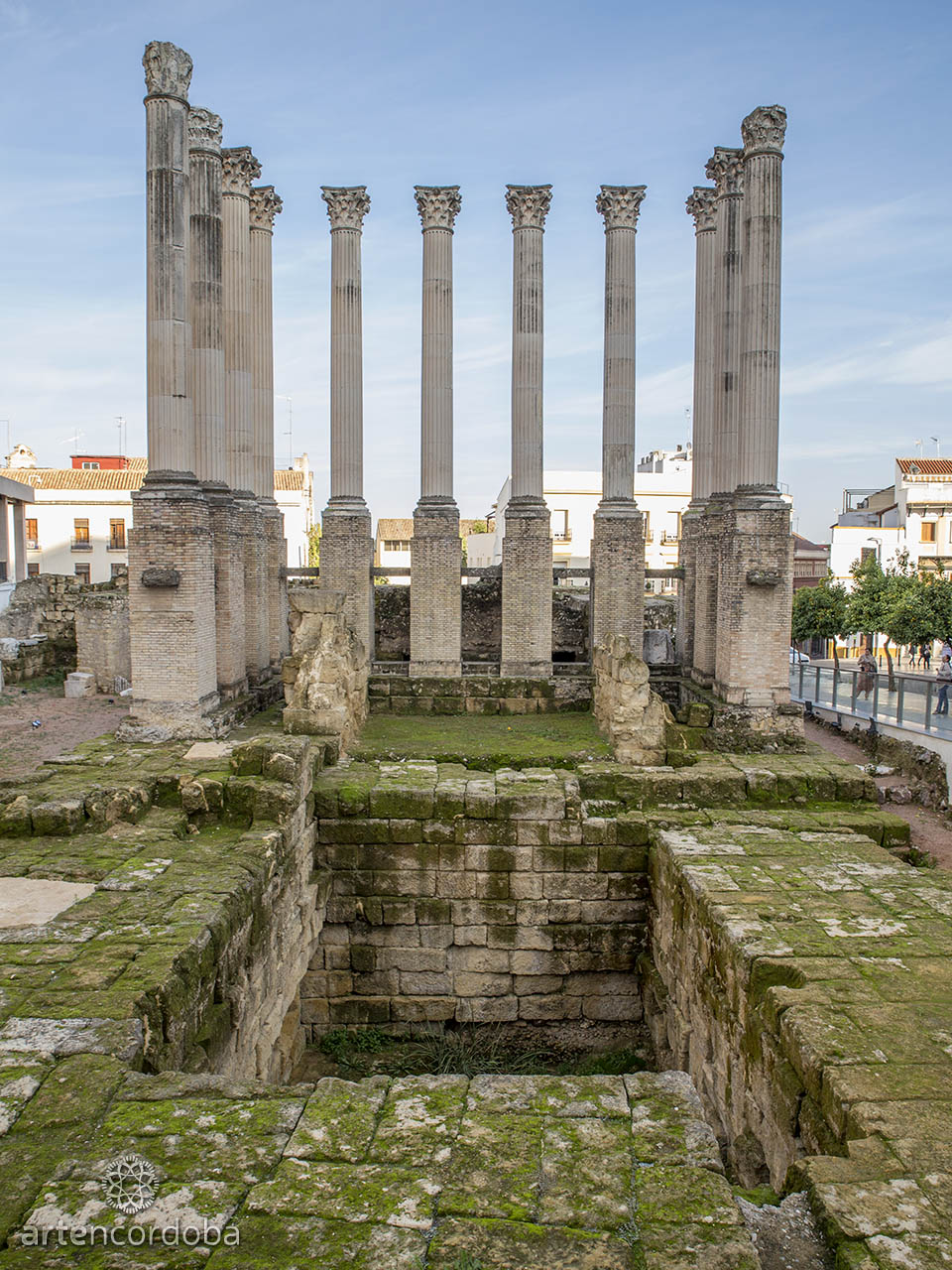
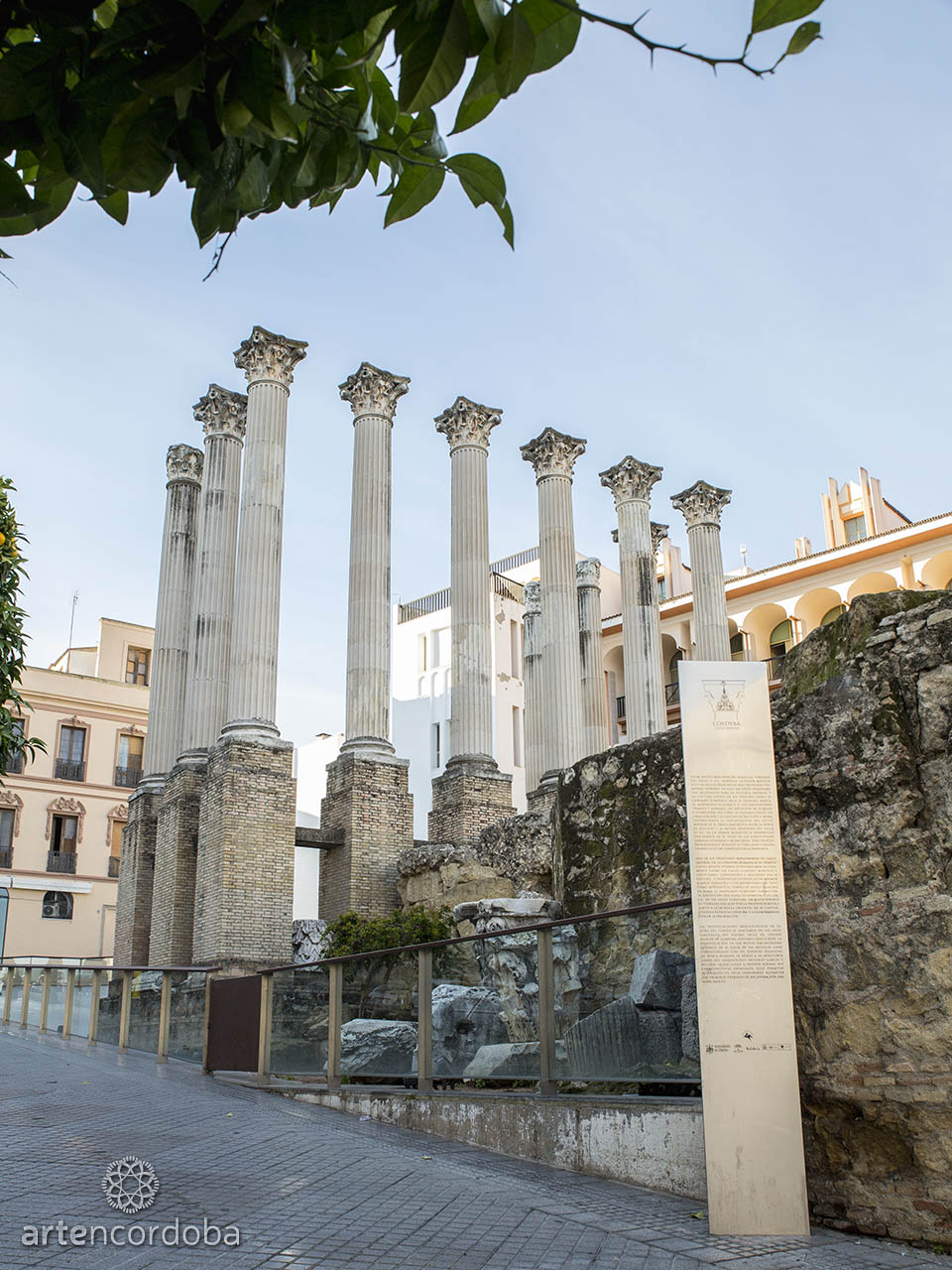
Popularly known as the Roman Temple of Claudio Marcelo, this area of Córdoba may have been established between the 1st and 2nd centuries A.D. as the provincial forum of Colonia Patricia, the title the city received during the Roman rule. This is suggested both by the layout and parallels of the best-known building, the large hexastyle temple (six columns in front of the portico), and by the location to its east and along its axis of the eastern circus.
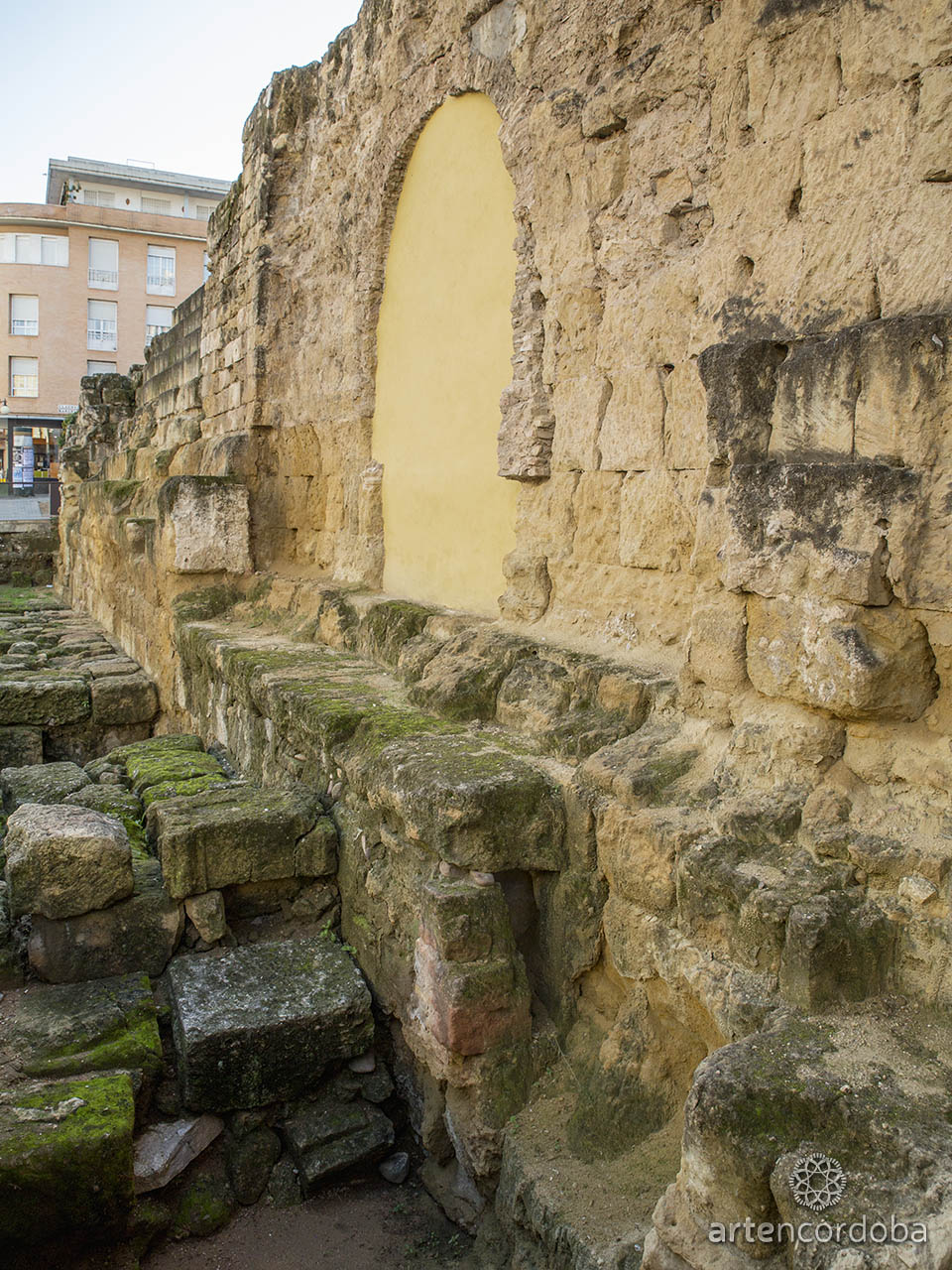
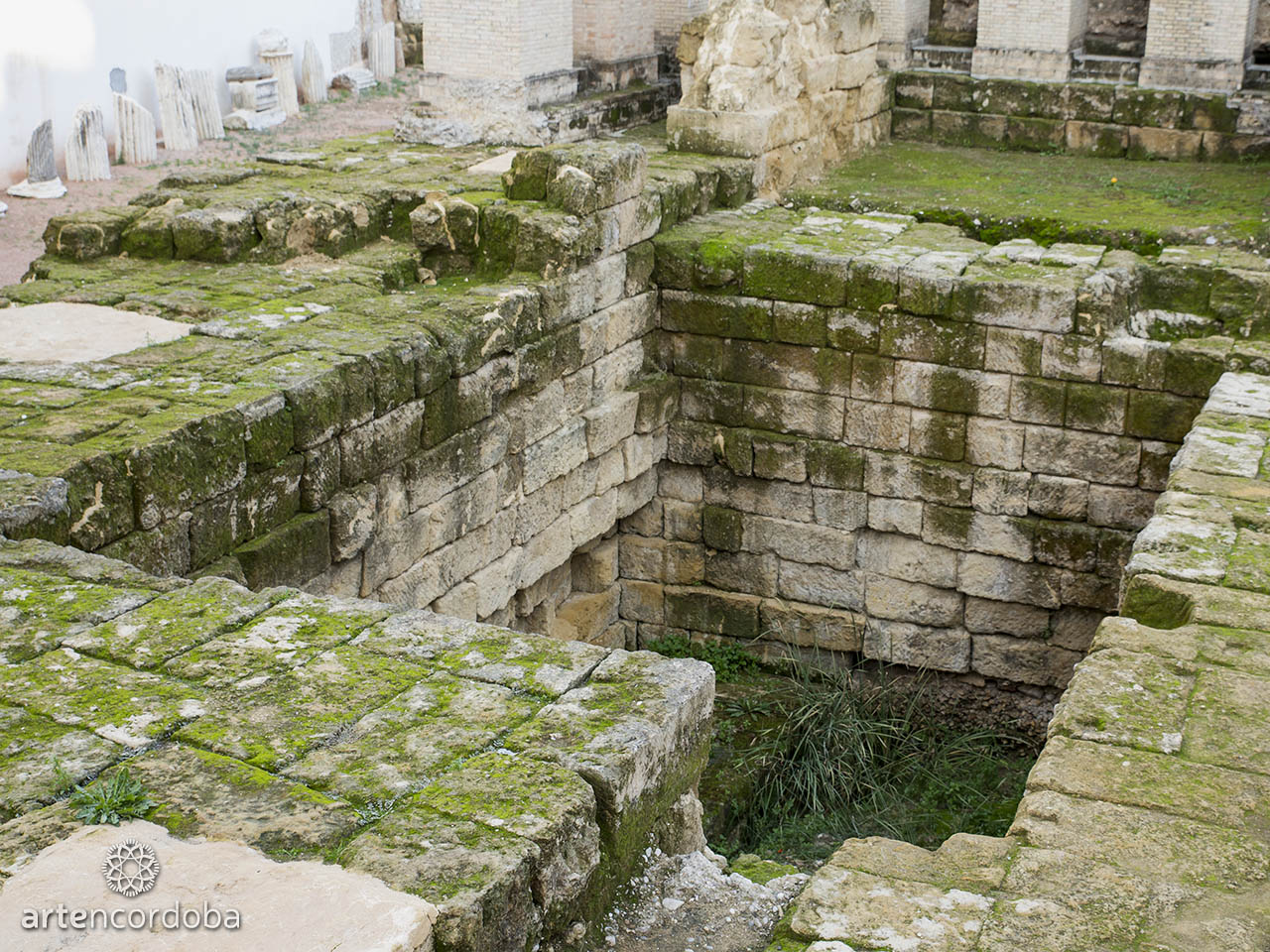
Both structures were built at different heights, taking advantage of the natural slope of the terrain at this point, which lies partially outside the city wall. A large terrace was constructed to support the temple, with the massive volume of earth contained by a system of stepped or fan-shaped buttresses known as anterides. The height difference between the temple and the circus led to the currently accepted hypothesis of an intermediate terrace that would have served as an urban connection between the two structures.
Construction and Historical Evolution
The construction of the Roman Temple began with the demolition of all previous phase structures. The project included the construction of the square and the presiding temple, as well as the modification of the surrounding urban layout and the necessary infrastructure works, including the construction of an aqueduct, the Aqua Nova Domitiana Augusta, which would supply water to this large building complex.
Chronology of the Temple
The Roman temple on Claudio Marcelo Street may have been built between the 1st and 2nd centuries A.D.
The complex began construction during the reign of Emperor Claudius (41–54 A.D.) but was not completed until the rule of Domitian (81–96 A.D.), at which time it was supplied with water. Some modifications occurred in the 2nd century A.D., likely coinciding with the relocation of the colonial forum to the area around the current Convent of Santa Ana.
Materials and Architectural Features
Various materials were used in the construction of the Roman Temple. On a base of opus caementicium were placed countless blocks of local calcarenite, while the most prominent elements, such as columns and capitals, were carved in white marble. The upper square was paved with purplish nodular limestone, also of local origin.
It is precisely the upper terrace that is best known and can be visited today, whereas we have less information about the configuration of the other two platforms or terraces, largely because they are currently beneath modern and contemporary buildings. The scant epigraphy recovered in the vicinity contrasts with the various sculptural pieces documented so far—though very incomplete, they provide important data about the decoration the complex must have featured.
The magnificent temple, whose portico columns were reconstructed by Félix Hernández, originally had six columns on its front and ten on the sides, making it one of the largest in the city by size.
Visiting the Roman Temple
If you’re wondering what to visit in Córdoba, a great option would be Roman Córdoba, by choosing one of our guided tours. This way you can learn everything about the Roman Temple. Choosing quality tourism means choosing ArtenCórdoba.
Text: Fran Peña.