





Illustrious and Pious Brotherhood and Confraternity of Our Father Jesus the Nazarene Rescued and Most Holy Mary of Bitterness.
History
Although since 1713 there have been reports of veneration of the image of Christ and records of the existence of an inconsistent brotherhood, it was not until 1941 that the confraternity was definitively founded by a group of devotees of Our Father Jesus the Nazarene Rescued. It held its first penitential procession on Holy Thursday of 1942, during the post-war period, with the consequent effort required to provide the confraternity with everything necessary to process with dignity. In 1945, the Virgin of Bitterness made her first appearance, ceasing to do so in 1960, until she was definitively reintegrated in 1968, with a new float, into the penitential procession.
Temple
Parish of Saint Mary of Grace. The church was founded in 1608 as a convent of Discalced Trinitarians, built elevated on the ground, and is accessed by two ramps. Its interior consists of a longitudinal nave richly decorated in Baroque style, as is the altarpiece carved in the same artistic style.
Curiosities
It is the only brotherhood in Córdoba where the canopy float precedes that of the Christ figure. This is due to the long lines of penitents who, in fulfillment of their promises, accompany the Rescued one, and who on more than one occasion have numbered as many as fifteen thousand people.
The Images
Most Holy Mary of Bitterness
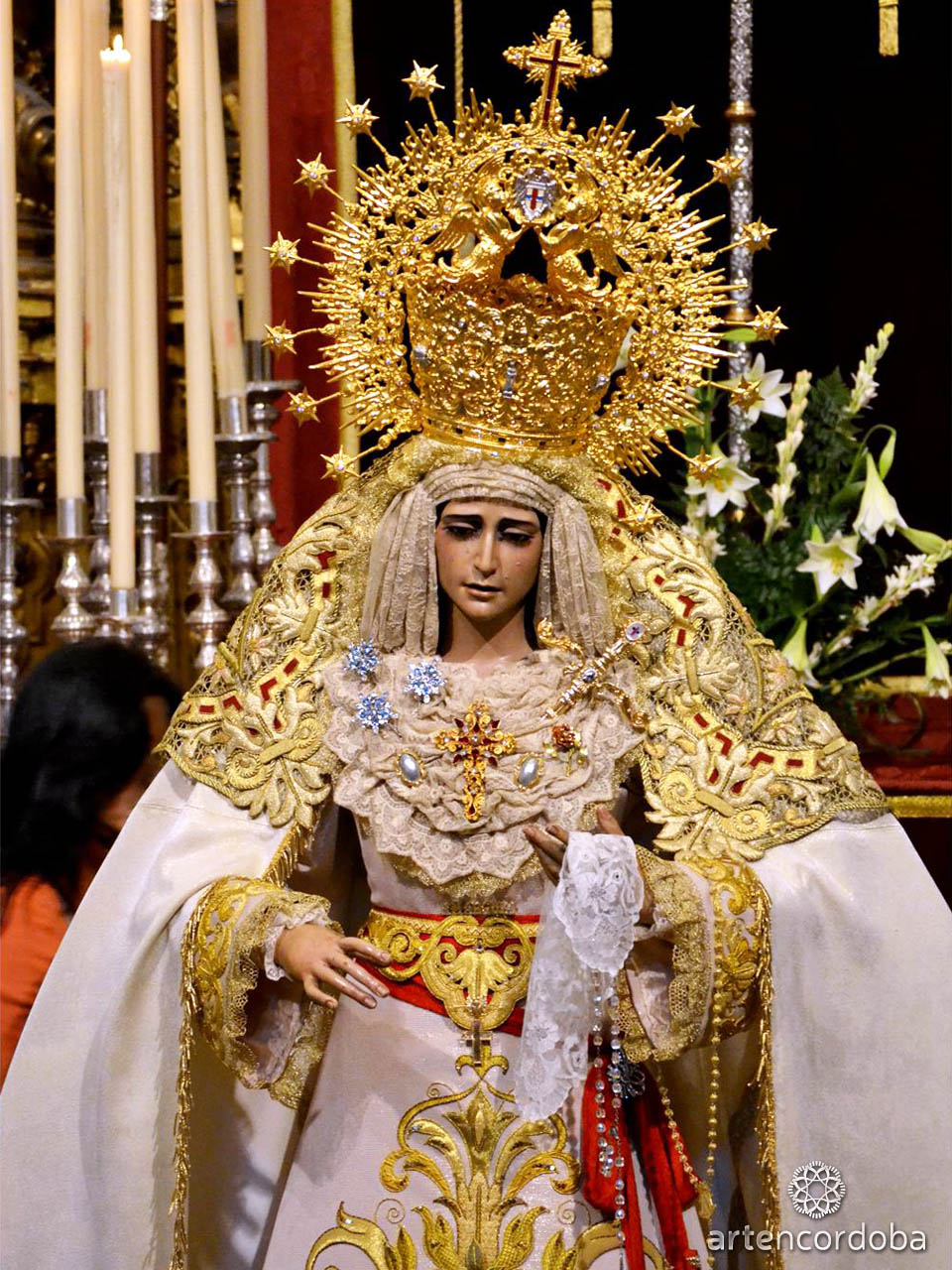
The image of the Most Holy Mary of Bitterness was carved in 1942 by the sculptor José Callejón. It had been commissioned years earlier with the purpose of accompanying Our Father Jesus Rescued in procession. In 1966, the image underwent a major remodeling by the image-maker Juan Martínez Cerrillo, resulting in flatter, less rounded features, and even changing the direction of the gaze to face forward.
Like the Nazarene, it is a dressed image with only the hands and face carved. The face is slightly rounded with a downcast gaze, featuring a subtle eyebrow curvature that accentuates the expression of sorrow. An image of great expressive power.
Our Father Jesus Rescued
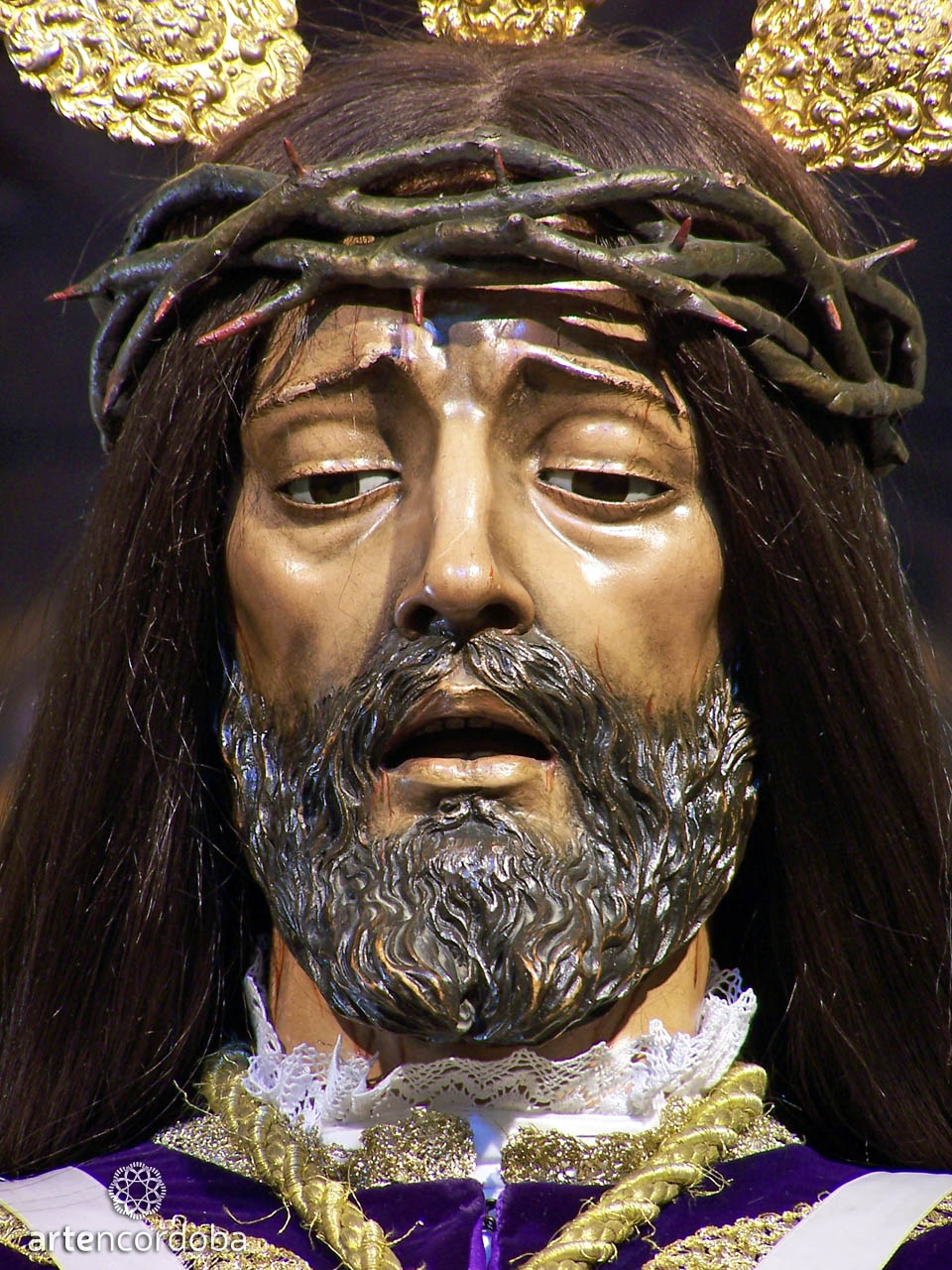
The image of Our Father Jesus Rescued was commissioned in 1713 by Friar Cristóbal de San Juan Mata to the sculptor Fernando Díaz Pacheco. It represents the moment when Jesus, after being abandoned by his disciples, is captured and bound.
It is a dressed image, although fully carved, with articulated arms and a wig. With a downcast, introspective gaze, prominent cheekbones, slightly open mouth, and a thick beard, this image conveys great drama.
Currently, the Nazarene is dressed in a purple velvet tunic embroidered in gold, with a golden thread cord at the neck and wrists, symbolizing his captivity. He wears a Trinitarian scapular on his chest and, on his head, three gilded silver rays stand out.
Nazarene Habit
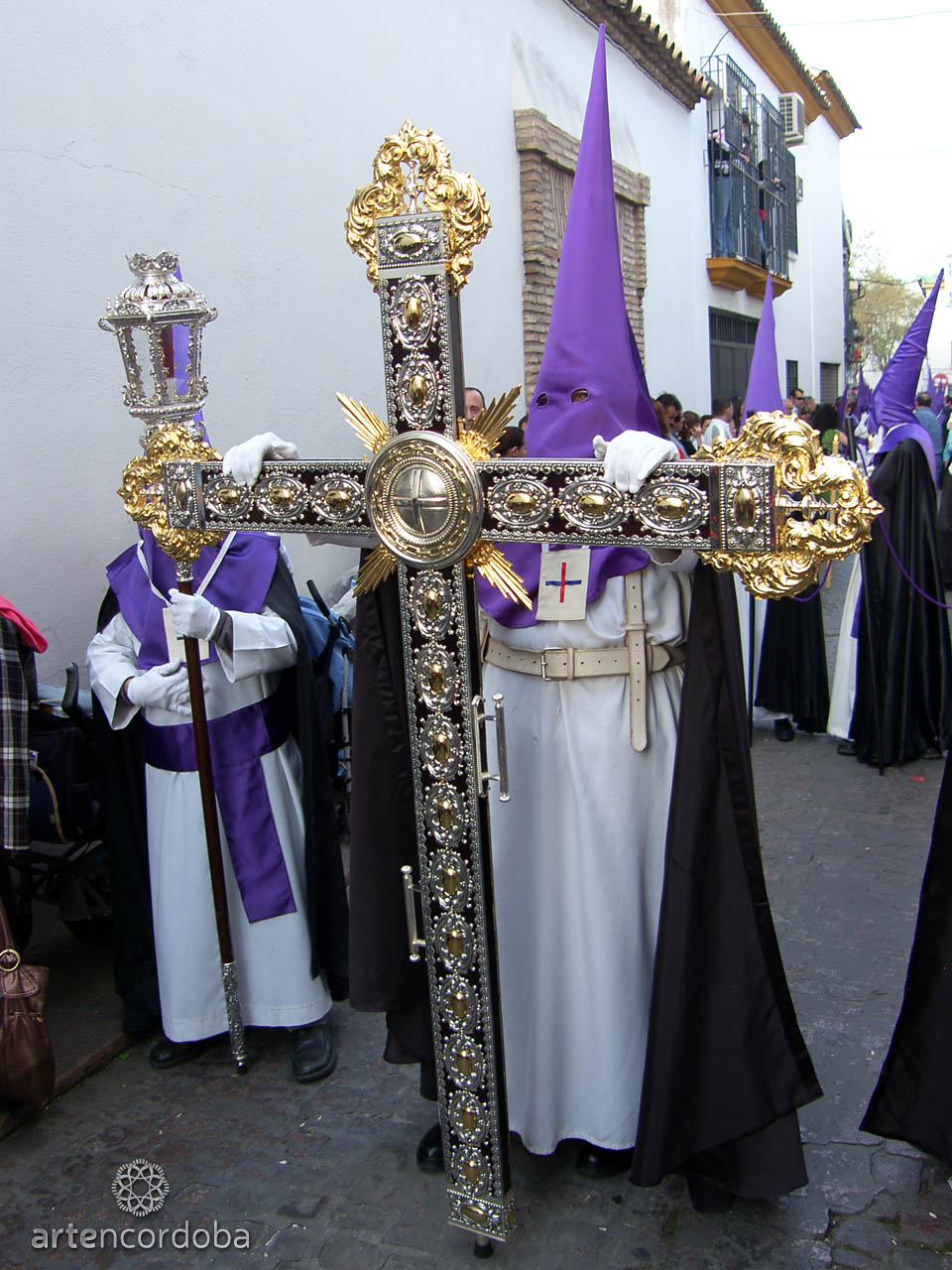
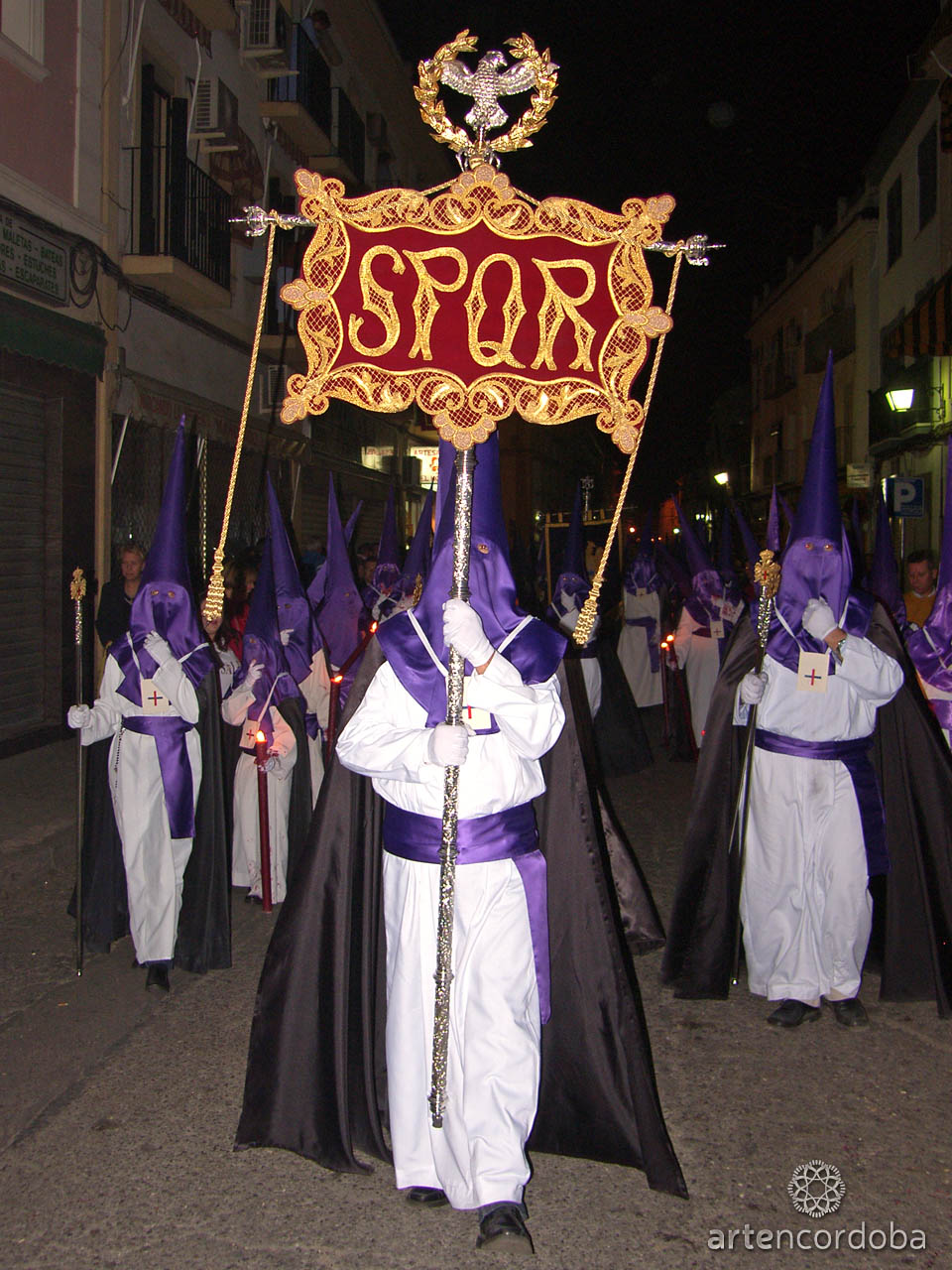
White tunic, black cape, and purple sash and face-covering with Trinitarian scapular, black shoes and socks, and white gloves. The officials wear the brotherhood emblem on one side.
Notable Insignias
- Guide Cross made of wood and chiseled metal, the work of Díaz Roncero.
- Chiseled metal trumpets and maces by Lama.
- Velvet embroidered banner of the Virgin with the old brotherhood emblem. Banner of the Lord embroidered with the current brotherhood emblem.
- Banner-standard of the Ducal House of Medinaceli, the most characteristic symbol of the brotherhood, carried since 1967 when it was donated by the Dowager Duchess of Medinaceli, honorary member. Designed by José María González del Campo and embroidered by the Adoratrices Mothers.