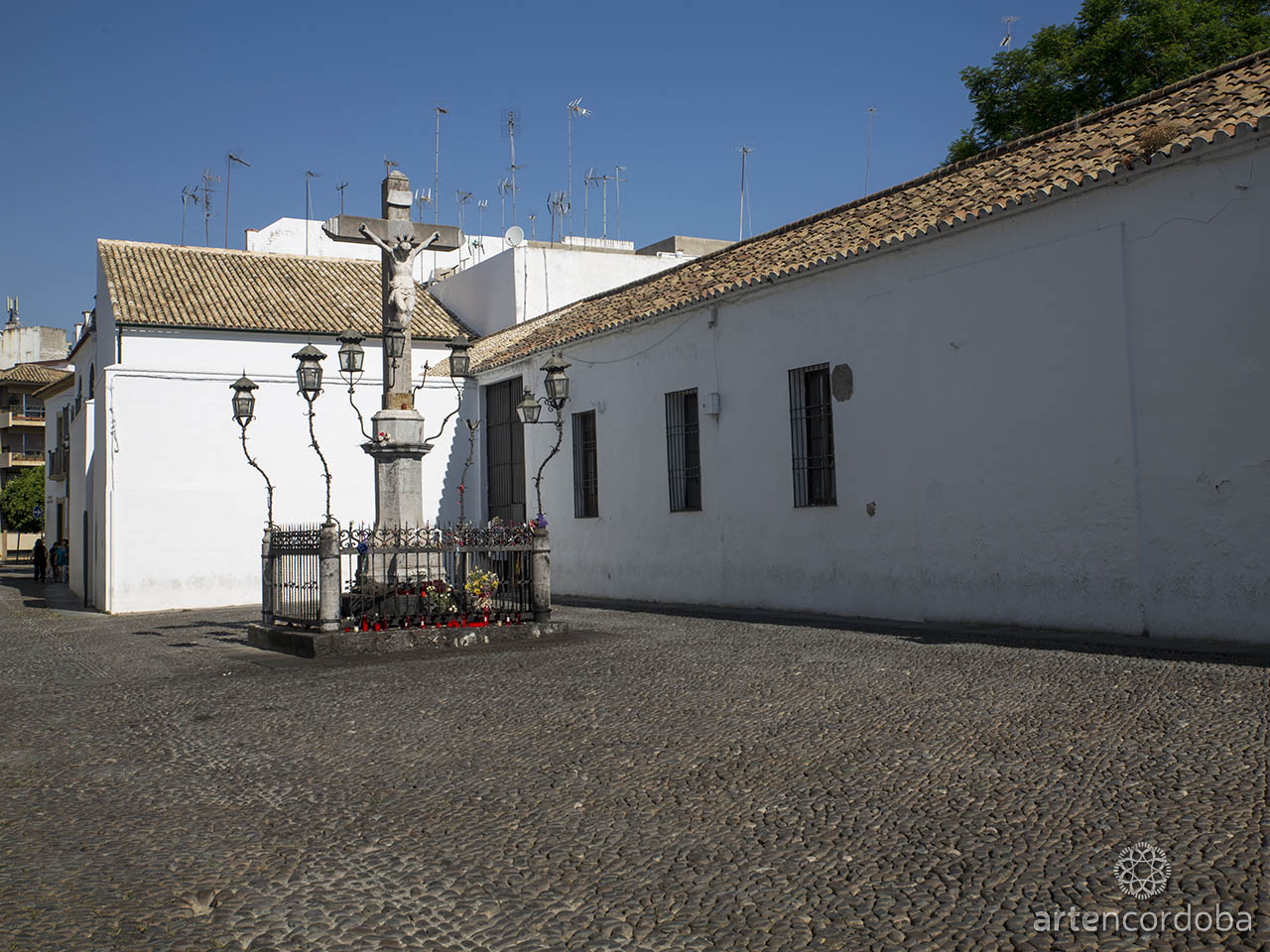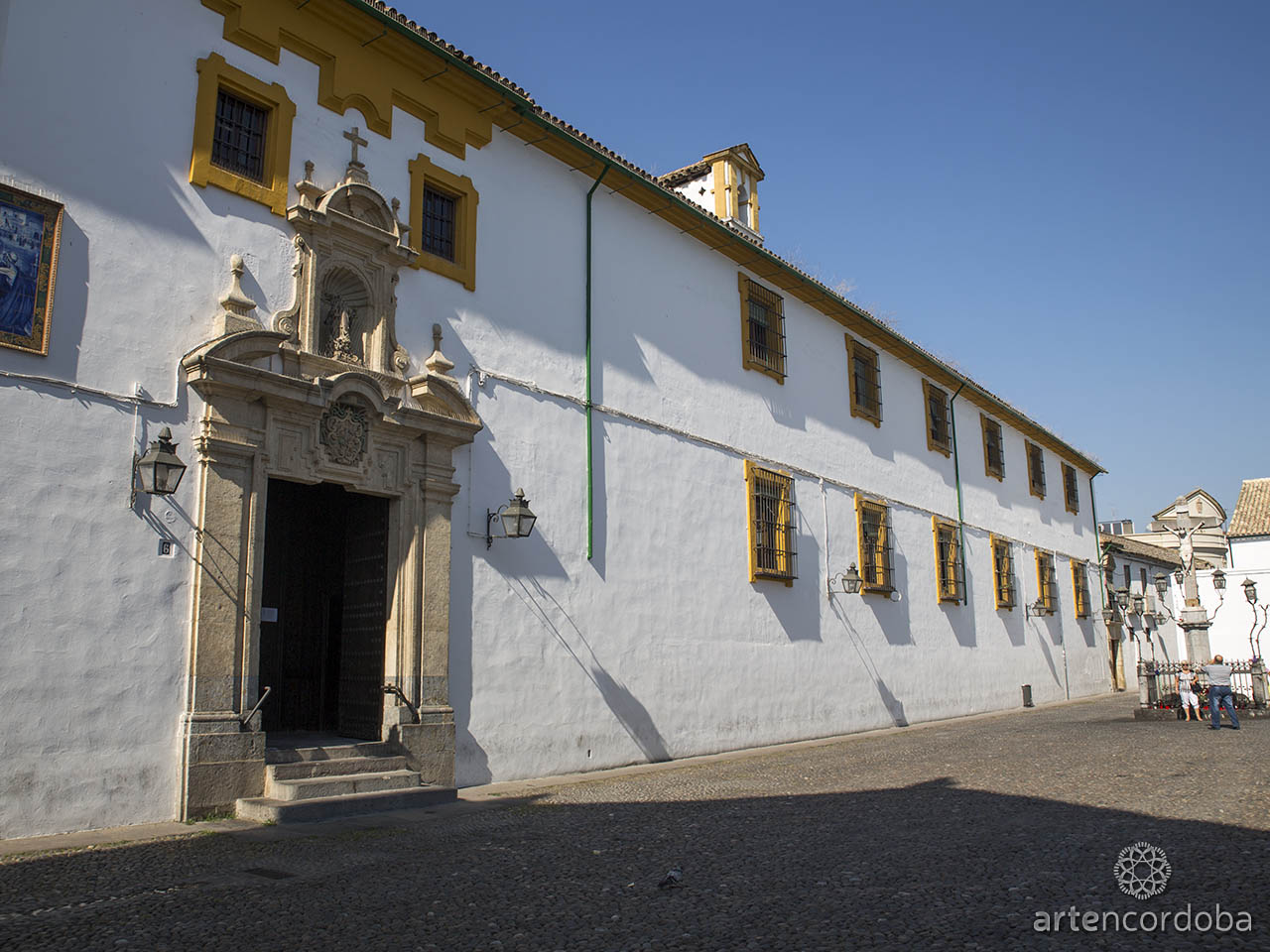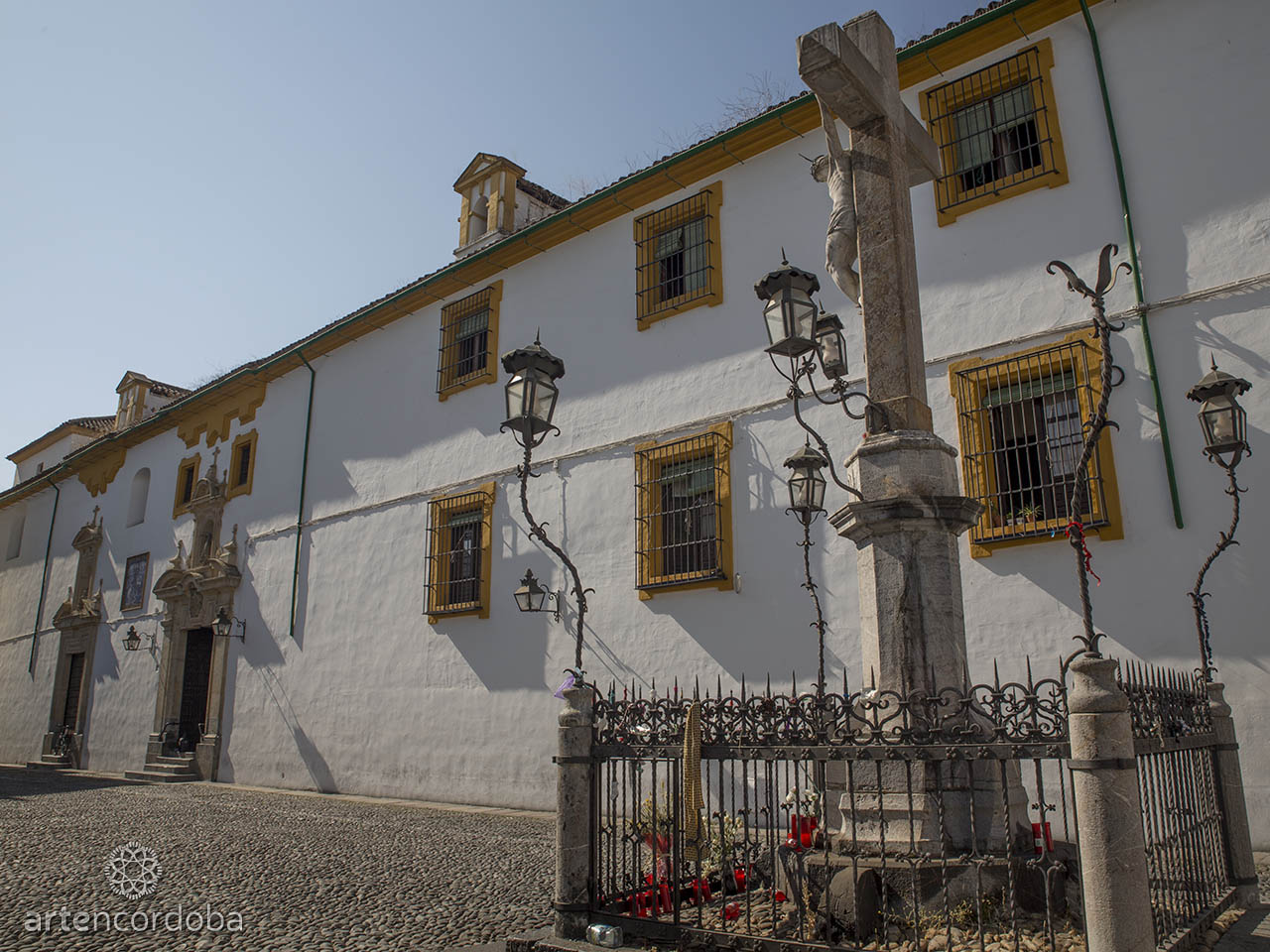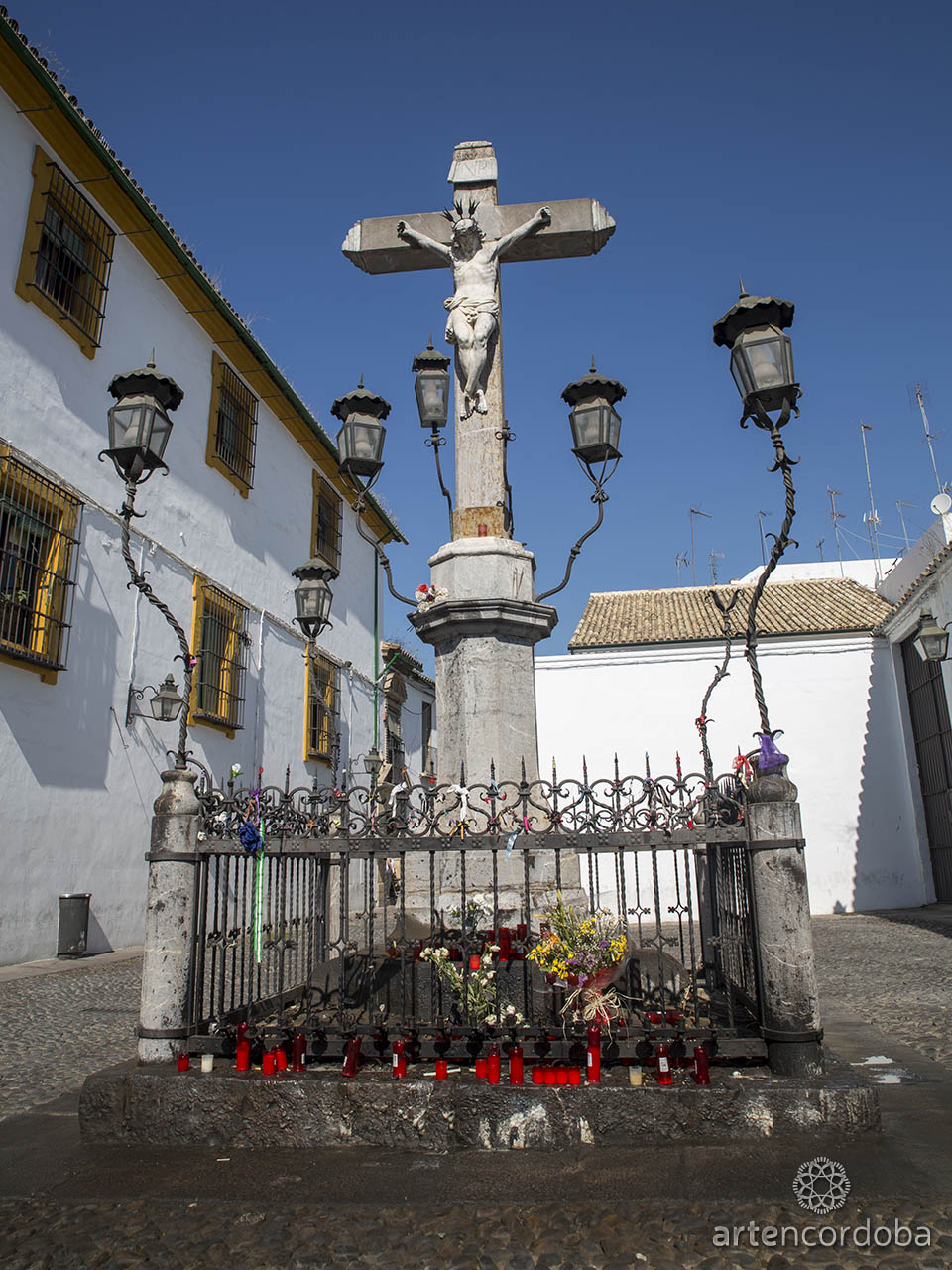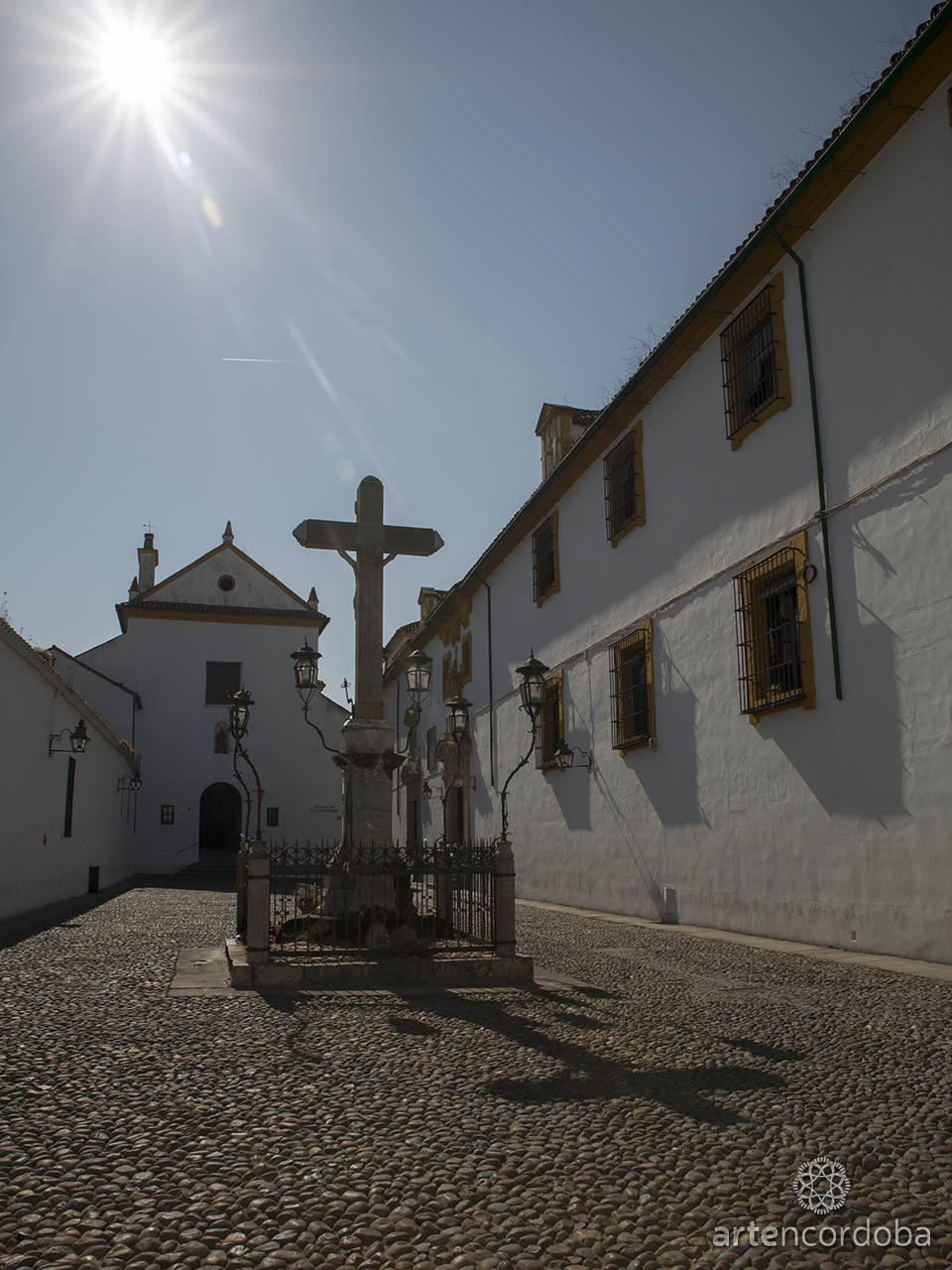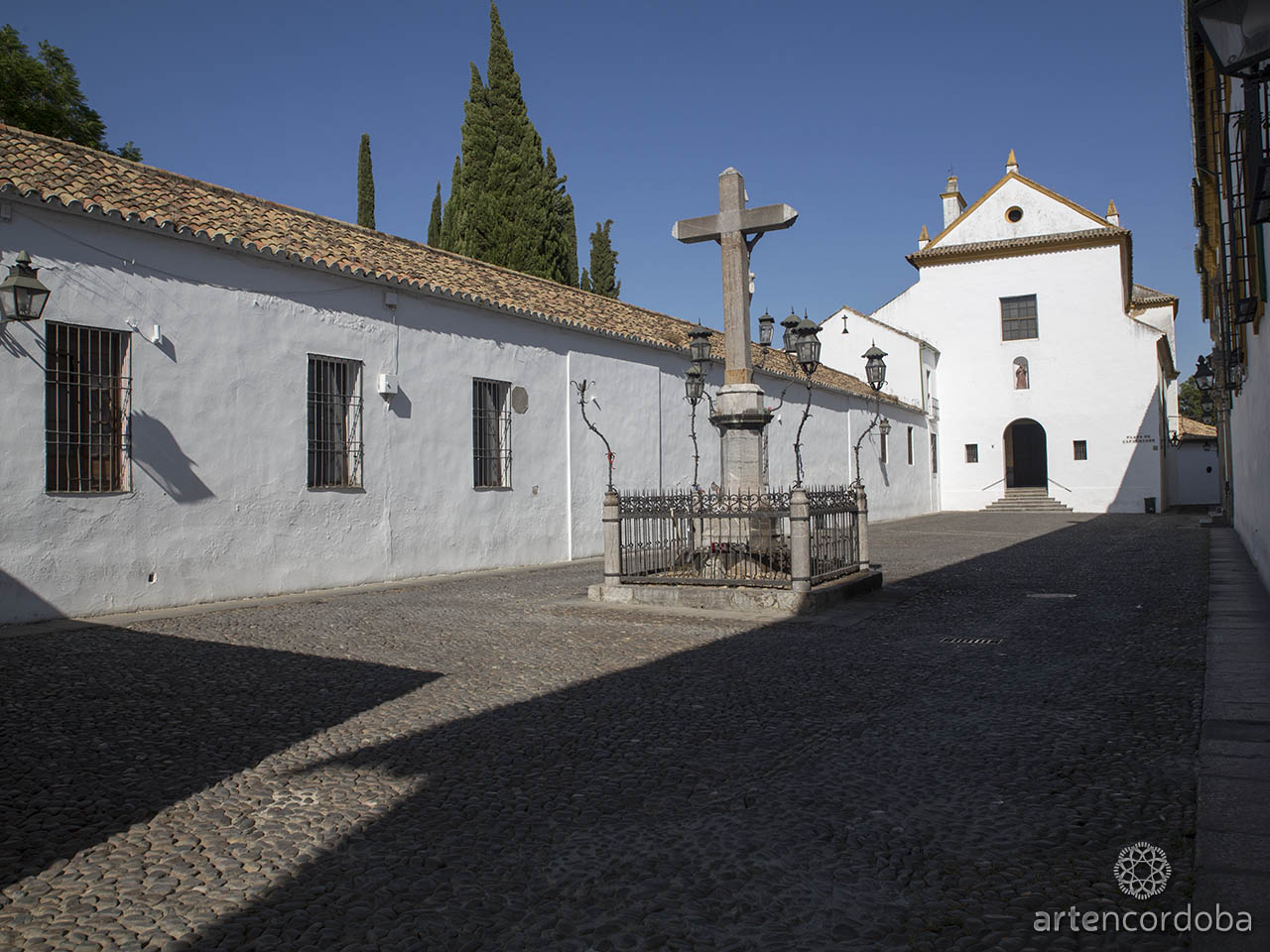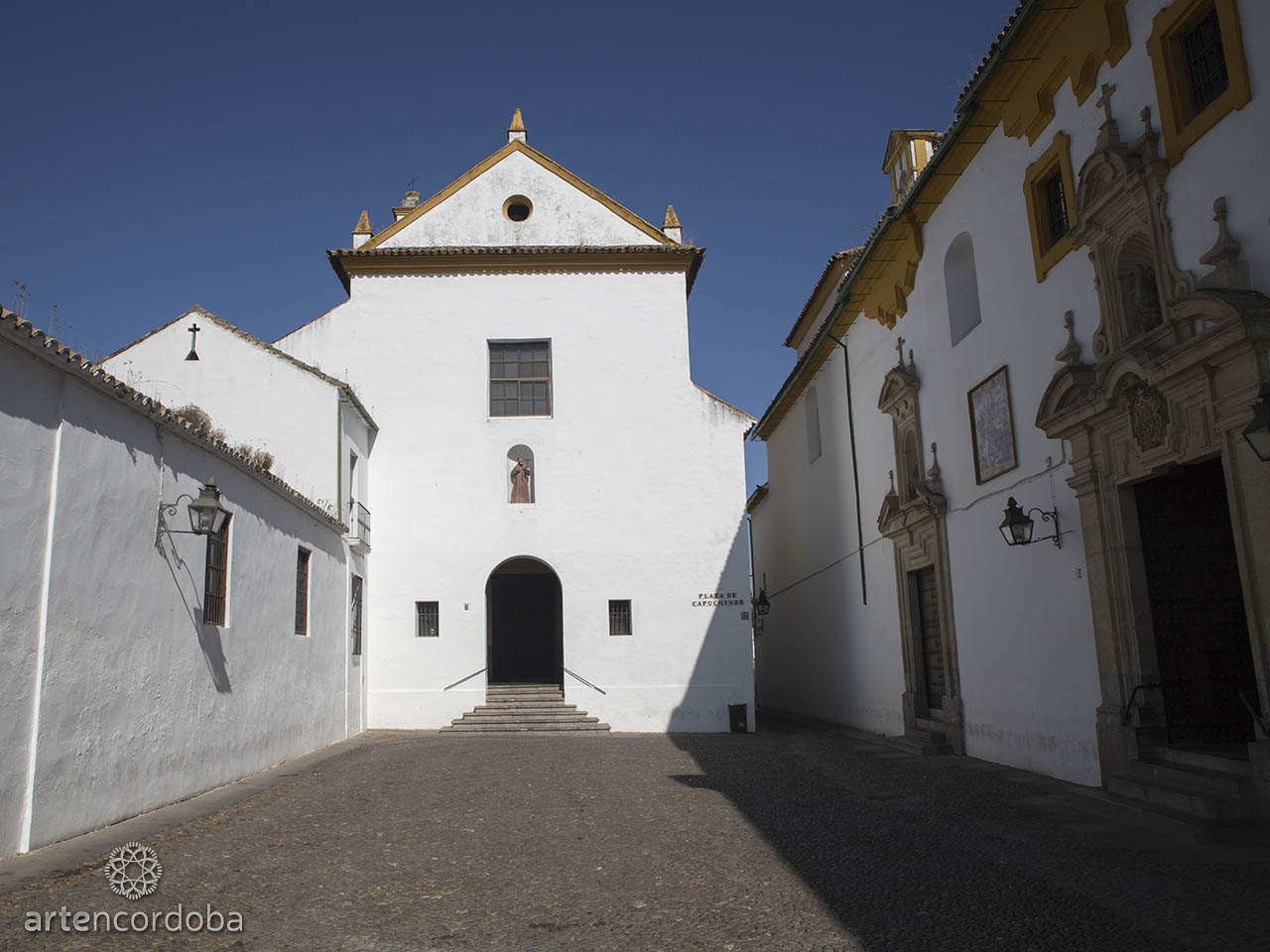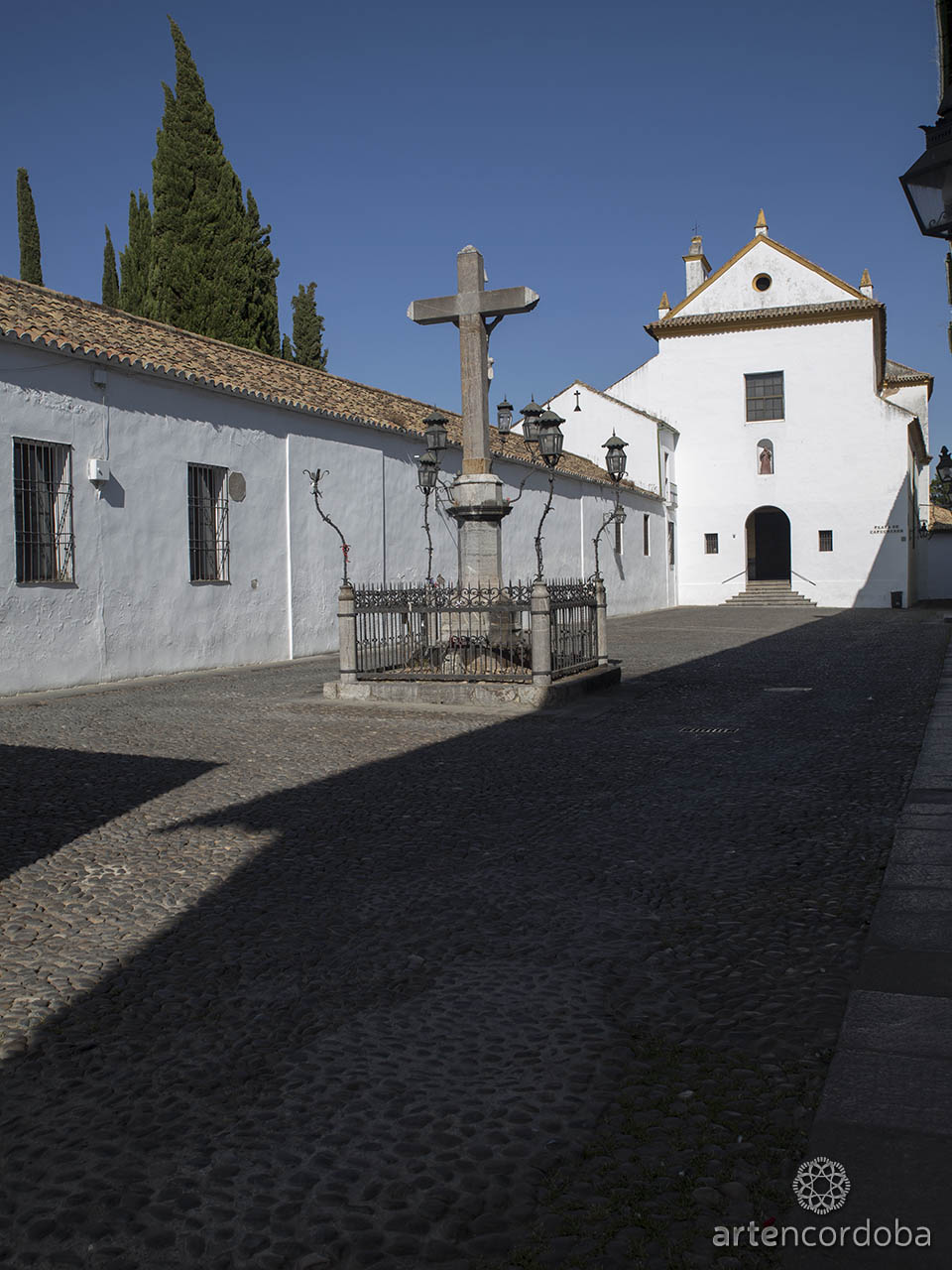






The Capuchinos Square has been called this since the early 17th century, when the original convent of Franciscan friars was founded. Rectangular in shape and almost enclosed, it is completely dominated by the white lime covering its smooth walls. The renowned architect Rafael de la Hoz once said of it, referring to its sobriety and elegance, that “never before in architecture had so much been done with so little.”
Monumental Complex of Capuchinos Square
In Capuchinos Square we find the Capuchin convent, the Church of Los Dolores, and the Christ of the Lanterns.
Capuchinos Square has two access points, east and west, either from the Cuesta del Bailío or from the Plaza de las Doblas. If we enter through the Cuesta del Bailío, our eyes are drawn to the imposing Christ of the Lanterns that presides over the square; whereas if we come in from the nearby Plaza de las Doblas, the white façade of the Church of the Capuchin Convent completely dominates the view.
The Capuchin Convent
Fray Félix de Granada purchased a house at the Puerta del Corbacho from the Marquis of Almunia in 1629, with the intention of building the Capuchin Friars’ Convent on the site. The construction was completed in 1633, with the church being built a few years later. The church had a single nave floor plan with a transept covered by a dome supported on pendentives.
The façade then featured three semicircular arches, though only the central arch remains today, above which there is a niche housing a beautiful image of Saint Francis, flanked by two small narrow rectangular openings. The ensemble is topped by a large triangular pediment as wide as the façade, pierced in the center by a small oculus.
The friars experienced several confiscations, such as the one decreed by the government of Joseph Bonaparte in 1810 and another led by General Riego in 1821. Later, with Mendizábal’s confiscation in 1835, the convent was sold and demolished, and the church came into the possession of the Mitre. During those years, many valuable items were seized, including a Holy Family by José de Ribera, El Españoleto.
The Church of Los Dolores and the Hospital
The original Hospital of Saint John and Saint Hyacinth was founded in 1596 by Fray Pedro del Castillo, in a location near the Church of Saint John of the Knights, now the Church of the Slaves of the Sacred Heart of Jesus. The hospital remained there until 1717, when Father Posadas moved it to the square in question, opposite the aforementioned Capuchin Convent.
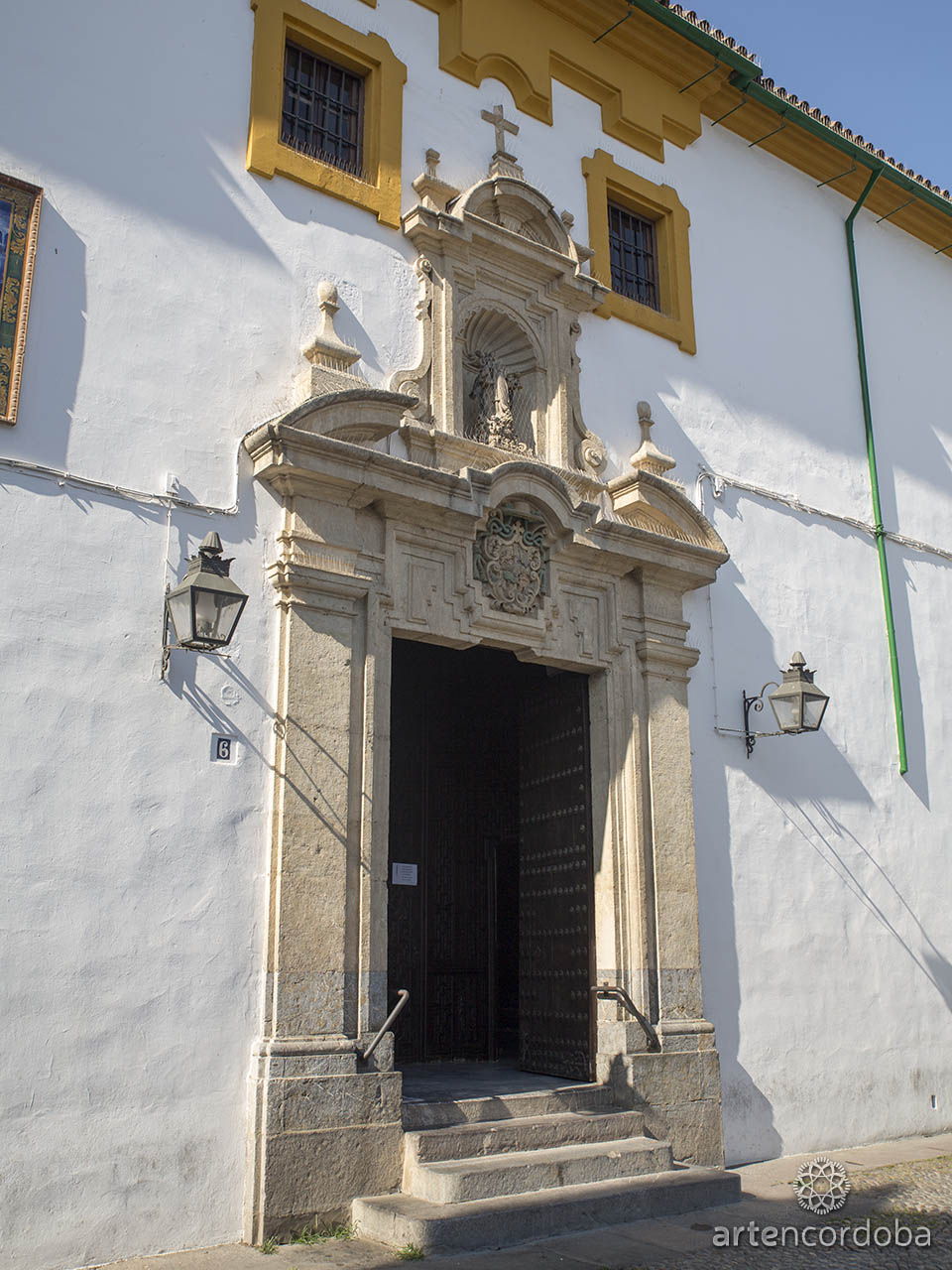
Capuchinos Square offers two access points to the church and hospital. The church portal is lintelled and framed by a split triangular pediment, within which lies a niche containing an image of the Virgin of Los Dolores.
The hospital portal, which also leads to the foot of the church, follows a similar scheme, though the pediment is curved and the niche contains an image of Saint Hyacinth, the hospital’s patron saint. Below it is the coat of arms of Bishop Marcelino Siuri, sponsor of the works.
The Church of Los Dolores features a single nave floor plan, covered by a barrel vault and a dome on pendentives at the transept. A standout element is the exceptional neoclassical-style chapel located at the head of the church, which houses the image of the Virgin of Los Dolores, popularly known as Our Lady of Córdoba, carved by sculptor Juan Prieto around 1719.
One of the altars on the gospel side is presided over by the Most Holy Christ of Clemency, co-patron of the Brotherhood of Los Dolores, created by Sevillian sculptor Amadeo Ruiz Olmos in 1939.
The Christ of the Lanterns
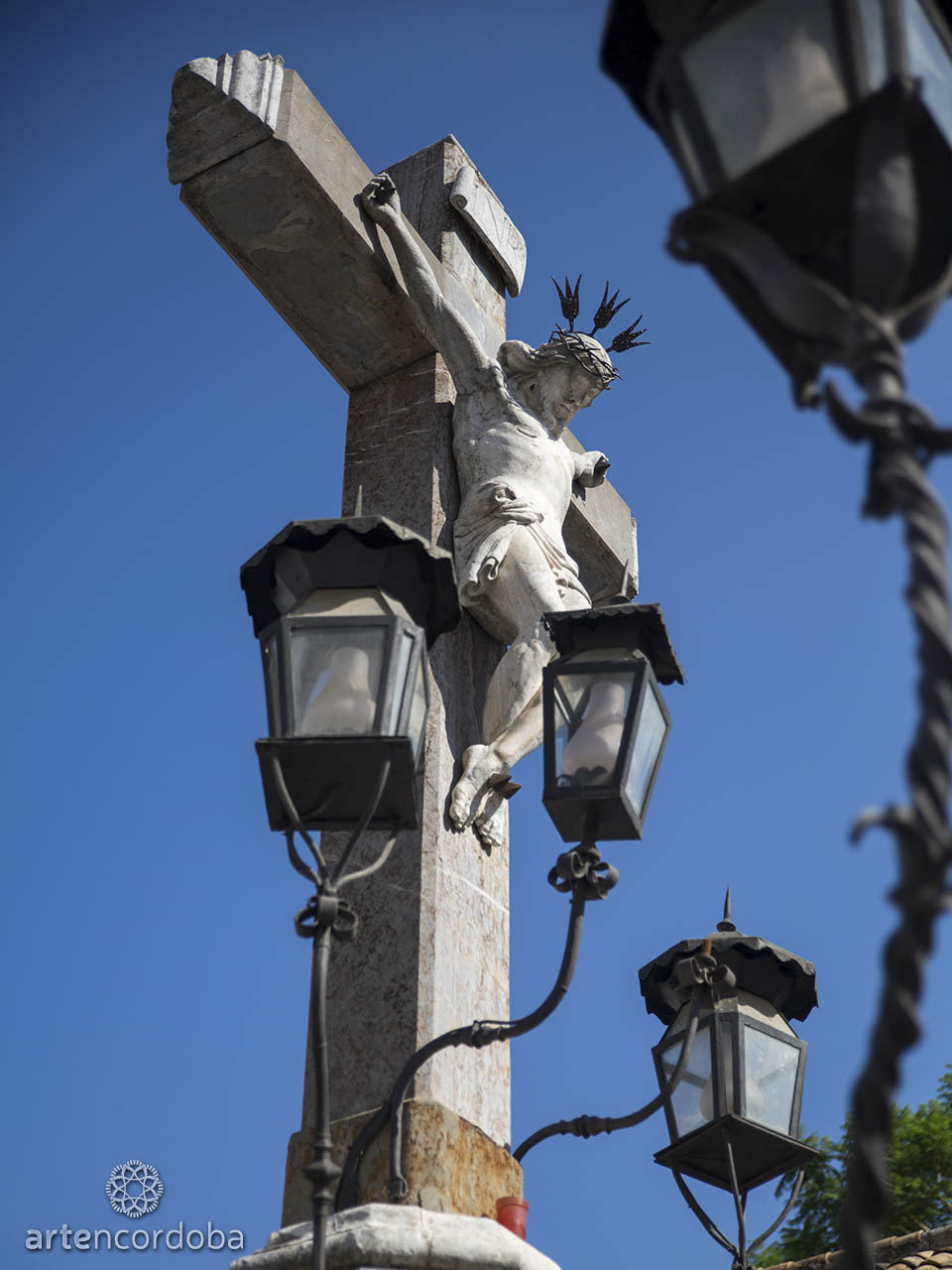
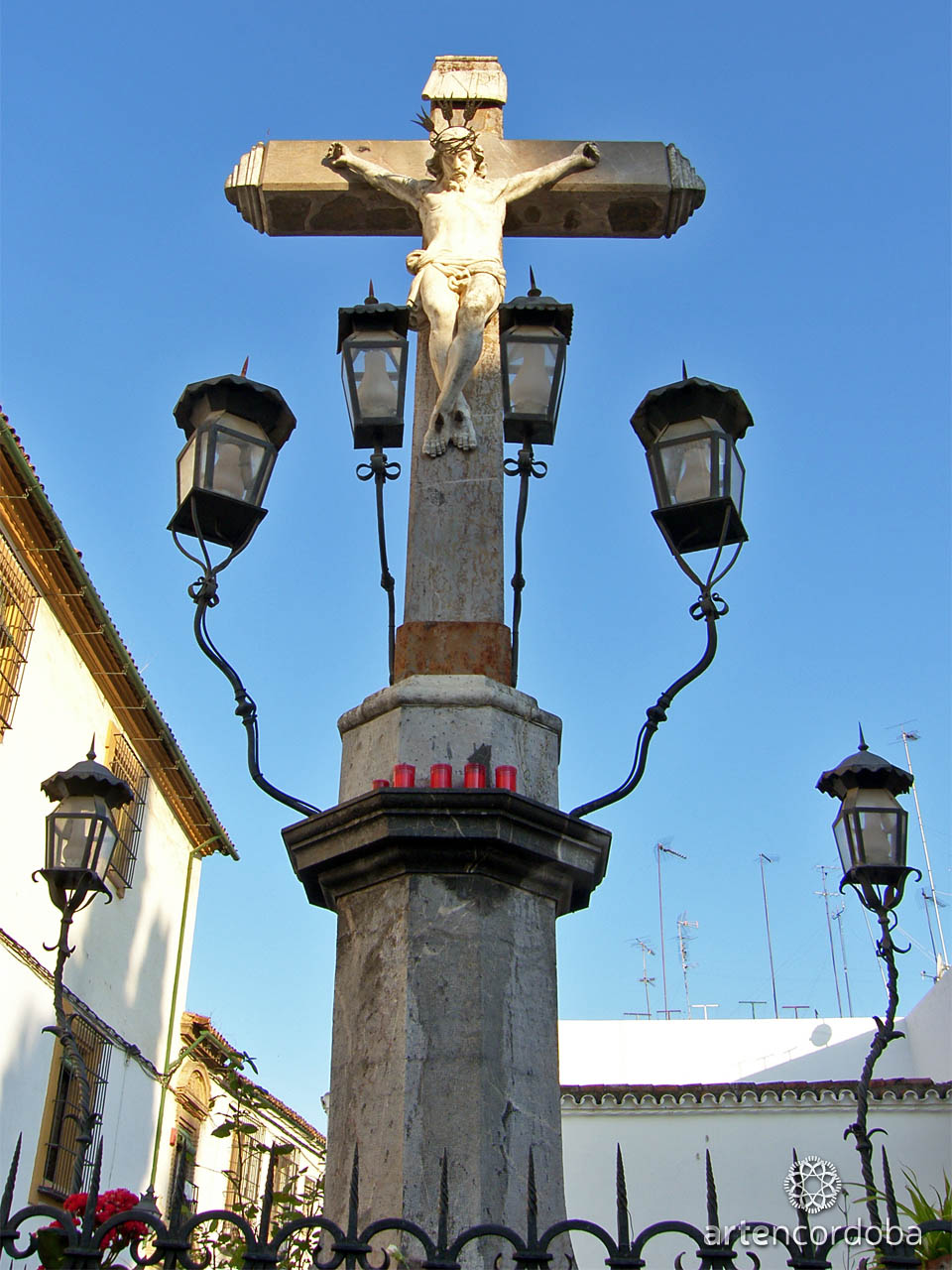
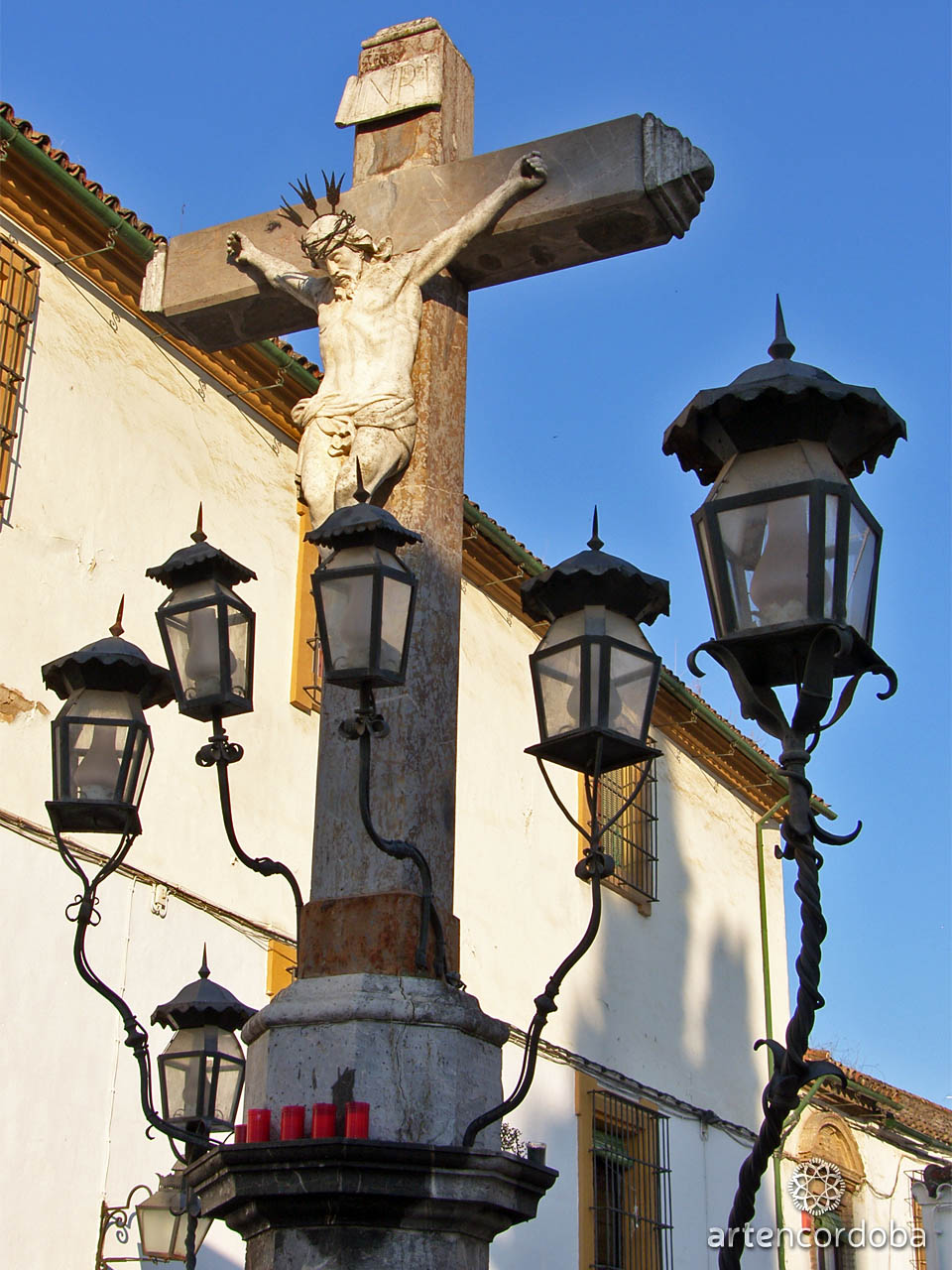
The Christ of the Lanterns has become an icon of the city of Córdoba.
Capuchinos Square is presided over by the famous Christ of the Lanterns, a work by stonemason Juan Navarro, whose true title is Christ of Atonement and Mercies, as stated on a plaque embedded in one of the convent walls:
All the faithful who devoutly pray a creed in front of this sacred image of the Most Holy Christ of Atonement and Mercies shall gain three hundred and sixty days of indulgence, granted by different prelates. Year 1794.
Carved in stone, this majestic crucifix is illuminated at night by eight elegant lanterns, lending the setting a deep sense of mysticism.
Carlos Clementson wrote:
And time has remained inert and white,
stopped in the center of a square
where a moonlit Christ among lanterns
agonizes without respite year after year.
Visiting Capuchinos Square
If you’re wondering what to do in Córdoba, we recommend visiting Capuchinos Square and its Christ of the Lanterns by booking one of our guided tours. Choose quality tourism, with qualified personnel. Don’t hesitate, ArtenCórdoba is the best option.
Text: J.A.S.C.