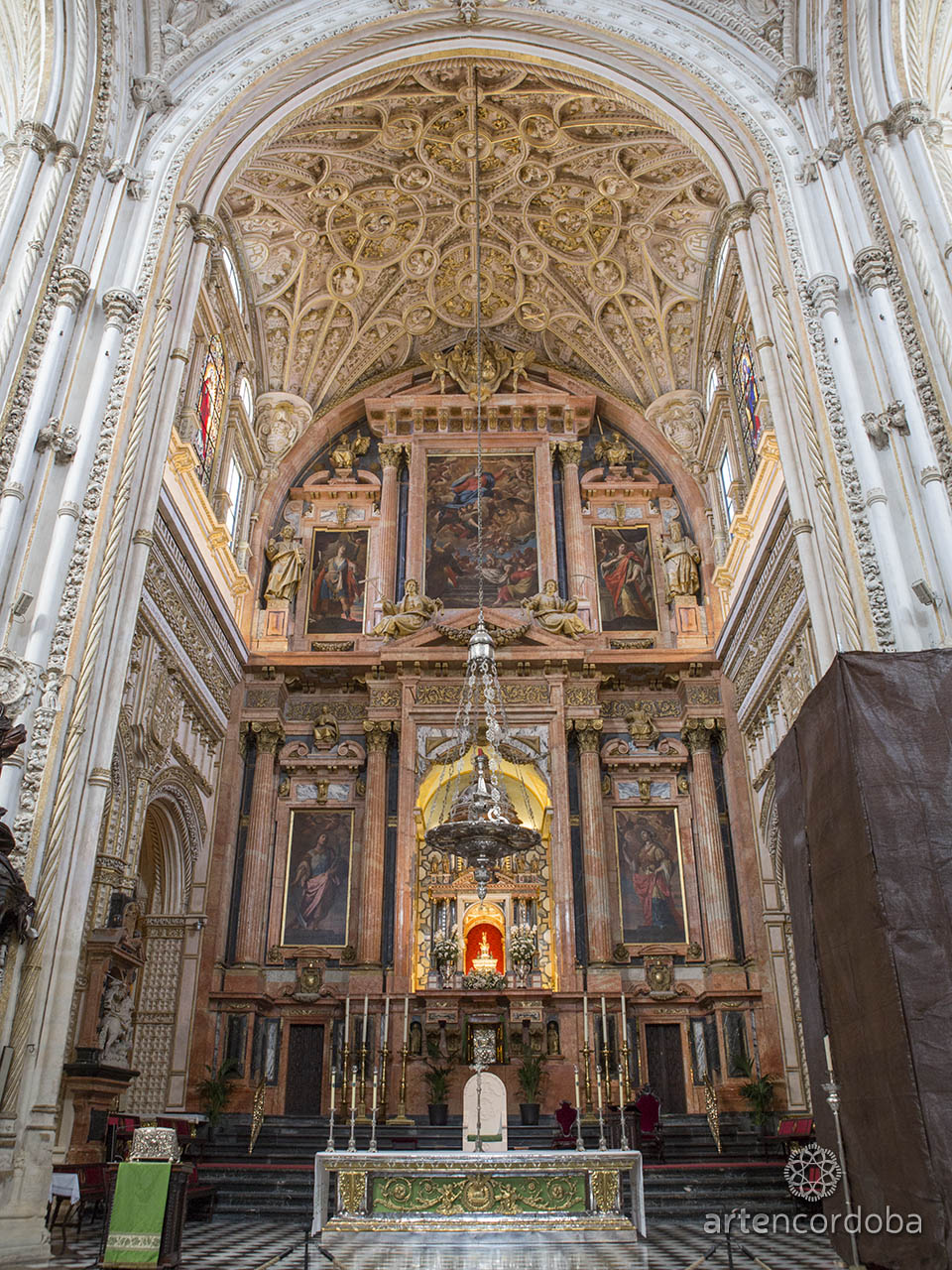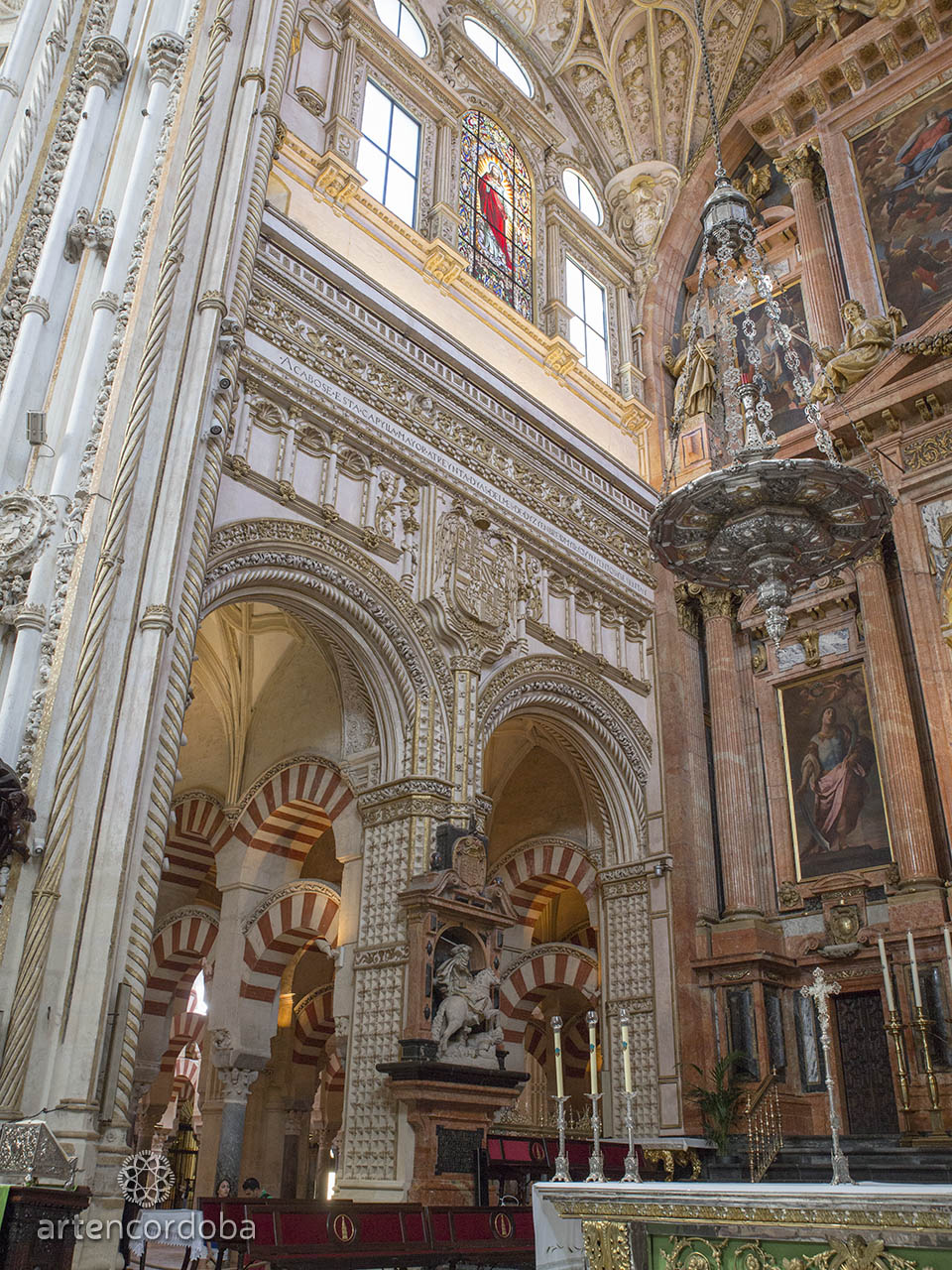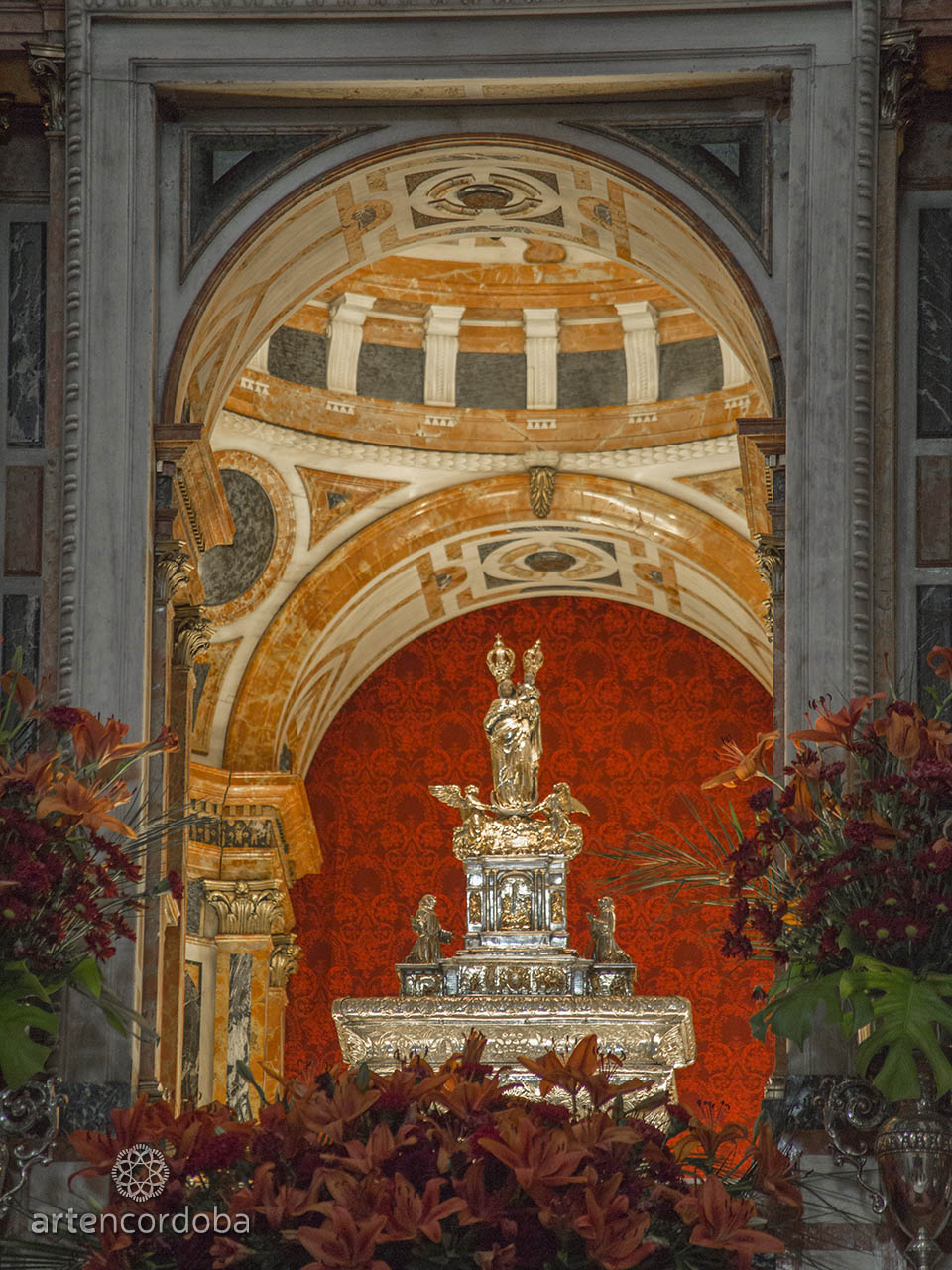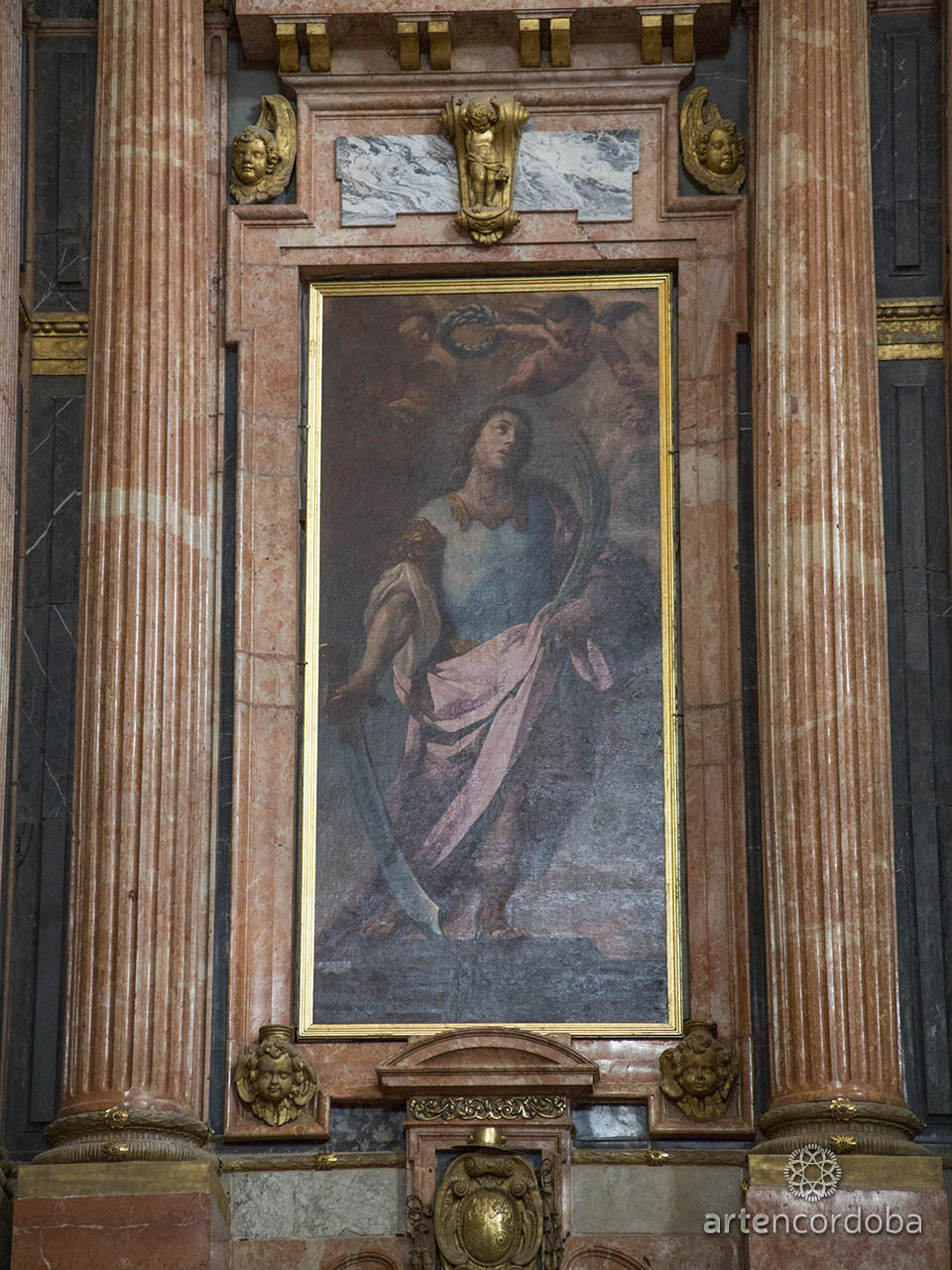






Shortly after the completion of the transept works of the Cathedral, Bishop Fray Diego de Mardones decided to commission a main altarpiece. Several masters were summoned in order to choose a project that would please the chapter; the chosen design was presented by Brother Alonso Matías from Granada, a member of the Society of Jesus. Matías was a man of notable culture, well-versed in Italian theorists such as Alberti, Vitruvius, Palladio, and Vignola himself.
Brother Matías’ project was characterized by the use of various types of marble and bronze, mainly for economic reasons. Córdoba had and still has numerous marble quarries, such as those in Cabra, Luque, or Carcabuey, which have been used since ancient times in countless constructions throughout the city. For the extraction of the different marbles, the Egabrense Luís González Bailén was hired.
The Main Altar of the Cathedral
Work on the Main Altar began in 1618, but numerous issues with the Father General of the Society led to the subsequent transfer of Brother Matías to another city in August 1625. From Montilla, Matías wrote to the chapter proposing how to continue the work on the altarpiece in his absence, recommending that Luís González Bailén remain in charge of the project. In June 1627, Juan de Aranda Salazar was appointed master of the altarpiece. He had already been working on it since Brother Matías’ departure, and under his direction, the stonework was completed in May 1629. The beautiful ensemble was completed in 1653 with the addition of the Eucharistic tabernacle.
The Main Altar of the Cathedral has often been compared to the one made by Juan de Herrera for the church of the Monastery of San Lorenzo de El Escorial. In fact, both are made of marble and are presided over by a large monstrance.
Architectural Structure
Brother Matías designed a large base, above which he projected a giant order of four columns dividing the first section into three panels. Above these, he created a broken entablature decorated with vegetal motifs in bronze and matched its height to the entablature made by Hernán Ruiz I, which spanned the entire apse. In this way, a spacious attic was formed, similar in size to the first section, though only in the central panel.
Paintings of the Altarpiece
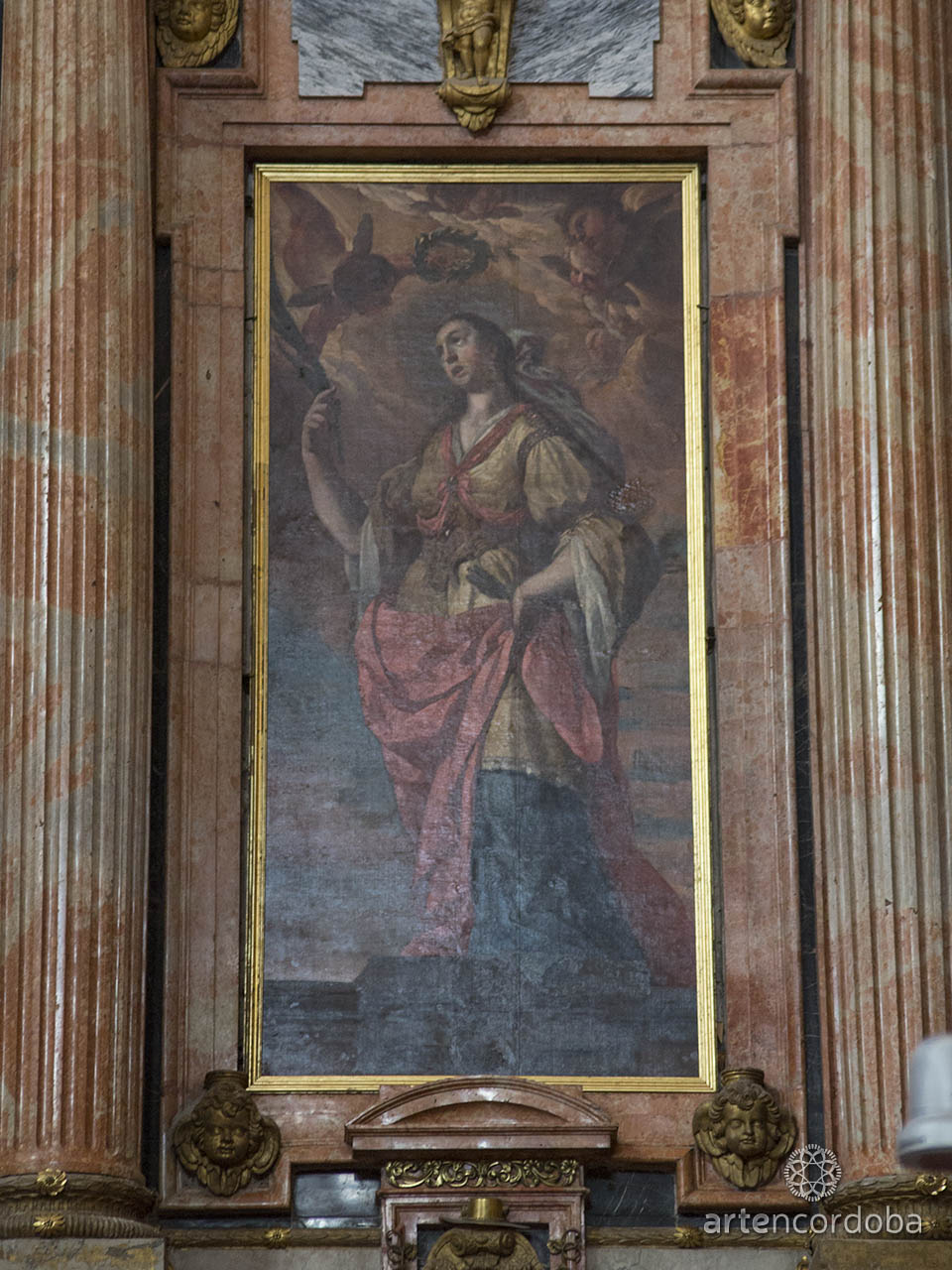
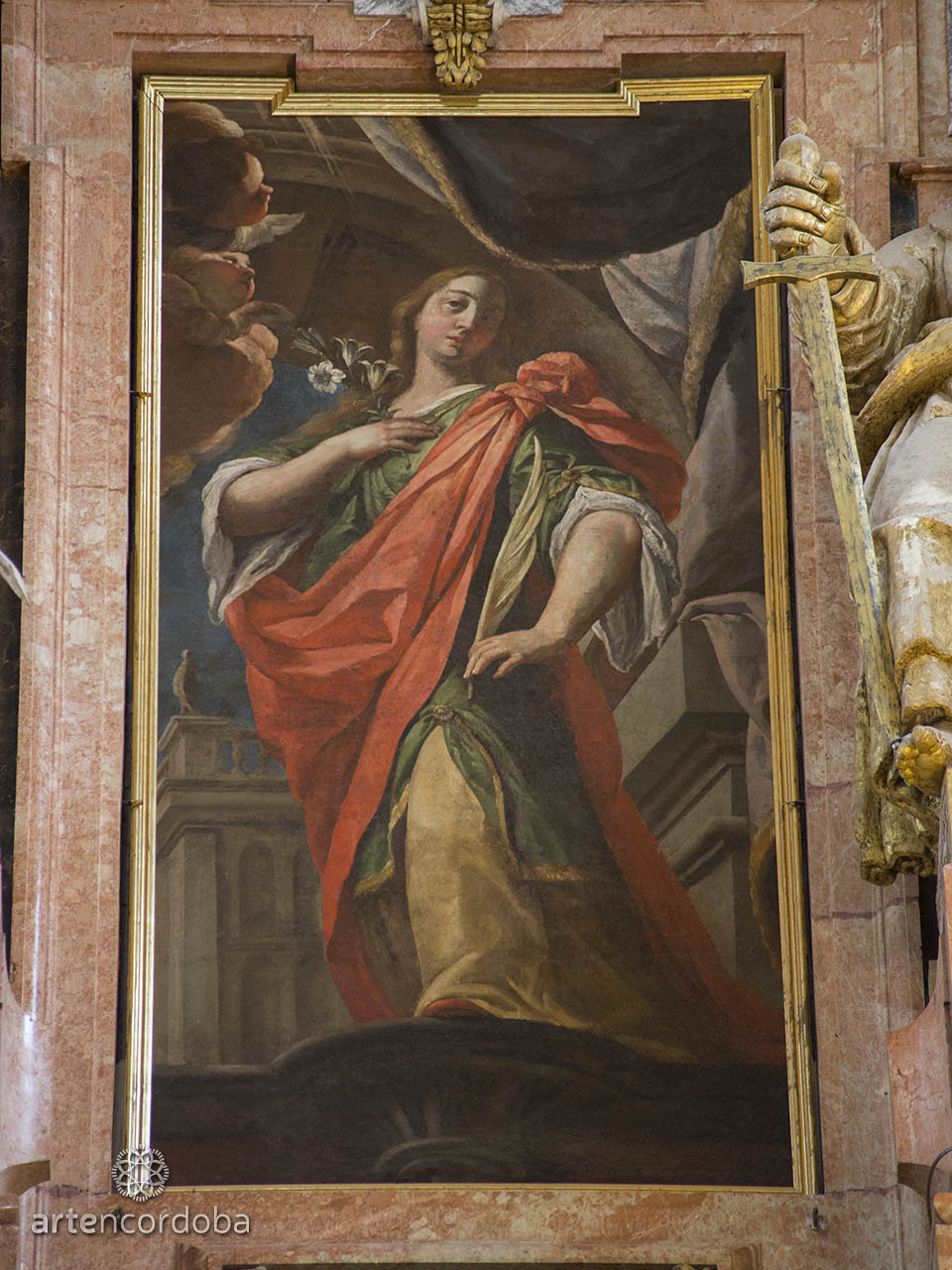
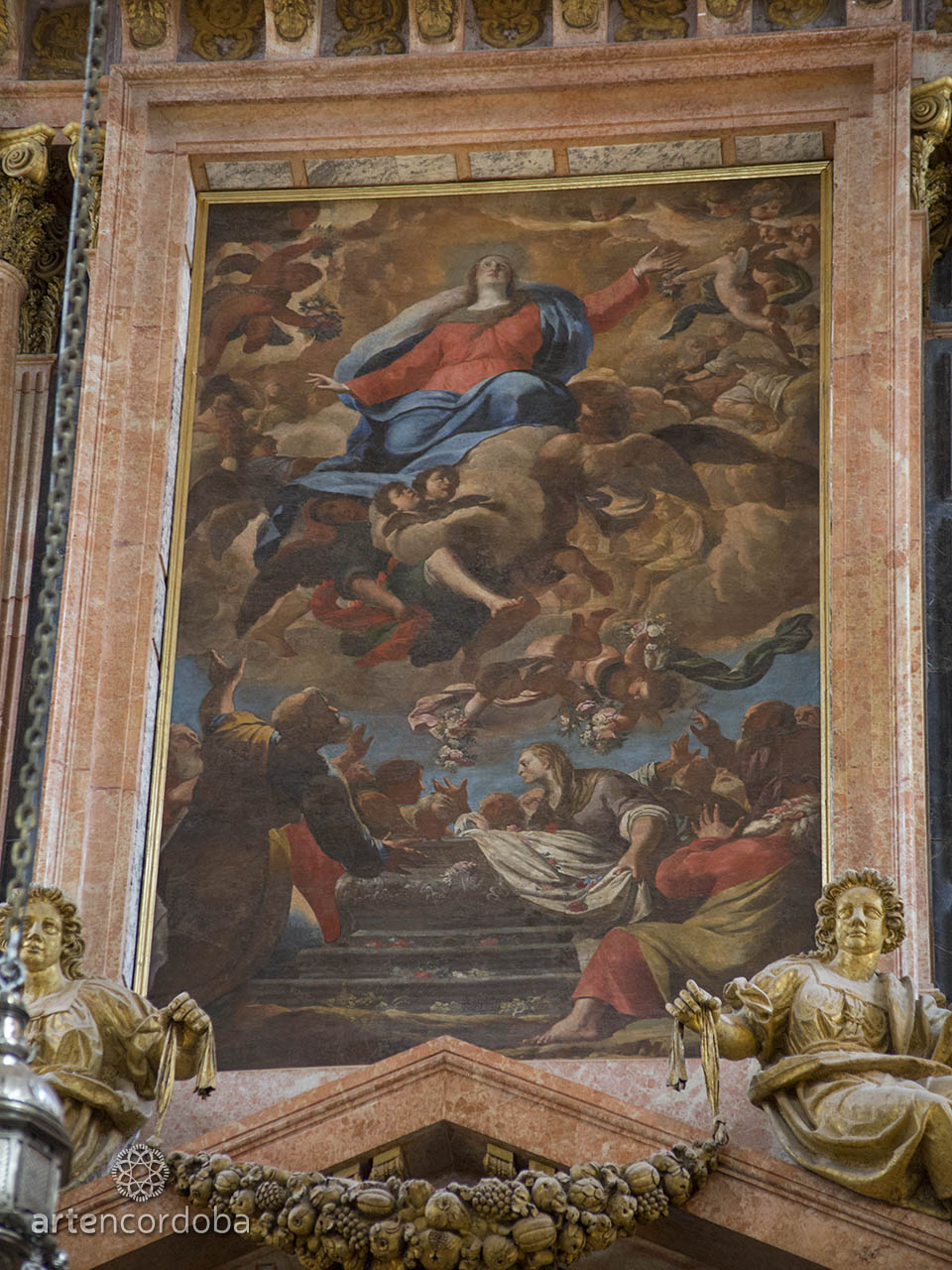
The original paintings were created by Cristóbal Vela Cobos but were replaced in 1713 by the current ones, the work of Acisclo Antonio Palomino, a native of Bujalance and a more prestigious and skilled artist. The chapter once said of the originals: “… by a humble hand that serves more as a smudge than an embellishment.” The current paintings comprise a total of five canvases, four of which occupy the side panels of the first section and attic; they depict four Cordoban martyrs, two from the Roman period, “Saint Acisclus” and “Saint Victoria“, the patron saints of Córdoba, and two from the Muslim period, “Saint Pelagius” and “Saint Flora“. The remaining canvas crowns the ensemble and represents “The Assumption of the Virgin“, who at the time was already the patroness of the Cathedral.
The Monstrance or Tabernacle
The sculptures located at the ends of the attic of the Main Altar, above the aforementioned giant order columns, were made by the sculptor Pedro Fraile de Guevara and represent the pillars of the Church, “Saint Peter” and “Saint Paul“.
We conclude this brief study with what is undoubtedly the centerpiece of the Main Altar, the Monstrance or Tabernacle. It is a later work, created around 1653 by Sebastián Vidal following designs by Alonso Matías. It is divided into two sections: the first has a square floor plan, the second a circular one, topped with a dome and lantern. It is believed, as mentioned at the beginning of the analysis, that Matías may have been inspired by the one made by Juan de Herrera for San Lorenzo de El Escorial years earlier.
Visit the Mosque-Cathedral
If you are unsure about what to do in Córdoba, we recommend visiting the Mosque-Cathedral by booking one of our guided tours. There, we dedicate a special section to the Main Altar. Choose to enjoy quality tourism with qualified personnel — don’t hesitate, ArtenCórdoba is the best option.
Text: J.A.S.C.