





The purpose of this section is to analyze those monuments and places of interest that, while not as significant as those previously mentioned, may still be of great interest to tourists. With this in mind, and as could not be otherwise, we begin our tour with the well-known “Roman Bridge“.
Origin and chronology of the Roman Bridge
We say it is known as the Roman Bridge because, as Miguel Ángel Ortí Belmonte explains, from the Roman era, only the layout of its lines and the foundations remain.
Construction during the Roman period
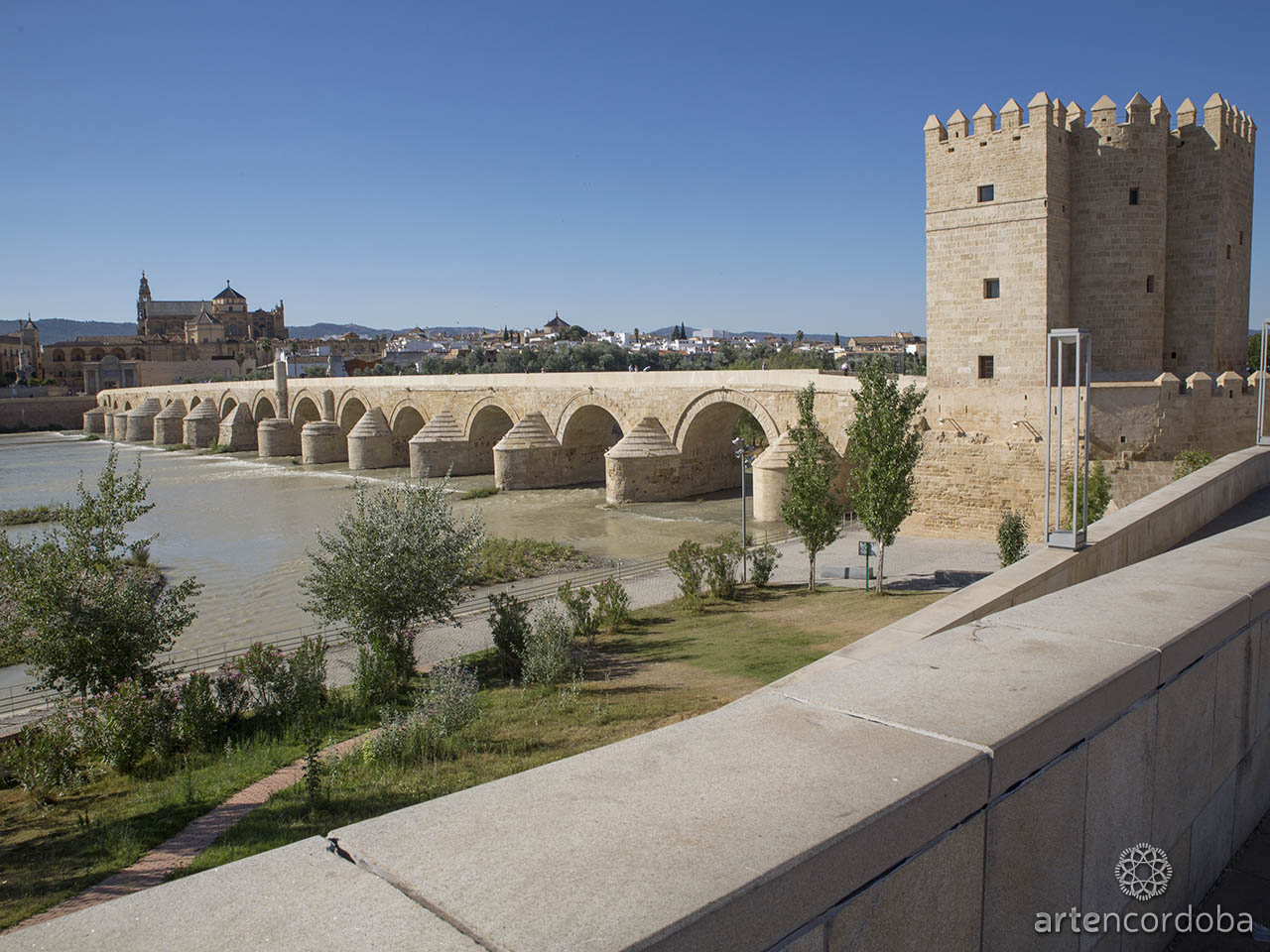
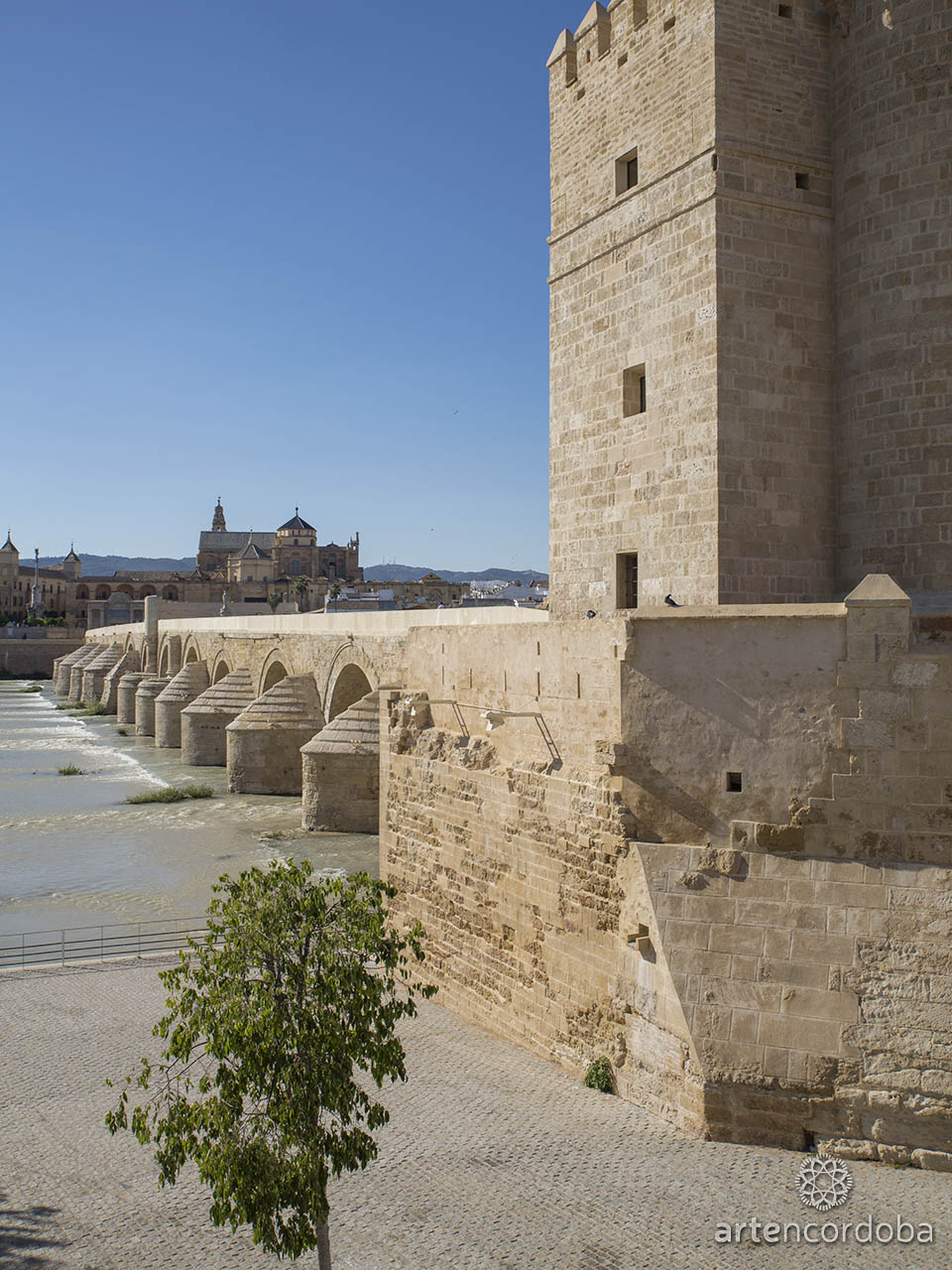
The Roman bridge was built in the lowest part of the bend of the Guadalquivir River.
Aulus Hirtius, captain and historian of Caesar’s war against the sons of Pompey—in which our city supported the latter—narrated the episode of Caesar’s entry into the city: “Having arrived, Caesar… had large baskets filled with stones thrown in, upon which a bridge was built… and the army crossed it three times”. Based on the idea that Caesar had to build a temporary bridge to cross the river and enter the city, it is reasonable to think there was no bridge at the time and that the one in question was likely built years later, during the reign of Emperor Augustus, when our city was granted the rank of Colonia Patricia.
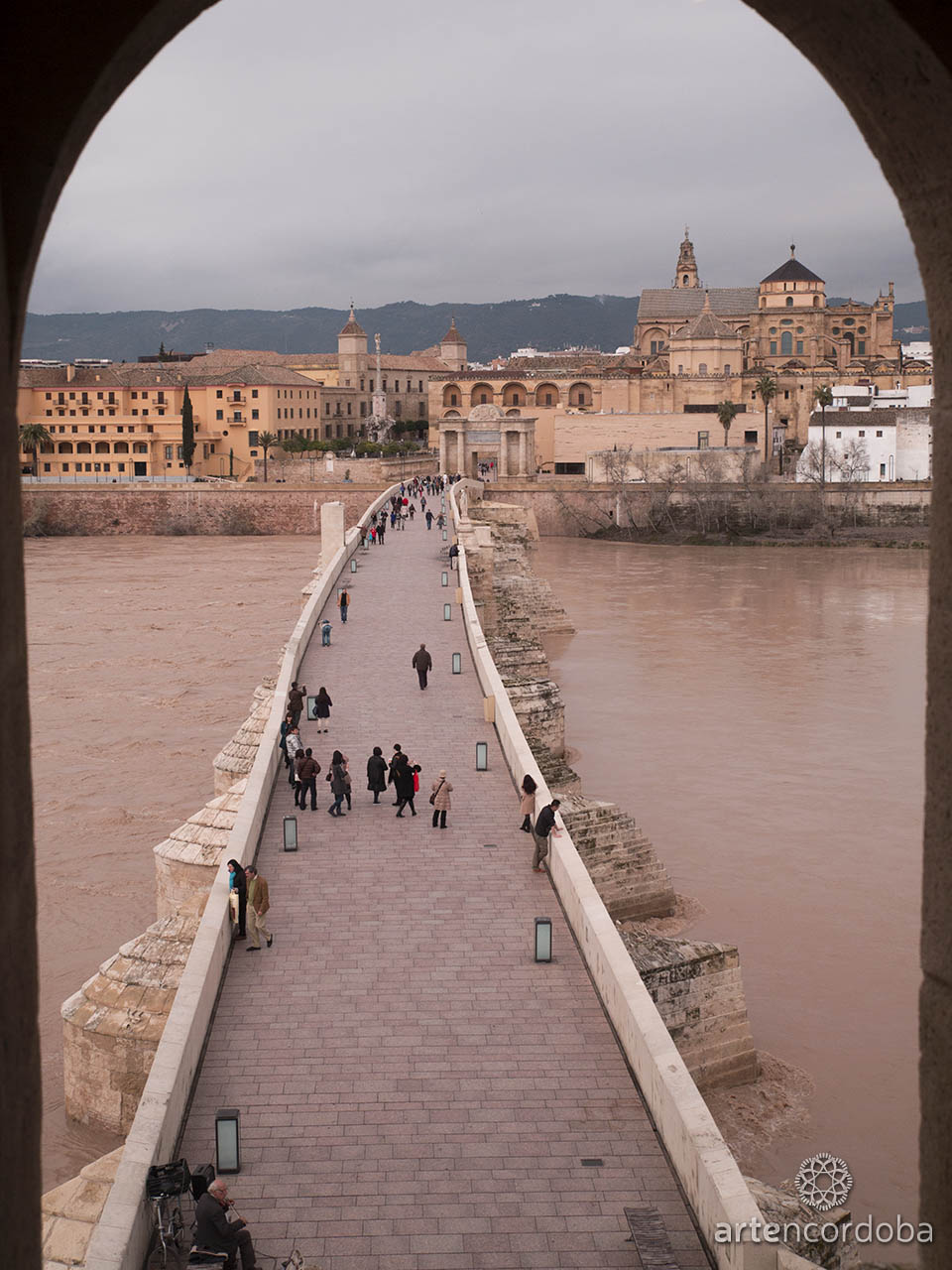
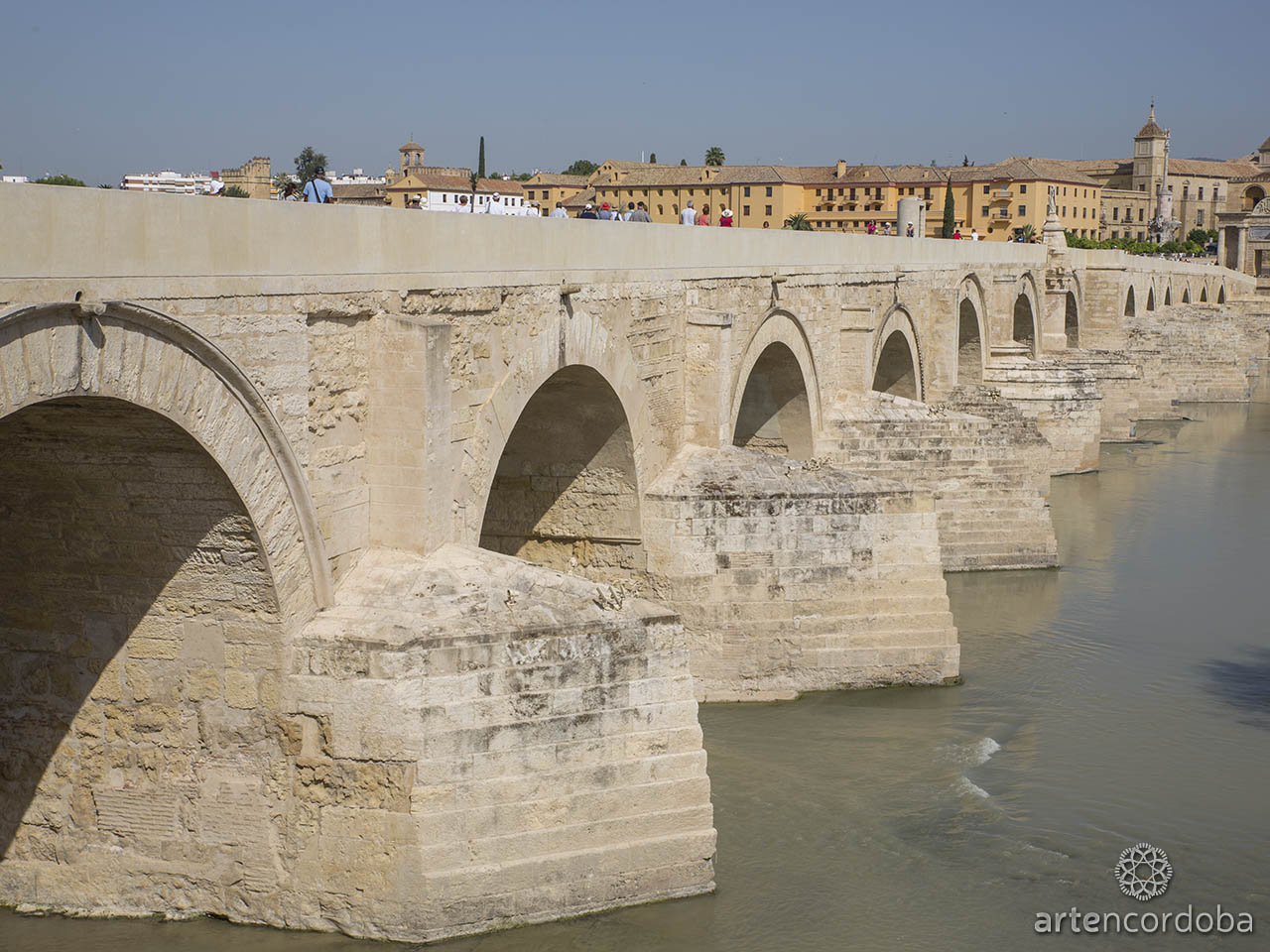
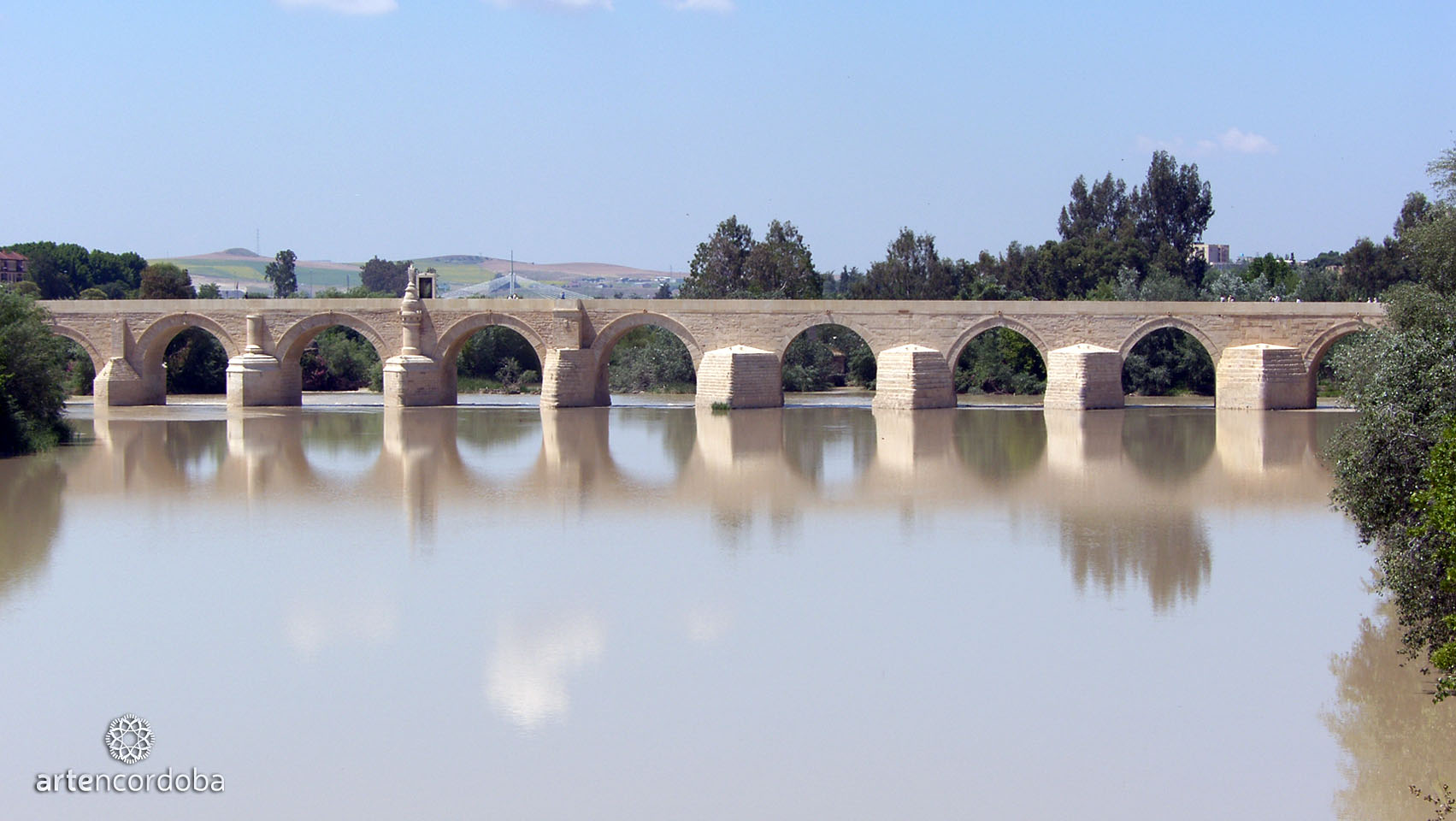
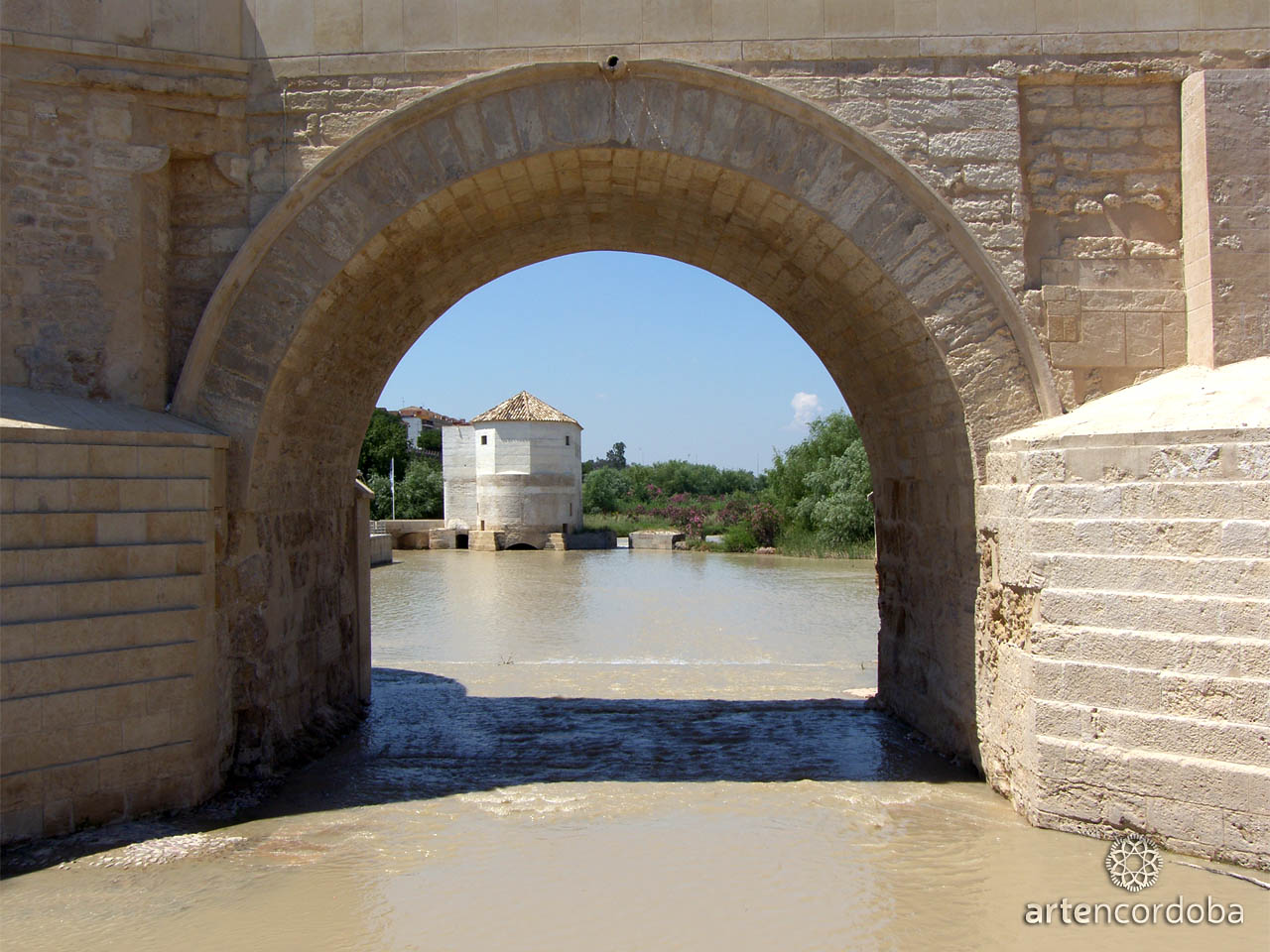
The Romans were experts in building bridges over rivers, just as they were with many other types of structures. The first step was to choose the right location, and as with other surviving examples in our country, they chose the lowest area of the bend, next to the Martos Mill, seeking the deep river channel. The result was a bridge built with limestone (an erodible material, it should be noted) from the mountains, composed of sixteen semicircular arches supported by robust pillars with angled and circular cutwaters.
The Roman Bridge throughout history
Islamic period
We have documentary evidence of the bridge during the Arab occupation. An interesting text from Ajbar Madmua recounts the rainy night when armies from North Africa entered the city via the bridge. The structure underwent numerous repairs during this period, some due to the constant flooding of the river, others due to the natural fragility of the building material. We even know that for many years it was not possible to cross it, to the extent that the deceased had to be ferried by boat to the Arab cemetery in the Arrabal, located on the opposite bank of the river.
Medieval Christian period
During the medieval Christian period, as Beatriz Sánchez writes, the bridge was seen as a key location, and efforts were made to preserve it as much as possible.
Devotional elements of the Roman Bridge
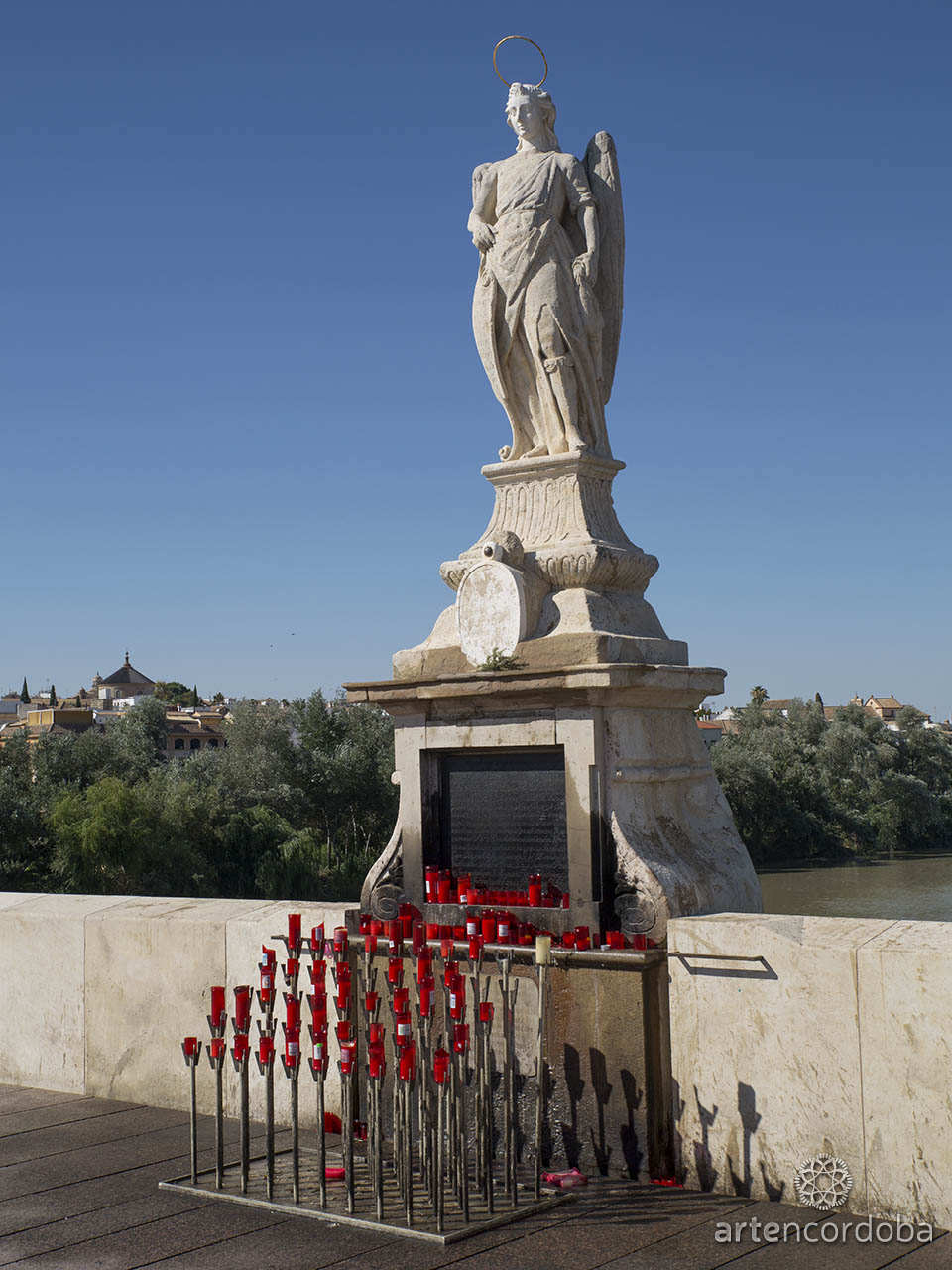
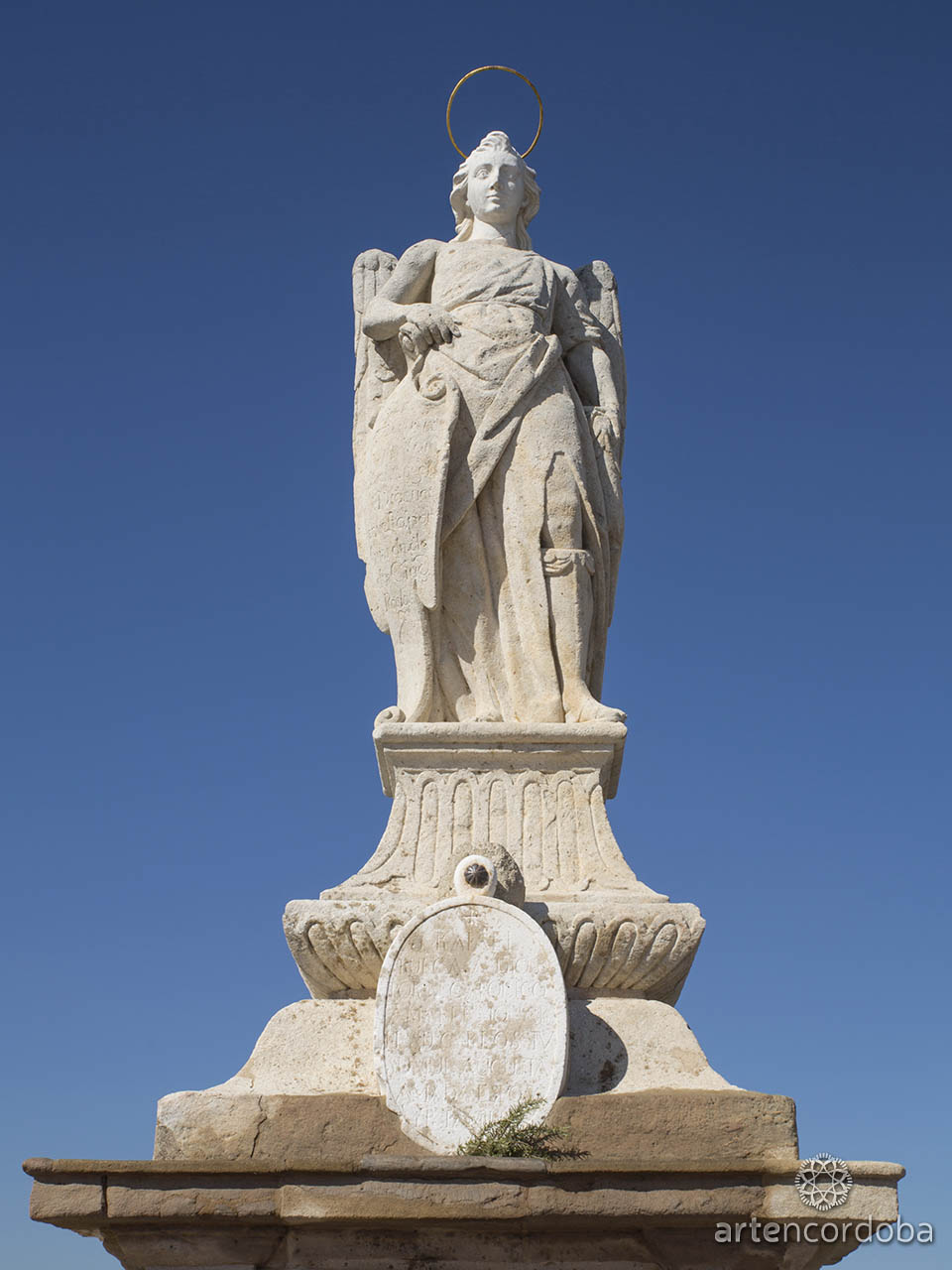
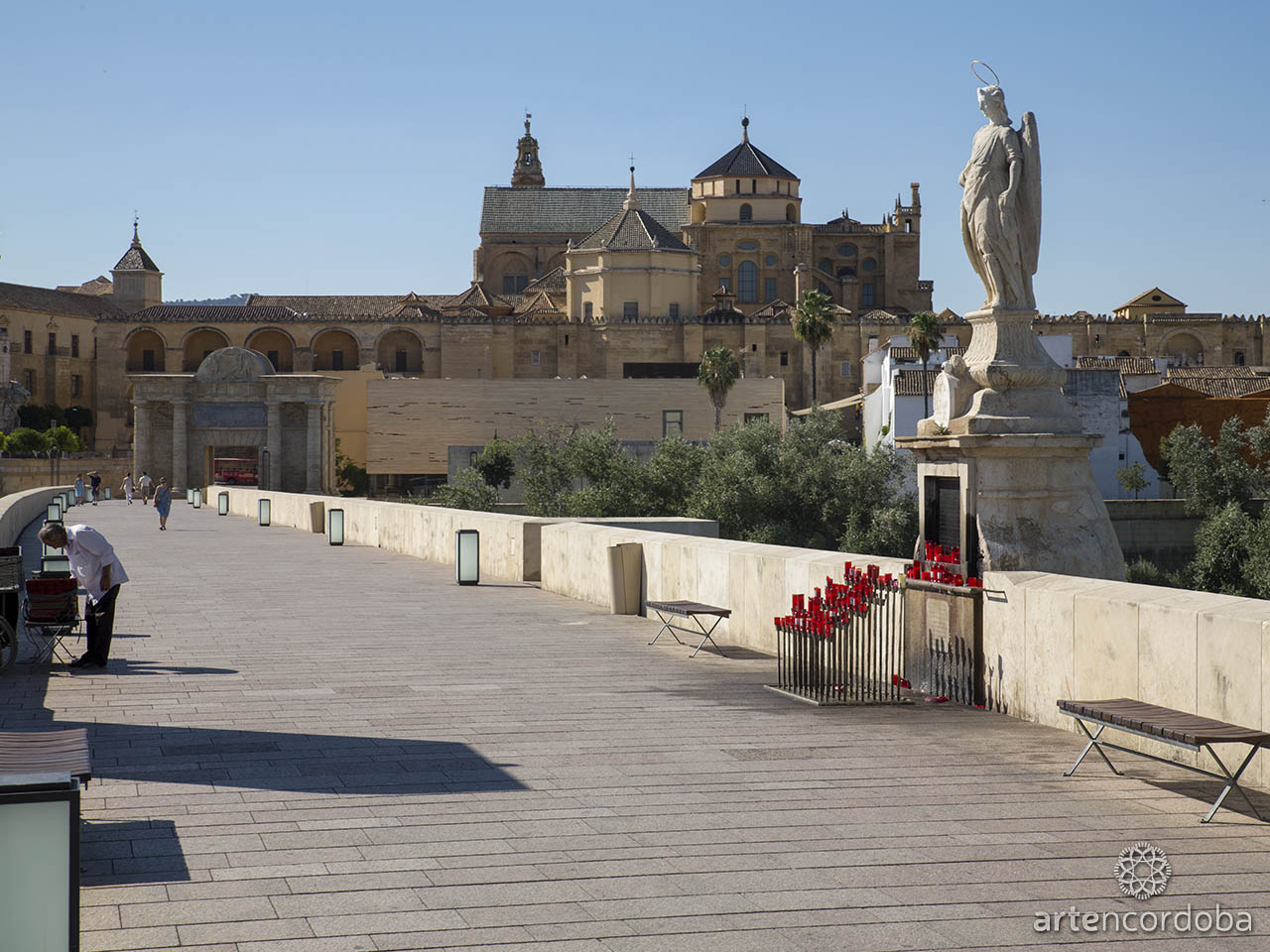
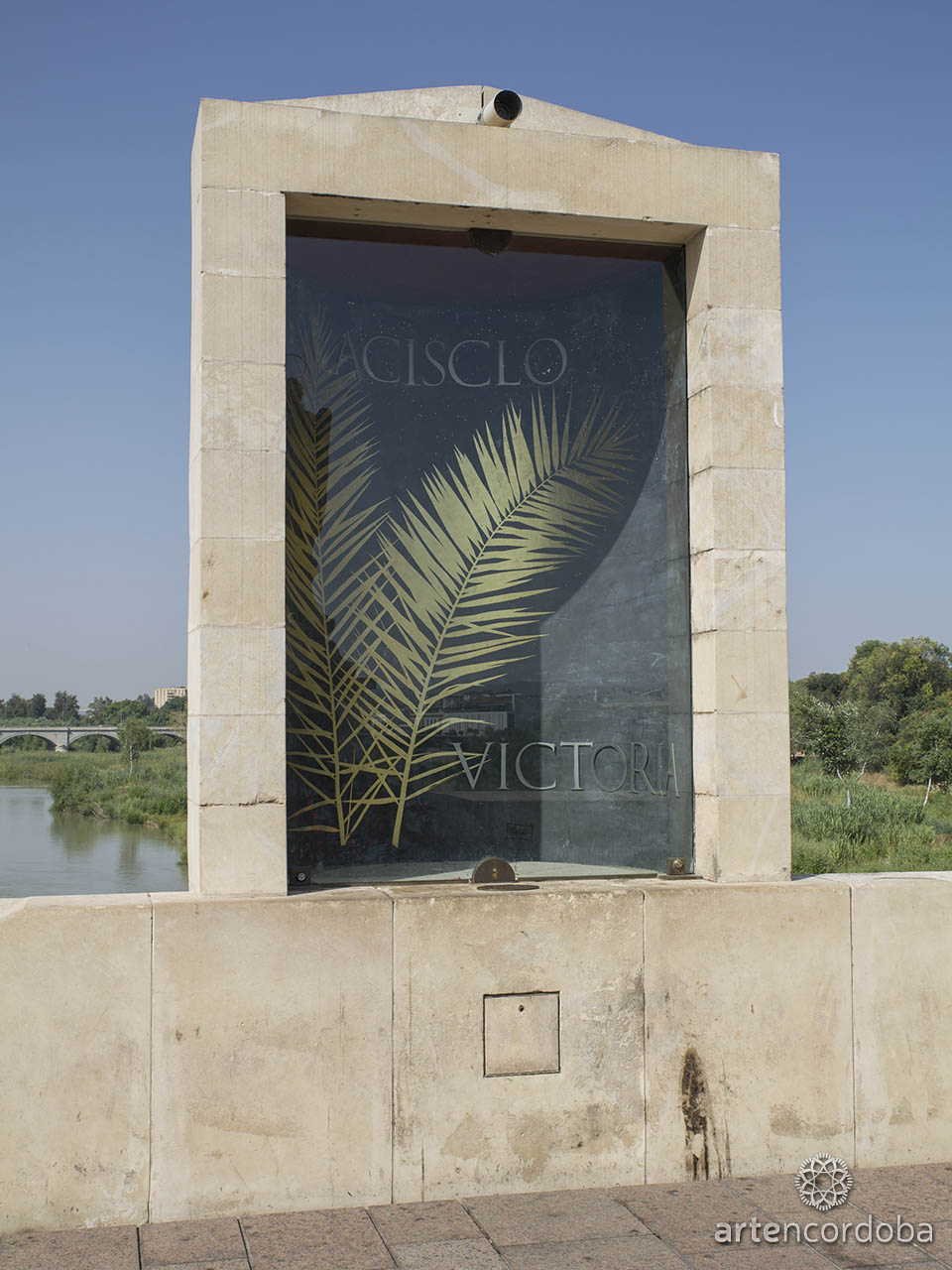
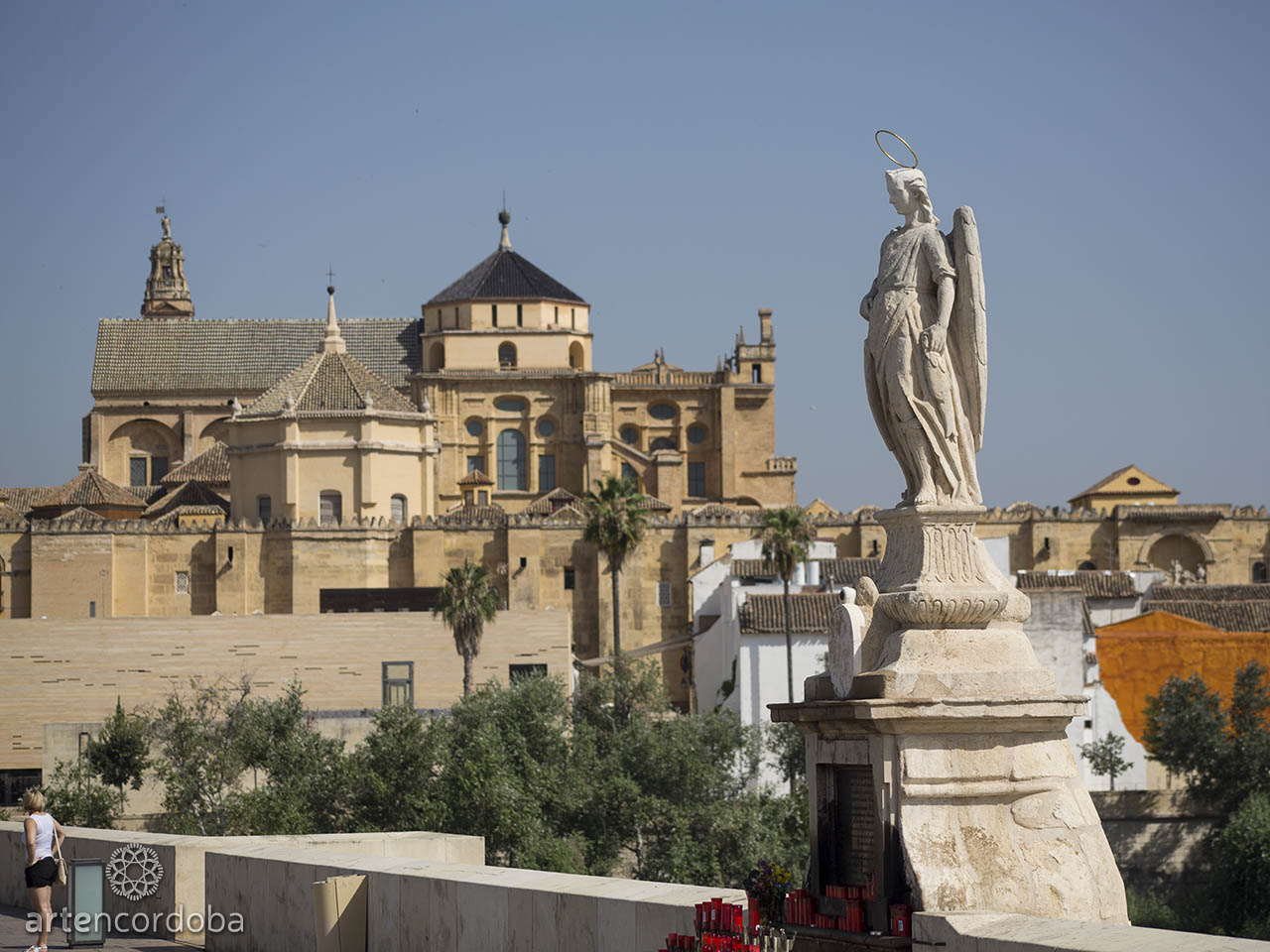
On the Roman bridge, we can see a sculpture of Saint Raphael, the city’s guardian, and a monument to the patron saints of Córdoba, Saints Acisclus and Victoria.
The Triumph of Saint Raphael
In the mid-17th century, a plague epidemic broke out in the city, wreaking havoc on the population. When the plague subsided, a statue of Archangel Saint Raphael was placed on the bridge, a work by sculptor Bernabé del Río, initiated by Father Juan Bautista Caballero. Below it, a white marble plaque reads: “To the greater glory of God and in honor of our Holy Guardian, the guild of tanners and glove makers renewed this holy image… September 10, 1789”. He is the archangel closest to the people, and thus he is always surrounded by a dense red cloud of candles, all burned down—a true reflection of the affection and deep devotion the people of Córdoba feel for him.
Contemporary restorations
For many years, our city had an outstanding debt with the Roman Bridge. To the already unfortunate “restorations” carried out in the early 20th century was added the poor condition of the bridge—materially, visually, and even acoustically, I would say… not to mention that until not long ago, all types of vehicles, including heavy “intercity buses,” used to cross it.
On January 9, 2008, the bridge was inaugurated after a long restoration process—not without controversy, some of it understandably—which aimed to restore its original appearance. It is worth noting that the shrine dedicated to Saints Acisclus and Victoria, the patron saints of the city, has been recovered and is once again facing the aforementioned image of Archangel Saint Raphael.
Visit to the Roman Bridge of Córdoba
If you wish to visit the Roman Bridge of Córdoba, don’t hesitate to book one of our guided tours. We are experts in the interpretation of Córdoba’s historical heritage. If you’ve chosen to enjoy tourism in Córdoba, choose a quality option—choose ArtenCórdoba.
Text: J.A.S.C.