





The walled enclosure that protected the Islamic city closely coincided, as would be expected, with that of the Roman period, featuring a total of seven gates. Ibn Baskuwal listed them as follows: the Bridge Gate (Bab al-Qántara), located in line with the Roman Bridge; the Iron Gate (Bab al-Hadid), also known as Zaragoza Gate (Bab al-Saraqusta), situated on the eastern side, just a few meters from the southeast corner; the Toledo Gate (Bab al-Tulaitula), the heir to the old Roman gate that provided access to the Via Augusta; the Jews’ Gate (Bab al-Yahud), located on the northern side of the wall; the Amir Gate (Bab Amir al-Qurasi), near the current Gallegos Gate; the Seville Gate (Bab Ishbiliya) of the Old Alcázar, and, between these last two, the Almodóvar Gate, previously known as Walnut Gate (Bab al-Yawz).
The Walnut Gate
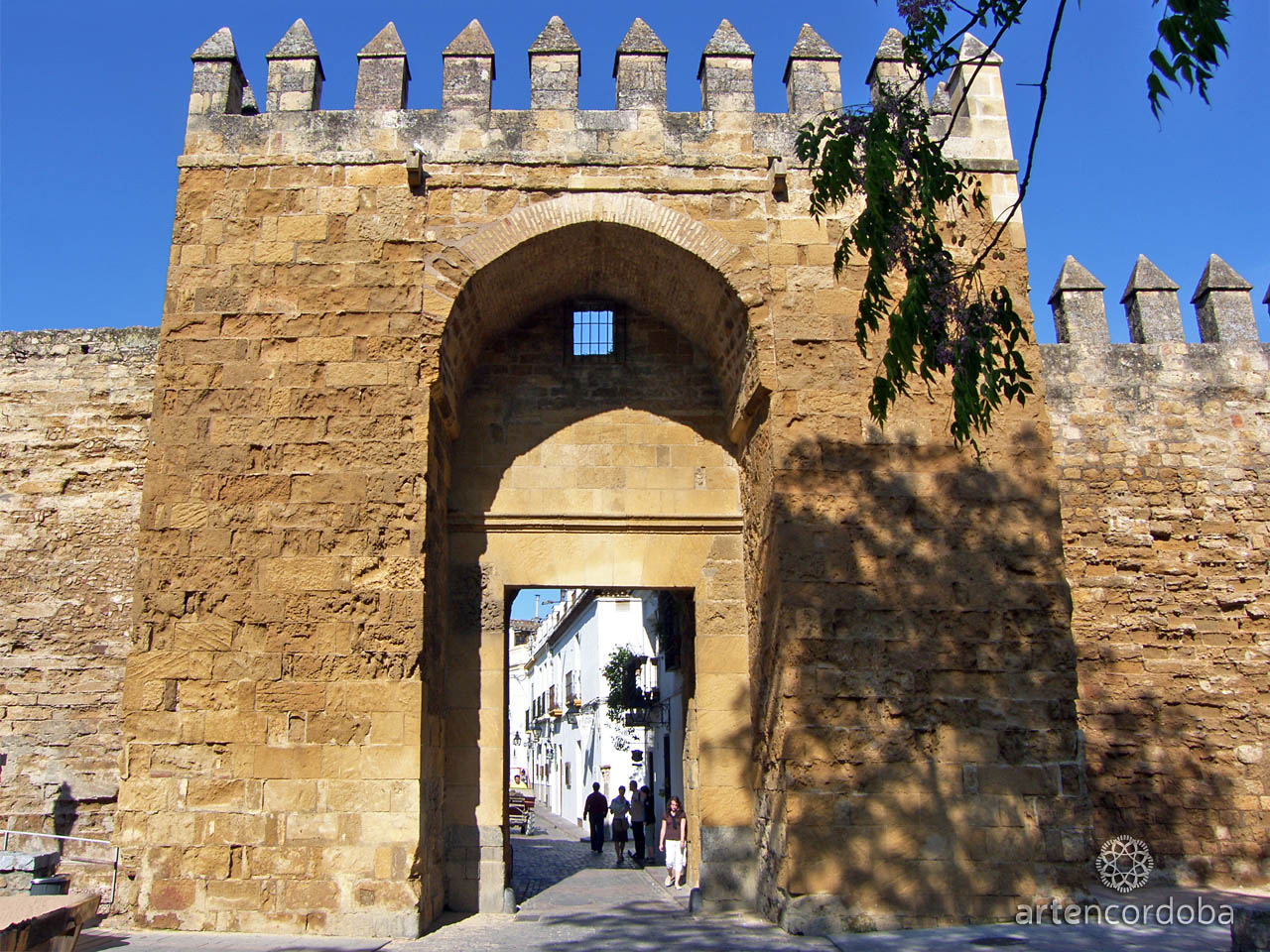
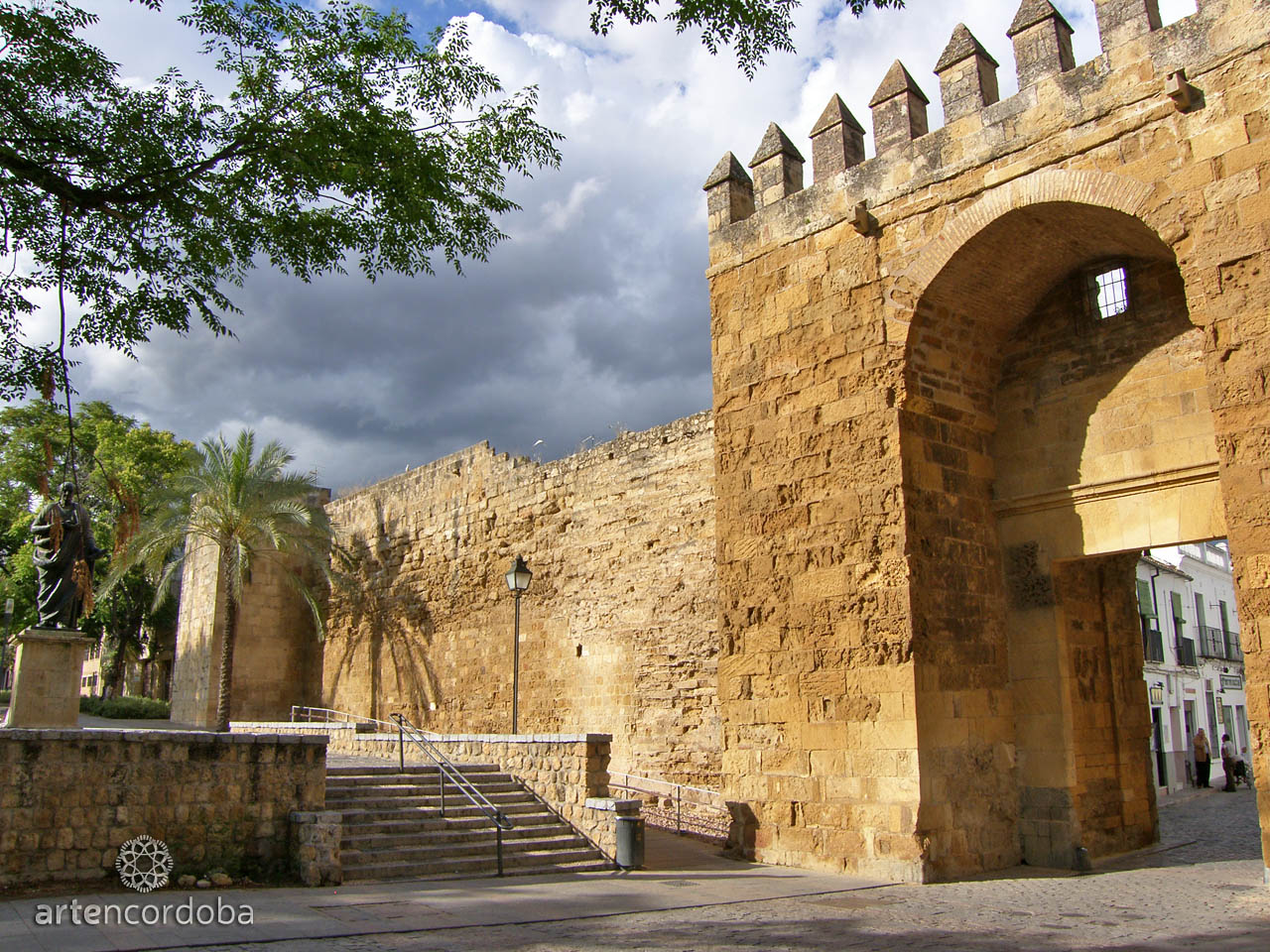
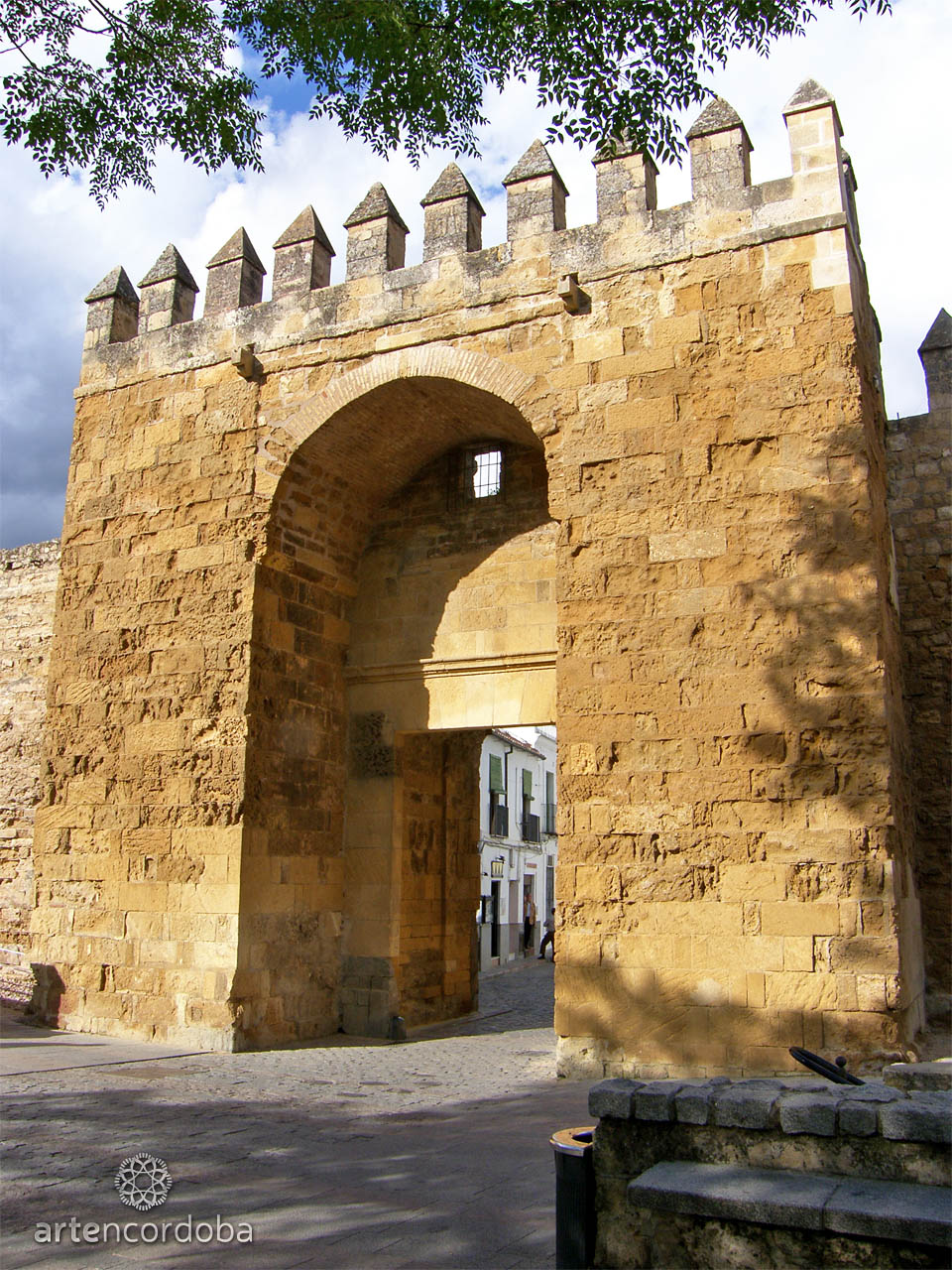
Of all these gates, only the Almodóvar Gate has survived, making it a legacy of great value for our city. Known to the Arabs as Walnut Gate, it was located on the road leading to the town of Almodóvar, which is why it was called so after the city was reconquered in 1236.
Architectural Description
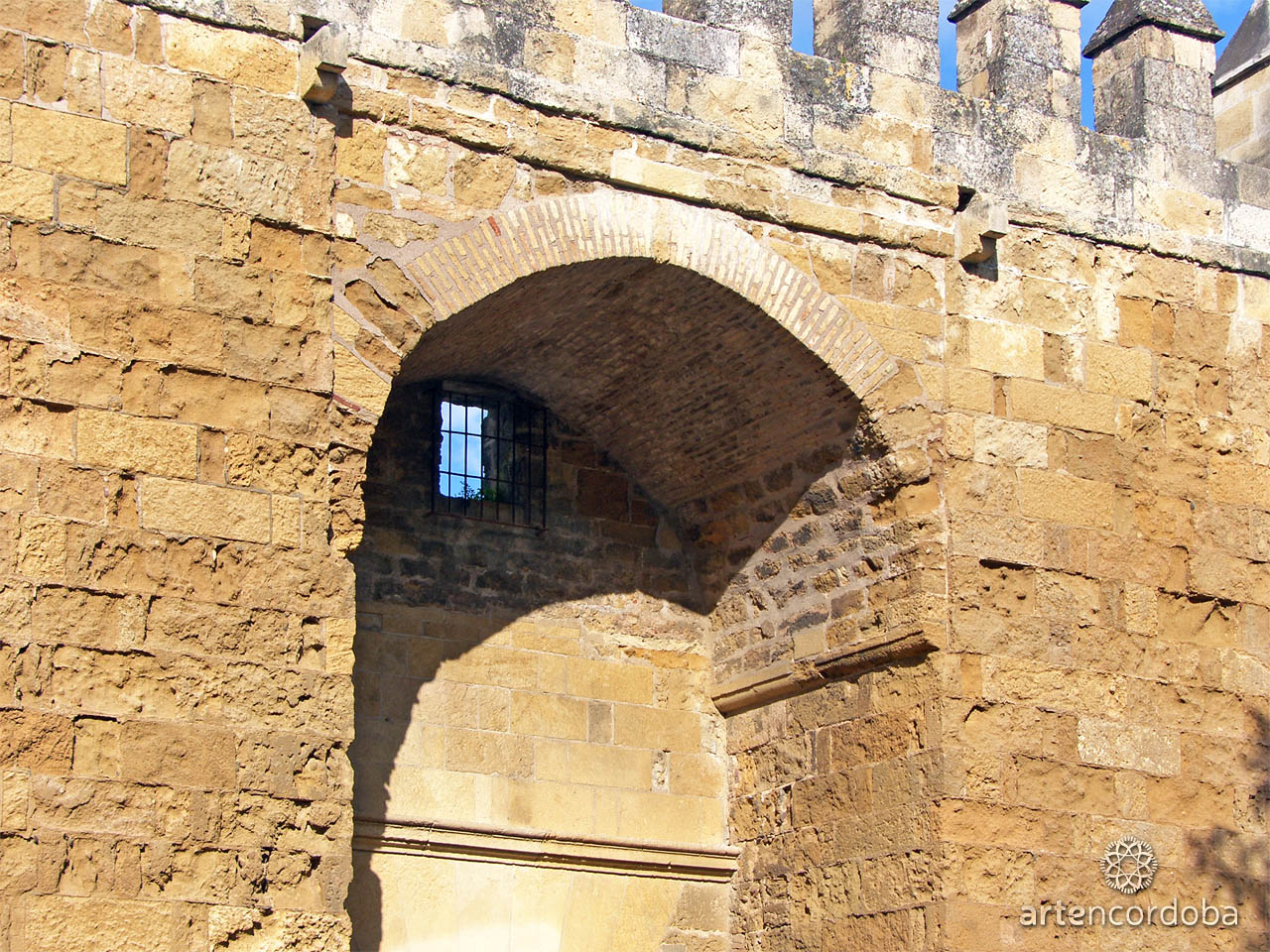
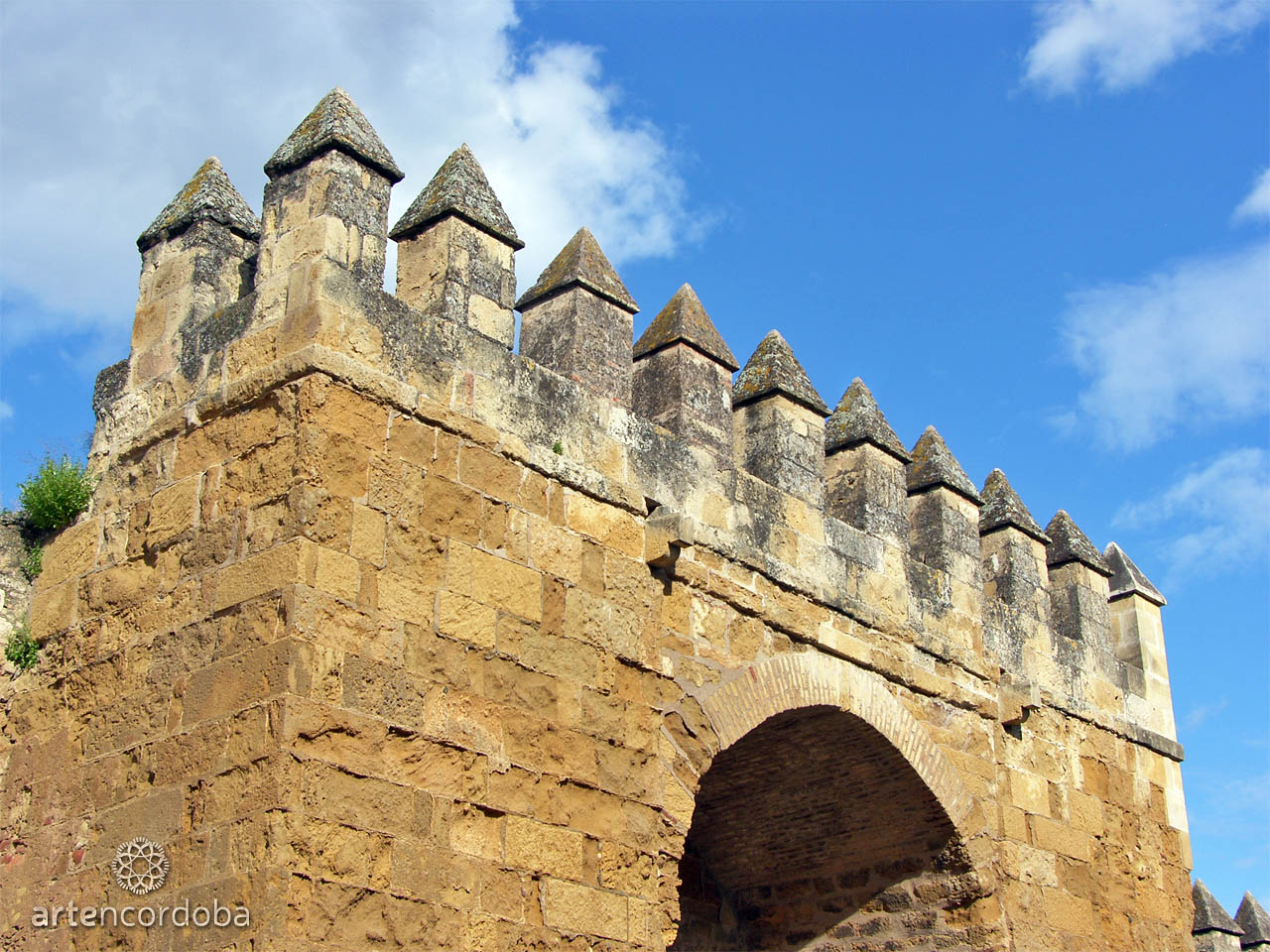
The Almodóvar Gate was built with ashlar masonry using pieces of sandstone, although there are numerous additions from later restorations that have altered its original appearance. The central opening, which allowed access to the interior of the walled enclosure, is flanked by two prismatic towers joined together like a bridge by a slightly pointed arch, which on the inside forms a barrel vault. The arch is framed by a simple alfiz, almost without any decoration. The building is crowned by a row of pyramidal battlements.
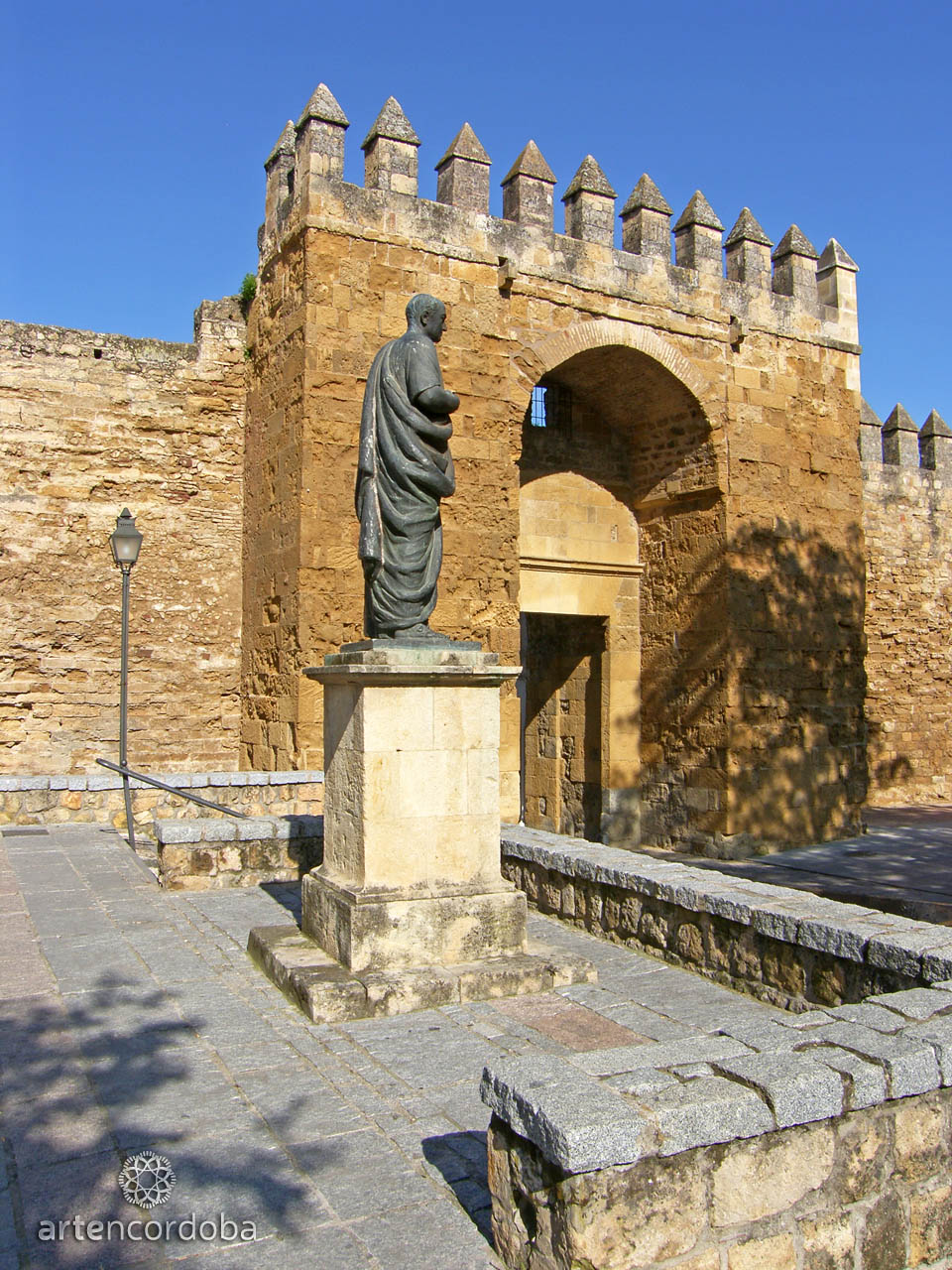
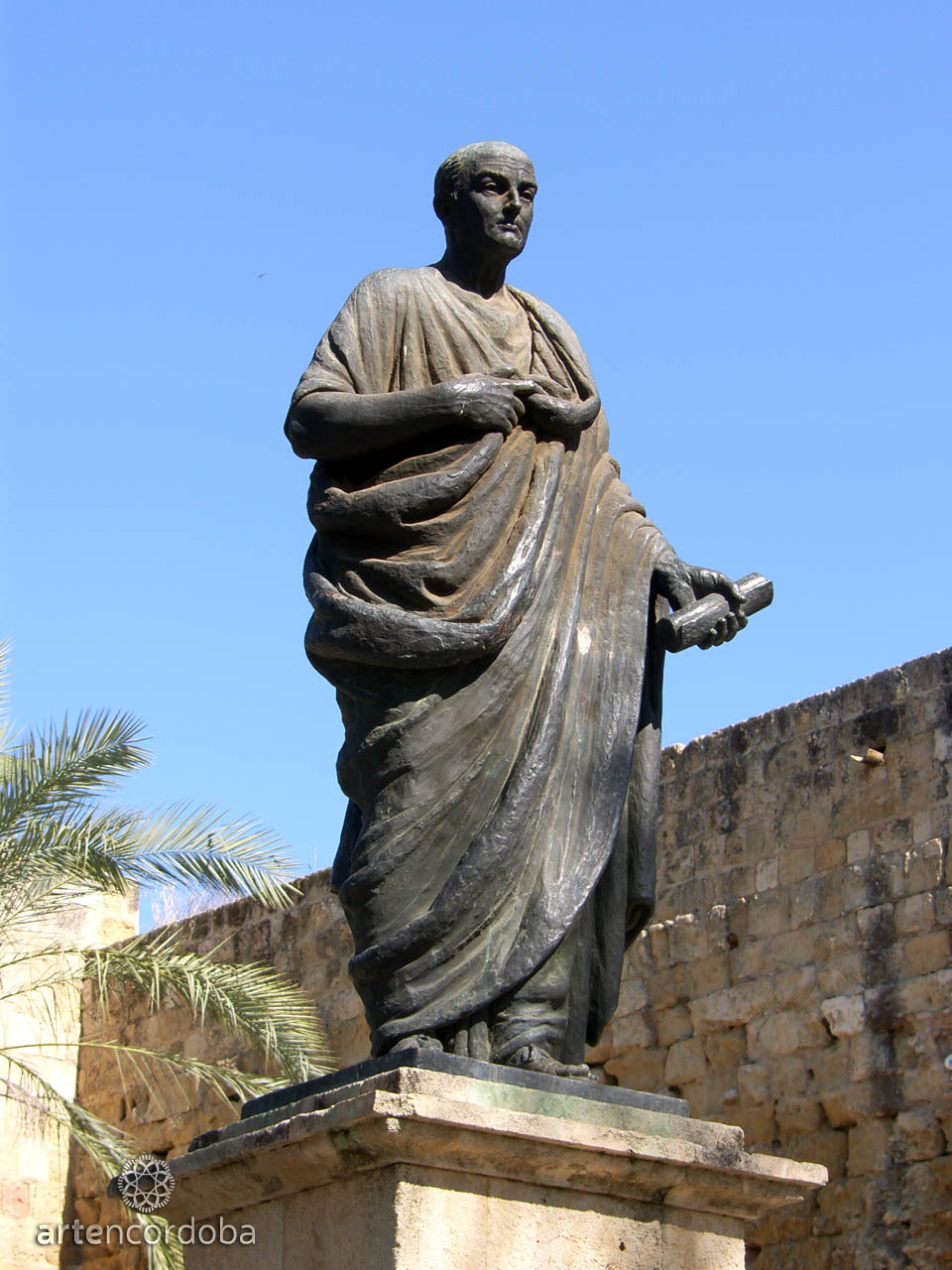
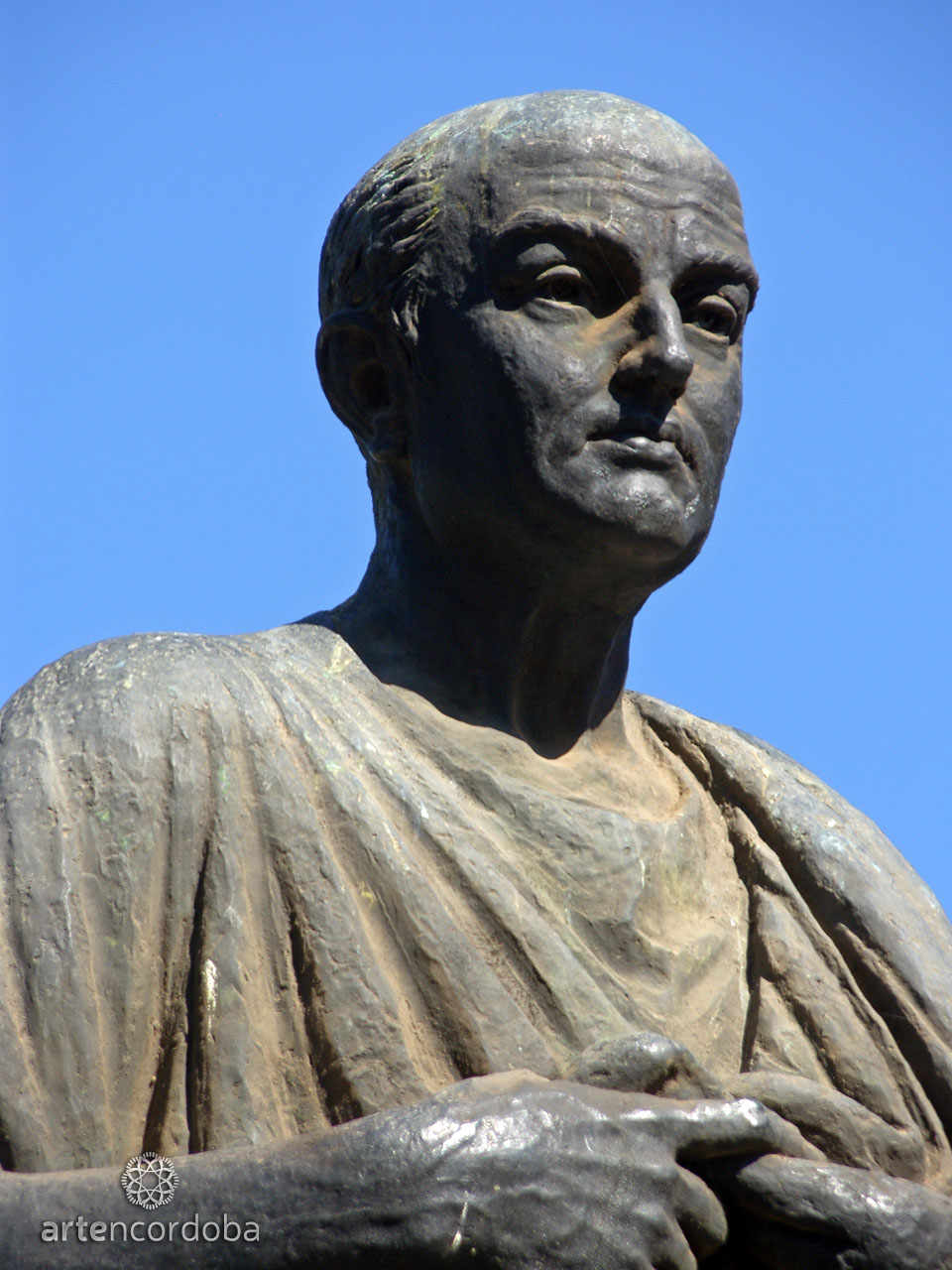
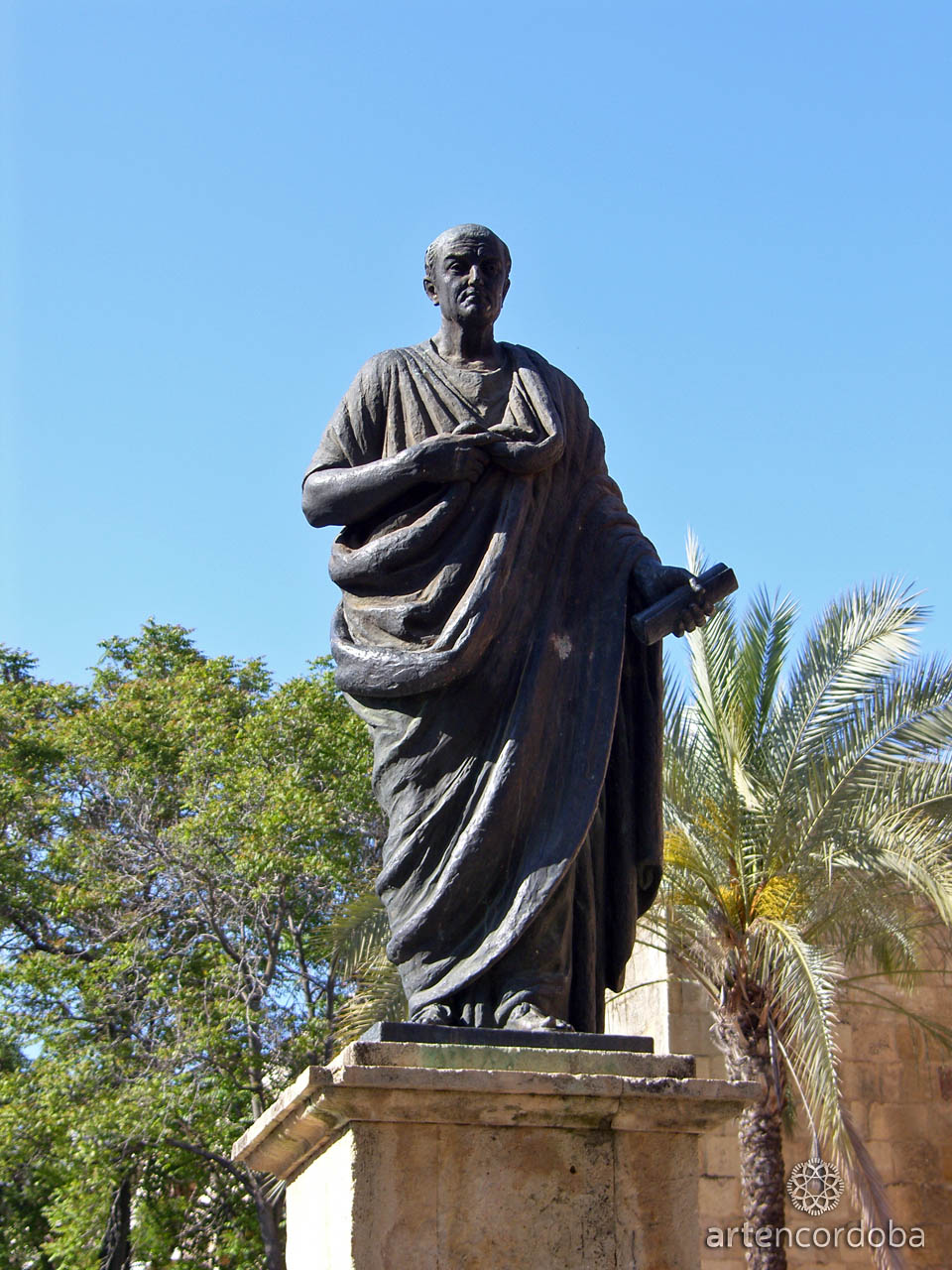
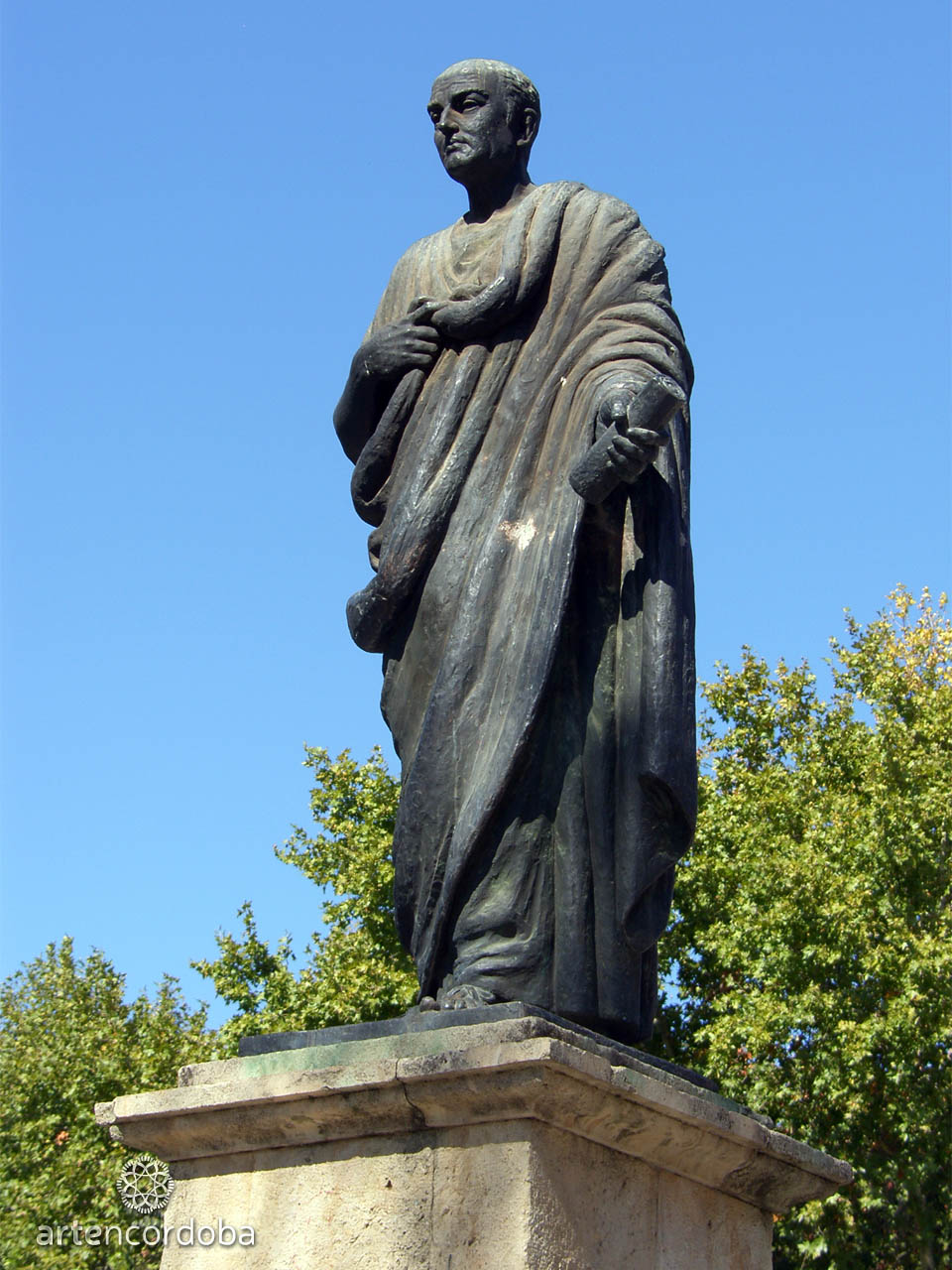
The Statue of Seneca
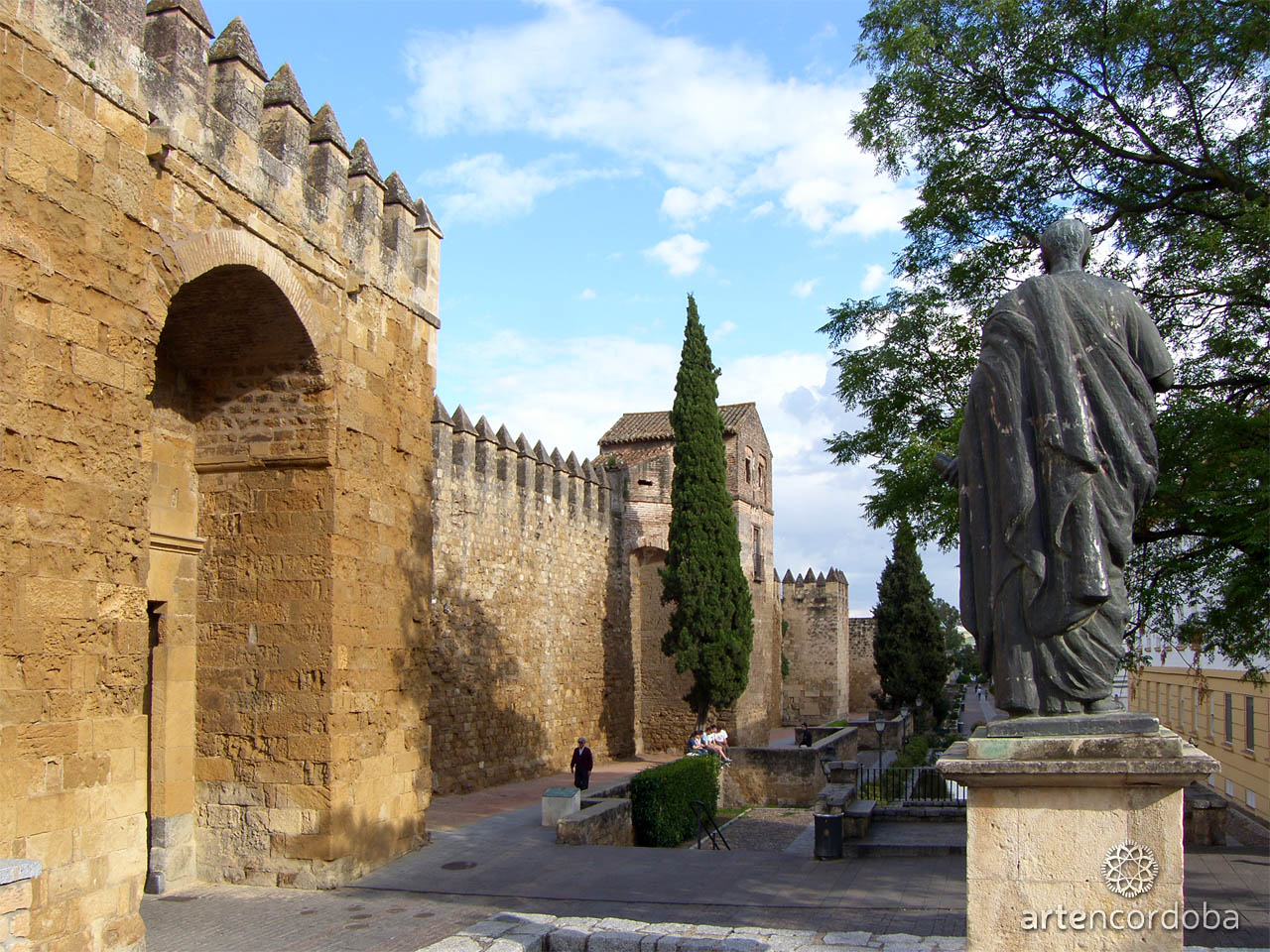
Since 1965, next to the gate, there has been a bronze sculpture dedicated to the Cordoban philosopher Lucius Annaeus Seneca, created by the sculptor Amadeo Ruiz Olmos, with Manuel Benítez El Cordobés, the famous bullfighter, covering the costs. Seneca is depicted standing, wearing a toga and holding a scroll in his hand, atop a high pedestal.
Cairuán Street and the Wall
The Almodóvar Gate opens up a small but charming route along the street that runs beside the wall, called de Cairuán or de la Muralla, which ends at the statue of another philosopher, Averroes, also from Córdoba, although in this case a Muslim… two figures, two cultures, a millennium apart, which in our city are separated by just a few meters.
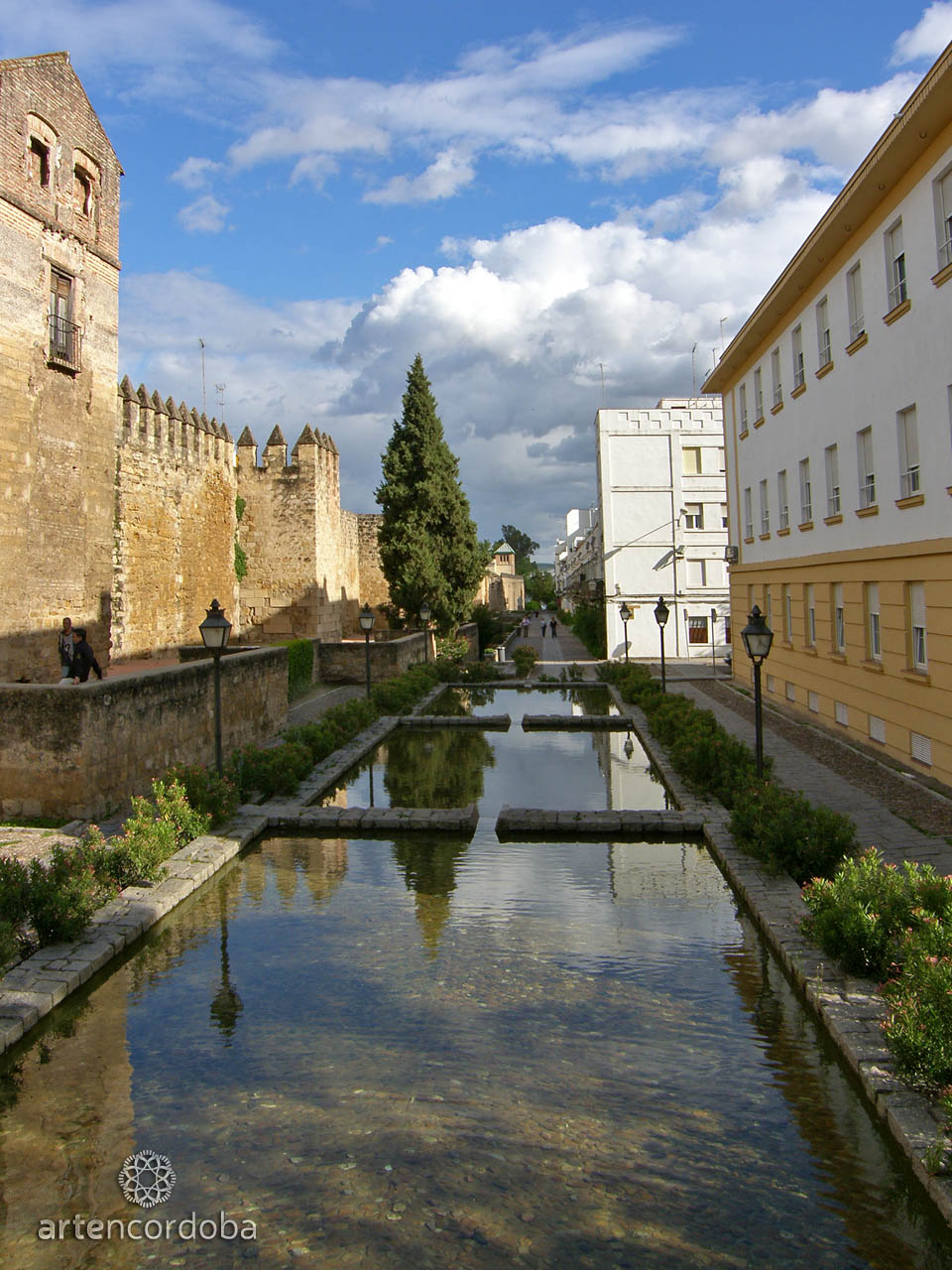
The current conception of Cairuán Street is the result of a renovation led by Mayor Antonio Guzmán Reina, who ordered the transformation of a small stream into the beautiful pond we enjoy today. Back then, the water came from an old cistern located in front of the Almodóvar Gate.
A recent restoration has stripped the wall of the vegetation that covered it, only two cypresses were preserved. In this way, the old wall-walk has been recovered, which is higher than the rest of the street, allowing visitors to stroll along it or sit and watch the water cascade down each of the ponds in the aforementioned pool.
Guided Tours
If you wish to visit the Almodóvar Gate, do not hesitate to book one of our guided tours. We are experts in the interpretation of Cordoban historical heritage. If you have chosen to tour Córdoba, choose a quality option, choose ArtenCórdoba.
Text: J.A.S.C.