





One of the most significant aspects of the urban configuration of Islamic cities is the place where commerce takes place. As we know, Córdoba is one of the cities in Western Europe where Muslims left one of the clearest marks in the past, and, logically, it had its market. In fact, from the Arabic word suq, meaning market, comes the Spanish word zoco. And perhaps to continue maintaining the ancient use of the place, located next to the mosque, it was decided to create in its surroundings a space to promote traditional Cordoban crafts.
Origin and Location of the Municipal Zoco
Thus, the chosen site was behind the Bullfighting Museum, in front of the small Plaza de Tiberíades, between Judíos and Averroes streets. In 1954, Mayor Antonio Cruz Conde (1949-1964) inaugurated the Municipal Zoco, built in the gardens of the original Casa de las Bulas by the Cordoban architect José Rebollo Dicenta (born in 1915). The complex has been declared an Asset of Cultural Interest in the General Plan of Cultural Assets, thus enjoying special protection.
Architectural Description
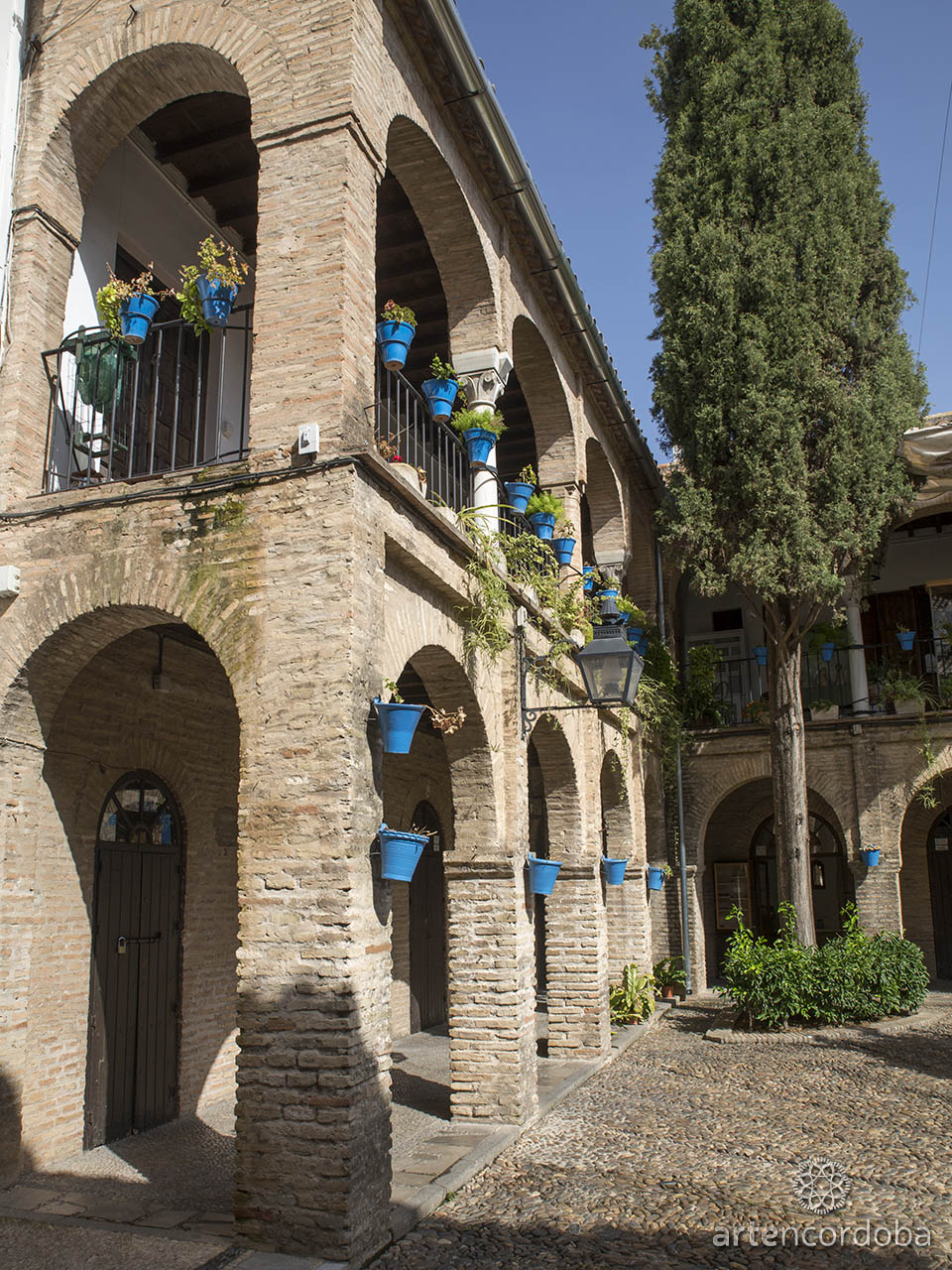
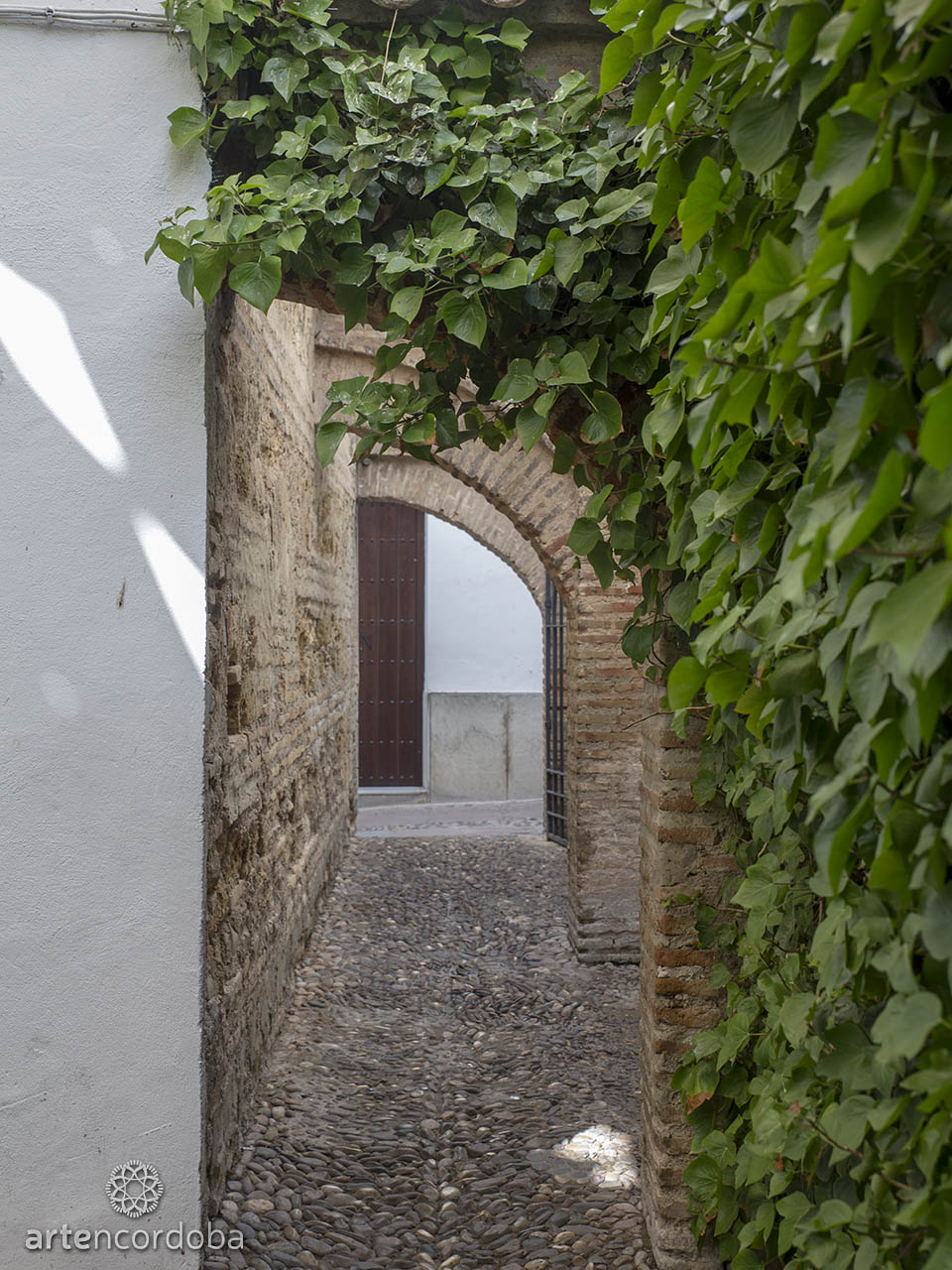
Like a hidden passageway, access to the Casa de las Bulas is gained directly through a narrow alleyway framed by three half-arches. The building, two stories high, rests on load-bearing walls and arcaded porticoes on pilasters and columns, and features galleries around the patios.
Thus, it forms a kind of plaza-patio, in which the main structuring patio, rectangular in shape and double height, has four galleries with arches framed by alfiz and supported by columns and capitals. Regarding its double height, the lower level has porticoed galleries on three sides, with the staircase to the second floor on the fourth side. The upper part has only two galleries, as the third corresponds to one of the rooms of the Bullfighting Museum.
The Municipal Zoco is located in the heart of the Jewish Quarter, an ideal place to promote traditional Cordoban crafts.
Outstanding Elements of the Complex
It is a manor house with Mudejar reminiscences (16th century), in which the following characteristic elements stand out: the patio, adjacent to the façade, features a loggia—an open gallery, open to the outside on one or more sides—serving as the entrance, and a two-story gallery to the north.
The façade, whitewashed, is distributed across three fronts of the block; the stone lintelled entrance has a balcony on the upper floor, and in the rest of the façade, the solid wall prevails over the opening, with its sloping roof of Arab ceramic tile; finally, the decoration is simple, with exposed brickwork, highlighting the cobblestone pavement and the vegetation.
Craftsmanship and Urban Environment
In the Municipal Zoco there are various shops or businesses (silversmiths, ceramists, leather artisans specializing in cordovan), where tourists can observe and purchase a variety of typical Cordoban crafts. The charming patios and corners of the house are clear examples of the neighborhood’s intimacy.
At the end of the zoco there is another pointed arch, facing Calle de Averroes, where the Mudejar Chapel of San Bartolomé is located and, further up, the old Hospital of Cardenal Salazar, around whose Baroque patio are distributed the classrooms of the Faculty of Philosophy and Letters of the University of Córdoba.
Tradition and Visit
Finally, the Cante Jondo performances held here during the popular festivities of the Patios of the May of Córdoba are unforgettable.
If you are wondering what to do in Córdoba, we recommend visiting the Municipal Zoco by booking one of our guided tours. Choose quality tourism with qualified staff—don’t hesitate, ArtenCórdoba is the best option.
Text: Jesús Pijuán.