





One of the most interesting places to include in this section is, without a doubt, the Plaza de la Compañía, which owes its name to the fact that it housed for more than two centuries the school called Santa Catalina, and the Jesuit church.
Following the expulsion of the Jesuits from the city in 1767, due to the reforms carried out by the Count of Aranda during the reign of King Charles III, the church became a parish, merging those of Santo Domingo de Silos, located opposite, and El Salvador, then situated on Calle Alfonso XIII, hence it is now known as the Parish of El Salvador and Santo Domingo de Silos.
Church of the Compañía
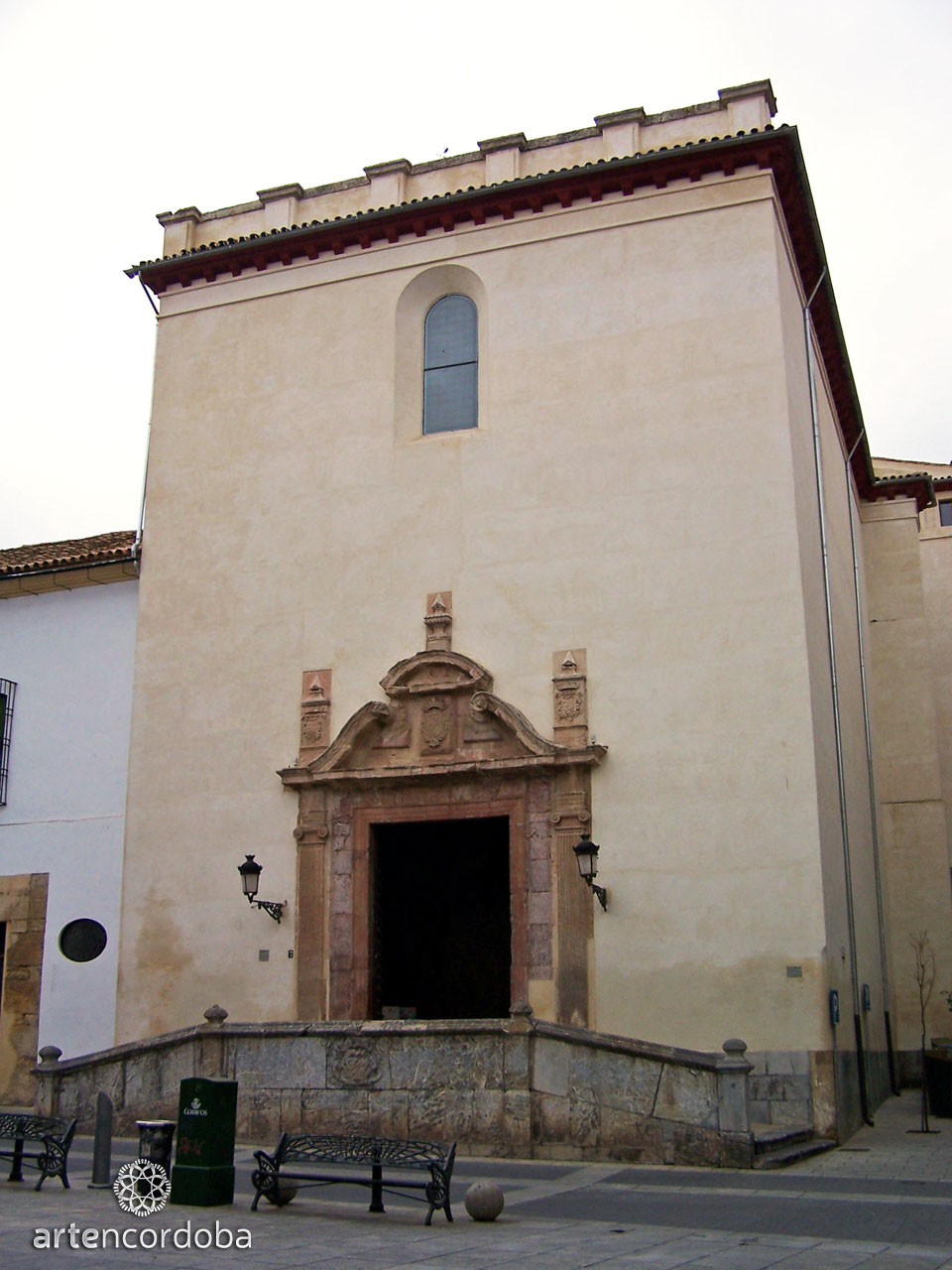
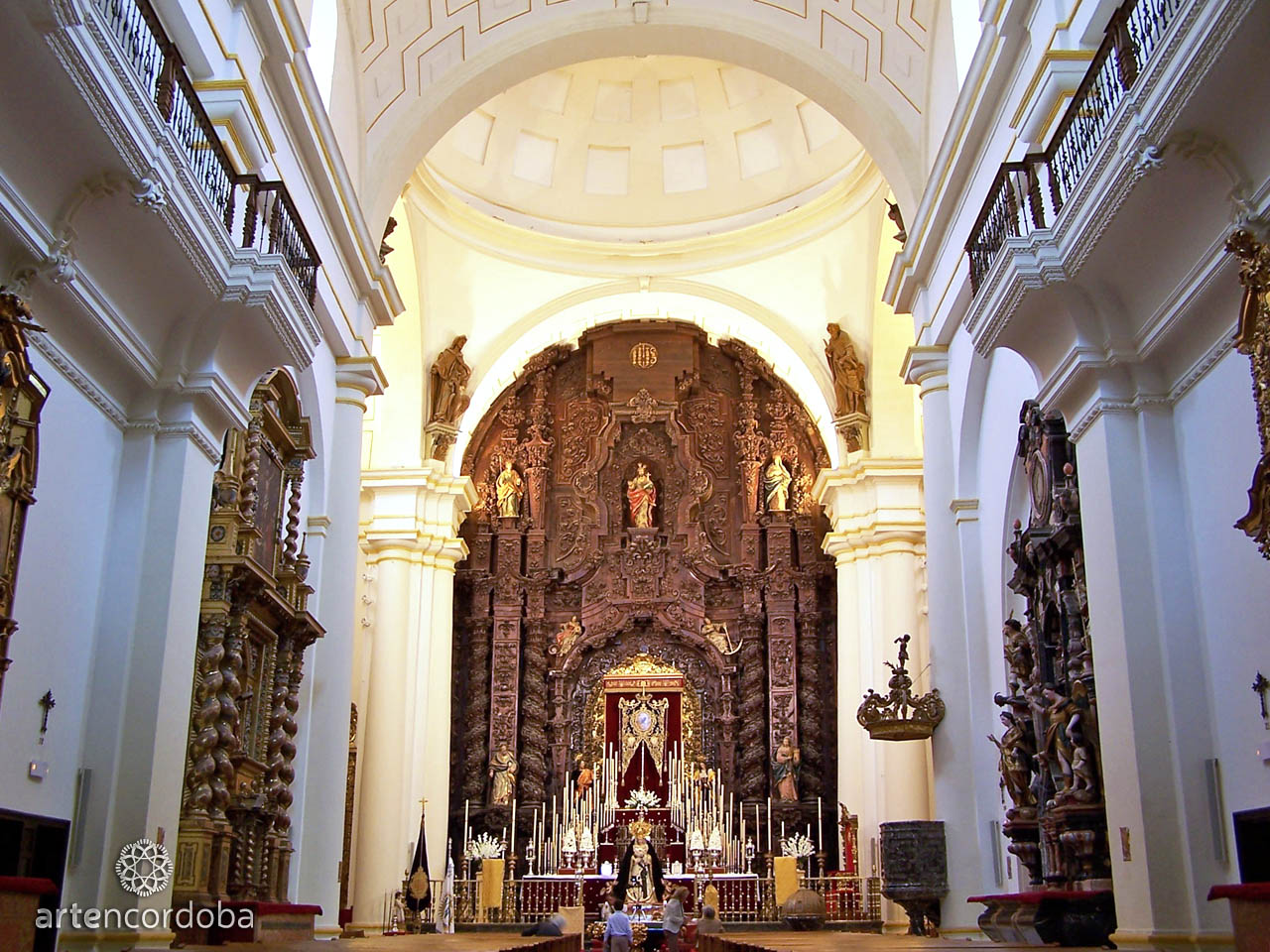
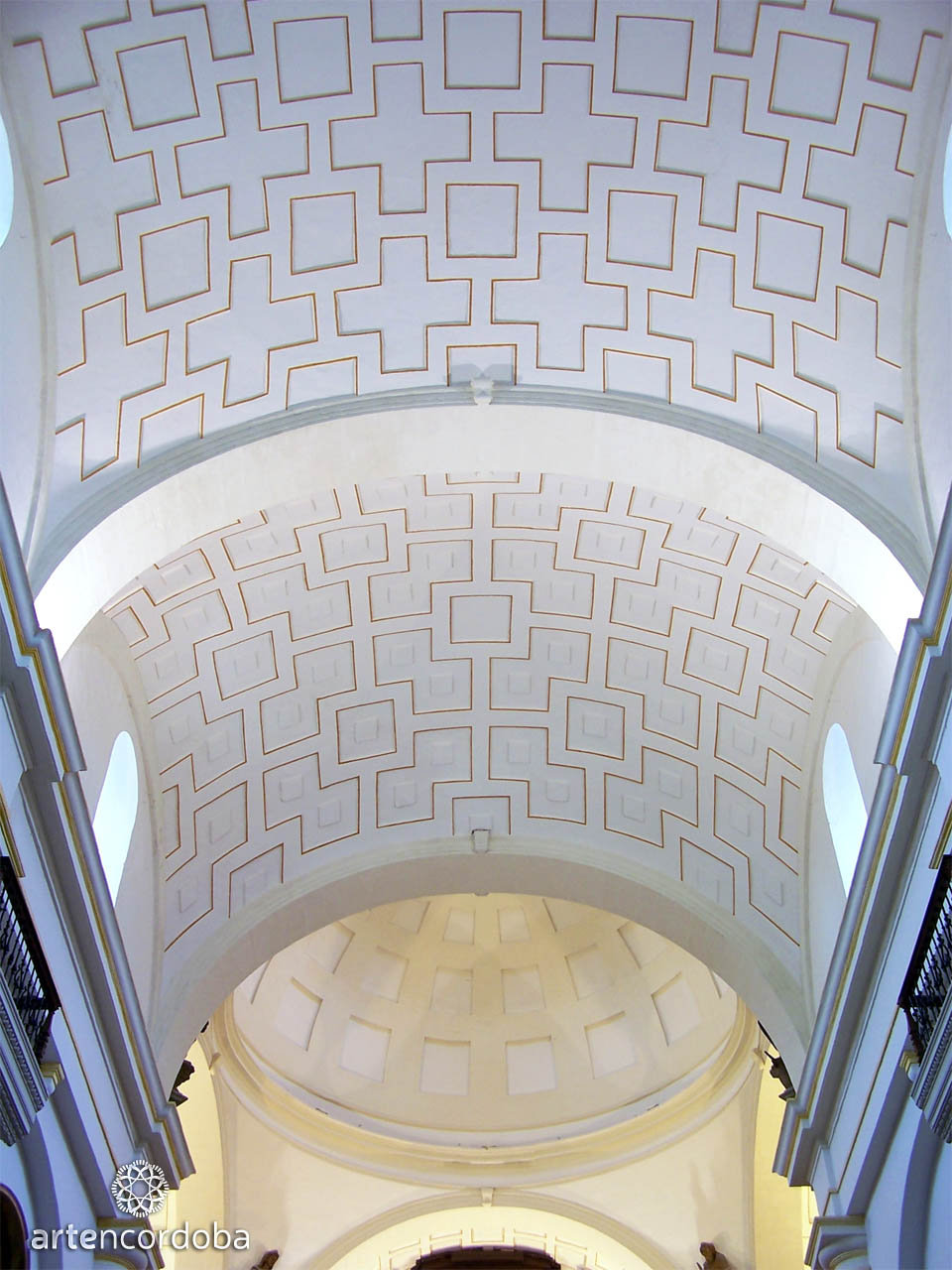
The church follows the typical layout of Jesuit temples, with a single nave floor plan, in this case covered by a barrel vault with lunettes and a transept topped with a dome on pendentives. Inside, it is worth highlighting the altarpiece decorating the Main Altar, created by Teodosio Sánchez de Rueda, considered by many his masterpiece, or the Altarpiece of Our Lady of Perpetual Help, carved by Alonso Gómez de Sandoval.
The façade is sober and elegant, fortress-like, and features a doorway accessed from the right and left by a stone staircase. It consists of a lintelled opening flanked by two pilasters that extend upward to a second level. Crowning the entrance is the coat of arms of Castile and León used by the Habsburgs, set in a niche topped by a circular pediment. On either side, on the pilasters, are the coats of arms of the Fernández de Córdoba family, referring to the support they provided to the religious order during their stay in the city.
Royal Schools of the Immaculate
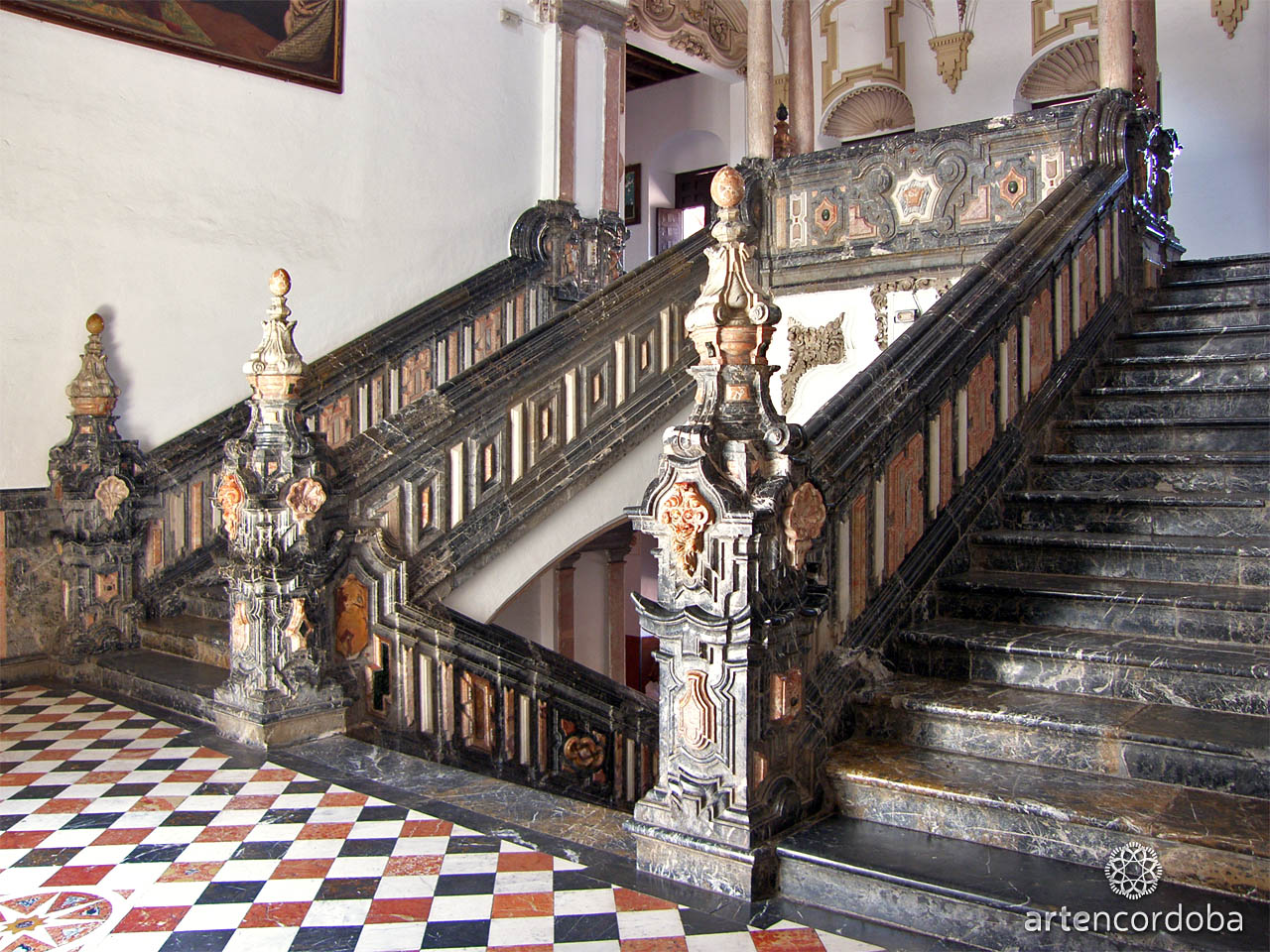
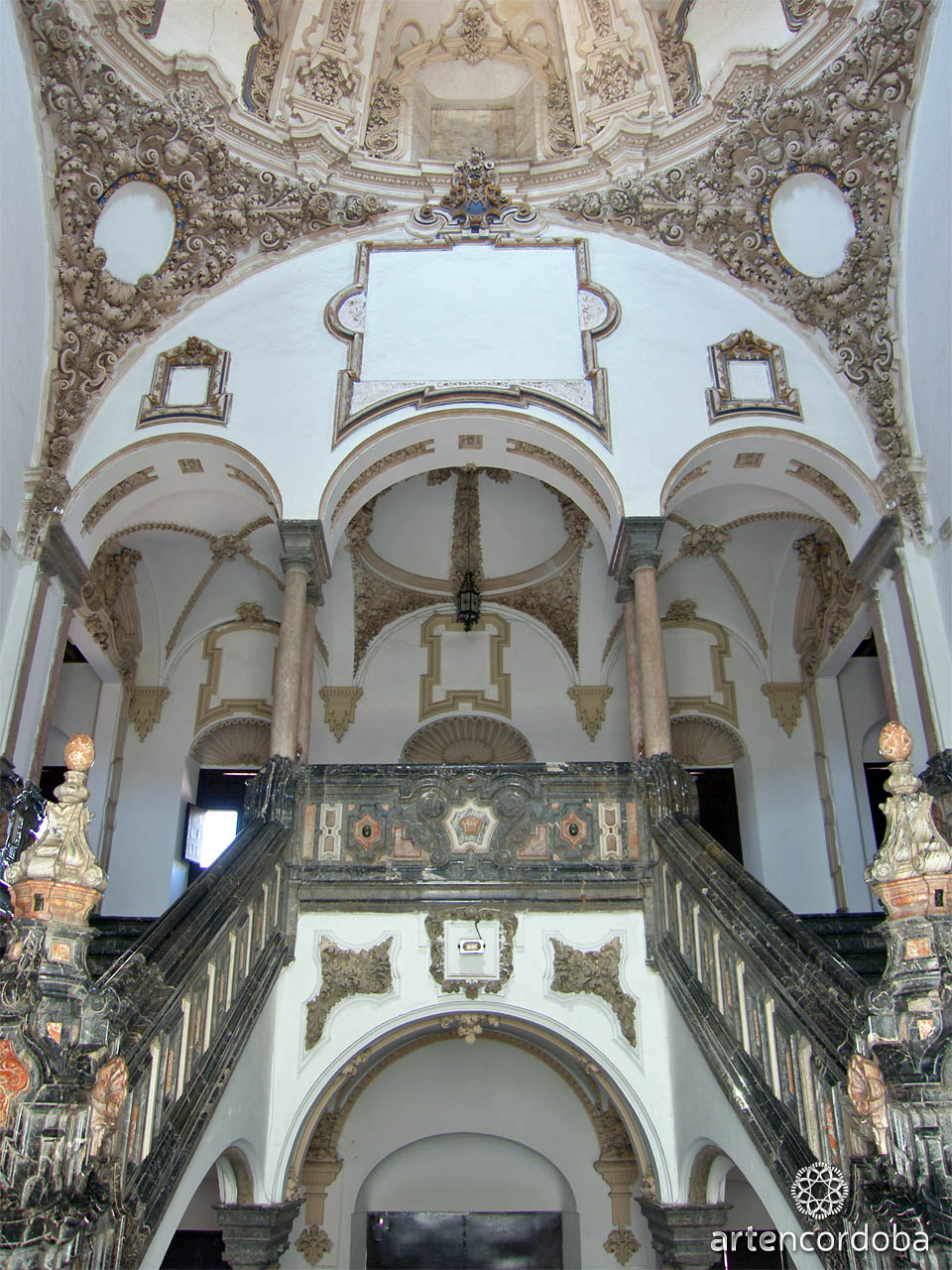
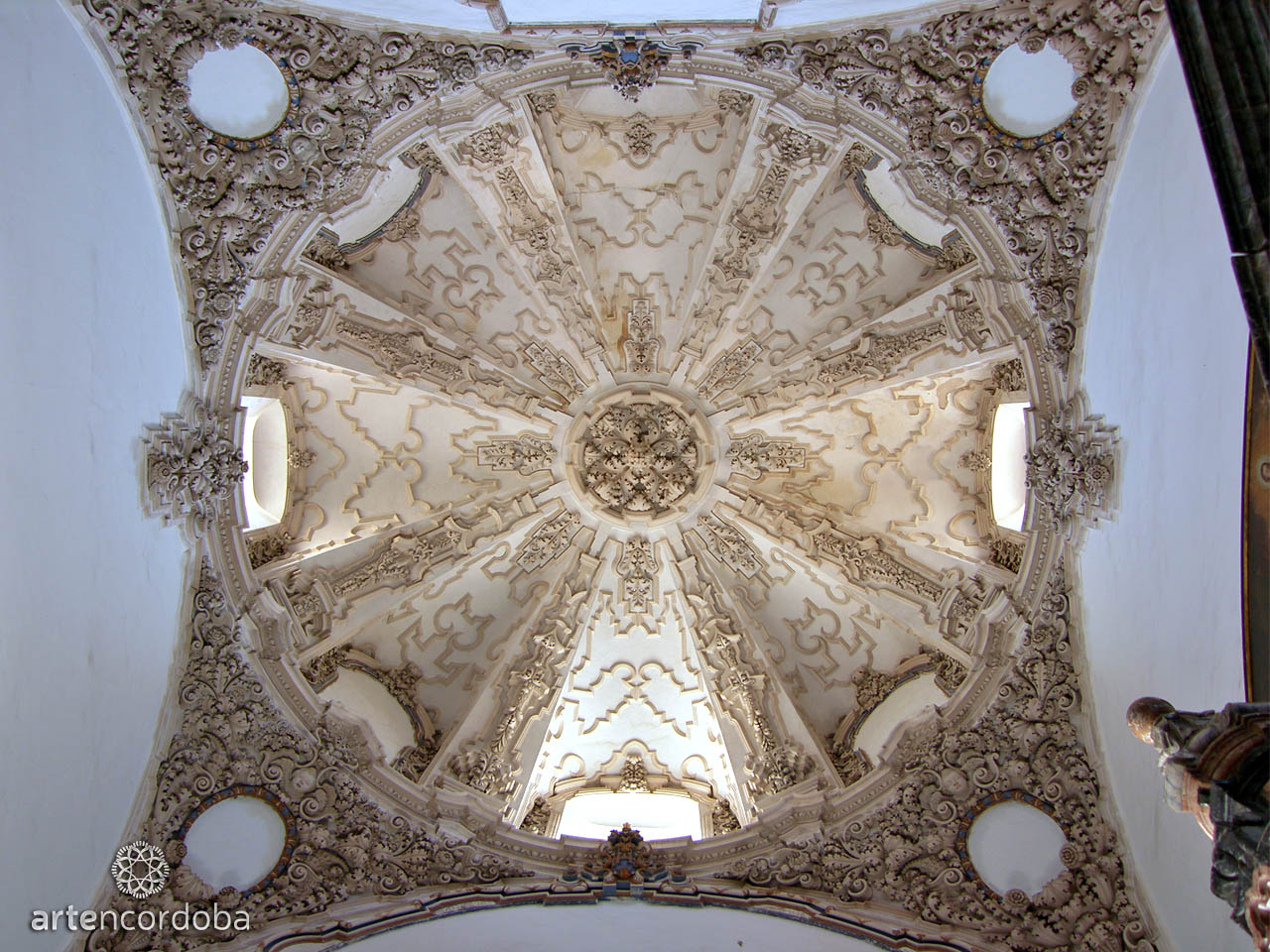
Continuing along the façade, a little further ahead, we come across the Royal Schools of the Immaculate, rebuilt in the early 18th century on the site of the old Jesuit School of Santa Catalina. Its simple façade, in white and ochre tones, is marked only by a few windows and its entrance, crowned by a simple circular pediment. However, the most remarkable feature of this building is an exceptional imperial-style staircase inside, made of black and red marble, and topped by an equally striking dome on pendentives, decorated with plasterwork in rocaille motifs.
Church of the College of Santa Victoria
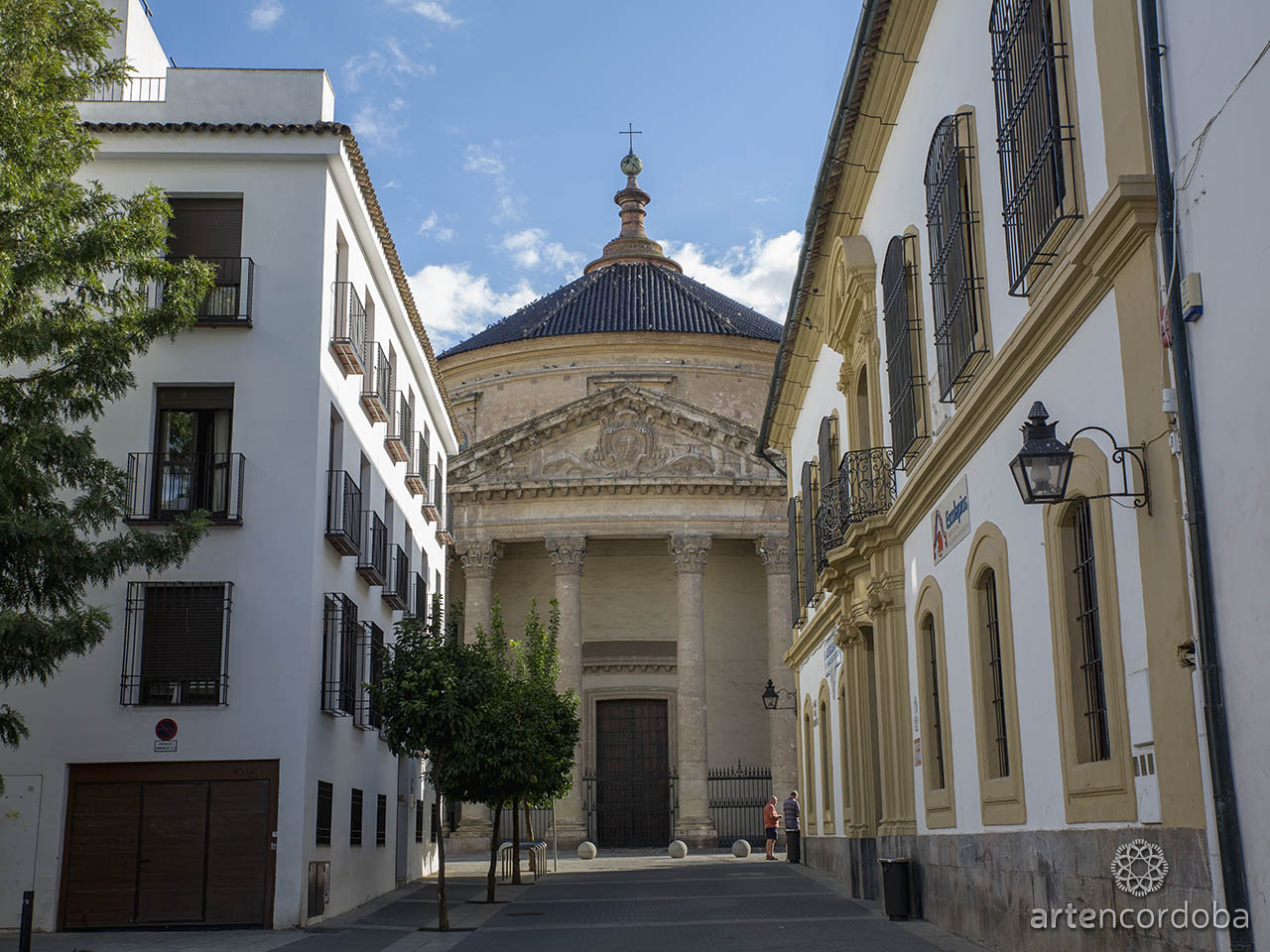
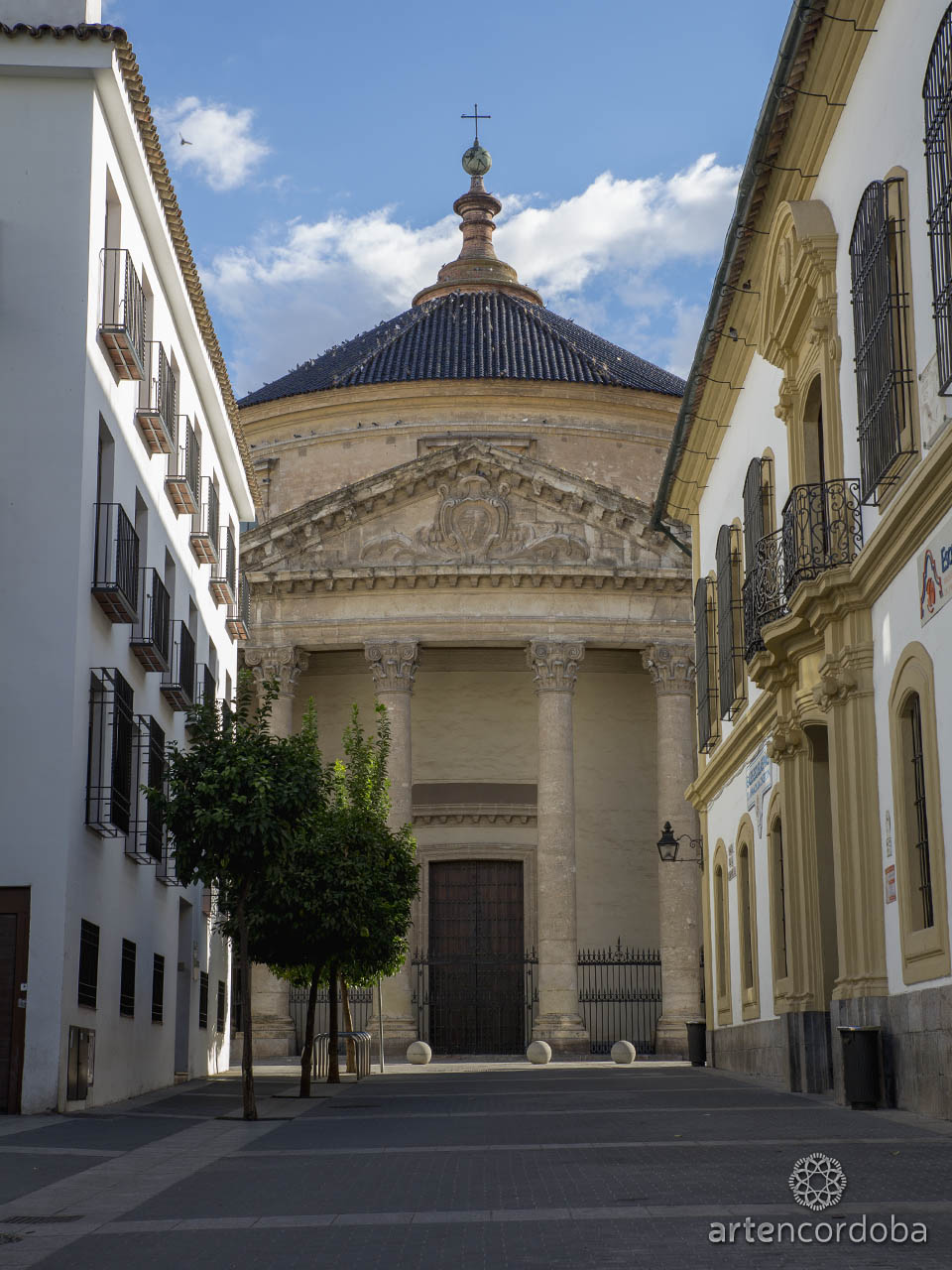
Closing the perspective of the Plaza de la Compañía is the Church of the College of Santa Victoria, neoclassical in style, notable for its peristyle of fluted columns of colossal order. Above their Corinthian capitals rises an undecorated frieze, slightly curved — the church has a circular floor plan — which gives way to the large triangular pediment that crowns the complex and, as mentioned, closes the southern end of the square. The temple was designed by French architect Baltasar Devreton and completed by Ventura Rodríguez.
Church of Santo Domingo de Silos
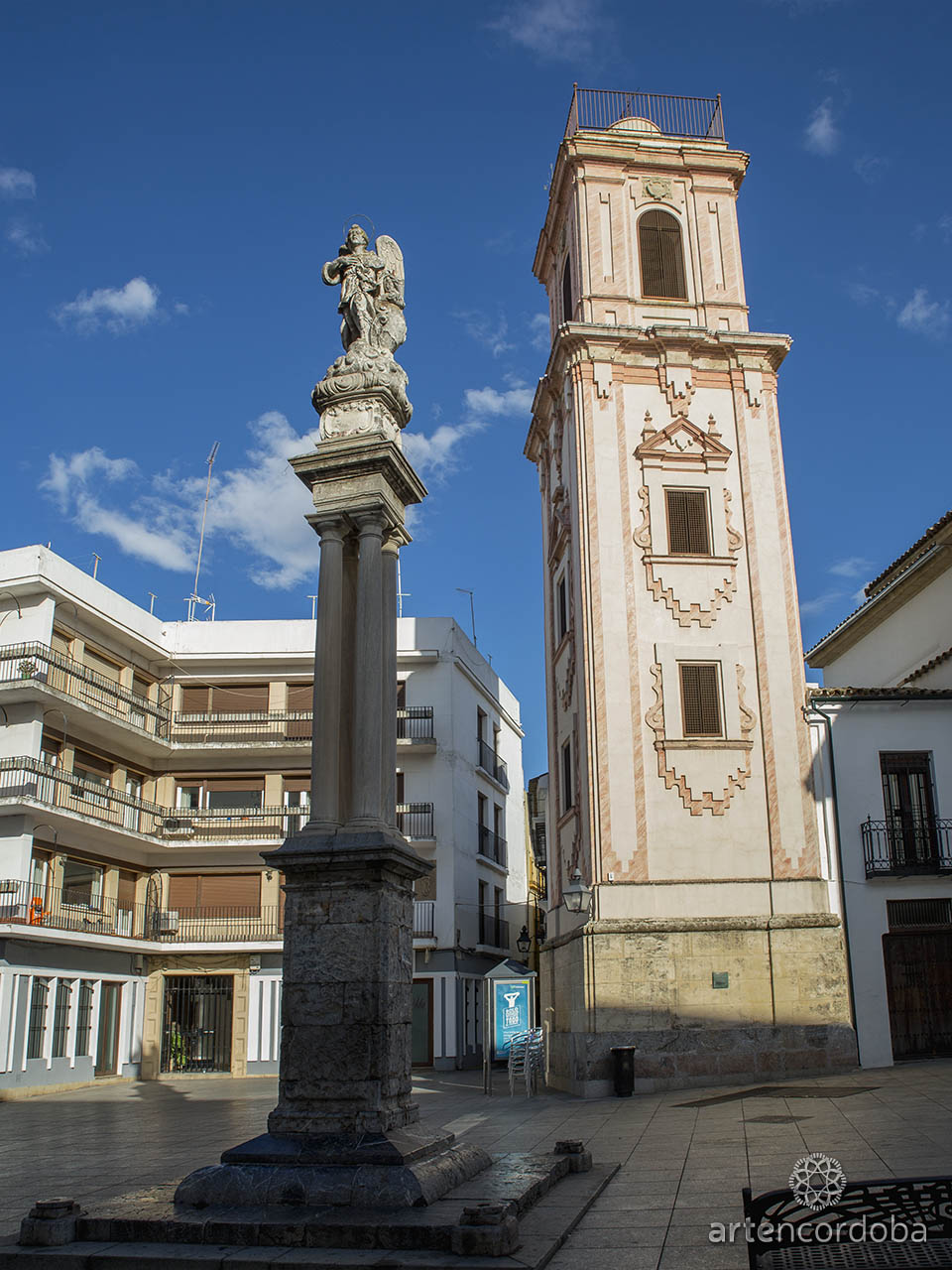
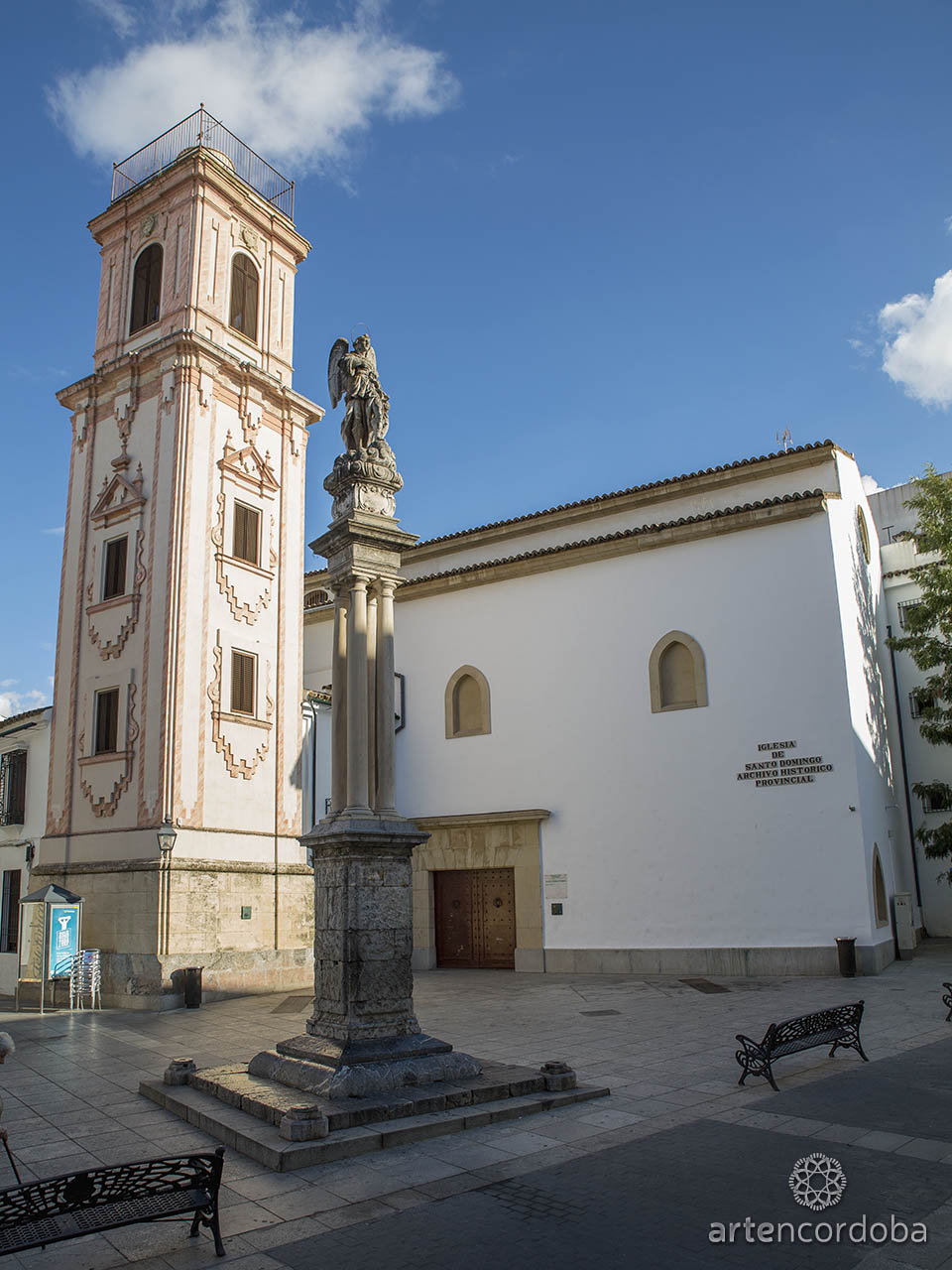
Opposite the aforementioned Church of the Compañía stands the old and Fernandine Church of Santo Domingo de Silos, now home to the Provincial Historical Archive of Córdoba. Built a few years after the conquest of the city by Ferdinand III the Saint, only the Chapel of the Conception remains in good condition — a small medieval gem within a monumental setting. The bell tower, dating from the mid-18th century, underwent a major restoration several months ago; it is one of those examples belonging to the style scholars call “plaque baroque“, widely used in our city during those years.
Triumph of Saint Raphael
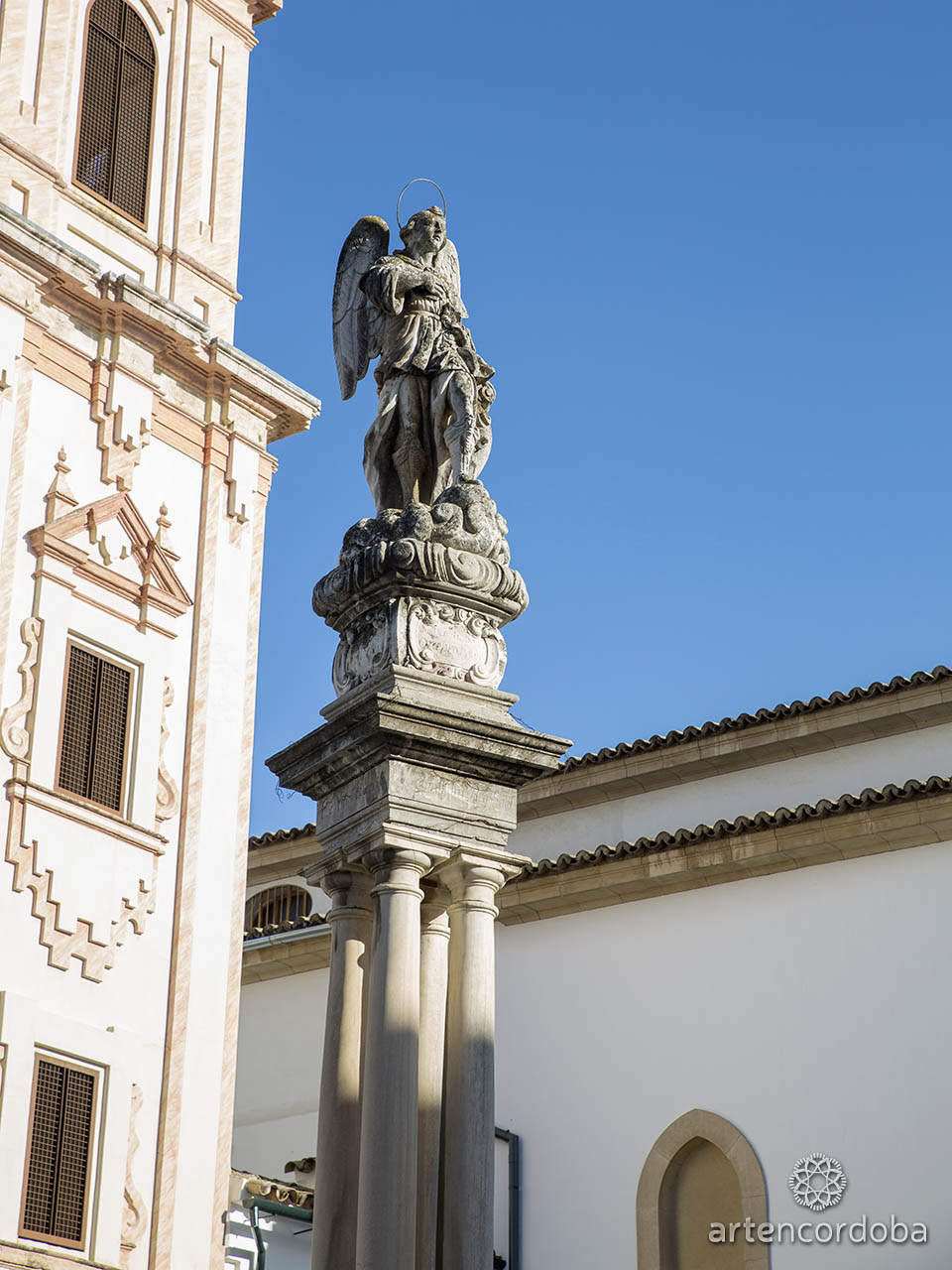
Presiding over the Plaza de la Compañía is a Triumph of Saint Raphael, erected in 1736 at the proposal of the Jesuit Juan de Santiago. Ramírez de las Casas-Deza described it in the mid-19th century with these words: “it consists of a platform on which rises a quadrilateral pedestal with gilded panels, each bearing a Latin inscription. On it rest four white marble columns supporting the cimacio with a cloud that serves as a pedestal for the gilded image of Saint Raphael.” Over the years, the gilding and inscriptions mentioned by Ramírez de las Casas-Deza have faded, and the fence is no longer preserved.
Visiting the Plaza de la Compañía
If you’re wondering what to visit in Córdoba, a great option would be the Plaza de la Compañía, by choosing one of our guided tours. Choosing high-quality tourism means choosing ArtenCórdoba.
Text: J.A.S.C.