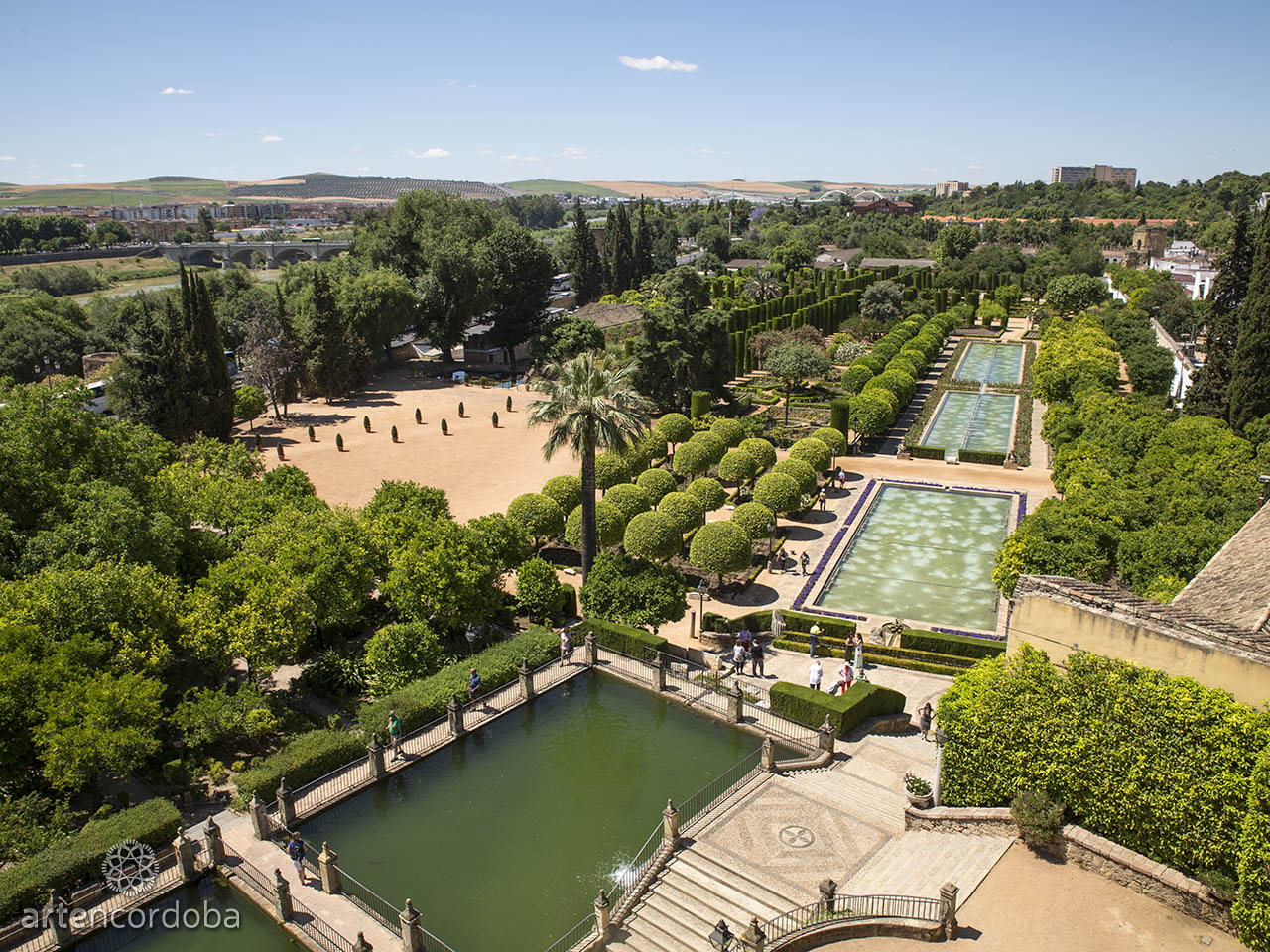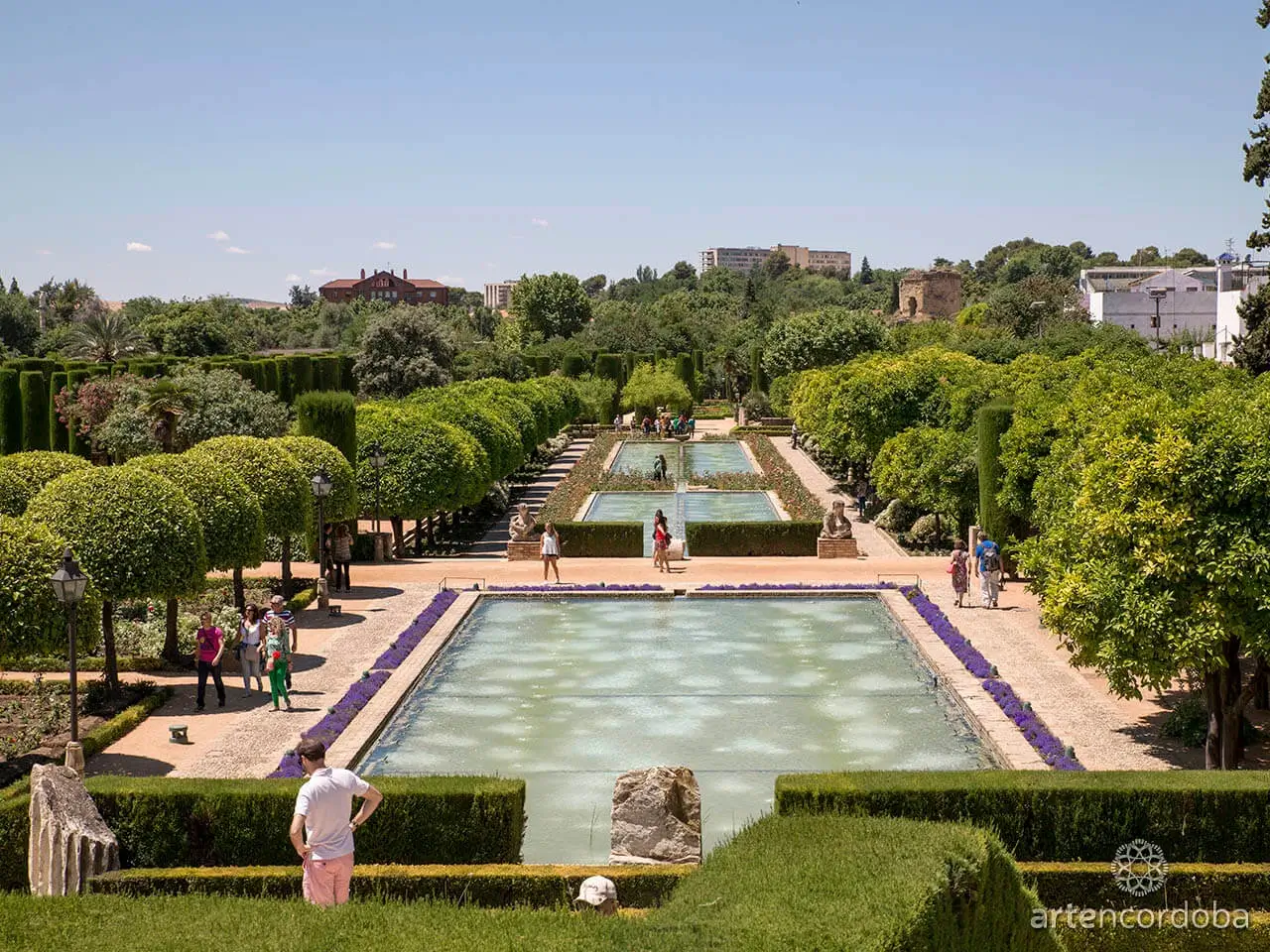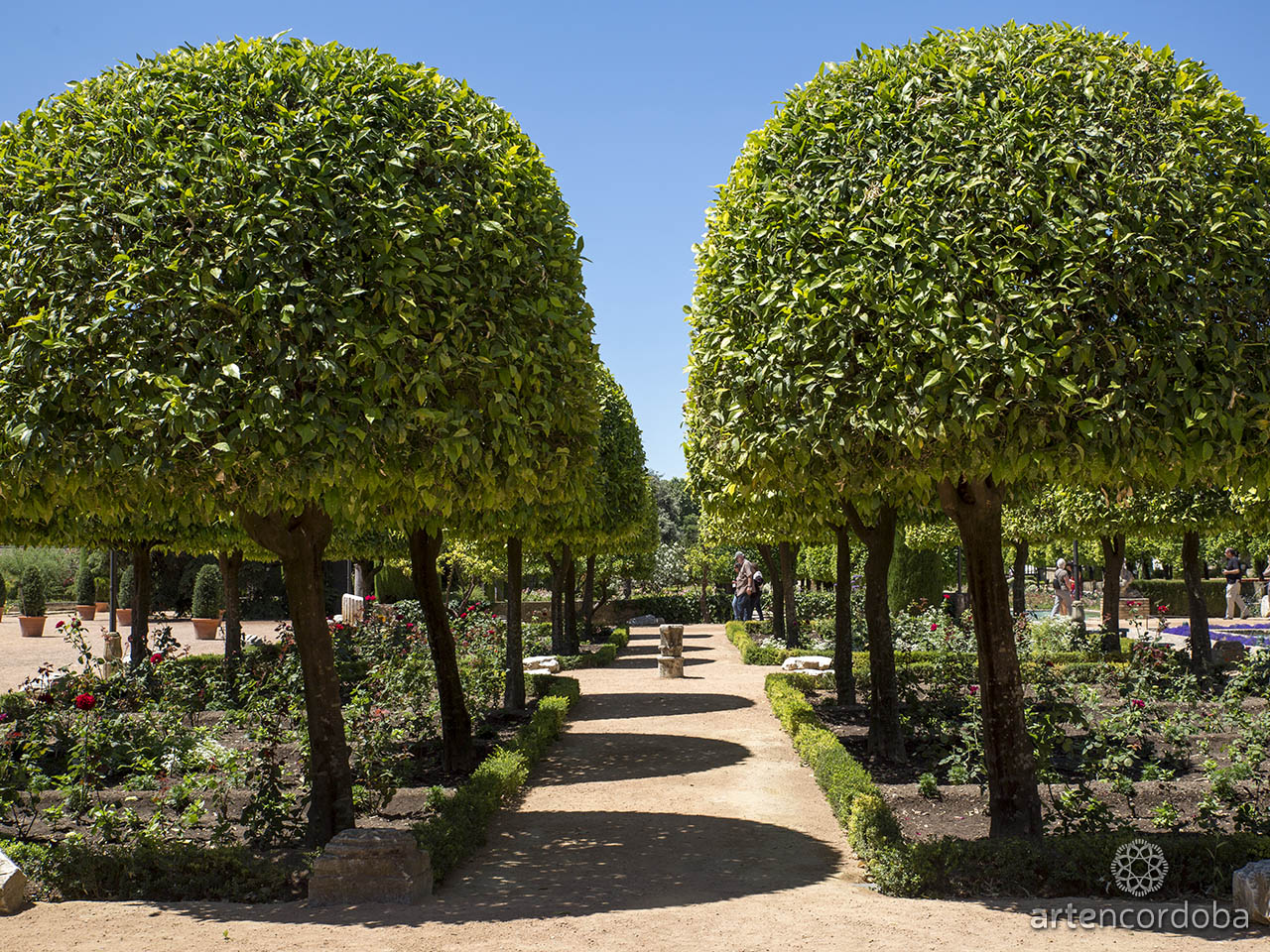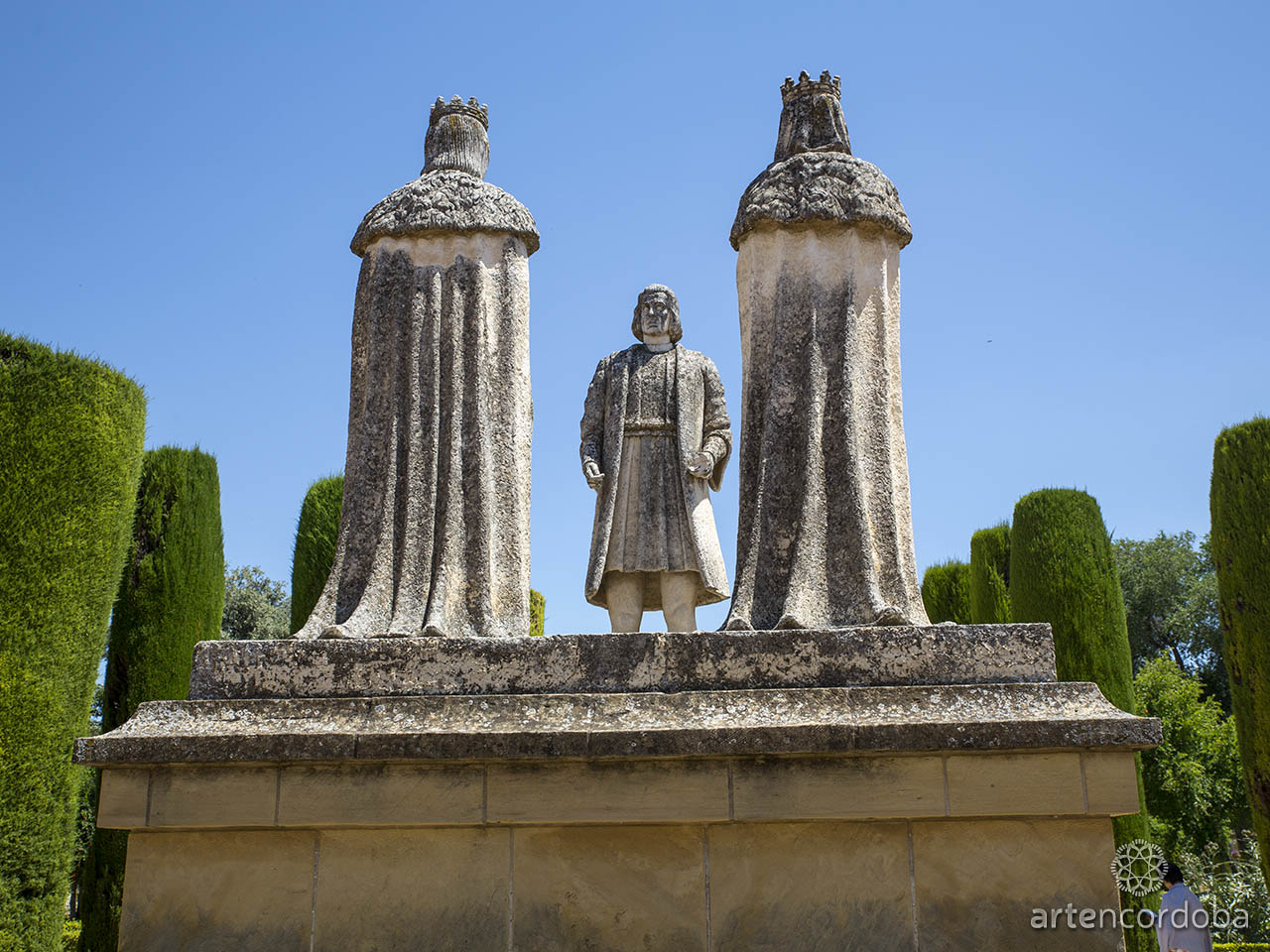






To gain a relatively complete view of the Gardens of the Alcázar, one must go back to the time of Julius Caesar himself, who personally planted various floral species and exotic trees, such as the Oriental plane tree. This tree is known for offering extensive shade, which would help to soften the temperature of the grounds.
During the Arab period, the gardens we know today began to take shape. They were located in the southern area of the complex, occupying the westernmost zones. Their layout completed the space designated for the royal harem, next to the baths, and ended with an orchard.
Construction probably began during the reign of Abd al-Rahman II, around the year 822. At that time, the aqueduct was built to bring water from the Bejarano and the Caño de Escarabita, with a branch diverted directly to the Alcázar. Thanks to this aqueduct, along with the water raised by the Albolafia waterwheel, all the palace’s needs could be met, including those of the gardens.
With the rise to power of Abd al-Rahman III and the transfer of the court to Medina Azahara, the gardens were abandoned for nearly a century.
Isabella the Catholic and the Gardens of the Alcázar
The gardens after the Christian conquest
After the Christian conquest, the Gardens of the Alcázar regained their splendor. The Catholic Monarchs ordered the Albolafia waterwheel to be stopped due to the noise it made, as the queen was ill. This decision affected the irrigation of the gardens, since much of the water came from the river, and the Bejarano’s supply was not enough—among other reasons because residents of Calle de los Judíos and Las Pavas secretly took water from it.
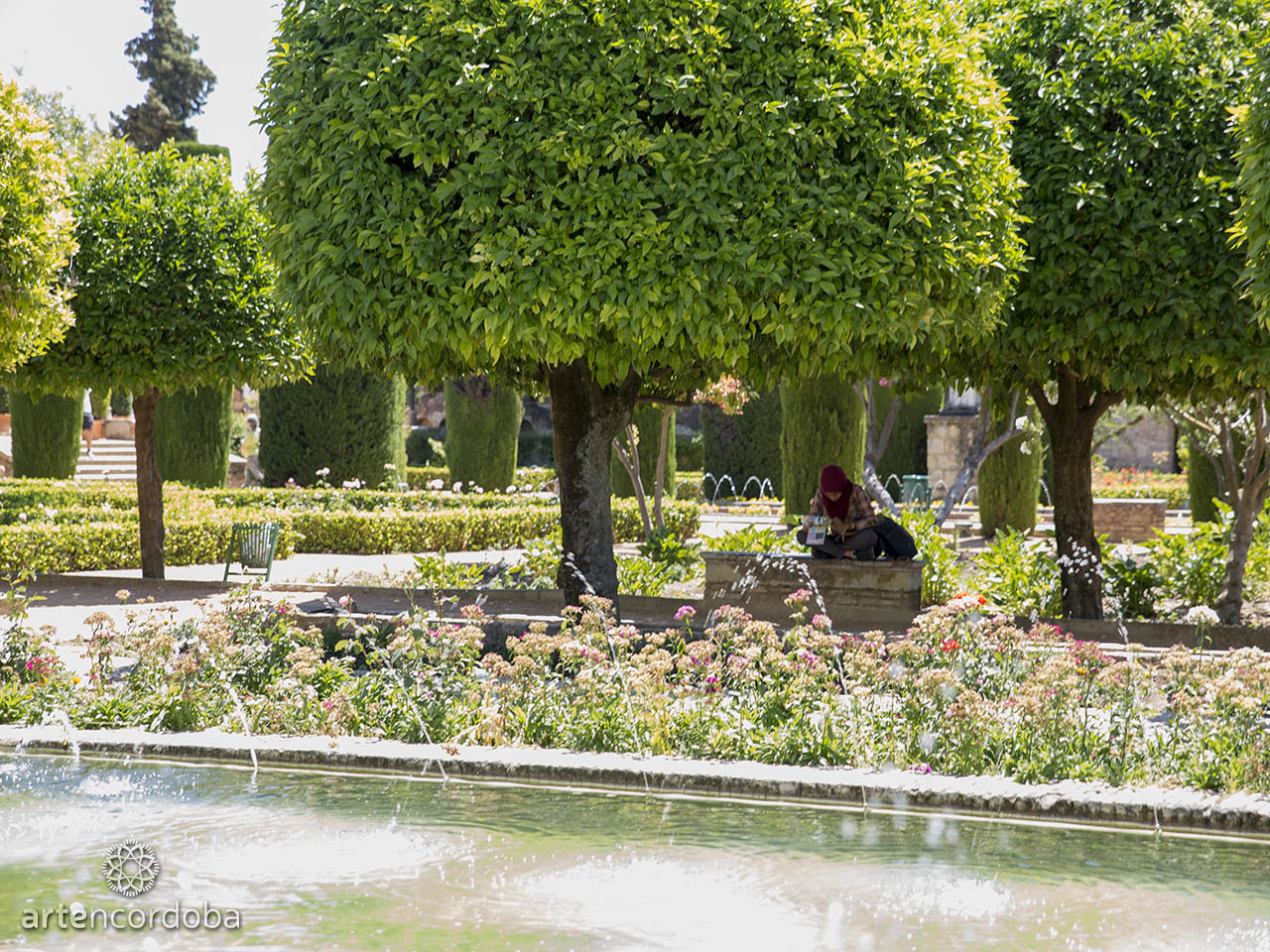
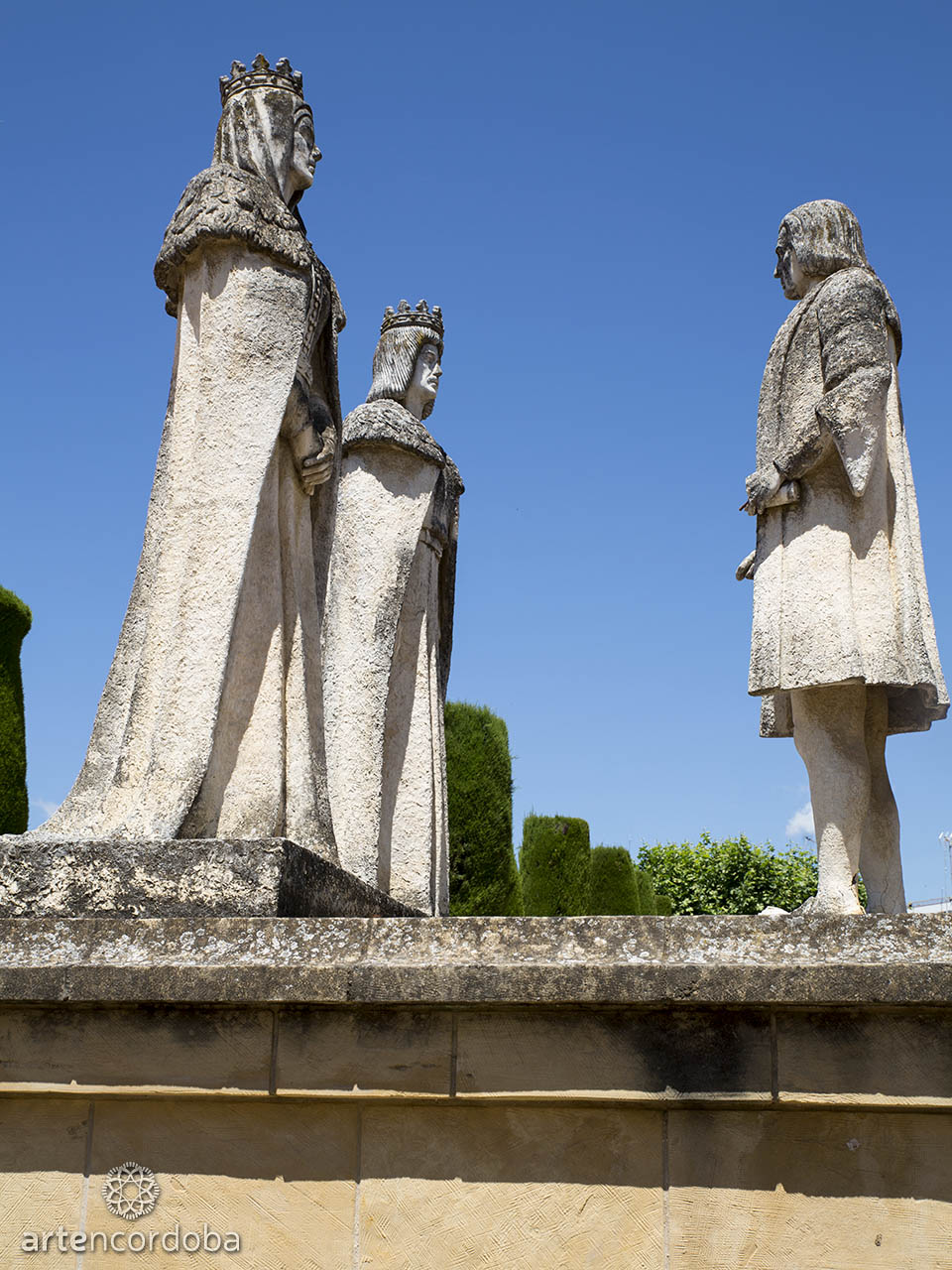
Isabella the Catholic had a special fondness for these gardens: she liked to walk through them and read under the shade of the trees.
The Gardens of the Alcázar today
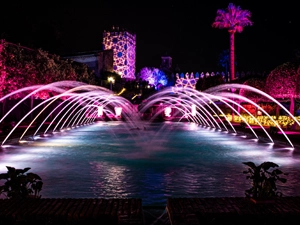
Today, the gardens receive visitors from all over the world and can even be admired at night thanks to the installed lighting.
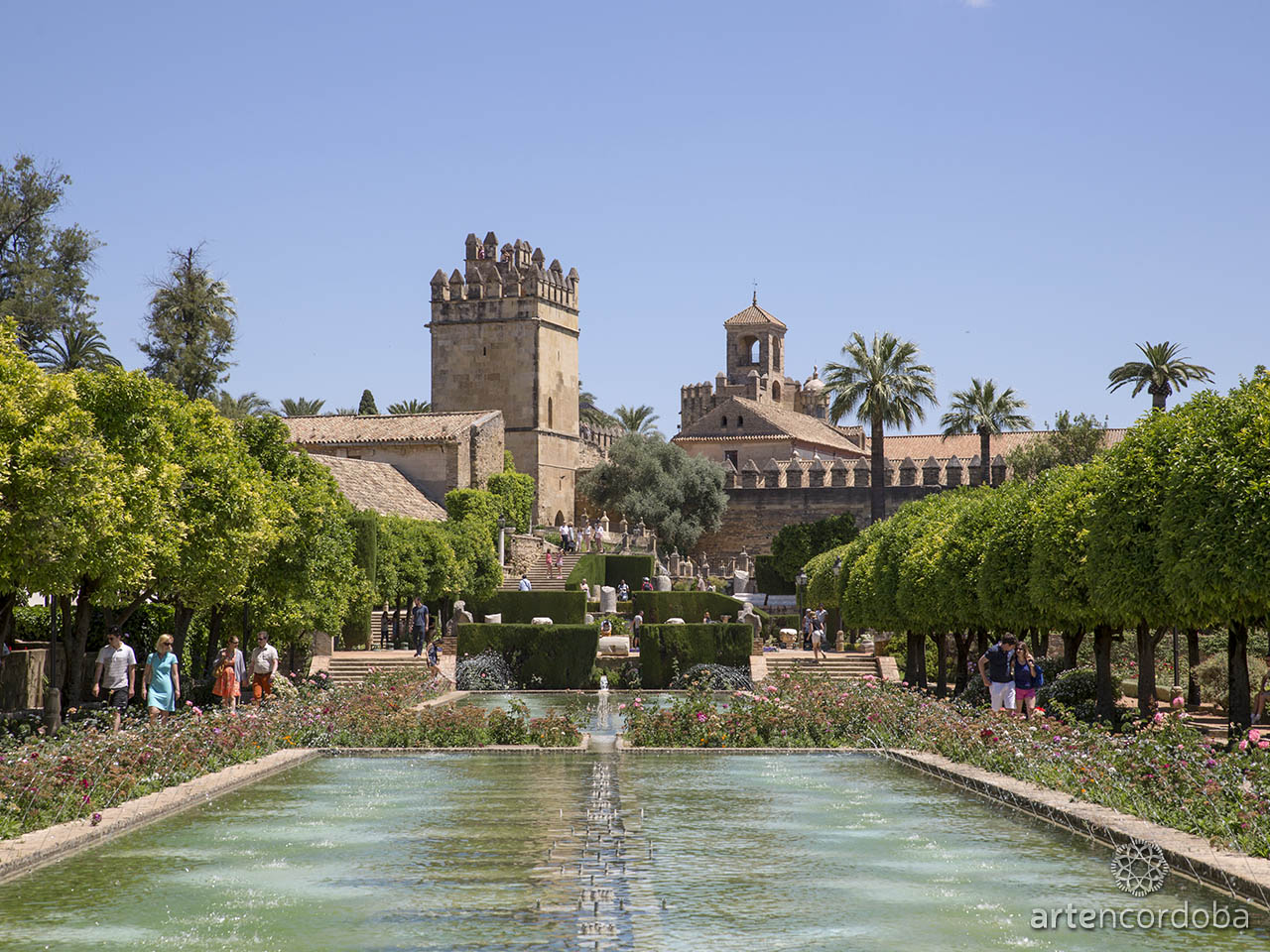
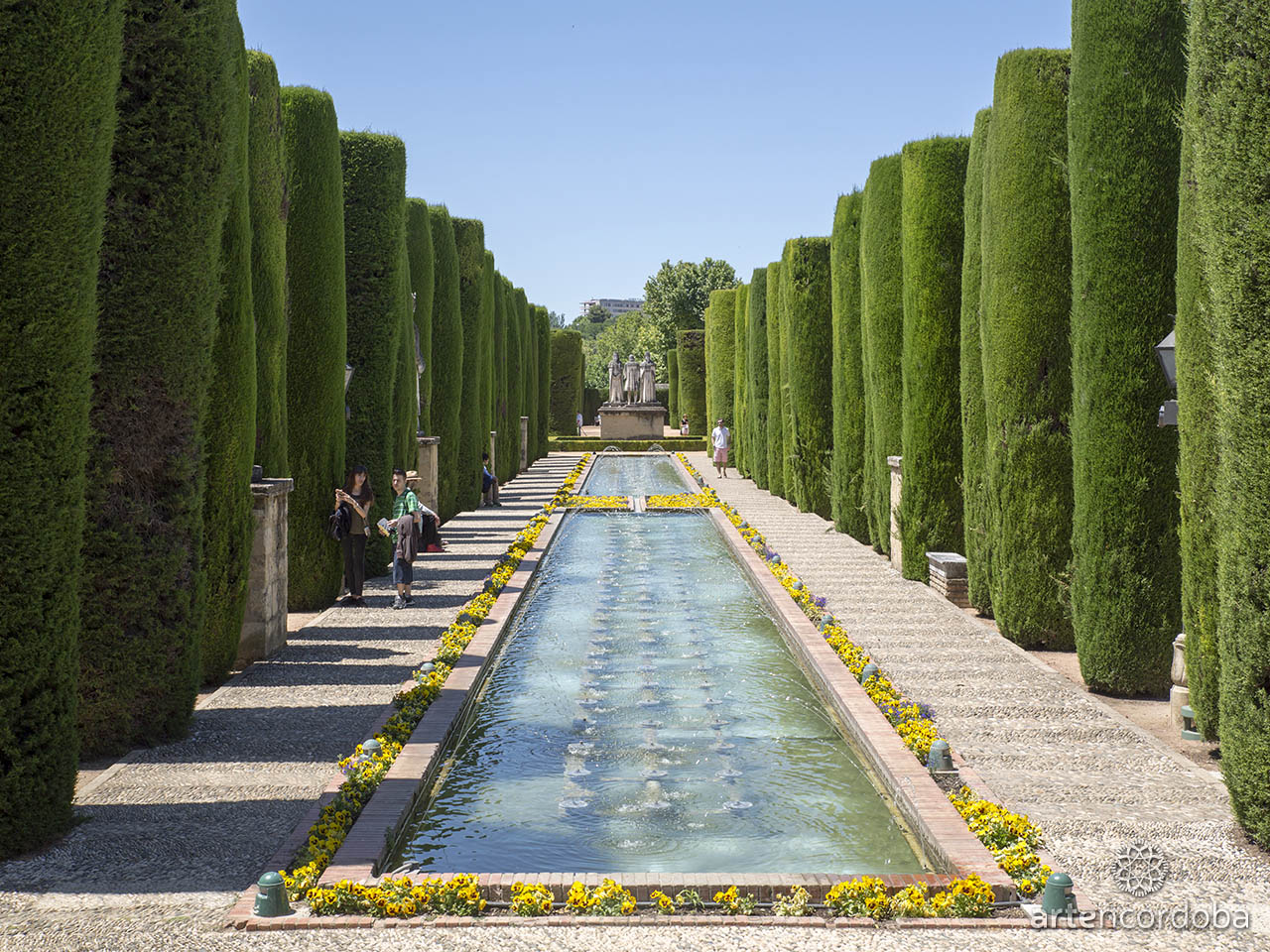
Going down a few brick steps, we find the stone fountain that receives water from the mountains. From there it flows through a channel to the first pool. The water continues descending from basin to basin to the far end of the gardens. All of this is surrounded by lush greenery and vibrant colors that stimulate the senses. Let us not forget that these gardens have long been places of love.
A space tied to celebrations
One of the most popular customs today is for newlywed couples to come with their families to take photos in the gardens. It’s not uncommon to see several couples posing among the pools and hedges.
Visiting the Gardens of the Alcázar
If you’re wondering what to visit in Córdoba, an excellent option is the Alcázar of the Christian Monarchs and its wonderful gardens, by booking one of our guided tours. Choosing quality tourism means choosing ArtenCórdoba.
Text: J.A.S.C.
Photo gallery