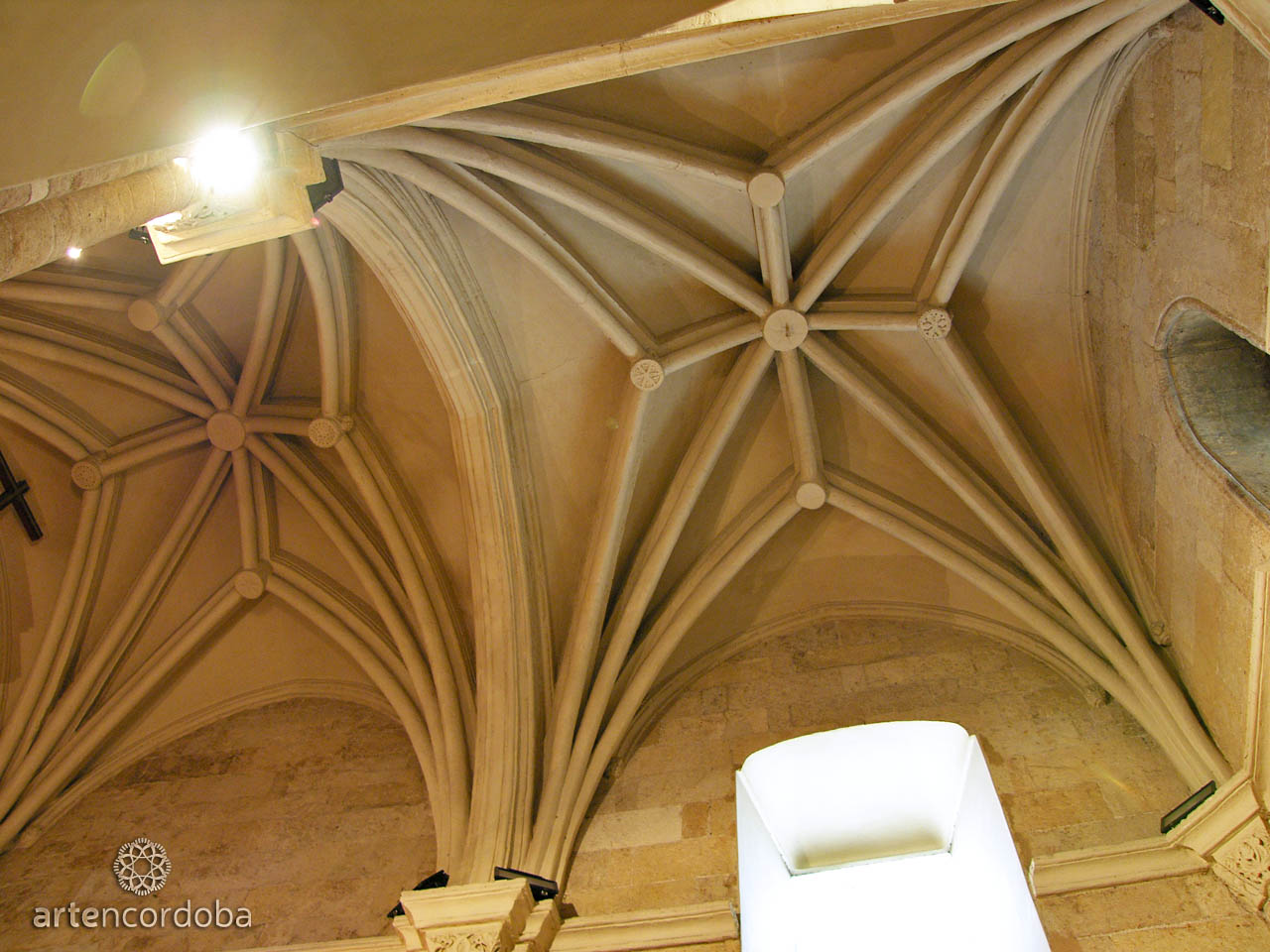






To carry out a thorough analysis of the Fernandine Churches of Córdoba, we believe we must go back a few years before their conception and construction, even before the conquest of the city in 1236 by Ferdinand III the Saint.
Historical Context Prior to the Conquest
After the conquest in 1236 by Ferdinand III the Saint, there was an urban redistribution that divided the city into two districts.
About five kilometers from Santa Elena, one of the northernmost towns in the province of Jaén, next to the Despeñaperros pass, there is a vast area where the remains of ancient weapons are so abundant that for centuries they have provided local farmers with the iron needed to make their tools. This is none other than the battlefield of Las Navas de Tolosa.
The major victory the Christians achieved over the Almohad army of Muhammad al-Nasir in July of 1212 marked the beginning of the end of the Arab occupation of the peninsula. From that point on, Christian monarchs faced fewer difficulties, and cities such as Córdoba and Seville were conquered within a relatively short period, during the reign of Ferdinand III the Saint. The city that resisted the longest was Granada, which fell to the Catholic Monarchs, who, interestingly, directed their campaigns from an emblematic building in our city that bears their name, the Alcázar of the Christian Monarchs.
The Urban Reorganization of Córdoba
Each district was in turn divided into seven parishes, and in each one a church was built, these are the so-called Fernandine churches.
After the conquest of Córdoba in 1236 and the signing of the capitulation, the fame of its wealth and fertile agriculture spread throughout Spain, quickly attracting people from all over who flocked to the city in such numbers that there were more inhabitants than houses.
The urban redistribution significantly altered the layout of the former caliphal capital, where Alfonso XI built the Alcázar as a royal residence, while Henry II of Trastámara reinforced the defenses with towers such as those of Calahorra and Malmuerta, attempting to prevent the continued threat of incursions from the Muslims in the south.
The caliphal city was clearly divided into two large districts, the Villa and the Axerquía, a layout that remained until the Modern Age. The first covered approximately the perimeter of the former Roman city, while the second extended eastward. Ferdinand III the Saint divided each district into seven parishes, and in each of them, a church was built, serving as both religious and administrative center.
Additionally, these Fernandine churches were built in strategic locations, often in areas with sparse population, in an attempt to distribute the population as evenly as possible. The churches gave their names to the neighborhood, the parish, and often the urban development revolved around them.
The Preserved Fernandine Churches
Below we have compiled a brief analysis of the so-called Fernandine Churches of which remains have been preserved—twelve in total—and we have grouped them into three different itineraries, following no specific pattern other than their proximity, to allow tourists to visit them, where possible, with maximum convenience and ease.
Unique Cases
There are two cases of Fernandine Churches we would like to highlight. The first is the Church of Santa María Magdalena, part of the “Axerquía II Itinerary,” a temple closed to worship since the early 20th century. Managed by the bank Cajasur, it often hosts cultural events such as classical music concerts or exhibitions, and is therefore closed to tourists.
The second case is the Church of Santo Domingo de Silos, part of the “Villa Itinerary.” Of this church, only some of its structures and the tower—which is not medieval—have been preserved. Today, the building houses the Provincial Historical Archive of Córdoba, and as with the previous case, it is closed to tourists.
Guided Tours
If you would like to learn about the Fernandine Churches, do not hesitate to book one of our guided tours. We are experts in the interpretation of Córdoba’s historical heritage. If you have chosen to do tourism in Córdoba, choose a quality option—choose ArtenCórdoba.
Text: J.A.S.C.
Fernandine Churches of Córdoba
- Church of St. Francis and St. Eulogius
- Church of San Agustín
- Church of San Andrés
- Church of San Lorenzo
- Church of San Miguel
- Church of St. Nicholas of the Villa
- Church of San Pablo
- Church of San Pedro
- Church of St. Mary Magdalene
- Church of Santa Marina
- Church of Santiago
- Church of St. Dominic of Silos