





The building activity of the first generation of city inhabitants focused on the construction of a solid wall over three meters thick, formed by two faces of large calcarenite stone blocks, arranged in opus quadratum, alternating stretchers and headers, with a core of rubble and clay. Along its entire perimeter, square and circular towers were built. The solid wall defined an irregular polygon with an approximate area of 42 hectares.
The inner structure in the 2nd century BC shows a very modest Corduba in its constructions. The walls were generally made of rough stones and river pebbles bound with mud, topped with adobe and rammed earth. Floors were very poor, made of cobblestones or, in the worst cases, compacted earth. For this reason, the primitive city mostly had a defensive character lacking a defined internal urban fabric.
First Signs of Monumentalization
However, in the transition from the 2nd to the 1st century BC, a certain degree of monumentalization is documented. On top of the foundational remains, structures with solid ashlar blocks are detected. The walls feature opus signinum coatings and painted stucco. As for water supply, in these early stages, it focused on digging wells to reach the water table and collecting rainwater through cisterns. Latin historians affirm the existence at this time of rich mansions and a forum used as a court where governors administered justice.
The Augustan City and the Colonia Patricia
With the arrival of Augustus and the institution of the city as Colonia Patricia, a period of reconstruction begins. It was at the turn of the era, during the reign of Emperor Augustus, that a series of renovations were undertaken, allowing us to speak of a new Corduba. Recent archaeological excavations reveal that during the second half of the 2nd century BC, the city began to be rebuilt over Republican structures, following a highly organized urban plan.
On one hand, the Republican walled enclosure was considerably expanded, reaching a final area of 78 hectares. This increase in the pomerium (Lat. beyond the wall) towards the river likely enhanced its role, as it is during this time that the construction of the bridge and port must be dated.
Interior Urban Planning
Inside the walls, a defined urbanism developed, characterized by blocks or insulae, separated by wide streets equipped with a complete and complex sewer system. At the intersection of the main streets: Kardo Maximus and Decumanum Maximus, the colonial forum was located, situated near the current Church of San Miguel.
Water Supply and Public Buildings
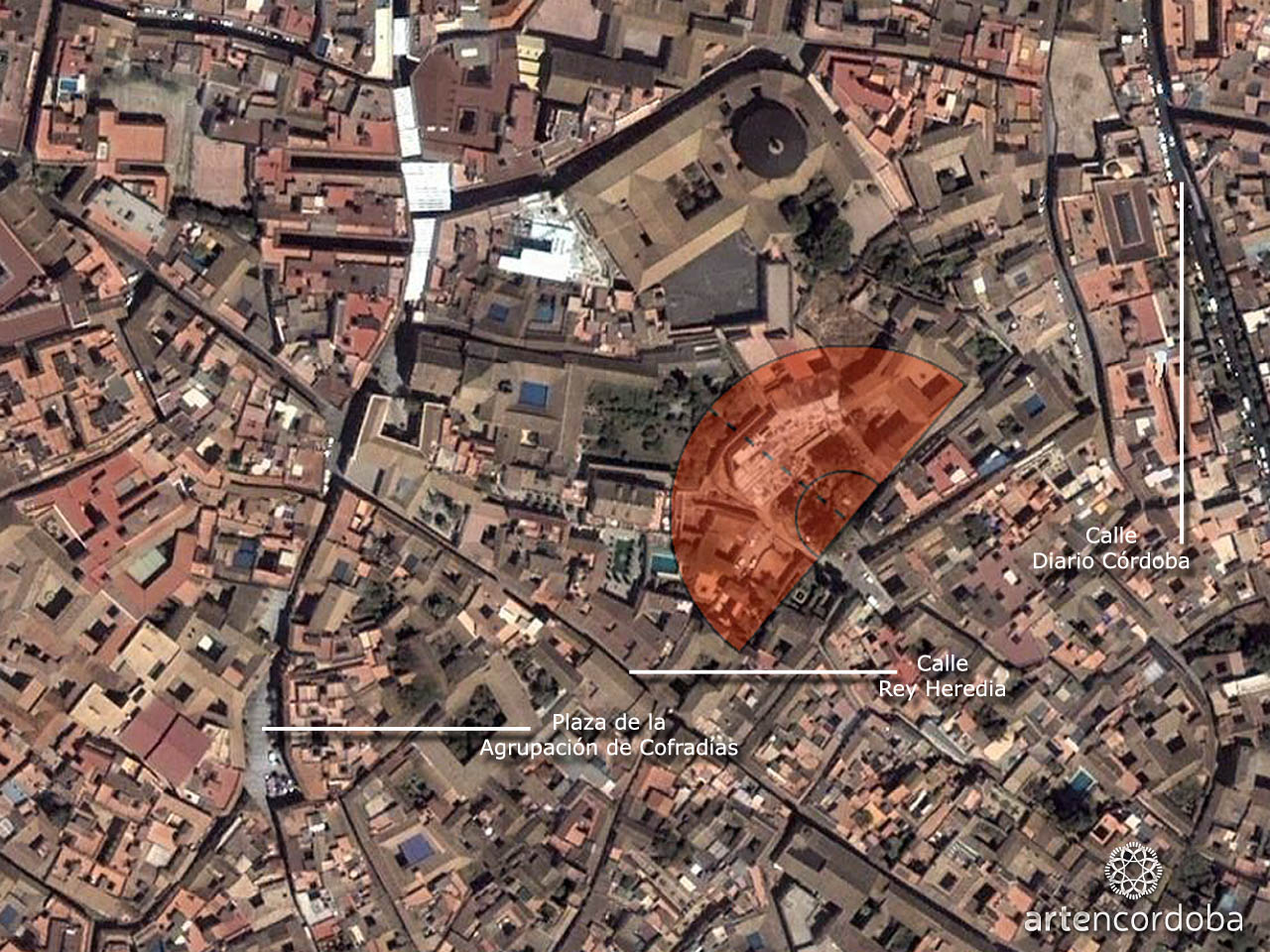
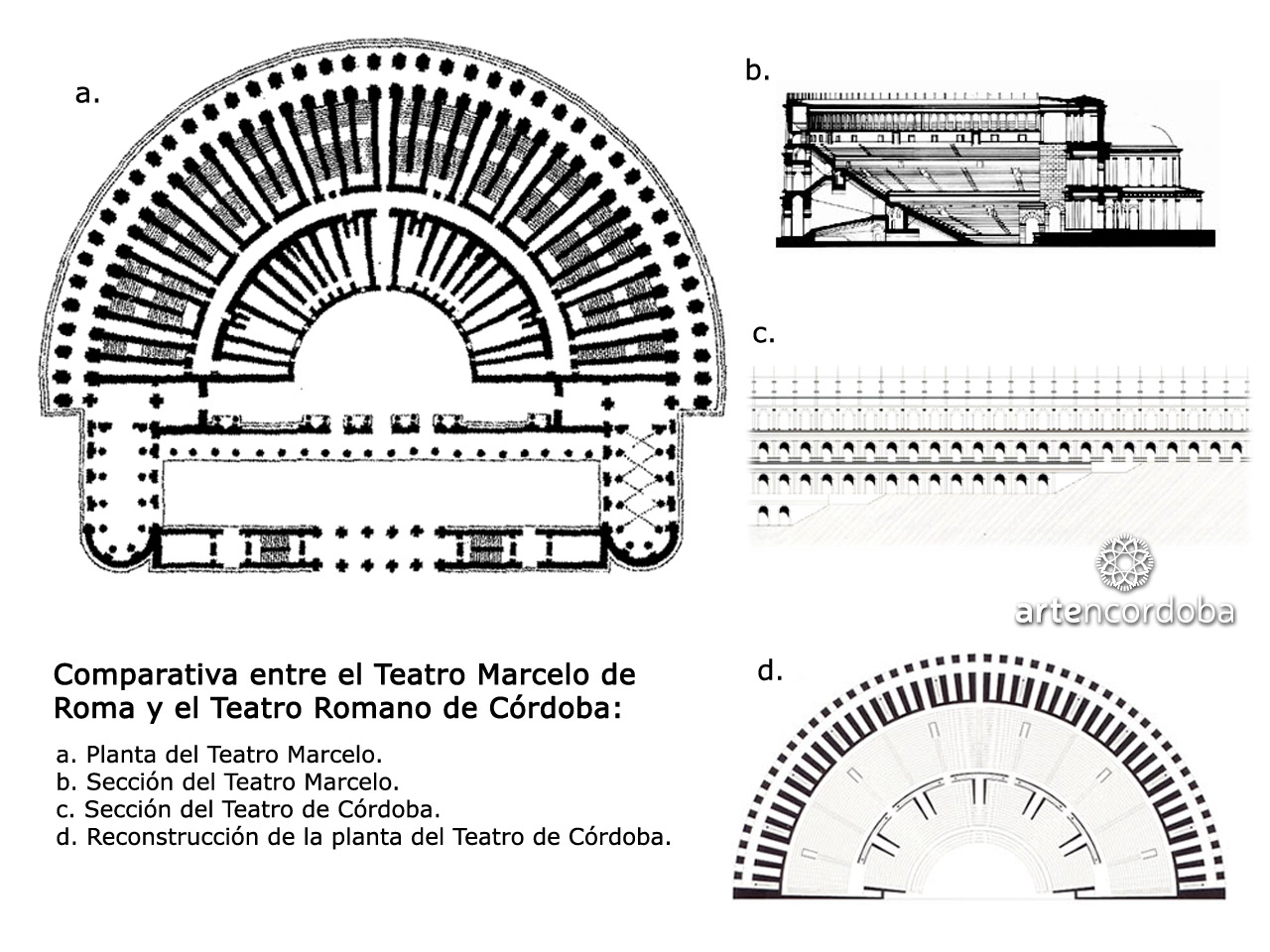
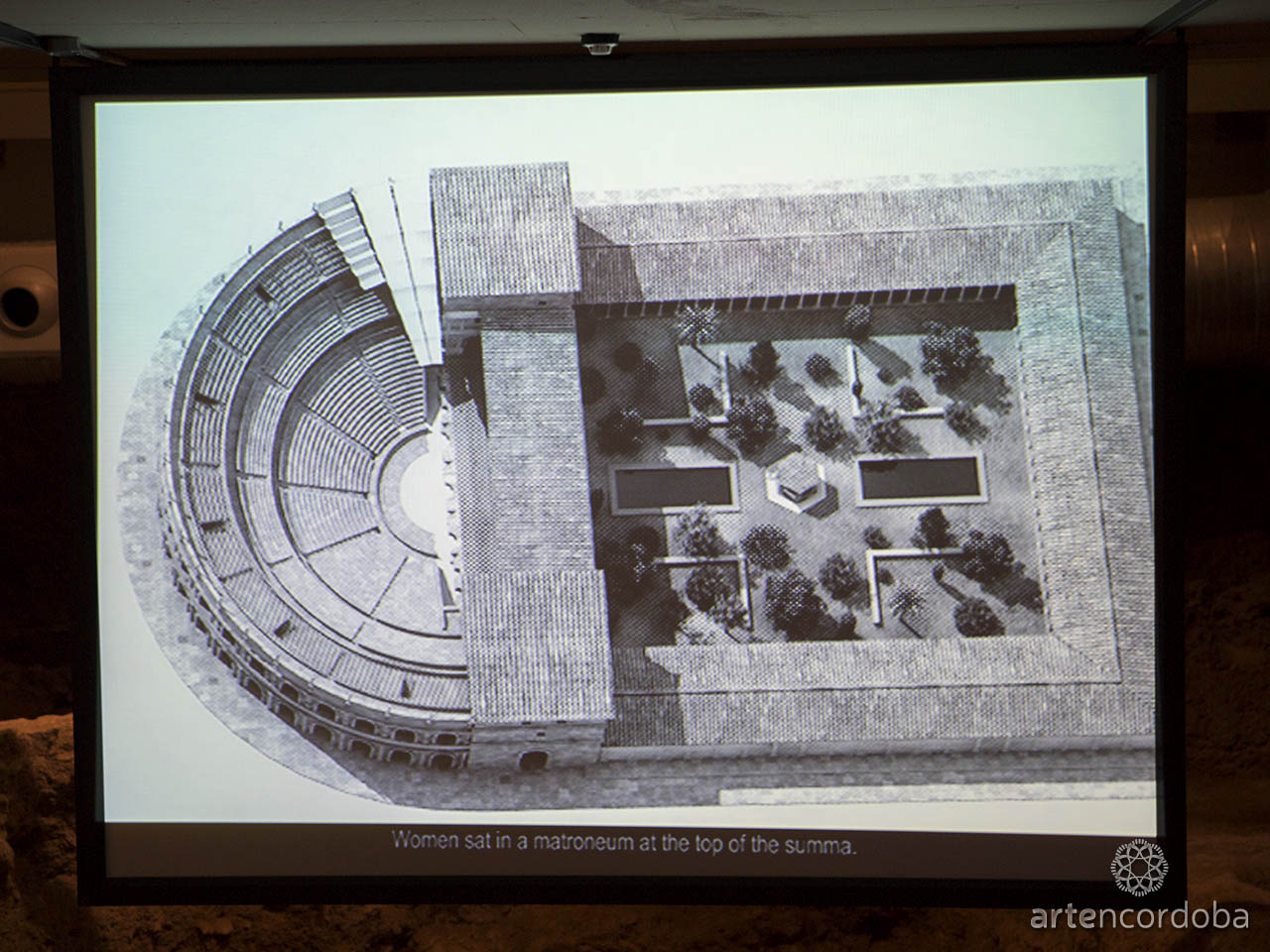
On the other hand, the population increase resulting from this urban expansion required a significant amount of water resources, leading to the construction of an aqueduct, the Aqva Avgvsta or Valdepuentes Aqueduct, as well as the proliferation of public fountains. At the end of the Augustan era, the construction of the Theatre began, taking advantage of a pronounced natural slope in the southeast of the walled area.
High Imperial Córdoba
During the High Imperial period, the city experienced unprecedented urban development, in line with its role as a provincial capital. The city grew beyond the walls, giving rise to new neighborhoods or vici. Two entertainment buildings were also constructed outside the city: the Circus to the west, near the Via Augusta, and the Amphitheater, recently partially excavated on the grounds of the Rectorate, of which little information can be provided.
Likewise, necropolises began to appear along the main roads out of the city, some of them, such as the western and northern ones, of considerable size, leaving evidence of the level achieved in Corduban funerary architecture.
Monumental Squares and Infrastructure
Building activity continued inside the city with the construction of two monumental squares. The first, dated to the end of Claudius’s reign, was located in the western sector of the city, housing the Temple on Claudio Marcelo Street. The second, built in Flavian times, was located near Jesús María and Ángel de Saavedra streets.
All this construction frenzy caused a greater demand for water, addressed by the construction of a second aqueduct, the Aqva Nova Domitiana Avgvsta, during the reign of Domitian. Likewise, the capital was equipped with a major communication hub, remnants of which include the Roman Bridge over the Pedroche Stream.
Urban Decline
From the 3rd century AD onwards, the city began to experience a certain decline: abandonment and looting of public buildings, clogging of water supply and sewage systems, intramural burials, and a noticeable urban decline in the northern part of the city to the detriment of the southern area. This was only somewhat mitigated by the construction, outside the city walls, of the Palace of Emperor Maximian, as well as the prominent role the city played under Hosius.
Roman Córdoba and Cultural Tourism
If you’re wondering what to visit in Córdoba, a great option would be Roman Córdoba, by choosing one of our guided tours. This way you can learn everything about its urban planning. Choosing to engage in quality tourism is choosing ArtenCórdoba.
Text: Fran Peña.