





Throughout the 18th century, the devotion of the people of Córdoba to San Rafael filled many of the city’s squares with images of the archangel; these images were known as triumphs.
The first of these triumphs was placed on the Roman Bridge around 1651 as a token of gratitude for the end of the plague outbreak that had struck the city years before. Years later, the sculptors Pedro de la Paz and Bernabé Gómez created a San Rafael as a crowning element for the Cathedral Tower, so that it would overlook the city.
As previously mentioned, during the 18th century the city squares were populated with a large number of these triumphs, such as the one located in Plaza de la Compañía in 1736, the one erected at the entrance of the Alcázar in 1743, the one in Plaza de Aguayos from 1753, or the one located in Plaza de San Hipólito, among others.
Project and Location
This trend of constructing such monuments may have prompted the Cathedral Chapter to consider erecting, in 1736, a Triumph of San Rafael dedicated to the city’s Guardian Archangel. At first, the project was entrusted to an Italian artist, consisting of the creation of a cascading fountain where the water symbolized the birth of the Guadalquivir River, but this was soon dismissed due to water issues. Subsequently, the Italian priests Domenico de Escroijs, chamber painter to the King of Portugal, and Simone Martín, sculptor in service to the King of Sardinia, were consulted.
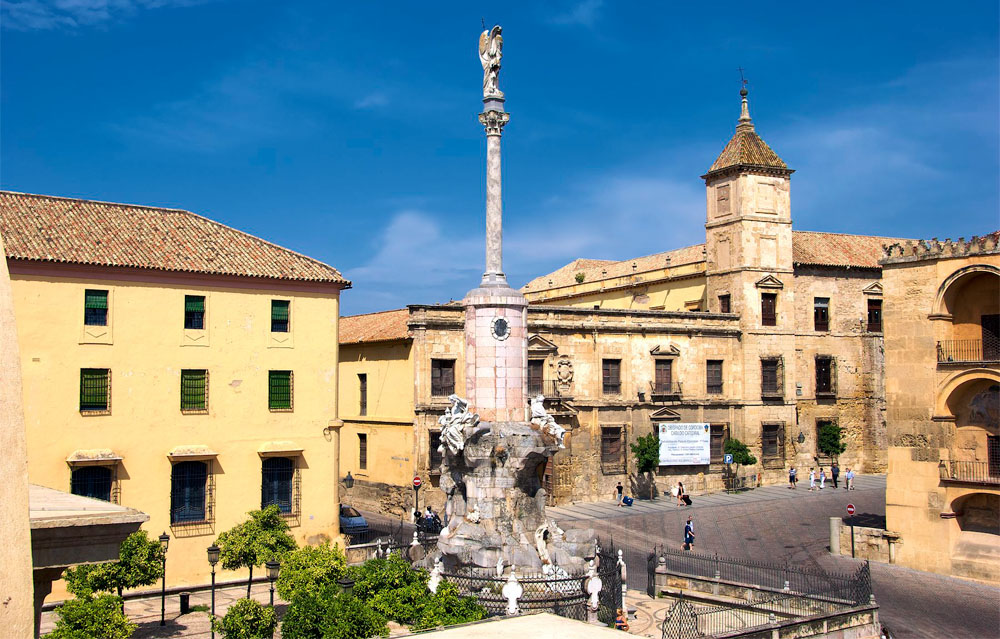
The chosen location was the esplanade adjacent to the south façade of the Cathedral, next to the Seminario and the Southern Gate of the city. During the Middle Ages, this place had housed the old Hospital de los Apestados, founded by Bishop Pascual and later also dedicated to those drowned in the river.
Development of the Works
When the works had barely begun, we know that they were interrupted, either due to lack of funds or a lack of technical direction, and there was no activity at the site until the arrival of Bishop Barcia to the city. During the foundation works, numerous human remains belonging to the cemetery of the aforementioned hospital came to light, and even the lid of Bishop Don Pascual’s tomb was found.
Bishop Barcia entrusted the direction of the works to the Marseille-born artist Miguel Verdiguier, who had settled in Córdoba and, among other merits, had been a drawing and painting teacher to the Duke of Rivas. In fact, we have little documentary evidence of the works, except for several writings by Ramírez de las Casas Deza, so we cannot state with certainty what changes Verdiguier may have introduced compared to Escroijs’s initial project.
Artistic and Symbolic Description
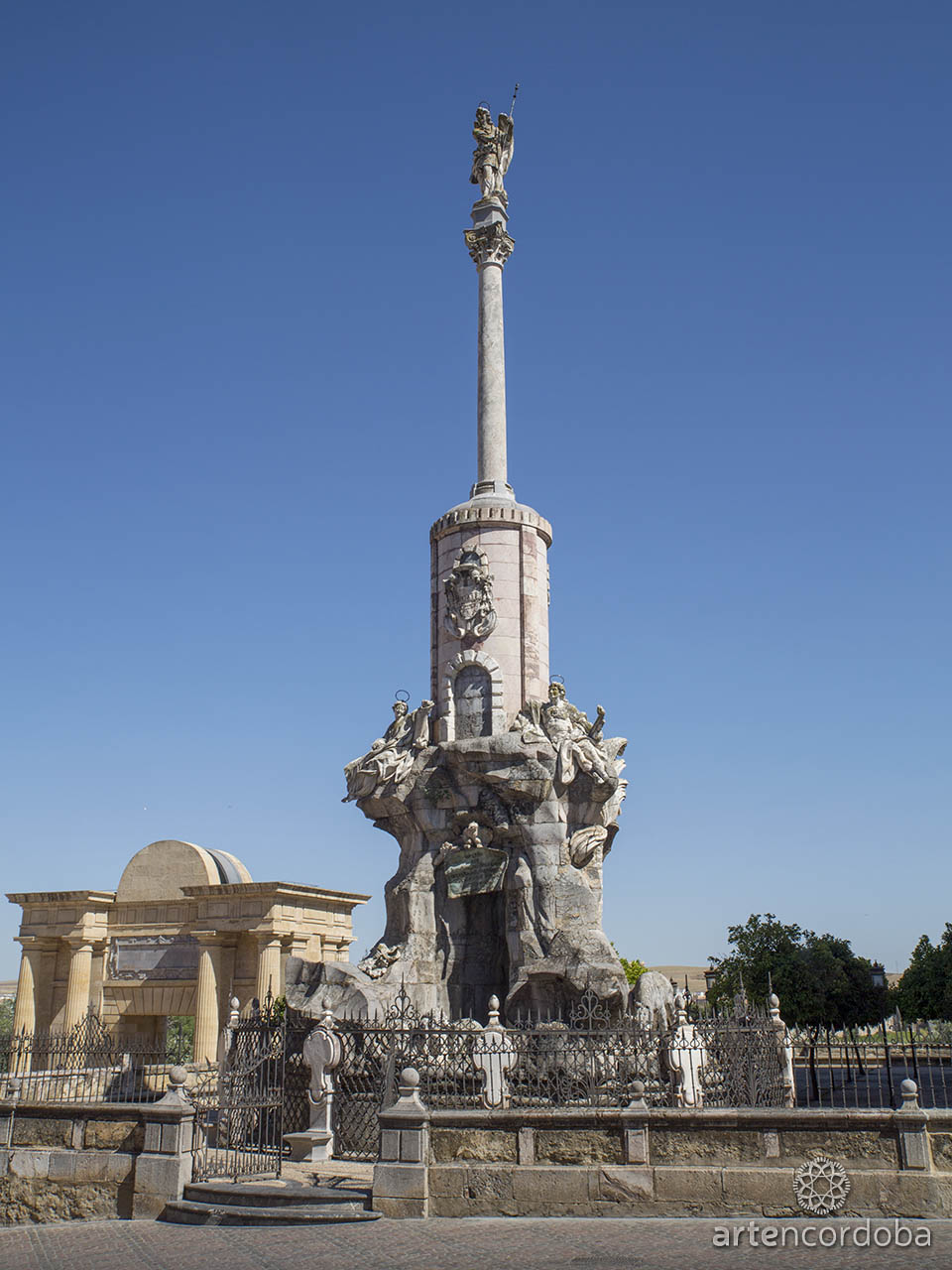
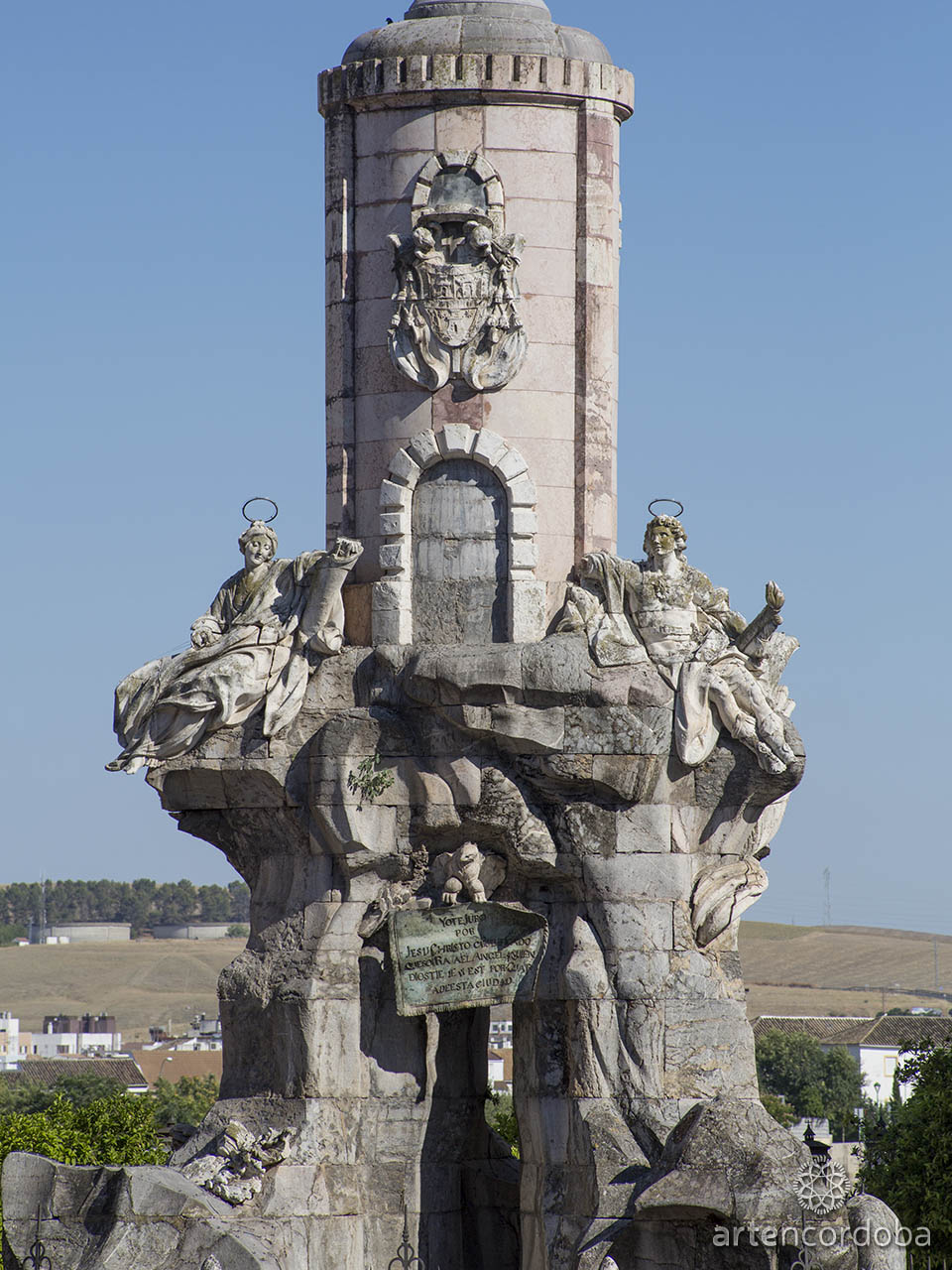
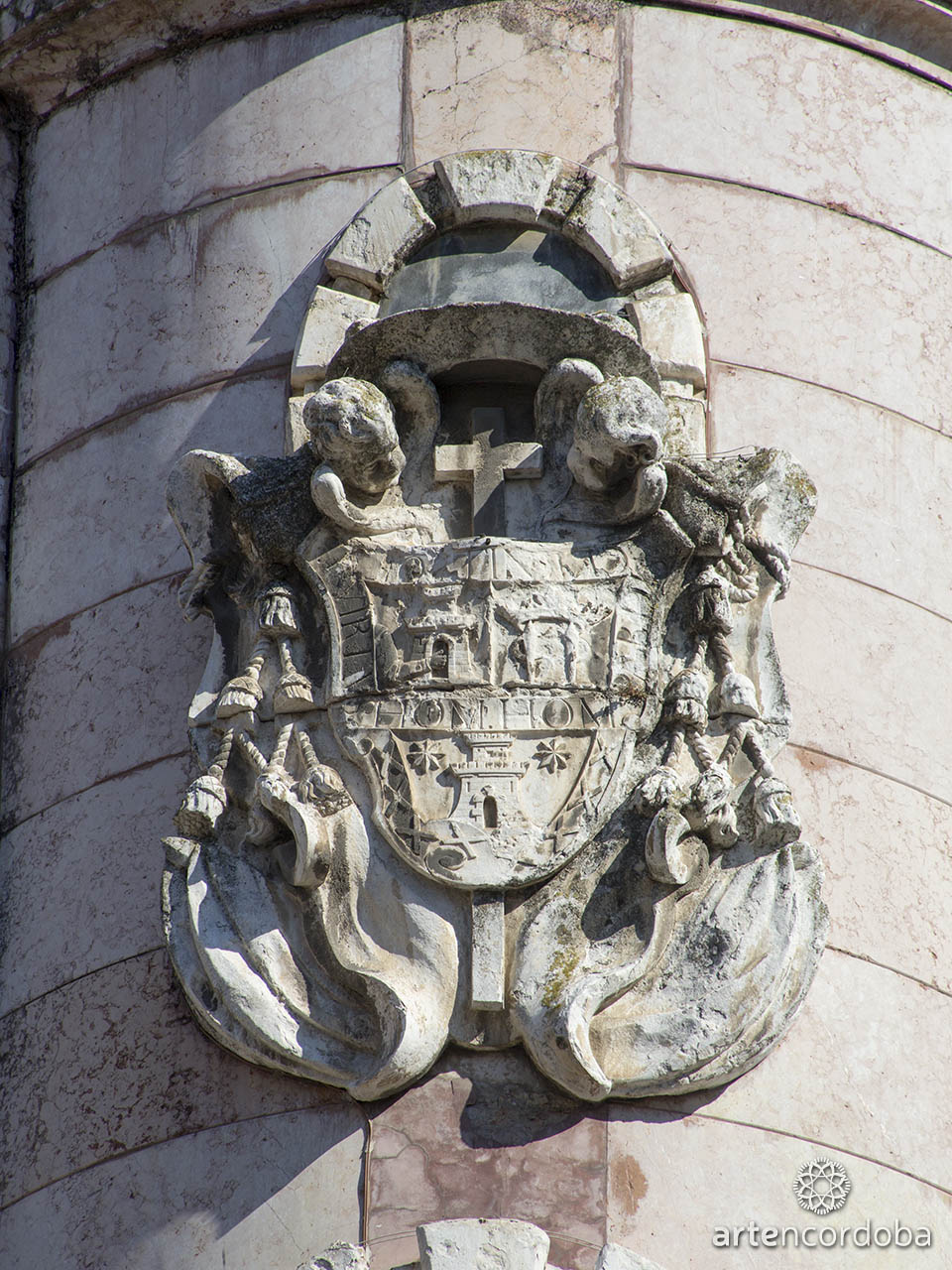
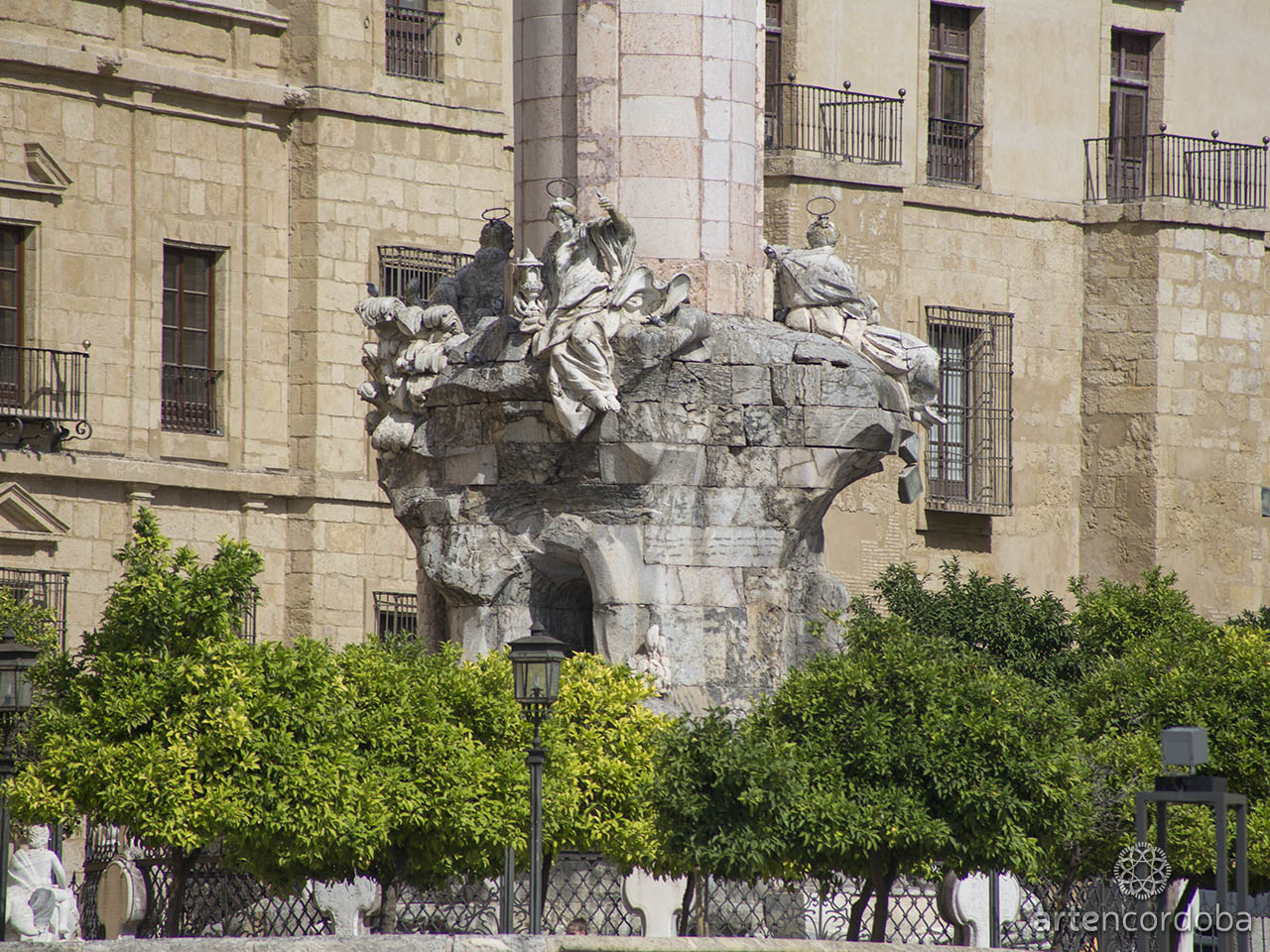
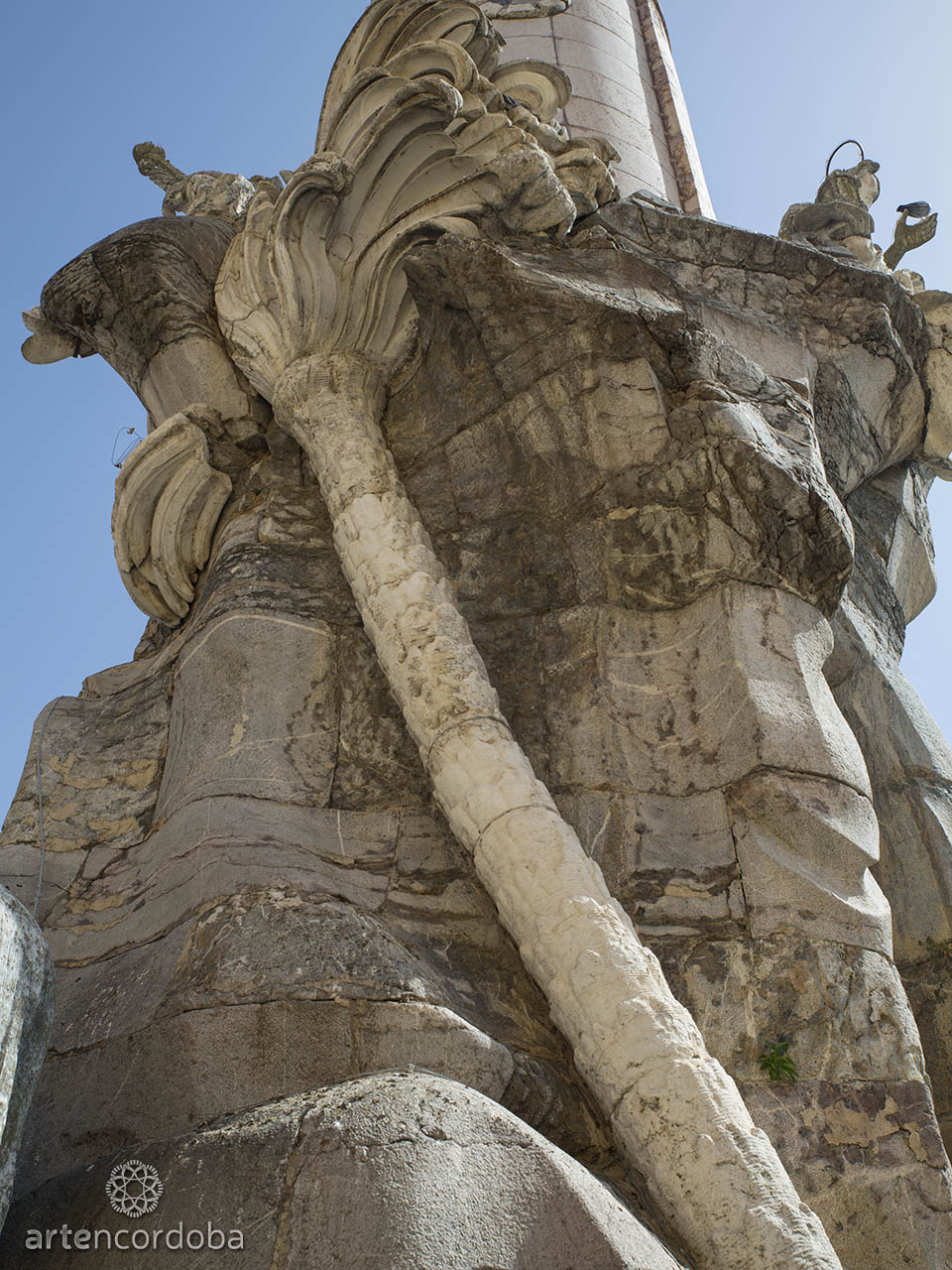
The Triumph of San Rafael resembles a rugged stone mountain, pierced by a small grotto, atop which stands a cylindrical tower. The door, a semicircular arch, is decorated with Bishop Barcia’s coat of arms, next to which is a Latin inscription: “Only virtue distinguishes man equal to man.”
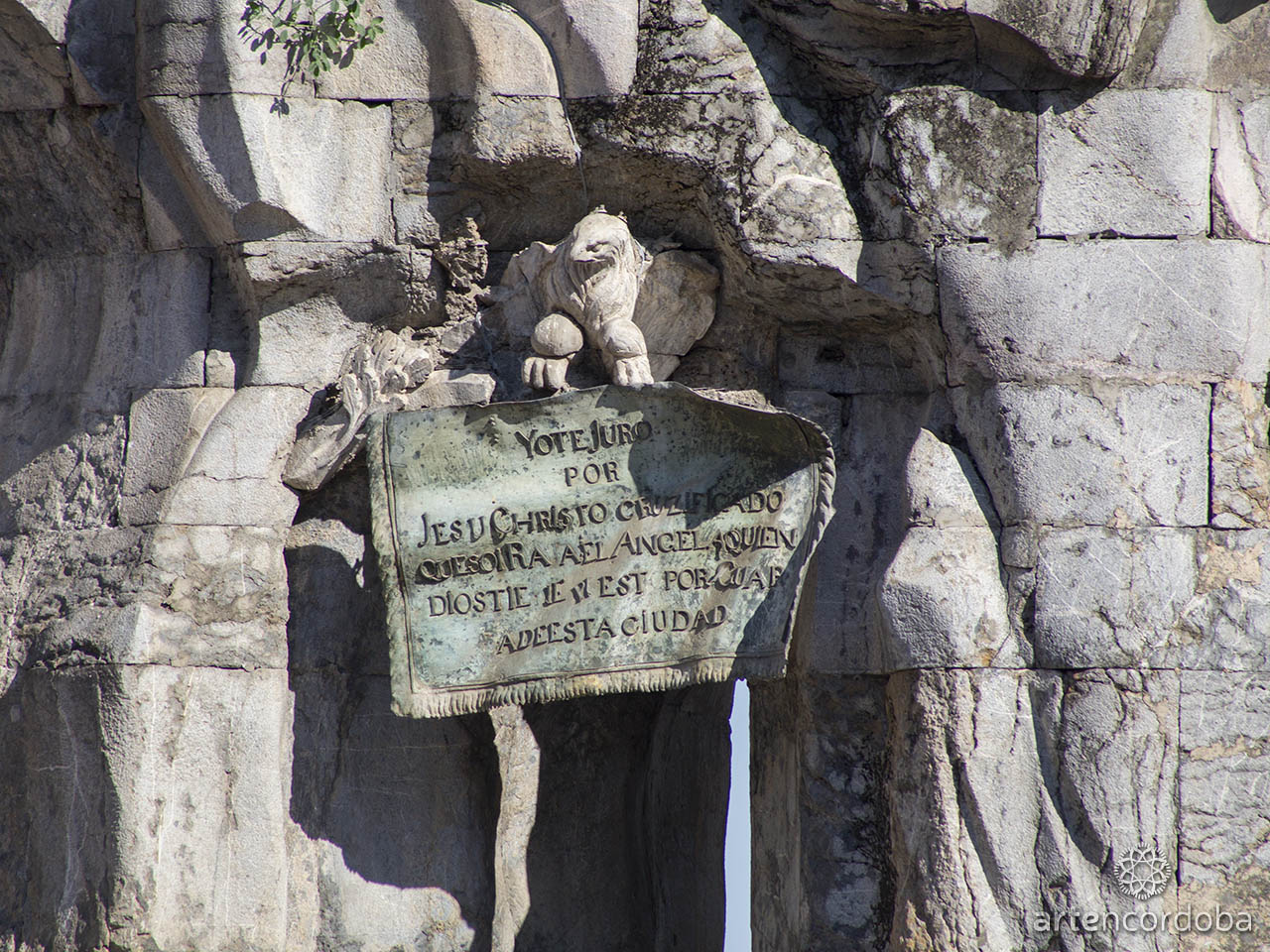
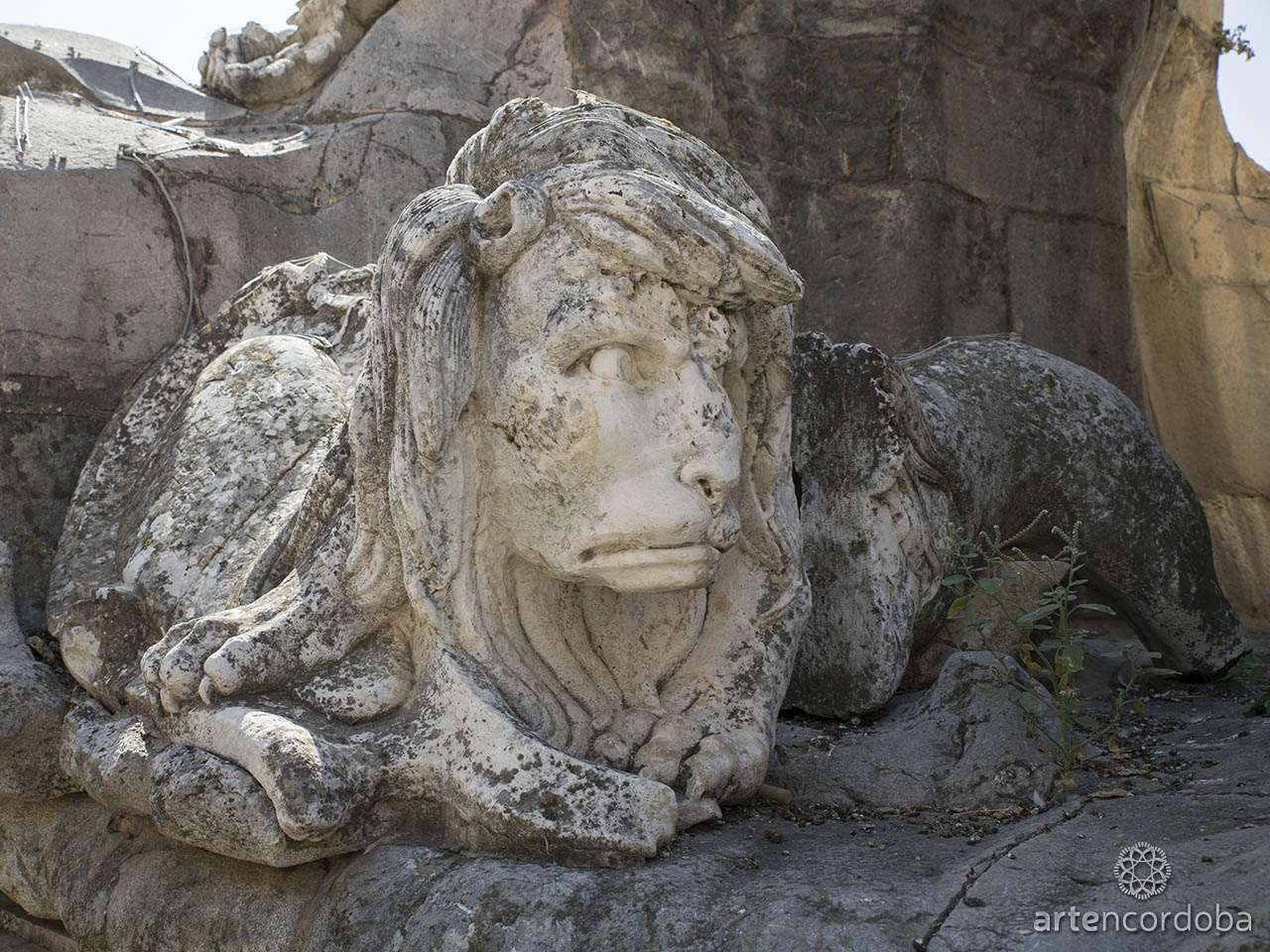
At the entrance of the grotto, two decorative elements stand out: a lion with a sphinx’s face, bearing a shield under its paw representing the city’s coat of arms; and, on the keystone of the arch, an eagle that holds a marble plaque in its talons, on which the oath of Archangel San Rafael to Father Roelas is inscribed: “I swear to you by Christ Crucified that I am Rafael the Angel whom God has set as guardian of this city.”
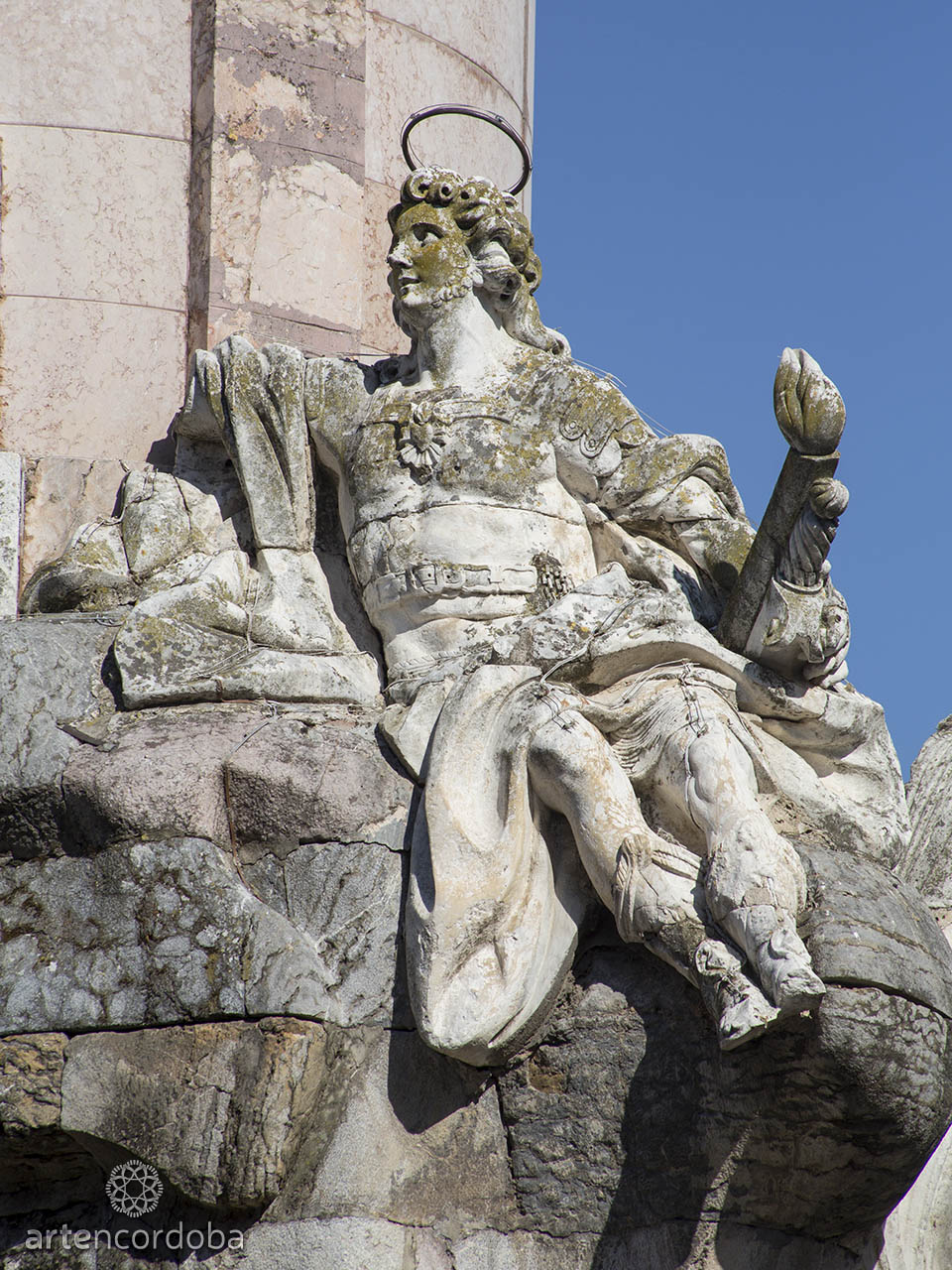
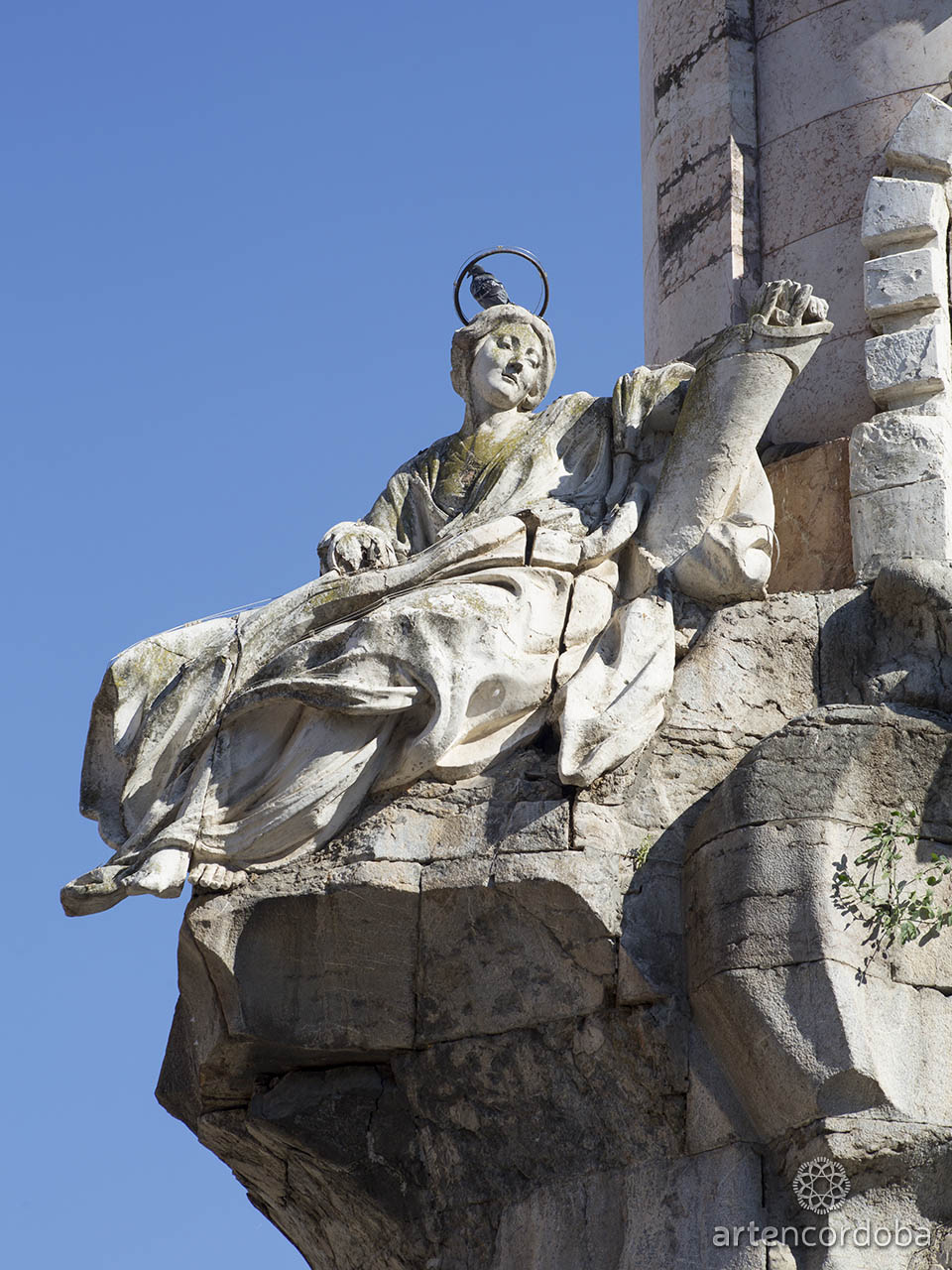
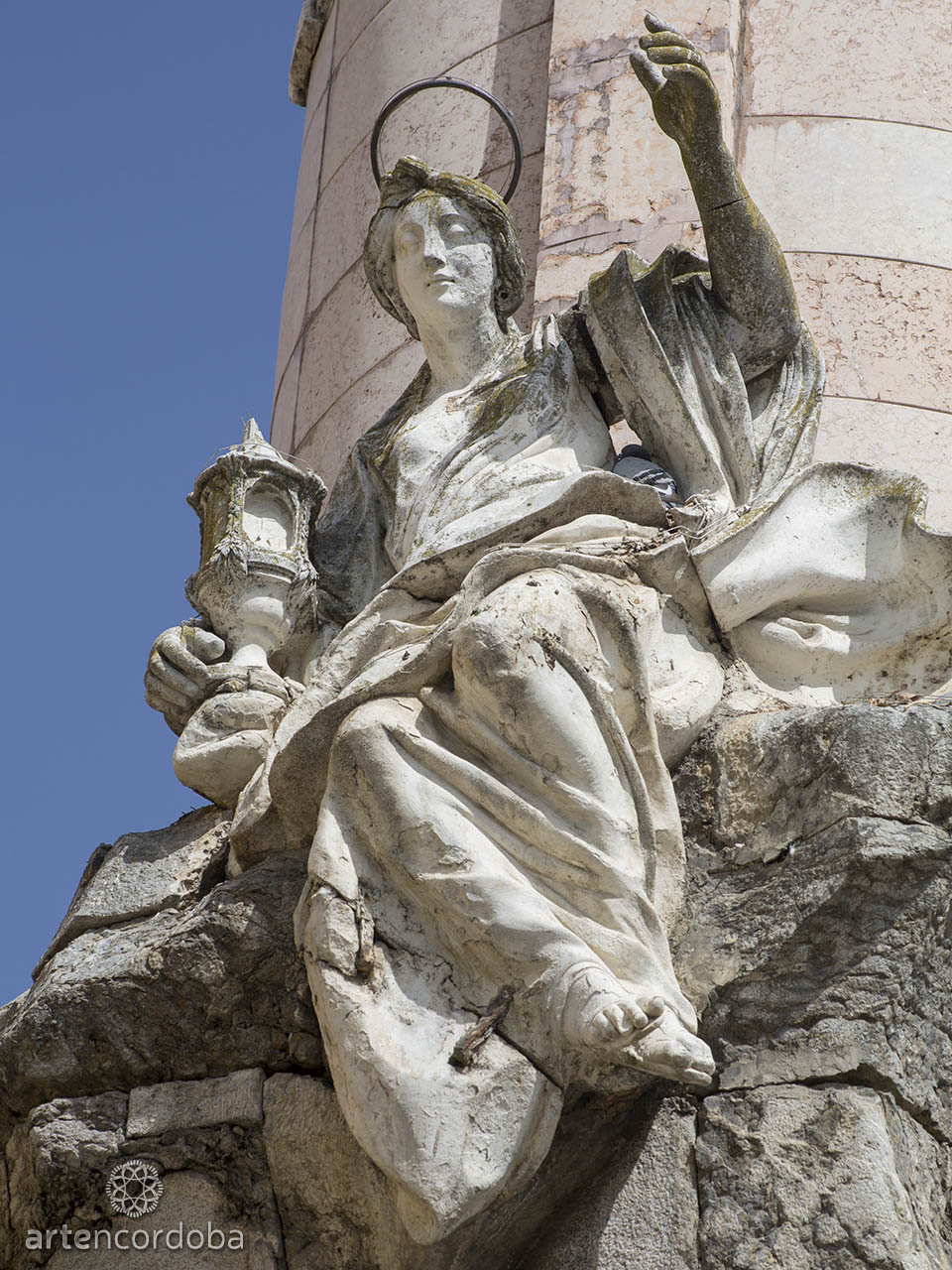
Above the aforementioned rugged mountain lie three reclining sculptures representing San Acisclo and Santa Victoria (North side), patron saints of the city, and Santa Bárbara (South side), notable for the excellent treatment of the folds in their garments.
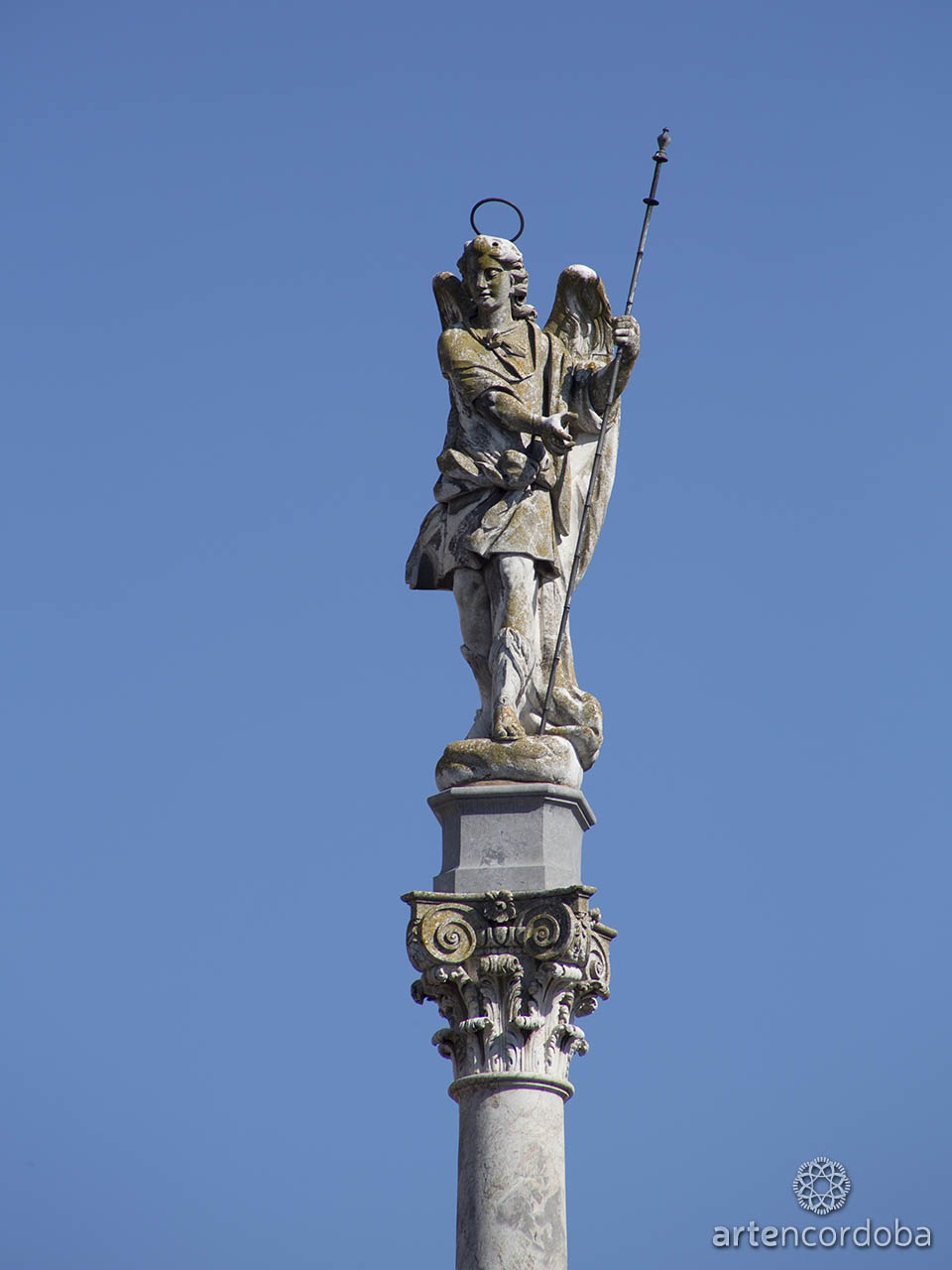
The cylindrical tower serves as the base for a slender fluted column of composite order, which in turn serves as the pedestal for the image of San Rafael, also carved in marble. The figure carries a pilgrim’s staff while pointing toward the city.
Surroundings and Complementary Elements
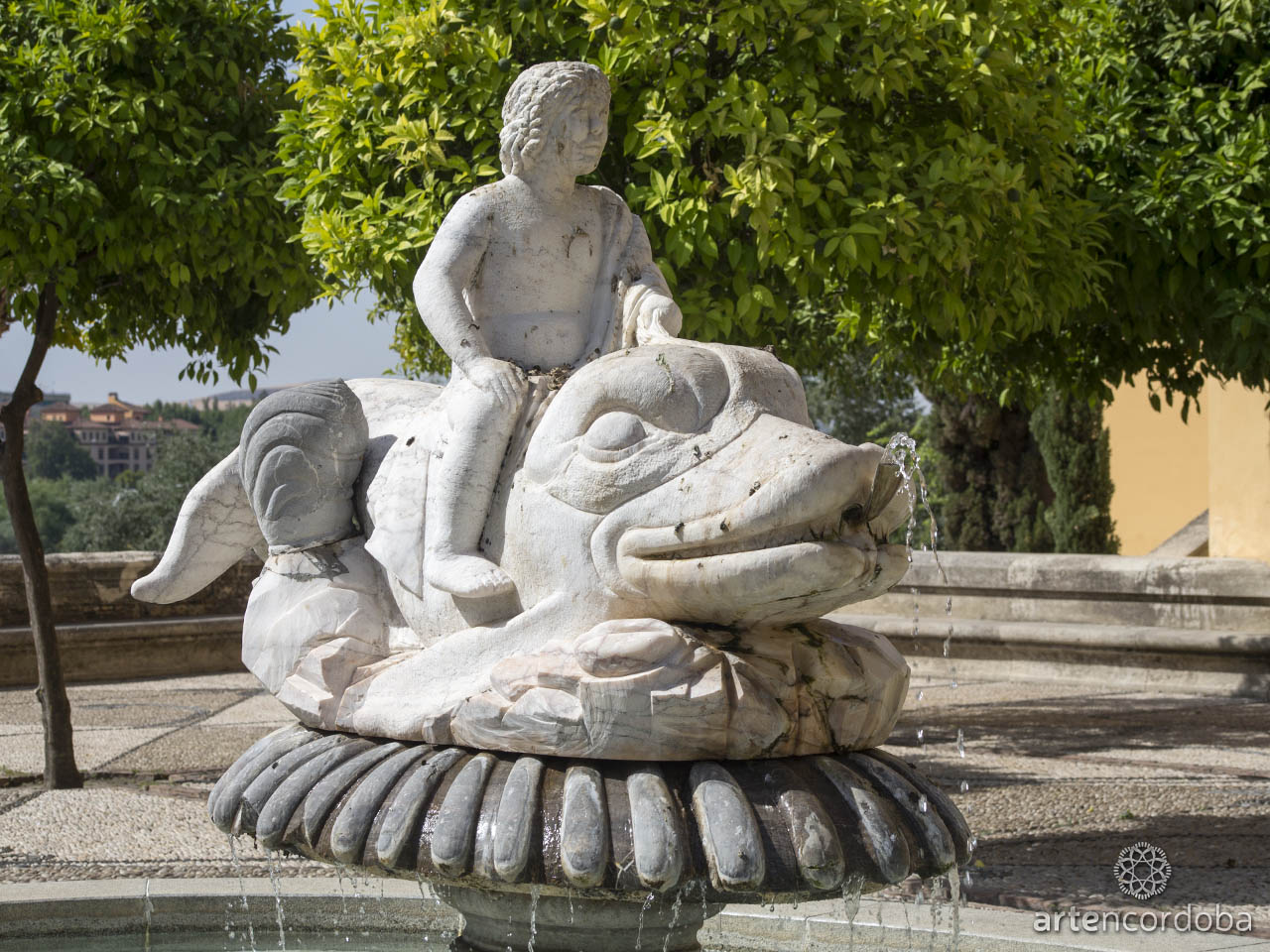
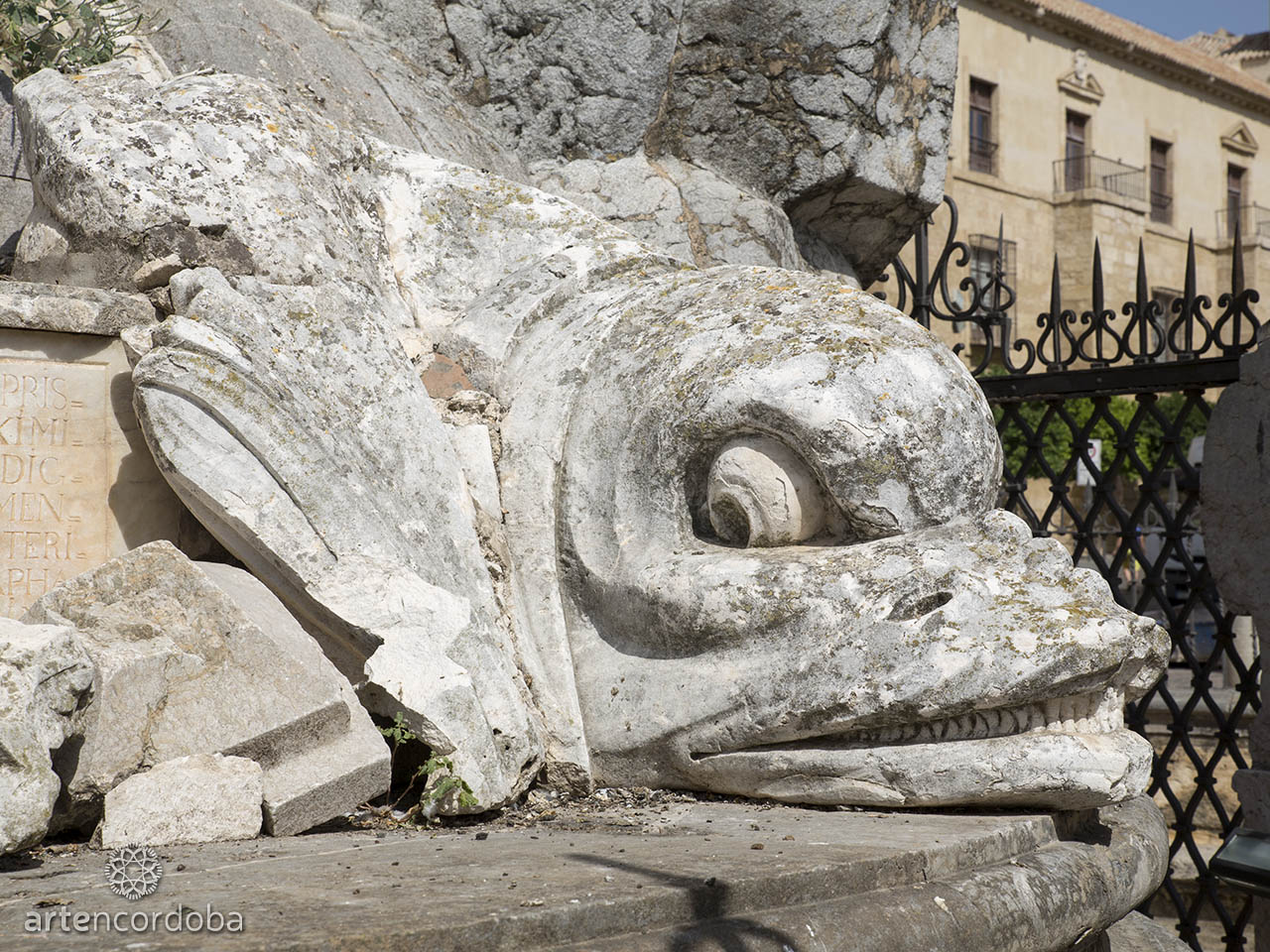
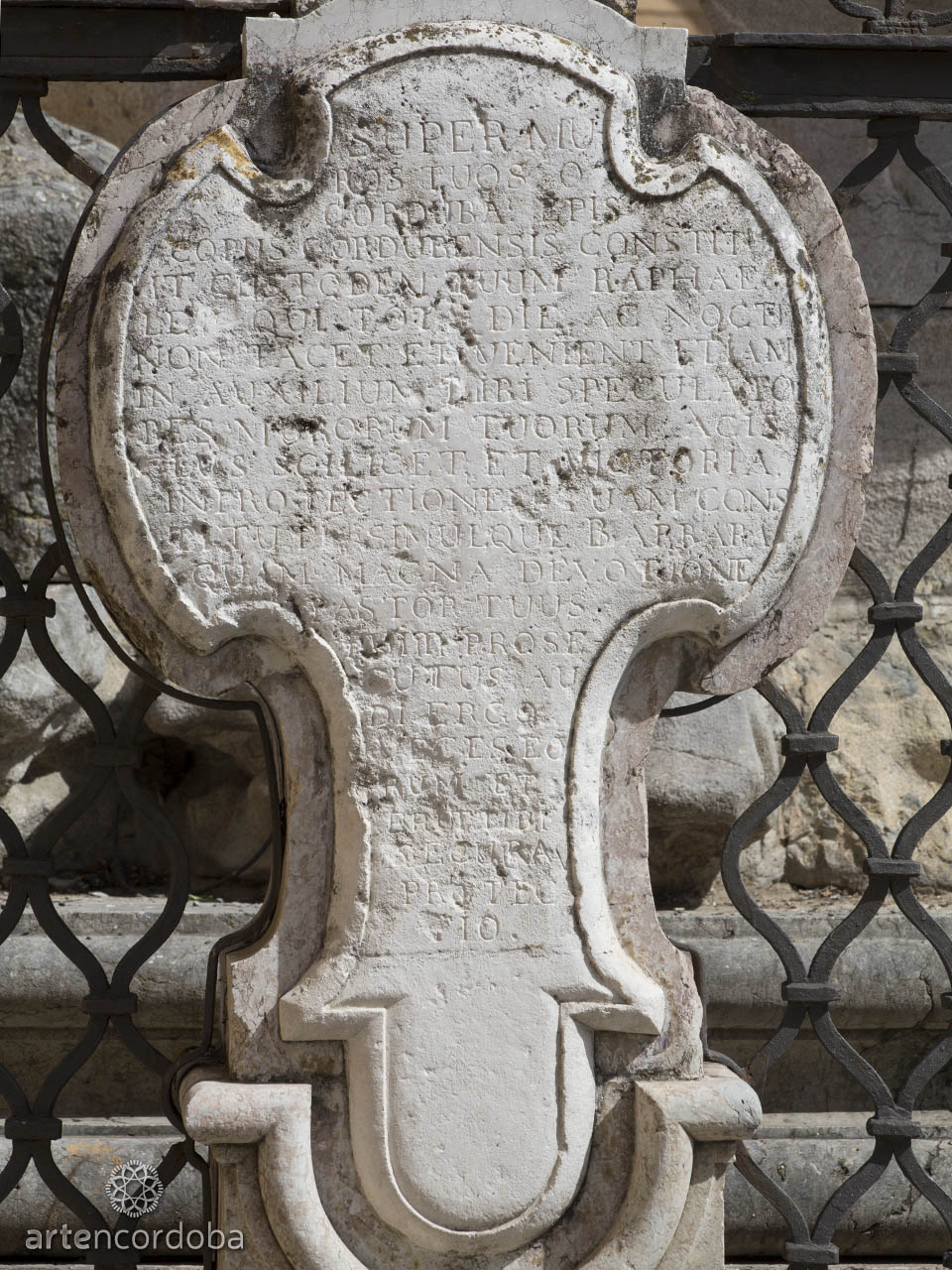
The Triumph of San Rafael is surrounded by an iron fence, interrupted by ten pedestals decorated with Latin inscriptions, mostly dedicated to Córdoba and the city’s Guardian Angel. Additionally, in the center of the esplanade is a fountain in which a child rides atop a dolphin.
Cultural Visit
If you wish to visit the Triumph of San Rafael, do not hesitate to book one of our guided tours. We are experts in the interpretation of Córdoba’s historical heritage. If you have chosen to do tourism in Córdoba, choose a quality option, choose ArtenCórdoba.
Text: J.A.S.C.