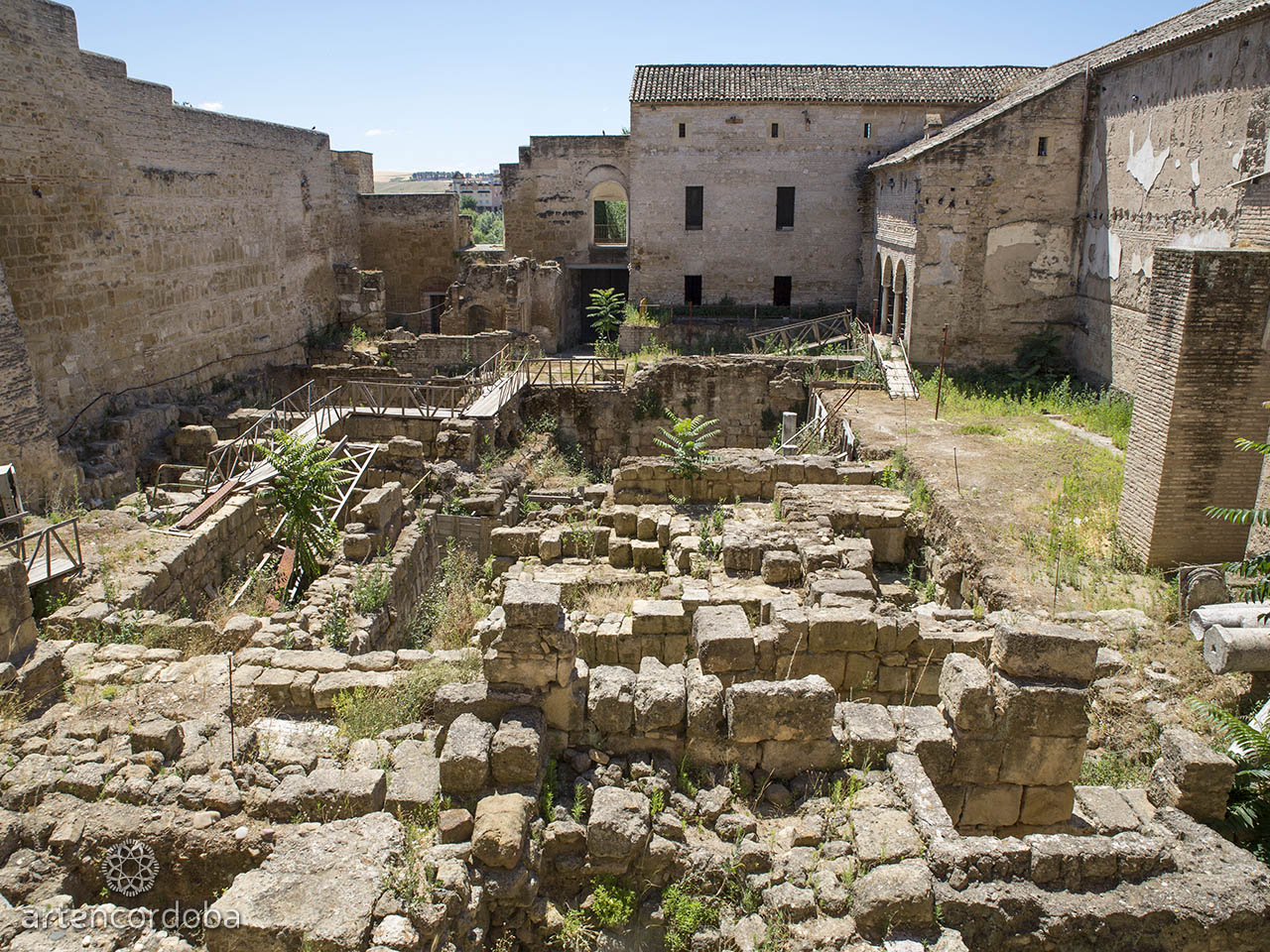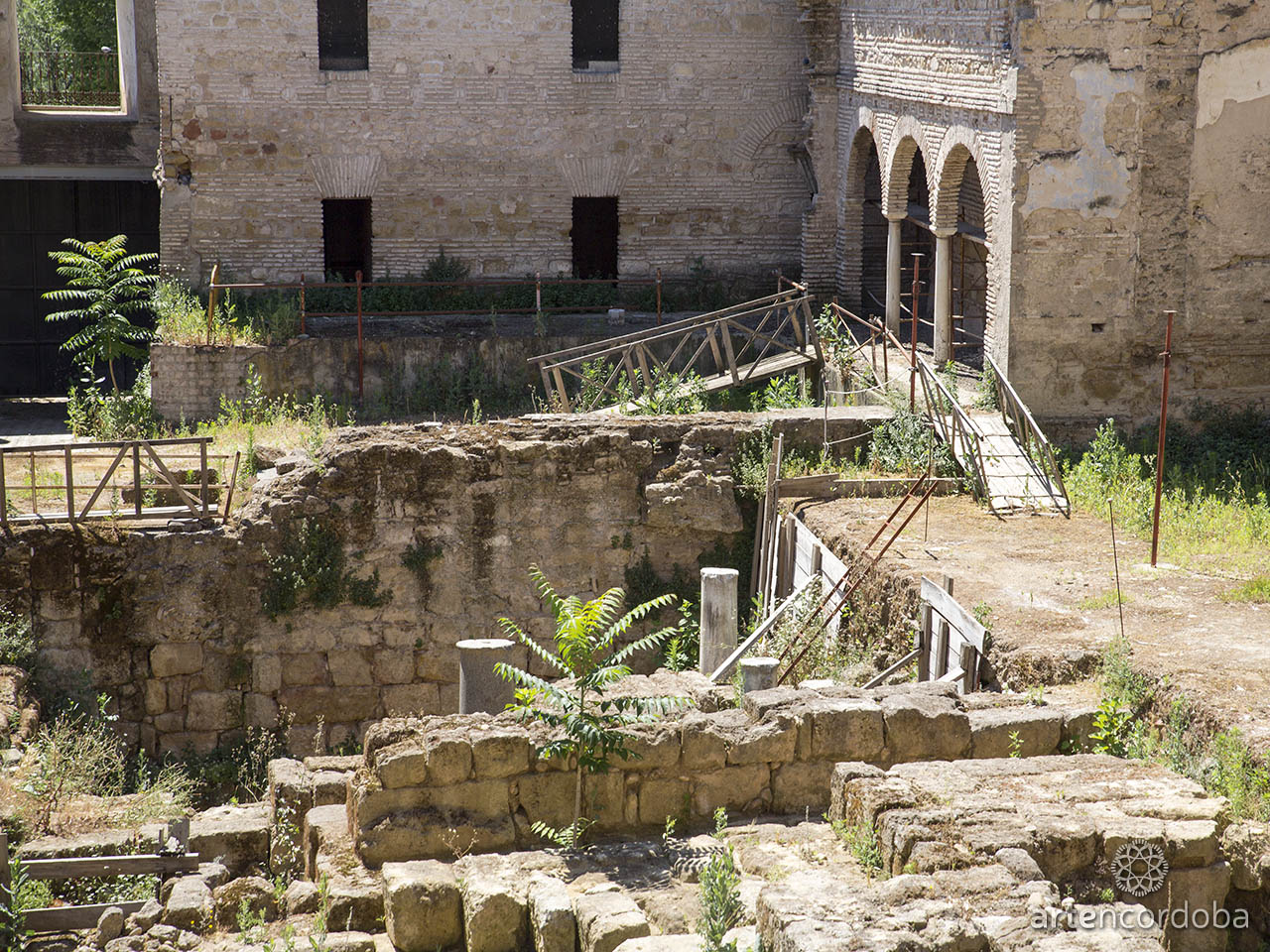






The grounds of the Alcázar of the Christian Monarchs have an almost square layout, measuring 66 meters from North to South and 62 meters from East to West, covering an area of nearly 4,000 square meters.
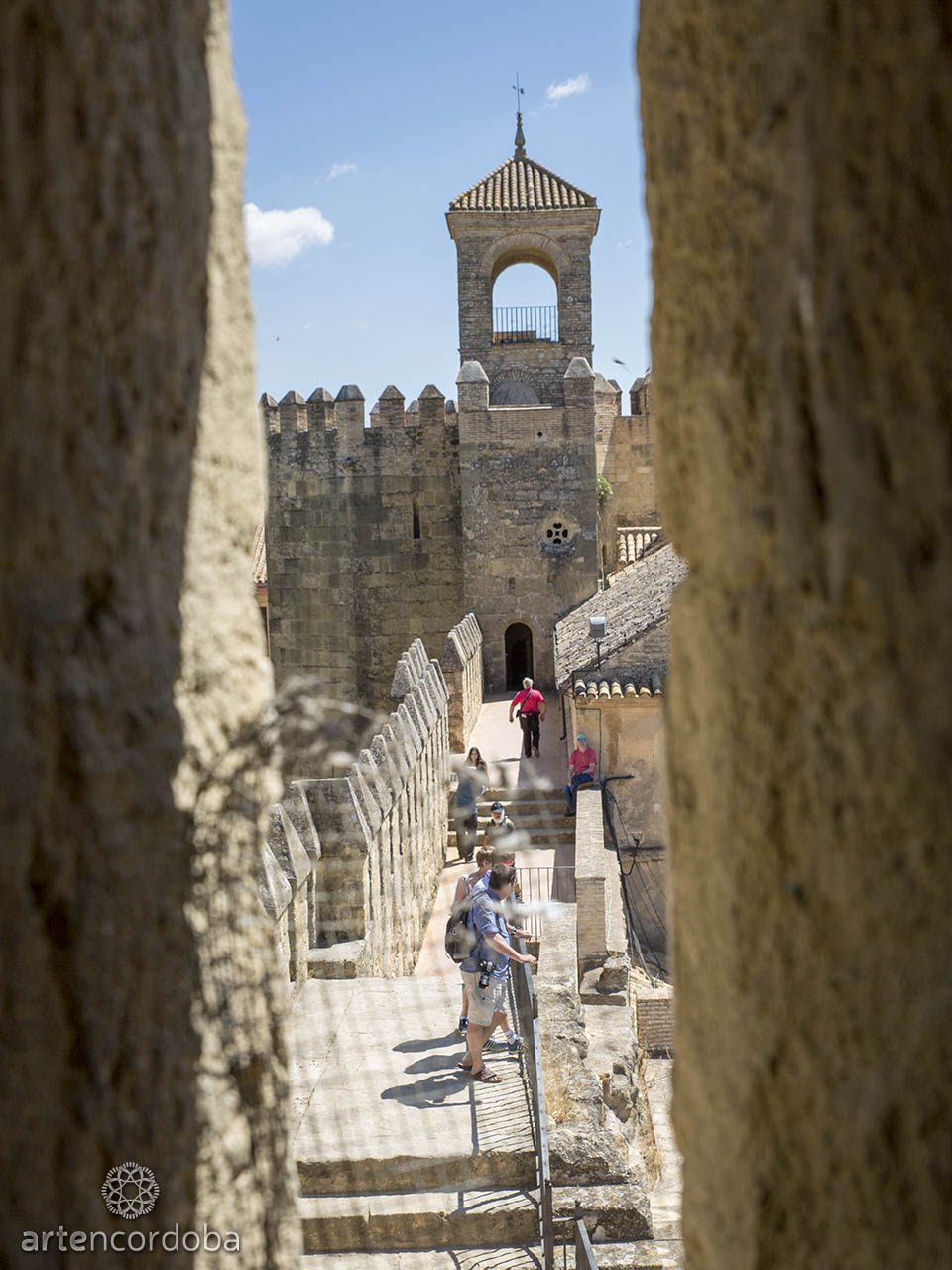
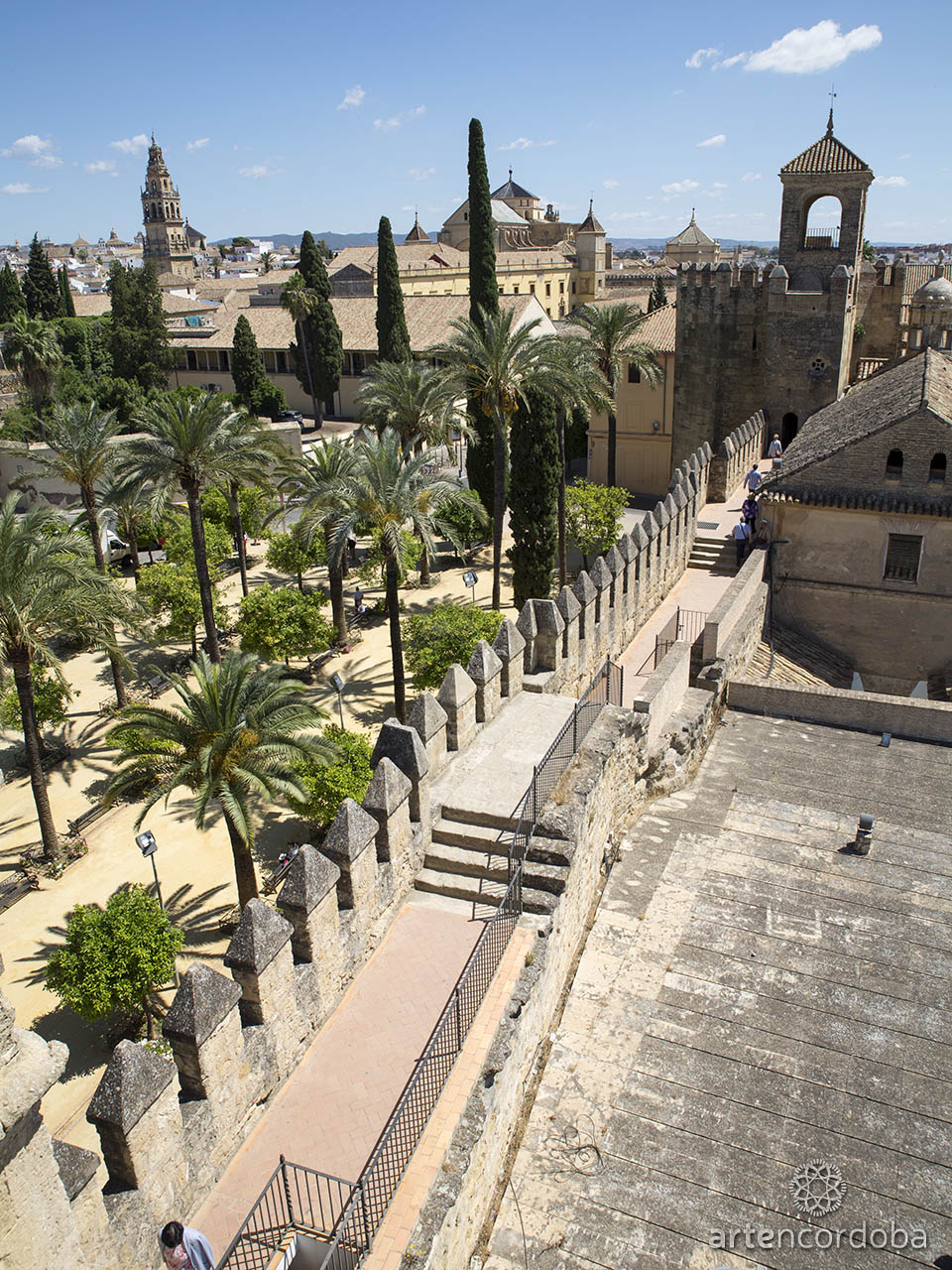
The curtain wall is made up of irregular stone ashlars, arranged in header and stretcher bond, topped by wall walks with battlements and arrow slits, which connect the towers with each other, with staircases overcoming the differences in level.
The towers and the defensive structure
There were a total of four towers, each located at one corner of the square that forms the Alcázar of the Christian Monarchs. The Dove Tower, located in the southeast, was destroyed in 1850; the tower served as the entrance to the Palace and was even used as a channeling route to carry water from the river to the gardens and baths.
Of the three remaining towers, only two are preserved: the Keep and the Lions’ Tower. The latter, located in the northwest, stands out for its worn gargoyles.
The Keep owes its name to the fact that flags were flown there during royal proclamations; however, it was also known as the Clock Tower, as it once housed a clock that was dismantled at the beginning of the 20th century. The other preserved tower is the Inquisition Tower, located in the southwest of the Alcázar. It has a cylindrical shape, three stories, and two clearly differentiated sections: the first, older, with cross-shaped arrow slits, and the second, made of brick in a prism shape.
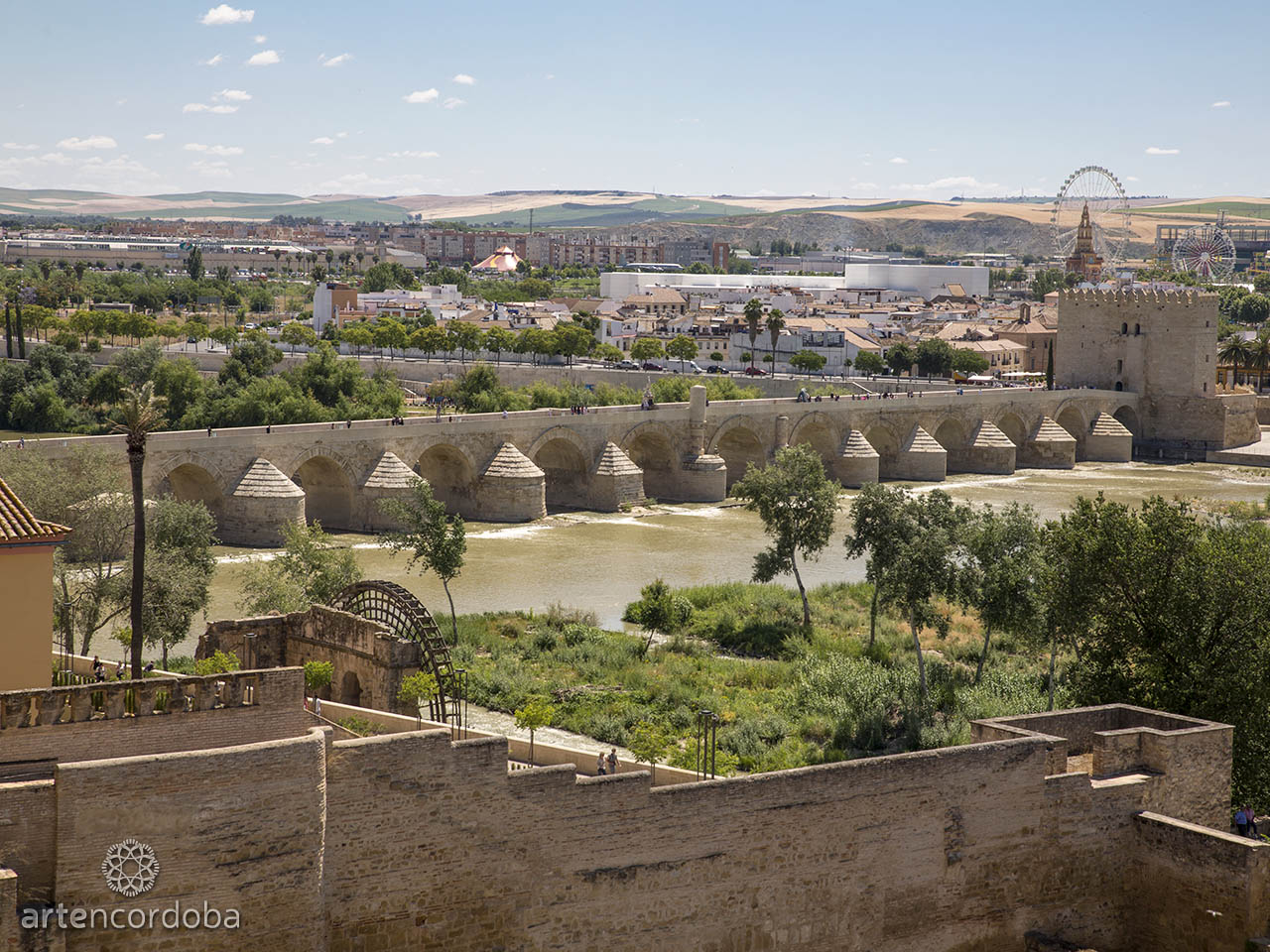
The external appearance of the Alcázar is that of a fully fortified structure, fulfilling the military character it required. The best-preserved wall is the northern one, which faces the city and connects the Lions’ and Keep towers.
The current entrance to the Alcázar is located at the base of the Lions’ Tower. It features a pointed arch, with a radius smaller than its span, stuccoed ochre voussoirs, and limestone imposts.
Interior of the Alcázar
Upon entering, a small rectangular room can be seen, covered by a beautiful ribbed vault. Its capitals, heavily worn, are placed at the corners.
Crossing the antechamber, to the left is the main entrance to the covered area, which then connects to the Hall of Mosaics.
Parallel to this room and attached to the northern wall is a corridor with stairs leading up to the wall walk that connects the Lions’ and Keep towers. On the right, however, you can access both the baths, located on the lower floor, and the Moorish Courtyard.
Visit Recommendations
If you’re unsure what to do in Córdoba, we recommend visiting the Alcázar of the Christian Monarchs by booking one of our guided tours.
Choose high-quality tourism with qualified staff — don’t hesitate, ArtenCórdoba is your best option.