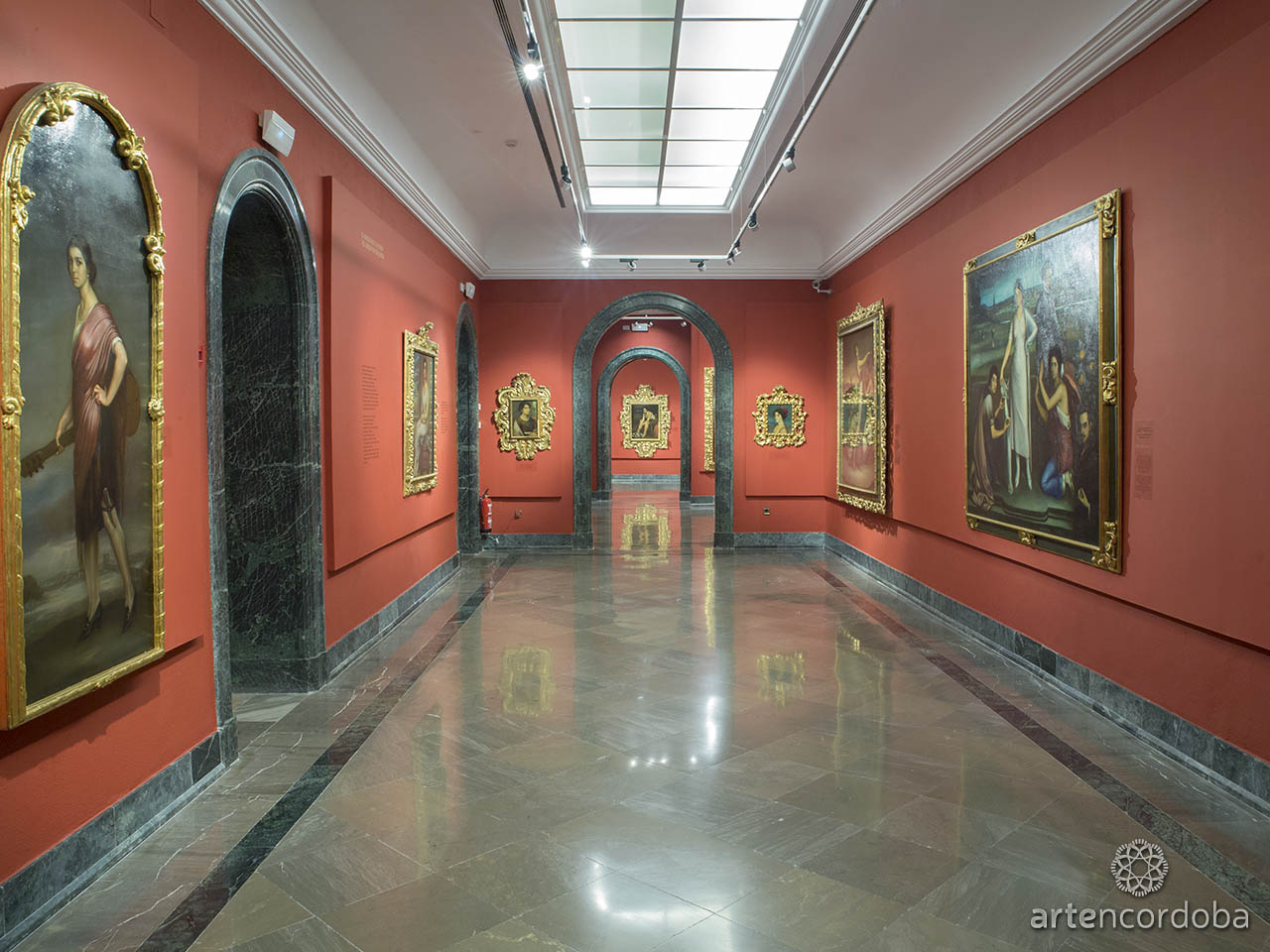






The premises currently occupied by the Julio Romero de Torres Museum and the Museum of Fine Arts originally belonged to the former Charity Hospital, an institution sponsored by the Catholic Monarchs at the end of the 15th century and governed by the Third Order of Saint Francis, which provided care for the sick in the mentioned building until 1837.
Since the mid-19th century, the building has undergone numerous renovations, housing several cultural institutions of the city, such as the Archaeological Museum, which was located there between 1868 and 1917, or the Provincial Museum of Fine Arts, even serving as the residence of its curator and director, Rafael Romero Barros, father of Julio Romero de Torres. Our artist was born within these walls, in the rooms where his museum is now located.
When Julio Romero de Torres died on May 10, 1930, his widow, Francisca Pellicer, and his children, Rafael, Amalia, and María, decided not to sell the works they still owned, as their intention from the start was to create a museum with them. The family donated to the City of Córdoba, among others, the paintings exhibited at the Ibero-American Exposition held in Seville a year earlier.
On November 23, 1931, the Julio Romero de Torres Municipal Museum was inaugurated, with the attendance of the President of the Second Republic, Niceto Alcalá Zamora, a native of Priego de Córdoba. In 1934, the facilities were expanded following the acquisition of adjoining buildings, adding a second floor.
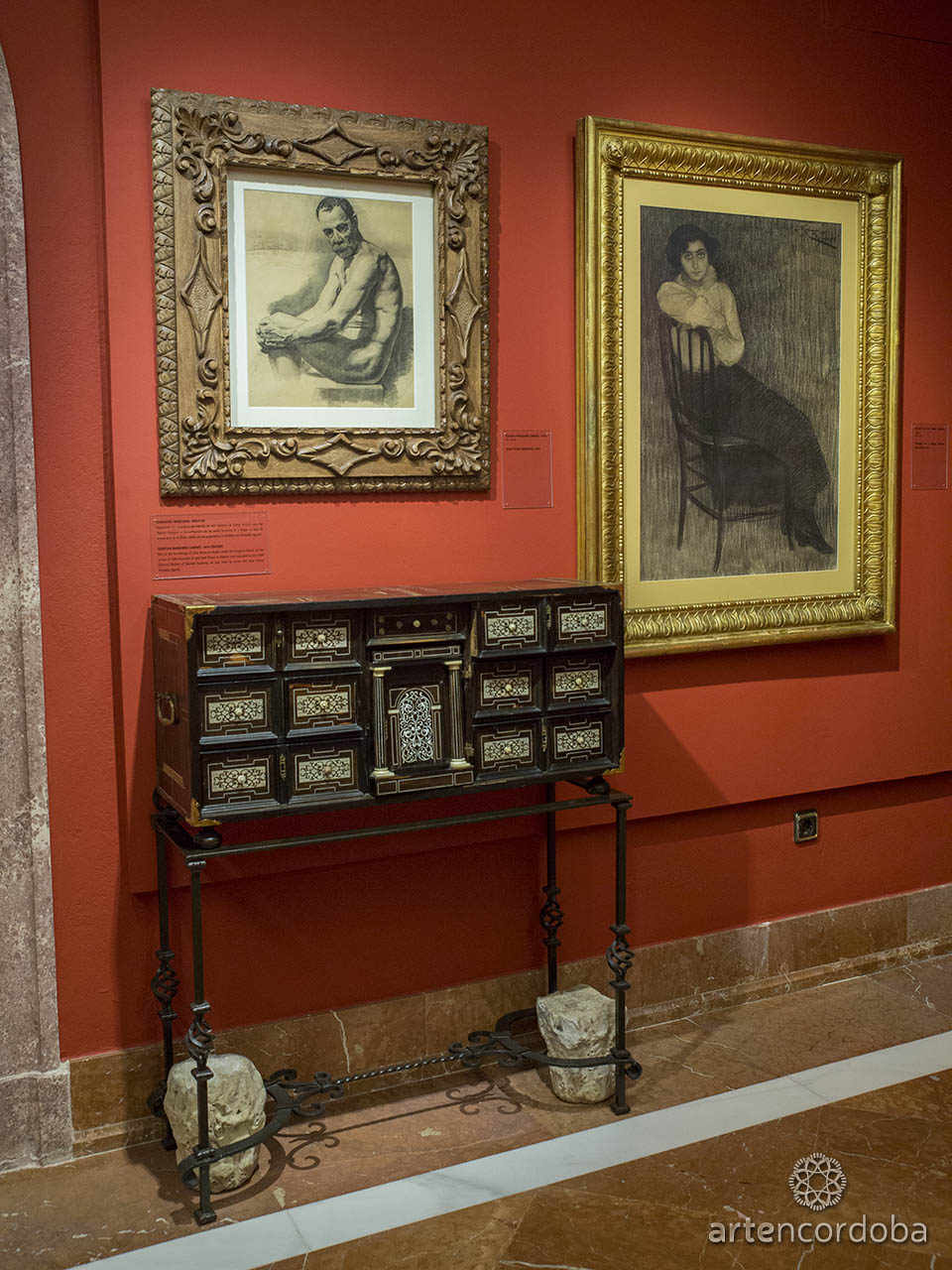
Over time, the museum has constantly increased its collection, starting with the furniture from the painter’s studio in Madrid, which today forms the core of the museum’s Intimate Room. Furthermore, the City Council has acquired works by the artist in recent years with the aim of enhancing and enriching the already extraordinary collection that our city possesses.
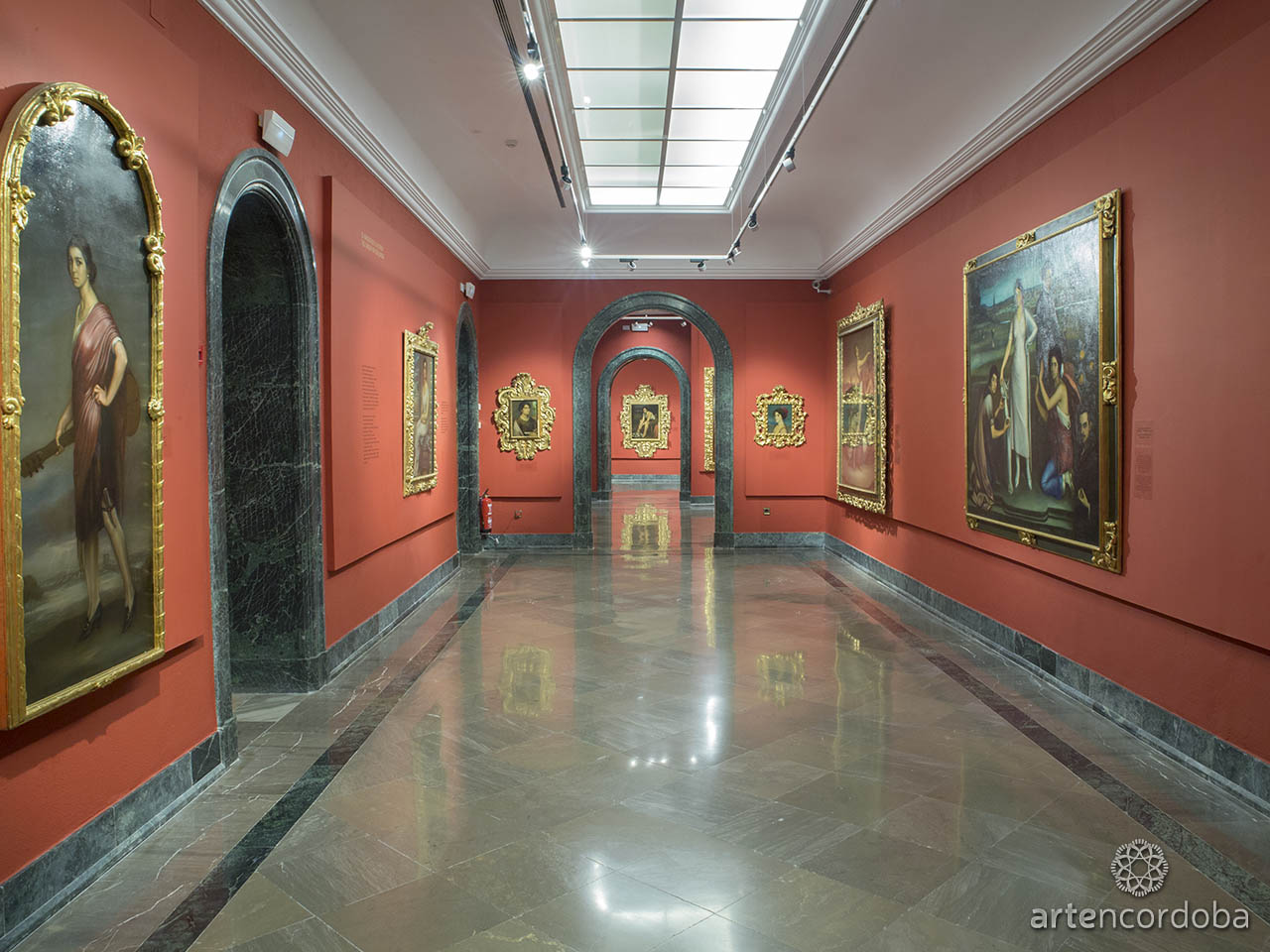
The Museum Rooms
Room I: Family environment
This room aims to bring us closer to the figure of the artist. Here we find caricatures, sculptures of the painter and his father (Rafael Romero Barros), works by the latter, and portraits of Julio painted by other artists. The room is also dedicated to poster art, as Romero de Torres was involved in the well-known contemporary movement originating in France that used posters as a means of communication, producing several works aligned with this new trend. Posters were ultimately what cemented the painter’s popularity. This poster-making activity by Julio Romero de Torres was mainly known for his participation in various advertising campaigns, especially for the posters created for Cruz Conde Wineries and the Río Tinto Explosives Union.
Room II: First period
The youthful works of Julio Romero de Torres are marked by luminism and transition through modernism and symbolism until reaching the realism expressed in his landscapes and still lifes. In his early stage, Romero de Torres painted several works within the line of social painting, with a style that characterizes and defines his beginnings.
Room III: The chapel
In this room, the spotlight is on the artist’s unique and mystical vision. The painter brought classical themes into his works but in a very personal way, often blending spirituality and sensuality in his figures.
Room IV: The origin of depth
The paintings of Julio Romero de Torres are essentially motifs of flamenco singing: “a symbol of each copla.” His admiration for flamenco songs and guitar, along with his knowledge of the genre, inspired a significant portion of his artistic production. In these works, “cante” appears as a symbol of Andalusian flamenco. Julio Romero also pays tribute to the old flamenco singers and dancers of the time. Many portraits include the guitar as a symbol of his eternal passion for flamenco, this painting of Andalusia—land of nostalgia and joy.
Room V: Portraits
Julio Romero de Torres was primarily a portrait painter. With more than 500 portraits, he dedicated a large part of his compositions to women. He painted the aristocracy and the working class, people from all social strata, but the painter reached his highest creative capacity when he was not limited by the constraints of commissions.
Room VI: The essence of Córdoba
This room highlights Julio Romero de Torres’s deep sentiment for his homeland. From afar, he painted his city with nostalgia—the memory of its river, the silence of its squares; its monuments and traditions take center stage in this series of works, such as “Virgin of the Lanterns“, “Angels and Fuensanta“, or “Poems of Córdoba“. These works feature dark, tenebrist tones characteristic of the painter’s final years.
Notable Works
La chiquita piconera
Oil and tempera on canvas Dimensions: 100 x 80 cm Date: 1930
Considered one of his masterpieces, it was completed just days before the artist’s death and was presented at the Ibero-American Exposition in Seville. María Teresa López, the beautiful model from Córdoba, is depicted seated, looking directly at the viewer, with her relaxed arms resting on her knees. In the background, the sunset over Córdoba’s Paseo de la Ribera can be seen, symbolizing the twilight of the artist’s own life. Over the years, this painting has become iconic, even being reproduced by the National Mint and Stamp Factory on a 5-peseta stamp.
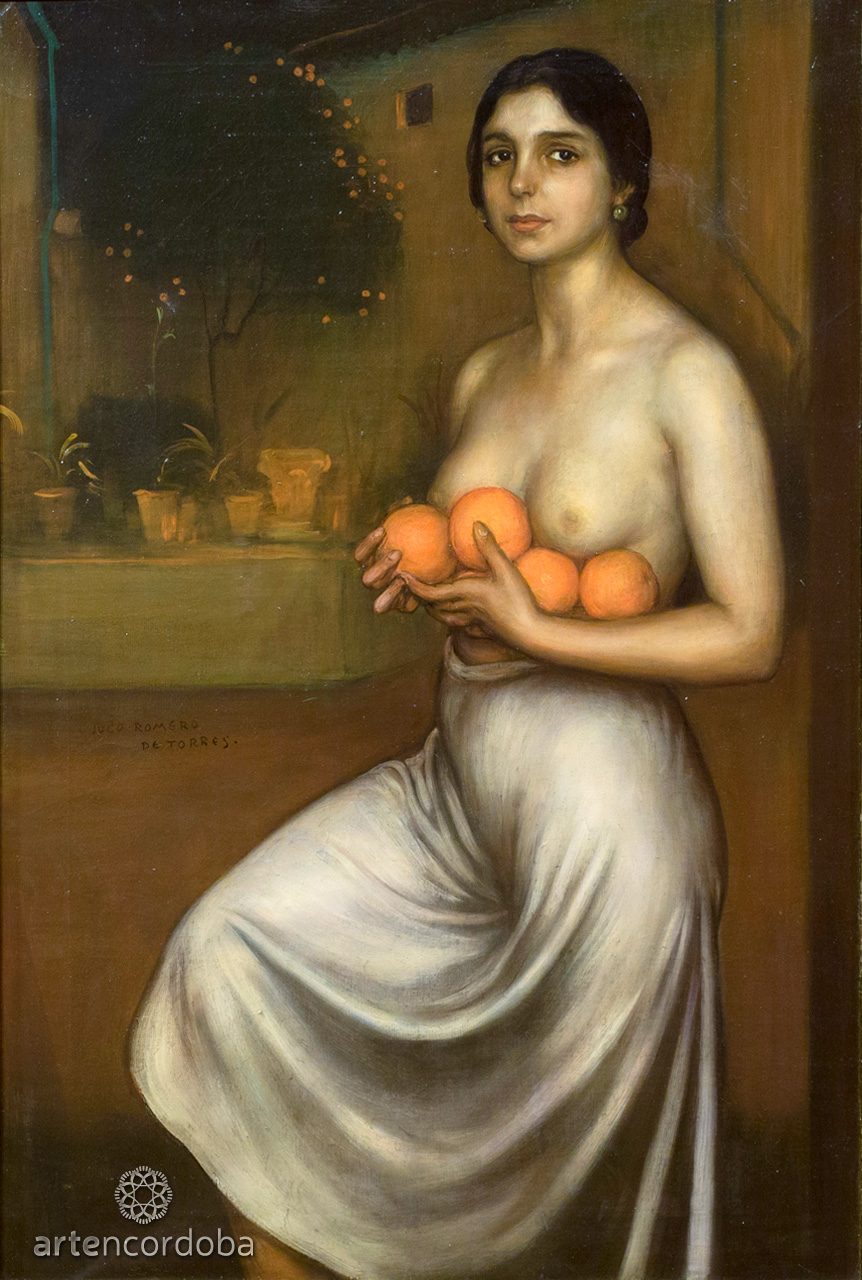
Oranges and lemons
Oil and tempera on canvas Dimensions: 104 x 70 cm Date: 1927
A mature work in which the artist worked with model Asunción Boué. Julio Romero de Torres approached the still life genre in a very personal way, giving a prominent role to the woman. The semi-nude model holds several oranges to her chest while looking at the viewer, giving the composition a strong erotic element. In the background, the artist chose a typical Córdoba courtyard.
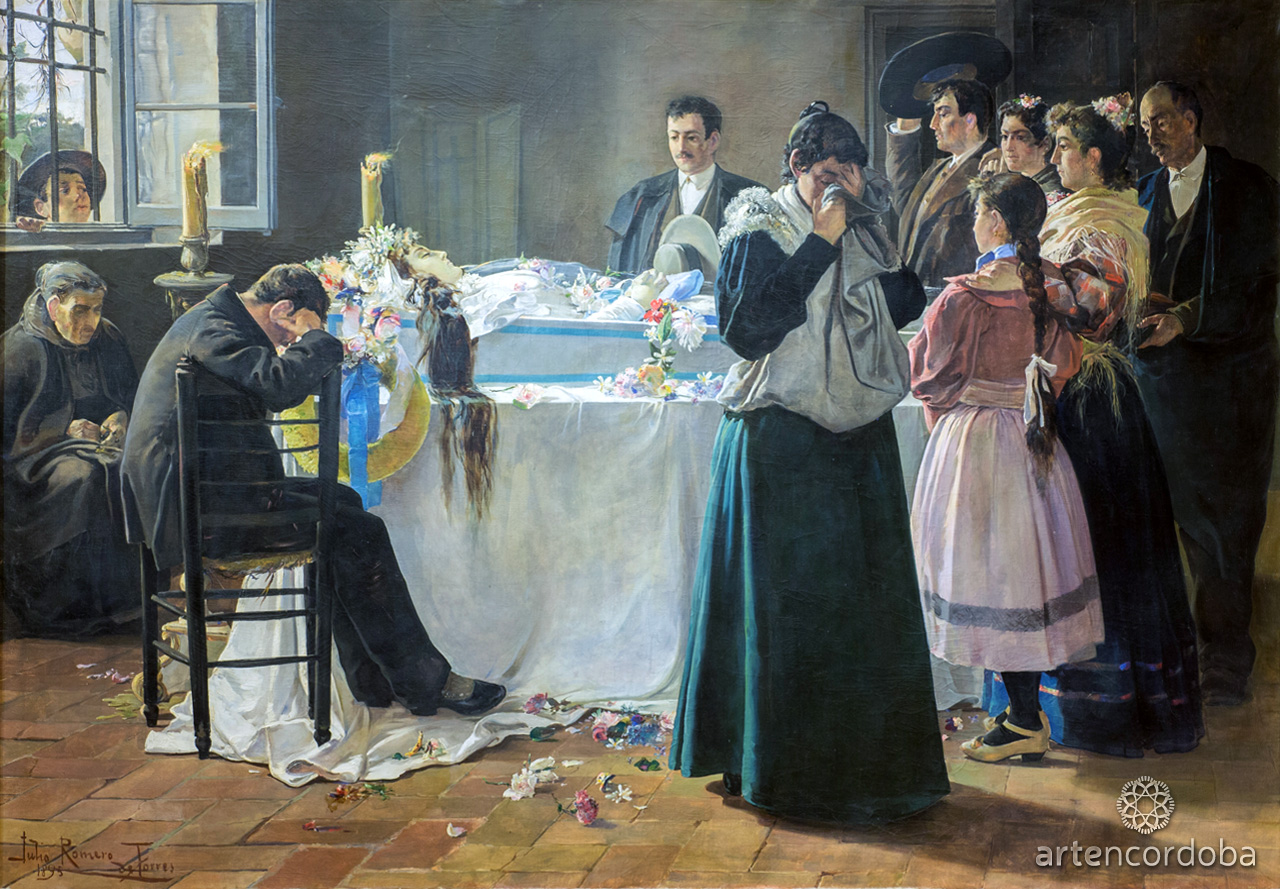
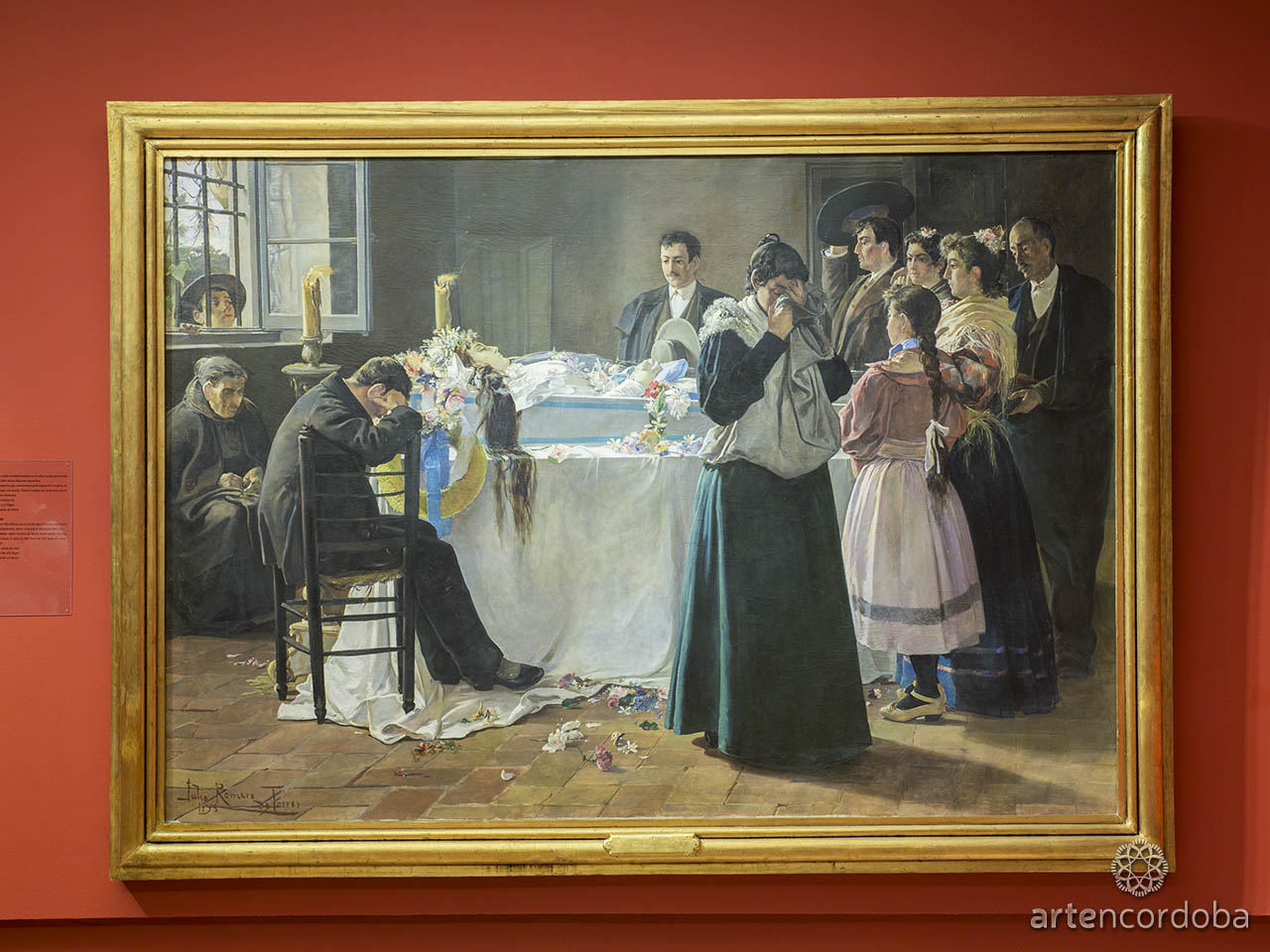
Look how beautiful she was!
Oil on canvas Dimensions: 148 x 210 cm Date: 1895
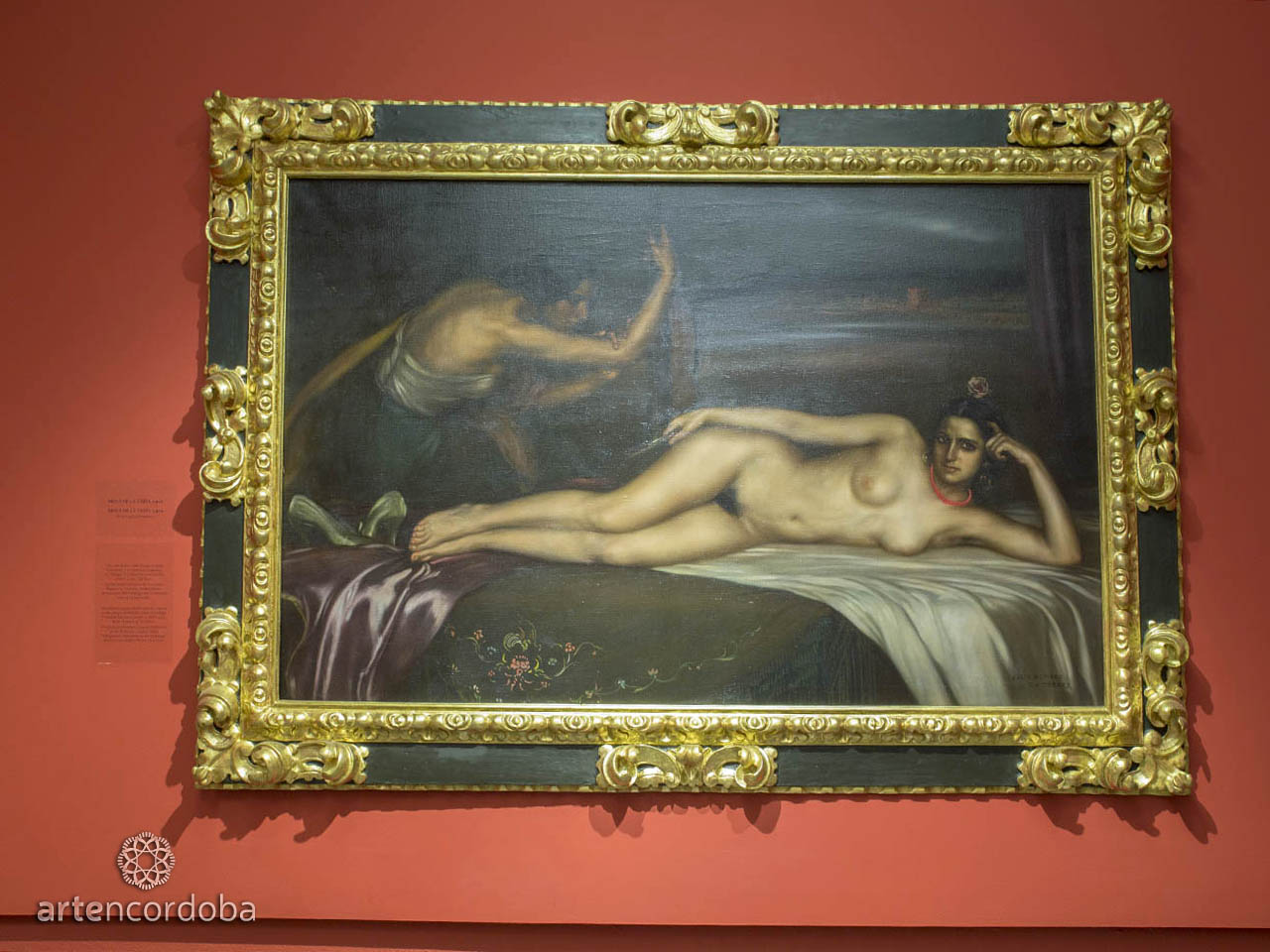
With this work, Julio Romero de Torres gained recognition at the 1895 National Exhibition, earning an honorable mention. The painting brings together the three themes that marked his career: women, death, and flamenco. The scene shows a young woman lying dead in her coffin, surrounded by family members, with dramatic lighting coming from a side window.
Contact
Address: Plaza del Potro, 1. 14002. Córdoba Phone: +34 957 491 909 / +34 957 485 010
Bus Lines
Lines 1, 3, 7, and 12.Opening Hours
From September 16 to June 15
- Tuesday to Friday: 8:15 a.m. to 8:15 p.m.
- Saturdays: 9:30 a.m. to 5:30 p.m.
- Sundays and public holidays: 8:15 a.m. to 2:15 p.m.
- Closed on Mondays.
From June 16 to September 15
- Tuesday to Sunday: 8:15 a.m. to 2:15 p.m.
- Closed on Mondays.
- Closed on January 1 and December 25.
Price
- Adults: €5.
- Students, large families, people over 65, and other special groups: 50% discount.
- Free admission: Residents, children under 17, unemployed people, teachers, and people with disabilities over 33%.
How to get there
The Julio Romero de Torres Museum is located in Plaza del Potro, one of the most iconic places in the city. It is very close to the Paseo de la Ribera and easily accessible from the historic center, such as from Plaza de las Tendillas.
If you wish to visit the Julio Romero de Torres Museum, don’t hesitate to book one of our guided tours. We are experts in the interpretation of Córdoba’s historical heritage. Choose a quality option with ArtenCórdoba.