



The current Church of San Francisco was founded by King Ferdinand III the Saint as the Monastery of San Pedro el Real, and has been considered a Historic-Artistic Monument since 1981. The monastery belonged to the parish of San Nicolás de la Ajerquía, and was located near the wall that connected this area with the Villa. It was a sparsely populated area at the time, but the presence of the monastery prompted the repopulation of the sector.
During the late medieval period, the neighborhood was characterized by its strong artisan and commercial nature, with buildings intended for these purposes, such as workshops, shops, taverns…
The Urban Environment and the Portillo
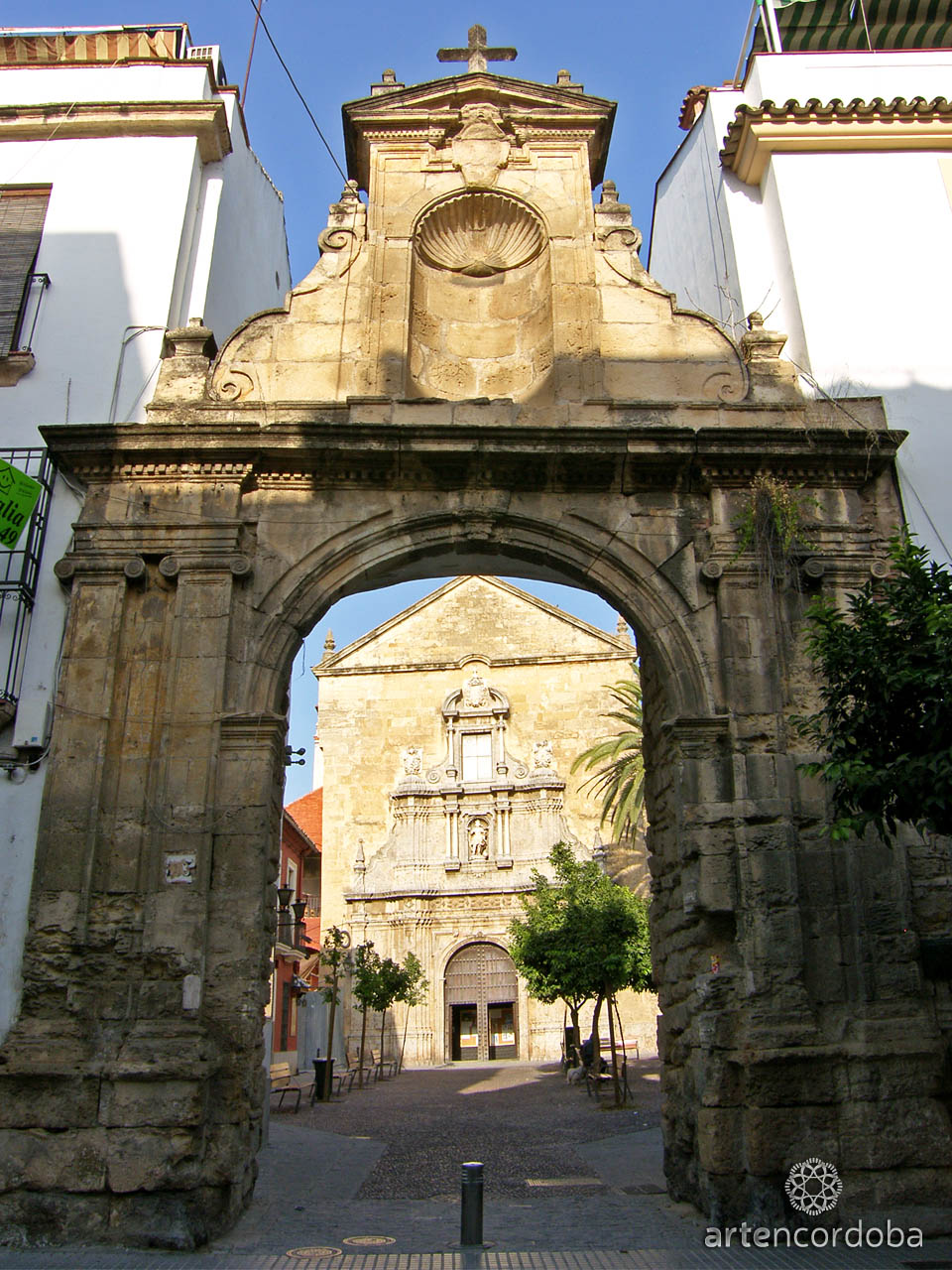
In front of the Church of San Francisco stood, since the year 1123, one of the entrances embedded in the wall that connected the Medina and the eastern neighborhood, following the fortification of the latter. Over time, this access has been known by various names: Postigo de los Descalzos during the Reconquista, Portillo de Corvache at the end of the 13th century, Portillo de San Francisco in the 15th century, and Portillo de los Mercaderes in the 18th century. Today, the site is commonly known as the Arco del Portillo.
Originally, the monastery occupied a large plot of land bordered by the streets San Francisco, Armas, Maese Luis, and Feria. Even in medieval times, the friars sold part of the orchards, which were replaced with houses and businesses, evolving into a predominantly commercial area.
The Franciscan Community
Until well into the 19th century, it was home to a community of Franciscan friars, who are known to have been present since the mid-13th century, as in 1246 the City Council confirmed a water privilege granted to them by Ferdinand III. Later, Alfonso X would grant two more privileges in this regard: one in 1264 and another in 1266. Over time, the monastery grew in importance within the order, even becoming its Mother House. It is known that in the 17th century it housed more than one hundred friars, a number that increased in the 18th century, its period of greatest splendor.
Disentailment and Disappearance of the Convent
The 19th century witnessed the disappearance of the convent, as in 1810 the French abolished religious orders in Spain. In 1842, the house of San Pedro el Real was sold to Don Bonifacio Gallego Campos, leaving only the church standing to this day.
The Current Church
The Church of San Francisco retains few remnants of what was once the church of the Monastery of San Pedro el Real, due to the numerous transformations it has undergone, which are described in the section concerning the building’s description.
Today, the Church of San Francisco is one of the richest and most representative religious buildings in our city. It houses numerous chapels and altars for worship. Additionally, it is one of the few temples privileged to host two brotherhoods: The Prayer in the Garden and Charity.
The Altars of the Church of San Francisco
The Main Altar
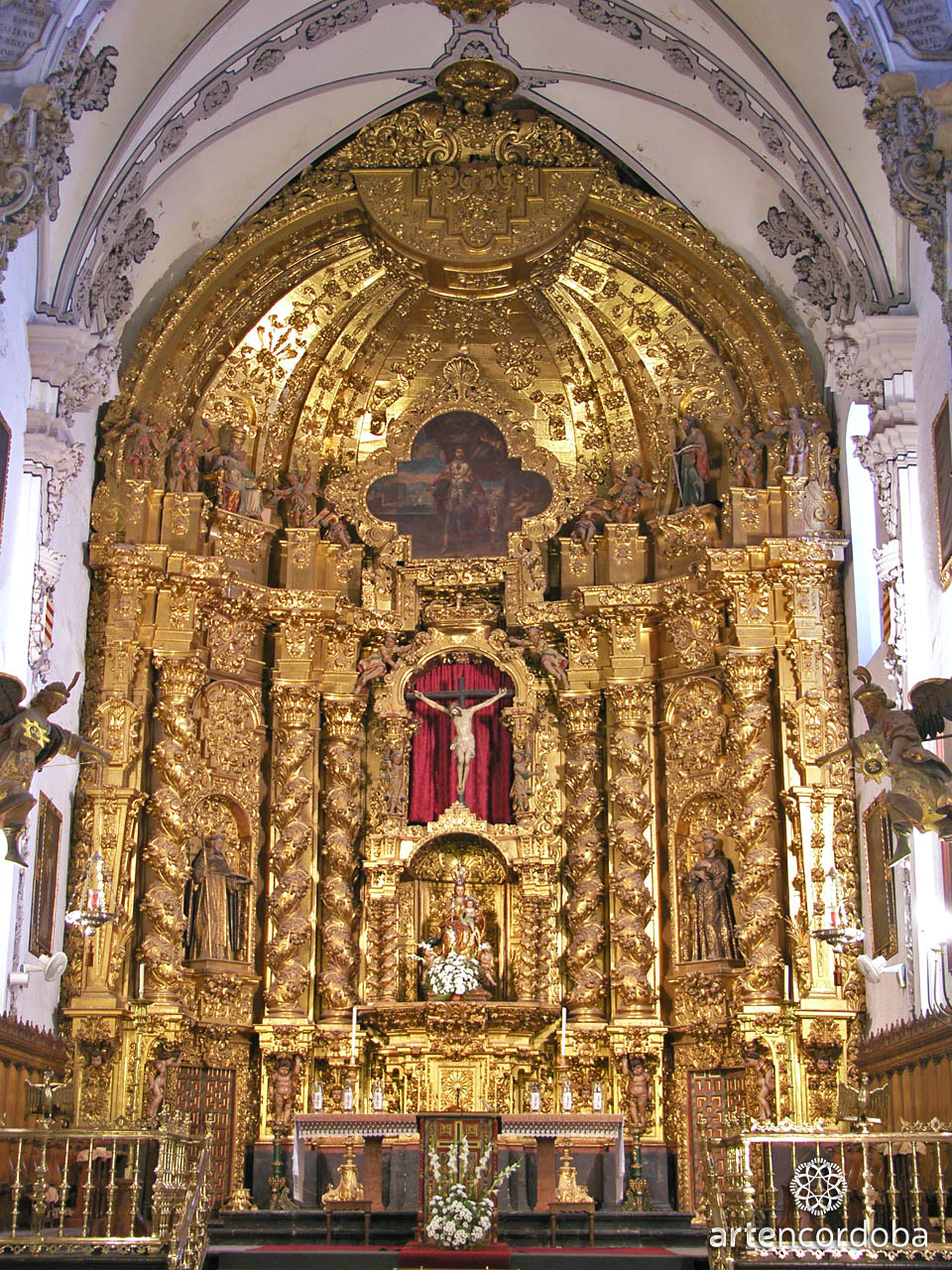
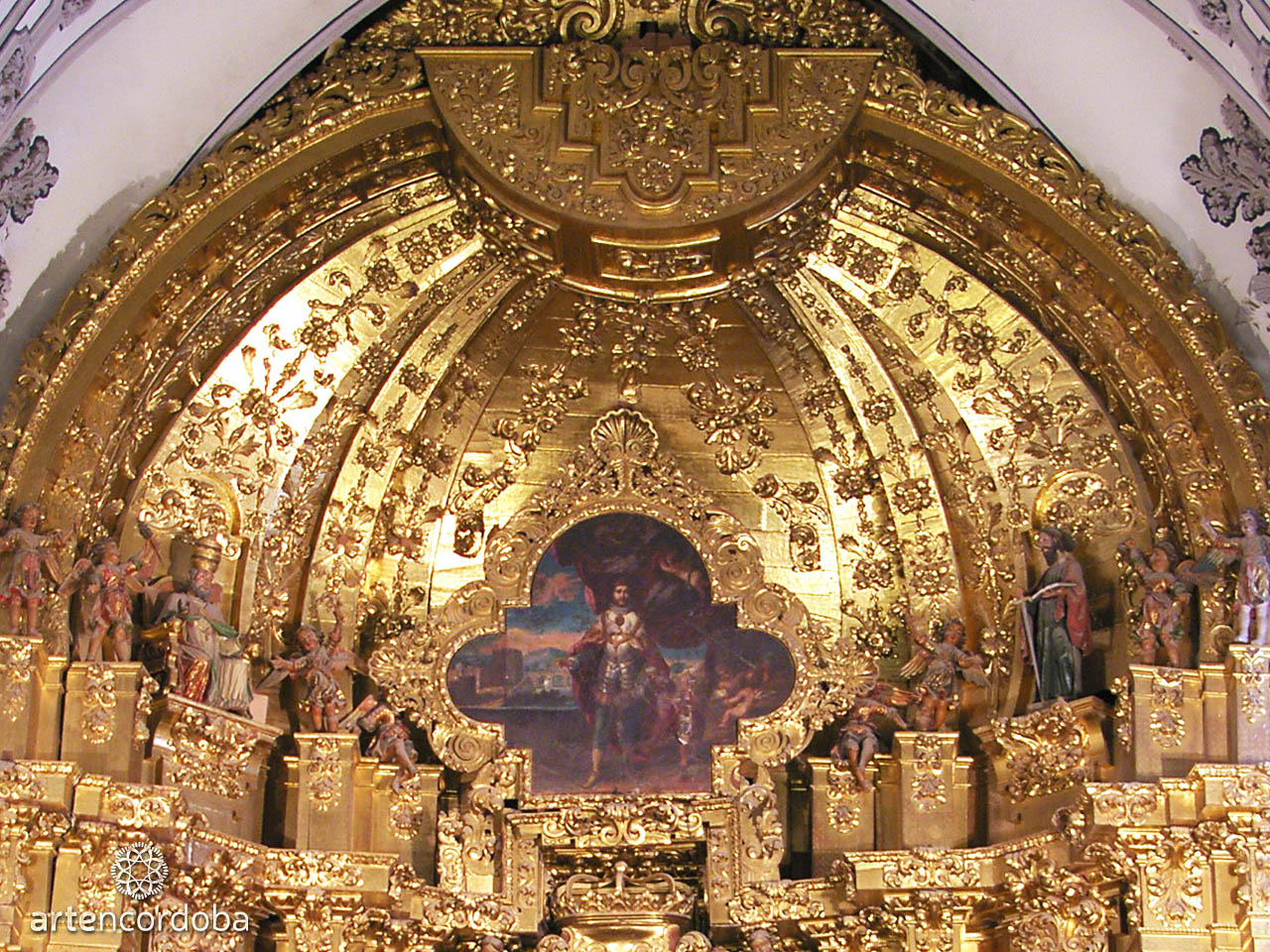
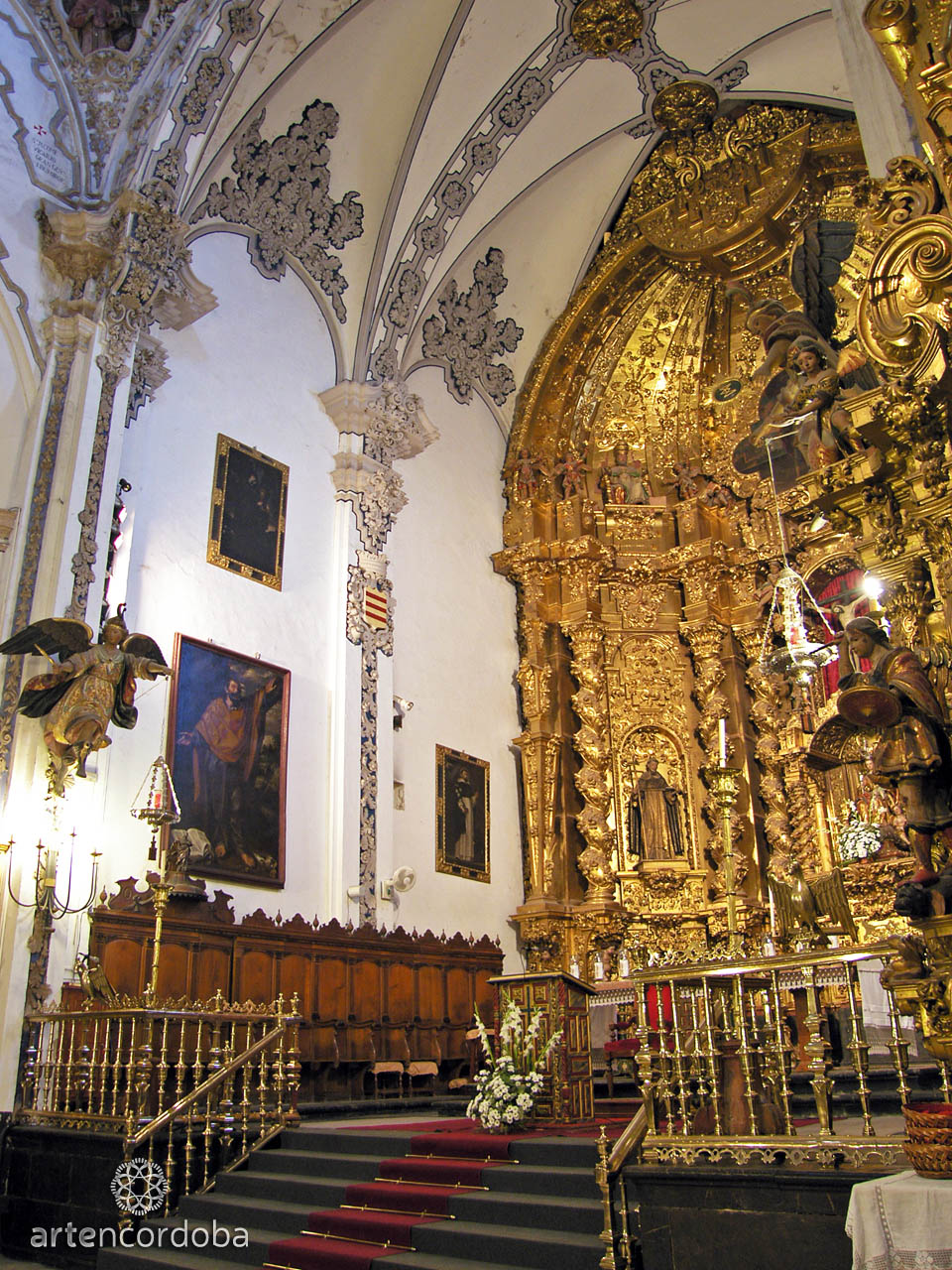
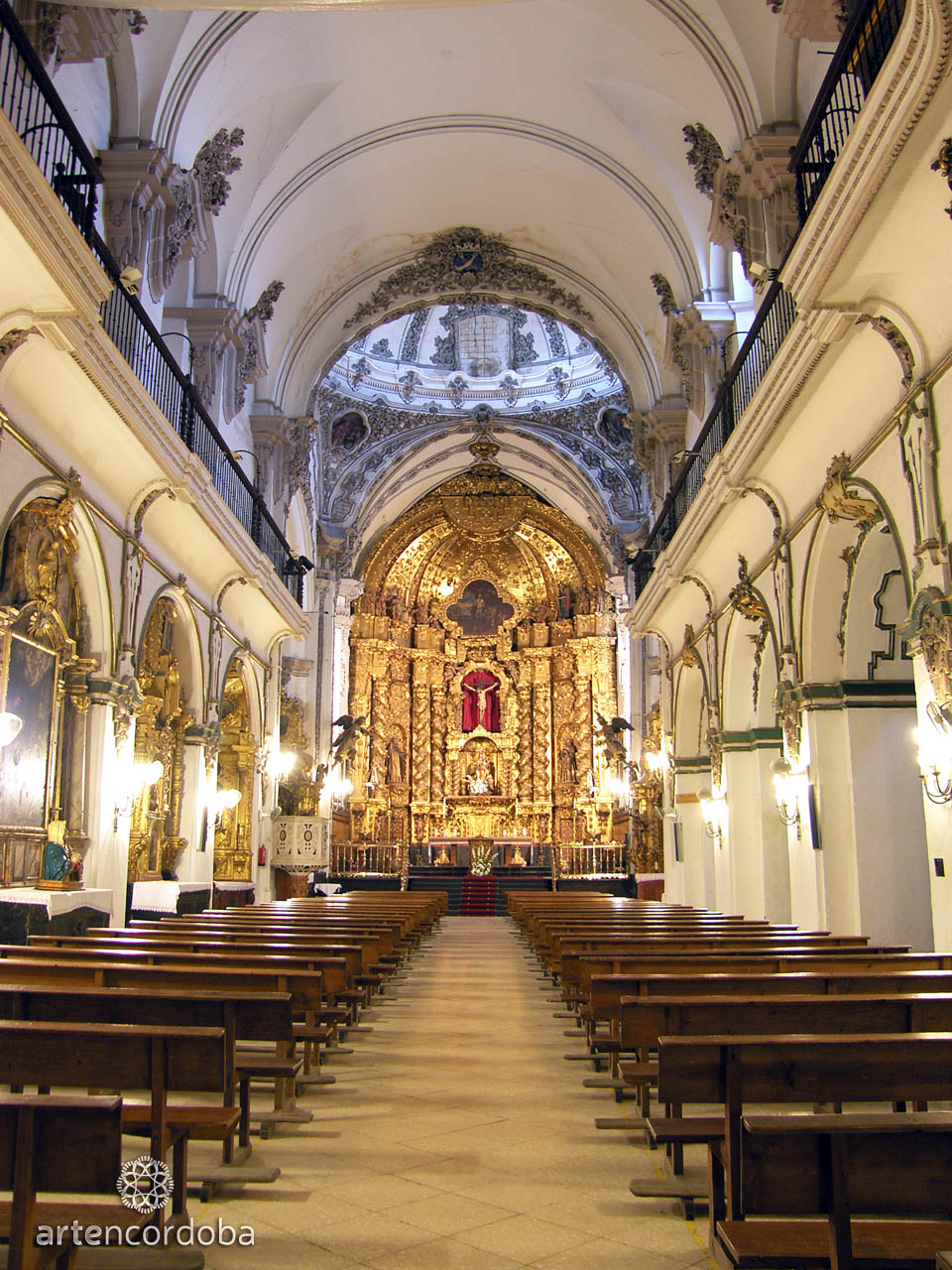
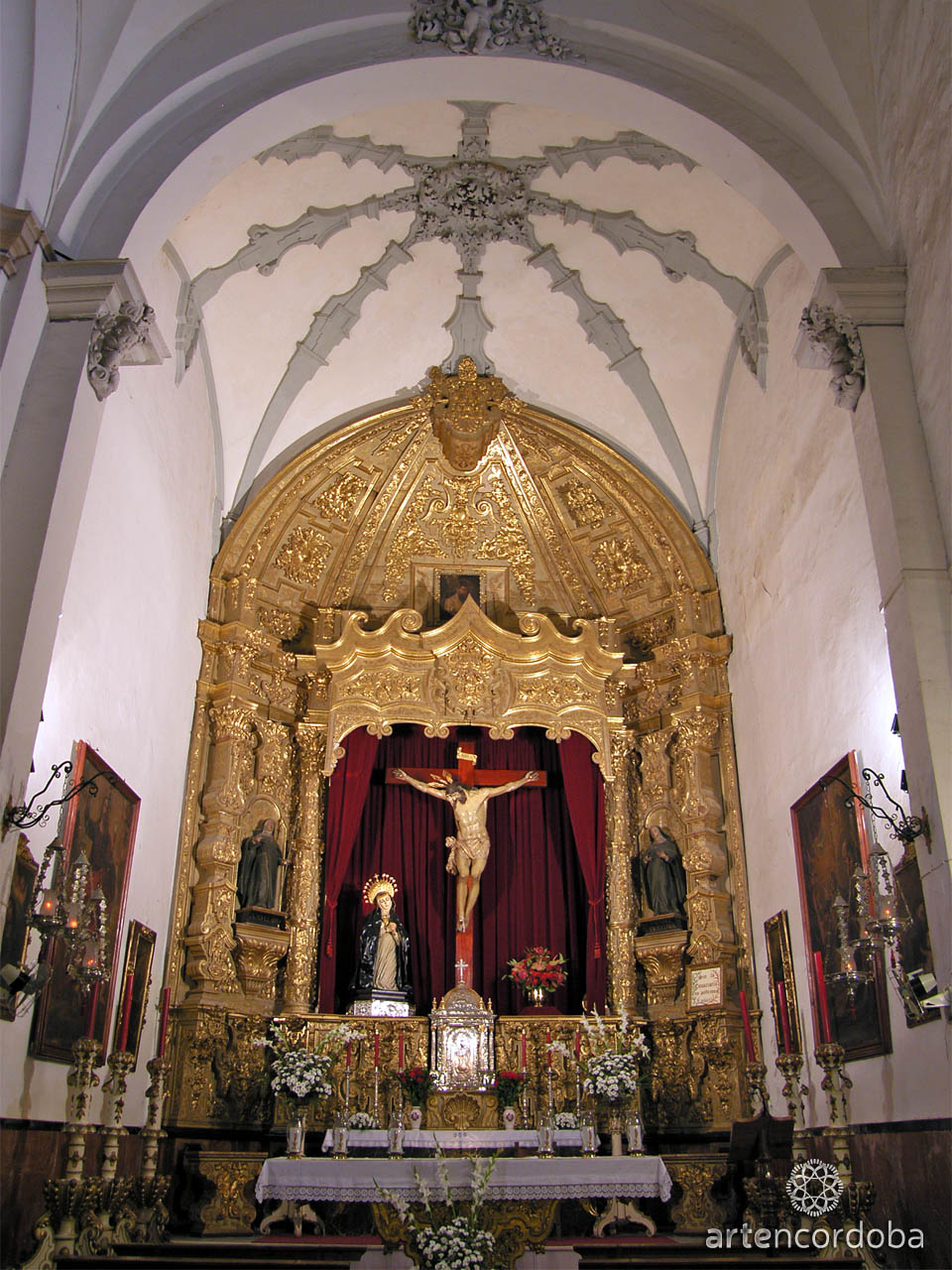
The Main Altar of the Church of San Francisco is presided over by a large altarpiece by Teodosio Sánchez de Rueda, completed in 1720. The altarpiece is made of gilded wood and fits perfectly with the shape of the apse, which, as previously mentioned, retains its medieval structure.
Structure and Decoration of the Altarpiece
The ensemble comprises three vertical sections and two horizontal levels, with varying depths due to its concavity, giving it great dynamism and visual impact. Elements such as the Solomonic column, stipite, or pilaster distribute the different spaces of the richly decorated altarpiece, which features floral and vegetal motifs.
First Level
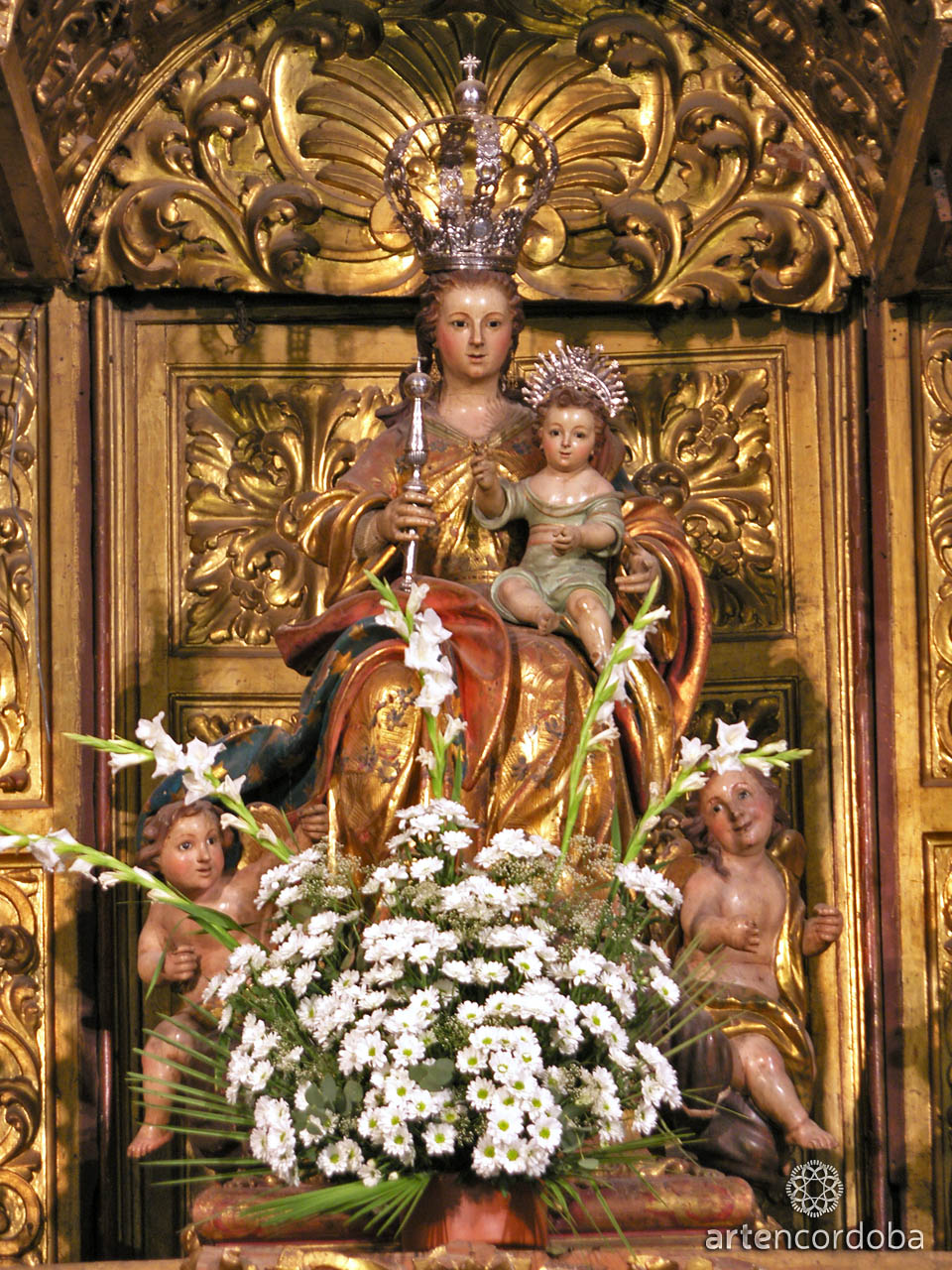
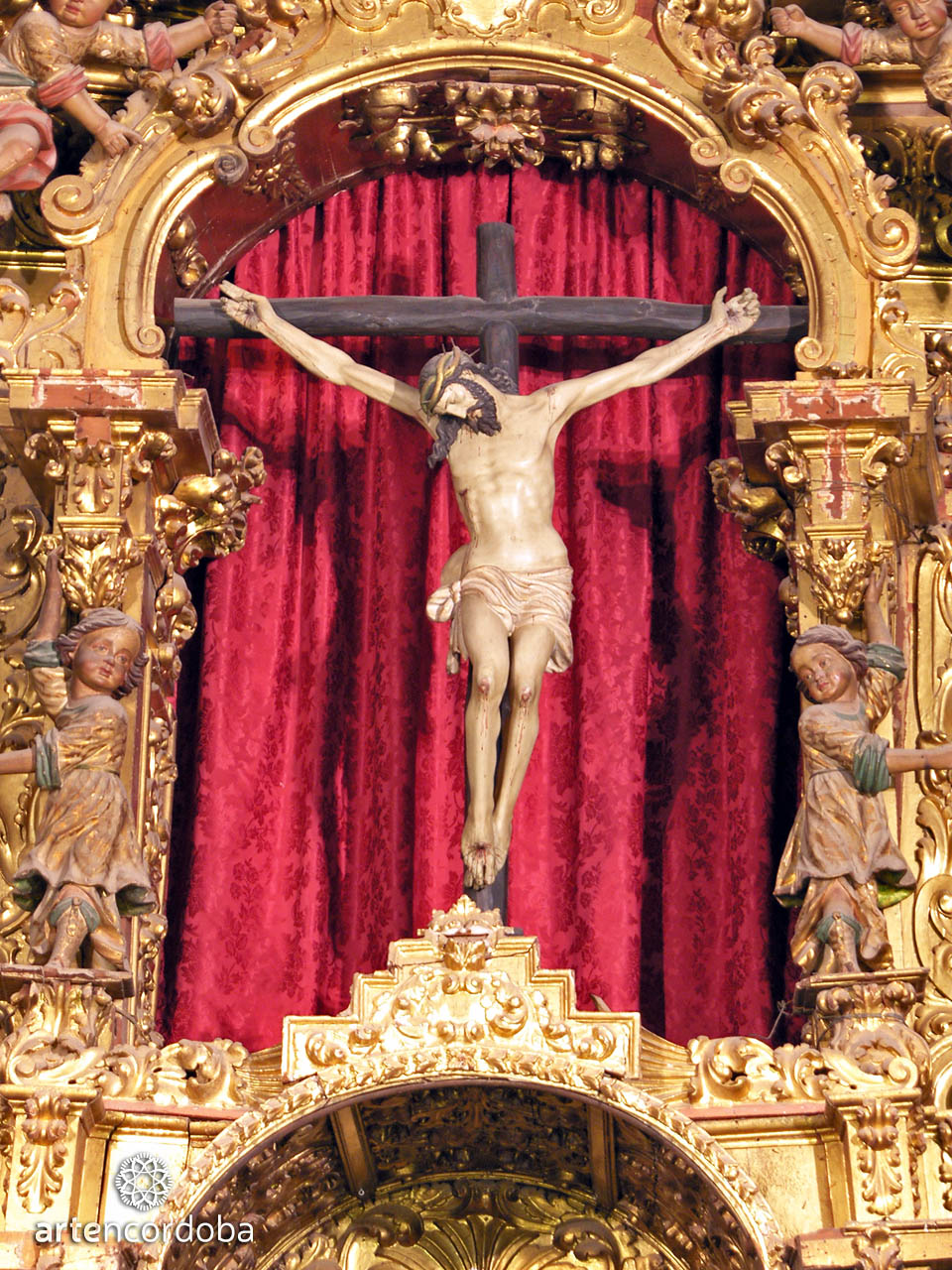
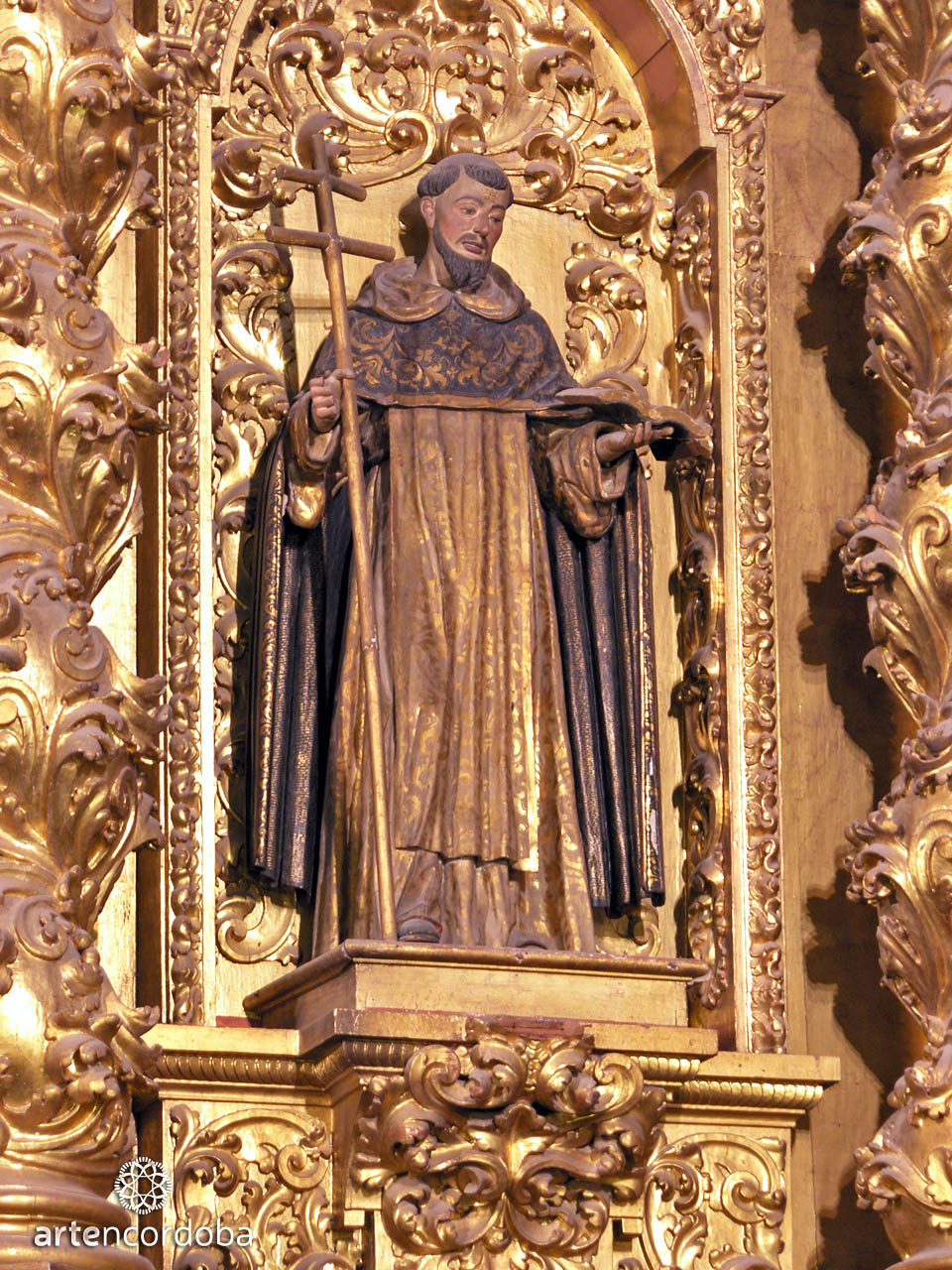
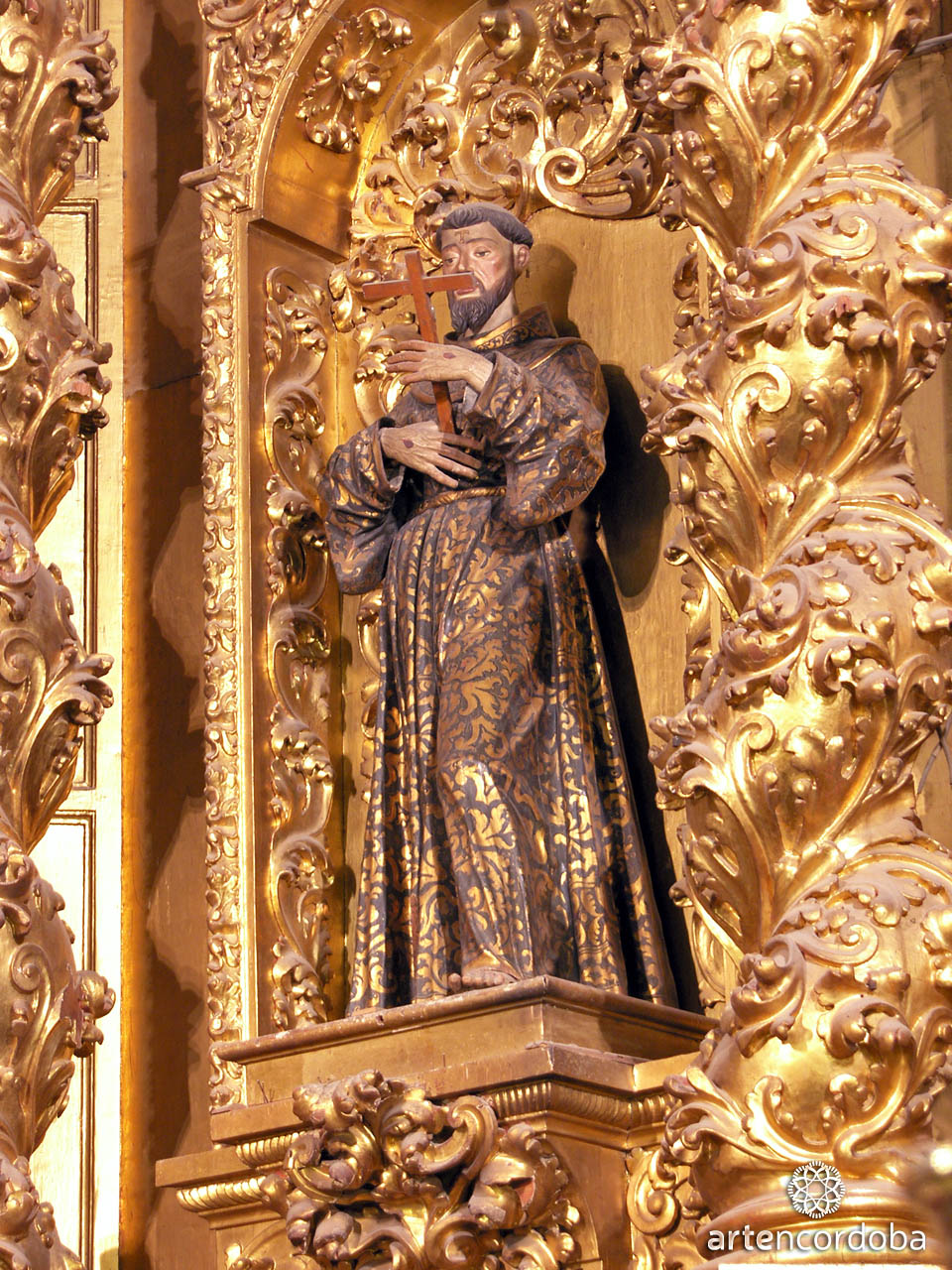
At the center of the composition is a smaller-than-life-size “Crucified Christ“, of unknown authorship. Below, in a niche, is the “Virgin of the Dawn“, depicted seated with the Child Jesus; it is believed to be the work of Alonso Gómez de Sandoval. Flanking the central scene, in the side sections, are two carvings of “Saint Francis of Assisi” and “Saint Dominic“. The first stands, displaying the stigmata that appeared on his hands and feet while praying on Mount Alverno; the second is also standing, holding a cross and a book. Interestingly, the two were friends, and the artist chose to depict them similarly, with excellent treatment of the estofado technique.
Second Level and Apse Adaptation
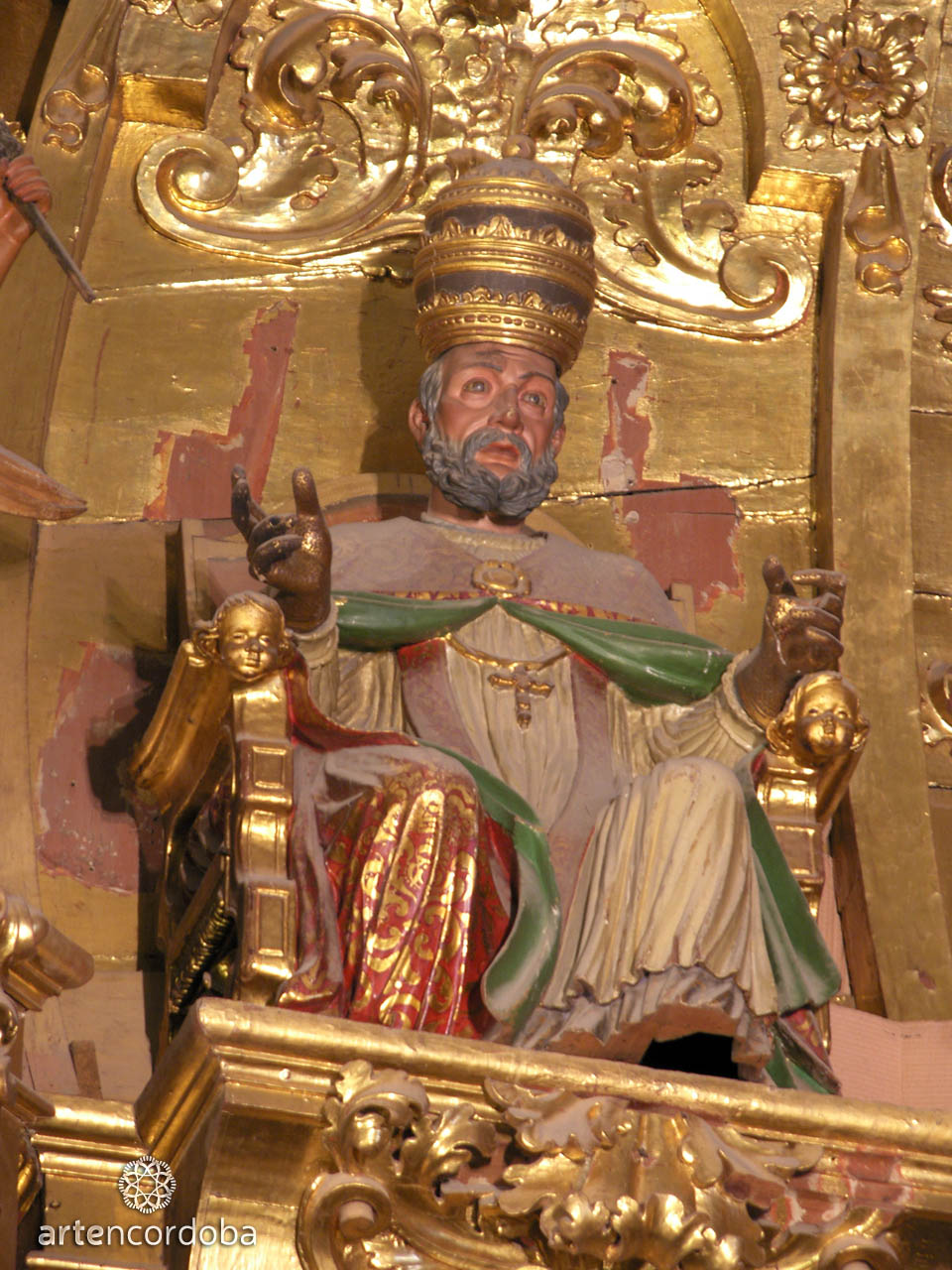
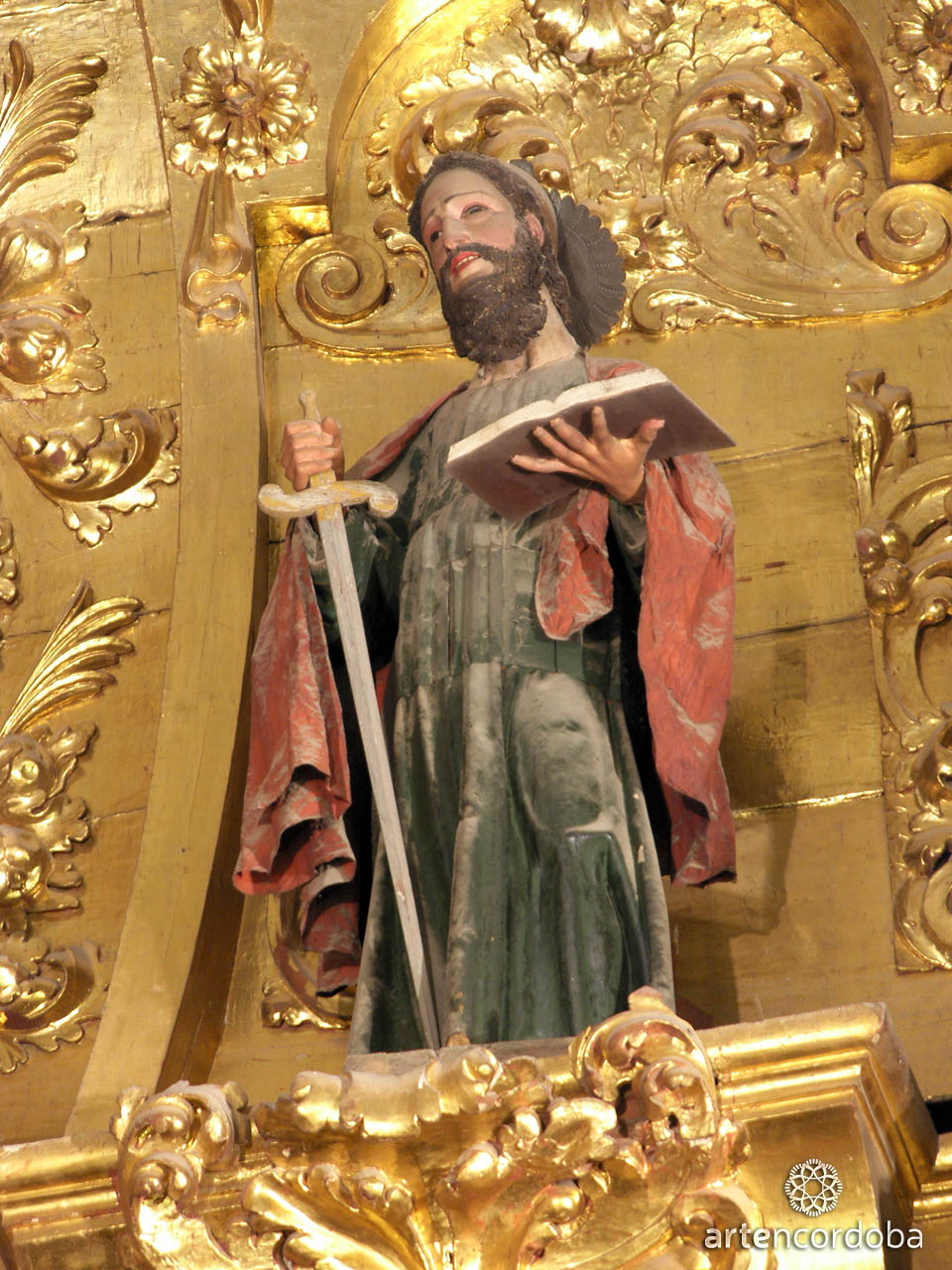
The second level is topped by a kind of dome forming a quarter-sphere, fitting perfectly with the medieval architecture. Once again, there are three sections, separated by pilasters. In the central one is a painting depicting “King Ferdinand III the Saint“. To the left is “Saint Peter“, seated in his chair, wearing the papal tiara, in a blessing gesture. To the right is “Saint Paul“, standing, holding a book and sword. Both figures are smaller than life-size.
Paintings of the Apse
Among the paintings on the apse walls, the exceptional “Saint Andrew” by Juan de Valdés Leal, painted in 1647, stands out. Leaning on his X-shaped cross, he looks to the sky, extending his right arm in supplication. Below are two of his most significant attributes: the book and the fish, as he was a fisherman. The mastery of dark tones is exceptional, rivaled only by the warm red of the saint’s mantle and the skillful depiction of fabrics. The work is designed to be viewed from a considerable height, as indicated by the large size of the feet.
The altars housed in the Church of San Francisco are noteworthy. We begin with those located on the gospel side of the main nave, then proceed through the transept, its arms, and the lateral apses, leaving the Main Altar for a separate section.
Altars on the Gospel Side
Altar of the Holy Martyrs
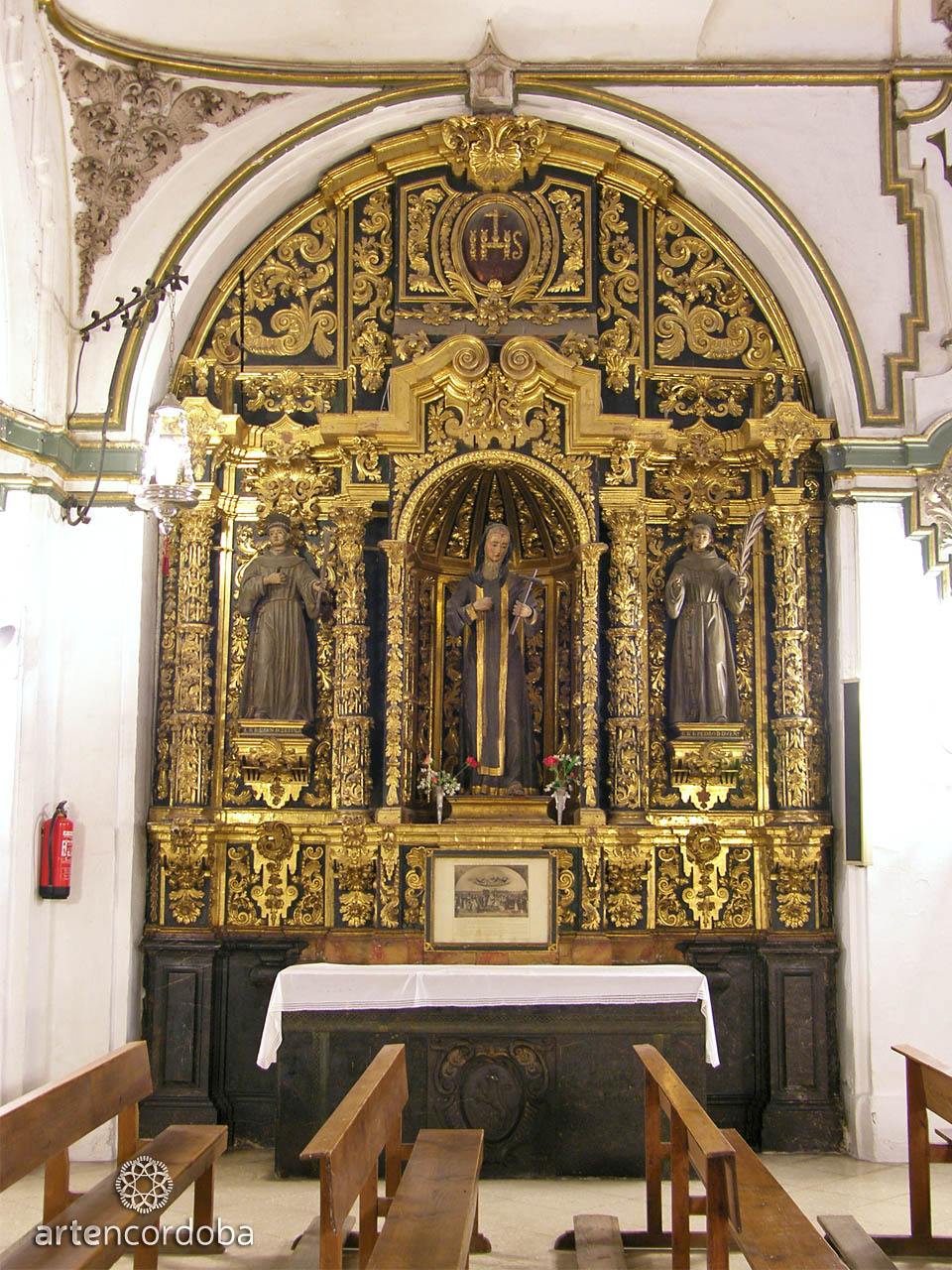
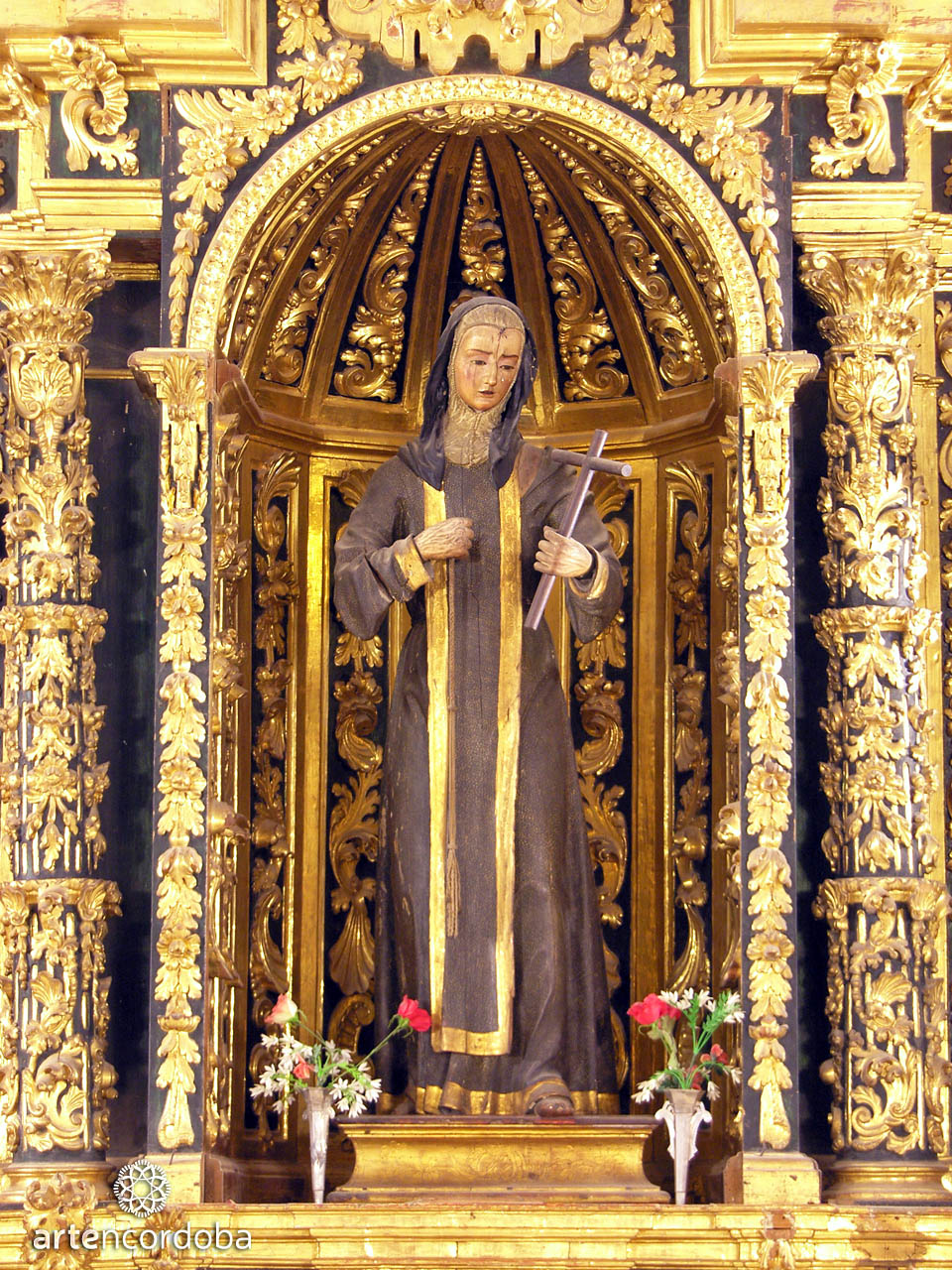
The first altar on the gospel side is the Altar of the Holy Martyrs. It is a small altarpiece made of polychromed and gilded wood, richly decorated with floral and geometric elements. At the center is the figure of “Saint Rita“, holding a cross as a symbol of her penance, dressed in the Augustinian habit. Flanking her are two saints: “Saint Peter Dueñas” and “Saint John of Cetina“, both holding palms, symbols of martyrdom.
Altar of the Nativity
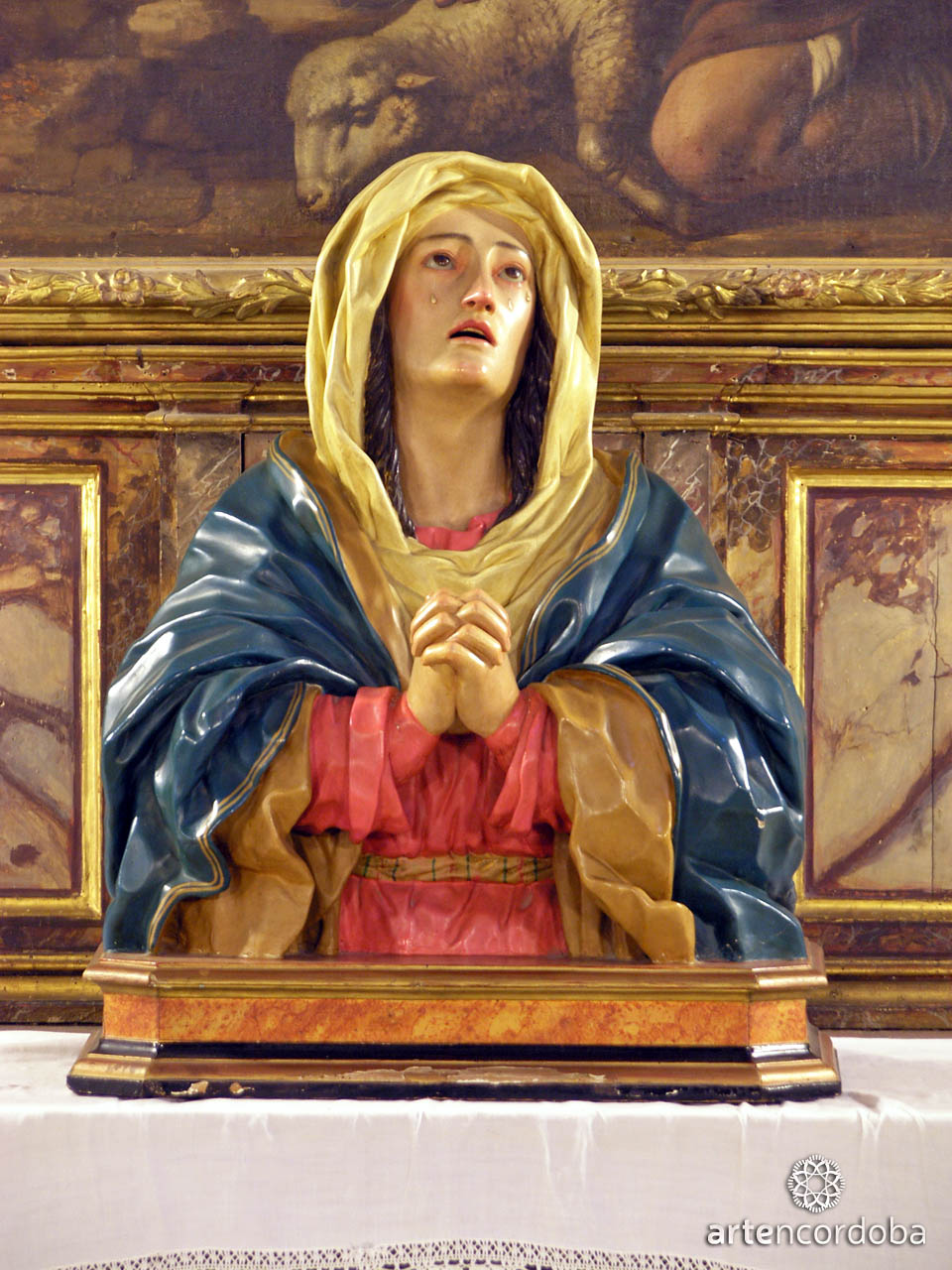
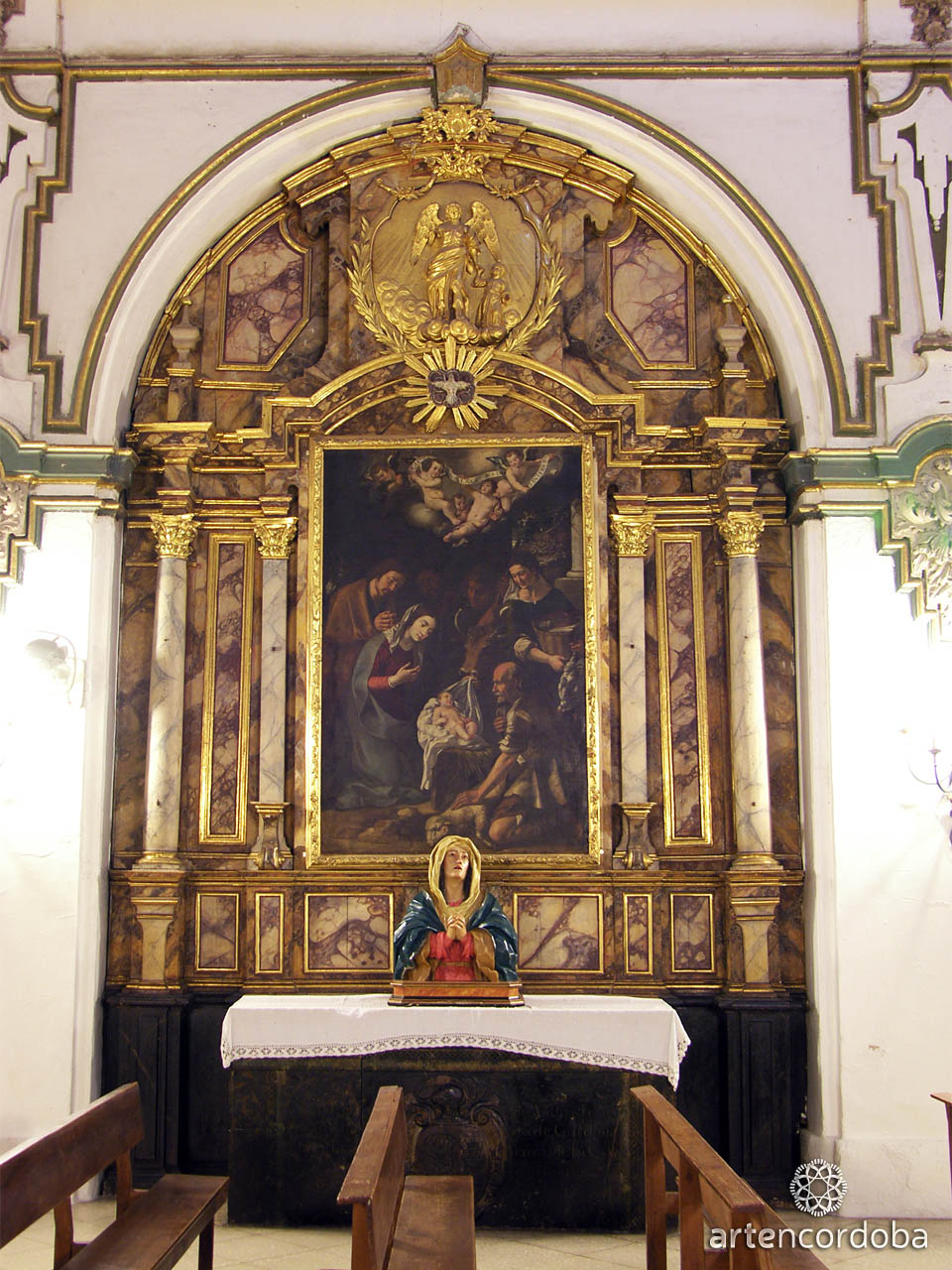
The Altar of the Nativity is named after the painting above it, a work by the Sevillian artist José Ruiz de Sarabia. It is a skillful composition, featuring an interesting rupture of glory that divides the scene into two, typical of the artist’s style, with a deep influence from Zurbarán, particularly in the use of light. The altarpiece is made of polychromed and gilded wood and imitates marble decoration. It is crowned by a golden relief depicting the “Guardian Angel with the Child“, a work by the aforementioned Manuel Gómez.
Altar of the Ecce-Homo
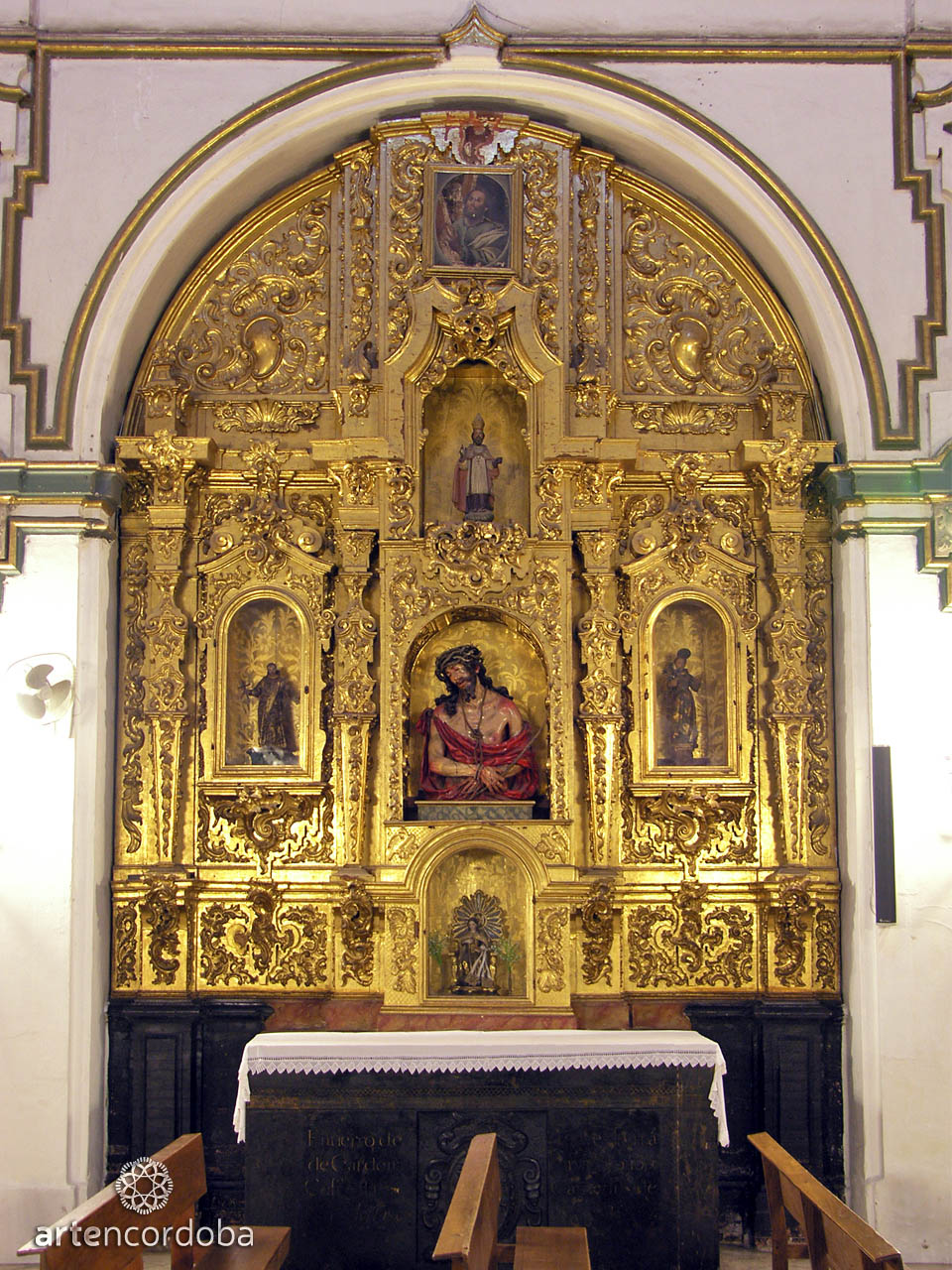
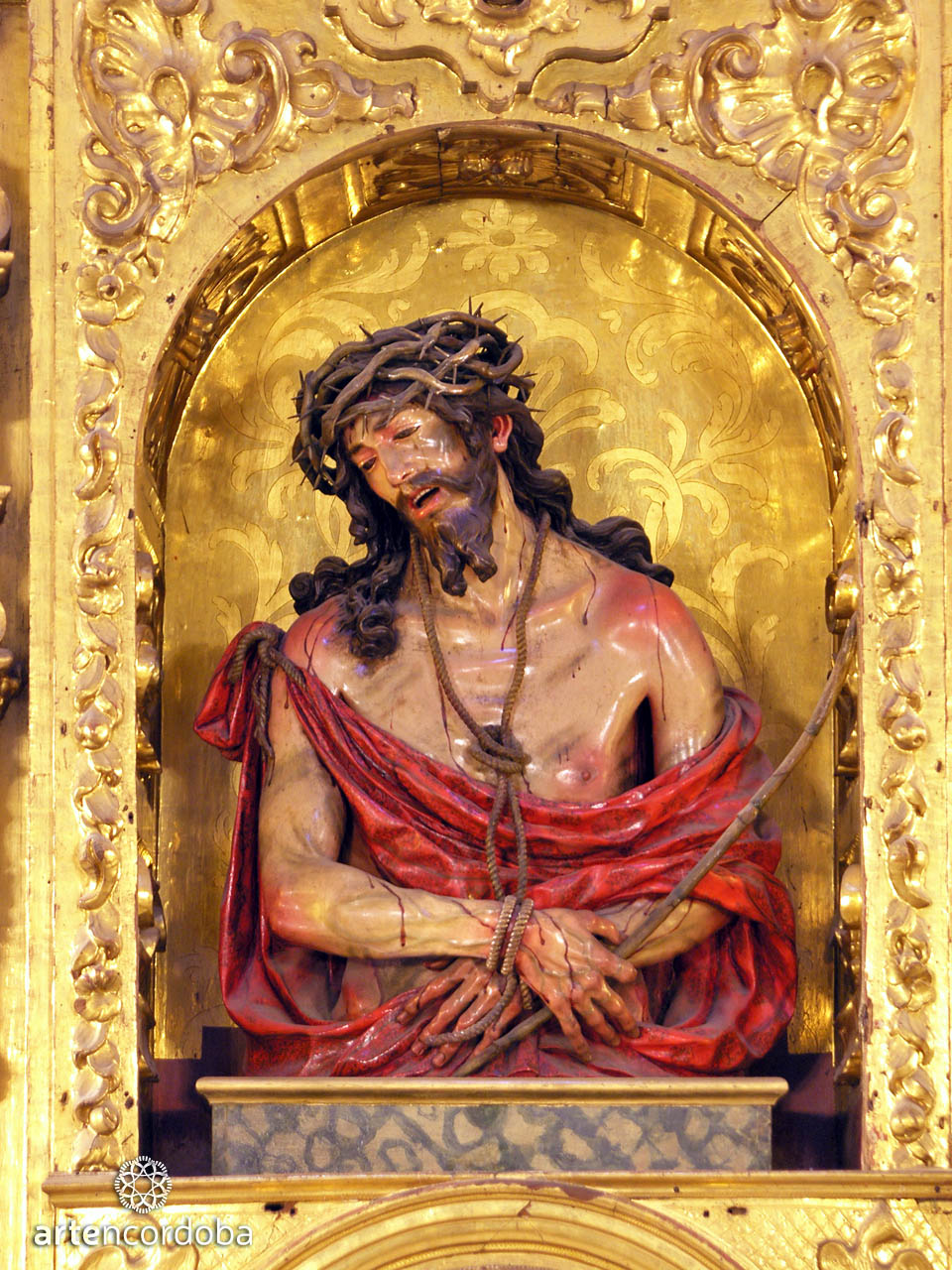
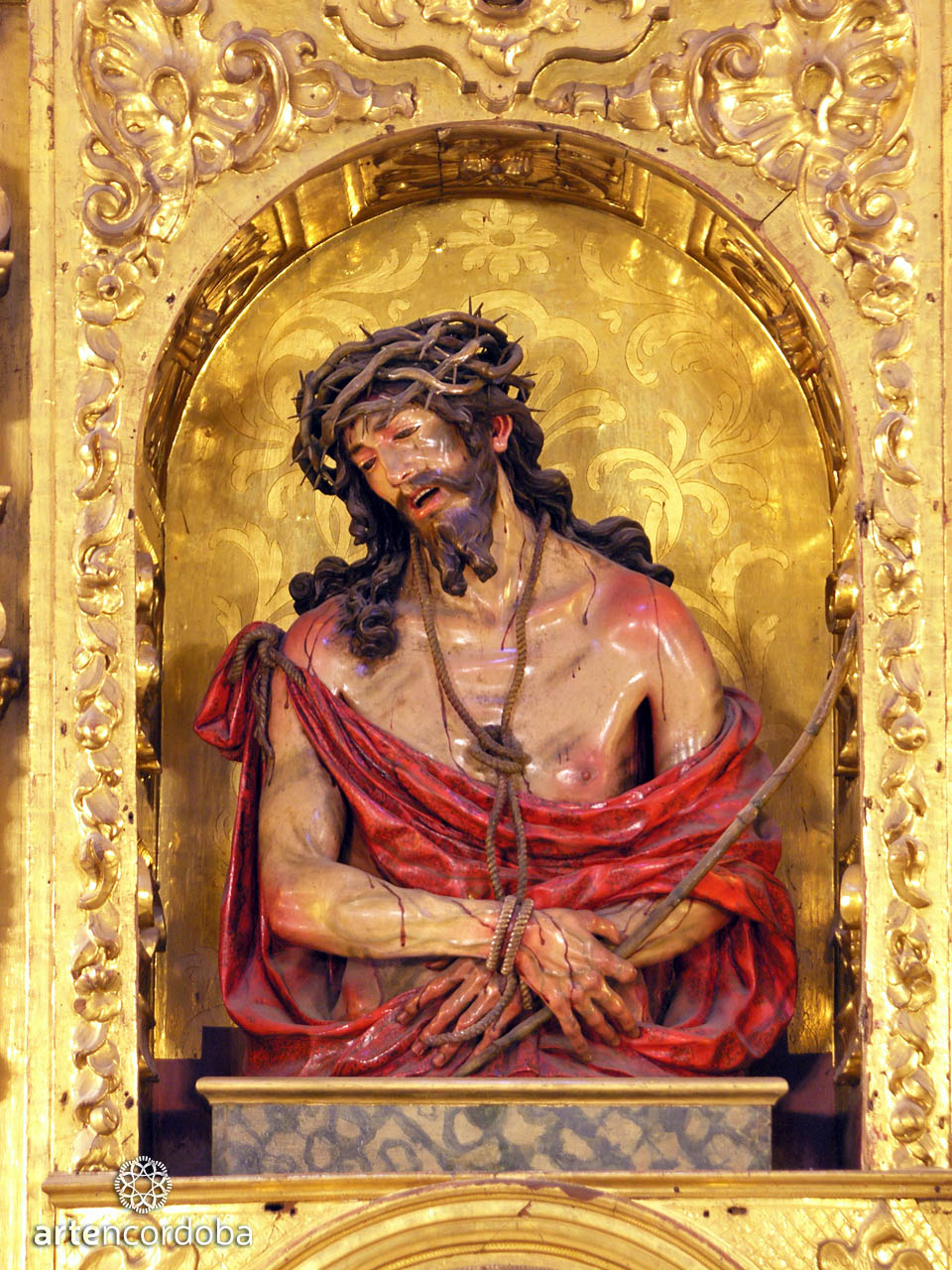
The well-known Altar of the Ecce-Homo is especially interesting. Highly ornate, it is a three-section altarpiece separated by stipites, with the central section extending to the top. In the middle is the “Ecce-Homo“, a polychromed wooden bust, attributed to Luisa Roldán “La Roldana“, daughter of Pedro Roldán. On either side are two small images representing “Saint Francis of Assisi” and “Saint Anthony of Padua“.
Altarpiece of Saint Joseph
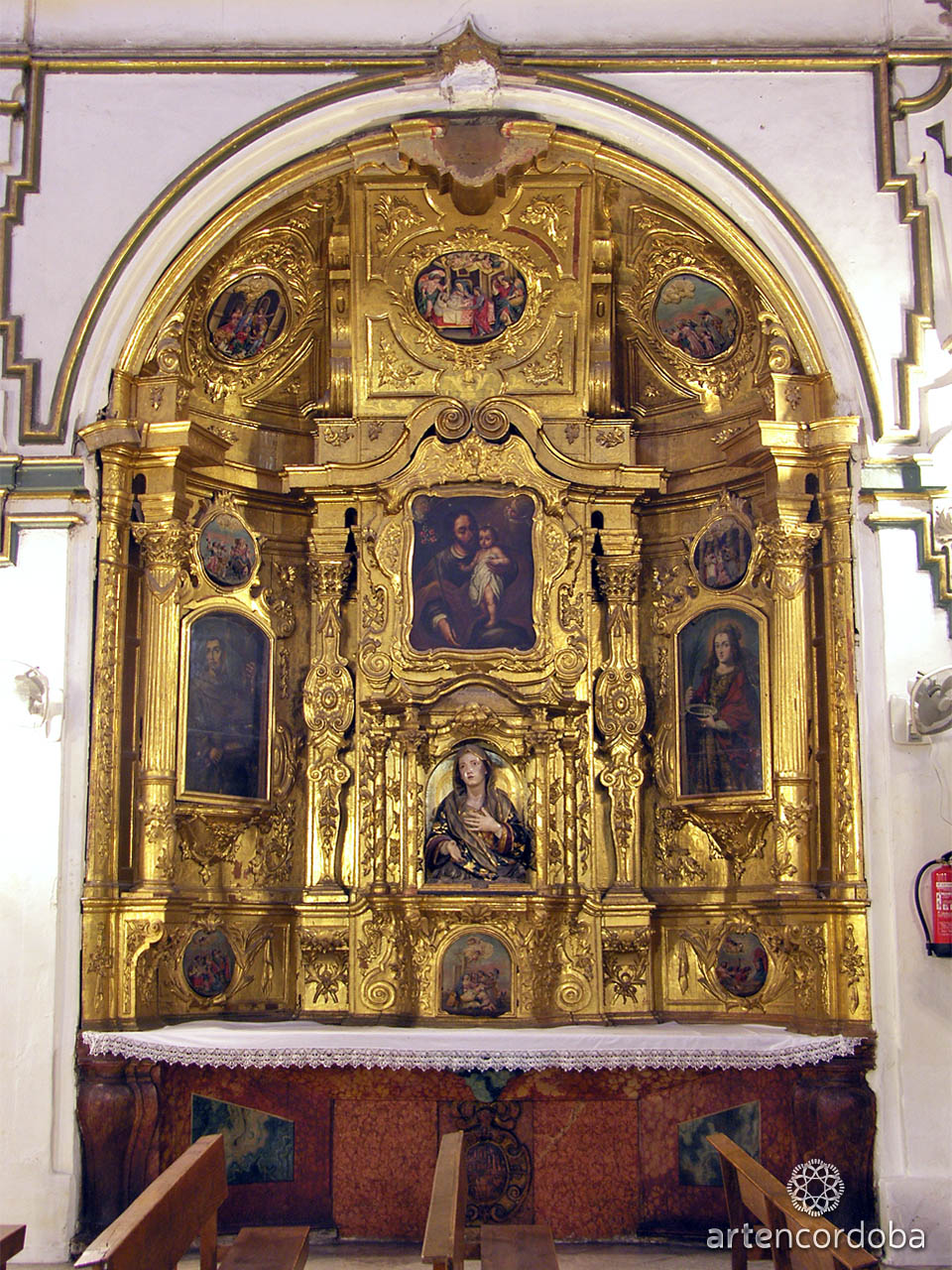
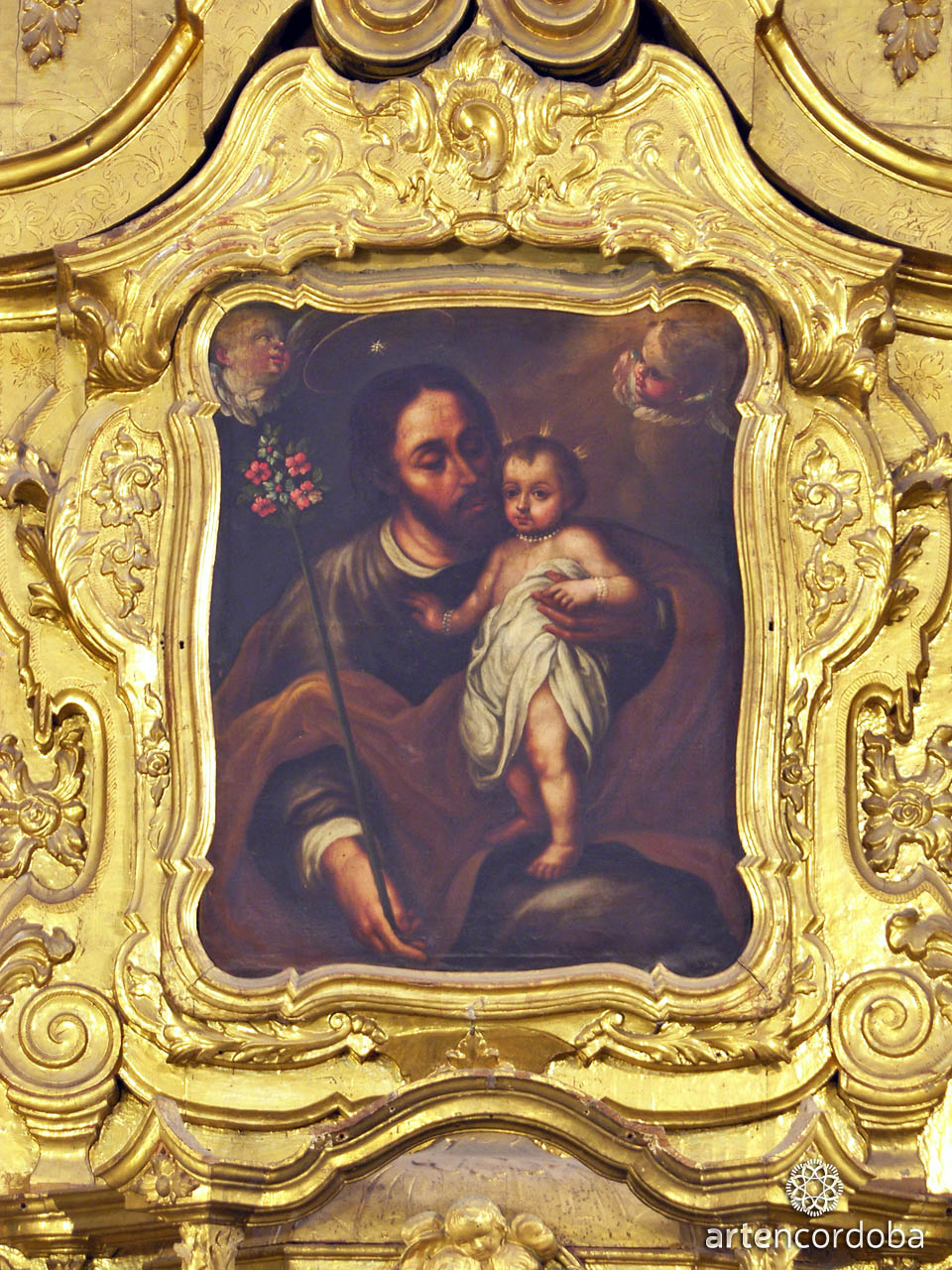
We conclude with the Altarpiece of Saint Joseph, attributed to José de Cano. It is named after the painting “Saint Joseph with the Child“, an emotional scene where the saint holds Jesus in his arms while carrying a lily branch, symbol of his purity. Several polychrome reliefs depict scenes from Joseph’s life, such as “Saint Joseph’s Dream“, “The Nativity“, and “The Adoration of the Shepherds“.
Transept Altars
Altar of Saint Joseph
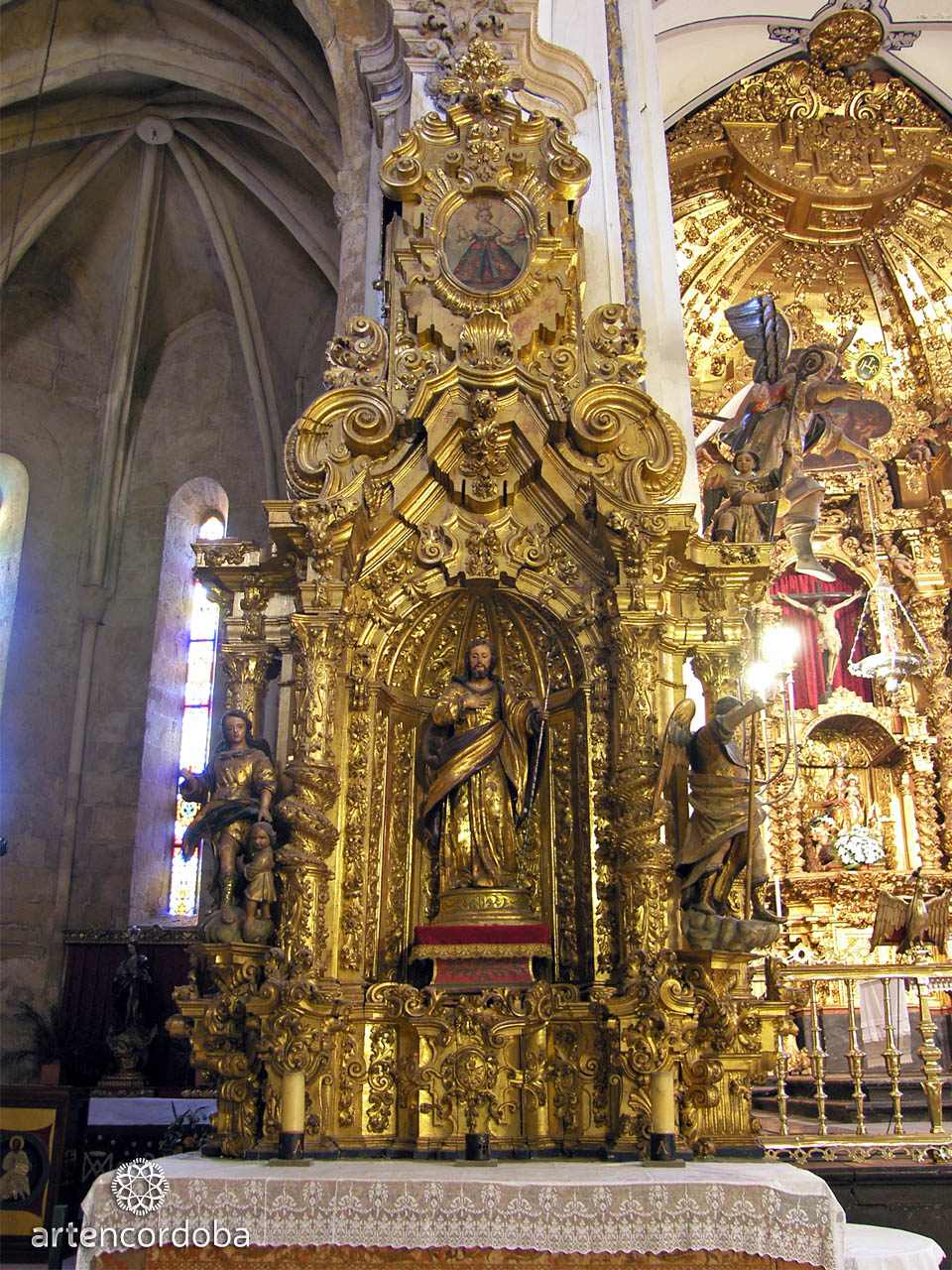
Beneath one of the pillars supporting the transept, on the Gospel side, is the Altar of Saint Joseph, curiously dedicated to the same Saint as the previous one. It is a work of great verticality and movement. The centerpiece is a carving of “Saint Joseph“, standing alone, holding the blossomed staff. On either side are images of the archangels “Saint Michael” and “Saint Raphael“.
Altar of Saint Eligius
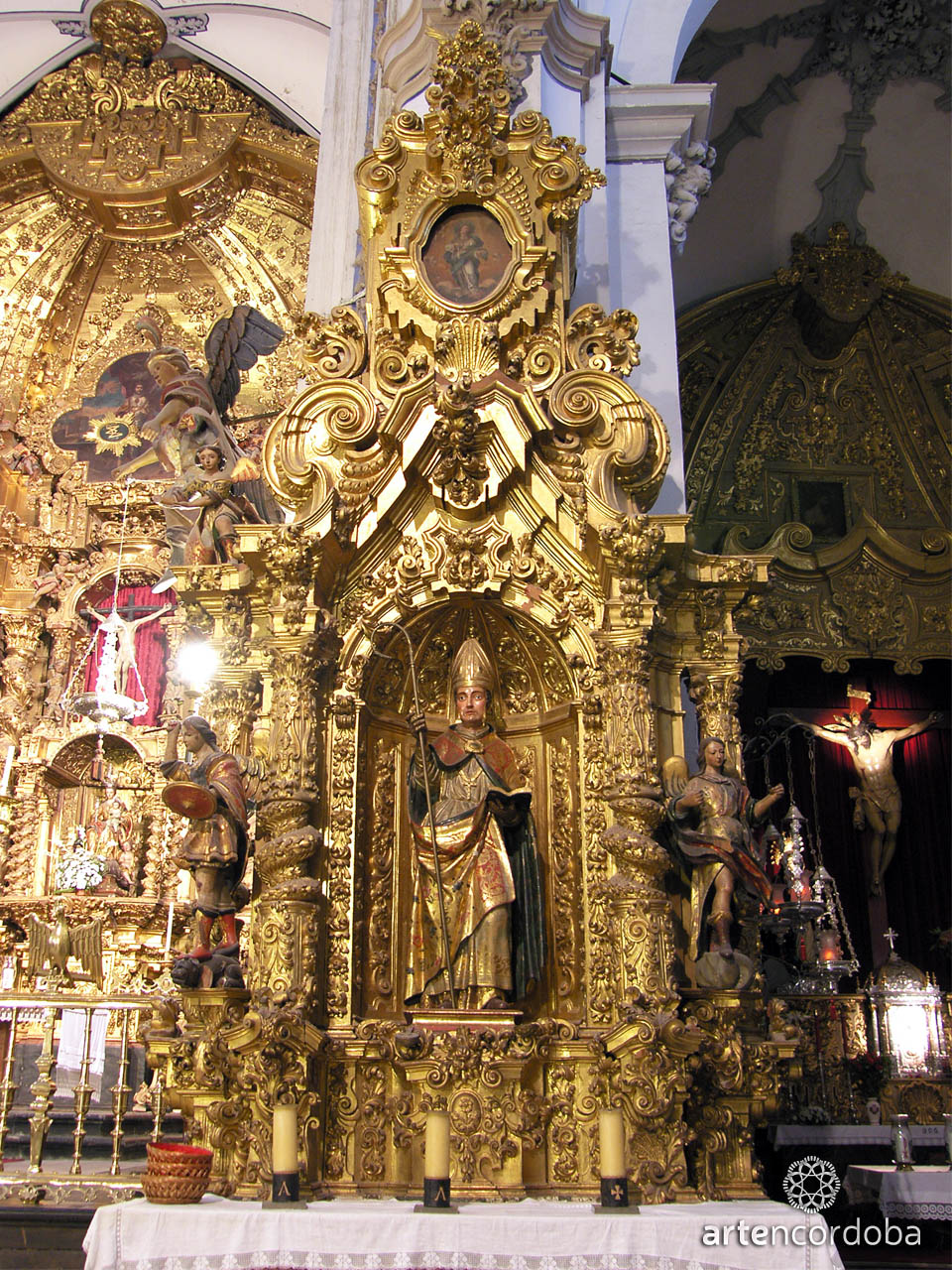
On the opposite pillar of the transept is the Altar of Saint Eligius, with similar proportions and decoration to the previous one. The hand of Teodosio Sánchez Cañadas is believed to be present in both. In this case, the altar is presided over by the image of “Saint Eligius“, depicted dressed as a bishop, with splendid garments and fine use of gilt polychrome.
Works in the Transept Arms
The Visitation
In the Gospel side arm of the transept, a notable painting is “The Visitation“, attributed to the Flemish painter Pedro de Campaña. It represents the moment of the meeting with Elizabeth, in the presence of Zechariah. It shows good mastery of perspective and the use of warm colors, typical of the Flemish school.
Altar of the Saint Johns
Near this painting is the Altar of the Saint Johns, which presents an interesting composition: it is shown as if behind curtains, being drawn aside by two beautifully crafted winged cherubs. The pictorial composition dedicated to the mentioned saints is the work of Diego Monroy, a copy of an original by Antonio del Castillo.
Apse on the Epistle Side
Altarpiece of Charity
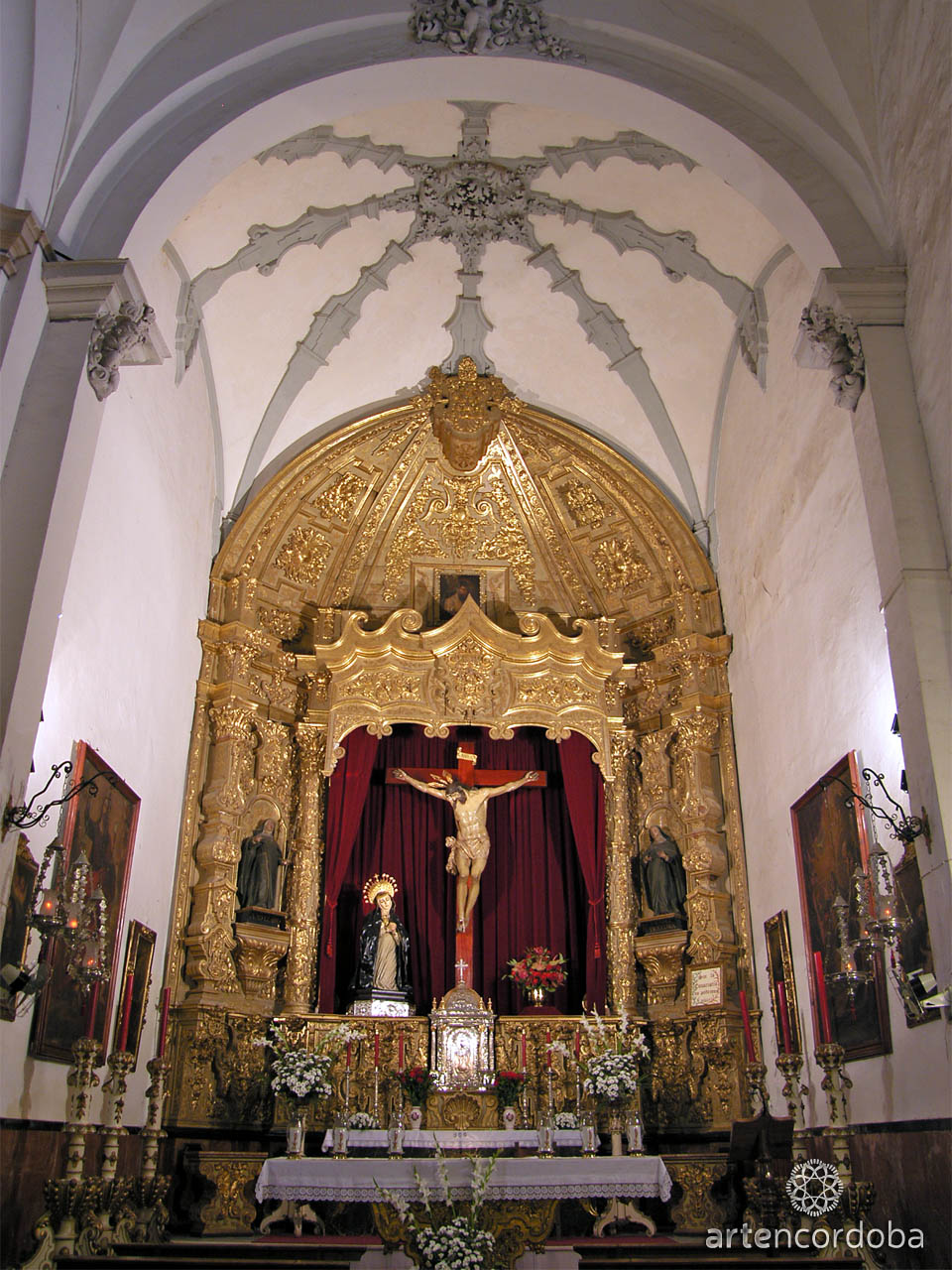
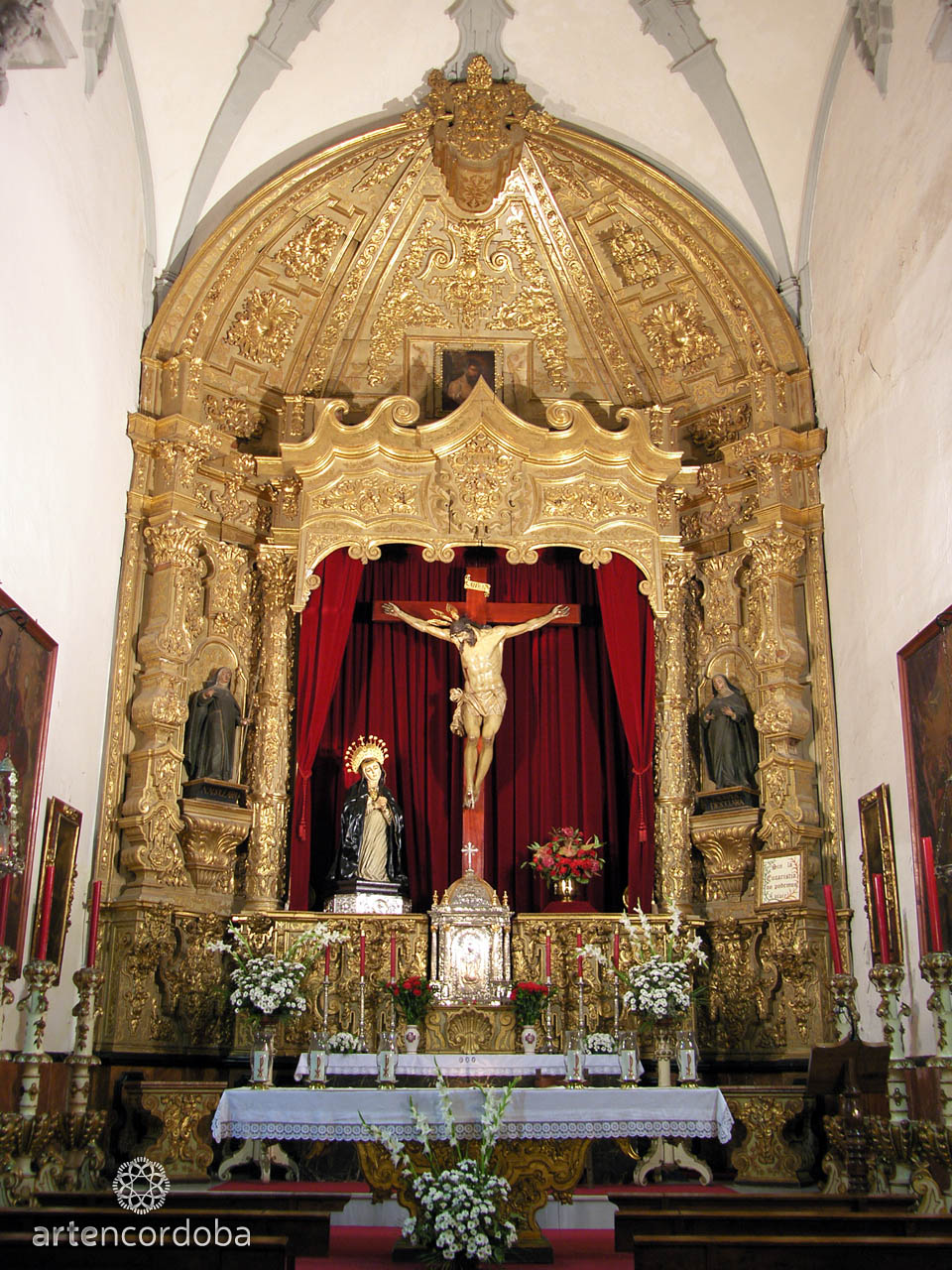
We finish in the apse on the Epistle side, currently the Tabernacle of the Church of San Francisco. There is the Altarpiece of Charity, an anonymous 18th-century work, which houses the crucified figure of the titular image of the brotherhood that parades on Holy Thursday. The images of this brotherhood are described in the section dedicated to Holy Week in Córdoba on our website.
Paintings of the Tabernacle
Among the paintings decorating the Tabernacle, we would like to highlight those by Acisclo Antonio Palomino, a well-known painter due to his work, treatises, and family ties to Diego Velázquez. Firstly, “The Savior” presents the Lord in a blessing pose, holding the Tabernacle, and also a beautifully crafted “Saint Anne“. Of great interest is the painting depicting “Saint Anne, Saint Joachim, and the Virgin as a Child“, where all characters are in communion: Saint Anne looks to the heavens, where a burst of glory reveals the Holy Spirit as a Dove, while Saint Joachim gazes at the praying Virgin Child.
Chapels of the Church of San Francisco
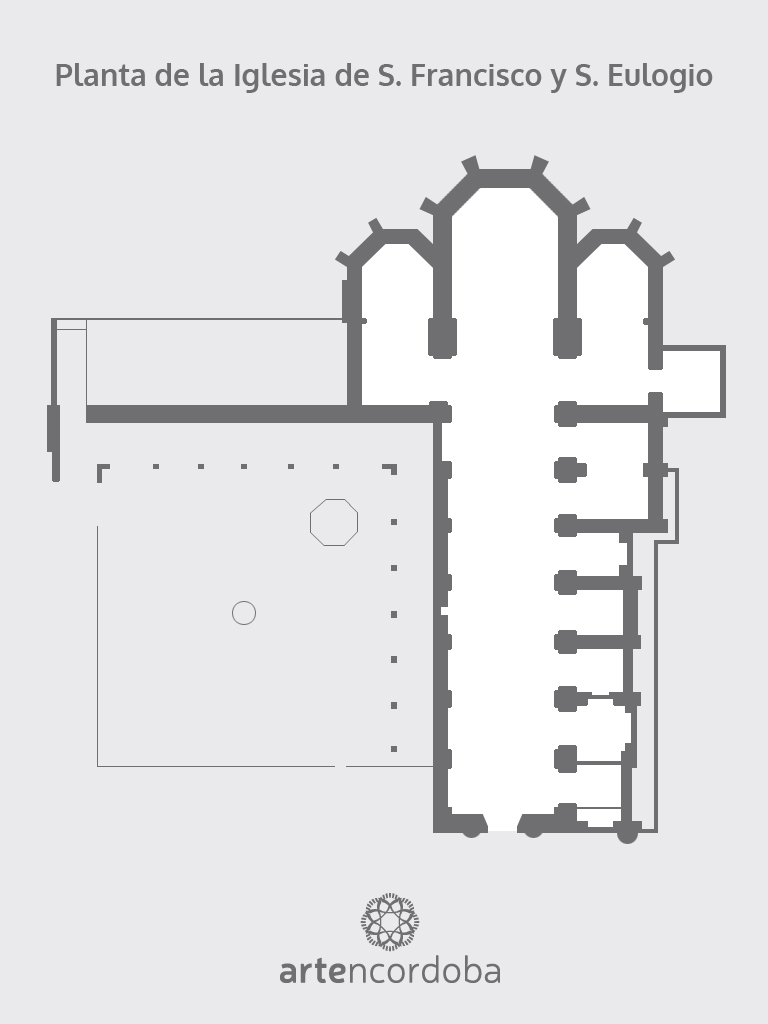
The various chapels housed in the Church of San Francisco are located along the main nave, on the Epistle side. There are a total of six, showing notable differences in both style and content.
Chapel of the Baptism
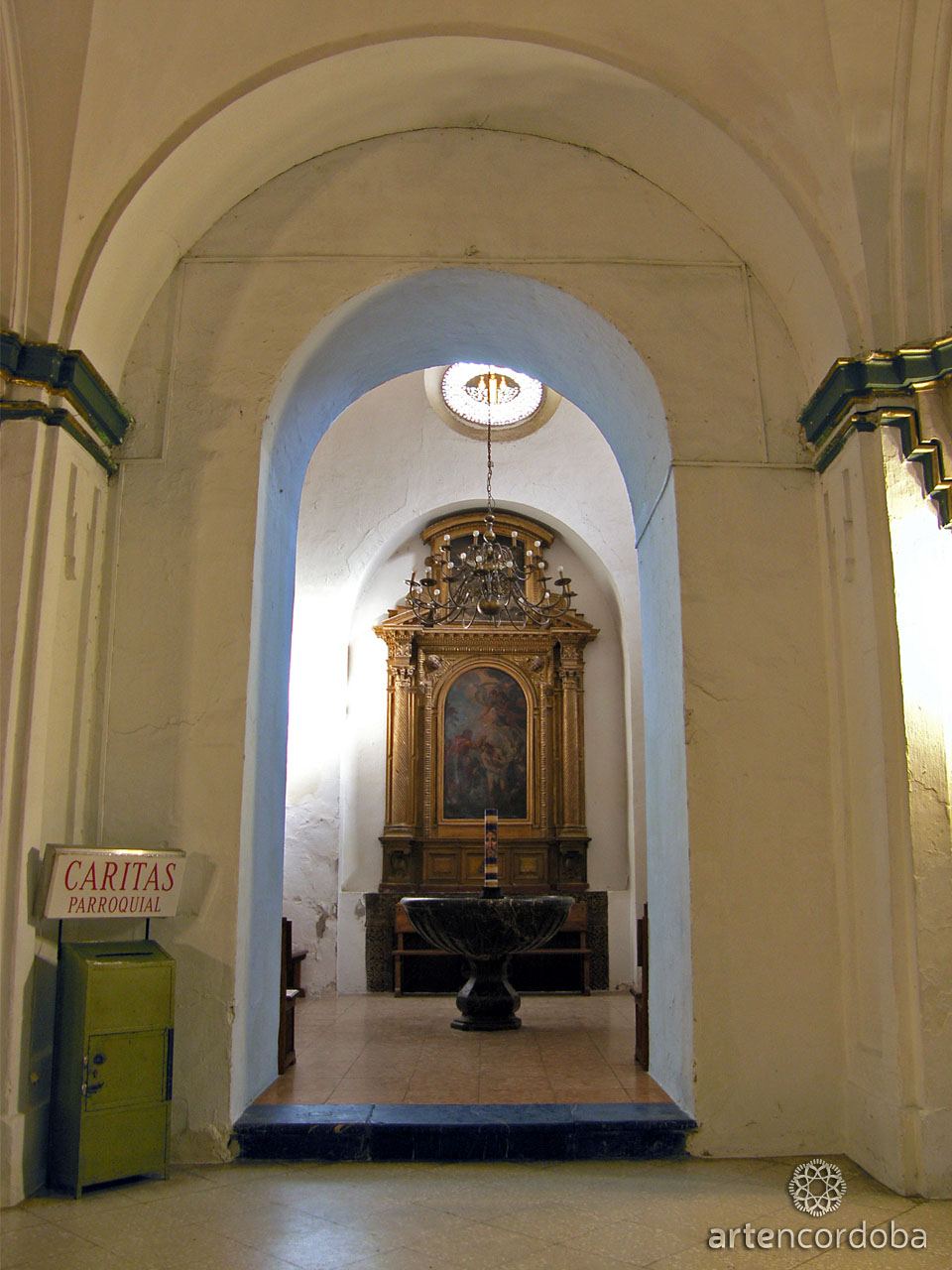
The first is the Chapel of the Baptism, named after the black marble baptismal font located at its center. Behind it stands out a 17th-century altarpiece attributed to Melchor Fernández Moreno, who gave it a marked classicist accent through elements such as a split triangular pediment, spiral fluted columns, and a curved top to fit the space. The main theme is, naturally, the “Baptism of Christ“, a copy of an earlier work.
Chapel of Saint Raphael
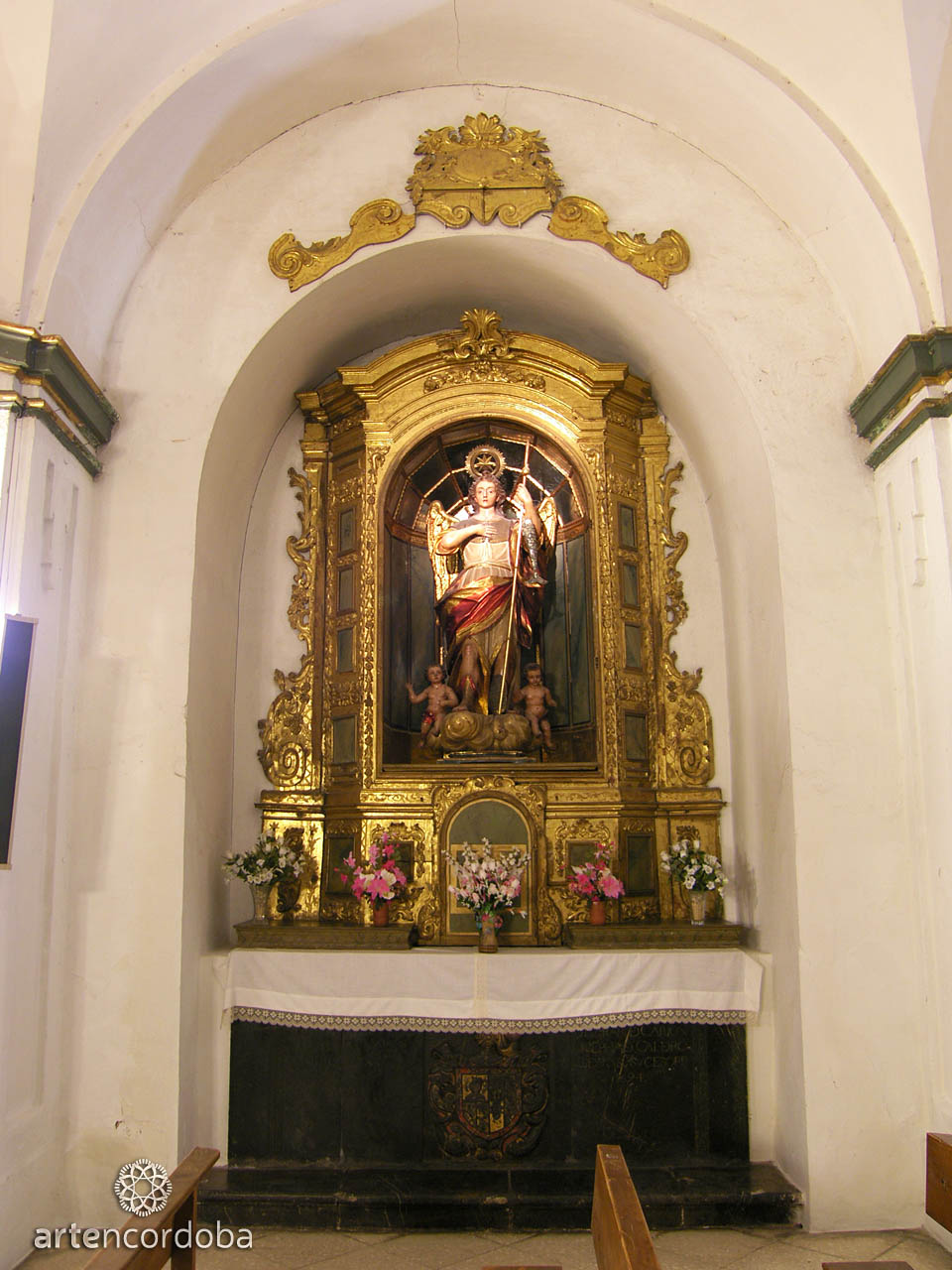
The Chapel of Saint Raphael is a small space with a modest altar dedicated to “Saint Raphael“. The altar is presided over by a freestanding figure of the “Guardian Angel” of our city, believed to be the work of Manuel Gómez, son and pupil of Alonso Gómez de Sandoval, dating it around 1795.
Chapel of the Venerable Third Order
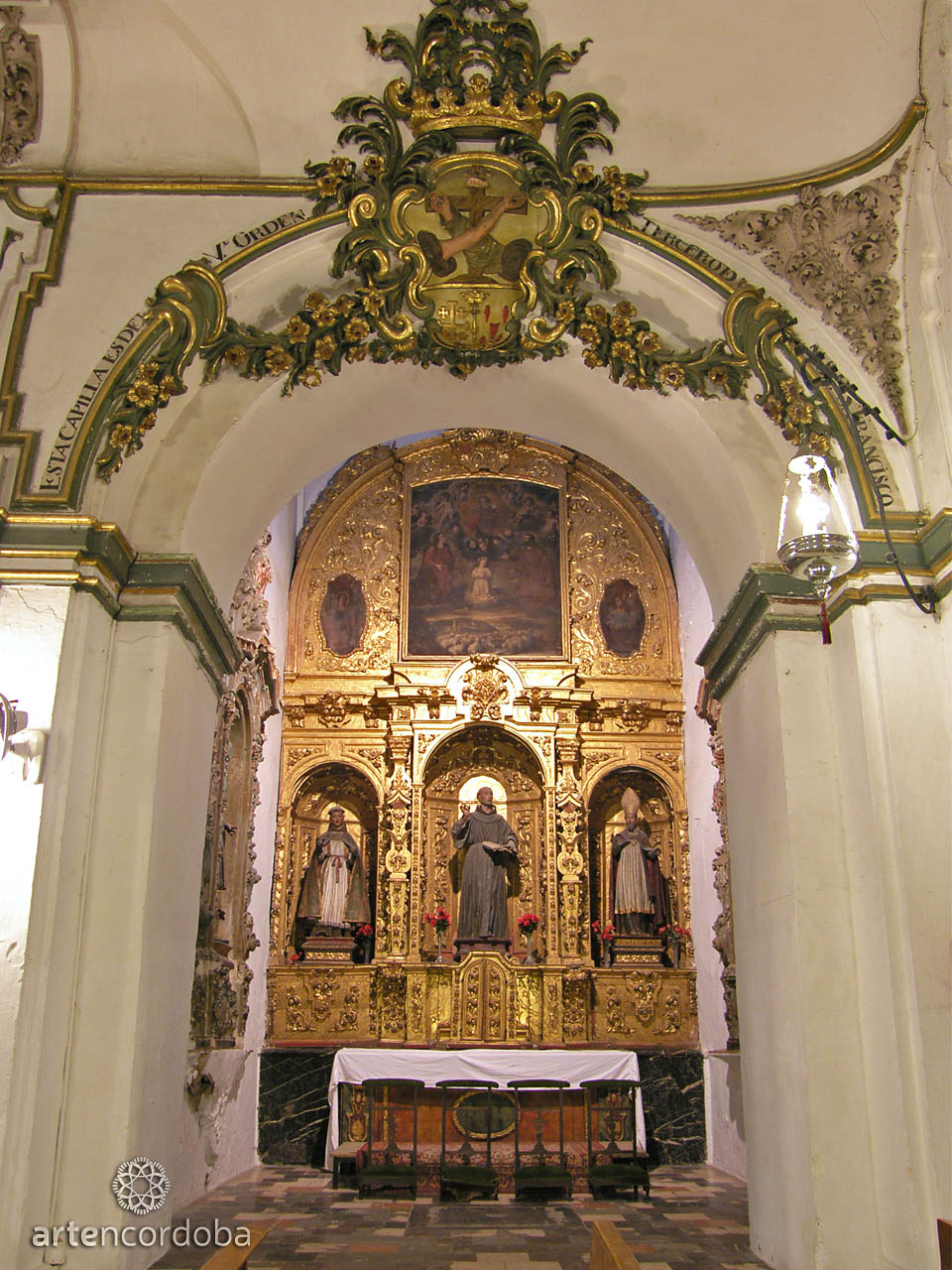
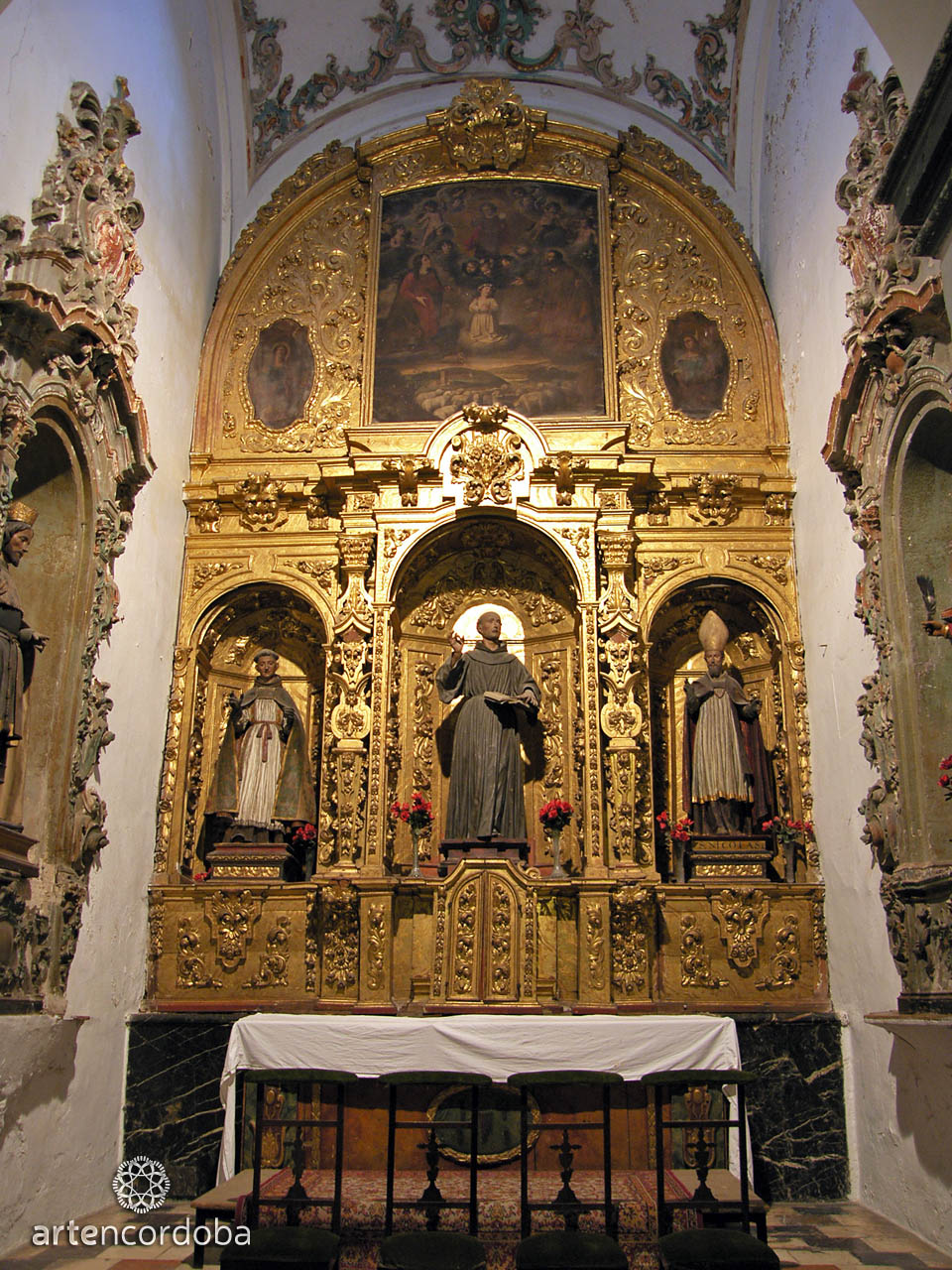
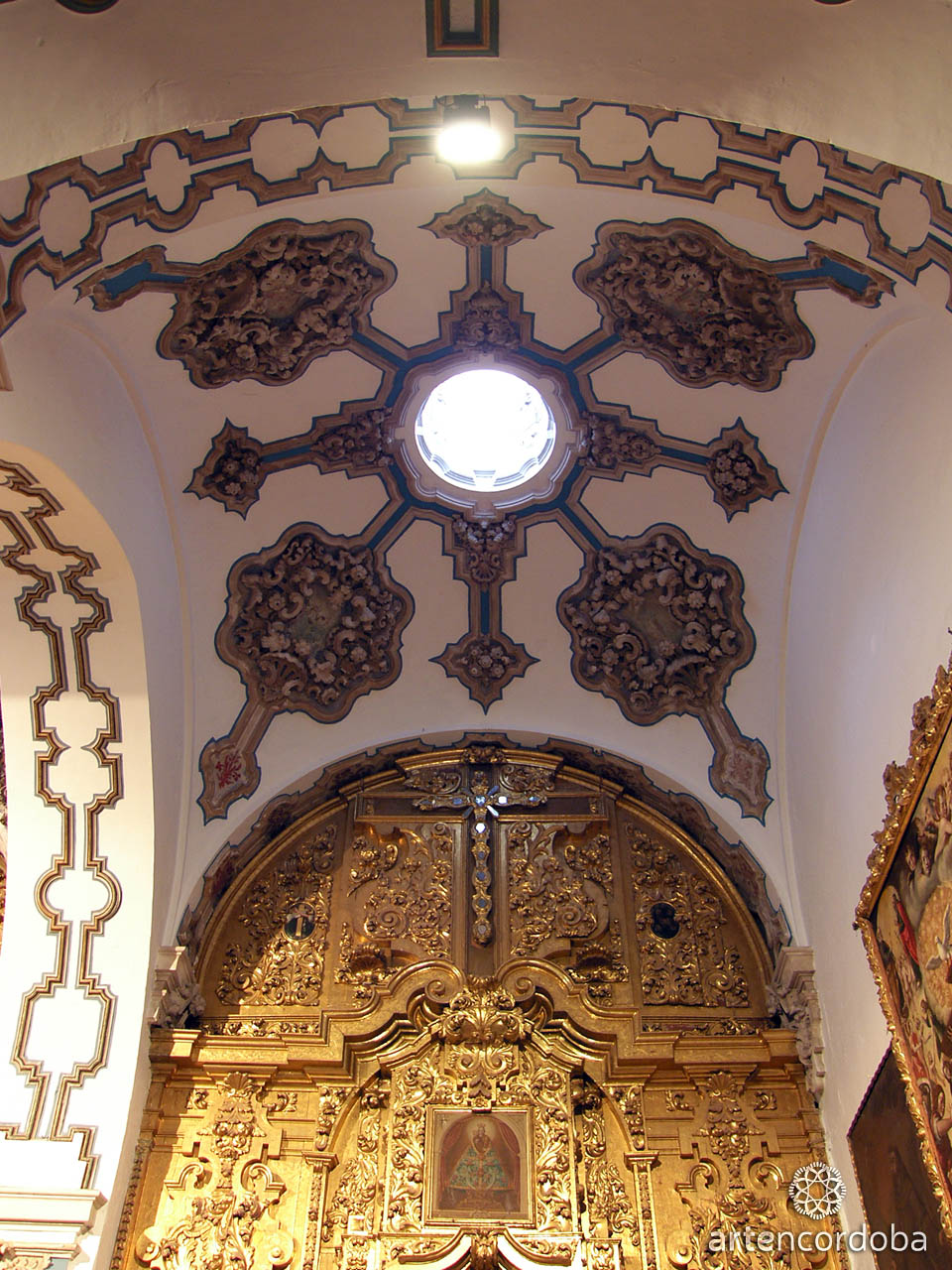
Next is the Chapel of the Venerable Third Order, a small square room, covered by a sail vault topped by a lantern, decorated with floral elements in greenish and golden tones. An altarpiece dedicated to “Saint Peter of Alcántara” dominates the space. With two tiers and three panels, the central figure is the saint, a work by Pedro de Mena from the late 17th century. On the side panels are two other figures: “Saint Nicholas” (as this convent once belonged to the parish of Saint Nicholas) and “Saint Benvenuto“. The second tier consists of a large semicircular arch that fits the room’s space. Two small altars complete the chapel, dedicated to “Saint Eulogius” and “Saint Ferdinand“.
Chapel of the Agony in the Garden
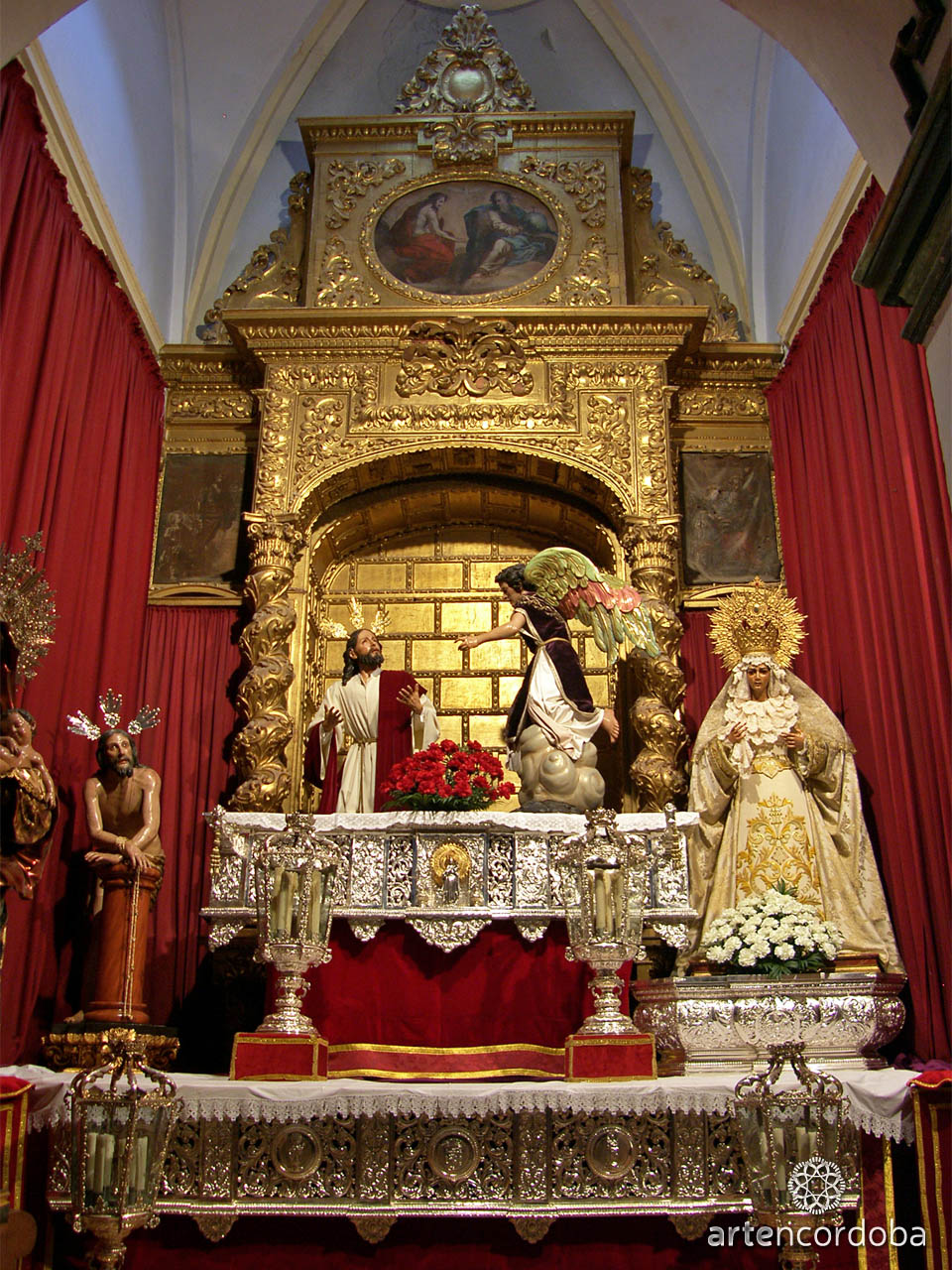
In the Chapel of the Agony in the Garden are the titular images of the Brotherhood of the Garden: “Our Father Jesus of the Agony in the Garden“, “Our Imprisoned Father Tied to the Column“, and “Holy Mary of Candlemas“; the first two are anonymous 17th-century works, while the Virgin was created by Antonio Rubio in 1974. The figure of the “Angel” processes with the Lord during Holy Week and is the work of Miguel Ángel Arjona Navarro from Córdoba.
Chapel of the Virgin of Fatima
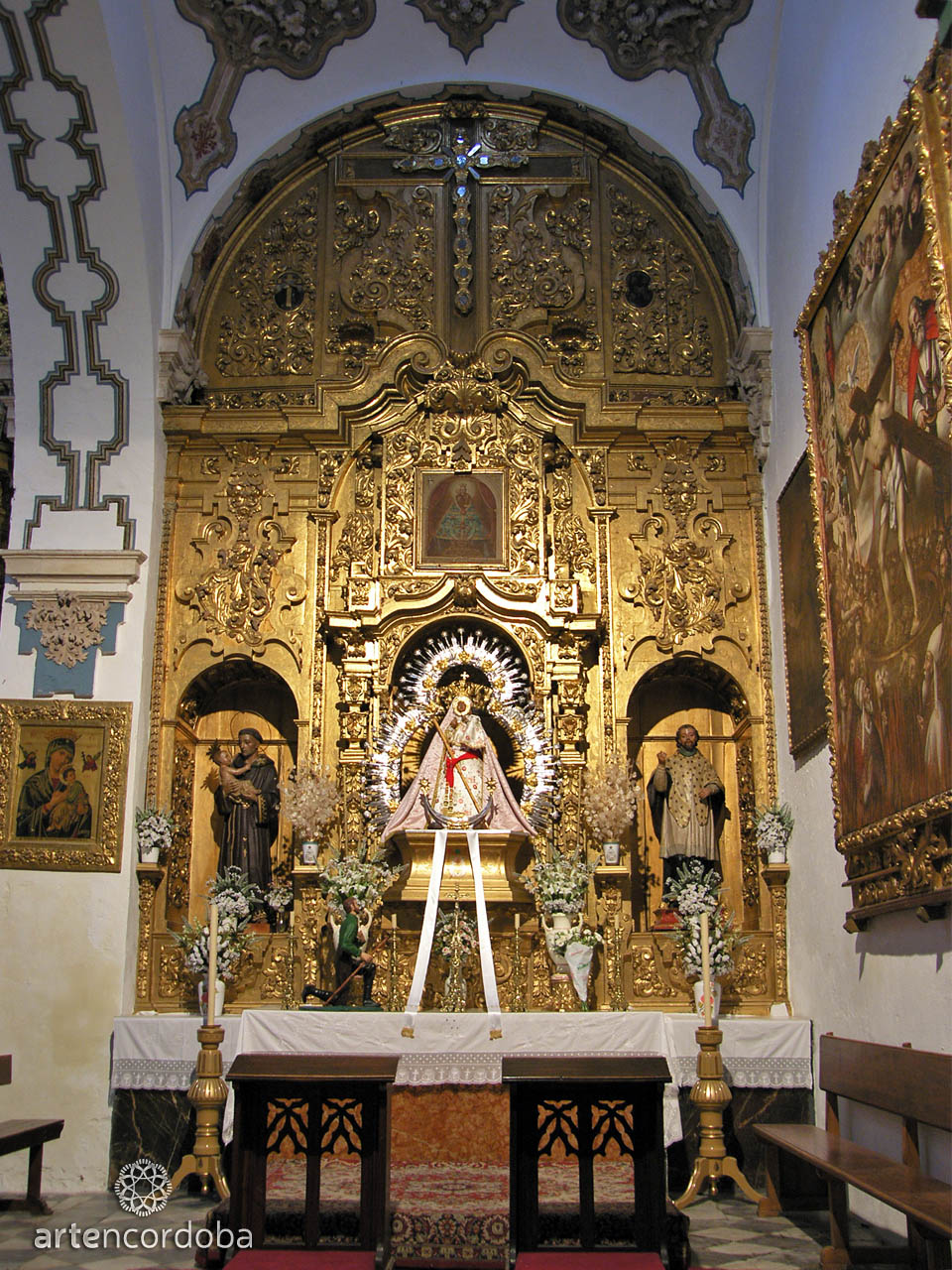
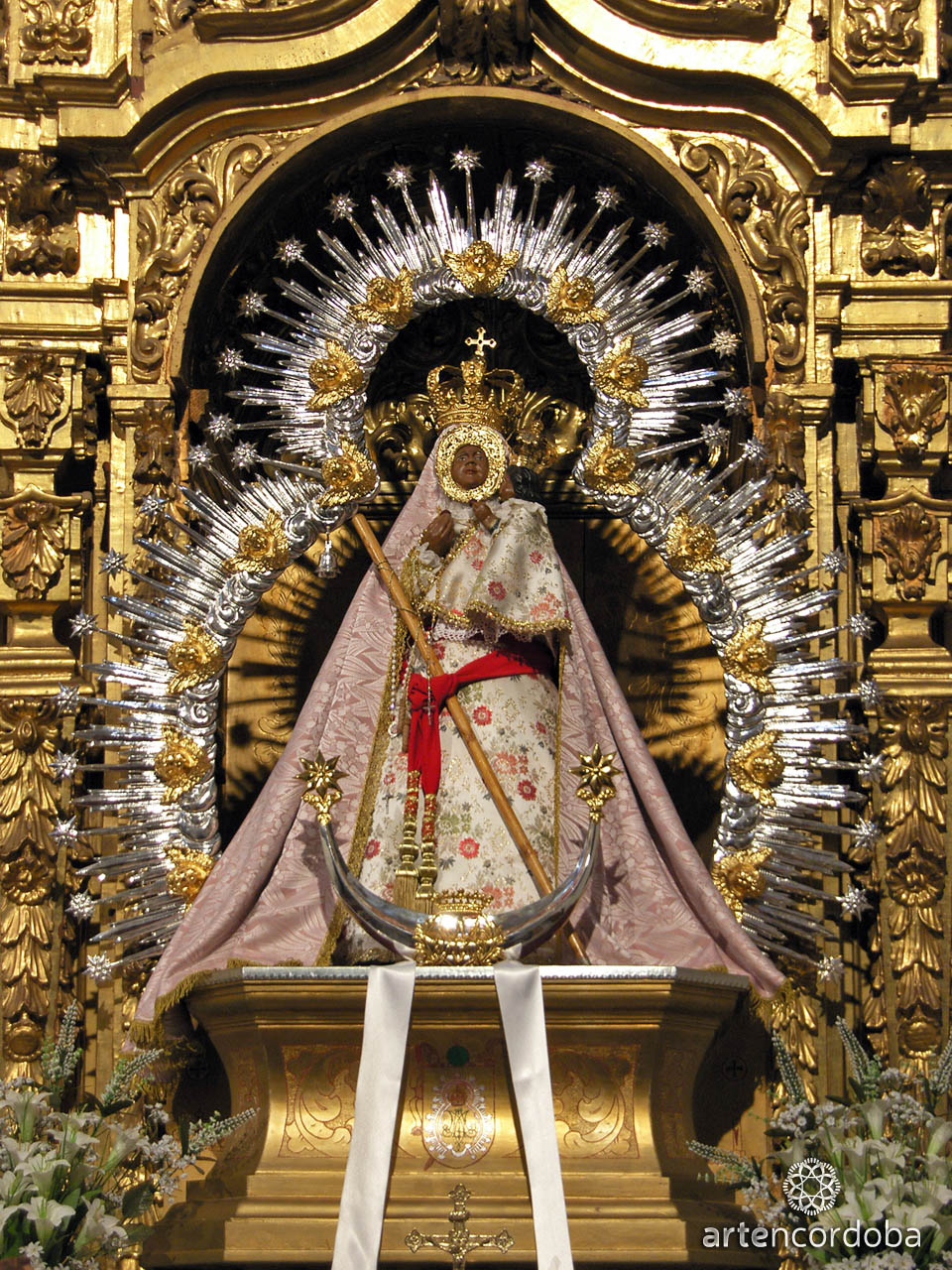
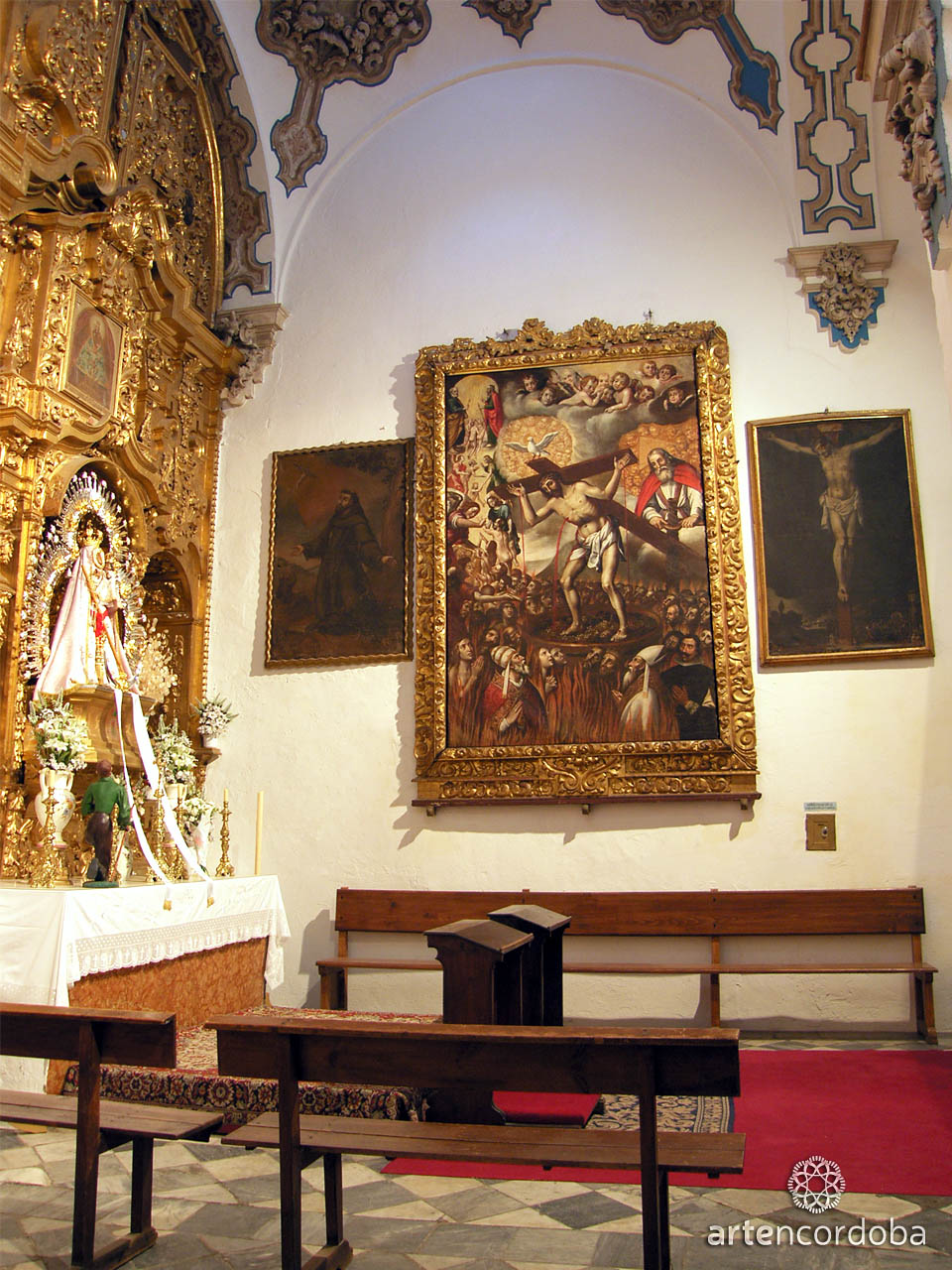
The last two chapels are connected, separated only by a semicircular arch. The first is the Chapel of the Virgin of Fatima, featuring a beautifully crafted golden altarpiece divided into three panels and two tiers, richly decorated. In the center is the “Virgin of Fatima“, dark-skinned and small in size. To the right is a carving of “Saint Anthony with the Child“, and to the left, one of “Saint John Nepomucene“. The altarpiece is crowned with a semicircular arch containing the Holy Cross.
Psalmodia Eucharistica
To the right is one of the most important works owned by the church, an oil painting titled “Psalmodia Eucharistica“, depicting Christ carrying the cross, his blood mixing with the grapes he treads upon. It is a subject of deep iconographic meaning, which we will explore in future sections on painting in our city.
Chapel of Our Lady of the Pillar
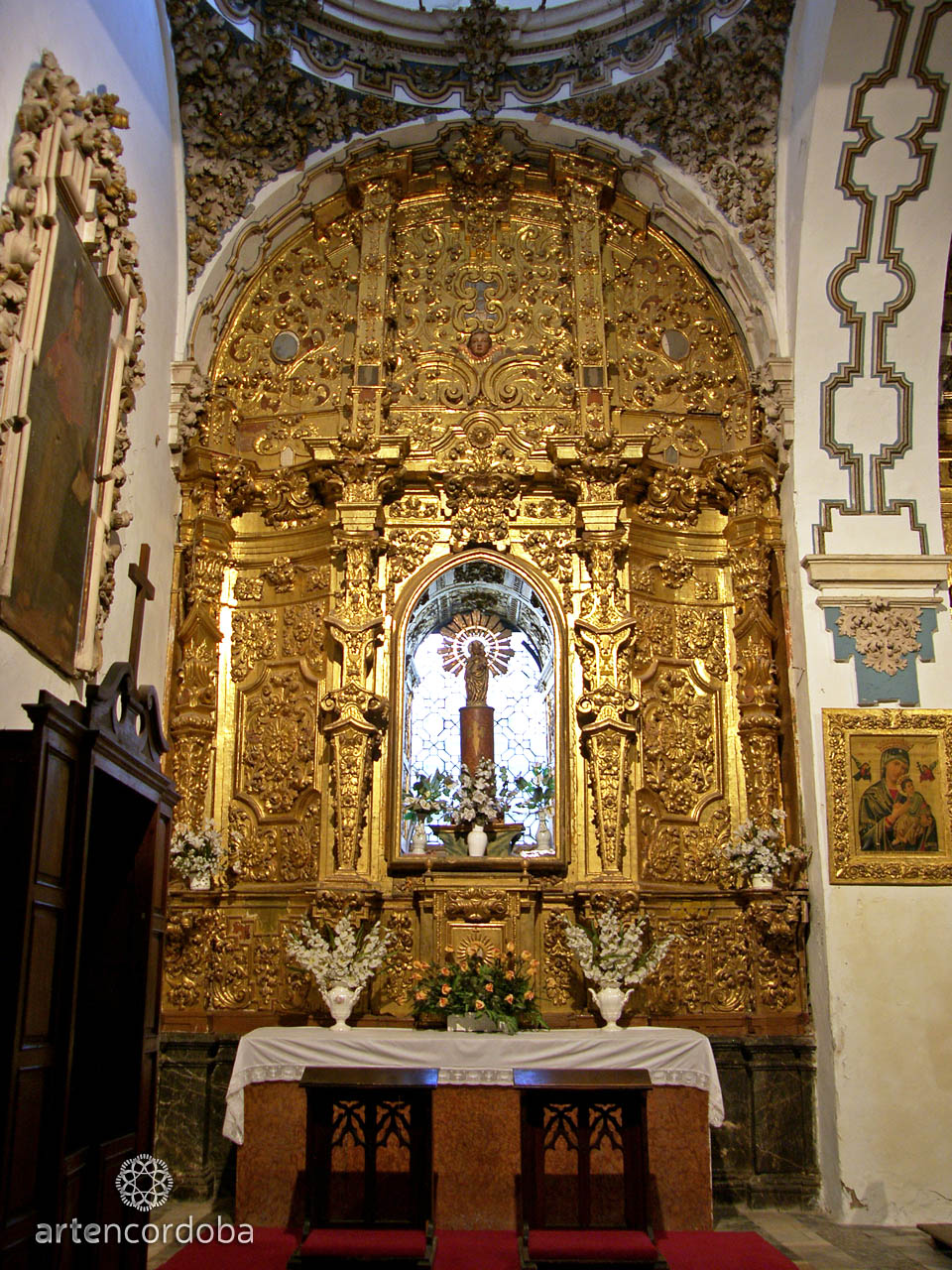
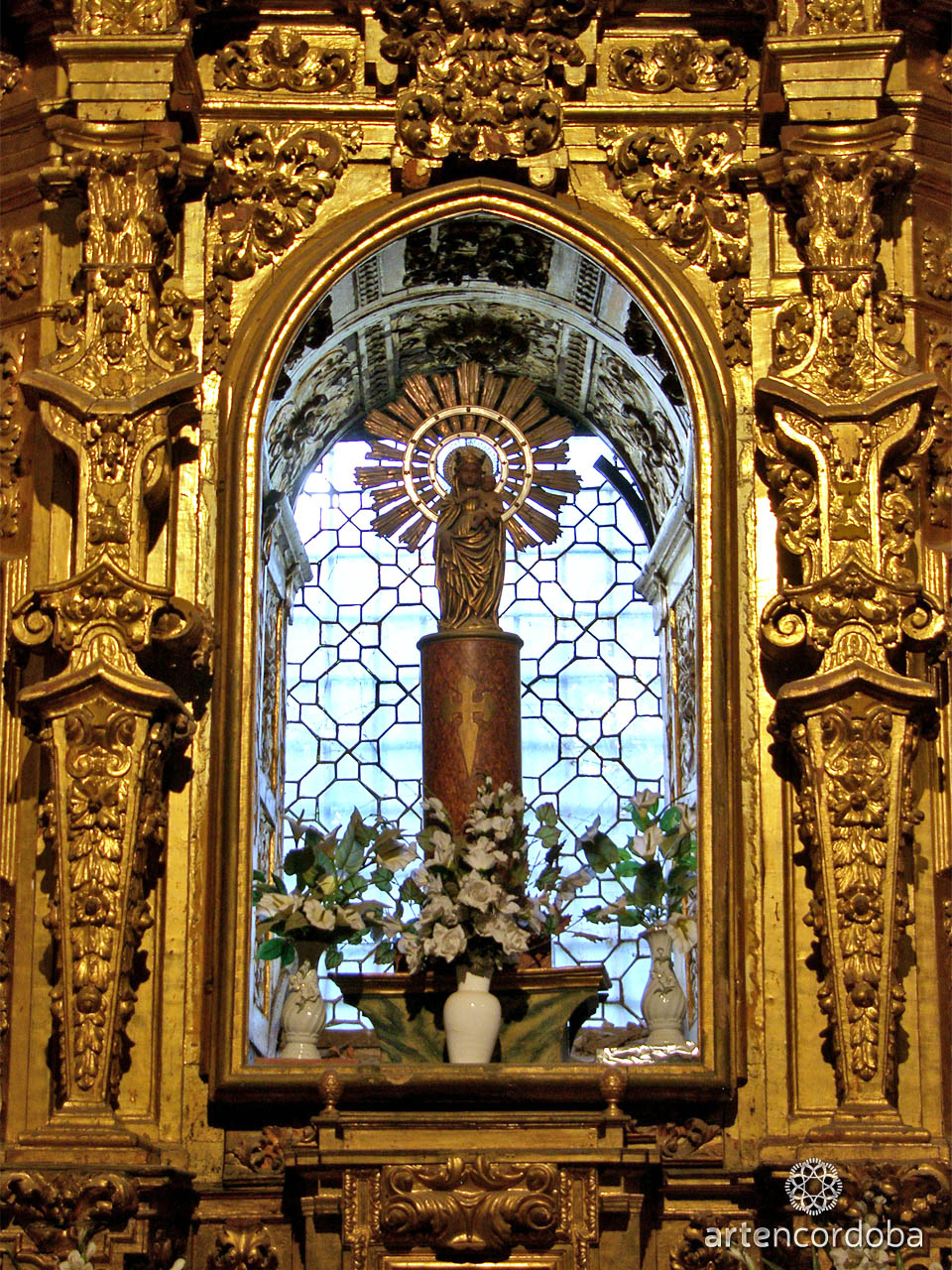
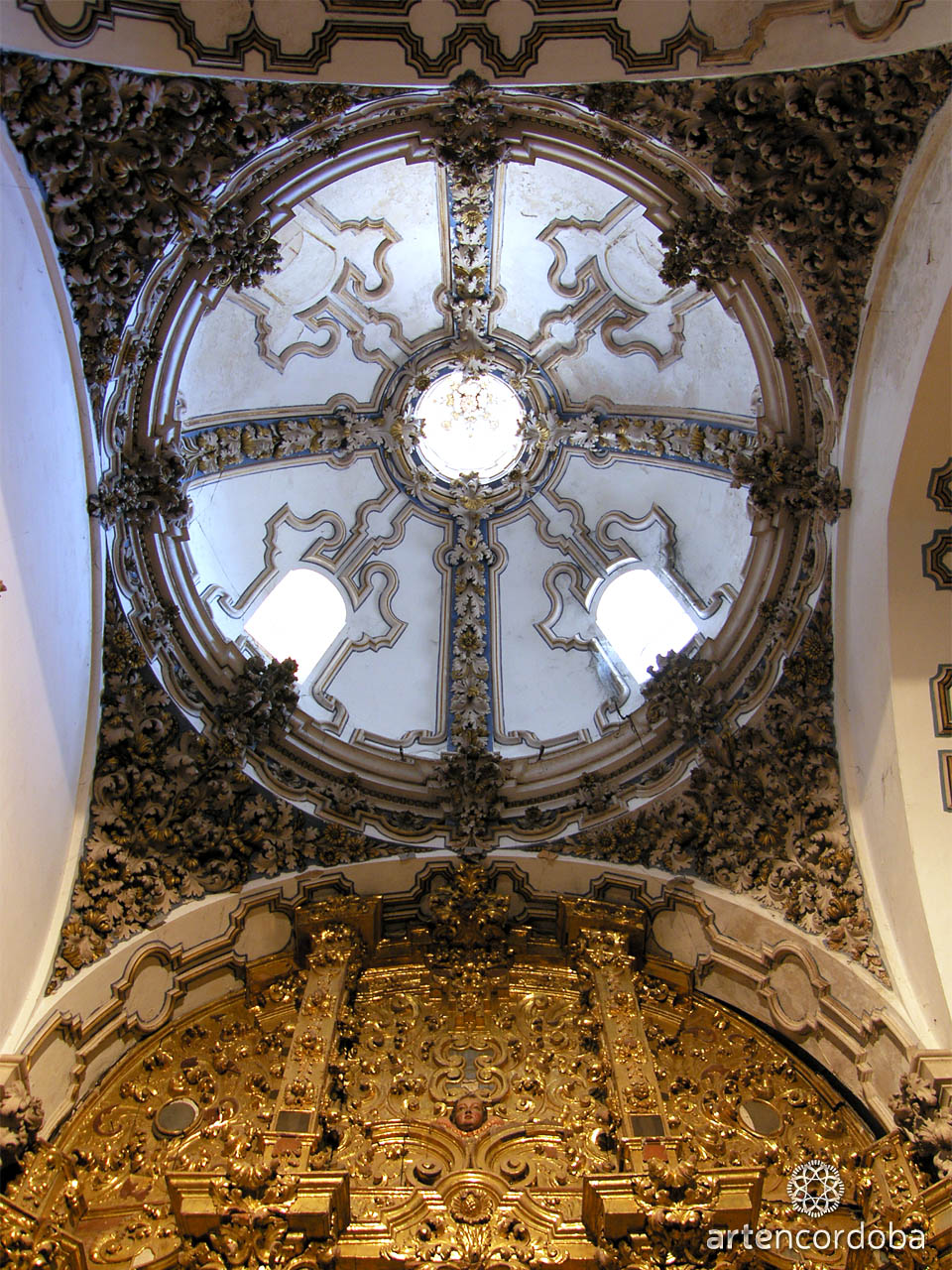
We conclude with the Chapel of Our Lady of the Pillar, a space of similar size to the previous one, decorated with an 18th-century gilded altarpiece. The room is covered by a richly decorated dome with vegetal and geometric motifs, typical of the period. The altarpiece is divided into three panels, separated by stipites in the lower tier and pilasters above. In the center is a small image of “Our Lady of the Pillar“ shown with the Child.
The Building
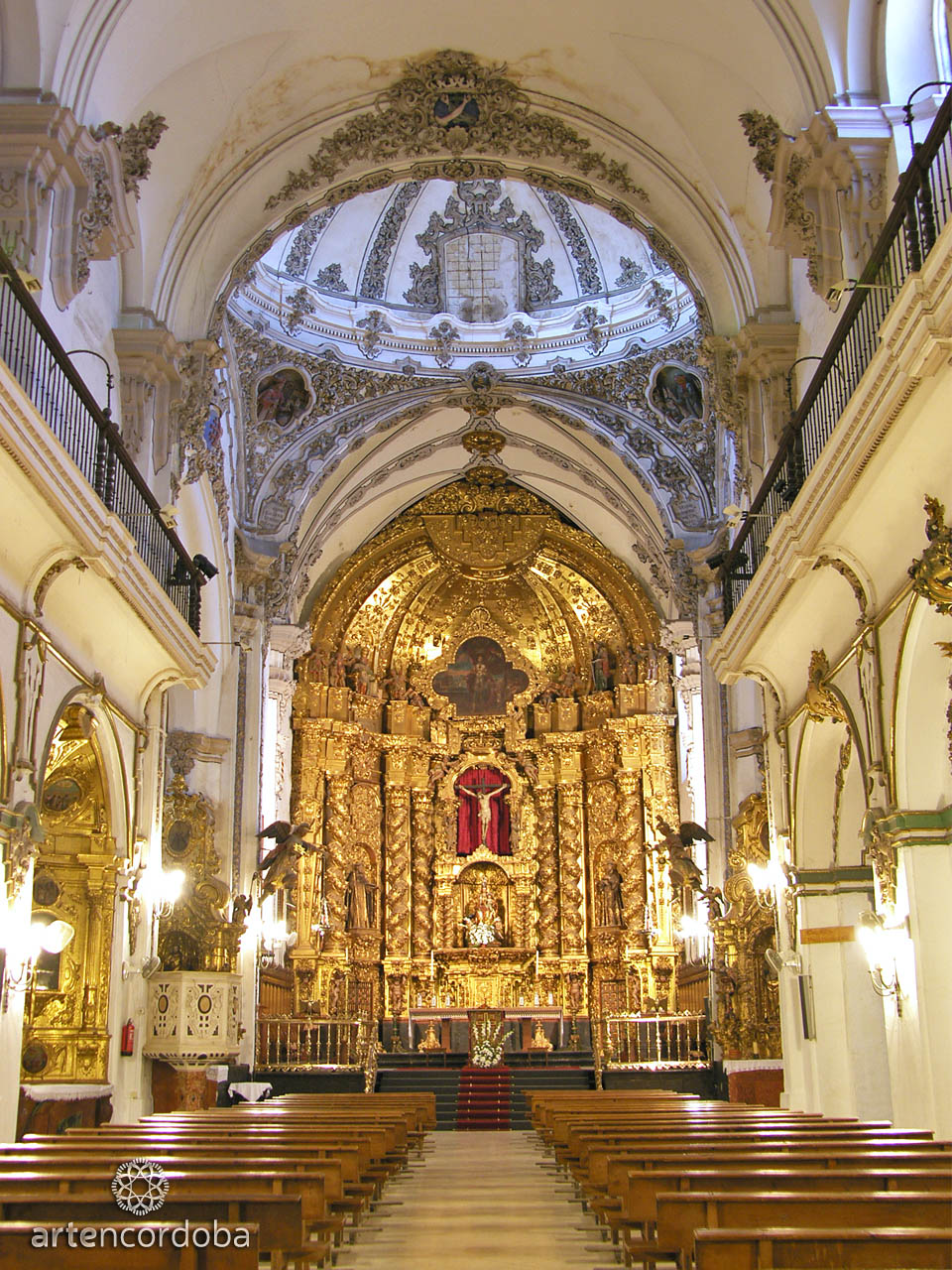
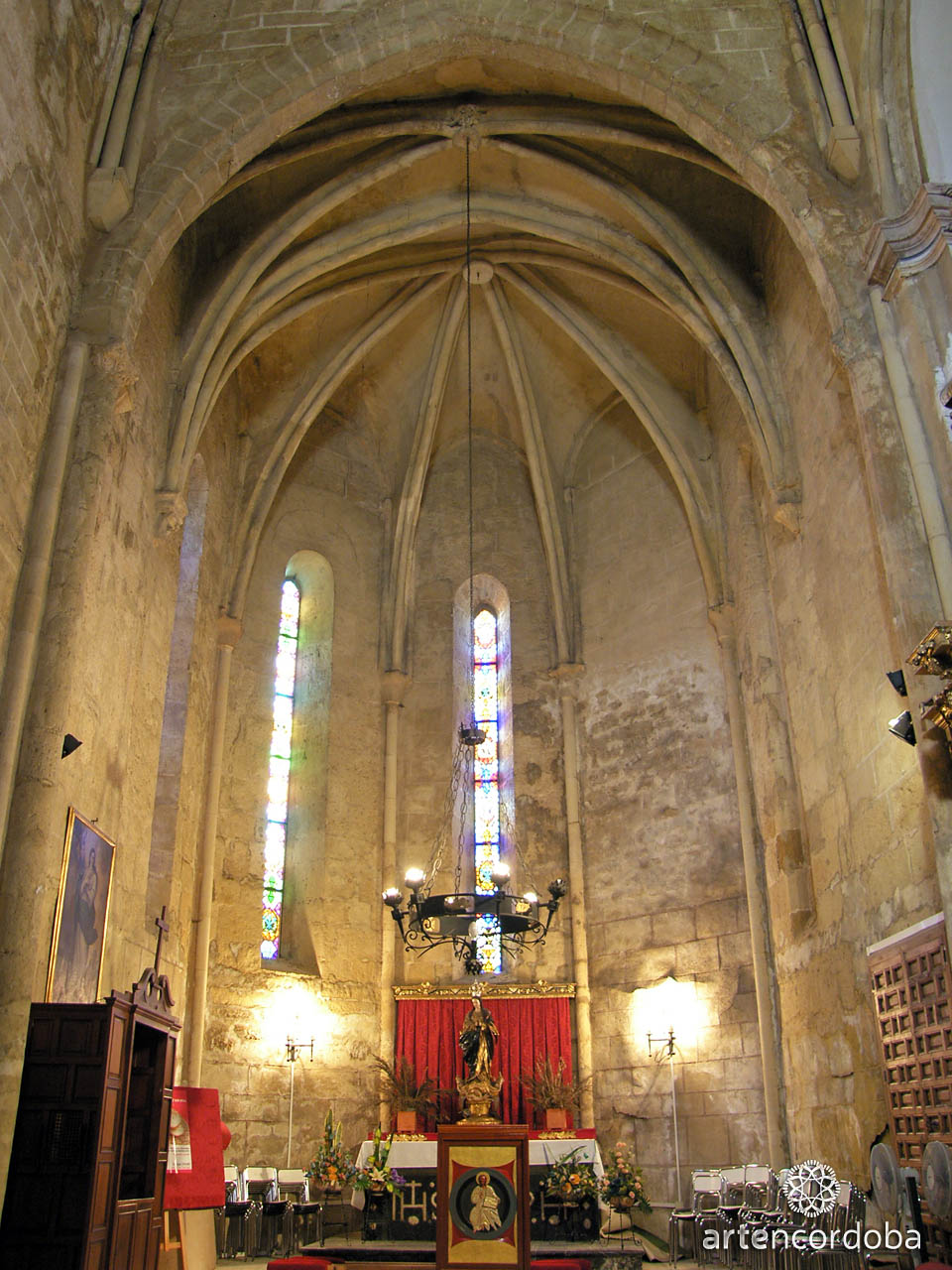
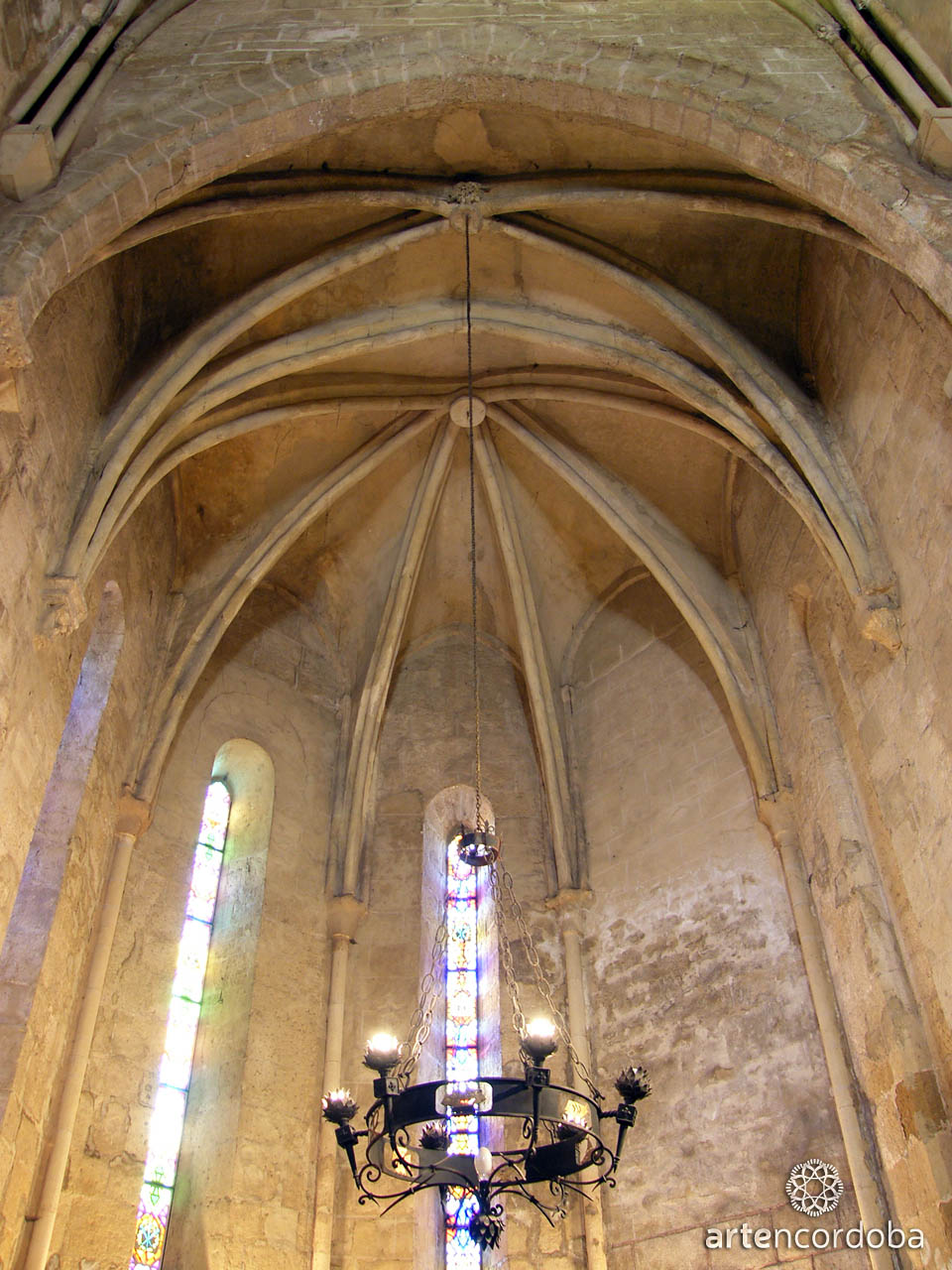
The layout of the Church of San Francisco consists of a single nave and a large transept, with side chapels located on the Epistle side between buttresses, and altars on the Gospel side. The head consists of three polygonal apses with buttresses visible from outside; today, only the central apse and the Gospel side apse retain their original condition. The structure uses angled pillars supporting the access arches to the apse chapels and torals, along with corner columns for the apse polygons.
An interesting detail is the lack of uniformity between the supports and the vaulting elements, suggesting two construction phases: a first from the ground to the springing of the vaults, and a second when the vaulting was completed. All vaults were ribbed with four panels, except the apse, which had six, with ribs made of mouldings, either rounded, as in the chapels, or pointed, as in the transept.
Historical Transformations
The first transformations of the medieval church date back to the 17th century, with renovations of various chapels, such as that of Our Father Jesus of the Agony in the Garden. At the end of the century, the convent’s cloister was built, of which some remains are preserved, although part disappeared in 1836 after the Confiscation.
The 18th century brought the most extensive renovations to the Church of San Francisco, transforming the medieval complex into a Baroque temple. A new façade was built. Inside, architect Francisco López redesigned the head and central nave, including the Chapel of Our Lady of the Pillar.
The Church Interior
Today, the Church of San Francisco bears little resemblance to its original form. The central nave is now covered by a large barrel vault with lunettes, and access to the chapels is through semicircular arches on large pillars. At the back of the nave is the choir, which extends sideways forming galleries. The white walls of the church contrast with the bluish-gray decoration and gold detailing scattered throughout the temple.
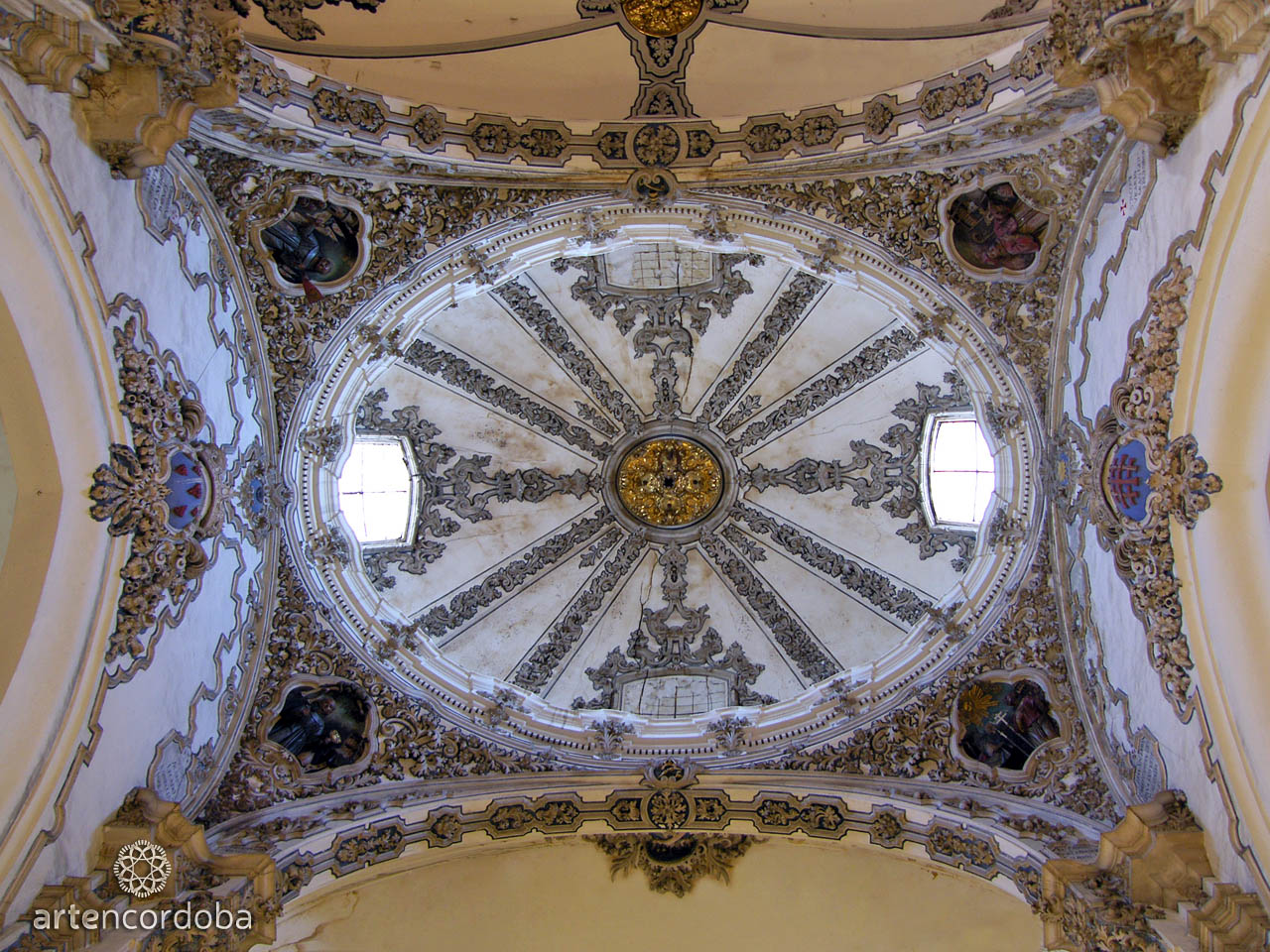
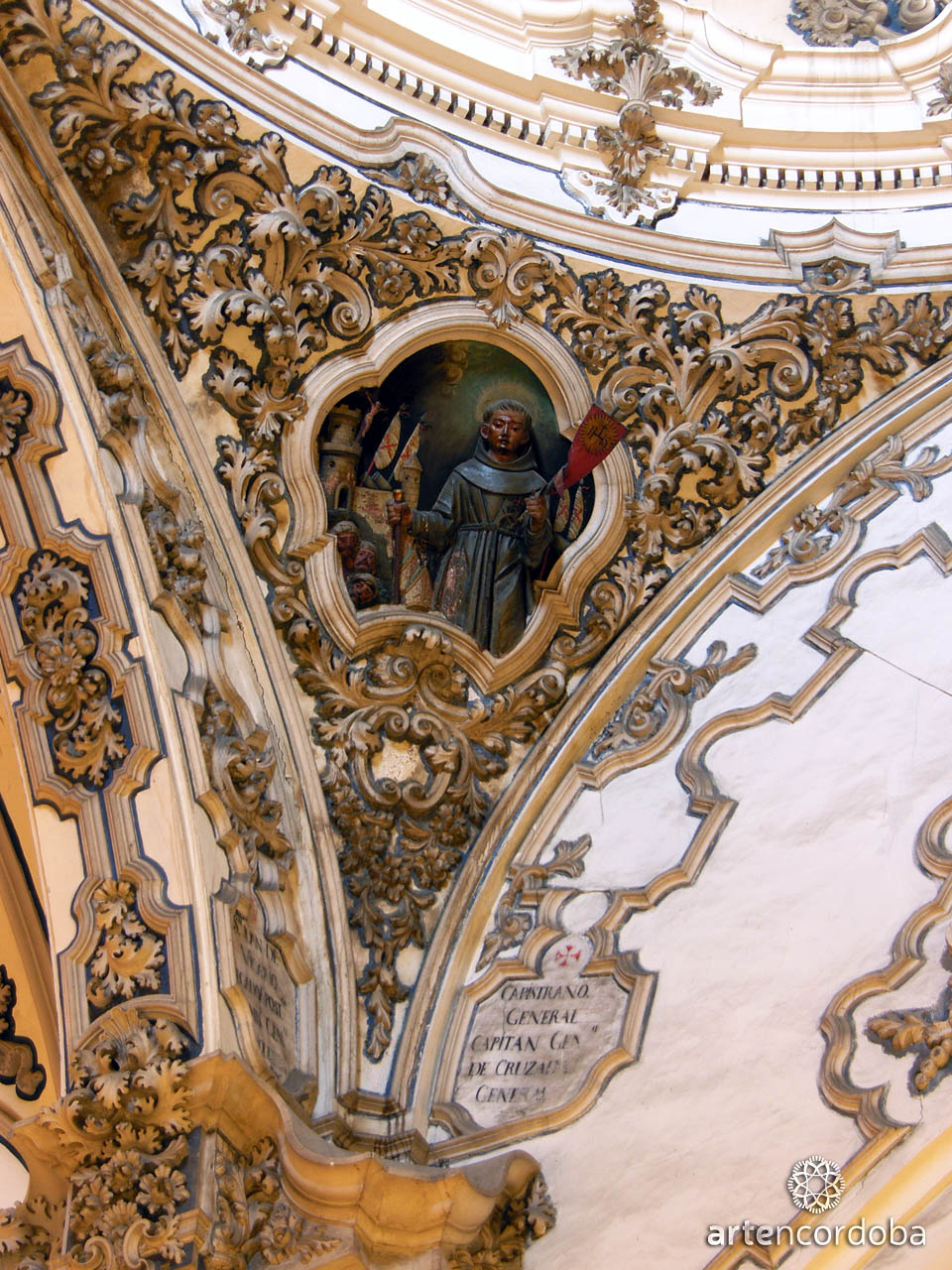
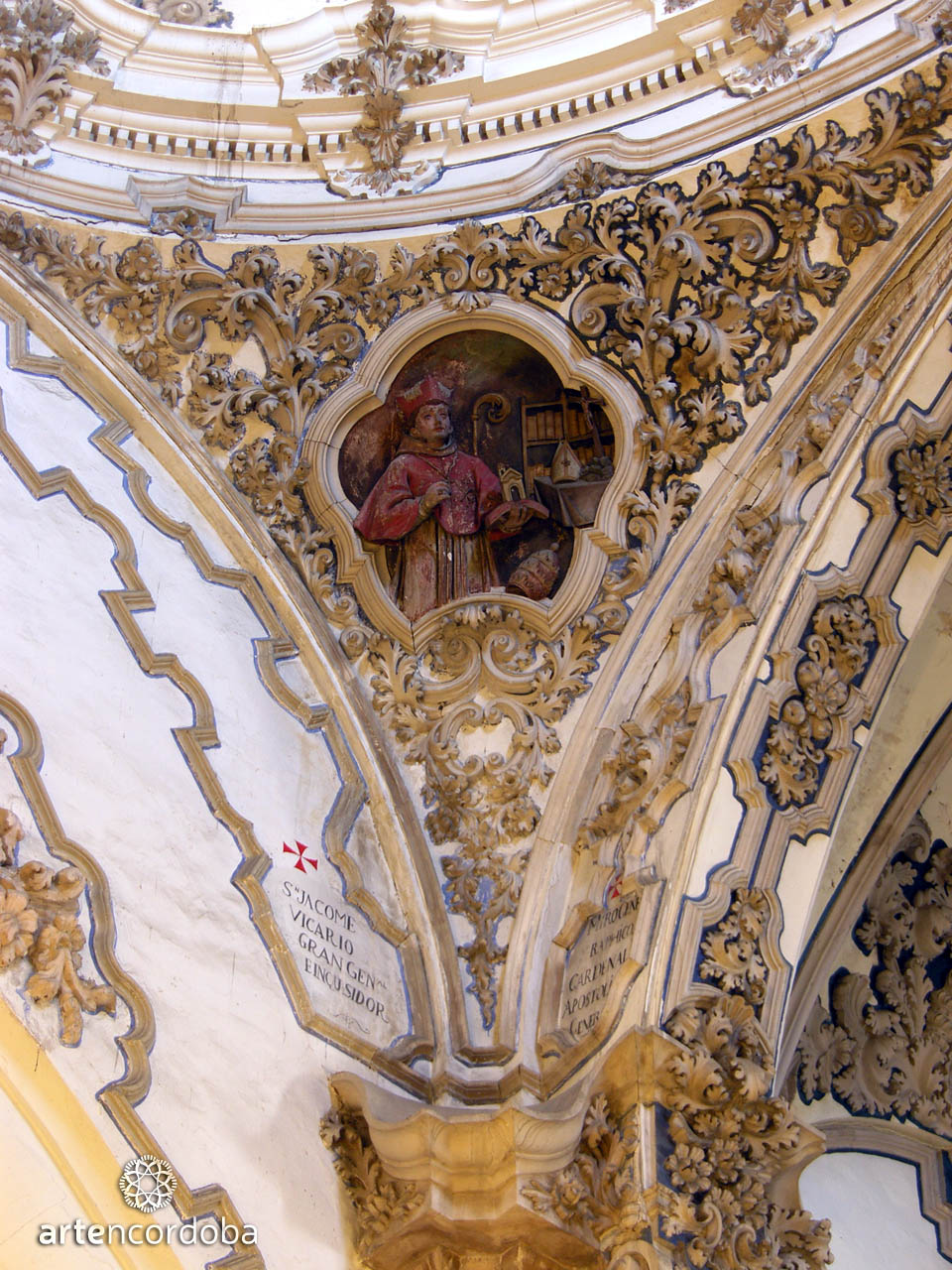
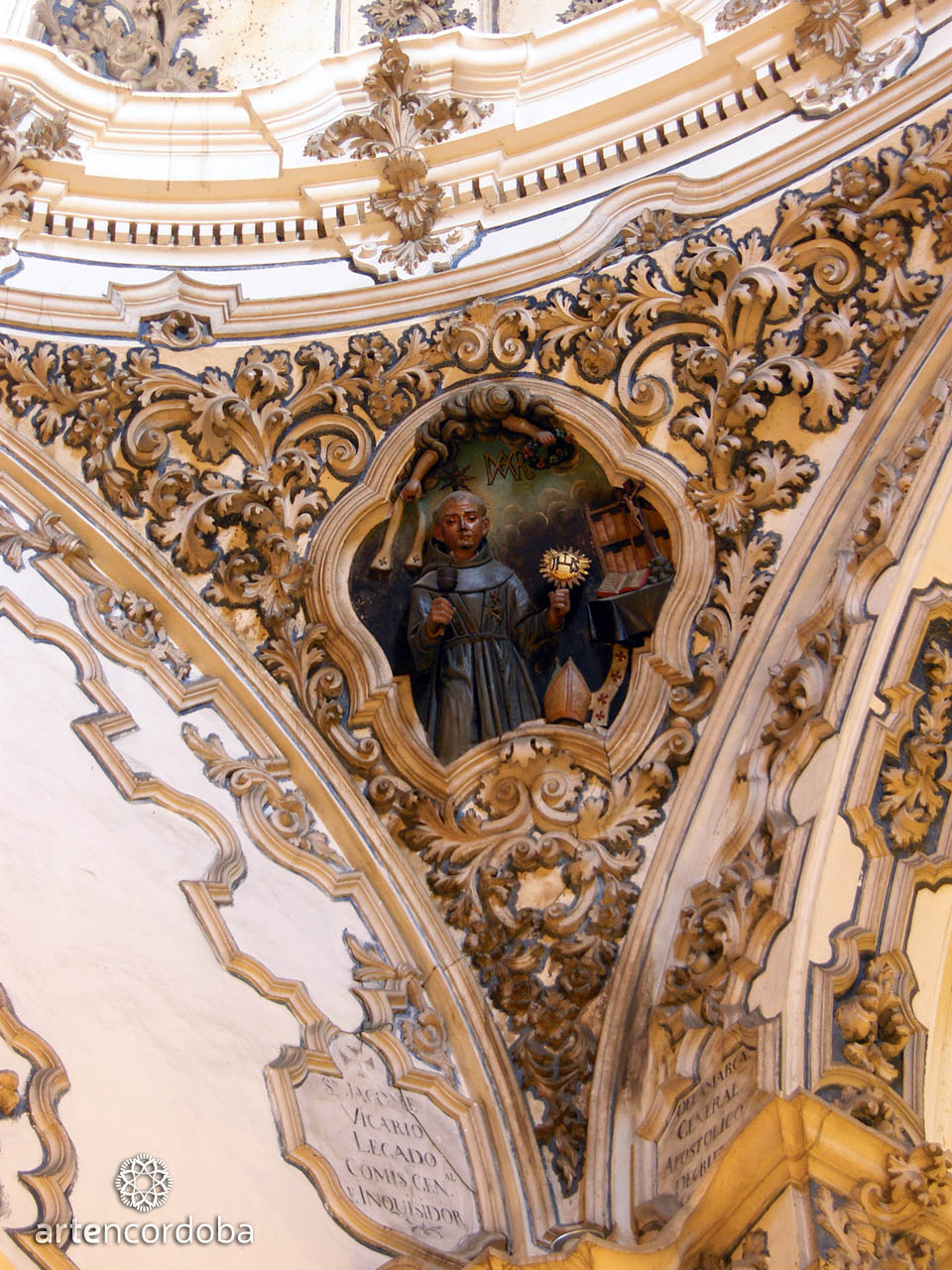
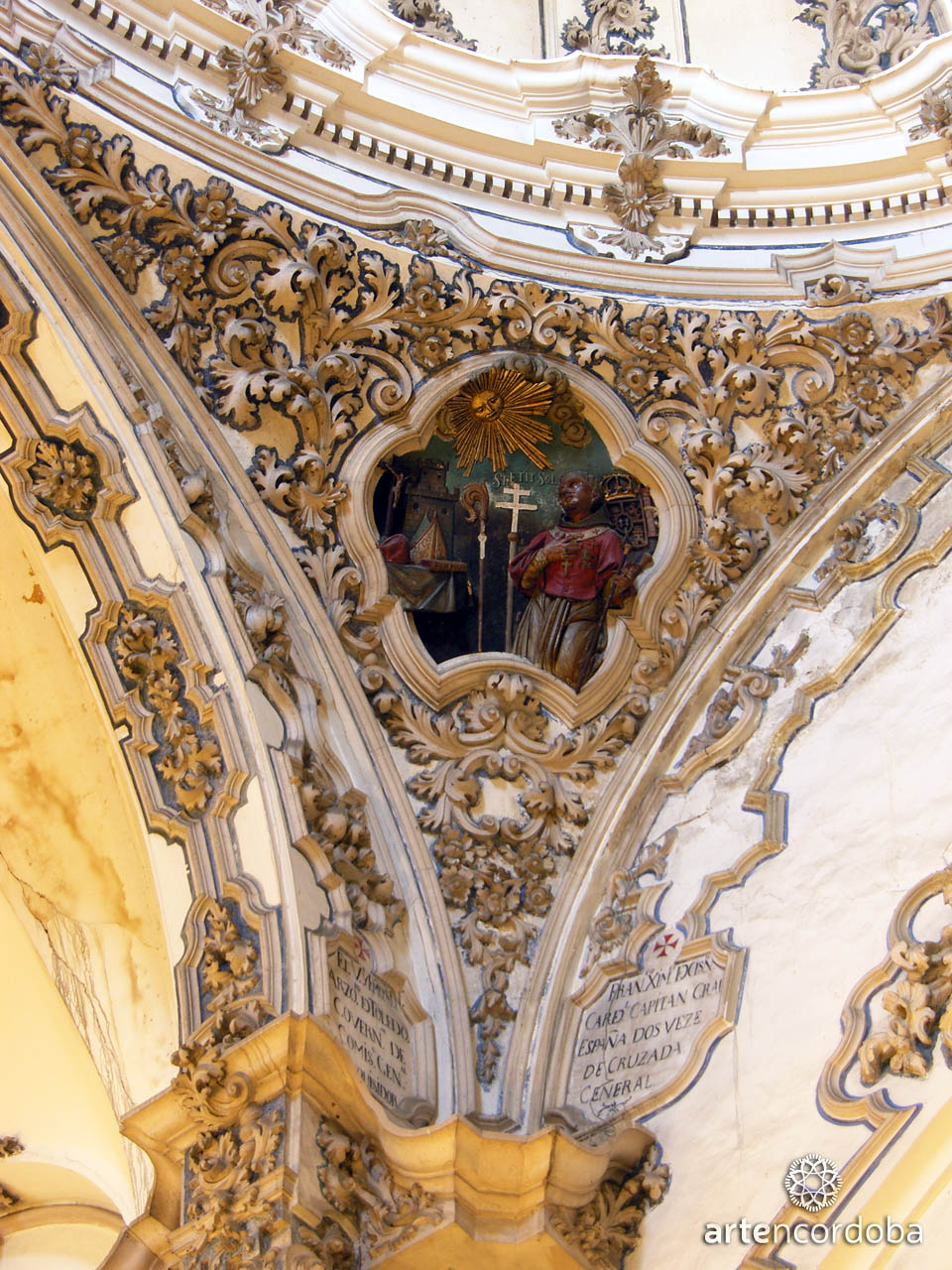
The transept is crowned by an exceptional oval dome supported by pendentives adorned with images of illustrious members of the Franciscan order. The entire space is lavishly decorated in the period’s style, with plasterwork adding dramatic effect and movement. The transept arms extend on both sides, from where the lateral apses emerge.
The Old Cloister and Surroundings
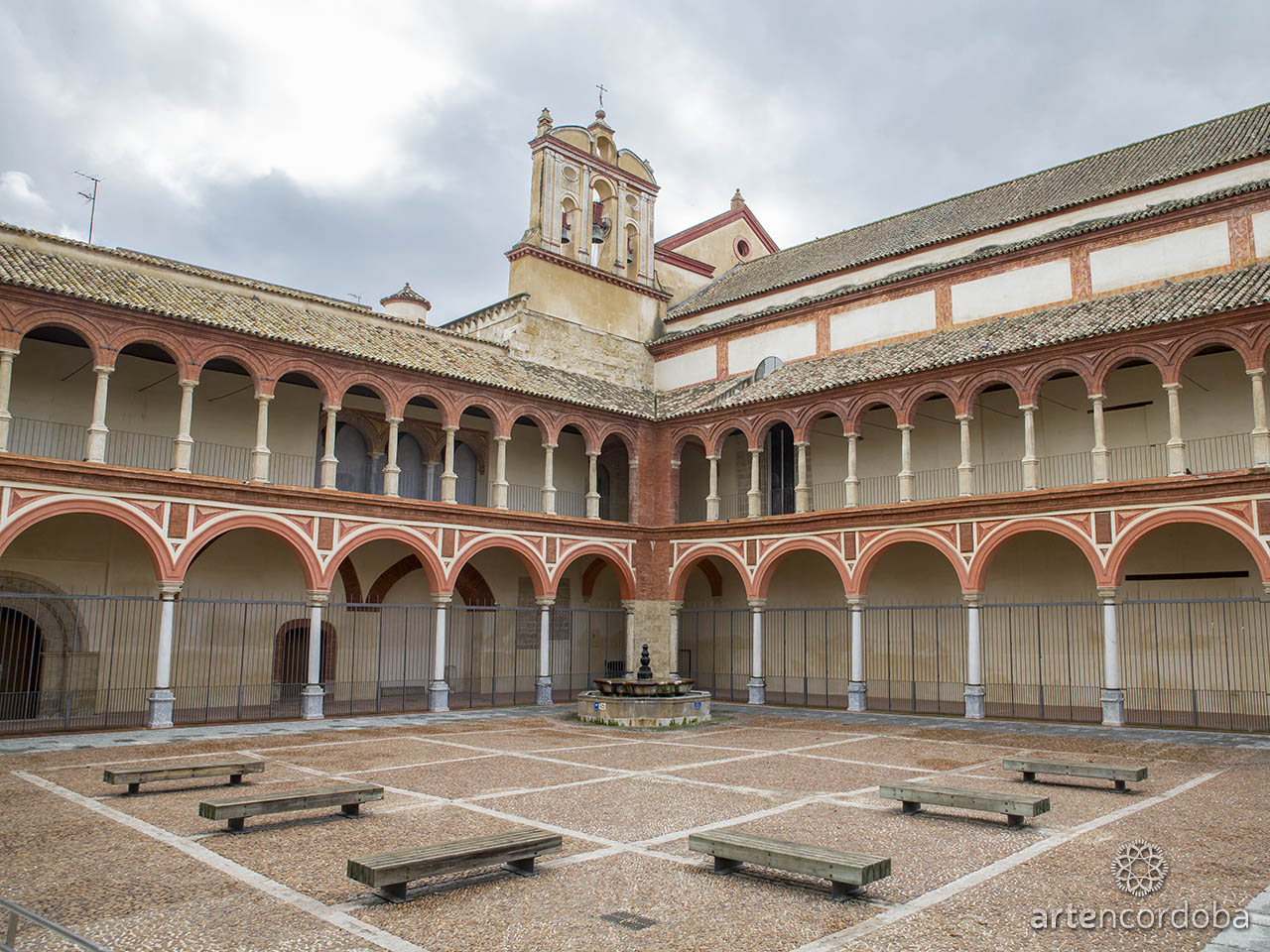
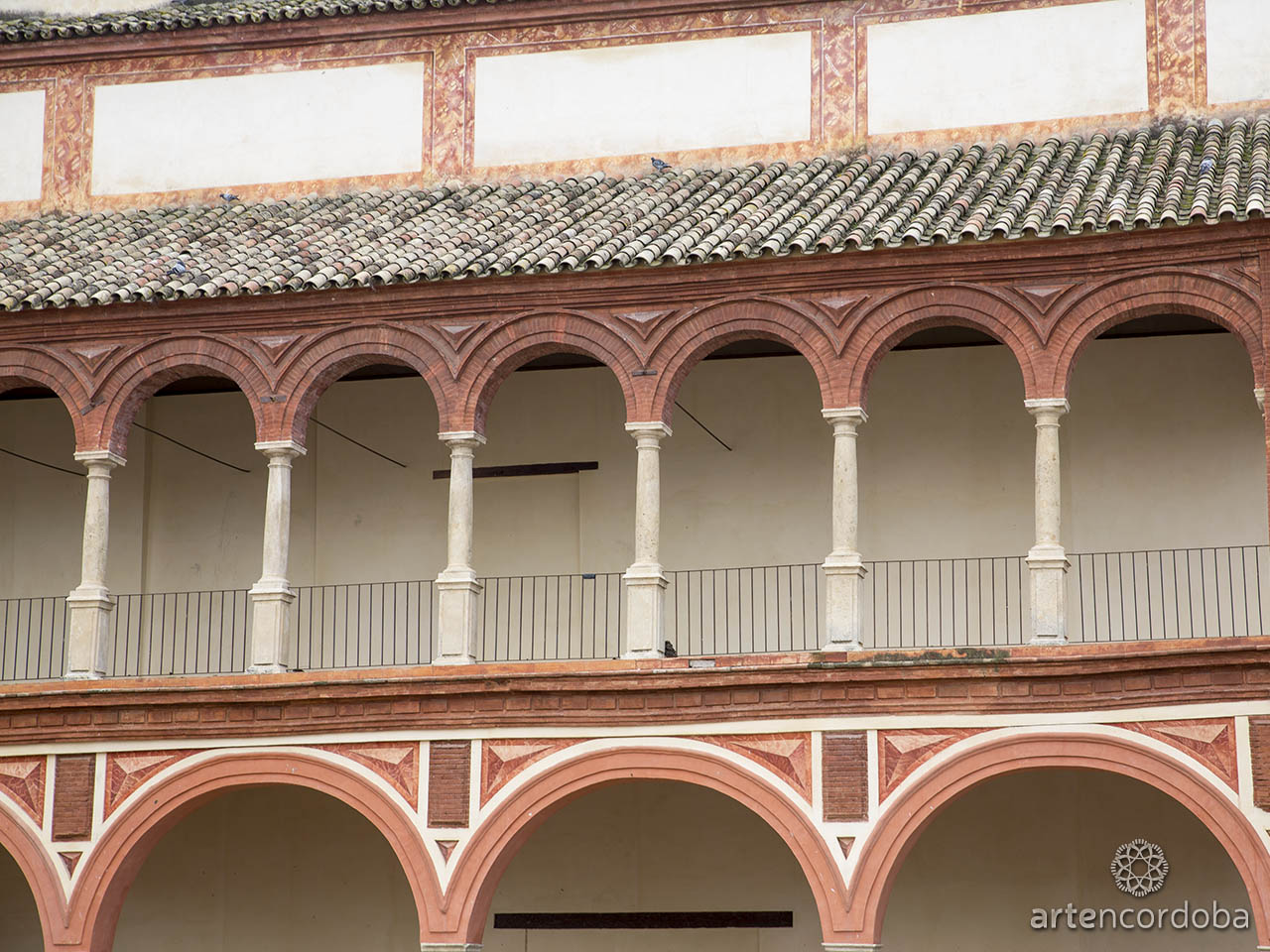
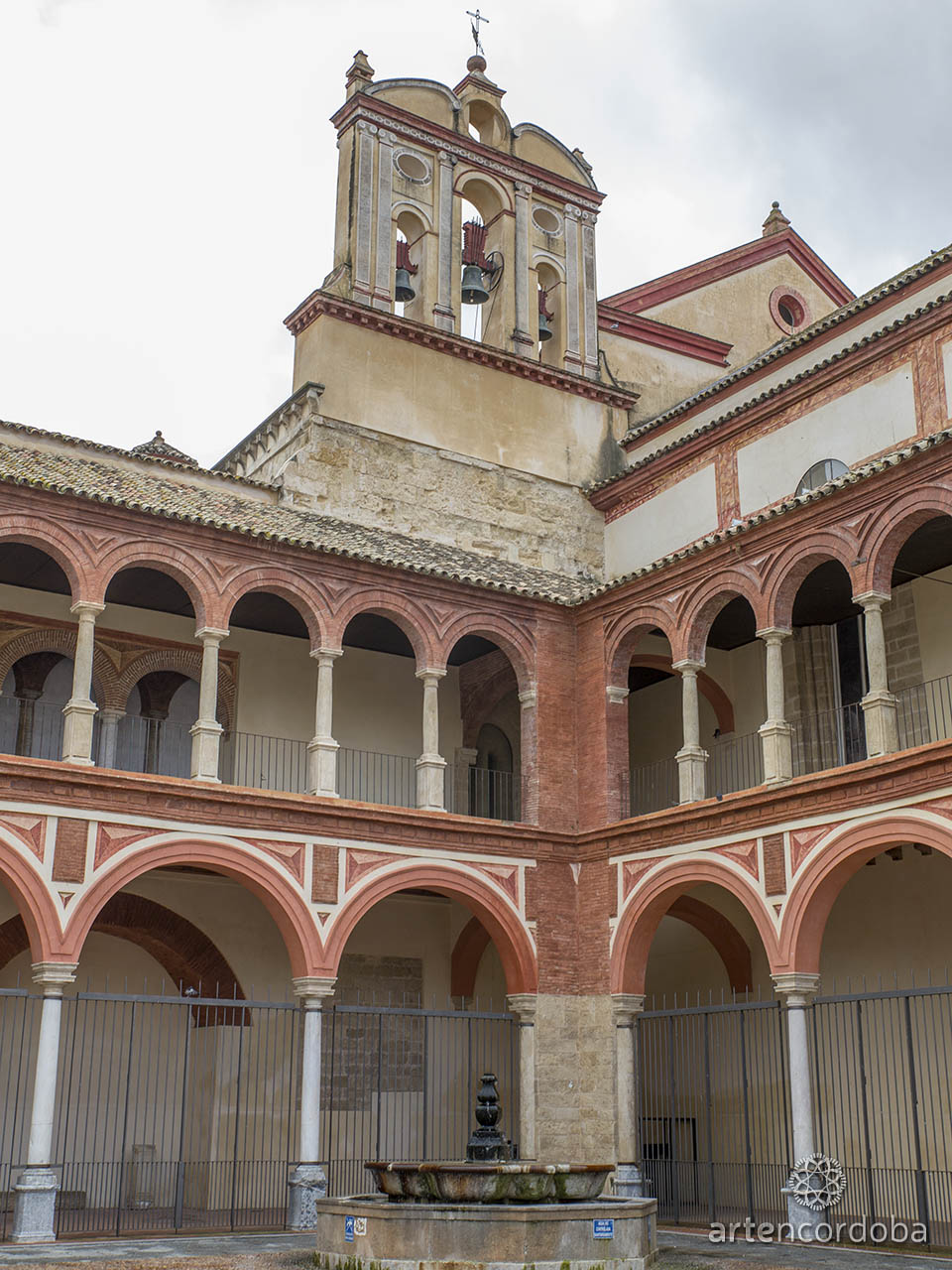
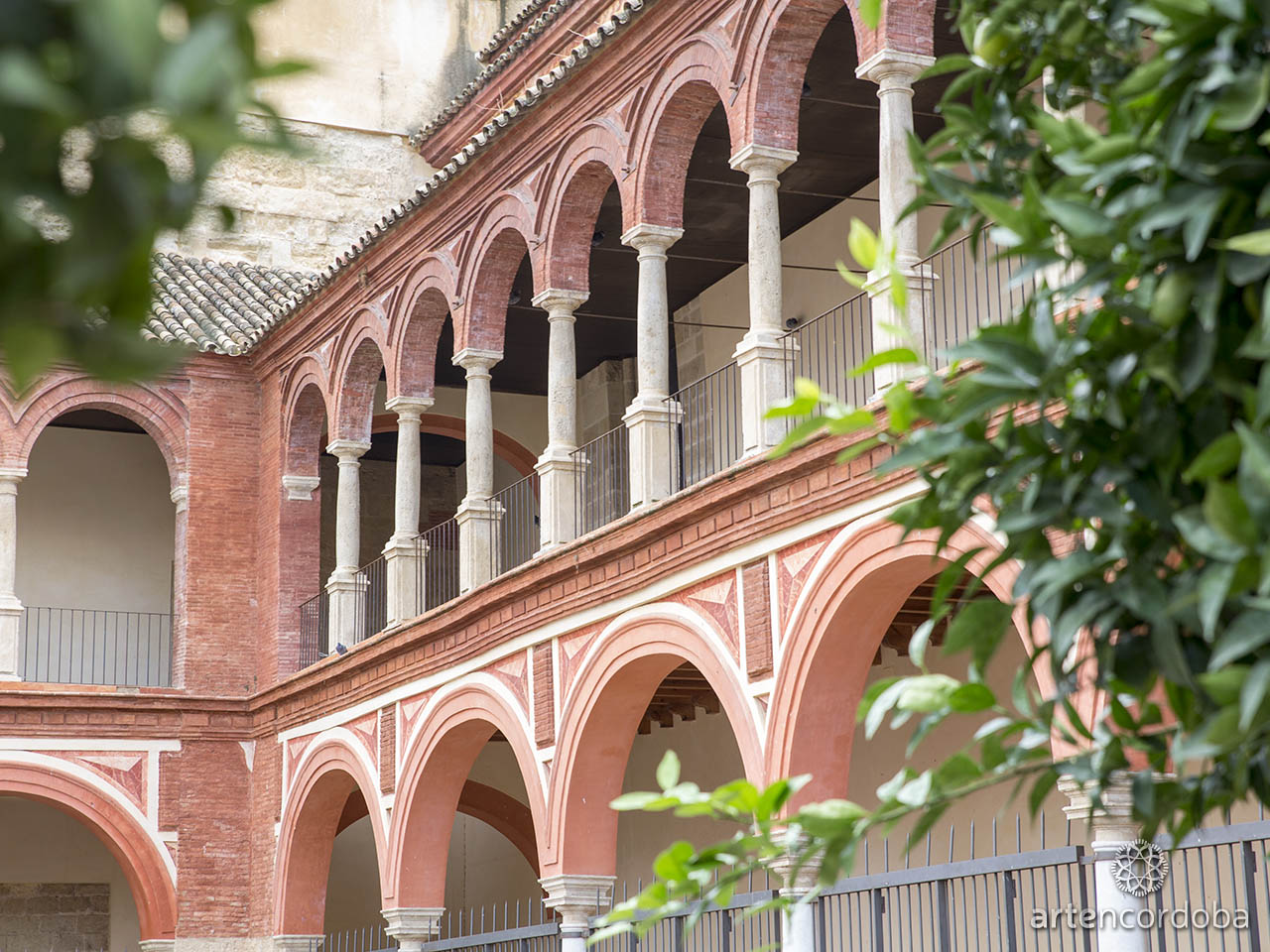
On the exterior, the two surviving wings of the old convent cloister stand out. It is a two-story cloister, both levels visible from outside through semicircular arches on slender smooth-shafted columns with Tuscan capitals, resting on pedestals. The arrangement is two arches above for every one below. The overall appearance is very austere, in contrast with the interior of the church.
The street leading to the church, Calle Compás de San Francisco, recalls the monastery days. This space was accessed through the Compás Gate, connecting it with Feria Street. The Compás Gate was built in the late 18th century, composed of a semicircular arch flanked by two pairs of pilasters with Ionic capitals on pedestals. Above the opening is a niche that once held a statue of “Saint Francis“, now missing. The view of the Church of San Francisco from this gate is exceptional.
The Façade
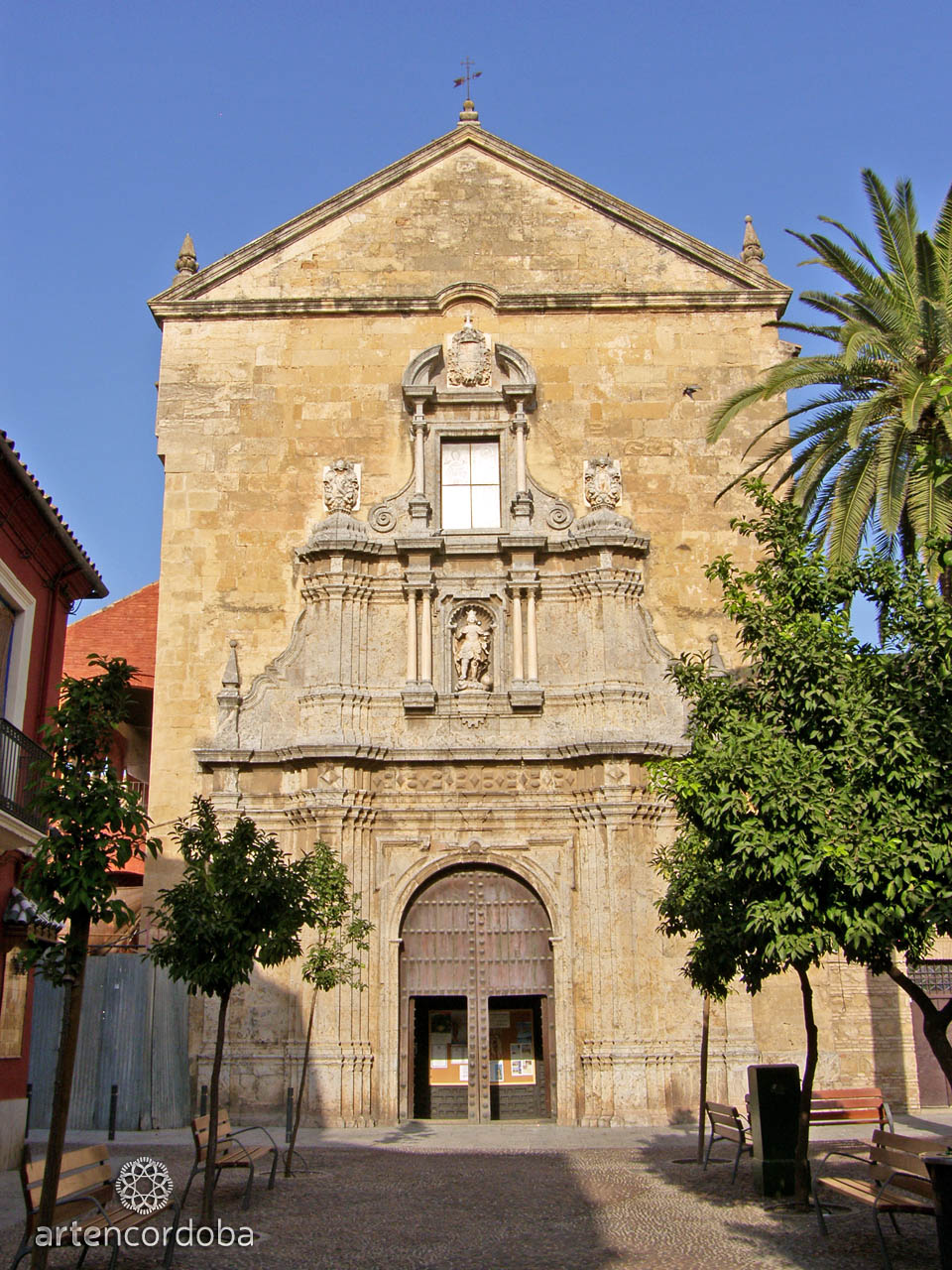
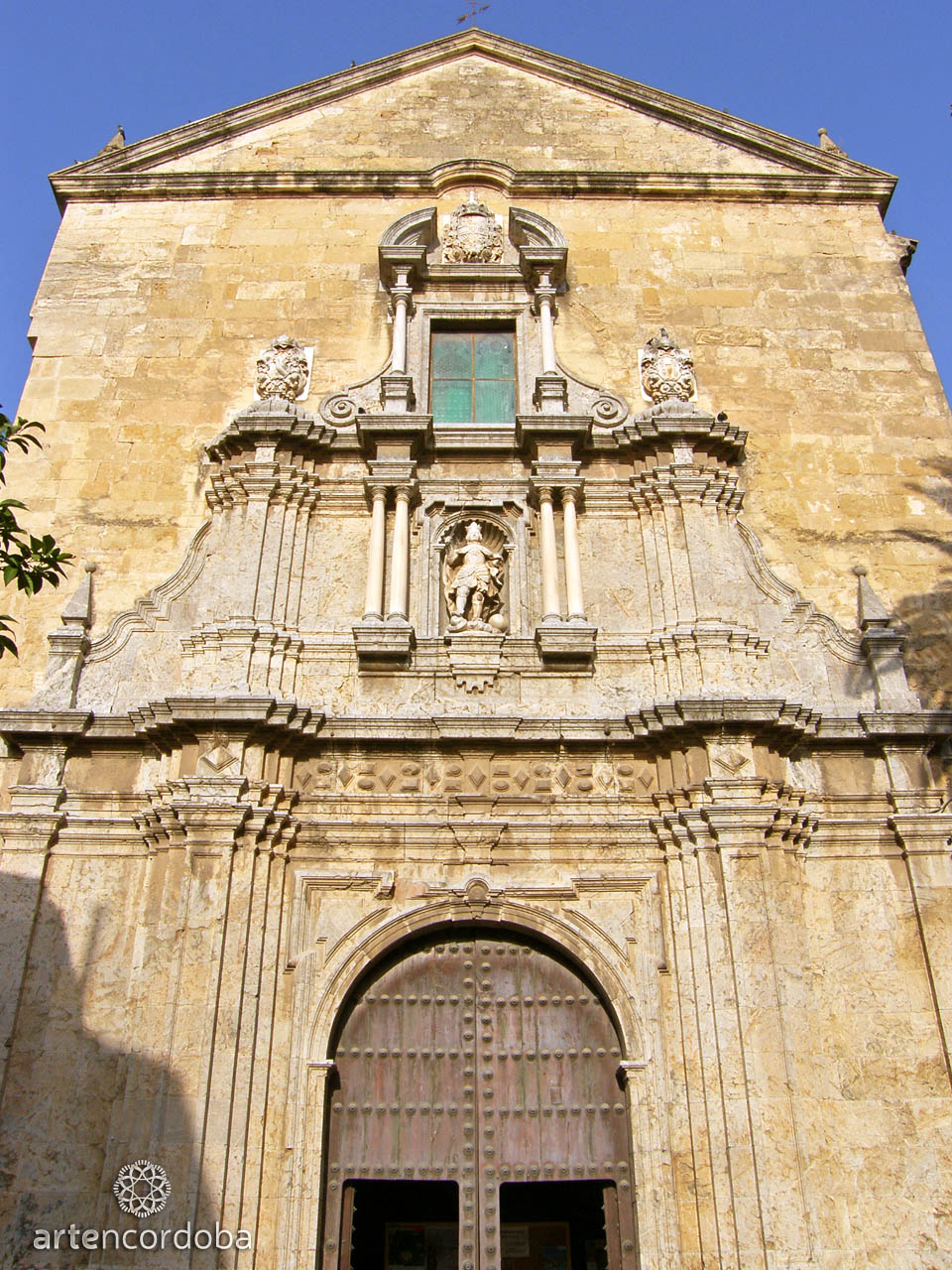
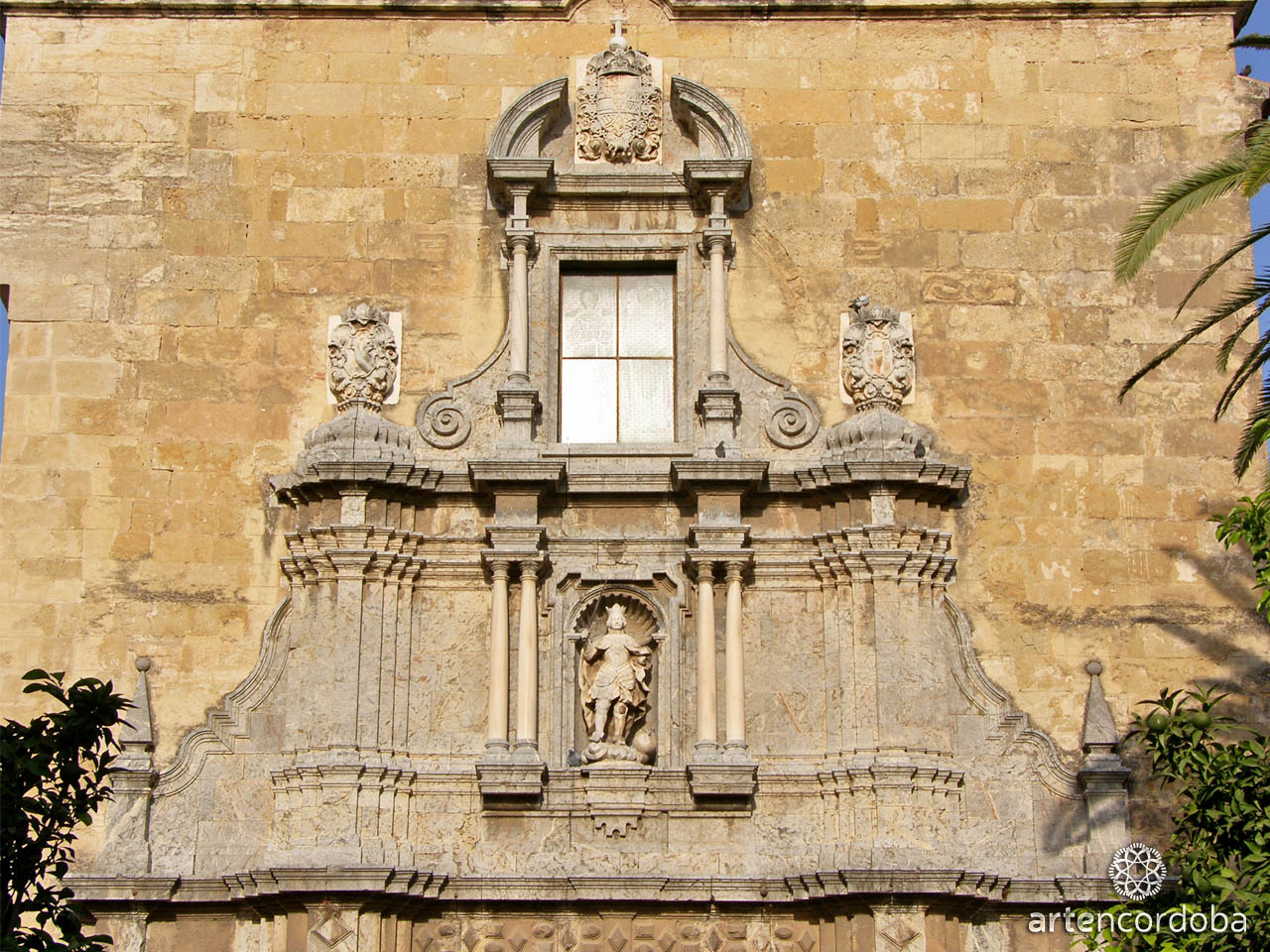
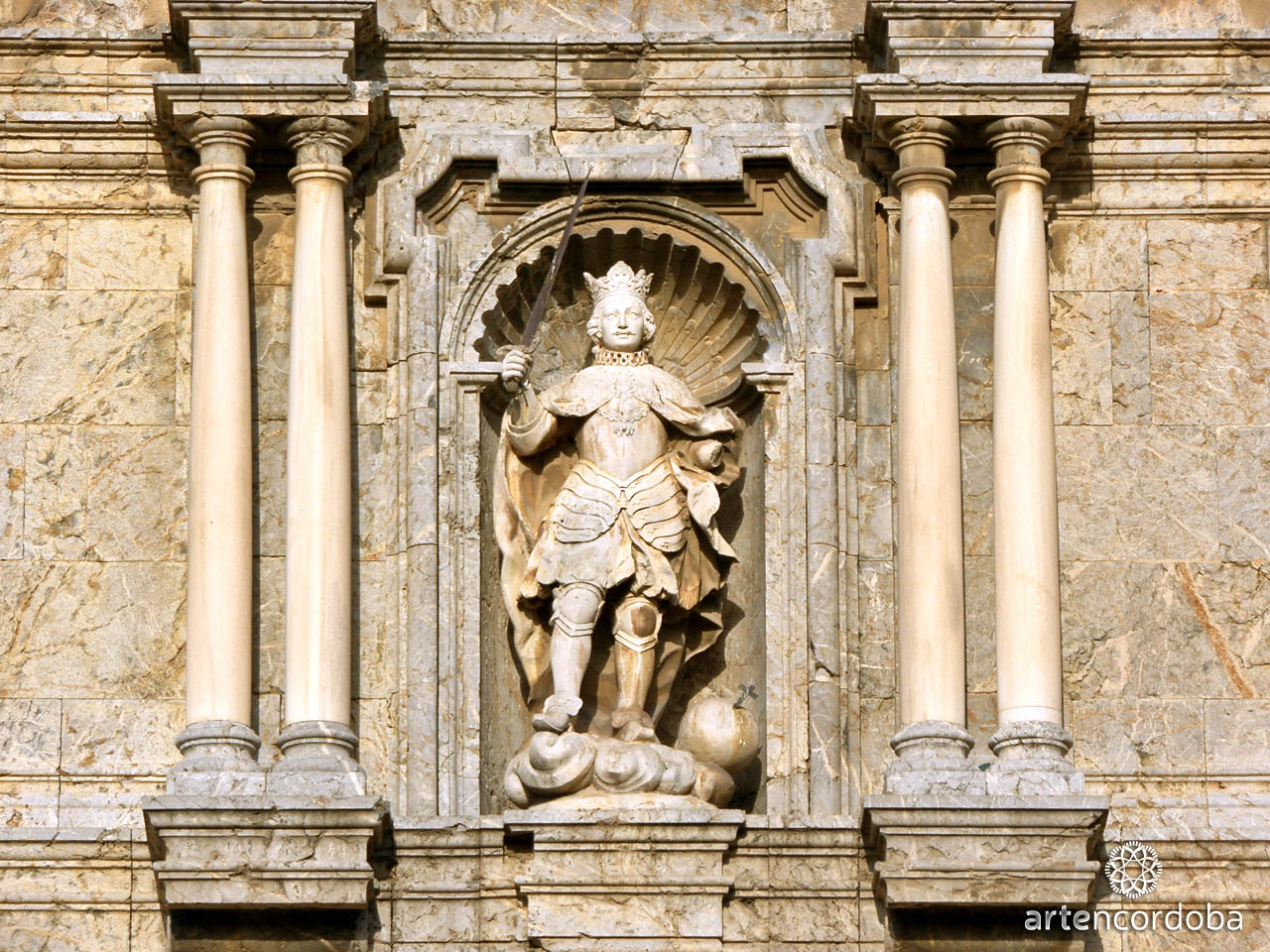
The façade is very simple, crowned by a large triangular pediment topped with Herrerian-style balls. The stone doorway is divided into three vertical and three horizontal sections. The first features a semicircular arched entrance flanked by pilasters on pedestals with geometric decoration. The second tier, above a continuous entablature, houses a scallop-shelled niche with a white marble image of “Saint Ferdinand“, shown crowned and holding a sword. The third tier features a rectangular window flanked by small columns supporting a split circular pediment. Finally, note the different planes in which the various façade elements are arranged, giving the whole a strong sense of plasticity and dynamism.
Visiting the Church of San Francisco
If you’re wondering what to visit in Córdoba, a great option would be the Fernandine Churches, choosing one of our guided tours. This way, you can learn all about the Church of San Francisco. Choosing quality tourism means choosing ArtenCórdoba.
Text: J.A.S.C.